
Picture this: you descend into crystal-clear turquoise water, surrounded by dramatic underwater landscapes shaped by ancient volcanoes. This isn't just a daydream; it's the reality of Big Island scuba diving. You're not just exploring another pretty reef; you're diving into a raw, dynamic ecosystem that stands apart from any other tropical destination. The island’s incredible geology and naturally protected waters have created a world-class hub for divers of every skill level.
Why the Big Island Is a Top Global Dive Destination
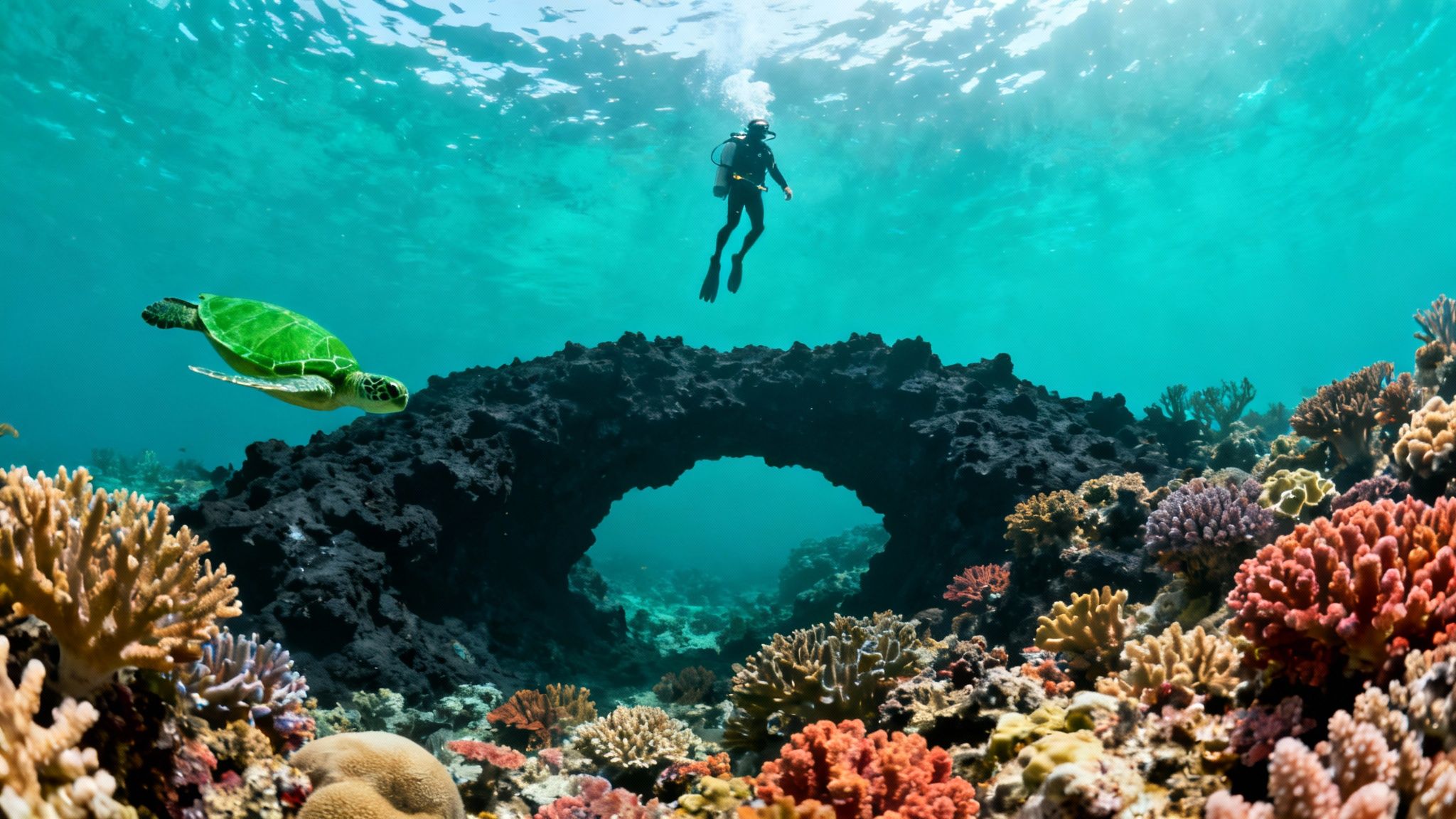
What takes a dive spot from great to truly legendary? On Hawaii's Big Island, the secret ingredient is its volcanic soul. The western Kona coast is perfectly shielded by the island’s massive volcanoes, which act as a natural barrier against the trade winds. The result? Exceptionally calm, clear seas all year long. This protection gives us incredible underwater visibility that often stretches beyond 100 feet.
This one-of-a-kind setting has allowed a spectacular underwater world to flourish. Forget endless sandy bottoms; here, you'll glide through a submerged world of lava tubes, dramatic archways, and ancient craters that have been completely taken over by vibrant coral gardens. This complex and beautiful topography creates the perfect home for an amazing variety of marine life.
A Sanctuary for Diverse Marine Life
The sheer amount of life here is stunning. On just about any dive, you’re likely to come face-to-face with some incredible creatures.
- Honu (Green Sea Turtles): These gentle giants are practically locals. You'll often see them resting on the reef or soaring effortlessly through the water.
- Vibrant Reef Fish: Swarms of brilliant yellow tang, intricate butterflyfish, and colorful parrotfish paint a living rainbow against the dark volcanic rock.
- Unique Encounters: Always keep your eyes peeled. You might spot moray eels peeking out from their rocky homes, octopuses perfectly camouflaged on the reef, or majestic eagle rays gliding by in the deep blue.
It’s this rich ecosystem that has truly put the island on the map. From a humble start in the late 1960s, the Big Island now welcomes around 150,000 dive tourists annually. They complete roughly 100,000 certified dives each year, supported by a fantastic network of over 50 local dive shops and charters. You can learn more about why you should think of diving on the Big Island and what makes it such a world-renowned destination.
An Unforgettable Diving Experience
When you combine the calm conditions, warm water, and jaw-dropping underwater scenery, you get an experience that is truly special. The Big Island is a place where every single dive feels like a new adventure, whether you're navigating a maze of lava formations or witnessing the silent, graceful dance of giant manta rays.
For anyone ready to jump in and explore this underwater paradise, there are plenty of professionally guided diving tours ready to show you the absolute best the Kona coast has to offer.
The Unforgettable Manta Ray Night Dive
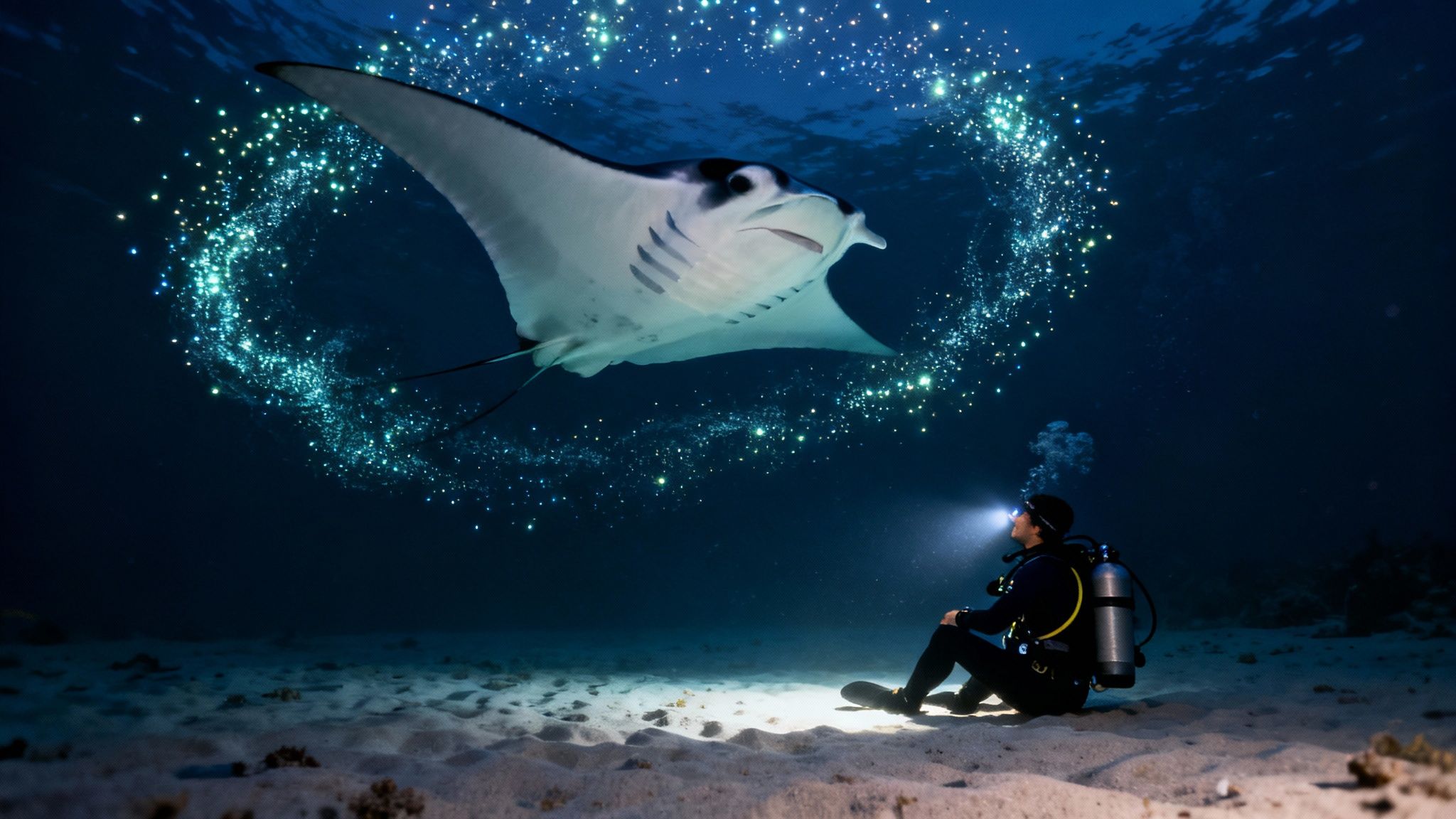
There are some dives that you remember, and then there are dives that change you forever. The Manta Ray Night Dive off the Kona coast is absolutely one of the latter. It’s an experience that tops bucket lists for divers from all over the world, and for a very good reason.
Picture this: you're kneeling on the sandy ocean floor in the dark. Suddenly, a colossal, gentle giant with a wingspan up to 18 feet glides silently through the water, performing a weightless ballet just inches above your head. It's a completely surreal and profound encounter that has come to define Big Island scuba diving.
This incredible spectacle isn't just a random occurrence; it's a brilliant bit of symbiosis. The whole dive is built around a simple food chain reaction. We set up bright, stationary underwater lights on the seafloor. These lights act like magnets for clouds of plankton, the microscopic critters that manta rays love to eat. For Kona's resident reef mantas, this is basically an all-you-can-eat buffet.
They swoop into the beams of light, barrel-rolling with their cavernous mouths wide open to filter the plankton-rich water. It's this mesmerizing feeding frenzy that creates the show. The best part? Manta rays are completely harmless—they have no teeth or stingers—making the interaction perfectly safe and totally awe-inspiring.
Prime Locations for the Manta Ballet
Two main spots along the Kona coast have become world-famous for this nightly performance. Each one offers a slightly different vibe, but both are equally breathtaking.
- Manta Heaven: Just north of Kona, this site (also called Garden Eel Cove) often attracts a huge number of mantas. It's not uncommon to see a dozen or more, creating a whirlwind of graceful movement.
- Manta Village: Located south of Kona near Keauhou Bay, this is the original manta ray dive spot. It’s known for an incredibly high success rate, making it a very reliable choice for this magical encounter.
No matter which site you visit, the trip starts with a beautiful boat ride as the sun dips below the horizon. Your divemaster will give you a full briefing, explaining how to interact responsibly with these majestic animals to keep them—and you—safe. You can learn more about what the manta ray night dive entails to get fully prepped for the adventure.
Your Front-Row Seat to Nature's Spectacle
Once you descend and get settled on the bottom, the real magic starts. You’ll point your dive light straight up, adding to the plankton buffet and drawing the mantas even closer. They glide in, sometimes so close it feels like you could reach out and touch them (but please don't—touching can harm their protective slimy coat).
It’s truly a humbling experience to witness these ancient, intelligent animals in their element. The conditions in Kona are almost perfect, with underwater visibility often stretching past 100 feet and warm water temperatures all year long. This contributes to a nearly 100% likelihood of seeing mantas on most nights. It's not just a dive; it's a guaranteed spectacle.
Exploring Kona’s Top Underwater Sites
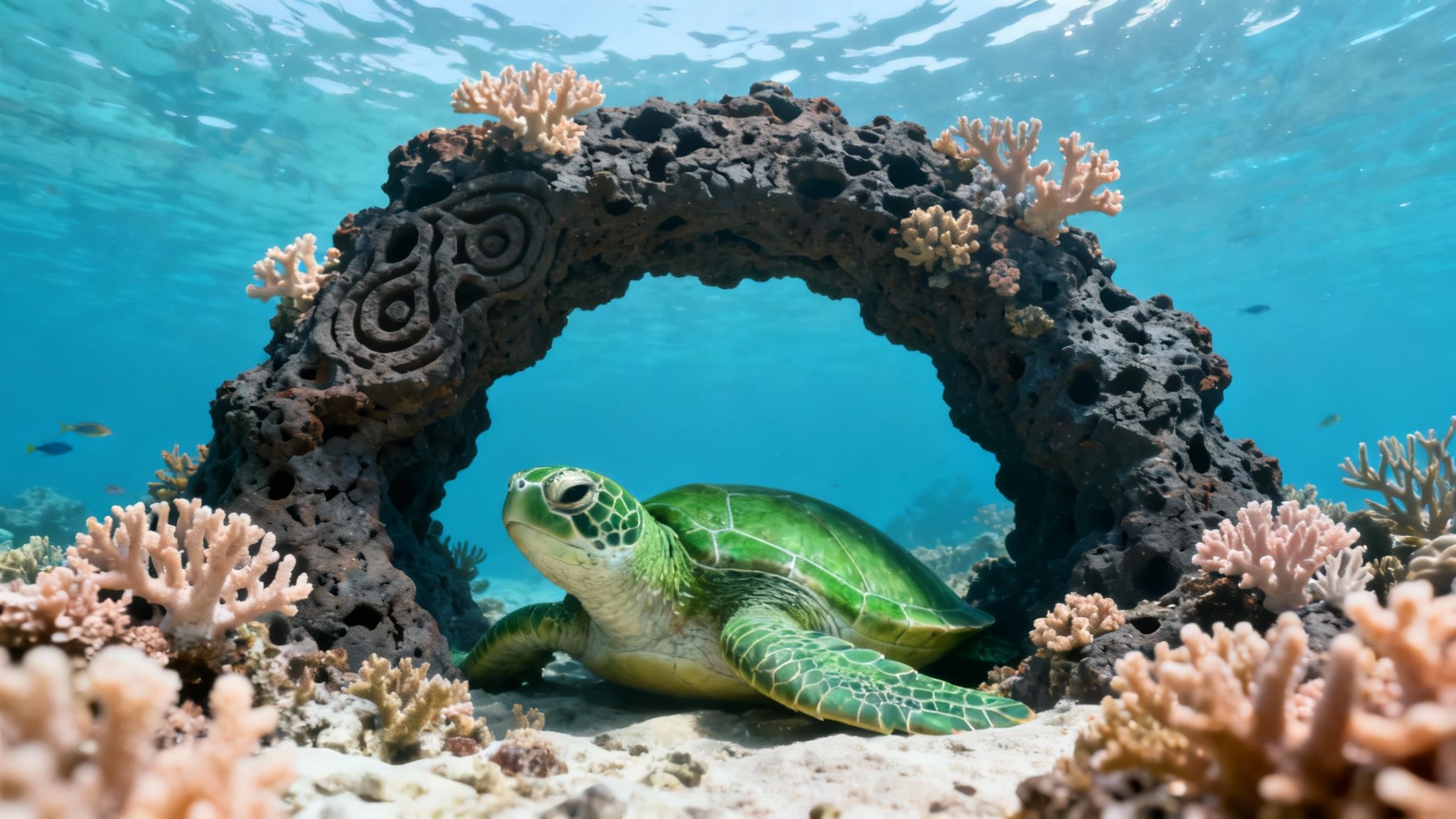
Sure, the manta ray ballet gets all the fame, and for good reason. But that spectacular show is just the opening act for the incredible underwater world of Big Island scuba diving. The Kona coast is packed with dozens of dive sites, each one a unique adventure shaped by ancient lava flows.
When you venture beyond the mantas, you discover a playground of submerged lava tubes, sprawling coral gardens, and all sorts of fascinating marine life. Think of the Kona coastline as a sunken mountain range. The island's volcanic backbone has created a stunningly complex underwater landscape, and it's this geological drama that makes diving here so special. For a full rundown, you can explore the many dive sites Kona Honu Divers visits to get a real feel for the variety.
Navigating Lava Tubes and Arches
One of the absolute must-do experiences in Kona is swimming through ancient lava formations. Sites like Golden Arches are the perfect example of this. You'll find a series of magnificent arches and swim-throughs carved by lava, now completely decked out in colorful corals and sponges.
Gliding through these structures feels like you're exploring a sunken cathedral. Sunlight pierces through openings in the rock above, creating these incredible light beams that dance in the water. It’s a magnet for marine life—keep your eyes peeled for schools of bright yellow tang, hard-to-spot frogfish, and moray eels poking their heads out of rocky dens.
Witnessing Nature's Cleaning Stations
Another truly fascinating part of Kona's ecosystem is the "cleaning station." These are specific spots on the reef where tiny fish and shrimp set up shop to clean parasites off larger animals. Turtle Pinnacle is a prime example and an absolute must for anyone who loves green sea turtles, or honu.
Here, you can watch turtles line up, almost like they're at a car wash, letting cleaner wrasse pick algae and parasites off their shells and skin. It’s an amazing display of a symbiotic relationship right in front of your eyes.
This behavior gives photographers and wildlife lovers a chance to see the turtles in a totally relaxed, natural state. It’s easily one of the most beloved and memorable dive experiences in Kona.
For the Truly Adventurous: The Kona Blackwater Dive
If you're an experienced diver looking for something completely different—something genuinely out of this world—the Kona Blackwater Dive is your ultimate adventure. This isn't a reef dive. It's a drift dive, at night, miles from shore, hanging over thousands of feet of inky black water.
You're tethered to the boat and descend to about 50 feet, suspended in the vast, open ocean. Why? To witness one of the largest migrations on the planet. Every single night, bizarre and beautiful deep-sea creatures rise toward the surface to feed. You'll see life forms that look like they belong on another planet: see-through squid, otherworldly jellyfish, and the strange, larval forms of familiar fish. It's a highly specialized dive for advanced divers, but it offers a peek into a part of the ocean very few will ever see.
To help you get a sense of what's out there, here's a quick look at some of the most popular dive sites along the Kona coast.
Popular Kona Dive Sites at a Glance
| Dive Site | Key Feature | Average Depth | Best For |
|---|---|---|---|
| Manta Heaven | Manta Ray Night Dive | 35 ft / 11 m | All Skill Levels |
| Golden Arches | Lava Tubes & Arches | 40-60 ft / 12-18 m | Beginner to Intermediate |
| Turtle Pinnacle | Turtle Cleaning Station | 30-60 ft / 9-18 m | All Skill Levels |
| Kona Blackwater Dive | Pelagic Night Creatures | 50 ft / 15 m (tethered) | Advanced Divers Only |
| Crescent Beach | Unique Topography | 20-50 ft / 6-15 m | Intermediate |
From gentle drifts over vibrant reefs to heart-pounding deep-water encounters, the sheer variety of sites means every diver can build their perfect trip. Whether you're just getting your fins wet or you're an experienced pro looking for a challenge, the Kona coast delivers.
How to Choose the Right Dive Operator
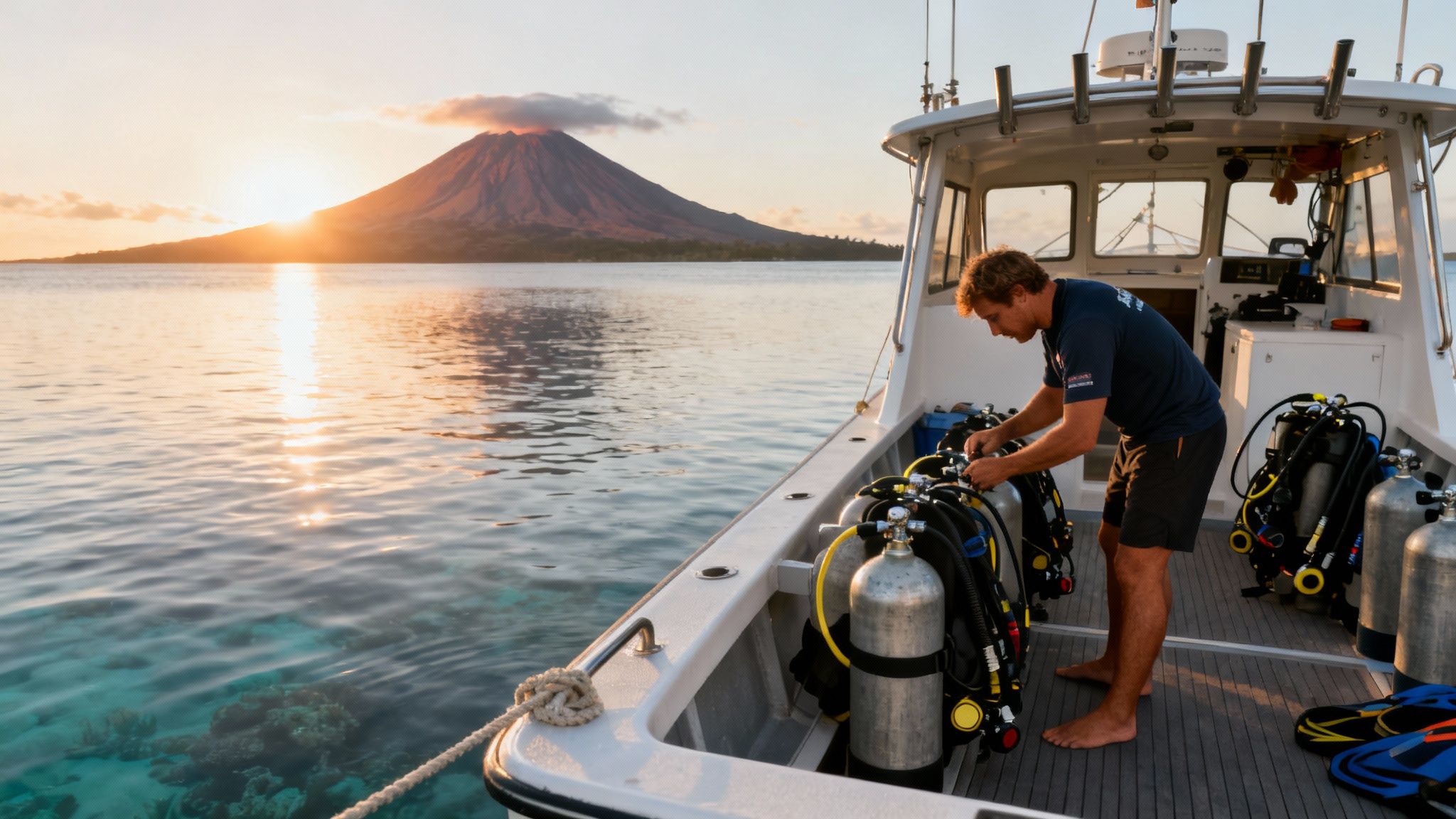
The success of your Big Island scuba diving adventure really comes down to one thing: the crew you choose to dive with. Think about it—they aren't just boat captains. They're your guides to a hidden world, your safety net, and the ones who can turn a good dive into a truly mind-blowing experience.
Picking the right operator is everything. So, where do you start? There are a few absolute must-haves you should never compromise on.
- An Impeccable Safety Record: This is non-negotiable. Look for a shop with a long-standing reputation. Do they have clear emergency plans? Is their safety gear visible and well-maintained? Don't be afraid to ask.
- Professional Certifications: Make sure the operator is affiliated with a major agency like PADI or NAUI. This is your guarantee that the divemasters and instructors meet high international standards.
- Well-Maintained Boats and Gear: A clean, organized boat and gear that looks new (or at least professionally serviced) are huge green flags. It shows they care about the details, which translates to a better, safer experience for you.
What Separates the Good from the Great
Once you've ticked off the safety boxes, you can look for the details that elevate a dive shop from just okay to outstanding. These are the things that make your trip personal and unforgettable, and one of the biggest is the guide-to-diver ratio.
A small group makes all the difference. You're not bumping into other divers underwater, and you get real, personal attention from your guide. They have the time to point out that camouflaged frogfish or help you with your gear without being pulled in ten different directions.
Local knowledge is another game-changer. An experienced divemaster knows these reefs like the back of their hand. They know exactly which lava tube the light hits perfectly in the morning or where a particular family of eels likes to hang out. Their passion for the ocean is contagious and brings the whole reef to life.
A Commitment to the Ocean and Their Divers
Finally, a great operator shows a deep respect for the very environment they're sharing with you. They should be teaching proper etiquette—like not touching the coral—and actively participating in reef conservation.
At Kona Honu Divers, this philosophy is at the heart of everything we do. We're all about small groups, seasoned divemasters who live and breathe Kona diving, and an unwavering respect for our marine life. It's how we've earned our reputation. But don't just take our word for it; see what your fellow divers have to say.
Choosing the right operator gives you the peace of mind to just relax and soak it all in. When you trust your crew completely, you're free to focus on the incredible beauty of Big Island scuba diving. Ready to book a trip with a top-rated crew?
Planning Your Big Island Dive Adventure
Alright, you know about the incredible world waiting beneath the waves and why a great crew makes all the difference. Now for the fun part: making it happen. Planning your Big Island scuba diving trip is the final step in turning that dream into a reality. Think of this as your pre-flight checklist for an amazing adventure, covering everything from the best time of year to visit to what you should actually pack.
A little bit of prep work now will pay off big time, ensuring your trip is smooth, safe, and utterly unforgettable. Let's dive into the details, starting with how the seasons can shape your experience.
When Is the Best Time to Dive in Kona?
Here’s the fantastic news: there's really no bad time to dive on the Kona coast. The island's massive volcanoes act like a giant shield, keeping the waters on the western side remarkably calm and clear year-round. But that doesn't mean every season is the same. Certain times of the year bring unique highlights that might be exactly what you're looking for.
Instead of thinking in terms of "good" or "bad" seasons, think about what kind of special encounter you're hoping to have.
One of the most magical things you can experience is diving here in the winter. Even if the whales are out of sight, you can often hear their hauntingly beautiful songs echoing through the water during your dive. It's a profound, humbling moment you'll never forget.
To help you choose the perfect time for your trip, here’s a quick look at what you can expect from each season.
Big Island Diving Conditions by Season
The conditions in Kona are fantastic all year, but here’s a breakdown of the subtle shifts you’ll find. This can help you pinpoint the perfect window for your visit, whether you're chasing the warmest water or hoping to hear whale songs on your safety stop.
| Season | Avg. Water Temp | Avg. Visibility | Marine Life Highlight |
|---|---|---|---|
| Winter (Dec-Mar) | 75-77°F (24-25°C) | 80-100+ ft | Humpback Whale Songs |
| Spring (Apr-Jun) | 76-78°F (24-26°C) | 100+ ft | Manta Ray Activity High |
| Summer (Jul-Sep) | 79-81°F (26-27°C) | 100+ ft | Warmest Water, Calm Seas |
| Fall (Oct-Nov) | 78-80°F (26-27°C) | 80-100+ ft | Excellent Diving Conditions |
As you can see, you're in for a great time no matter when you arrive. The water is always warm, and the visibility is consistently world-class.
Your Smart Packing Checklist
Packing for a dive trip is always a balancing act. You want to be prepared, but you don't want to haul unnecessary weight across the ocean. Here’s a simple list to help you decide what to bring and what you can easily rent once you're here.
What to Bring:
- Your Personal Gear: If you own a mask, fins, and dive computer, bring them. Nothing beats the comfort of a mask that fits your face perfectly, and being familiar with your own computer is a huge plus for safety and confidence.
- Exposure Protection: While dive shops rent excellent wetsuits, having your own guarantees a perfect fit. A 3mm wetsuit is plenty for most people in Kona's balmy waters, though if you tend to get chilly, you might prefer a 5mm in the winter.
- Reef-Safe Sunscreen: This is a big one. Please don't bring conventional sunscreen. Chemicals like oxybenzone are devastating to our coral reefs. You can help protect our underwater paradise by only using mineral-based, reef-safe options.
- Logbook & Cert Cards: The old-school essentials! Don't leave home without them.
What to Rent:
- The Heavy Stuff: Unless you're a traveling professional, save yourself the headache and excess baggage fees. Rent your BCD, regulators, and tanks on the island. Reputable shops like Kona Honu Divers meticulously maintain their rental gear, so you'll be in great hands.
Prioritizing Safety on Every Dive
Let's wrap up with the single most important aspect of your planning: safety. The Big Island's waters are generally forgiving, but the ocean is a powerful force that always deserves respect. This is exactly why choosing a certified, professional operator isn't just a good idea—it's essential.
Going on professionally guided diving tours gives you access to invaluable local knowledge. Your divemaster knows the currents, the layout of the reef, and is trained to manage any situation that could possibly arise. That kind of expertise is what turns a potentially stressful dive in an unfamiliar place into a relaxed and safe one.
While any ocean activity has inherent risks, the data shows that professionally managed scuba diving is remarkably safe. In Hawaii, from 2009-2018, there were a total of 28 scuba diving fatalities. That number is significantly lower than those for unguided activities like snorkeling. These statistics underscore just how important safety protocols and professional oversight are. You can read more about ocean safety statistics in Hawaii for the full picture.
By planning ahead, packing smart, and always putting safety first, you're setting yourself up for the dive trip of a lifetime.
Frequently Asked Questions About Big Island Diving
Planning a dive trip to the Big Island? You probably have a few questions. Let's run through some of the most common ones we hear from divers getting ready to explore Kona's underwater world.
Do I Need to Be a Certified Diver to Scuba Dive on the Big Island?
Not necessarily! While being certified gives you access to everything, you can absolutely get your first taste of scuba here without a C-card.
Most dive shops, including us at Kona Honu Divers, offer introductory experiences like the PADI Discover Scuba Diving program. It’s a great way to get your feet wet—literally. You’ll learn the basics from a pro and go for a real dive in a shallow, controlled spot. If you get hooked, the Big Island is an incredible place to get your full PADI Open Water Diver certification.
What Is the Best Side of the Big Island for Scuba Diving?
Hands down, the Kona coast on the west side. It’s not even a competition.
The massive volcanoes, Mauna Kea and Mauna Loa, act as a natural shield, blocking the trade winds that pummel the rest of the island. This protection gives the Kona side consistently calm, crystal-clear water. It’s why you’ll find all the legendary dive sites—including the manta ray night dives—right here. The Hilo side, on the east, is a different story; it faces the open ocean and winds, which means rougher seas and murkier water.
Can I Shore Dive on the Big Island?
Absolutely. There are some fantastic shore dives along the Kona and Kohala coasts. Spots like Two Step at Honaunau Bay or Kahalu'u Beach Park are famous for their easy access and amazing shallow reefs packed with fish.
That said, you’d be missing out if you only shore dived. Many of the most dramatic sites, with wild lava tube swim-throughs and chances to see bigger animals, are only reachable by boat. For the best experience and to stay safe, hopping on a boat with a local guide is the way to go, especially if you’re new to the area.
What Kind of Marine Life Will I See While Diving in Kona?
Get ready for an incredible show. The reefs are buzzing with life—you’ll see schools of colorful butterflyfish, chubby parrotfish munching on coral, moray eels peeking out from crevices, and maybe even a cleverly disguised frogfish or octopus. Green sea turtles (honu) are practically everywhere.
The real headliners, of course, are the manta rays you'll meet on the night dive. We also regularly see spinner dolphins and graceful eagle rays gliding by. If you’re wondering about the rays, this guide answers the common question: Can Manta Rays Sting You?. Depending on the season and a little luck, you might even spot whitetip reef sharks, tiger sharks, or the ultimate prize—a whale shark.
Ready to see it all for yourself? The crew at Kona Honu Divers lives and breathes Big Island scuba diving and we're stoked to show you the best spots. From the world-famous manta ray night dive to exploring volcanic caverns, we have professionally guided diving tours for every diver.