
Scuba diving on the Big Island isn't just another dive trip; it's an adventure into a world sculpted by volcanoes. The island's fiery heart has created an underwater landscape you won't find anywhere else, brimming with life and offering some of the most unique dives on the planet.
Why the Big Island Is a Top Diving Destination
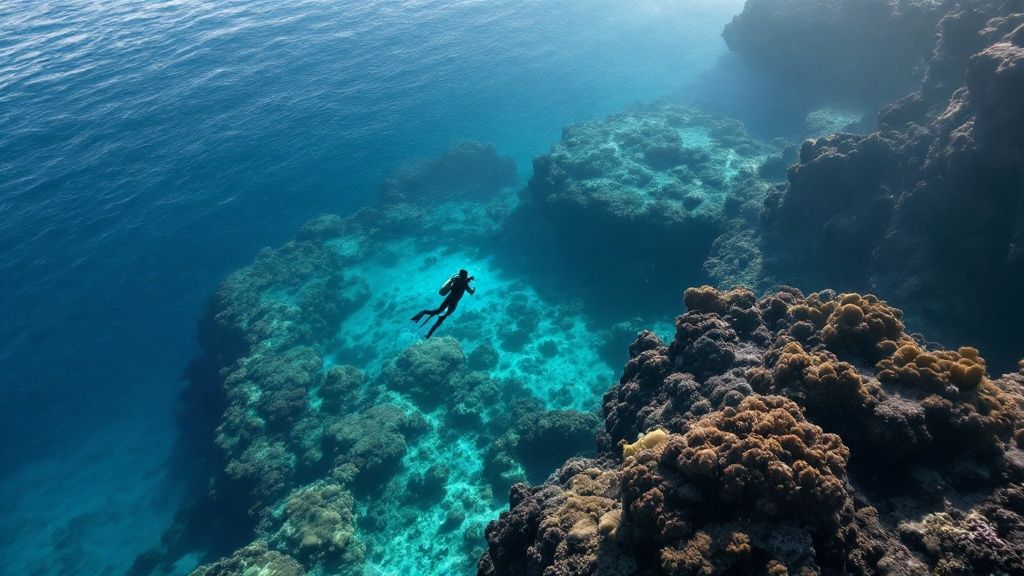
Picture this: you roll back into the deep blue of the Kona coast. The water is so clear that sunlight pierces the surface, lighting up a dramatic scene of ancient lava flows frozen in time. That's the magic of diving here—it’s a direct connection to the island's raw, volcanic origins.
This isn't your typical sandy-bottom reef. The ocean floor is a playground of incredible volcanic structures, a testament to millennia of lava meeting the sea. As a diver, you get to explore:
- Submerged Lava Tubes: Imagine swimming through massive, winding tunnels that were once rivers of molten rock. Now, they're quiet havens for things like sleeping whitetip reef sharks and colorful sponges.
- Dramatic Arches and Pinnacles: You can glide around huge, otherworldly rock formations that jut up from the seafloor. These structures act like magnets for schools of fish and create some seriously epic photo ops.
- Vibrant Coral Gardens: Over centuries, healthy, thriving coral reefs have taken root on top of the dark volcanic rock, creating a stunning contrast and providing a home for countless critters.
A Sanctuary for Marine Life
This unique underwater terrain is the perfect foundation for a bustling ecosystem. You’ll almost certainly encounter green sea turtles (honu) resting peacefully on the reef. It’s also common for pods of playful spinner dolphins to greet the dive boats, and if you're here in the winter, you can often hear the haunting songs of humpback whales echoing through the water on your dives.
Because Hawaii is so isolated, many of the marine species here are endemic, meaning you can't find them anywhere else in the world.
This rich biodiversity sets the stage for some true bucket-list experiences. Whether it's the world-famous Manta Ray Night Dive or the surreal Kona Blackwater Dive, the Big Island consistently delivers unforgettable underwater moments. The numbers really back this up—divers log about 100,000 certified scuba dives here every single year.
This incredible demand is met by a great local dive community, with over 50 dive shops and charters ready to take more than 150,000 dive tourists out each year, as broken down in this overview of Big Island scuba diving statistics.
If you're ready to see it for yourself, local experts like Kona Honu Divers run fantastic diving tours on the Big Island that really showcase the best spots along the Kona coast.
Experience the World-Famous Manta Ray Night Dive
Of all the incredible dives you can do around the world, very few come close to the surreal, almost spiritual experience of the Kona Manta Ray Night Dive. This is more than just another entry in your logbook; it's a front-row seat to an underwater ballet, a spectacle that has earned its top spot on divers' bucket lists everywhere. For many, Big Island scuba diving is this single, unforgettable encounter.
Picture this: you descend into the warm, dark Pacific just after sunset. You find your spot on the sandy ocean floor, about 30-40 feet down, and switch on your dive light, pointing the beam straight up toward the surface. You and your fellow divers form what’s affectionately known as "the campfire"—a circle of lights with one very specific purpose: attracting plankton.
The Underwater Ballet Begins
It doesn't take long. Within minutes, clouds of tiny organisms swarm to the light, creating a shimmering, living galaxy in the water column. And then, out of the inky blackness, the first shadow emerges. It's a graceful, winged giant—a reef manta ray, which can have a wingspan of over 16 feet.
Soon, more arrive. They glide effortlessly into the light, performing mesmerizing barrel rolls and somersaults just inches above your head. With their cavernous mouths wide open, they filter the plankton-rich water in a silent, hypnotic dance. The feeling of a creature so massive and majestic moving with such impossible elegance so close to you is something you truly have to experience to understand.
Why Kona is the Manta Capital
So, what makes Kona the best place on earth for this? It all comes down to reliability. The manta rays here are locals; they don’t migrate. Over the years, specific sites have become their regular nightly dining spots. Dive operators have perfected the art of creating this plankton buffet, leading to an incredible sighting success rate of over 90% year-round.
This consistency allows for a predictable yet completely wild encounter. Before you hit the water, you'll get a thorough briefing on proper "manta etiquette"—how to position yourself and where to shine your light to ensure the experience is safe for both you and these gentle giants. For a deeper look into the mechanics of the dive and the science behind it, you can learn more about what the manta ray night dive involves.
The most important rule is to be a passive observer. By resisting the urge to touch the mantas, you help preserve the vital protective mucous coating on their skin, which is crucial for their health.
Ready to see this incredible performance for yourself? We offer world-class manta ray dive tours that put you right in the middle of the action. For a complete overview of this unique encounter, including how to prepare and what to expect, check out this Ultimate Guide to the Kona Manta Ray Night Snorkel. This isn't just a dive; it's a memory that will stay with you for a lifetime.
Must-Visit Big Island Dive Sites
While the Manta Ray Night Dive gets most of the spotlight, it's really just the beginning of what Big Island scuba diving has to offer. The Kona and Kohala coasts are loaded with dozens of incredible dive sites, each one a unique peek into Hawaii's underwater world. The island’s volcanic origins have sculpted a truly dramatic seascape of lava tubes, arches, and ancient formations you just won't find anywhere else.
Getting out and exploring these spots really shows you the sheer variety of life and landscapes here. We're talking everything from sun-drenched shallow reefs packed with colorful fish to deep-water "cleaning stations" and mind-bending lava structures. There’s an adventure waiting for every diver, and most of these amazing places are just a short boat trip from Kailua-Kona.
To help you get started, here's a quick look at a few of the top dive sites on the Big Island. This table breaks down what makes each one special.
Popular Big Island Dive Sites at a Glance
| Dive Site | Location | Experience Level | Key Features |
|---|---|---|---|
| Turtle Pinnacle (Au Au) | Kona Coast (Boat) | Beginner to Advanced | Famous turtle cleaning station, excellent visibility, lots of honu (sea turtles). |
| Two Step | Honaunau Bay (Shore) | Beginner | Easy shore entry, calm bay, frequent spinner dolphin sightings, healthy coral. |
| Golden Arches | Kona Coast (Boat) | Intermediate | Stunning lava arch swim-through, schools of yellow fish, unique topography. |
Each of these sites offers something different, but they all showcase the incredible underwater environment shaped by the island's volcanic past.
Turtle Pinnacle (Au Au)
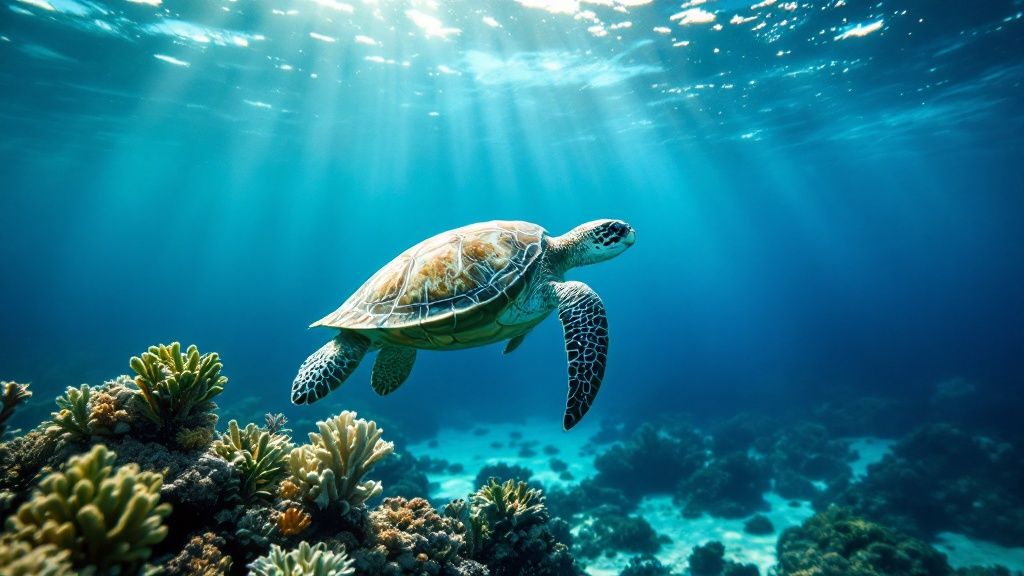
One of the most requested boat dives on the Kona coast, and for good reason, is Turtle Pinnacle (or Au Au). This spot is a classic "turtle cleaning station," where Hawaiian Green Sea Turtles, or honu, line up to let surgeonfish nibble algae and parasites right off their shells. It’s basically an underwater spa day for turtles, and we get a front-row seat to the action.
The main pinnacle comes up from the ocean floor to about 35 feet below the surface, making it a perfect multi-level dive. It's common to see a half-dozen turtles just chilling out, waiting their turn. The visibility here is often fantastic, sometimes over 100 feet, and the reef is alive with moray eels, octopus, and massive schools of butterflyfish.
Two Step (Honaunau Bay)
If you love shore diving, Two Step is an absolute must-do. It’s right next to the Pu'uhonua o Hōnaunau National Historical Park and gets its name from the two natural lava rock "steps" that make getting into the water incredibly easy. The bay itself is super calm and protected, with depths from 15 to 40 feet, making it ideal for divers of all skill levels.
This place is famous for its spinner dolphin pods, which often come into the bay to rest during the day. Below the surface, you’ll find amazing coral gardens and lava arches. Thanks to the clear, shallow water and bright sunlight, it's a dream for underwater photographers.
Pro Tip: Get here early in the morning. You'll beat the crowds for a parking spot and have a better chance of seeing the dolphins when they're most active. Just remember to always give marine life plenty of space and respect.
Golden Arches
A perfect example of the Big Island’s wild underwater architecture, Golden Arches is a favorite among local divemasters. The highlight is a massive lava arch you can swim right through, often filled with shimmering schools of milletseed butterflyfish and yellow tangs.
This boat dive is a dynamic experience, with most of the action happening between 40 and 60 feet. Beyond the main arch, the area is riddled with smaller caverns and ledges. Peek inside, and you might find whitetip reef sharks napping or some well-camouflaged crustaceans. The topography here is a constant, awesome reminder that you're diving on the side of a volcano. To see more of the incredible underwater landscapes you can explore, check out this guide to dive sites Kona Honu Divers visits.
Advanced Diving and the Kona Blackwater
If you've logged countless reef dives and are starting to crave something more, the Big Island is ready to deliver. Sure, the coral gardens are beautiful, but the island's raw, volcanic soul offers some serious challenges and thrills for divers with the skills to match. This is where Big Island scuba diving goes from being a scenic tour to a genuine expedition.
Experienced divers can explore complex underwater lava tube systems—cavernous, winding passages that demand flawless buoyancy and a cool head. Other advanced dives take you down to deep-water pinnacles that shoot up from the abyss, attracting pelagic visitors like sharks, rays, and massive jacks patrolling the blue. These dives aren't for everyone; they require precision, confidence, and a true spirit of exploration. For those who are ready, specialized advanced dive tour options are designed to hit these deeper, more rugged sites.
Check Availability
The Ultimate Frontier: The Kona Blackwater Dive
Of all the advanced dives in the world, few are as strange or mind-bending as the Kona Blackwater Dive. You can forget about the reef and the ocean floor. This dive happens miles offshore, suspending you over thousands of feet of inky black water. People often describe it as a spacewalk, and honestly, that’s not far off.
The concept is both simple and completely profound. The boat heads miles out to sea, into the deep pelagic zone. You clip into a tether attached to a big float on the surface and descend to about 50 feet. Then, you just hang there, drifting in the dark, a silent observer in a vast, three-dimensional world.
Witnessing the Great Vertical Migration
So, what exactly are you looking at? You're smack in the middle of the largest daily migration of life on Earth. Every single night, countless bizarre, alien-like creatures rise from the crushing depths to feed near the surface. The best part? Many of them are bioluminescent, creating their own light in the absolute darkness.
Your dive light attracts this cloud of zooplankton and other strange critters, drawing them right into your field of view. You’ll see creatures that look like they were dreamed up for a sci-fi movie:
- Pteropods: Tiny sea snails that swim freely, fluttering their "wings" like miniature butterflies.
- Larval Creatures: The baby versions of crabs, eels, and fish, often totally transparent and looking nothing like their adult forms.
- Jellyfish and Siphonophores: Intricate, glowing chains of organisms pulsing and drifting on the current.
This isn't a dive for spotting big animals. It’s about discovering a hidden universe of micro-fauna that is as scientifically fascinating as it is breathtakingly beautiful. The whole experience is a powerful, humbling reminder of how much life is teeming in the ocean that we almost never get to see.
Because this dive is so specialized—at night, in the open ocean, and requiring you to be completely comfortable in the water—it's strictly for experienced divers. To get the full scoop on this one-of-a-kind adventure, check out our complete guide to blackwater diving in Kona. For any certified diver looking for a truly unique challenge, the Kona Blackwater Dive is an unforgettable trip into the heart of the deep sea.
Planning Your Trip: Diving Conditions and Seasons
One of the best things about planning a scuba trip to the Big Island? There’s really no bad time to go. The island's massive volcanoes, Mauna Loa and Hualalai, act as a natural shield for the Kona coast, blocking the trade winds and keeping the water exceptionally calm and clear almost all year.
This protective geography creates a diver's dream. Unlike so many other world-class destinations that have specific on- and off-seasons, Kona's conditions are remarkably consistent. You can book a trip for virtually any month and expect fantastic visibility—often reaching well over 100 feet—and comfortable seas.
Year-Round Water Temperatures
Kona's water temperature stays inviting throughout the year, with just a slight dip in the winter months. The change is just enough to make you think about your wetsuit thickness, but it’s never truly cold.
- Summer (May – October): These are the warmest months, with the water hovering between a balmy 79°F and 82°F (26-28°C). A 3mm wetsuit is perfect for most people, and some hardy divers are happy in just a dive skin.
- Winter (November – April): The water cools off a bit, averaging 75°F to 78°F (24-26°C). You’ll be much happier in a 5mm wetsuit, especially if you're doing multiple or deeper dives.
What to Expect Each Season
While the diving is always great, what you experience can change subtly with the seasons. Here’s a quick look at what to expect throughout the year.
| Season | Water Temperature | Visibility | Marine Life Highlights |
|---|---|---|---|
| Winter (Nov – Apr) | 75°F – 78°F (24-26°C) | Excellent (100+ ft) | Humpback whale songs are the soundtrack to every dive. Mantas and reef fish are abundant. |
| Summer (May – Oct) | 79°F – 82°F (26-28°C) | Excellent (100+ ft) | Surface conditions are often glassy and calm. Perfect time for pilot whales and dolphins. |
In the summer, the ocean along the Kona coast is typically at its calmest. We're talking glassy, smooth conditions that make for easy boat rides and even easier entries and exits. It's an ideal time for new divers or anyone who just wants to relax and enjoy the ride.
Winter, however, brings a touch of magic. This is when the humpback whales arrive.
From roughly December through March, thousands of these gentle giants migrate to Hawaii's warm waters to mate and give birth. While getting a glimpse of one underwater is the holy grail of rare encounters, you don't need to see them to experience their presence. Their complex, haunting songs travel for miles underwater, providing an unforgettable soundtrack to your dives. Hearing that powerful chorus echo through the reef is a truly humbling, almost mystical, experience.
Staying Safe While Exploring the Depths
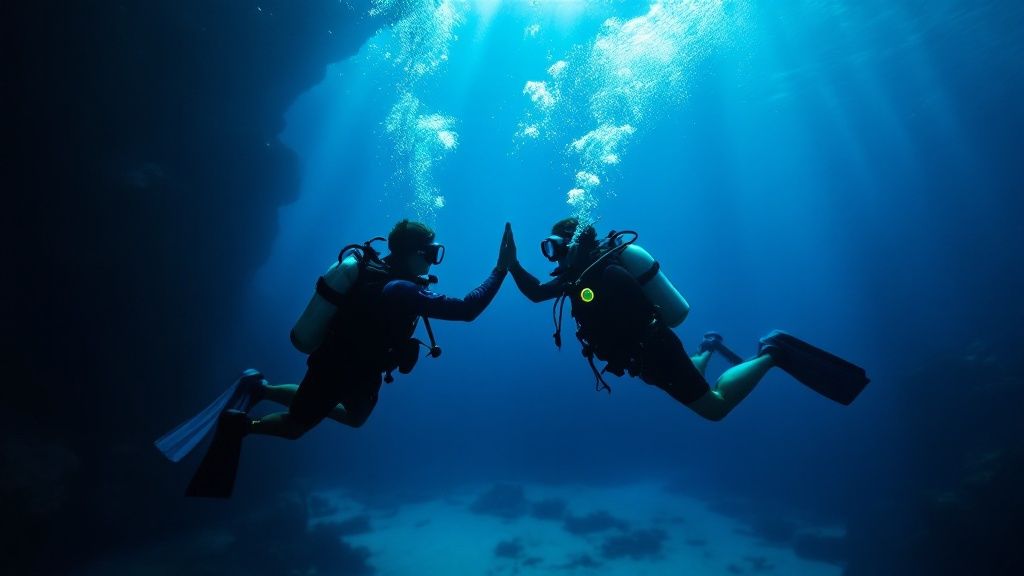
On every single dive, your safety is priority number one. Period. Here on the Big Island, the professional dive community has built a solid culture around this principle. From the moment you step onto the boat until you’re back on board, every procedure is there to make sure you feel secure, confident, and ready to enjoy what’s beneath the waves.
This deep-rooted commitment to safety is a huge part of what makes Big Island scuba diving so trusted. It’s a highly structured activity with mandatory training, certification, and constant professional oversight, which sets it worlds apart from other ocean sports that might carry higher risks.
The Power of Professional Guidance
The most important safety decision you'll make is choosing a certified, reputable dive operator. Your local divemasters and instructors are more than just guides—they’re experts who live and breathe these waters. They know the currents, the marine life, and the emergency procedures inside and out. Their entire job is to manage the dive so you can just relax and take it all in.
The numbers really bear this out. While Hawaii has unfortunately seen high incident rates for snorkelers, scuba diving fatalities are drastically lower. Over a ten-year span, there were only 28 scuba-related deaths compared to 206 for snorkeling. As this analysis of Hawaiian marine activity risks points out, that stark difference speaks volumes about the value of the training and safety protocols built into scuba.
Your Pre-Dive Safety Checklist
A safe dive starts long before you hit the water. Any good operator will walk the group through a thorough briefing and equipment check. You should always expect to cover these bases:
- Detailed Site Briefing: Your guide will lay out the dive plan, covering things like maximum depth, potential currents, and what you’re likely to see.
- Buddy Check: You'll run through the classic "BWRAF" check (Begin With Review And Friend) to ensure your gear—and your buddy's—is working perfectly.
- Clear Communication: The group will review hand signals and emergency protocols, making sure everyone is on the same page.
A great divemaster empowers you to be a safe diver. They create an environment where asking questions is encouraged and feeling comfortable with the plan is mandatory before anyone gets in the water.
This focus on preparation is what builds confidence and heads off potential problems, letting you fully immerse yourself in the beauty of the Kona coast.
Diving with Respect for the Ocean
Safety isn't just about us; it's also about protecting the fragile marine environment we're there to see. Good diving practices are essential for conservation, ensuring these incredible sites stay healthy for generations to come.
One of the most vital skills here is mastering neutral buoyancy. When you can control your position and just hang in the water, you can glide effortlessly over delicate coral without ever making contact. This protects the living reef from accidental bumps and fin kicks, which can cause real damage. Your guide can help you dial in your weighting to achieve this, making you a safer and more ocean-friendly diver.
Your Big Island Scuba Questions Answered
Every dive trip comes with a few questions, and planning one for the Big Island is no different. To help you get ready for your underwater adventure, I've rounded up the answers to the questions I hear most often from divers.
Think of this as your quick guide to get those last-minute details sorted so you can feel totally confident about your plans. Let's get right to it.
Do I Need to Be Certified to Scuba Dive on the Big Island?
For the vast majority of dives here—especially the boat dives that get you to the best sites—yes, you absolutely need to be a certified diver. Think of your C-card as your all-access pass to Kona's incredible underwater world.
But what if you're not certified and just want to give it a try? You're in luck. Most shops offer a "Discover Scuba Diving" experience. It’s a fantastic way to test the waters, literally. You'll go with an instructor to a calm, shallow spot and get a real taste of what it’s like to breathe underwater.
Honestly, with its warm, clear, and protected bays, the Big Island is one of the best places on the planet to get your certification. Dive operators like Kona Honu Divers offer the full range of PADI courses, from your first Open Water dives to advanced specialties.
What Is the Water Temperature in Kona?
The good news is the water here is beautiful and warm all year long. You can definitely leave your dry suit at home!
- Winter (November – April): The water hovers around a comfortable 75-78°F (24-26°C). Most divers find a 5mm wetsuit is perfect for staying warm.
- Summer (May – October): Things heat up to a balmy 79-82°F (26-28°C). A 3mm wetsuit is usually all you'll need.
Don't worry about packing your own neoprene; the local shops all have high-quality rental wetsuits to match the current conditions.
Can I See Sharks While Diving on the Big Island?
It's possible, but seeing a shark isn't a guaranteed, everyday thing on most of the popular reef dives. The one you're most likely to spot is the Whitetip Reef Shark. They're typically very chill, and you’ll usually find them resting on the sandy bottom or tucked away under a lava rock ledge.
Encounters with bigger species like Tiger Sharks or Hammerheads are much rarer and tend to happen on deeper, more advanced offshore dives. Your dive guide is a pro at handling any kind of wildlife encounter, ensuring both you and the animals are safe and respected.
What Should I Bring on a Dive Boat Trip?
Packing for a day on the water is pretty simple. The two things you absolutely can't forget are your certification card and your logbook.
Beyond that, a little comfort goes a long way. Here’s a quick checklist:
- A towel to dry off
- Reef-safe sunscreen (this is a must!)
- Sunglasses and a hat for surface intervals
- A reusable water bottle to stay hydrated
Any reputable dive boat will provide rental gear, plus snacks and water to keep you fueled up between dives. One last tip: if you're even a little prone to seasickness, it's a smart move to take some medication beforehand. For any other general travel questions not related to diving, you can find more frequently asked questions here.
At Kona Honu Divers, we live and breathe this stuff, and we're excited to share the magic of the Big Island's underwater world with you. Whether it's your very first time breathing underwater or you're an experienced diver looking for a new thrill, we offer a full range of diving tours for every skill level.