
Picture this: you're sinking slowly into a world of brilliant turquoise, the Hawaiian sun shimmering on the surface above you. As you descend, ancient lava tubes and sprawling coral gardens come into view. This isn't just a fantasy; it's the heart of Big Island scuba diving.
Why Choose the Big Island for Your Next Dive
From the tranquil Kona coast to the wild underwater terrain carved by volcanoes, the Big Island delivers a dive experience that’s truly one-of-a-kind. The island's western side is naturally sheltered from the trade winds, which means the water stays incredibly calm and clear almost all year.
This protective geography gives us visibility that often pushes past 100 feet. For underwater photographers, it's paradise. But the clear water is just the beginning.
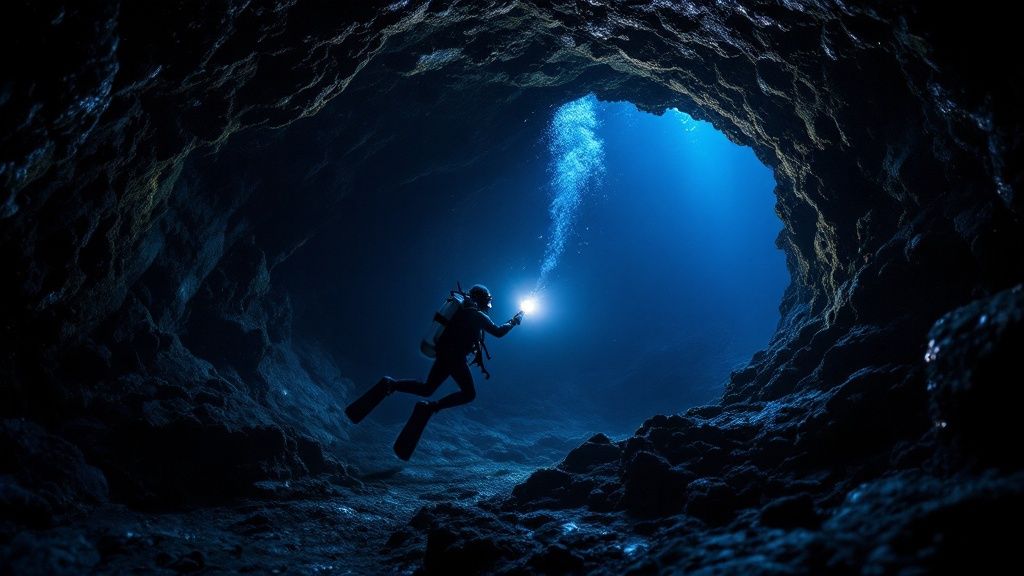
It’s the island’s volcanic soul that creates such a spectacular underwater playground. We get to explore intricate lava tubes, swim through massive archways, and hover over submerged craters—all left behind by the same forces that built Hawaii itself. These unique structures have become the perfect homes for an incredible amount of marine life.
A Sanctuary for Marine Life
What really makes Big Island scuba diving so unforgettable is the sheer biodiversity. The waters here are a haven for a huge variety of species, and many of them are endemic—you literally can't find them anywhere else on the planet.
On any given dive, you might swim alongside a graceful Hawaiian green sea turtle (honu), spot an octopus perfectly camouflaged against the volcanic rock, or be surrounded by schools of brilliantly colored reef fish.
The Big Island’s dive sites aren't just pretty; they are living, breathing ecosystems. The unique mix of protected bays, nutrient-rich currents, and volcanic topography has created a true sanctuary for marine creatures, solidifying its place as a world-class diving destination.
Before we go further, here's a quick look at what makes this place so special.
Big Island Diving Highlights at a Glance
| Feature | What Makes It Special |
|---|---|
| Visibility | Consistently 100+ feet on the Kona Coast |
| Topography | Lava tubes, arches, craters, and pinnacles |
| Marine Life | High concentration of endemic species |
| Signature Dives | World-famous Manta Ray Night Dive & Blackwater Dive |
| Conditions | Calm, protected waters ideal for all skill levels |
As you can see, the Big Island checks all the boxes for an epic dive trip.
Adventure for Every Skill Level
It doesn't matter if you're about to take your first breath underwater or you've got hundreds of dives in your logbook—the Big Island has a site for you.
- For Beginners: Sheltered spots like Kealakekua Bay provide calm, shallow waters that are perfect for learning the ropes and getting certified.
- For Experienced Divers: We've got advanced sites with dramatic drop-offs, deep-water pinnacles, and exhilarating drift dives that will keep any seasoned diver on their fins.
Of course, the island is also famous for its signature dives. Experiences like the surreal Manta Ray Night Dive and the otherworldly Blackwater Dive offer encounters you simply can't have anywhere else. These are the dives people travel across the globe for.
To get a better sense of the magic here, you should read more about the many reasons to think of diving on the Big Island.
Discover the Big Island’s Unique Marine Life
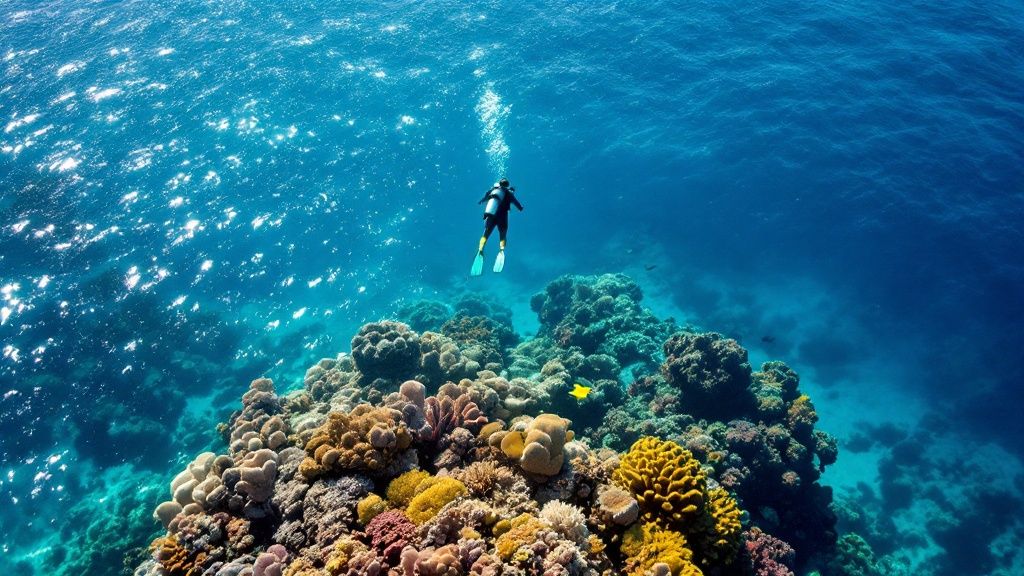
What really takes Big Island scuba diving from great to truly unforgettable is the life teeming beneath the waves. This isn't just about seeing a few fish. It's about dropping into a world sculpted by the island's volcanic soul—a dramatic underwater landscape of lava tubes, grand arches, and submerged craters that have become bustling neighborhoods for a complex ecosystem.
This one-of-a-kind geology is the perfect backdrop for an incredible diversity of creatures. The Big Island boasts Hawaii's richest marine biodiversity, with around 1,100 marine species calling these waters home. The Kona coast, in particular, is a playground of different topographies, from caves where whitetip reef sharks snooze to sheer pinnacles patrolled by squadrons of eagle rays.
The Endemic Treasures of Hawaii
The real magic of diving here? It's the sheer number of species you won't find anywhere else on the planet. Roughly 129 marine species are exclusive to Hawaiian waters, which turns every dive into a genuine hunt for something rare.
Think of it like visiting a living museum where the exhibits swim right up to your mask. You’re not just looking in; you're a temporary guest in their very exclusive home.
This uniqueness makes a simple reef dive feel like a treasure hunt. Spotting a Bandit Angelfish or a Hawaiian Lionfish is like discovering a secret that only these islands hold. If you're keen to learn more, check out our guide on searching for endemic marine animals on the Big Island.
Meet the Iconic Residents
While the rare endemic fish are a huge draw, the Big Island is also famous for its charismatic megafauna. These are the encounters that make a good dive log entry a great one.
-
Honu (Hawaiian Green Sea Turtles): Watching a honu glide effortlessly through the water is the quintessential Hawaiian moment. You'll see these ancient, gentle reptiles at many of the most popular Kona dive sites.
-
He'e (Octopus): Spotting an octopus is always a thrill. These masters of disguise can change their color and texture in a flash to perfectly match the volcanic rock—a mind-blowing display of marine intelligence.
-
Colorful Reef Fish: Get ready to be surrounded. Clouds of brilliant yellow tangs, delicate butterflyfish, and striking Moorish idols are a constant, dazzling presence on the reef.
The sheer variety of life means no two dives are ever alike. Each time you descend, you’ll meet a new cast of characters and witness a different story playing out on the reef.
Seasonal Spectacles and Year-Round Visitors
Beyond the full-time residents, the Big Island’s waters also play host to some incredible seasonal visitors. The most spectacular of all is the annual migration of humpback whales.
From December through March, these gentle giants arrive to breed and give birth. While you can't go on a "whale dive," their presence is impossible to ignore. Hearing their haunting songs reverberate through the water during a dive is a humbling experience you will never, ever forget.
And to top it off, playful spinner dolphins are a year-round fixture, often seen leaping from the water along the Kona coast. This constant mix of resident and migratory life ensures that Big Island scuba diving always has something new to offer, connecting you directly to the powerful rhythm of the Pacific.
Exploring the Top Kona Coast Dive Sites
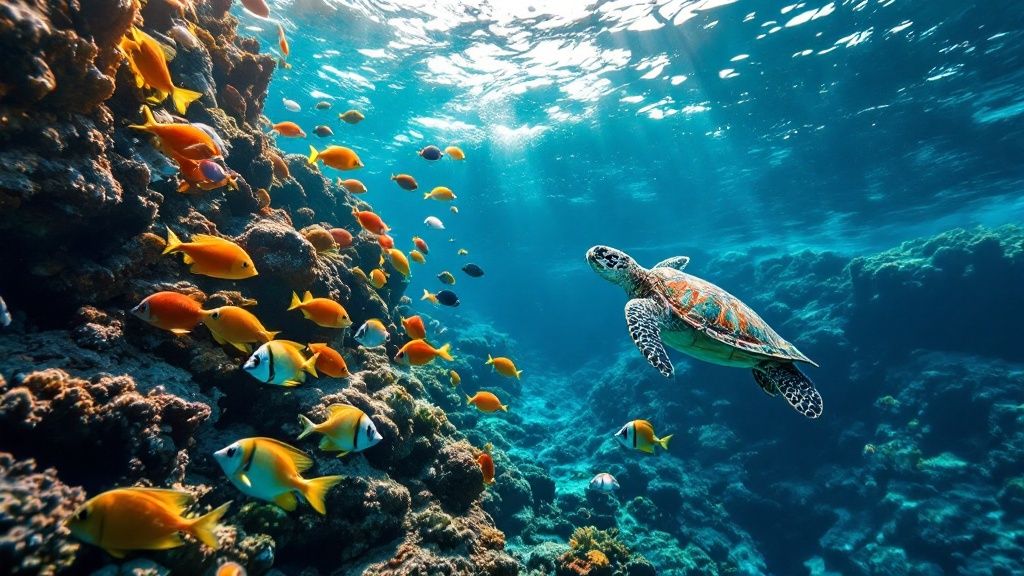
The Kona coast is a diver’s dream, a sprawling underwater playground where volcanic history and a vibrant marine present collide. Tucked away on the leeward side of the island, it’s shielded from the heavy trade winds, which creates the calm, crystal-clear conditions that make Big Island scuba diving so legendary. This coastline is dotted with dozens of unique sites, each one its own special adventure.
You’ll find everything here. From shallow, sun-drenched coral gardens perfect for getting your fins wet for the first time, to dramatic deep-water drop-offs that will thrill even the most seasoned divers. The first step to building your perfect diving tour is knowing where to go.
Kealakekua Bay: A Protected Sanctuary
You can’t talk about Kona diving without starting with Kealakekua Bay. This isn’t just another dive spot; it’s a protected Marine Life Conservation District, and that special status has allowed its ecosystem to absolutely flourish. It’s a world-class destination for a reason, with visibility that often pushes past 100 feet, giving you a stunning, high-definition view of everything below.
Because the bay is sheltered and fishing is restricted, the coral gardens are ridiculously healthy and teeming with life. We’re talking massive schools of yellow tangs, colorful parrotfish, and striking moorish idols everywhere you look. On top of all that, it’s historically significant as the place where Captain James Cook landed in 1779. If you want to learn more about what makes this one of Kona's premier dive destinations, we've got more details on konahonudivers.com.
Classic Kona Dives for All Levels
Beyond the iconic bay, the Kona coast has a whole collection of world-class sites that have become favorites for good reason. These spots showcase the very best of what the island has to offer, from simple shore entries to exciting boat dives.
-
Two Step (Honaunau Bay): Known for its ridiculously easy shore entry—literally two natural lava rock “steps” into the ocean—this site is a paradise for snorkelers and divers alike. It’s one of the best places on the island to see Hawaiian green sea turtles (honu) up close in shallow, calm water.
-
Turtle Pinnacle: Just like the name says, this spot is a bustling "cleaning station" where turtles line up to let reef fish nibble away parasites. It’s an incredible photo opportunity, as the turtles are usually just chilling out, creating a spectacular scene of natural teamwork.
-
Golden Arches: This dive features a magnificent lava archway big enough to swim through. The structure is often circled by schools of fish, and the way the sunlight streams through the opening is just breathtaking.
Exploring these varied sites is like having a passport to different underwater worlds, all within a few miles of each other. Each location reveals a new facet of the Big Island’s incredible marine biodiversity.
Pushing the Boundaries for Experienced Divers
For those with a few more dives under their belt and a hunger for adventure, Kona absolutely delivers. There are plenty of sites that offer greater depths, more complex topography, and bigger thrills.
These advanced dives are where you find the dramatic walls, deep-water pinnacles, and intricate lava tube networks. It’s in these environments that you’re more likely to encounter larger pelagic species, shy reef sharks, and rare endemic critters that hang out in the deeper, cooler water. Venturing into these sites requires sharp buoyancy control and solid dive planning. If you’re ready to see what lies beyond the reef, our premium advanced dive tours are designed to take you there.
Experience the World-Famous Manta Ray Night Dive
There are some dives you never forget, and then there's the Manta Ray Night Dive. It's consistently ranked as one of the best night dives in the world for a reason. This isn't just another dive to check off your list; it's a truly profound, almost magical encounter that will stick with you long after you've dried off.
Picture this: you descend into the quiet, inky black water, settle onto the sandy ocean floor, and point your dive light up. It doesn't take long. Soon, enormous, graceful manta rays with wingspans stretching over 15 feet materialize from the darkness, performing a silent, weightless ballet right above you.
The Science Behind the Spectacle
So, how does this incredible spectacle happen so reliably, night after night? It's actually a pretty simple, and brilliant, chain reaction. Dive boats shine powerful lights into the water, which act like magnets for clouds of plankton—the microscopic critters that mantas absolutely love to eat.
The local reef mantas, which stick around this area year-round, have figured out that these bright lights signal an easy, all-you-can-eat buffet. They swoop and glide through the illuminated beams, doing effortless somersaults to scoop up the plankton, often coming within inches of the wide-eyed divers below. It’s a perfect, passive way to get a front-row seat to one of nature’s most amazing feeding events.
What to Expect on Your Manta Dive
Your adventure kicks off just after sunset as you head out to one of the well-established feeding sites. Once you descend, you and your group will find a spot on the bottom, often in a semi-circle, and aim your flashlights straight up. Then, you just wait for the show to begin.
It’s hard to put into words the feeling of a school-bus-sized, gentle giant gliding silently over your head. It’s simultaneously thrilling and incredibly peaceful. No photo or video can ever do it justice.
This is a passive observation dive. The whole point is to stay put on the seafloor. By doing so, you let the mantas move naturally and freely, which makes the whole interaction safe and respectful for everyone—divers and mantas alike.
The actual in-water time is usually around 30 to 45 minutes, which gives you plenty of time to soak in the entire, unbelievable performance.
Interacting Responsibly with Gentle Giants
For this amazing experience to continue for years to come, everyone needs to be on their best behavior. The golden rule is simple: look, but don't touch.
Manta rays are covered in a protective mucus layer that acts like a shield against infection. If you touch them, you can wipe off that coating and leave them vulnerable to disease. It's a small action with big consequences.
Here are the key guidelines to follow:
- Stay on the bottom: Stick to the sandy floor. This keeps the water column clear for the mantas to do their thing.
- Lights up: Point your dive light toward the surface. You're helping build the plankton buffet!
- Give them space: Never chase, grab, or try to ride a manta. Just let them come to you.
By following these simple rules, you’re doing your part to protect these magnificent animals. To get the full story on this incredible dive, you can learn more about what the manta ray night dive is all about. This is the signature adventure on the Big Island—don't miss out.
Finding the Right Big Island Dive Operator
Picking the right guide for your underwater adventure is just as crucial as picking the dive site itself. Think of it this way: your safety, how much you enjoy the dive, and what you actually see all hinge on the crew, the boat, and the overall vibe of the company you choose.
While the conditions for Big Island scuba diving are almost always incredible, the right operator is what turns a good dive into an unforgettable one.
So, what’s the secret sauce? Look for a PADI 5-Star Instructor Development Center (IDC). This isn't just a fancy sticker on their window; it's a mark of excellence. It means the shop meets the absolute highest standards for training divers, keeping everyone safe, and providing top-notch customer service. It’s a sign they’re committed to not just showing you cool stuff, but helping you become a better, more knowledgeable diver.
But certifications are only part of the story. The best shops have experienced local guides who know these reefs like their own backyard. They’re the ones who can spot a camouflaged frogfish you’d swim right past or guide you through a winding lava tube with total confidence. A well-maintained boat with perks like a hot shower after a dive doesn't hurt, either.
Premier Dive Operators on the Big Island
When it comes to hitting all the right notes—safety, local expertise, and a genuine love for the ocean—Kona Honu Divers is tough to beat. As a PADI 5-Star IDC, they specialize in small groups, which means you get the personal attention you deserve, whether it's your first dive or your hundredth.
Their team has a stellar reputation for being professional, friendly, and incredibly knowledgeable about Kona's unique marine life. They run the full gamut of Big Island diving tours, from introductory dives to the world-famous Manta Ray Night Dive. You don't have to take our word for it; their reviews speak for themselves.
Choosing wisely means you can just relax and soak it all in, knowing you're in truly capable hands.
Other Respected Kona Dive Companies
Of course, the Kona coast has several other excellent operators, each bringing something a little different to the table. One name you’ll hear a lot is Jack's Diving Locker.
Established way back in 1981, Jack's is one of the original and largest dive operations on the Big Island. They’ve been a cornerstone of the local dive scene for over 40 years. As another PADI 5-Star IDC, they've trained thousands of divers, offering everything from your first open-water course to professional-level certifications. Their large fleet allows them to visit a wide range of dive sites, and they were instrumental in making the Manta Ray Night Dive the legendary experience it is today. You can learn more about the Big Island's cornerstone dive shops on konahonudivers.com.
Here's what fellow divers have to say about their experience with Jack's:
By checking out a few options, you can easily find a company that fits your diving style and vacation goals perfectly.
Making an Informed Choice for Your Adventure
At the end of the day, picking an operator is about matching what they offer with what you want. Are you looking for a small, tight-knit group to explore some advanced lava tubes? Or maybe a larger, family-friendly boat is more your speed?
When you're doing your research, look past the price. Dig into recent reviews to get a feel for the real experience. Don't be shy—give them a call and ask about their safety procedures, their boats, and what makes their trips special. A good operator will be happy to chat.
Your choice of dive shop will color your entire Big Island scuba diving memory. A little bit of homework now will pay off in a big way once you’re descending into Kona’s spectacular underwater world.
Ready to book your dive?
How to Plan Your Big Island Dive Trip
Alright, let's get down to the fun part: turning your dream of Big Island scuba diving into a real plan. A little bit of thoughtful planning goes a long way in making sure your trip is smooth, safe, and exactly the kind of adventure you're looking for. I'll walk you through the key decisions, from picking the perfect time to visit to figuring out what gear to pack.
When Is the Best Time to Dive the Big Island?
This is the first question on everyone's mind, and the simple answer is that the diving here is fantastic all year. Seriously. But, depending on what you want to see and experience, some seasons have their own unique magic.
The summer months, from about May through October, generally treat us to the warmest water and the calmest seas. You can expect the temperatures to hover around a blissful 80°F (27°C), making for some incredibly comfortable dives.
Then there's winter. From December to March, the water gets a touch cooler, but it brings an unbelievable bonus: humpback whales. There is nothing quite like being underwater and hearing their songs echoing through the ocean. It’s an experience that will stick with you forever.
To help you nail down the perfect time for your trip, here's a quick reference guide to help you plan your dive trip around the best conditions.
Big Island Diving Season and Conditions
| Month Range | Average Water Temp | Visibility | Marine Life Highlights |
|---|---|---|---|
| April-June | 76-78°F (24-26°C) | Excellent | Calm seas, the start of summer patterns, and fewer crowds. A great sweet spot! |
| July-Sept | 79-80°F (26-27°C) | Excellent | The warmest water of the year and reliably calm conditions. Peak summer season. |
| Oct-Dec | 77-79°F (25-26°C) | Very Good | Humpback whales start arriving in December, adding excitement to your dives. |
| Jan-March | 75-76°F (24-25°C) | Very Good | Peak humpback whale season. You won't just see them, you'll hear them singing! |
No matter which window you choose, you can rest easy knowing that the island's famous manta rays are here all year. You absolutely won't miss out on that legendary night dive.
Packing Your Gear and Planning Your Days
Once you've got your dates locked in, the next step is thinking about gear. Many divers I know love bringing their own mask, regulator, and computer because they know them inside and out. It's all about comfort and familiarity. That said, renting top-notch, well-maintained equipment from a great shop like Kona Honu Divers is a super convenient, hassle-free way to go.
A quick tip on wetsuits: For most of the year, a 3mm wetsuit is perfect. But if you're someone who gets chilly easily or you're planning a trip in the winter months, you’ll be much happier in a 5mm, especially if you're doing multiple dives in a day.
Finally, don't forget that the Big Island is incredible above the water, too! I always tell people to balance their dive schedule with some topside adventures. Go see Hawaiʻi Volcanoes National Park, hike through a lush rainforest, or just relax on a stunning black sand beach. A perfect day could be a two-tank morning dive followed by an afternoon exploring the island's raw, natural beauty.
With a solid plan in place, all that's left is to book your trip and get ready for some of the best diving of your life.
Your Big Island Diving Questions, Answered
We've gone over a ton of information about diving on the Big Island, but I get it—you probably still have a few questions rolling around in your head. Let's tackle some of the most common ones I hear so you can feel completely ready to jump in.
Do I Have To Be Certified To Scuba Dive?
Nope, not at all! While having your certification definitely opens up more of the island's dive sites, you don't need a C-card to get your first taste of the underwater world here.
Most of the top-notch dive shops, including Kona Honu Divers, offer what’s called an introductory dive, often the PADI Discover Scuba Diving program. Think of it as a scuba test drive. You'll learn the essential skills in a safe, shallow spot with an instructor glued to your side, and then you'll go for a real reef dive. It’s the perfect way to see if diving is for you.
When Is The Best Time Of Year To Go Diving?
Honestly, there's never a bad time to dive in Kona—the conditions are amazing year-round. That said, what you want to experience might make one season a little better than another for you.
- Summer (May-October): This is when you'll find the warmest water, often hitting a balmy 80°F (27°C). The seas are usually glassy and calm, making for some incredibly relaxing dives.
- Winter (December-March): The water might be a few degrees cooler, but this is when the humpback whales arrive. Hearing a whale song underwater is something you will never, ever forget. It’s a truly humbling, goosebump-inducing experience.
Can I See Manta Rays During A Day Dive?
It's possible, but you'd have to be incredibly lucky. Seeing a manta ray cruise by during the day is a random, rare encounter. The breathtaking spectacle the Big Island is famous for—that underwater ballet with dozens of mantas—is strictly an after-dark affair.
The famous manta ray night dives are a well-orchestrated production. Dive operators set up powerful lights on the seafloor, which attract clouds of plankton. This plankton buffet is what draws the mantas in, guaranteeing an up-close and personal show you just can't get when the sun is out.
Ready to see it for yourself?
Your next great adventure is waiting just beneath the waves. Here at Kona Honu Divers, we live to share the magic of Hawaii’s ocean with people like you, always with safety and respect for the environment as our top priorities. Book your Big Island diving tour today!