
You’re probably in the same place most divers are before they book Kona. You’ve seen the manta photos, heard that the visibility is unreal, and now you’re trying to separate island-wide hype from what makes for a smooth, safe, memorable dive trip.
That’s the right way to approach big island hawaii scuba. The Big Island rewards good planning. It also exposes sloppy planning fast, especially if you mix boat dives, shore entries, night diving, and a family schedule into one trip. The upside is that few places give you this much variety in warm, clear water.
Welcome to the Underwater Paradise of Hawaii's Big Island
The first descent on the Kona side usually answers the question within a minute. You drop into warm blue water, level off, and the reef doesn’t look flat or repetitive. Lava structure gives the whole dive shape. You see fingers of rock, cut-throughs, ledges, and coral growth layered onto old volcanic terrain. Even easy dives feel scenic.
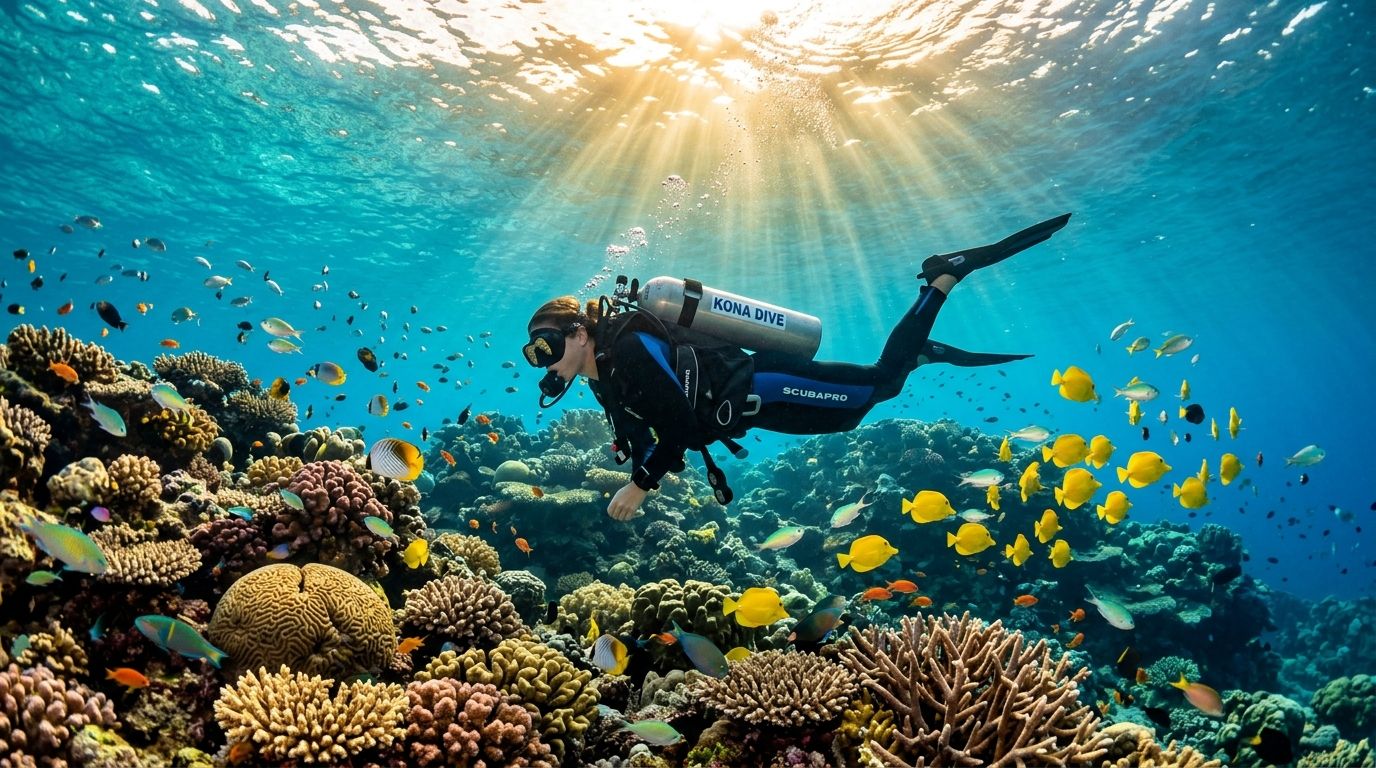
That’s why visitors who come in thinking “Hawaii diving” usually leave talking specifically about Kona. The west side of the island is where conditions, terrain, and marine life line up in a way that feels unusually reliable. If you want a quick outside overview before going deeper, Kona Snorkel Trips' Big Island scuba gives a solid broad look at why divers focus here.
What the trip feels like when it’s planned well
A good Big Island dive trip doesn’t feel rushed. It feels sequenced. You book your signature dives first, leave room for weather and energy levels, and choose sites that match your actual comfort in the water.
That matters more here than many visitors expect. Kona offers beginner-friendly reef diving, but it also offers advanced profiles, night diving, and shore sites that punish careless entries. The destination is forgiving only if the diver is honest.
Good Kona diving starts before splash time. The divers who enjoy it most usually arrive with a plan, not just a wishlist.
If you’re comparing options and trying to understand what separates this island from the rest of the state, why you should consider scuba diving Hawaii is worth reading before you lock in your itinerary.
Why so many divers build a trip around Kona
Three things stand out right away:
- The water is welcoming: Warm conditions make long dive days easier.
- The terrain has personality: Lava tubes, arches, and reefs give dives a sense of place.
- The menu is deep: You can do calm daytime reef dives, a manta night dive, and a blackwater trip all on the same vacation.
That combination is what turns a generic dive holiday into a trip people remember years later.
Why the Kona Coast Offers Unmatched Scuba Diving
On the boat ride out of Kona, the difference usually shows up before anyone hits the water. The sea state is often calmer on this side of the island, crews can reach more sites reliably, and divers spend more of the day diving instead of getting bounced around in transit.
That consistency starts with geography. Kona sits on the leeward coast, sheltered from the prevailing trade winds that can make other parts of the Big Island rougher and less predictable. For visiting divers, that usually means steadier charters, simpler entries, and fewer days lost to conditions.
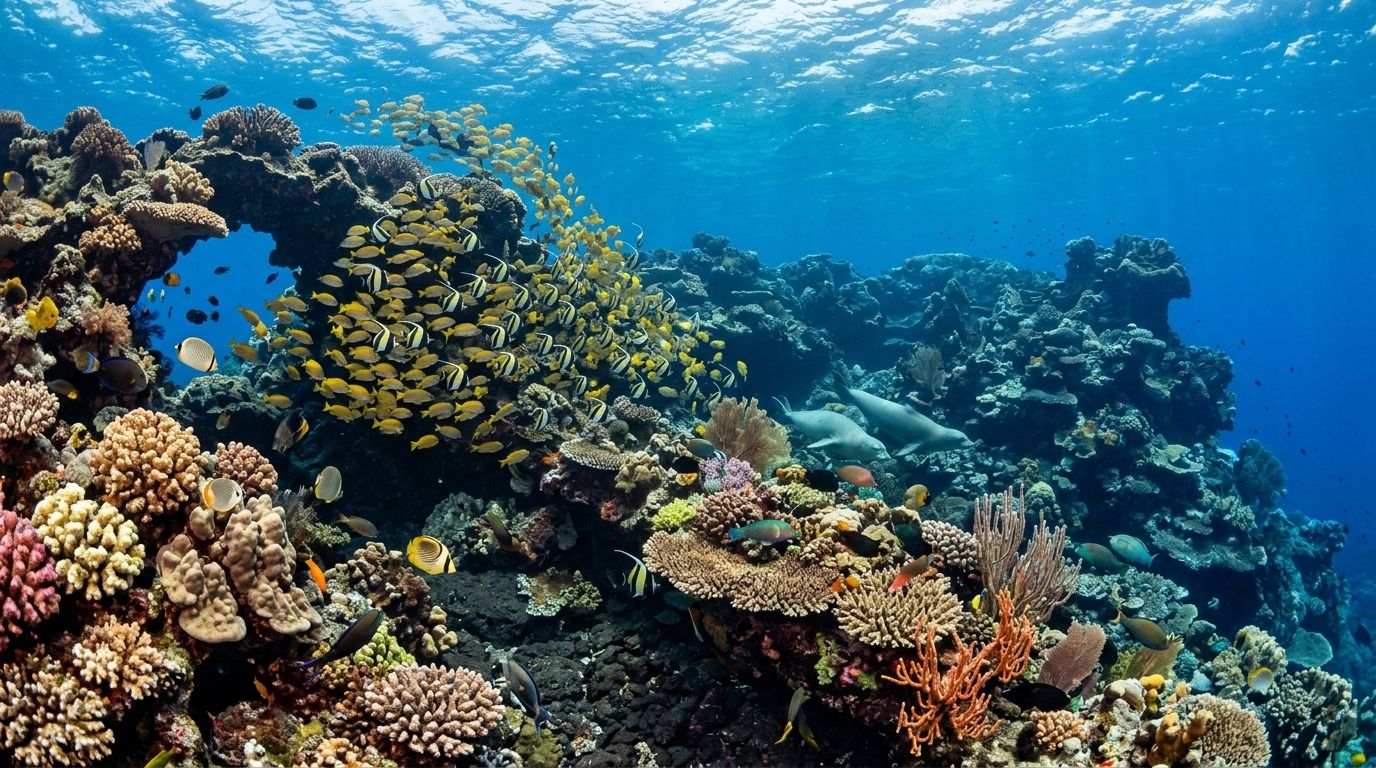
The water itself helps. Visibility is often excellent, temperatures are comfortable for long days, and many sites stay diveable through much of the year. That does not mean every day is easy. Winter swells, surge at shoreline entries, and occasional current still matter. Good Kona diving rewards divers who match the site to the conditions instead of assuming “Hawaii” means automatic calm.
Volcanic geology changes the dive
Kona’s underwater terrain feels different because it is different. Reef grows over old lava flows, ledges, collapsed tubes, and fingers of black rock that create arches, caverns, swim-throughs, and sharp topographic changes in a single profile.
That variety is more than scenery. It affects how you dive. A broad reef with open sand channels is forgiving for newer divers. A site with lava fingers, overhangs, and tighter spaces demands better buoyancy, cleaner trim, and more awareness of your fins and gauges. Divers who have logged plenty of tropical reef dives elsewhere often notice that Kona asks a little more of them in a good way.
If you want a closer explanation of how that terrain shapes local diving, what is unique about diving in Kona breaks it down well.
Marine life benefits from that habitat mix
The habitat changes fast along this coast, and the marine life changes with it. One dive may be all about structure and reef fish. On the next, divers spend more time scanning the blue for larger pelagics or slowing down to find Hawaiian endemics tucked into cracks in the lava.
As noted earlier, the Big Island supports an unusually rich mix of marine life, including species found only in Hawaii. That is one reason Kona works so well for mixed groups. Newer divers can enjoy the visibility and reef action. Experienced divers usually appreciate the terrain, the fish behavior, and the fact that no two sites feel interchangeable.
Why this matters when you choose dives
The practical advantage of Kona is not just that it is beautiful. It gives you options, and options matter when weather, skill level, and trip goals are all competing for space on the same itinerary.
| Factor | What it means for you |
|---|---|
| Leeward location | More reliable access to boat sites and fewer rough travel days |
| Warm, clear water | Longer comfortable dives and easier underwater orientation |
| Volcanic structure | More varied profiles, from relaxed reefs to more technical-feeling terrain |
| Wide site selection | Easier to match the dive to certification level, comfort, and sea conditions |
A simple rule works well here. Choose Kona for consistency. Choose each individual site for the kind of diving you do well. That is how local operators, including Kona Honu Divers, build better dive days for both new visitors and experienced repeat divers.
Kona's Signature Dives You Cannot Miss
Your first Kona night dive can go one of two ways. You drop onto the site, settle in, and spend the next 40 minutes grinning through your regulator. Or you book the wrong experience for your comfort level and spend the whole dive wishing you had asked better questions first.
That is why this part of trip planning matters. Kona has famous dives, but the smart choice depends on how you handle night conditions, open water, task loading, and boat time.
The manta ray night dive
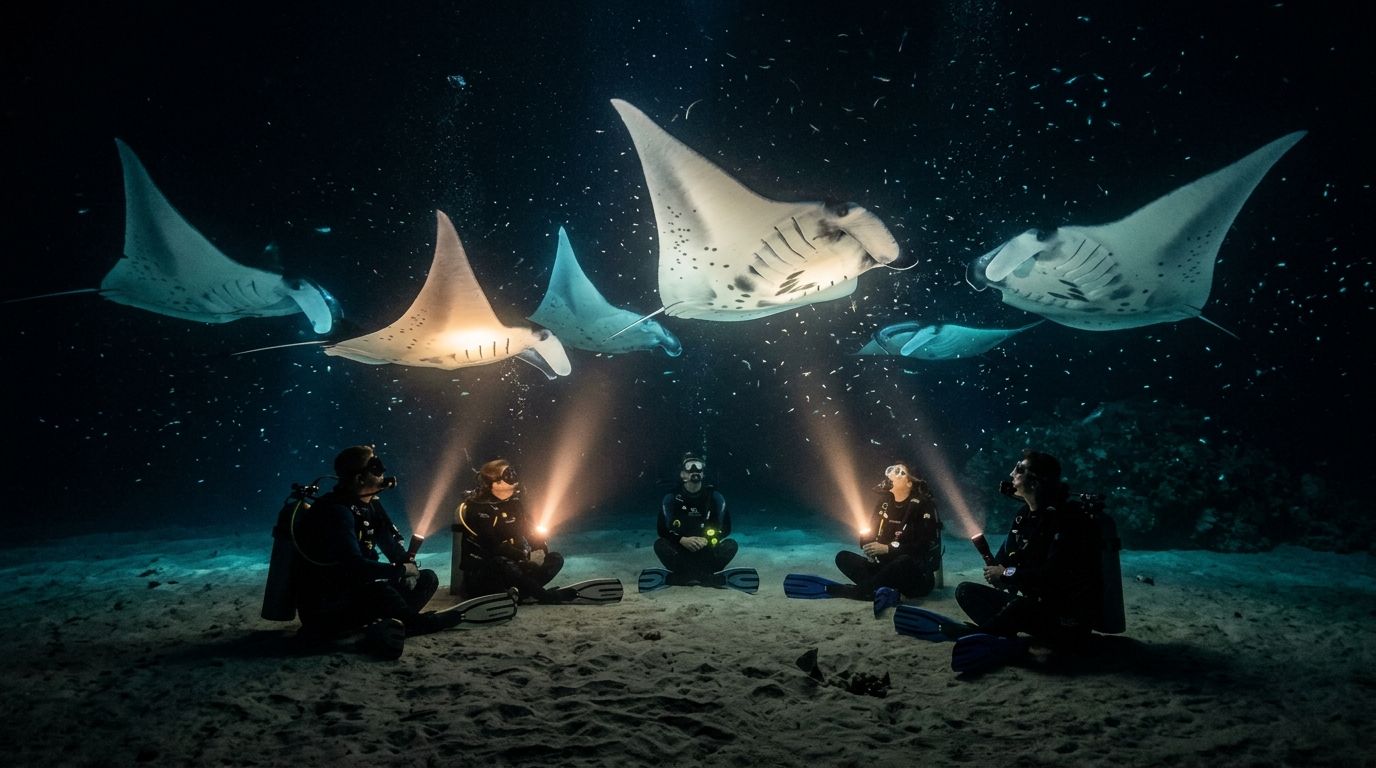
The manta night dive is the signature Big Island experience for a reason. Divers gather near the bottom around a light source while plankton collects in the beam. The mantas come to feed, looping overhead again and again, often close enough that new visitors forget to breathe slowly.
For many divers, this is the one to book first. The profile is straightforward, the payoff is obvious, and the site briefing tends to be simpler than more specialized night dives. It also works well for people who want a world-class experience without needing advanced skills beyond solid buoyancy and comfort in the dark.
Site choice still matters. Garden Eel Cove is often the stronger manta option because it is generally more protected and the layout tends to give divers a cleaner view of the action. In practical terms, that usually means an easier surface wait, less repositioning once you are down, and fewer bodies crowding the same viewing lane.
For divers and snorkelers comparing options, the dedicated manta ray dive tours page is the easiest place to see current trip details.
The blackwater dive
Blackwater is a completely different animal.
Instead of using a reef for orientation, you descend into open ocean at night and hover in the lit water column while larval fish, jellies, squid, and other pelagic life drift up from the depths. It is one of the most unusual dives offered anywhere in Hawaii, and it rewards a very specific kind of diver.
Book blackwater if you are comfortable without a visible bottom, can hold position cleanly without chasing depth, and enjoy small, strange marine life. Skip it if open water at night makes you tense, or if you still burn a lot of attention just managing buoyancy and gear. I tell newer visitors the same thing on the boat all the time. Blackwater is memorable because it is weird and beautiful, not because it sounds more advanced on paper.
If that sounds like your kind of dive, use the Blackwater Dive tour page to check whether the dates line up with the rest of your trip.
Advanced daytime diving
Kona’s marquee night dives get the attention, but experienced divers should not ignore the daytime schedule. Some of the strongest boat days are the ones built around deeper structure, lava formations, stronger fish life, and sites that are not on every first-timer’s list.
That is usually where an advanced charter earns its price. You get site selection aimed at divers who already know what they want, whether that is more demanding profiles, less traffic underwater, or a day that feels less introductory. The advanced long-range dive tour is worth a look if standard reef trips feel too basic for this trip.
If you want the bigger site picture before you choose, this overview of Big Island diving sites and trip styles does a good job laying out the range.
One practical note. Signature dives sell out faster than divers expect, especially around holidays and peak travel windows. If you are building a trip around manta, blackwater, or a premium advanced charter, protect the booking the same way you would protect flights and lodging. This guide on why travel insurance is vital is worth reading before you lock in nonrefundable plans.
Planning Your Dive Logistics Boat vs Shore
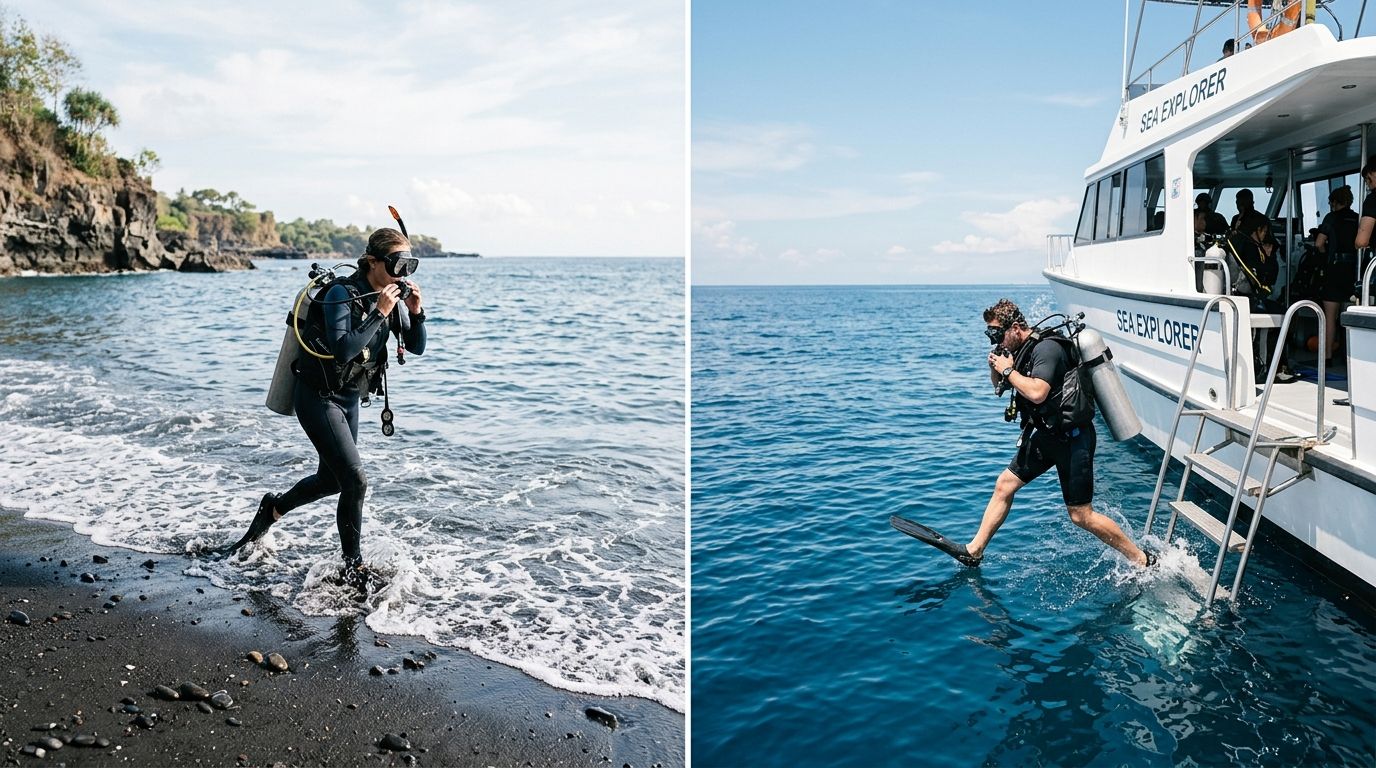
Your alarm goes off before sunrise, the ocean looks calm from the lanai, and by 9 a.m. a simple dive day can already split into two very different experiences. One diver is stepping off a boat with crew support and a site brief dialed in. Another is picking a path across wet lava, watching surge at the entry, and deciding whether the exit will still look manageable an hour later.
That choice shapes more than convenience. It affects risk, workload, and how much energy you still have for the rest of the trip. On the Big Island, that matters. Visitors often focus on which famous dive to book, but the better question is how each day should be set up.
When boat diving is the better call
For many Kona visitors, boat diving is the smart default. You get easier entries, guided site selection, crew assistance, and access to reefs and lava structure that are impractical from shore.
That support has real value in Hawaii. It saves wear on your legs and lower back, especially if you are carrying a camera, diving on consecutive days, or pairing daytime dives with a night charter later in the week. It also cuts down on judgment calls that visiting divers are not always equipped to make well, like reading a marginal surface forecast at an unfamiliar entry or deciding whether a site still works after a wind shift.
Newer divers usually get more bottom enjoyment from a boat day. Experienced divers do too, especially when the goal is efficient diving instead of solving logistics in the parking lot.
Where shore diving makes sense, and where it turns on people
Shore diving has real advantages. It gives flexible timing, lower cost, and the freedom to spend extra time at a favorite local site. If you know the entry, the conditions, and your own limits, it can be excellent.
The trade-off is responsibility. Shore diving around Kona and the Kohala Coast often means slippery lava, surge at the entry, surfacing around snorkel traffic, and making your own call on whether conditions are getting worse. That is why self-sufficient divers treat shore days as a separate skill set, not a cheaper version of boat diving.
If you want a practical local comparison before you choose, this guide to boat vs shore diving on the Big Island lays out the differences in day-to-day terms.
Side-by-side trade-offs
| Option | Works well for | Main trade-off |
|---|---|---|
| Boat diving | Visitors, photographers, families, divers who want site guidance and support | Higher cost and fixed departure times |
| Shore diving | Independent divers, repeat Hawaii visitors, short flexible outings | Harder entries, more planning, and less margin for error |
A simple rule works well here. If the goal is seeing great underwater terrain with the least friction, choose the boat. If the goal is independence, build the day like an independent dive from start to finish.
A practical shore diving checklist for Two Step and similar entries
Two Step, Puako, and similar sites reward calm decision-making. They also punish rushed setup.
- Watch the exit before you gear up: A shore dive is only as good as its easiest exit. Spend a few minutes studying how people are getting out, not just in.
- Enter with less in your hands: Loose cameras, fins, and dangling accessories create problems on wet lava. Keep the walk simple.
- Set a real buddy plan: Agree on route, max depth, turn pressure, surface procedure, and what happens if one diver calls the dive early.
- Check the site at water level: Conditions can look friendlier from the parking area than they do at the entry.
- Call it early if the setup feels off: Bad footing, surge, crowding, or confusion at the waterline are enough reason to skip the dive.
I have seen plenty of otherwise capable divers get into trouble before they ever descended. Most of those problems started with a rushed entry and the assumption that a famous shore site must be an easy one.
Logistics people forget until they need them
Independent shore divers should plan the after-problem phase as carefully as the dive itself. Know the nearest simple exit. Decide who has the keys. Carry water and a basic first-aid setup in the car. If one diver is hurt or exhausted, the other should already know who stays, who calls, and where cell service is strongest.
Trip protection belongs in that same planning bucket. Dive vacations stack weather, boats, rental cars, and specialty charters in a hurry, so it is smart to review why travel insurance is vital before you lock in nonrefundable plans.
Best Seasons Conditions and Packing Essentials
A diver who shows up in Kona with the right expectations usually has a much better week. Conditions can be calm, warm, and forgiving, but they still change enough by season, site, and time of day that planning matters.
Kona is diveable all year. The practical result is simple. Pick your travel window based on what kind of diving you want to do, then pack for the boat rides, the sun, and the possibility that one standout dive turns into three.
Best timing for most divers
For many visiting divers, late summer into early fall is the easiest window to work with. August through October often brings calmer overall conditions on the Kona coast, which helps newer divers settle in and gives experienced divers more flexibility to stack reef dives, manta nights, and longer boat days without getting worn down.
Winter can still be excellent. It just asks for more flexibility. Boat schedules, surface conditions, and comfort between dives matter more when the wind picks up or the ocean gets bouncy. Divers who only have a few days on island should keep some margin in the schedule instead of building the whole trip around one exact day.
If you want help matching the season to the type of diving you plan to do, this guide to diving the Big Island of Hawaii with Kona Honu Divers lays out the main options clearly.
What changing reef conditions mean underwater
Reef health around Hawaii is changing, and good trip planning should acknowledge that. According to Scuba Diving magazine’s Hawaii guide, recent marine heat waves off Kona caused bleaching on some reefs.
That does not erase Kona’s value as a dive destination. It does mean smart operators adjust site selection, and smart divers arrive ready to appreciate what a site offers that day instead of chasing an outdated mental picture from an old photo set. Some sites still shine for topography, fish life, or night activity even if coral cover looks different than it did a few years ago.
Good local briefings matter here. They help divers understand what they are seeing instead of assuming a reef is either perfect or ruined.
Packing that works in Kona
Packing for Big Island diving is straightforward if you focus on comfort and reliability.
- Bring the gear you trust most: Mask, computer, certification card, and exposure protection you already know works for you.
- Pack for the boat, not just the dive: Sun shirt, hat, towel, water bottle, and a dry change of clothes make a bigger difference than many visitors expect.
- Keep night-dive gear simple: Use lights and clips you can handle by feel. If your setup is cluttered in daylight, it gets worse at night.
- Add a few shore-specific items: Booties, gloves only if permitted and appropriate for the activity, and a small save-a-dive kit help with rough lava entries and minor gear issues.
One small but useful note from years of briefing visiting divers. People often overpack accessories and underpack shade, hydration, and dry layers. The second group is what they ask for on the ride home.
Seasickness prep for boat days
If you are even mildly prone to motion sickness, prepare before you arrive at the harbor. Manta and blackwater dives are poor times to test whether you can tough it out.
Use the remedy that has worked for you before, whether that is medication, acupressure bands, or ginger. Test it on a low-stakes day at home if you have not used it recently. Also eat lightly, stay hydrated, and avoid starting the morning already tired. Those habits do as much work as the product itself for many divers.
Your Adventure with Kona Honu Divers
A well-built Big Island dive trip usually mixes a couple of standard reef mornings with one or two signature experiences at night. That’s the format that lets divers see Kona’s range without overloading every day.
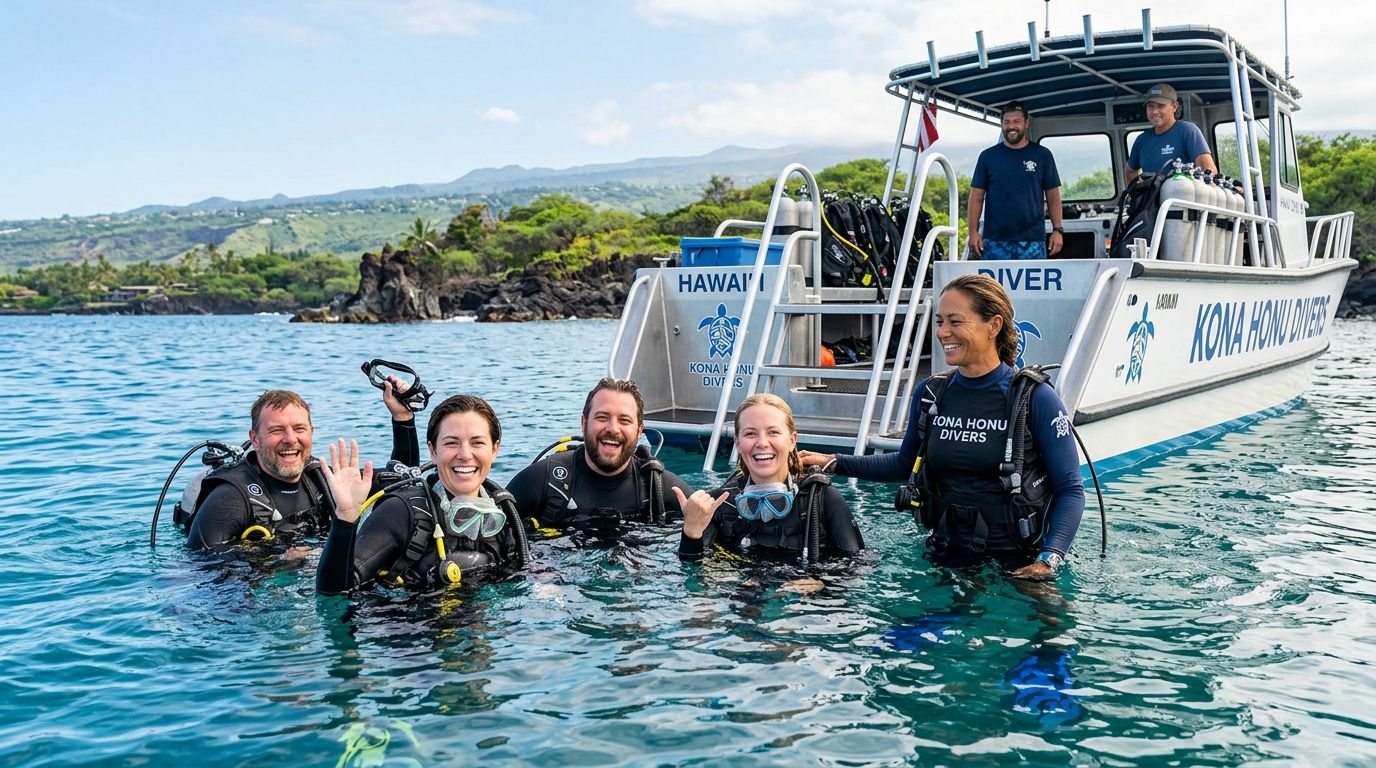
One practical way to do that is through Kona Honu Divers’ tour lineup, which includes morning reef dives, manta trips, and blackwater charters from Kona. For certified divers, the operator also offers free nitrox, and the company states it has over 200 years of combined industry experience across the crew.
How to build a smart itinerary
A few combinations work especially well:
- Short trip approach: One morning two-tank reef dive, one manta night.
- Experienced diver plan: Day charters first, blackwater later once buoyancy and weighting are dialed in.
- Mixed group strategy: Divers book scuba days while non-diving family members plan separate ocean activities or meet up after the boat returns.
What doesn’t work as well is stacking your hardest or most unusual dives back-to-back when you’re jet-lagged, under-hydrated, or still sorting out rental gear. Kona rewards divers who ramp into the week.
What a good operation solves
A solid Kona operator isn’t just selling seat space on a boat. Its value is smoother sequencing, local site judgment, and support when conditions or diver comfort change. That’s especially important for visitors who don’t know which days should be earmarked for advanced dives, which sites are forgiving, or when to skip a shore entry entirely.
If you want a closer look at what a guided Kona week can look like, dive the Big Island of Hawaii with Kona Honu Divers gives a more detailed picture.
Frequently Asked Questions for Big Island Divers
A lot of Big Island dive questions sound simple until you are standing on the dock, looking at the ocean, and trying to decide what is smart for your actual experience level. That is where local guidance matters. Conditions, entries, and site selection change the right answer.
What certification level do I need for Kona diving
Open Water divers can have a very good trip here. The key is choosing dives that fit your recent experience, air use, and comfort in current. Easy reef boat dives off Kona are realistic for newer certified divers, especially with a solid briefing and a guide who knows how to pace the group.
More demanding dives call for more skill. Blackwater, deeper profiles, and some shore dives with uneven lava entries are better for divers with controlled buoyancy, calm ascent habits, and enough recent diving to manage task loading without getting behind.
Are there sharks in Hawaii and are they dangerous
Yes. Sharks belong here, and seeing one is often a highlight.
In normal recreational diving, shark encounters around Kona are usually calm and uneventful. The right response is simple. Stay with your group, keep your movements controlled, and follow the divemaster’s direction. Problems usually start when divers panic, kick hard, or separate from the group to chase a photo.
Can my non-diving family come on the boat
Sometimes, but it depends on the operator and the specific trip.
From a practical standpoint, mixed groups often enjoy the vacation more when the divers go dive and the non-divers do something they want to do. A long scuba boat morning can feel very long to someone who is not getting in the water. Ask before booking, especially for manta trips, private charters, or schedules built around divers only.
How do I avoid seasickness on a Kona dive boat
Start the plan the night before, not at the harbor. Hydrate well, get decent sleep, and avoid a heavy breakfast. Some divers do better with motion sickness medication, some prefer ginger, and some use acupressure bands. As noted earlier, pick your method in advance and test it before an important dive day if you have never used it.
The mistake I see most often is waiting until the boat is already bouncing outside the harbor. By then, prevention is harder and the day can unravel fast.
Is shore diving a good idea for families and beginners
It can be, but only if the site is forgiving that day. Shore diving on the Big Island is not just about underwater conditions. Entry and exit matter just as much. Lava rock, surge, slippery footing, and surf timing can turn a simple plan into a stressful one.
For many visitors, guided boat diving is the cleaner first step. It removes the hardest part, which is getting in and out safely. Shore dives make more sense after you have seen how local conditions behave or when you are diving with someone who knows the site well.
If you’re ready to turn all this into an actual dive plan, start with Kona Honu Divers. Look at your trip dates, choose the signature dives first, and build the rest of the week around the conditions and your real comfort level in the water.