
You've found the right flight, reserved a few days on the Kona coast, and now you're trying to solve the practical questions: which dive fits your certification, how should you handle the manta night dive, and how much space should you leave before flying or driving to altitude? Big Island divers in Kona, Hawaii get extraordinary marine encounters, but the best trip depends on planning the ordinary details carefully.
Kona combines volcanic underwater terrain, reef diving, unusual night experiences, and a well-established visitor economy. It also demands realistic expectations. Conditions vary, coral health isn't uniform, shore entries can become hazardous, and advanced dives require more than a certification card. The guide below focuses on the decisions that make a Kona itinerary safer, more comfortable, and more rewarding.
The Magic of Diving with Manta Rays in Kona
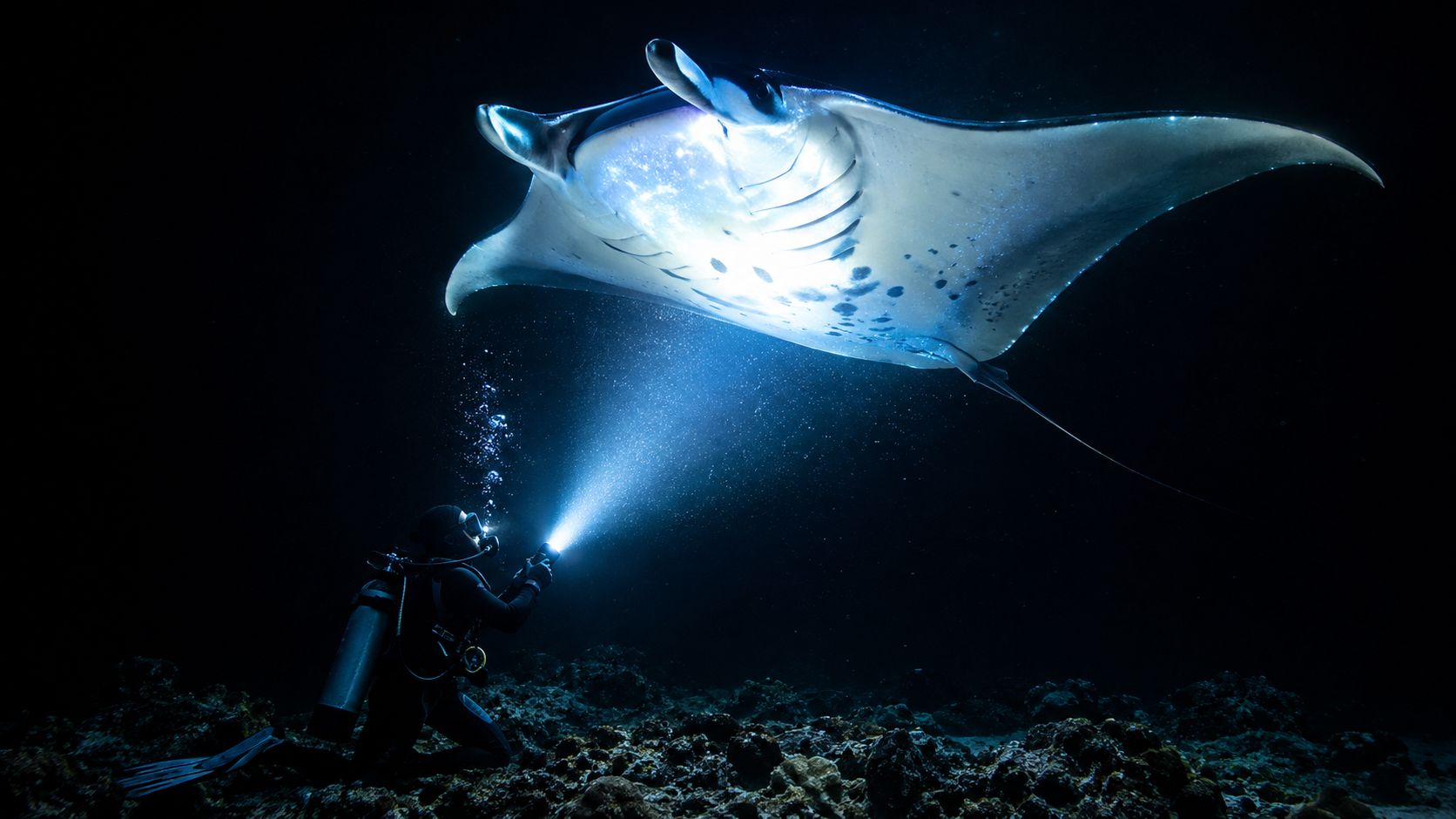
After sunset, the boat settles over the site and the Pacific turns nearly black. Powerful lights draw plankton into the water column. Divers hold position at the viewing area while manta rays sweep through the beams, banking close enough to reveal their cephalic fins and pale undersides.
The encounter depends on stillness, not pursuit. Keep your hands to yourself, maintain neutral buoyancy, and allow each ray to choose its route. A steady diver becomes a quiet observer as the animals circle, turn, vanish into the dark, and return.
Why Kona's mantas are unusually well documented
Kona's reef mantas are notable for strong site fidelity and unusually detailed individual history. Researchers use photographs of each animal's markings to recognize returning rays, much like identifying people by fingerprints. That record helps explain why a single night's sighting belongs to a longer local story.
A scientific study covering observations from January 1, 2009, through December 31, 2014, recorded 25,444 sightings involving 118 individually identified reef manta rays at Manta Heaven and Manta Village (NOAA scientific study). Manta Heaven accounted for 19,841 observations of 111 individuals, while Manta Village accounted for 5,603 observations of 71 individuals.
Across both sites, researchers recorded 66 males and 52 females. The study found that the 1.27-to-1 male-to-female ratio was not statistically different from an even distribution. Several mantas appeared repeatedly during the observation period, supporting the view that some animals remain long-term residents of the Kona coast rather than passing through once.
What divers should expect
A manta dive is a wildlife encounter, not a scheduled performance. Rays may arrive early, late, or not at all, depending on conditions and food availability. A responsible operator explains that uncertainty before departure, so guests can make an informed booking rather than expecting a guaranteed show.
Operational details affect comfort as much as marine life. Ask how the boat handles the briefing, where divers will wait, what happens if conditions change, and whether the plan suits your certification and confidence in night water. If you are prone to seasickness, discuss prevention before boarding, since discomfort can make it harder to control buoyancy and follow the group's positioning rules.
Kona's identification history extends further back than many visitors expect. Systematic manta identification in Kailua-Kona began in 1991 through the Manta Pacific Research Foundation, building on photographic identification work that traced the first recognized local manta, “Lefty,” to 1979.
Read this Kona manta ray night dive guide before booking. It can help you compare the experience with your training, plan seasickness precautions, and leave suitable time after diving before flying or traveling to altitude. Choose an operator that provides clear rules, a thorough briefing, and time to settle in before the mantas move overhead.
Exploring Dive Types and Premier Sites
Kona's dive menu rewards honest self-assessment. A daytime reef dive, a manta night dive, and a blackwater dive may all involve scuba equipment, but they create very different demands. Visibility, lighting, depth, entry procedures, current, and the amount of open-water exposure can change the character of the day completely.
Match the trip to the experience
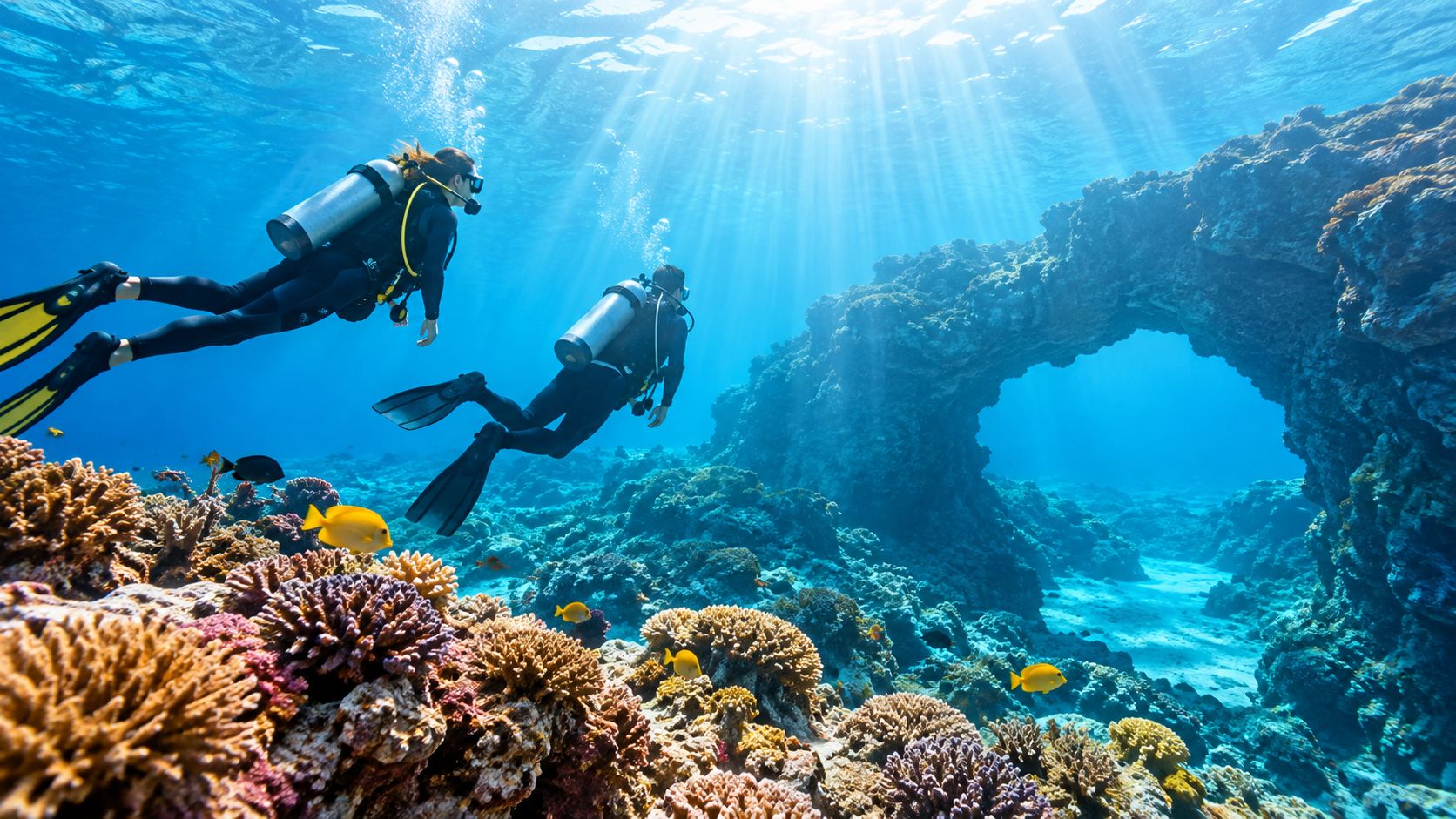
Daytime reef dives suit divers who want volcanic scenery, coral habitat, tropical fish, and a conventional two-dive rhythm. Kona's lava formations can create arches, walls, ledges, and swim-through-style terrain, but the guide should decide whether a feature is appropriate for your training and comfort. Don't enter an overhead environment because it looks accessible from outside.
Manta night dives emphasize buoyancy, stillness, and wildlife etiquette. The lights attract plankton, and the mantas do the rest. Garden Eel Cove is often considered the superior choice for a manta tour because its protected location, better viewing area, and surrounding reefs can make the encounter more comfortable and visually productive than less suitable sites.
A two-tank manta dive and snorkel tour can work well for groups with different experience levels, provided every participant understands whether they're diving, snorkeling, or remaining on the boat.
Specialized night and advanced options
Blackwater diving takes place offshore after dark, where divers watch for small pelagic organisms that rise from deeper water. The attraction is macro life rather than a reef panorama. You'll need excellent buoyancy, comfort in open water, and the ability to manage equipment and orientation with fewer visual references. Review the Kona Blackwater Dive description carefully before booking.
Advanced long-range trips are a different category again. They may involve deeper sites, longer boat travel, more demanding profiles, or conditions that leave fewer easy alternatives if a diver becomes uncomfortable. Certification alone doesn't prove readiness. Ask about recent depth experience, gas planning, surface conditions, and the guide-to-diver arrangement before reserving an advanced charter. Experienced divers can review advanced long-range dive options.
For site selection, use this guide to Big Island dive sites and planning tips. It's more useful to choose a site that matches your ability and the day's conditions than to chase a famous name.
Plan for a changing reef
Older trip reports often describe Kona reefs as uniformly pristine. Current evidence calls for more nuance. A 2026 U.S. Geological Survey assessment comparing early-2000s imagery with 2022 surveys found that live-coral cover declined across three Kona-coast national parks. Areas classified as non-coral habitat increased by roughly 25% overall and by nearly 90% at Puʻuhonua o Hōnaunau, while the assessment found little relationship between depth and coral-cover change (USGS Kona reef assessment).
That doesn't make Kona diving unworthy. It means divers should look closely and interpret the reef fairly. Healthy coral, rubble, macroalgae, and recovery can appear in the same area, and seasonal marine heatwaves, runoff, storms, and development can influence what you see.
Certifications and Dive Prerequisites
Start with the dive you want, then work backward to the qualification it requires. A certified recreational diver joining a standard reef charter faces a different preparation problem from a newly certified diver considering a night or advanced trip.
Choose the right starting point
An Open Water certification generally establishes the foundation for recreational diving. You learn equipment use, buoyancy, basic emergency procedures, and how to plan within recreational limits. If you haven't completed certification, an introductory experience may allow you to try scuba under close supervision, but it isn't the same as holding an independent-diver qualification.
Use this Open Water certification information to understand the course path and ask the operator which activities are available to beginners. Don't book an advanced charter first and hope the crew can convert it into a beginner experience.
Think beyond the card
A certification card doesn't tell the crew whether you've dived recently, whether you're comfortable at night, or how you respond to current and surge. Be ready to discuss:
- Recent experience: Tell the operator when you last dived and how many dives you've completed recently.
- Special conditions: Mention whether you've done night diving, deep diving, boat diving, or open-water drift-style profiles.
- Health and fitness: Answer medical screening questions accurately and disclose relevant conditions or medications.
- Equipment familiarity: If you're renting, arrive early enough to check fit, understand the inflation system, and confirm that your computer settings are correct.
- Personal limits: A diver who feels anxious, cold, seasick, or overloaded should tell the guide before entering the water.
Advanced Open Water training can support deeper or more specialized recreational experiences, but it doesn't automatically prepare you for every long-range or challenging profile. Ask what the specific charter demands, then compare that with your actual comfort and recent practice.
Planning Your Diving Itinerary and Costs
A Kona arrival can make trip planning easier, but it also creates a temptation to schedule every day tightly. In 2015, Hawaii Island received 1,503,547 visitors arriving by air, a 3.8% increase over 2014 and a 12.3% increase compared with 2011. Approximately 1.28 million arrived through Kona International Airport, compared with just under 549,000 through Hilo International Airport (Hawaii Tribune-Herald tourism data).
Use that convenient access to build in flexibility. Schedule the dive most affected by weather early enough to allow a replacement day, and leave the day after a demanding night dive relatively open. A strong itinerary has breathing room, much like a dive plan includes reserve gas.
Build the itinerary around flying
Available guidance recommends waiting at least 12 hours after one no-decompression dive and 18 hours after multiple dives or diving on multiple days before flying (Big Island diving safety guidance). Treat these intervals as the minimum framework for planning, not as spare time to fill with another activity.
A practical sequence is:
- Schedule repetitive dives earlier in the vacation instead of immediately before departure.
- Reserve the final day for land activities at low elevation or an unhurried transfer.
- Check altitude implications before pairing diving with a mountain excursion.
- Keep a rescheduling option if swell, surge, or entry conditions worsen.
- Plan the manta night dive for an evening followed by sleep, rather than an early mountain trip or flight.
Practical rule: A full itinerary works only when you can complete it without pressuring the crew to accept a profile or entry that does not suit your preparation.
Understand what you're paying for
Prices vary according to boat type, trip duration, equipment rental, gas choice, certification requirements, and whether the charter reaches a specialized site. Before paying, ask whether the quoted amount includes equipment, tanks, lights, guide service, food, and enriched air. Package offers and early-diver discounts may be available, so confirm the eligibility rules for the specific trip.
| Tour Type | Best For | Depth Range | Highlight |
|---|---|---|---|
| Daytime reef dive | Certified recreational divers | Operator and site dependent | Lava formations, reef habitat, and daytime marine life |
| Manta night dive | Certified divers and suitable introductory participants | Operator and site dependent | Plankton-attracting lights and reef mantas |
| Blackwater dive | Experienced, buoyancy-confident divers | Open-water profile set by operator | Pelagic organisms after dark |
| Advanced long-range trip | Experienced divers with suitable training | Deeper or more demanding profiles | Remote sites and specialized underwater terrain |
Nitrox may help on repetitive recreational profiles, but it does not replace depth and exposure planning. The mixture contains more oxygen and less nitrogen, which can reduce nitrogen loading at a given depth. That higher oxygen content also lowers the maximum operating depth because oxygen partial pressure increases. A NOAA technical source describes oxygen-toxicity limits beyond approximately 50 feet of seawater and presents nitrox as a specialized mixture requiring controlled exposure (NOAA nitrox guidance).
Before the dive, verify the cylinder's analyzed oxygen percentage, calculate the maximum operating depth, set your computer to the measured mix, and follow the most conservative applicable limit.
Why Choose Kona Honu Divers
When comparing operators, focus on operational fit rather than a slogan. A useful provider should explain the certification requirements, identify what the price includes, maintain its boats and rental equipment, and give divers a clear plan for changing conditions.
Kona Honu Divers offers guided Kona charters that include daytime reef dives, manta ray night dives, blackwater diving, advanced two-tank trips, and certification courses. Its published service model also includes custom dive boats, maintained gear, and free nitrox for certified divers, which can simplify gas planning for repetitive recreational profiles. Review the Kona Honu Divers diving team and compare the crew's experience and communication style with what your itinerary requires.
What to verify before booking
A good pre-trip conversation should answer practical questions:
- Boat layout: Ask about shaded areas, gear storage, boarding, and exit procedures.
- Trip composition: Confirm whether the boat is dedicated to scuba divers or combines multiple activities.
- Gas and equipment: Verify nitrox availability, cylinder analysis procedures, rental inclusions, and computer requirements.
- Skill matching: Ask whether the guide groups divers by certification, experience, and comfort.
- Contingencies: Find out how the operator handles poor visibility, swell, unsafe entries, or a change of site.
The company's combined crew experience is described as over 200 years, but that figure should be treated as one part of your evaluation, not a substitute for asking specific safety questions. The right operator will welcome those questions because clear expectations help both divers and crew.
The strongest booking choice is the one that matches your experience, desired atmosphere, and tolerance for complexity. A beginner may value patient instruction and simple logistics, while an experienced photographer may care more about group size, site flexibility, and enough time to compose images without disturbing marine life.
Essential Gear and Seasickness Tips
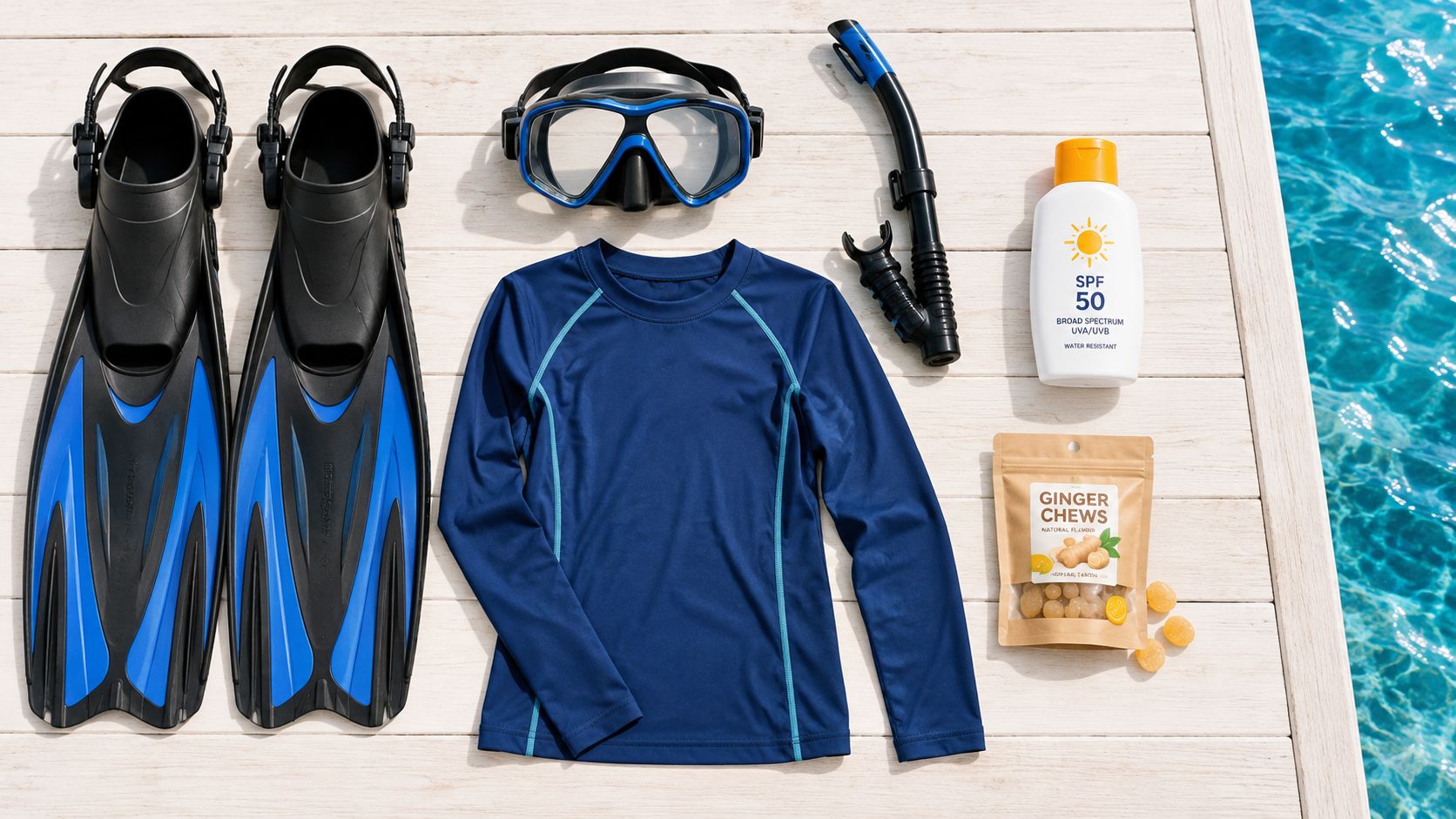
A Kona dive day can start before sunrise, so pack for the boat, the water, and the trip home. Bring a well-fitting mask, rash guard or exposure suit, reef-safe sun protection, water, a towel, dry clothes, and any required certification or medical documents. If you use a personal dive computer, bring its charger or spare-battery plan, and confirm that you can change its gas settings.
Reduce seasickness before boarding
Boat design affects how much you feel the ocean's motion. A wider-beam boat is generally more stable. Divers Alert Network recommends avoiding single-hulled sailboats when possible and choosing dive sites relatively close to shore (DAN seasickness prevention guidance).
Your routine matters as well. Avoid alcohol and heavy meals the day before, eat a light meal 45–60 minutes before boarding, and check how long an antiemetic needs to work and how long its effects last. For a fuller breakdown of prevention and treatment options, read this guide to how to avoid sea sickness on a Kona dive boat.
Do not test a medication for the first time immediately before diving. Try it on a non-diving day and ask a qualified healthcare professional whether it suits you and your planned activity.
Possible products include a Ship-EEZ Seasickness Patch, Dramamine pills, Bonine pills, Sea Band wristbands, and ginger chews. They work differently, and one traveler may experience drowsiness or other effects that another does not.
Protect your judgment underwater
Nitrogen narcosis while breathing air or nitrox is generally first felt around 80–100 feet, according to Divers Alert Network (DAN nitrogen narcosis guidance). Possible effects include an intoxicated feeling, impaired judgment, poor concentration, drowsiness, overconfidence, euphoria, fear, or insecurity. Depth, fatigue, cold water, alcohol before a dive, and personal susceptibility can increase the likelihood.
If you feel impaired, signal your buddy and ascend in a controlled manner with your guide's assistance. Your certification does not override the depth, gas, or environmental limits in the dive plan.
Hawaii also sets boundaries for dive flags. In ocean waters, a diver may not surface more than 100 feet from the flag, except in an emergency. In navigable streams, the limit is 50 feet, and the flag may be displayed only while diving is in progress (Hawaii dive-flag regulations).
Final Preparations and Booking
Your Kona plan should now have four parts: a dive matched to your certification, a realistic view of reef conditions, a conservative schedule around flights and altitude, and a seasickness and equipment strategy. If Kealakekua Bay is on your itinerary, remember that its conservation rules prohibit taking or injuring marine life, removing or altering coral or geological features, and feeding or attempting to feed fish (Kealakekua Bay regulations).
Book the signature experience with enough flexibility to respond to weather and ocean conditions. Kona's manta encounters, reef scenery, and specialized night dives reward divers who arrive prepared rather than rushed.
Kona Honu Divers offers guided reef, manta ray, blackwater, advanced, and certification experiences for divers planning a Big Island itinerary. Visit Kona Honu Divers to compare the available trips, confirm prerequisites, and reserve a dive that fits your training and travel schedule.