
You're probably in one of two places right now. You've either already booked a Big Island trip and you're trying to decide which dives are worth your limited vacation days, or you're staring at photos of Kona water that looks almost unreal and wondering if it really dives that well.
It does. But the difference between a good trip and a frustrating one usually comes down to matching the dive to your skill, comfort, and expectations.
Welcome to the Underwater World of the Big Island
You back-roll off the boat, look down, and the reef does not slope away the way many tropical reefs do. It drops into lava shelves, arches, and old flow lines that give the whole dive a different feel from the first minute. The water is often clear enough to read the terrain fast, which helps, but its primary appeal is how much the island asks you to choose well. A calm, shallow reef can feel easy and reassuring. A manta night dive, blackwater drift, or deeper lava tube profile asks for a different kind of comfort and preparation.
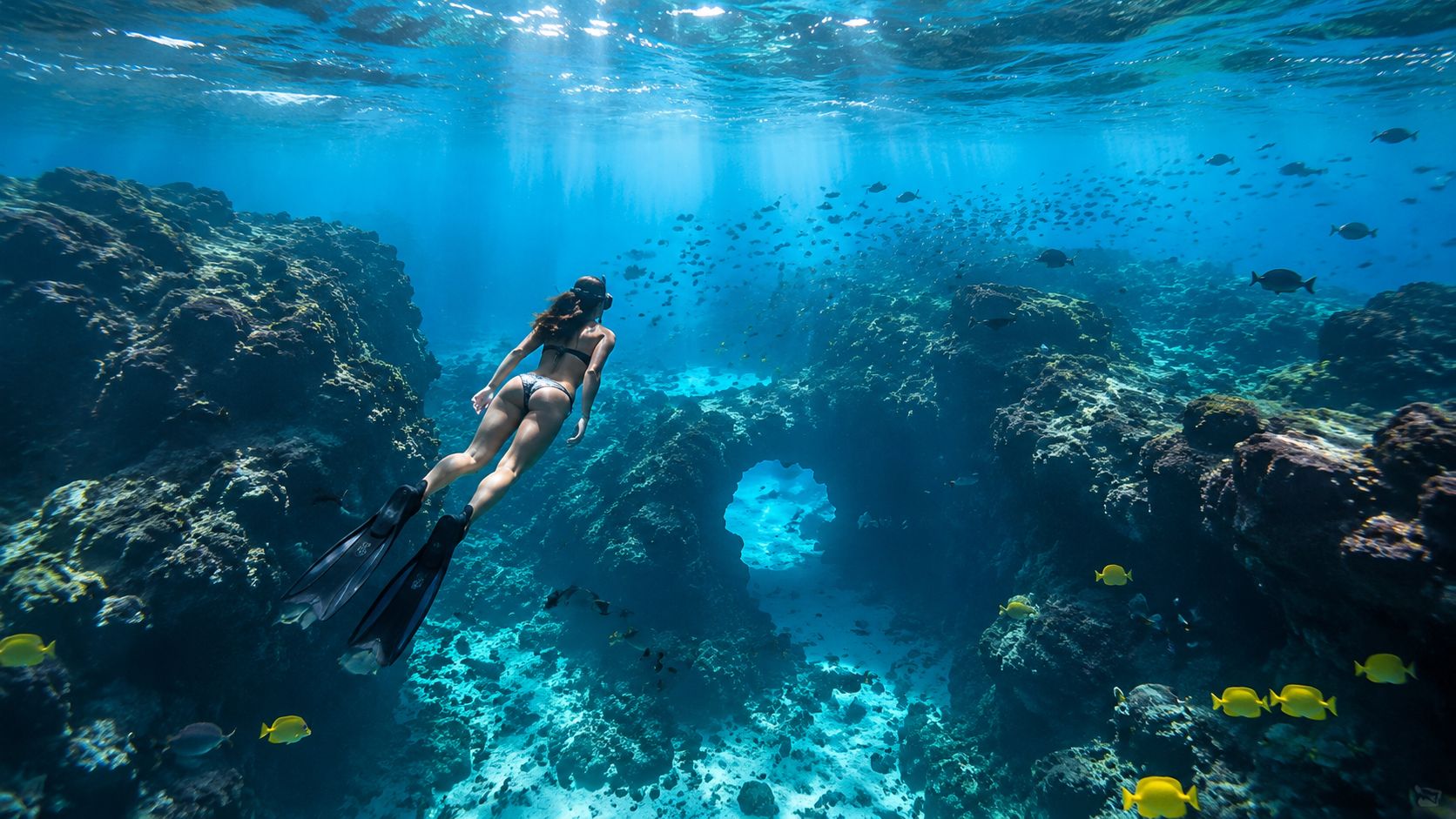
That is what makes diving Big Island so rewarding. You are not picking from a long list of random sites. You are matching visibility, depth, current, entry style, time of day, and your own headspace to the right dive on the right day. Divers who do that well usually come out of Kona talking about how relaxed they felt underwater, not just what they saw.
The island offers huge range. You can spend one morning on a protected reef with turtles, endemic fish, and easy navigation, then choose a night dive built around close animal encounters, then step up to more technical-feeling profiles once your buoyancy, gas use, and situational awareness are dialed in. That mix is part of what makes diving in Kona so distinctive.
A few practical realities shape a good trip:
- Variety matters more than bragging rights: A diver with limited recent experience often gets more out of a clean, comfortable reef dive than a famous site that feels rushed or stressful.
- The manta dive is not the same as a daytime reef dive: It is usually stationary, simple from a navigation standpoint, and mentally intense for some divers because of darkness, surface conditions, and the anticipation.
- Volcanic topography changes the experience: Lava structure creates dramatic scenery, but it also affects surge, entries, exits, and how a site feels if you are still working on buoyancy control.
- Conditions can be friendly and still demand judgment: Warm water and clear visibility lower the workload, but seasickness, equalization trouble, and anxiety can still derail a dive if you ignore them.
Good guidance fixes that. Divers need more than site names and pretty photos. They need to know why Garden Eel Cove suits one kind of diver, why another site makes more sense after a checkout day, and how to prepare physically and mentally so they spend the dive looking outward instead of managing preventable stress.
Why Kona Offers Unrivaled Diving Conditions
You feel Kona's advantage before you even giant stride in. On many mornings the boat ride is short, the surface is manageable, and once you descend the reef comes into view fast instead of appearing as a blur at the last minute. That changes how a dive feels, especially for newer divers, photographers, and anyone who wants to spend less energy settling in and more energy observing the reef.
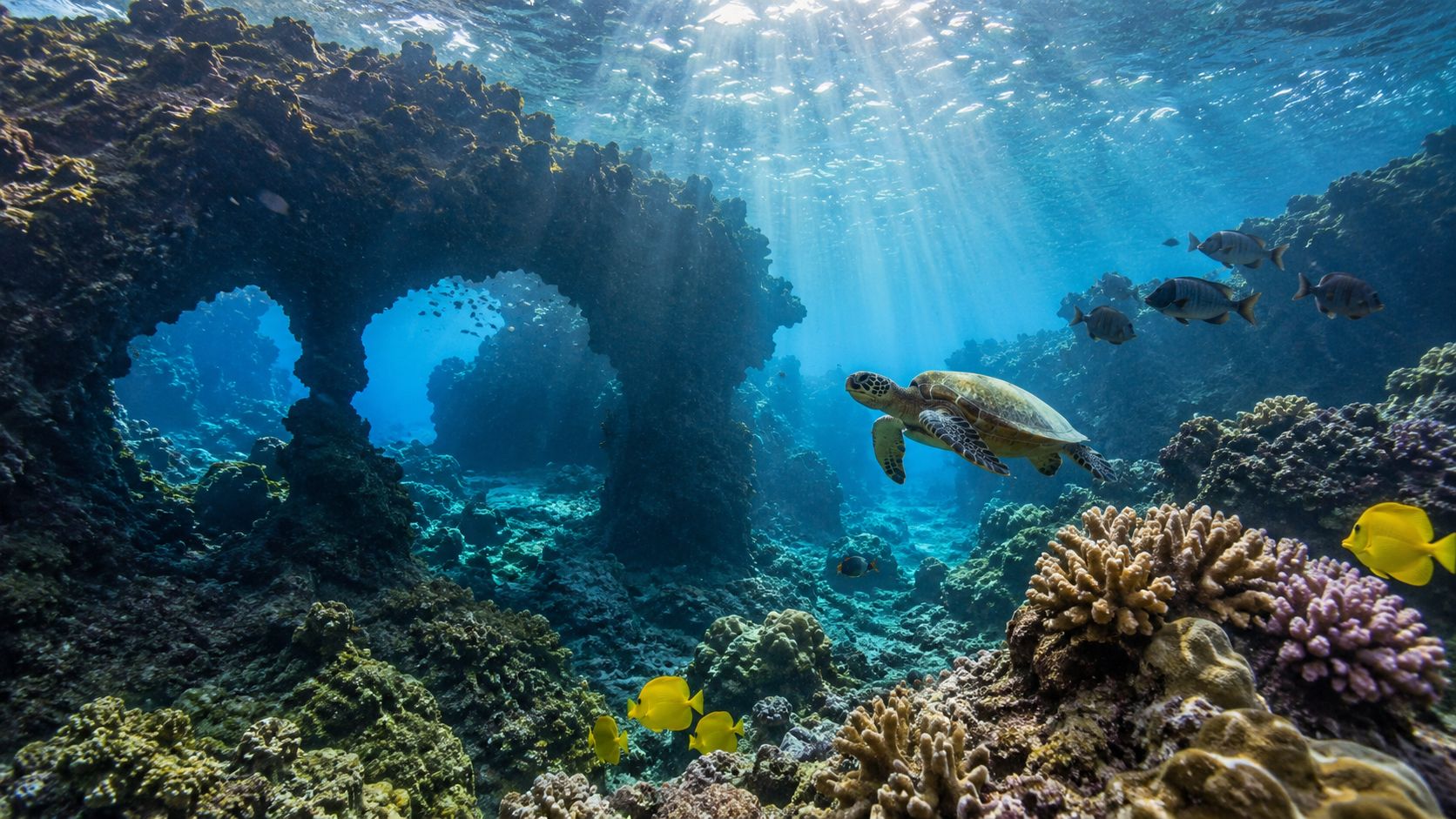
Kona gets that consistency from geography. The west side sits in the lee of the island, so it is protected from a lot of the wind and swell that rough up other coastlines. Add clear offshore water, young volcanic terrain, and relatively limited sediment runoff, and you get the combination divers care about most: good visibility, dependable access, and sites that stay diveable across a wide range of trip dates. That's a big part of what makes Kona diving so distinctive.
Why the visibility is so good
A lot of tropical destinations have warm water. Fewer have warm water that regularly looks this clean.
On the Kona coast, there are fewer muddy drainages feeding sediment into the ocean, and the lava shoreline does not break down into the kind of fine silt that hangs in the water column for long. Local operators also note that visibility often exceeds 100 feet at the right sites and in the right conditions, which is one reason advanced charters and photography dives are so rewarding.
That pays off in practical ways:
- Descents are less stressful: Seeing the bottom and your group early helps divers control breathing and settle buoyancy faster.
- Reef reading gets easier: You can pick out ledges, fingers of lava, sandy channels, and your ascent reference without working as hard.
- Marine life stands out sooner: Turtles on the edge of the reef, eels tucked into cracks, and small endemic fish are easier to spot before you drift past them.
- Photography improves: Cleaner water usually means better color, stronger contrast, and fewer backscatter problems.
Why the underwater terrain keeps dives interesting
Kona is not a coast of flat, forgettable reef. Lava built the structure, and lava gives these dives their character.
You get arches, caverns, hard drop-offs, broken shelves, and long folds in the reef where fish stack up in the current. One site may be ideal for a relaxed checkout-style dive with simple contours and easy orientation. Another may ask for sharper buoyancy control because the terrain invites you to look into holes, under overhangs, and along walls while managing depth carefully. That variety is useful. It lets divers match the site to their comfort level instead of forcing every diver into the same profile.
The marine life benefits from that structure too. Crevices shelter eels, octopus, shrimp, and nudibranchs. Cleaning stations draw in larger animals. Blue water sits close to shore, so pelagic visitors can show up without a long run offshore.
Clear water helps. Volcanic structure is what makes the dive memorable from descent to ascent.
If you are deciding where to base a Big Island dive trip, Kona gives you the widest margin for a good day in the water. Conditions are often forgiving, but the diving still has depth, texture, and enough site variety to keep both newer and experienced divers engaged.
The Legendary Kona Manta Ray Night Dive
You back-roll into black water, look down into a circle of dive lights, and within minutes a manta ray sweeps overhead close enough to feel the pressure wave from its wings. For many divers, this is the dive they remember most from Kona, not because it is extreme, but because the setup lets you watch a wild animal feed calmly and repeatedly at close range.
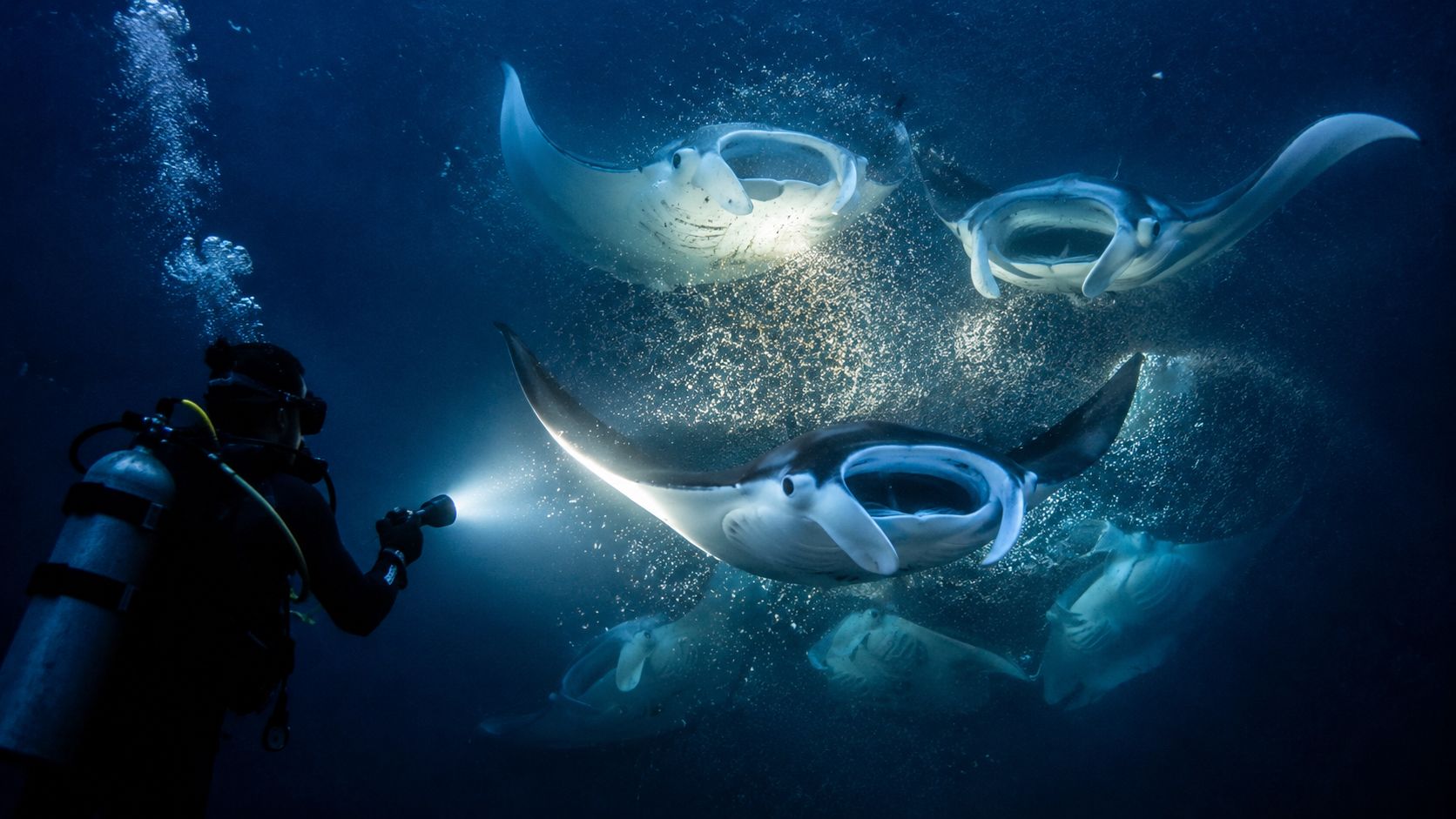
The format is straightforward. Divers descend to a fixed viewing area, settle in, and aim lights upward so plankton gathers in the beam. The mantas follow the food, then loop through the light column in slow passes and barrel rolls. If you want the basic rundown before choosing between scuba and snorkel, the Kona manta ray night swim overview explains how the experience is typically set up.
Why Garden Eel Cove is the better choice
Site choice matters more than many visitors realize. Two manta dives can sound similar on paper and feel completely different in the water.
For most divers, Garden Eel Cove is the stronger pick because it is usually more protected and easier to manage at night. That changes several things at once. Entries tend to feel calmer. Descents are often less hectic. Once divers are in position, they can focus on breathing, buoyancy, and the mantas instead of correcting for surge every few seconds.
That trade-off is practical, not theoretical. A calmer site often gives newer night divers a better first experience, while experienced divers usually appreciate it for the same reason. Less task loading means more attention left for the animals. It also helps the group stay settled, which makes the viewing pattern cleaner for everyone.
Keauhou can still be a good dive on the right night with the right crew. But if a diver asks me which site gives the widest margin for comfort, orientation, and enjoyment, I usually point to Garden Eel Cove first.
Night diving anxiety is normal
Night dives change the headspace. Even solid daytime divers can tense up during the briefing, especially if they have not been underwater in a while or have never descended into darkness.
The fix is not bravado. The fix is reducing uncertainty.
A few steps help a lot:
- Do a daytime dive first: If buoyancy, equalization, or gear setup feel rusty, sort that out in daylight.
- Get the profile before you leave the harbor: Know the depth, how the group will descend, where you will hold position, and how the exit works.
- Use a simple task sequence: Descend with the group, settle where instructed, control your breathing, keep clear of other divers and lights.
- Say something if you are uneasy: A good crew can place you where the descent is easier and explain exactly what will happen.
I see the same pattern often. Divers are tense on the boat, quieter than usual on the descent, and fully absorbed once the first manta starts circling through the lights.
That is also why this dive is not just about spectacle. The best operators match the site and briefing to the diver, not just the weather. If you choose the location well and go in with a clear plan, the manta night dive feels less like a test and more like what it should be: one of the most controlled, awe-filled wildlife encounters you can do on scuba.
Advanced and Specialty Big Island Dives
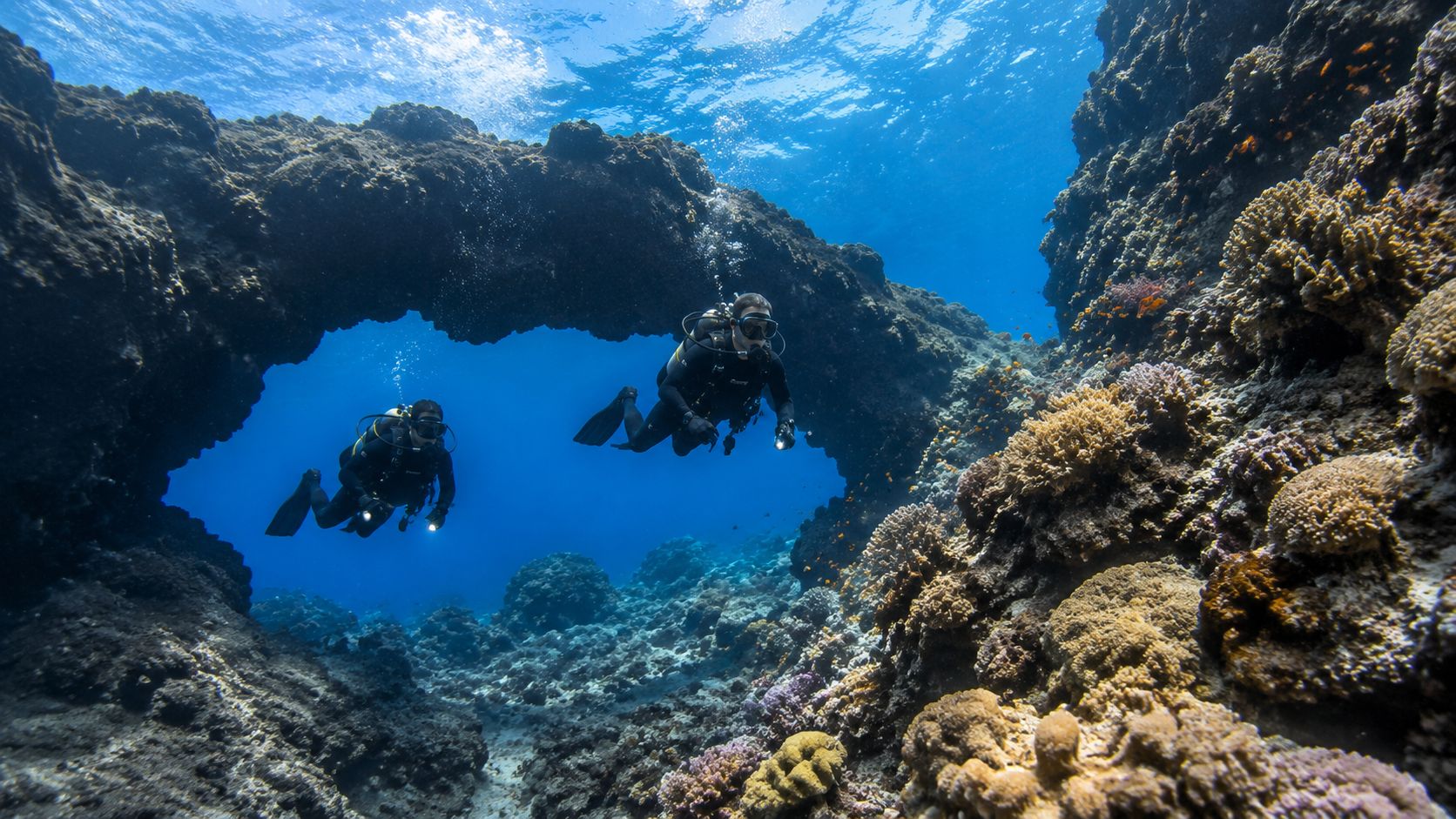
By the time divers start asking about arches, long-range runs, or blackwater, the core question is usually not “what's the coolest dive?” It's “what fits my skills, headspace, and appetite for challenge?” On the Big Island, that distinction matters. A site can be spectacular and still be the wrong call for a diver who is rusty, uneasy in blue water, or not ready for task loading at night.
Standard reef dives versus advanced outings
A typical Kona morning boat dive is still the smartest choice for a lot of certified divers. Boat diving removes one of the biggest trouble spots for visitors: unfamiliar shore entries over lava rock, surge, and uneven footing. It also gives the crew room to choose sites based on conditions instead of forcing the day around one entry point.
The full range of Big Island scuba diving tours shows how wide that menu can be.
The practical differences look like this:
| Dive style | Best for | Main trade-off |
|---|---|---|
| Morning reef boat dives | Certified divers who want a reliable, lower-stress day | Less specialized than night or long-range dives |
| Shore diving | Experienced divers comfortable judging entries, exits, and surge | More self-reliance, and mistakes happen before the dive even starts |
| Long-range advanced trips | Divers who want remoter topography and more demanding profiles | Longer day, more exposure, and less margin if your skills are rusty |
For divers with solid buoyancy, good gas awareness, and comfort in changing conditions, advanced long-range dive trips can be a much better fit than repeating easy reef sites. You get more dramatic lava structure, less-visited areas, and dives that ask a bit more from you.
That extra range comes with real trade-offs. If seasickness is already on your radar, a longer run offshore can wear you down before you ever hit the water. If your air consumption spikes when conditions get active, a more exposed site may feel short and stressful instead of rewarding.
The Kona blackwater dive
Blackwater is the specialty dive that separates curiosity from readiness. You are suspended in open ocean at night with no reef below, no wall beside you, and very few visual references beyond the downline, your lights, and the life drifting up from the deep.
That environment is what makes it extraordinary. It is also what unsettles divers who rely on the bottom for orientation.
On a properly run Kona blackwater night dive, the setup is controlled, but the experience is still mentally demanding. Divers hold position on a tethered line system over deep water and spend the dive watching pelagic larvae, jellies, translucent predators, and other midwater animals that rarely show themselves on reef dives.
Three things decide whether blackwater feels fascinating or overwhelming:
- Buoyancy without a visual bottom: Small depth changes are easier to miss in blue-black water.
- Calm breathing and mental control: Anxiety gets louder when there is no reef, sand, or lava slope to look at.
- Attention to procedure: Entry, descent, light use, spacing, and ascent all matter more here than on a casual reef dive.
I tell divers to be honest with themselves before booking it. If you are still working on basic trim, burn through gas when stressed, or dislike open-water ascents, do more daytime diving first. If you are comfortable in the water, listen well, and want to see one of the strangest wildlife displays in Kona, blackwater can be the dive you talk about for years.
Blackwater is not “advanced” because of depth on the computer. It is advanced because it strips away the normal reference points and asks you to stay relaxed anyway. Respect that, and it becomes one of the most memorable specialty dives on the island.
Preparing for Your Kona Dive Adventure
You feel the difference before you roll in. A diver who packed the right exposure layer, booked dives that match their actual comfort level, and showed up rested usually relaxes fast and enjoys more of Kona. A diver who guessed on gear or overbooked their skill level spends the trip solving avoidable problems.
Good preparation starts with one honest question. What kind of diver are you right now, not on your best day two years ago?
Picking the right season
Kona is diveable year-round, but the trip feels different depending on when you come. Summer usually brings warmer water and easier all-around comfort. Winter can still be excellent, though some divers get chilled faster on repetitive dives and need to plan for that.
Exposure protection matters more than people expect in Hawaii. Even in warm water, long boat rides, multiple dives, and a night dive can leave you cold by the end of the day. If you are unsure what to pack, this guide on choosing a wetsuit for diving in Hawaii will help you match thickness to season and tolerance.
A simple way to choose:
- Summer: A strong fit for divers who want the warmest water and the least fuss about staying comfortable.
- Winter: A good choice if you do not mind cooler water and like the chance of hearing or spotting whales on the ride out.
- Shoulder months: Often the easiest compromise if you want good conditions without building the whole trip around one season.
Certification and comfort level
Kona rewards accurate self-assessment. The site that becomes a highlight for one diver can feel like work for another.
Newly certified divers usually have a better first day on straightforward reef dives with a patient guide and a slow pace. Divers returning after a long break should do a refresher before booking specialty trips. That is not about checking a box. It is about getting buoyancy, mask clears, and basic awareness back to automatic so you have enough attention left to enjoy the dive.
For specialty dives, look at the actual demands, not just the certification card in your wallet.
- Easy boat and reef dives: Best for newer divers, rusty divers, and mixed-experience groups.
- Manta night dive: Fine for many certified divers if they are comfortable in the dark, can follow briefings, and do not panic when the ocean feels unfamiliar at night.
- Blackwater or other advanced profiles: Better for divers with solid buoyancy, calm breathing under stress, and comfort in open water without visual reference points.
- Mixed groups: Book with an operator who can separate profiles or recommend different days, so nobody gets pushed into a dive they are not ready for.
I would always rather talk someone out of the wrong dive on day one and put them on the right one on day two. That usually leads to a better trip and safer diving.
What to pack and what to rent
Bring the gear that affects confidence and fit. For many divers, that means a mask that never leaks, a computer you already understand, and exposure protection that fits your body. Those three items solve a lot of the frustration I see on boats.
Everything else depends on your priorities. Renting is practical if you want to travel light and use standard sizes. Bringing your own BCD or regulator makes sense if you are very particular about setup, hose routing, or trim. Photographers should also think through batteries, charging, and salt-safe storage before the trip instead of trying to improvise in a hotel room.
A short packing checklist helps:
- Bring your own: mask, computer, prescription lenses if needed, and any exposure item you are picky about
- Usually fine to rent: BCD, regulator, tanks, weights, and fins if standard fit works for you
- Do not forget: certification card, logbook or app, reef-safe sun protection for the surface interval, dry clothes, and water
The goal is simple. Remove small equipment problems before they turn into stress underwater.
Staying Safe and Healthy While Diving
Most Big Island dive problems are preventable. They don't come from dramatic emergencies. They come from avoidable discomfort, rushed decisions, and poor self-assessment before the boat leaves the harbor.
Seasickness prevention that actually helps
If you're prone to motion sickness, timing matters. For divers, taking medication like Bonine or Dramamine the night before a dive is more effective than taking it the morning of the trip, according to DAN's seasickness prevention guidance.
Useful options include Ship-EEZ Seasickness Patch, Dramamine pills, Bonine pills, Sea Band wristbands, and ginger chews. Some divers do best with medication, some with non-drug options, and some combine the two.
What usually works better than guessing:
- Start early: Take your preferred medication the night before if you know boats affect you.
- Don't skip hydration: Being dry, tired, and underfed makes motion sickness worse.
- Be honest with the crew: They'd rather help early than after you're already miserable.
If you get sick underwater
The key rule is simple. Keep your regulator in your mouth and vomit through it. DAN identifies that as the most important safety response if seasickness hits underwater, and Girls That Scuba also notes that most regulators can handle vomit without failing.
Stay on the regulator. Surface only after you've regained control and can do it calmly.
Pono underwater
Safety on the Big Island also means environmental discipline. Don't brace yourself on coral. Don't chase mantas. Don't touch animals because you want a closer photo.
Good local diving etiquette is simple: maintain control, leave the reef alone, and let wildlife choose the distance. Divers who follow that standard usually have better encounters anyway.
Booking Your Dives and A Sample Itinerary
You land in Kona with three dives on your wish list, a limited number of mornings, and no interest in spending vacation days on the wrong boat for your comfort level. Good trip planning starts there. The right operator helps you choose dives in the right order, explains what each charter feels like, and treats site changes as part of normal ocean decision-making, not as a surprise.
For visitors who want one place to compare formats, Kona boat tour options are a helpful starting point.
One operator worth considering is Kona Honu Divers. They run guided reef dives, manta charters, blackwater dives, and custom private trips, with nitrox available for certified divers. That range matters if one person in your group wants a relaxed reef day and another wants a more technical-feeling outing later in the trip.
The main booking mistake I see is saving all the decision-making for the night before. Kona diving goes better when you build around your priority dive first, then fit the easier pieces around it. If the manta night dive is the trip-maker, reserve that early. If blackwater is the goal, let that set the schedule because it asks more of your focus, energy, and comfort in open water after dark.
A practical two-day plan
If your time is short, keep the schedule realistic.
Day 1
- Morning two-tank reef dive, or an advanced coastal charter if your experience supports it
- Afternoon off for food, hydration, and a proper surface interval
- Quiet evening with good sleep
Day 2
- Light daytime activity only
- Evening manta ray night dive at a sheltered site such as Garden Eel Cove
That order works for a reason. Divers usually enjoy the manta dive more after they have already settled into Kona conditions, checked weighting, and shaken off first-day nerves. Garden Eel Cove also tends to give a cleaner, more organized manta experience because the site is well established for light-based viewing and easy diver positioning.
What a smart booking sequence looks like
If you have more flexibility, use this order:
- Book the dive you cannot miss first. Manta and blackwater charters fill a schedule faster than standard morning reef trips.
- Place your easiest dives early. A simple reef morning lets you sort out buoyancy, exposure protection, and seasickness response before a more committing dive.
- Keep one open window. Weather changes, boats reshuffle sites, and some divers need more recovery time than they expected.
- Match the charter to your real comfort level. A diver with fresh open water certification may love the manta dive and a calm reef, but not enjoy a demanding blue-water specialty on the same trip.
The Big Island rewards honest planning. Choose dives that fit the diver you are today, book the experiences you care about most before filling the gaps, and leave enough margin to enjoy the water instead of rushing through it.
If you're ready to build a trip around clear water, lava formations, manta encounters, and specialty dives that match your experience level, Kona Honu Divers is a practical place to start.