
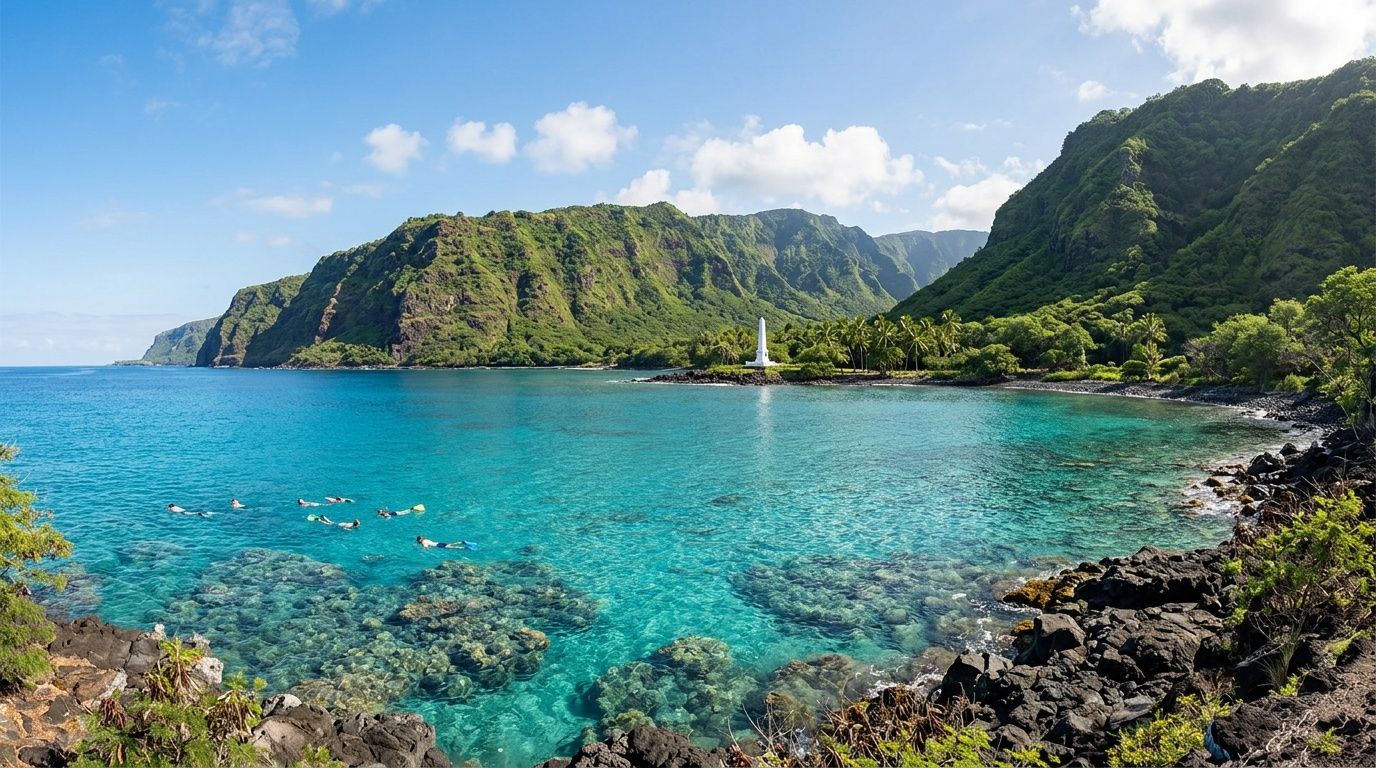
You’re probably here because your Hawaii trip is getting real. Maybe you’ve seen the photos already. Blue water, steep green cliffs, a white monument on shore, and snorkelers floating over a reef that looks almost unreal.
Then the practical questions hit. Is Big Island Captain Cook snorkeling good for beginners? Is it safe for kids? How deep is the water? Can you drive there? Do you need a tour, or is that just marketing?
Those are the right questions.
Kealakekua Bay is one of those rare places that really does live up to the hype, but it’s better when you understand the logistics before you go. That’s especially true if you’re traveling with family, if someone in your group gets nervous in open water, or if you want a smooth day instead of a complicated one.
Welcome to Paradise Your Ultimate Snorkel Adventure Awaits
A lot of visitors picture the same perfect morning. You wake up on the Kona coast, the sun is already warm, and you want one snorkel trip that feels like Hawaii in a single outing. Not just fish. Not just scenery. Something memorable.
That’s exactly why so many people end up choosing Kealakekua Bay.
What makes this place special
Kealakekua Bay sits on the Kona coast of the Big Island, and it’s not just another pretty cove. It has protected status, a major historical story, and water conditions that make snorkeling feel approachable even if you’re still learning. If you’re looking through options for snorkeling on the Big Island, this is the spot people usually mean when they talk about the iconic experience.
The bay has been protected as a Marine Life Conservation District since 1992, and it draws 100,000 to 190,000 visitors annually. It’s also the place where Captain James Cook first landed in 1779, and its protected waters support fish biomass 3 to 5 times denser than nearby fished areas according to this Kealakekua Bay overview.
That combination matters. You’re not just showing up to swim over a reef. You’re entering a place with both ecological protection and deep historical weight.
The day most people want
For many travelers, the ideal trip looks simple:
- Easy water entry: No stressful scramble over sharp rocks.
- Clear visibility: You can see the reef without diving deep.
- A sense of place: The monument, cliffs, and bay make the outing feel distinct.
- Good support: Especially if someone in your group is cautious, young, or new to snorkeling.
Big Island Captain Cook snorkeling works best when you match the trip style to your comfort level, not just the prettiest photo.
That’s where people often get tripped up. They hear “Captain Cook snorkeling” and think the hard part is choosing a date. Usually the bigger decision is choosing the right access method and the right kind of support.
Why Kealakekua Bay is a World-Class Snorkel Destination
Some snorkel spots look good from shore but feel underwhelming once you put your face in the water. Kealakekua Bay usually does the opposite. The surface is beautiful, then the underwater scene gets even better.
Protected water changes everything
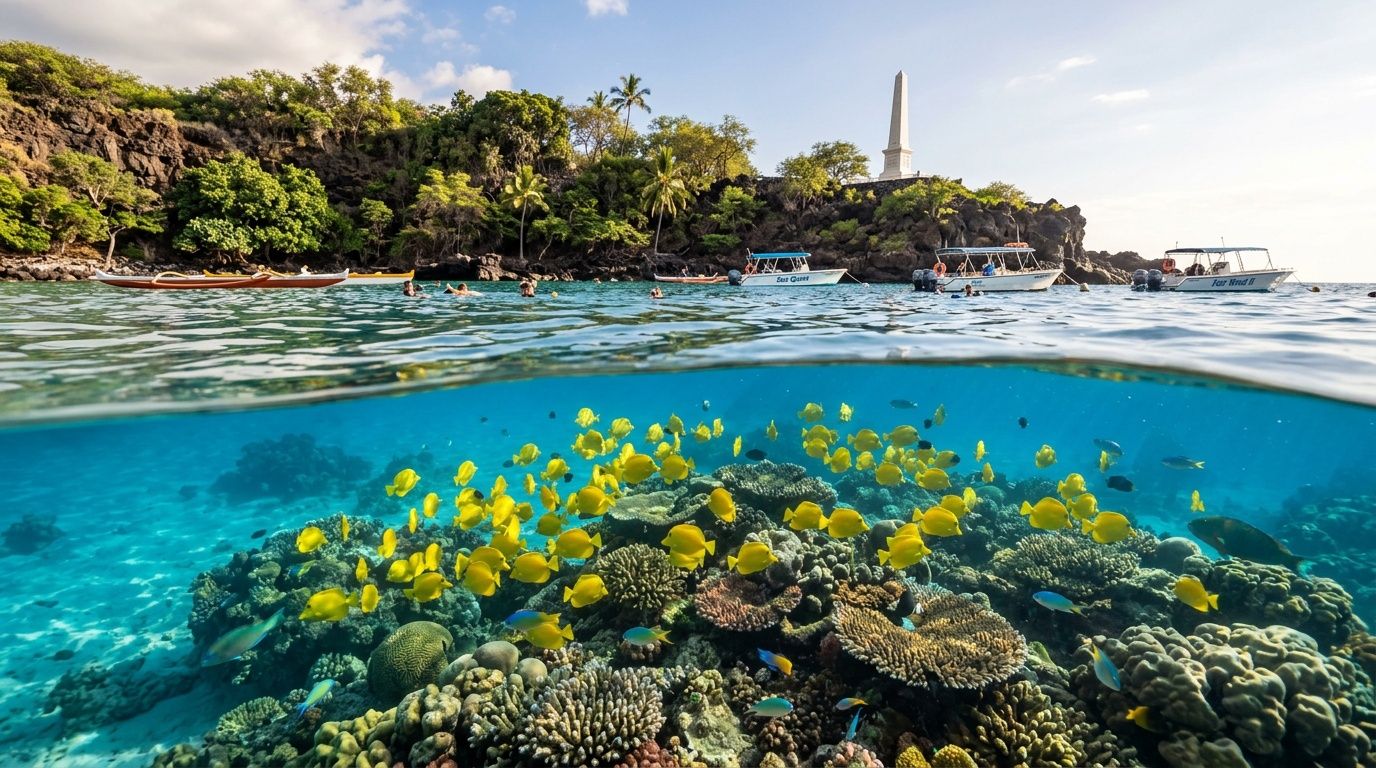
The bay’s 1,332-acre protected area has had years to recover and stay healthy. Because it’s a no-take zone, marine life gets a chance to grow and behave more naturally. That protection supports more than 4,000 individual coral colonies and habitat for over 200 species of fish, as described in this Kealakekua Bay snorkeling guide.
For a snorkeler, that protection translates into a few obvious things. You tend to see more fish. The reef feels active instead of sparse. The whole bay has the feel of an underwater neighborhood that’s still functioning the way it should.
The bay has both nature and history
Some visitors come for the monument first and the reef second. Others are the exact opposite. Both approaches work here.
The historical side isn’t just a footnote. The shoreline across from the monument is tied to one of the best-known encounters in Hawaiian history. In practice, that means the scenery above water adds context to what you’re doing below it. You’re floating in a place people remember for more than one reason.
Local perspective: The best snorkel sites aren’t only about what you see underwater. They’re also about whether the whole setting feels meaningful. Kealakekua Bay does.
Why the experience feels so rich
The bay’s geography helps create the kind of conditions snorkelers love. Steep volcanic cliffs and lava-based substrate help limit sediment, and the bay’s shape keeps things calmer than many open-coast spots. That’s one reason Captain Cook is often the trip people talk about long after vacation ends.
A healthy bay also rewards different kinds of visitors:
| What you care about | Why this bay stands out |
|---|---|
| Marine life | Protected waters support dense fish populations and healthy coral habitat |
| Easy viewing | Clear water makes it easier to spot fish and reef structure |
| Scenery | Cliffs, monument, and blue water create a dramatic setting |
| Meaning | The location carries major historical significance |
There’s also a simple emotional reason people love it. The bay feels intact. You don’t spend the whole time searching for the “good part.” You arrive in it.
How to Access the Captain Cook Snorkeling Area
Many visitors are surprised to learn that the famous snorkeling area near the Captain Cook Monument isn’t a casual pull-up, park, and stroll kind of place. You have options, but they are not equal.
The three main ways in
Visitors typically reach the snorkeling area one of three ways:
- Guided boat tour
- Kayak, with the proper rules and planning
- Hike down and back up the trail
On paper, all three sound possible. In real life, one method fits most travelers much better than the others.
Why the hike gets underestimated
The hike is scenic, but it’s not light vacation exercise. The route involves a 1,300 ft elevation change over 1.9 miles, and that effort deters an estimated 70% of casual visitors. The bay’s main snorkel zone is also 15 to 30 feet deep, which makes professional support and flotation especially helpful for the 30 to 40% of visitors who are novice snorkelers, based on this Captain Cook access and beginner safety guide.
That’s the key point many guides soften. The hard part isn’t only getting down. It’s doing the return climb after sun, salt water, and exertion.
If you’re fit, experienced, and traveling light, you may still choose it. But if you’re bringing children, older family members, weak swimmers, or anyone who gets tired easily, the hike can turn a fun snorkel outing into a long recovery session.
Kayaking sounds simple until the details show up
Kayaking appeals to independent travelers, and the bay certainly looks paddle-friendly from photos. But this option takes more planning than many people expect. You need to sort out access rules, timing, conditions, and logistics before you even start thinking about the snorkel itself.
It can be rewarding for the right person. It’s rarely the easiest first choice for a visiting family on vacation.
If your group wants a relaxed day, “possible” isn’t the same thing as “practical.”
Why boat tours fit most people
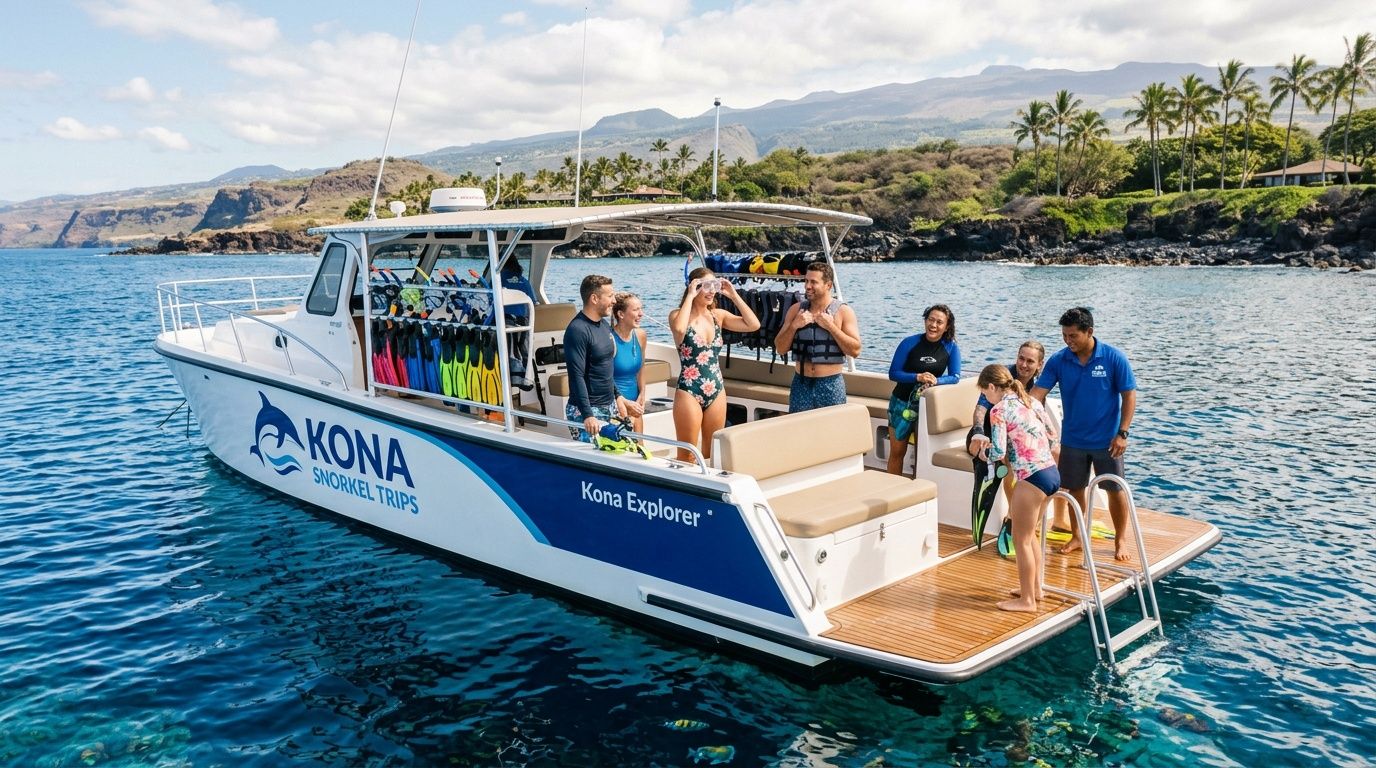
A guided boat tour solves the main friction points at once. You avoid the steep trail. You don’t have to manage paddle logistics. You usually get easier water entry, flotation, safety briefing, and a crew that can adjust to the day’s conditions.
That matters because the bay’s conditions can change with swell and current. Having guides assess the route in real time is a real safety advantage, not just a convenience.
Comparing Access Methods to Captain Cook Monument
| Method | Best For | Effort Level | Amenities | Estimated Time |
|---|---|---|---|---|
| Guided boat tour | Beginners, families, non-swimmers with support, most vacationers | Low to moderate | Typically includes snorkel gear, flotation, crew help, and easier entry | Half-day outing |
| Kayaking | Independent visitors comfortable planning logistics | Moderate | Limited, depends on your setup | Varies with launch, paddle, and snorkel time |
| Hike | Fit visitors comfortable with a strenuous return climb | High | Very limited | Longer day with significant physical effort |
The practical choice
If your goal is to enjoy Big Island Captain Cook snorkeling instead of proving something to yourself, a boat tour is usually the smartest route. It gives you more energy for the reef, more support in the water, and fewer chances for a minor problem to become the whole story of the day.
Choosing the Best Captain Cook Snorkeling Tour
Once you decide to go by boat, the next question is simpler. Which tour feels right for your group?
What to look for first
A good tour for Captain Cook isn’t only about getting you to the bay. It should answer the questions beginners have:
- How do you get in the water?
- Are flotation devices available?
- Will the crew help kids or nervous adults?
- Is the pace relaxed or fast-moving?
- What happens if ocean conditions change?
For many visitors, those practical details matter more than the boat’s appearance.
You can compare current options in this roundup of the top Kealakekua Bay snorkeling tours. Two direct booking options for Captain Cook trips are Kona Snorkel Trips Kealakekua Bay Captain Cook Monument tour and Captain Cook Snorkeling Tours. Kona Honu Divers also offers snorkeling excursions on the Big Island.
Seasickness is easier to manage when you plan ahead
If you know you get queasy on boats, don’t ignore that. Morning trips are often easier on people, and it helps to eat lightly and hydrate before departure. Some travelers also like to pack a backup option.
Common over-the-counter choices include Ship-EEZ Seasickness Patch, Dramamine pills, Bonine pills, Sea Band wristbands, and Ginger chews.
Bring your seasickness remedy before you think you need it. Once nausea starts, the ride usually feels much longer.
Match the tour to the group
Some groups need speed and simplicity. Others need reassurance. If you’re traveling with a child who’s excited but hesitant, or with an adult who’s never snorkeled, choose the operator that clearly talks about support in the water.
Look for signs like these:
- Beginner-friendly language: They explain entry, flotation, and expectations.
- Crew assistance: Someone is available to help adjust masks or guide nervous guests.
- Comfort features: Shade, easy boarding, and a manageable group dynamic matter.
- Clear communication: Good tours tell you what to bring and what the day will feel like.
What You Will See A Snorkelers Guide to the Bay
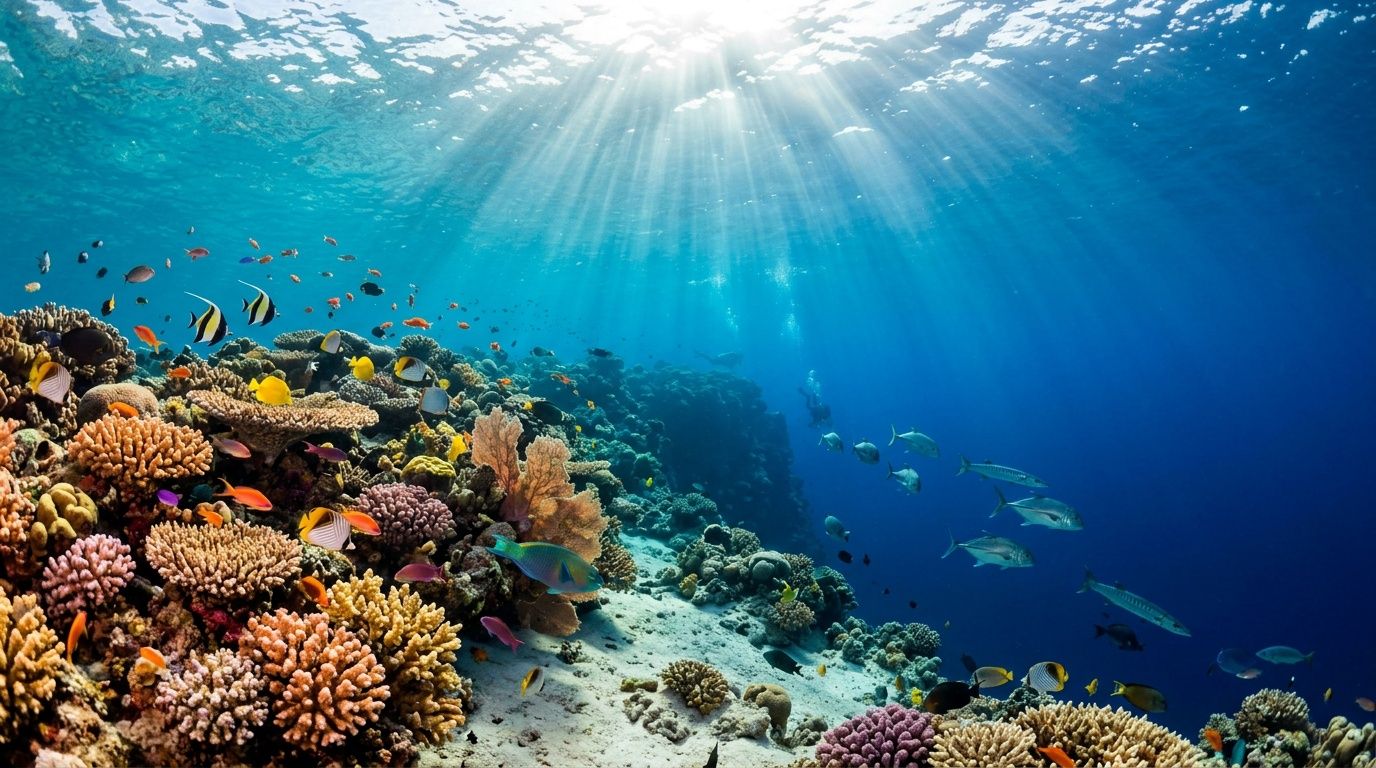
The first thing many people notice isn’t a fish. It’s the visibility. You look down and can clearly read the shape of the reef instead of staring into blue haze.
Understanding the depth without getting nervous
Depth is where beginners often get confused. They hear that Captain Cook has clear water and assume that means shallow water everywhere. It doesn’t.
Near boat entry points, the shallow reef zone sits around 10 to 15 feet. Around the monument and along the main swim corridors, the water reaches about 12 to 30 feet, and areas beyond that drop deeper than 30 feet. Visibility often reaches 100 feet, according to this Captain Cook water depth guide.
That sounds intimidating until you remember one important thing. Snorkelers stay on the surface. You don’t need to dive down to enjoy what’s below you.
The best zone for most snorkelers
The 12 to 20 foot band near the monument is often the sweet spot. Sunlight still reaches the reef well, colors stay vivid, and you can clearly watch fish moving through coral heads and lava structure.
That’s why beginners often enjoy this site more than expected. Even though the water is deeper than a sandy beach cove, the visibility makes it feel readable. You can tell where you are. You can see the bottom. For many people, that reduces anxiety.
Practical rule: Clear deep water often feels easier than murky shallow water because you can orient yourself right away.
What marine life people commonly notice
You may spot schools of reef fish moving over the coral, green sea turtles gliding through the bay, and a wide range of tropical fish using the reef for shelter. The bay’s protected status is the reason the scene feels busy instead of sparse.
The geography helps too. The bay’s steep cliffs, closed shape, and lava-based bottom limit sediment and support exceptional water clarity. Visibility can reach 100+ feet, and that lets snorkelers identify fish schools, turtles, and coral formations from much farther away, as described in this Kealakekua Bay water clarity overview.
Snorkeling etiquette that matters
Kealakekua Bay stays healthy because people treat it carefully. That isn’t a slogan. It’s the reason the reef still looks alive.
Keep these habits in mind:
- Don’t touch coral: Coral is living animal tissue, and even a quick handhold can damage it.
- Keep your fins up: Many beginners kick downward when they get excited. Stay horizontal.
- Give wildlife space: Turtles and other animals should never feel crowded.
- Use reef-safe sun protection: Better for the bay and better for the long-term health of Hawaiian reefs.
- Listen to your guide: They’ll know where conditions are calmer and where swimmers drift.
A calm snorkeler usually sees more. Move slowly, float, look ahead, and let the bay come to you.
Packing and Gear Guide for Your Snorkel Trip
A well-packed snorkel bag makes the whole day easier. You don’t need a lot of stuff, but the few items you bring should solve real problems like sun, motion, chill after the swim, and comfort on the boat.
What to bring from the start
If your tour includes mask, snorkel, and fins, use that unless you strongly prefer your own fit. For most visitors, the better move is bringing the personal items that improve comfort.
A helpful gear checklist for ocean outings is this guide to what gear you’ll need for your Kona water adventure.
Pack these first:
- Reef-safe sunscreen: Put it on before boarding so it has time to settle in.
- Rash guard or sun shirt: This often matters more than sunscreen once you’re in the water.
- Towel and dry clothes: The ride back feels better when you can dry off.
- Hat and sunglasses: Especially useful before and after snorkeling.
- Reusable water bottle: Kona sun can sneak up on you fast.
A few smart extras
These aren’t mandatory, but they often make the day smoother:
- Waterproof phone case or camera: The bay is photogenic above and below water.
- Light snack: Useful if your tour doesn’t provide food.
- Hair tie or mask defog solution: Small item, big difference for some people.
- Simple dry bag: Keeps the easy-to-lose things together.
What beginners often forget
The most overlooked item is something warm enough for after the snorkel. Even on a sunny day, people can feel cool once they’re wet and back in the breeze.
The second thing people forget is to keep the load light. You’re going snorkeling, not moving house. Bring what makes you safer and more comfortable, then stop.
FAQs About Snorkeling Captain Cook
Is Captain Cook snorkeling safe for non-swimmers and kids
It can be, if you choose a guided boat tour with flotation support and active crew help. This site is much more comfortable when beginners have an easy entry, a clear briefing, and someone nearby to answer questions in the water. Families should ask about life vests, float belts, and how the crew assists first-timers.
Is the water shallow
Not in the way many people expect. The main snorkeling area is deeper than a typical beach shallows zone, but the clear water makes it much easier to read. Many beginners do well here because they can see the reef clearly from the surface.
What’s the best time of day to go
Morning usually gives visitors the smoothest experience. Conditions are often calmer, the light is good for seeing into the water, and many people feel fresher and more relaxed early in the day.
Can you just swim out from shore to the monument
For most visitors, that’s not the practical approach. Shore access around the bay is limited, and the monument area is most commonly visited by boat. People often underestimate how much easier and safer a supported approach feels.
Is the hike worth it
For some fit and prepared visitors, yes. For many vacationers, no. The issue isn’t just whether you can make it down. It’s whether you still want to make the climb back after snorkeling in the sun.
Are there facilities at the monument
You shouldn’t plan on shore facilities solving your day. That’s another reason tours are appealing. Boats usually simplify the logistics, and you don’t have to build your outing around a very limited shoreline setup.
What if someone in my group is nervous
That’s common. The best move is to say so before the trip starts. Good crews are used to helping hesitant guests, and a lot of anxiety drops once people understand how entry works, how flotation works, and where they’ll be in relation to the boat.
Do I need to be an expert snorkeler to enjoy it
No. You do need to be honest about your comfort level. Big Island Captain Cook snorkeling is often most enjoyable for beginners when they treat it as a supported ocean activity, not a solo challenge.
If you want help planning a safe, well-organized day on the water, take a look at Kona Honu Divers. They offer Big Island ocean experiences with a strong focus on clear instruction, comfort, and time in the water that fits your skill level.