
The thrill of descending into a vibrant underwater world is an experience unlike any other, a silent realm of color and life that captivates both new and seasoned divers. But with thousands of islands dotting our oceans, the question for every underwater explorer is the same: which island is best for scuba diving? The perfect answer often depends on what you seek, whether it's swirling schools of fish, majestic megafauna, pristine coral gardens, or dramatic underwater topography. This guide cuts through the noise to explore a curated selection of the world's most incredible diving destinations, each offering a unique window into the ocean's greatest wonders.
We'll compare epic locations known for their biodiversity, accessibility, and unforgettable dive sites. While this list covers global hotspots, it’s worth noting that within specific archipelagos, one island often stands out. For example, when considering the Hawaiian Islands, the Big Island of Hawaii consistently ranks as the top choice. Its superior visibility, healthy coral systems, dramatic underwater lava features, warm temperatures, and unparalleled abundance of large marine life make it a clear winner. Let's dive in and discover your next great underwater adventure.
1. Raja Ampat, Indonesia
Often called the "Amazon of the Seas," Raja Ampat is an archipelago of over 1,500 jungle-clad islands situated in the heart of the Coral Triangle. This remote Indonesian paradise is not just a destination; it's the global epicenter of marine biodiversity. For divers seeking unparalleled species richness and pristine underwater landscapes, Raja Ampat is arguably the best island destination for scuba diving on the planet. Its waters host over 1,500 fish species and a staggering 75% of all known coral species, creating a vibrant, living kaleidoscope beneath the waves.
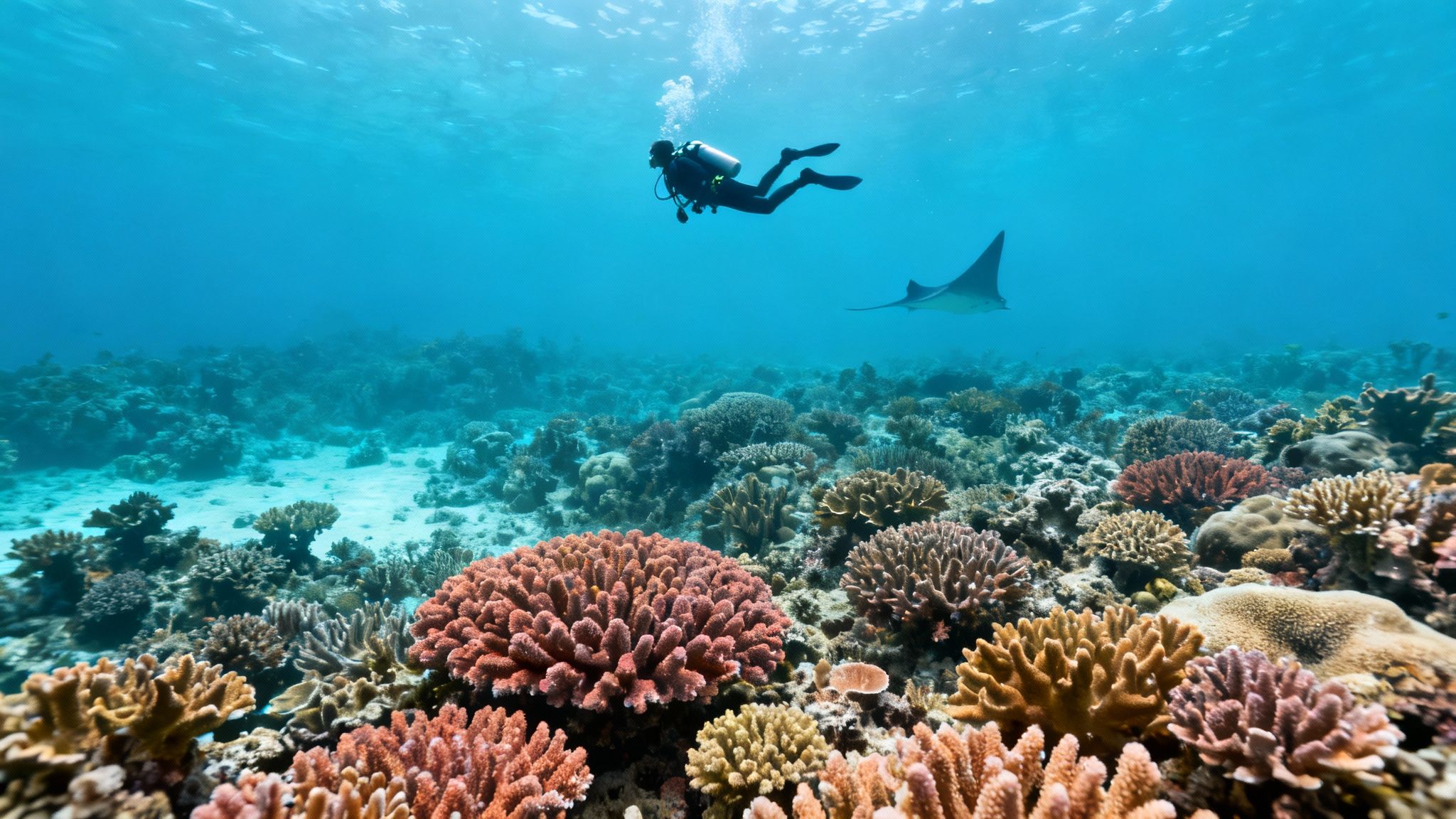
The diving experience here is defined by overwhelming abundance and variety. You’ll drift past dramatic pinnacles covered in soft corals, explore mangrove forests where juvenile fish find shelter, and witness massive schools of fish that can block out the sun. Success stories abound, from conservation programs led by local communities that maintain over 90% coral coverage in protected areas, to liveaboard operators who have pioneered sustainable eco-tourism models.
Why It's a Top Diving Destination
Raja Ampat's remote location has protected it from overdevelopment, preserving its ecosystem in a nearly untouched state. The convergence of the Indian and Pacific Oceans creates nutrient-rich currents that fuel this explosion of life. This makes it a bucket-list location for underwater photographers, marine biologists, and any diver who wants to see a coral reef ecosystem at its most vibrant and healthy.
Actionable Tips for Your Trip
- Book a Liveaboard: The best way to explore the vast area is by liveaboard. Book 6-12 months in advance, especially with reputable operators like Aggressor or Damai.
- Get Nitrox Certified: To maximize bottom time and explore the rich reefs more thoroughly, getting your Nitrox certification beforehand is highly recommended.
- Optimal Timing: Plan your visit between October and April for the calmest seas and best visibility, often exceeding 30 meters (100 feet).
- Travel Logistics: Due to its remoteness, allow extra days in your itinerary for potential travel delays getting to and from Sorong, the main gateway.
2. Great Barrier Reef, Australia
As the world's largest coral reef system, the Great Barrier Reef is a living wonder so immense it's visible from space. Stretching over 2,300 kilometers along the Queensland coast, this UNESCO World Heritage Site encompasses roughly 2,900 individual reefs and 900 islands. It’s a destination of superlatives, offering an almost endless variety of underwater experiences, from serene, shallow coral gardens teeming with technicolor fish to exhilarating drift dives along deep oceanic walls. For divers seeking both iconic status and immense scale, the Great Barrier Reef is an essential pilgrimage.
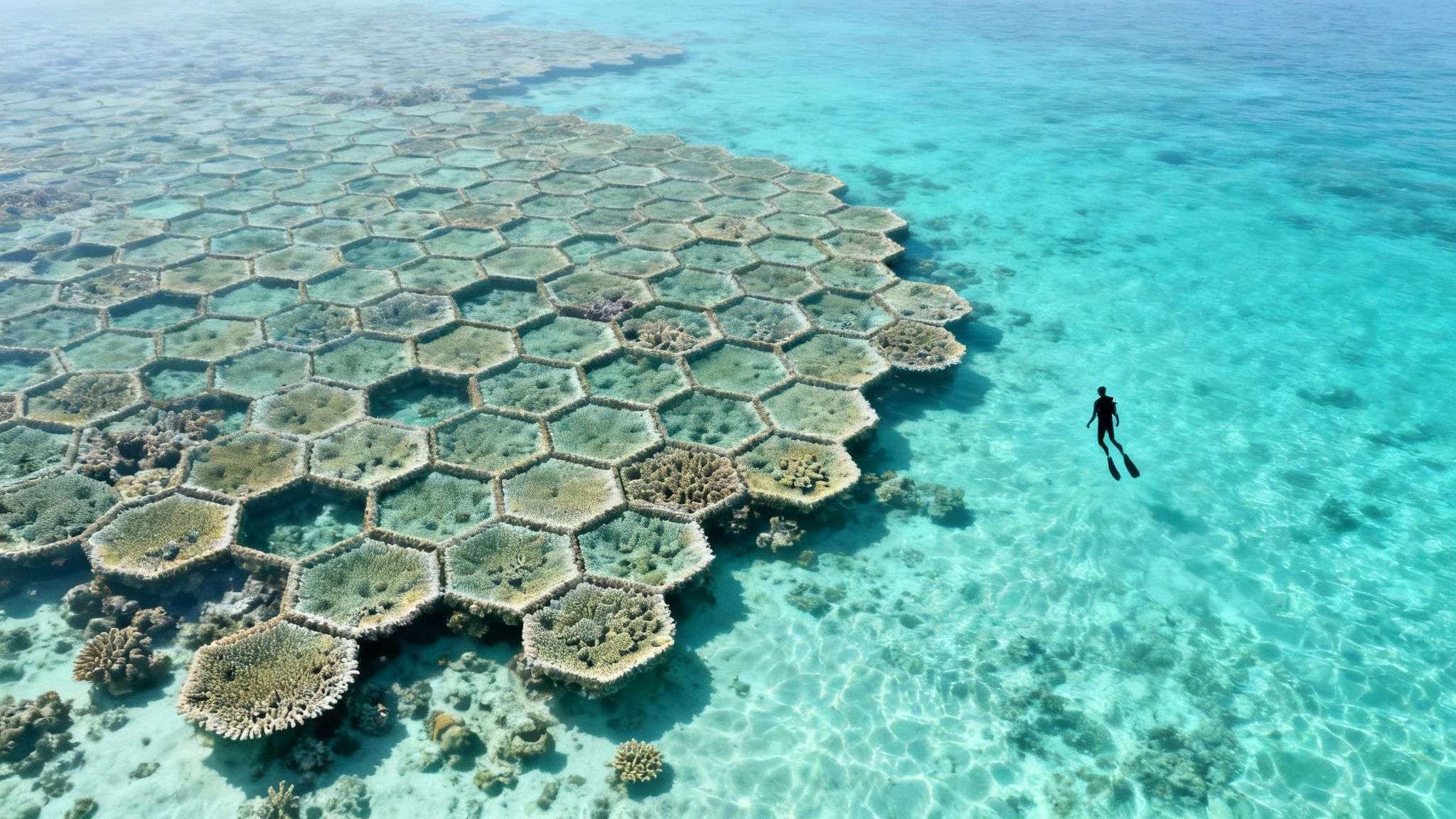
The diving here is characterized by its sheer diversity and legendary sites. Divers can explore the historic SS Yongala, consistently voted one of the world's best wreck dives, or interact with famously curious potato cod at the Cod Hole. Pioneering liveaboard operators like Mike Ball Dive Expeditions have made remote, pristine locations like Osprey Reef accessible, offering incredible encounters with sharks and other pelagics. Success stories include the special Minke Whale season (June-July), a unique and regulated opportunity for unforgettable in-water encounters with these majestic creatures.
Why It's a Top Diving Destination
The Great Barrier Reef's global reputation is built on its breathtaking scale and the incredible array of life it supports. From macro critters to massive pelagics, the biodiversity is astounding. Its vastness means there are dive sites suitable for every experience level, from novice divers exploring sheltered cays to advanced divers seeking adventure in the outer reefs. This iconic status, cemented by legends like Jacques Cousteau and David Attenborough, makes it a non-negotiable bucket-list item for any serious diver.
Actionable Tips for Your Trip
- Go Remote: For the best coral health and fewer crowds, book a liveaboard trip to the outer reefs like the Ribbon Reefs or the more distant Osprey Reef.
- Time Your Visit: Plan your trip between June and July for the chance to swim with Minke whales. For the absolute best water clarity and calm seas, aim for October to December.
- Safety First: Stinger suits are essential during the jellyfish season (typically November to May) to protect against marine stingers. Most operators provide them.
- Target Your Dives: If you're an advanced diver, prioritize trips that specifically visit the SS Yongala wreck and Osprey Reef for thrilling, world-class dives.
3. Galápagos Islands, Ecuador
Known as a living laboratory of evolution, the Galápagos Islands are a volcanic archipelago located 1,000 kilometers off the coast of Ecuador. This UNESCO World Heritage site is where Charles Darwin developed his theory of natural selection, and for divers, it offers an equally groundbreaking experience. The convergence of three major ocean currents creates a unique, nutrient-rich environment that attracts an incredible array of large pelagic species and endemic marine life found nowhere else on Earth, making it a powerful contender for the best island for scuba diving.
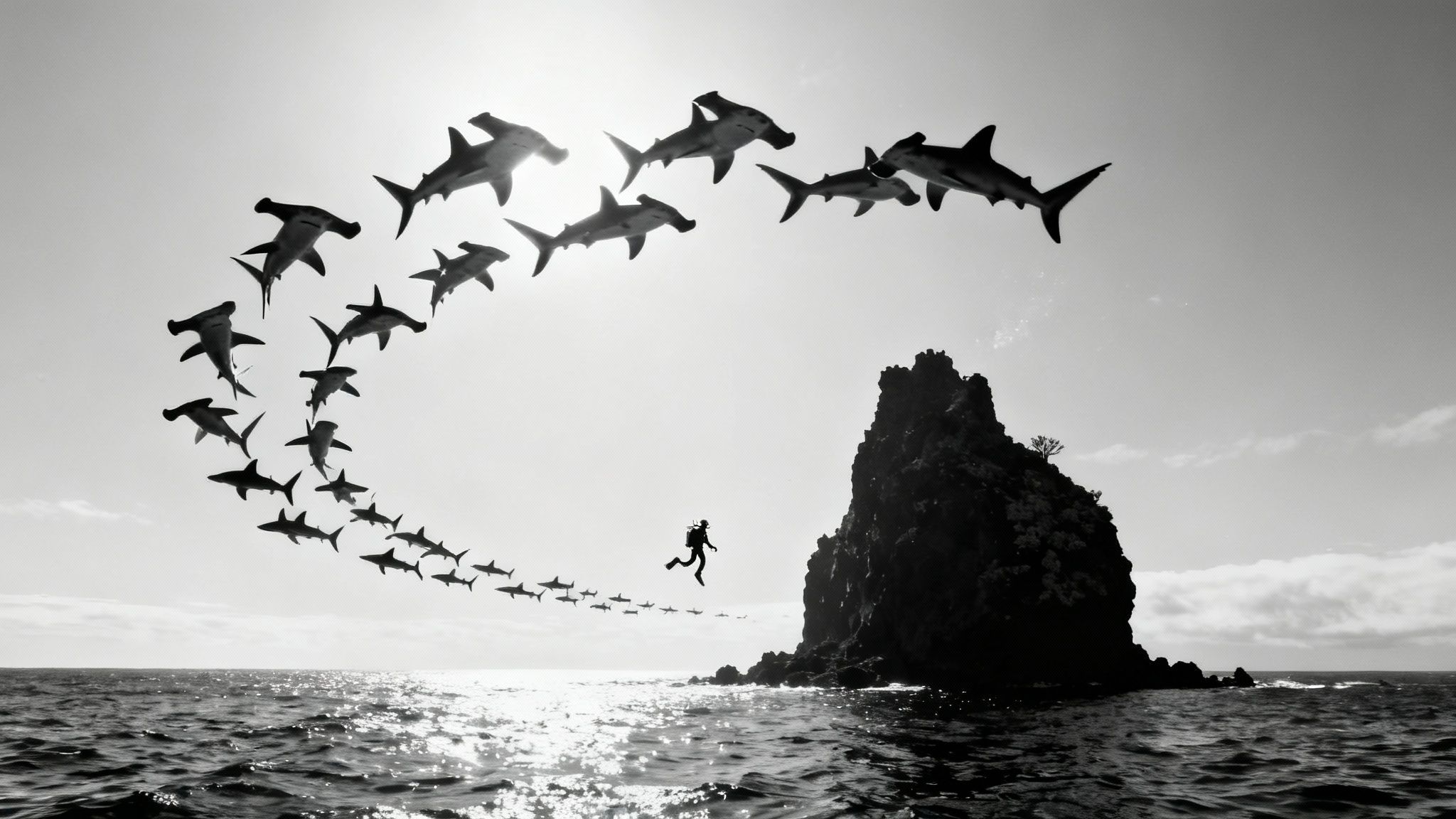
The diving here is less about colorful coral reefs and more about thrilling, big-animal encounters in a wild, untamed setting. You'll descend into powerful currents to witness walls of schooling hammerhead sharks, giant whale sharks gliding by, and graceful manta rays. The Galápagos Marine Reserve, one of the largest in the world, protects 133,000 square kilometers, and its success is evident. Conservation efforts and ongoing scientific monitoring have helped maintain robust shark populations at iconic sites like Wolf and Darwin Islands, which attract hundreds of advanced divers monthly during peak season.
Why It's a Top Diving Destination
The Galápagos offers a dive experience that feels truly prehistoric. It's one of the few places on the planet where you can dive alongside marine iguanas, playful sea lions, and Galápagos penguins. The sheer scale and quantity of the marine life are staggering, offering unparalleled opportunities to witness natural behaviors in a pristine ecosystem. This makes it a must-visit destination for advanced divers seeking adrenaline-pumping encounters with the ocean's most magnificent creatures.
Actionable Tips for Your Trip
- Book a Liveaboard Well in Advance: The premier dive sites like Wolf and Darwin are only accessible via liveaboard. Due to strict regulations and limited permits, book your spot at least 12-18 months in advance.
- Get Advanced Certified: An Advanced Open Water certification with experience in currents and drift diving is a minimum requirement for most liveaboards.
- Pack for Cold Water: Water temperatures can be chilly. Bring a 7mm wetsuit, hood, and gloves, or plan to rent them.
- Optimal Timing: Travel between June and November for the best chance of encountering whale sharks, although diving is excellent year-round.
- Prepare for Rough Seas: The open-ocean crossings can be rough. Bring effective seasickness medication to ensure you enjoy the trip.
- Combine Land and Sea: Dedicate a few days to explore the islands on foot to see the unique terrestrial wildlife that makes the Galápagos famous.
4. Cozumel, Mexico
Known for its effortless drift diving and gin-clear waters, Cozumel is a Caribbean gem located off Mexico's Yucatán Peninsula. Propelled by the gentle but consistent Mesoamerican Current, divers can fly weightlessly along spectacular coral walls teeming with life. This island has earned its reputation as one of the world's most popular and accessible dive destinations, offering incredible visibility that often exceeds 30 meters (100 feet) and consistently ideal conditions throughout the year, making it an excellent choice for both new and experienced divers.
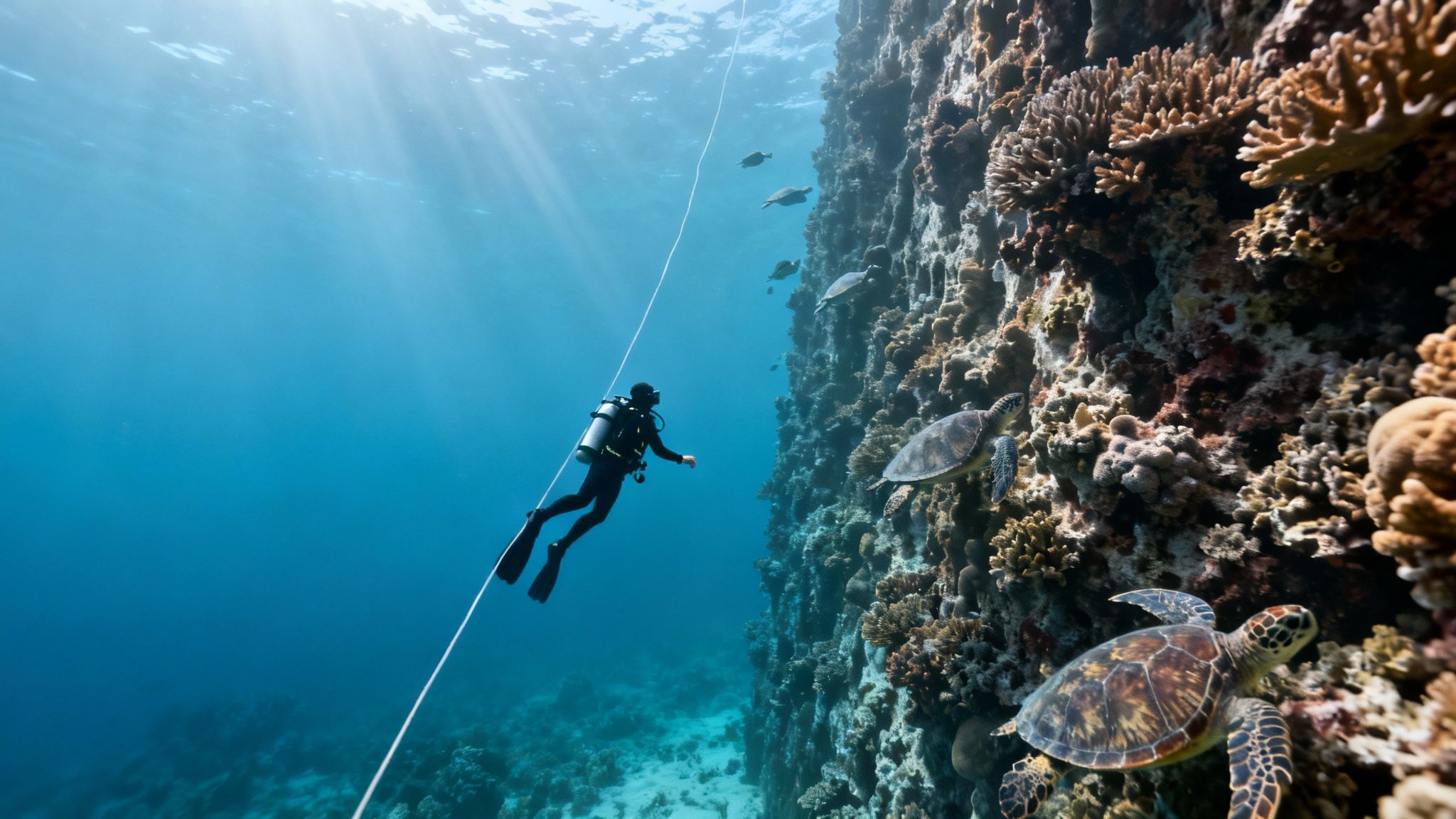
The diving experience is defined by dramatic topography and vibrant marine ecosystems. Divers can explore the legendary Palancar Reef system with its stunning coral formations, or advanced divers can tackle the famous Devil's Throat at Punta Sur, a breathtaking swim-through. Jacques Cousteau brought international attention to the island in the 1960s, cementing its place on the global dive map. Today, operators offer well-organized two-tank boat dives that make exploring sites like the Santa Rosa Wall, with its towering coral buttresses, an absolute pleasure.
Why It's a Top Diving Destination
Cozumel's appeal lies in its unique combination of thrilling drift diving, exceptional water clarity, and incredibly healthy reef systems protected within the Cozumel Reefs National Marine Park. The constant current delivers a steady supply of nutrients, supporting a rich biodiversity of sponges, gorgonians, and fish, including the endemic splendid toadfish. Its easy accessibility from North America and Europe makes it an ideal answer for divers asking, "which island is best for scuba diving" when seeking a convenient yet world-class underwater adventure. For a deeper dive into what makes this destination unique, you can find a comprehensive guide to diving in Cozumel, Mexico.
Actionable Tips for Your Trip
- Optimal Timing: For fewer crowds and great conditions, visit during the shoulder seasons of April-May or September-October.
- Stay on the Island: To maximize dive time and convenience, book accommodation in Cozumel rather than commuting from Playa del Carmen.
- Dive Smart: Consider afternoon boat trips when the cruise ship crowds have thinned out for a more relaxed experience. Many operators offer excellent value with two-tank dive packages.
- Get Nitrox Certified: With most days involving multiple dives, being Nitrox certified is a significant advantage for extending your bottom time and reducing fatigue.
5. Red Sea, Egypt
A legendary destination brought to the world's attention by pioneers like Jacques Cousteau, the Red Sea offers an unparalleled combination of vibrant coral reefs, dramatic wall dives, and world-class shipwrecks. Bordered by the deserts of Egypt, its crystal-clear, warm waters create a thriving underwater oasis accessible year-round. For divers seeking a diverse mix of history, thrilling pelagic encounters, and sheer reef beauty, Egypt's Red Sea is an essential destination that consistently ranks among the best for scuba diving. Its waters are a treasure trove of marine life, from tiny colorful nudibranchs to majestic oceanic whitetip sharks.
The diving experience here is exceptionally varied. One day you can be penetrating the historic holds of the SS Thistlegorm, a WWII freighter filled with intact cargo, and the next you could be drifting along the pristine walls of Ras Mohammed National Park. Success in the region is marked by its well-established dive industry and protected marine parks. Operators like Emperor Divers and Red Sea Diving Safari have set high standards for safety and access, allowing thousands of divers to safely explore remote sites like the Brothers Islands, renowned for their shark populations.
Why It's a Top Diving Destination
The Red Sea's unique geography, a narrow sea with high salinity and minimal rainfall, results in extraordinary water clarity and near-perfect conditions for coral growth. This enclosed sea has also led to the evolution of numerous endemic species found nowhere else on Earth. The combination of accessible shore dives like Dahab’s Blue Hole, stunning national parks, and remote offshore pinnacles makes it an incredibly versatile destination suitable for divers of every skill level and interest.
Actionable Tips for Your Trip
- Choose Your Base: For access to the SS Thistlegorm and Ras Mohammed, base yourself in Sharm el-Sheikh. For a more relaxed vibe and access to southern reefs and dugongs, head to Marsa Alam.
- Book a Liveaboard for Remote Sites: The best way to dive offshore sites like the Brothers Islands, Daedalus, and Elphinstone for shark encounters is via a liveaboard. Book well in advance.
- Optimal Timing: Visit between September and November for the warmest water temperatures (around 28°C/82°F) and the peak season for spotting oceanic whitetip sharks and other pelagics.
- Get Certified for Wrecks: To fully appreciate sites like the Thistlegorm, an Advanced Open Water certification is highly recommended for depth, and a wreck specialty will allow for safe penetration.
6. Palau, Micronesia
Known as a true legend in the diving community, the island nation of Palau is a pilgrimage site for those seeking dramatic underwater topography and unparalleled big-animal encounters. This Western Pacific archipelago is a conservation pioneer, establishing the world's first shark sanctuary in 2009. It delivers a pristine and thrilling experience defined by powerful currents, gin-clear visibility, and an astonishing concentration of marine life, making it an obvious answer for which island is best for scuba diving. From vertiginous walls patrolled by sharks to serene, surreal lakes, Palau’s waters are a living testament to successful marine preservation.
The diving experience here is characterized by high-octane action and unique natural wonders. You’ll hook into the reef at Blue Corner, watching a "river of sharks" flow past, or witness manta rays at German Channel's cleaning stations. Palau's success is rooted in its forward-thinking conservation policies and the commitment of its people, preserving unique environments like its UNESCO-listed Rock Islands Southern Lagoon and the world-famous Jellyfish Lake, where millions of non-stinging golden jellyfish pulse in a landlocked marine environment.
Why It's a Top Diving Destination
Palau’s position in the Pacific exposes it to oceanic currents that attract and sustain huge populations of pelagic species. This constant flow of nutrient-rich water has carved out breathtaking underwater channels, corners, and blue holes that create the perfect stage for unforgettable dives. Its combination of WWII wrecks, healthy coral gardens, and predictable big-animal action secures its place on any diver's ultimate bucket list.
Actionable Tips for Your Trip
- Master Reef Hook Use: Many signature sites have strong currents. Practice using a reef hook before you go to remain stationary and enjoy the show without damaging the coral.
- Book Well in Advance: The peak season from December to March offers the driest weather and best conditions. Book liveaboards and resorts 6-12 months ahead.
- Get Advanced Certified: To fully experience sites like Blue Corner and Peleliu Corner, an Advanced Open Water certification is strongly recommended. Nitrox is also highly beneficial.
- Plan Your Budget: A week-long trip can range from $3,500 to $5,000. Liveaboards like those operated by Aggressor Fleet or Sam's Tours offer the best access to the most diverse sites.
7. Sipadan, Malaysia
Described by the legendary Jacques Cousteau as "an untouched piece of art," Sipadan is an oceanic island rising 600 meters from the seabed of the Celebes Sea. This Malaysian jewel is not just another dive spot; it's a pelagic sanctuary and a pinnacle of marine biodiversity. For divers seeking dramatic wall dives and encounters with massive congregations of marine life, Sipadan offers an exclusive and powerful underwater experience that consistently places it among the top diving destinations worldwide.
The diving here is characterized by stunning drop-offs and a sheer abundance of life. At sites like the world-famous Barracuda Point, divers can find themselves completely enveloped by a swirling, tornado-like vortex of thousands of chevron barracuda. Equally impressive are the enormous schools of jackfish and the resident populations of green and hawksbill turtles, which are so numerous you often stop counting. Success stories here are tied to strict conservation; a daily permit system limiting divers to just 176 per day (a recent increase from 120) ensures the ecosystem remains pristine and the experience is never crowded.
Why It's a Top Diving Destination
Sipadan's unique geological formation as an oceanic island creates a vital feeding ground that attracts marine life from the deep sea. The nutrient-rich currents fuel a vibrant food chain, culminating in spectacular displays of large pelagic species and resident reef dwellers. The strict permit system, pioneered by operators like Borneo Divers since the 1980s, has preserved this "art piece," making it one of the most reliable places to witness large-scale marine phenomena and a must-dive location for serious underwater photographers and marine life enthusiasts.
Actionable Tips for Your Trip
- Secure Permits Early: Dive packages, which include the coveted Sipadan permits, should be booked at least 3-6 months in advance, especially for peak season.
- Stay Nearby: There are no resorts on Sipadan itself. Stay on the nearby islands of Mabul or Kapalai for easy boat access and to combine your trip with fantastic muck diving.
- Best Time to Visit: The prime diving season runs from April to December, with the absolute calmest conditions and best visibility typically from July to October.
- Certification and Skills: An Advanced Open Water certification is highly recommended to fully appreciate the deep walls. Perfect your buoyancy control before arriving, as the reef tops are shallow before the dramatic drop-offs.
8. Maldives
The Maldives, a nation of nearly 1,200 coral islands grouped into 26 atolls, creates a quintessential diver's paradise in the Indian Ocean. This destination is synonymous with crystal-clear turquoise waters, luxury resorts, and unparalleled encounters with large pelagic life. For divers seeking thrilling channel dives, graceful manta rays, and gentle whale sharks against a backdrop of pristine coral, the Maldives stands out as one of the best island destinations for scuba diving. Its waters offer stunning visibility, often exceeding 30 meters (100 feet), revealing a world teeming with life from tiny critters to majestic ocean giants.
The diving experience here is shaped by the monsoons, which dictate the flow of nutrient-rich currents through the atoll channels, or kandus. These channels act as highways for sharks, rays, and massive schools of fish. Success stories are abundant, from the conservation work of organizations like the Manta Trust to the designation of Hanifaru Bay as a UNESCO Biosphere Reserve, where hundreds of manta rays gather to feed. The South Ari Atoll Marine Protected Area is another triumph, safeguarding a crucial aggregation site for year-round whale shark encounters.
Why It's a Top Diving Destination
The Maldives offers a unique blend of adventure and accessibility. The atoll topography creates diverse dive sites, from calm coral gardens inside the lagoons to high-intensity drift dives in the channels that attract sharks and eagle rays. It is one of the most reliable places on Earth to see manta rays and whale sharks, making it a bucket-list destination for any serious diver or underwater photographer. The combination of world-class liveaboards and luxury dive resorts ensures every type of diver can be accommodated.
Actionable Tips for Your Trip
- Choose Your Base: A liveaboard offers the best access to a wide variety of atolls and remote sites. For a more relaxed pace, book a stay at a dedicated dive resort on a single island.
- Time Your Visit: The dry northeast monsoon from November to April offers the best overall visibility and calmest seas. For peak manta encounters in Hanifaru Bay, plan for the wet southwest monsoon from May to November.
- Get Certified for Currents: Many of the best dives are drift dives in strong currents. An Advanced Open Water certification and experience with drift diving are highly recommended.
- Book Well in Advance: Prime liveaboard spots and popular resorts fill up quickly. Book at least 6-12 months ahead, especially for peak season travel. More information is available for planning a Maldives dive trip on konahonudivers.com.
Top 8 Islands for Scuba Diving Comparison
| Destination | Implementation Complexity 🔄 | Resource Requirements ⚡ | Expected Outcomes 📊 | Ideal Use Cases 💡 | Key Advantages ⭐ |
|---|---|---|---|---|---|
| Raja Ampat, Indonesia | High (remote, advanced currents) | High (expensive travel, limited infra) | Exceptional biodiversity, pristine reefs | Eco-conscious divers, biodiversity lovers | Highest marine biodiversity, manta ray encounters |
| Great Barrier Reef, Australia | Medium (well-developed infra, varied sites) | Medium to High (liveaboards costly) | Vast reef system, diverse marine life | Diverse skill levels, accessible iconic dive | World’s largest reef, strong safety standards |
| Galápagos Islands, Ecuador | High (advanced skills, remote liveaboards) | Very High (permits, liveaboards costly) | Unique pelagic encounters, endemic species | Experienced divers seeking big pelagics | Best for hammerheads and whale sharks |
| Cozumel, Mexico | Low (easy access, stable conditions) | Low to Medium (affordable daily dives) | Clear water, excellent drift diving | Beginners to advanced, budget-conscious divers | Drift diving ease, accessibility, affordable |
| Red Sea, Egypt | Low to Medium (good infra, some currents) | Low to Medium (affordable day boats) | Vibrant reefs, famous wreck dives | All levels, wreck and reef diving lovers | Year-round diving, outstanding value |
| Palau, Micronesia | High (remote, strong currents) | High (expensive travel, limited ops) | Pristine reefs, shark sanctuaries | Advanced divers, conservation-focused travelers | Blue Corner, Jellyfish Lake, strong conservation |
| Sipadan, Malaysia | High (permit system, strong currents) | Medium (package-based, permits required) | Dense marine life, guaranteed turtle encounters | Advanced divers prioritizing marine encounters | Limited diver numbers, spectacular schooling fish |
| Maldives | Medium (luxury focus, strong currents) | High (luxury liveaboards, resorts) | Manta rays, whale sharks, pristine reefs | All levels, luxury seekers, pelagic encounters | Consistent manta/whale sharks, luxury diving |
Why the Big Island of Hawaii is Our Top Choice
After journeying through a list of the planet's most iconic underwater destinations, from the vibrant coral gardens of Raja Ampat to the unique evolutionary wonders of the Galápagos, the question remains: "Which island is best for scuba diving?" While every location offers its own irreplaceable magic, for an unparalleled combination of accessibility, unique underwater landscapes, and consistent big animal encounters, our top choice is the Big Island of Hawaii. It stands as a world-class destination that delivers unforgettable experiences for divers of every skill level.
What elevates the Big Island, specifically the Kona coast, above other incredible locales? It’s a perfect convergence of geological and biological factors. Sheltered by the colossal volcanoes of Mauna Loa and Hualalai, Kona's waters are often incredibly calm with visibility that frequently surpasses 100 feet. This clarity unveils a dramatic seascape of lava tubes, arches, and ancient volcanic craters carpeted in some of the healthiest coral in the Hawaiian archipelago. The water temperature is a welcoming constant, making diving a year-round pleasure. This unique environment isn't just beautiful; it's a thriving habitat for a spectacular array of marine life. For anyone considering scuba diving the Big Island, these factors make it an undeniable top contender.
The Kona Advantage: More Than Just a Dive
The Big Island distinguishes itself with signature dives that are simply unrivaled anywhere else in the world. While other destinations offer amazing reef dives, Kona provides experiences that become the highlight of a diver’s entire career.
- The World-Famous Manta Ray Night Dive: This isn't just a dive; it's a globally acclaimed wildlife encounter. Witnessing dozens of gentle giants gracefully gliding and somersaulting through the light beams is an awe-inspiring spectacle that has to be seen to be believed. We are proud to offer this signature 2-Tank Manta Dive adventure.
- The Pioneering Blackwater Dive: For the truly adventurous, the Kona Blackwater Night Dive is a journey into another dimension. You'll drift over thousands of feet of water at night, encountering bizarre and beautiful bioluminescent creatures as they migrate from the abyss.
- Diverse Marine Encounters: Beyond these specialties, daily dives along the Kona coast regularly feature encounters with spinner dolphins, green sea turtles, whitetip reef sharks, and a vibrant host of endemic fish species found nowhere else on Earth. For certified divers looking to push their limits, our Premium Advanced Trips explore remote lava structures and deeper reefs.
At Kona Honu Divers, our mission is to share the magic of this underwater paradise safely and responsibly. Our passionate and knowledgeable crew is dedicated to providing a five-star experience, as reflected in our thousands of glowing reviews.
Ultimately, the best island for scuba diving is the one that calls to you. But if you’re seeking a destination that combines incredible visibility, unique volcanic topography, iconic megafauna, and the welcoming spirit of Aloha, your search ends on the Big Island.
Ready to dive into the best Hawaii has to offer? Explore all of our Kona diving tours and find your perfect underwater adventure.
When you're ready to experience the answer to "Which island is best for scuba diving?" for yourself, let Kona Honu Divers show you the unparalleled beauty of the Big Island. As a top-rated local operator, we provide safe, fun, and unforgettable dive charters that showcase the very best of Kona's underwater world. Visit us at Kona Honu Divers to book the dive of a lifetime.