
So, which Hawaiian island truly has the best scuba diving? After years of exploring these waters, the answer is clear: the Big Island of Hawaii. While you can find great dives across the archipelago, the Big Island is definitively the best for scuba diving due to its superior visibility, pristine coral, unique underwater lava features, comfortable ocean temperatures, easy accessibility, and an unparalleled abundance of large marine life.
The Definitive Answer to Hawaii’s Best Scuba Diving Island
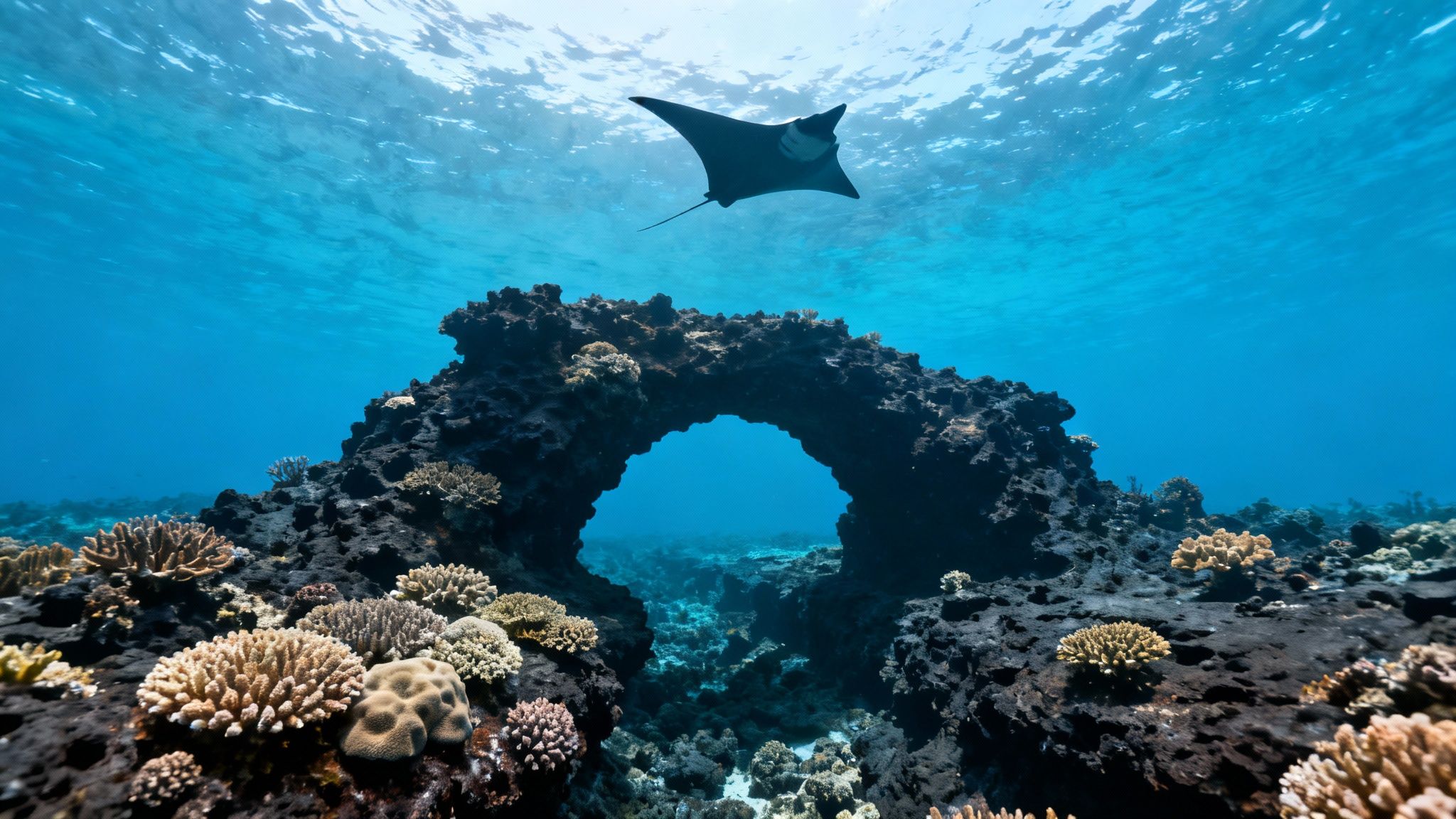
The Big Island, and specifically the Kona coast on its western side, is hands down the premier scuba destination in Hawaii. This isn't just about one or two good dive sites; it's about a powerful combination of factors that create an underwater environment few places on earth can rival.
The secret is the island’s massive volcanoes, Mauna Loa and Hualalai. They act as a giant shield, protecting the Kona coast from the gusty trade winds. This leeward position results in incredibly calm and clear water year-round. It's totally normal for visibility to push past 100 feet, making every dive a breathtaking visual experience.
That volcanic geology doesn't stop at the shoreline. It continues underwater, creating some of the most dramatic seascapes you'll ever see. Divers get to explore ancient lava tubes, swim through intricate arches, and drop into submerged craters, all covered in healthy, vibrant coral. It's a backdrop that sets Kona apart from every other island.
Why Kona's Underwater World Is Unmatched
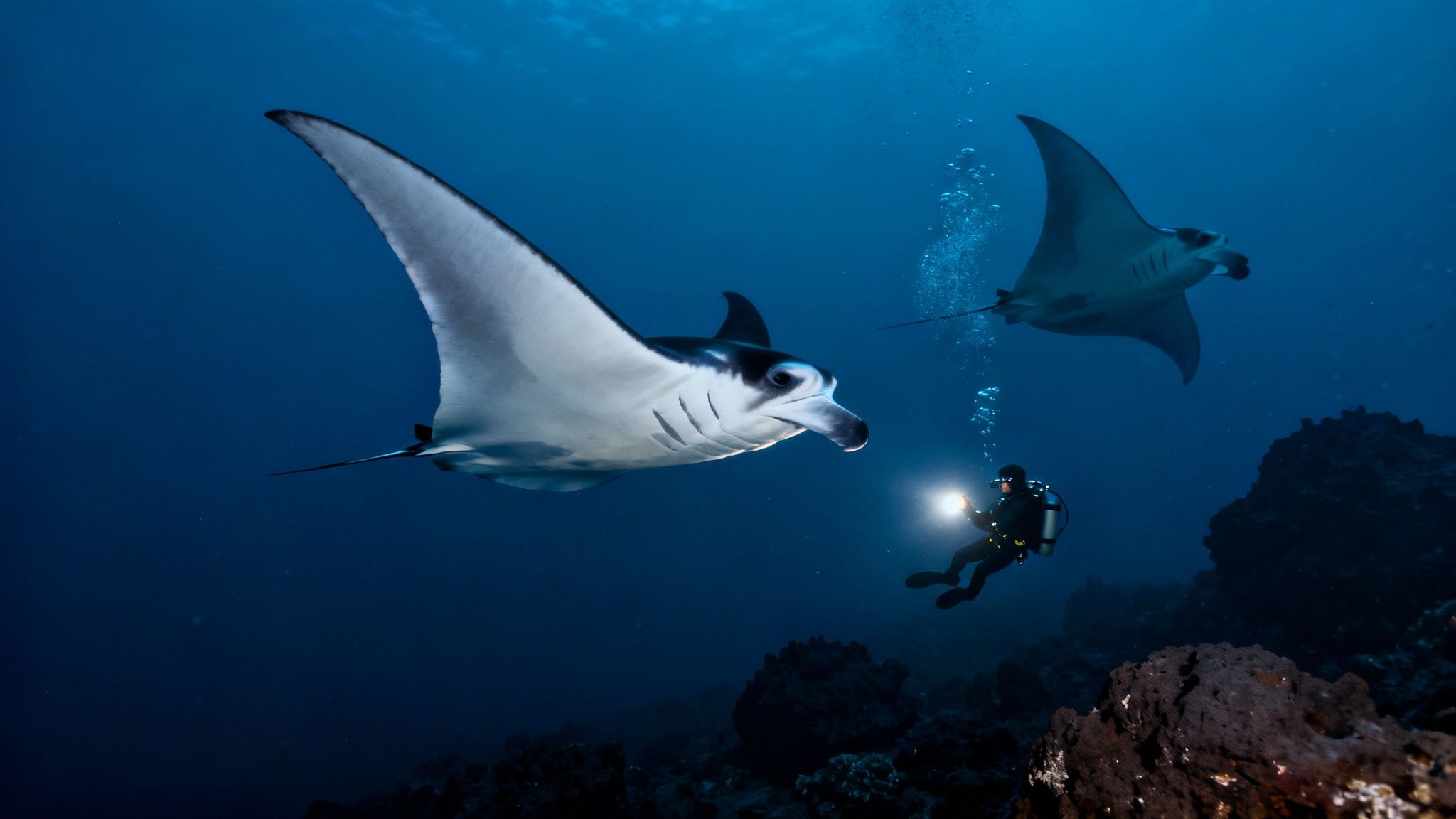
But it's not just about the clear water and cool lava formations. The Big Island is a magnet for large marine life. It's globally famous as the most reliable place to see majestic manta rays, especially on the legendary Manta Ray Night Dive. The ease of access to these gentle giants, along with routine encounters with sea turtles, pods of dolphins, and various reef sharks, simply elevates the entire experience.
If you want to get into the nitty-gritty, our complete best scuba diving in Hawaii guide breaks it all down.
To put things in perspective, here's a quick look at how the top islands compare.
Hawaii Scuba Diving Island Comparison at a Glance
For divers trying to decide where to book their trip, this quick-reference table breaks down the main differences between the top three islands. Each offers something unique, but their strengths cater to different types of divers.
| Feature | Big Island (Kona) | Maui | Oahu |
|---|---|---|---|
| Primary Attraction | Manta rays, lava tubes, and megafauna | Vibrant coral reefs and endemic fish | Historic shipwrecks and turtle cleaning stations |
| Typical Visibility | Excellent (80-100+ ft) | Very Good (70-100 ft) | Good (50-80 ft) |
| Underwater Landscape | Volcanic formations, arches, lava tubes | Coral gardens, submerged craters | Artificial reefs, sandy bottoms, some reefs |
| Best For | Divers of all levels seeking megafauna | Reef enthusiasts and underwater photographers | Wreck divers and those based in Honolulu |
As you can see, while Maui and Oahu have their own draws, the Big Island delivers an unbeatable all-around package—especially for those hoping to see Hawaii’s famous megafauna in pristine conditions.
Why the Big Island Reigns Supreme for Scuba Divers
While every Hawaiian island offers a unique glimpse into the Pacific, the Big Island—specifically the Kona Coast—delivers an underwater experience that is simply in a class of its own. It’s not just one single thing, but a perfect storm of geological and biological factors that makes it Hawaii’s undisputed scuba diving capital. When people ask, "which Hawaii island is best for scuba diving?" the answer almost always points to Kona.
The island's massive volcanoes, Hualalai and Mauna Loa, are the unsung heroes here. They act as natural shields, protecting the western coast from the powerful trade winds that can churn up the seas around the other islands. This leeward protection creates remarkably calm and predictable conditions all year long, making it a fantastic and reliable spot for divers of every skill level.
This calmness is a major reason for one of Kona's most celebrated features: crystal-clear water with visibility that often pushes past 100 feet. The deep offshore drop-offs and a lack of major river runoff mean there are far fewer particles clouding the water, giving you that incredible, gin-clear view.
Volcanic Topography Creates an Underwater Playground
The Big Island’s dramatic, volcanic origins don't just stop at the shoreline. Once you dip below the surface, you’re greeted by a surreal underwater landscape carved by ancient lava flows. This isn't your average reef dive; it’s an exploration of a submerged world full of incredible complexity.
You can navigate through intricate lava tubes, swim under massive arches, and explore submerged craters and pinnacles. These formations provide a stunning backdrop and create countless little nooks and crannies for a huge variety of marine life to call home. Unlike the flatter reefs or sandy bottoms you might find elsewhere, Kona's topography offers a genuine sense of adventure and discovery on every single dive. For a closer look at what to expect, check out our in-depth guide to Big Island scuba diving.
This one-of-a-kind environment is also home to some of the healthiest and most pristine coral gardens in Hawaii, which in turn attract a mind-boggling abundance of sea creatures.
The World-Famous Manta Ray Night Dive
You can't talk about diving in Kona without mentioning its most iconic experience: the Manta Ray Night Dive. It's widely considered one of the best night dives on the entire planet and for good reason—it’s a true bucket-list adventure.
After sunset, dive operators head to established feeding sites. Powerful lights are set up on the ocean floor, which attract massive clouds of plankton. Before long, graceful manta rays, some with wingspans stretching over 12 feet, emerge from the darkness to feed. They put on an acrobatic ballet, swooping and somersaulting just inches above your head.
This isn't just a lucky encounter; it’s an incredibly reliable phenomenon. The Big Island is the only place in the world where you can witness this spectacle with such amazing consistency, making it an absolute must-do for any visiting diver.
Kona Honu Divers offers unforgettable manta ray dive tours that give you a front-row seat for this breathtaking show.
Check Availability
Beyond Mantas: The Blackwater Dive and More
For those with a truly adventurous spirit, Kona offers an experience that is both surreal and thrilling: the Kona Blackwater Dive. This unique night dive happens out in the open ocean, thousands of feet above the sea floor.
You’re tethered to the boat, drifting in the pitch-black water, as you witness the largest vertical migration of life on Earth. Strange, bioluminescent creatures from the deep—many still in their larval stages—ascend toward the surface to feed. It’s an otherworldly encounter with organisms that very few people will ever get to see. You can learn more about this one-of-a-kind adventure on our Blackwater Dive tour page.
The island's robust dive infrastructure also plays a huge part in its top-tier status. The Big Island's dive culture has been growing since the late 1960s and early 1970s. Today, it’s home to over 50 dive shops and charters that facilitate roughly 100,000 certified scuba dives annually while welcoming more than 150,000 dive tourists each year. This mature industry means you can count on high standards of safety and accessibility. Discover more insights about the growth of diving on the Big Island on konahonudivers.com.
From world-class diving tours for all levels to specialized charters for seasoned pros, the options are endless. Kona Honu Divers is proud to be a top-rated operator right in the heart of it all.
Ultimately, it’s the combination of calm, clear waters, dramatic volcanic seascapes, and guaranteed megafauna encounters that creates a diving destination without equal in the Hawaiian Islands.
Maui’s Underwater World: A Diver’s Paradise
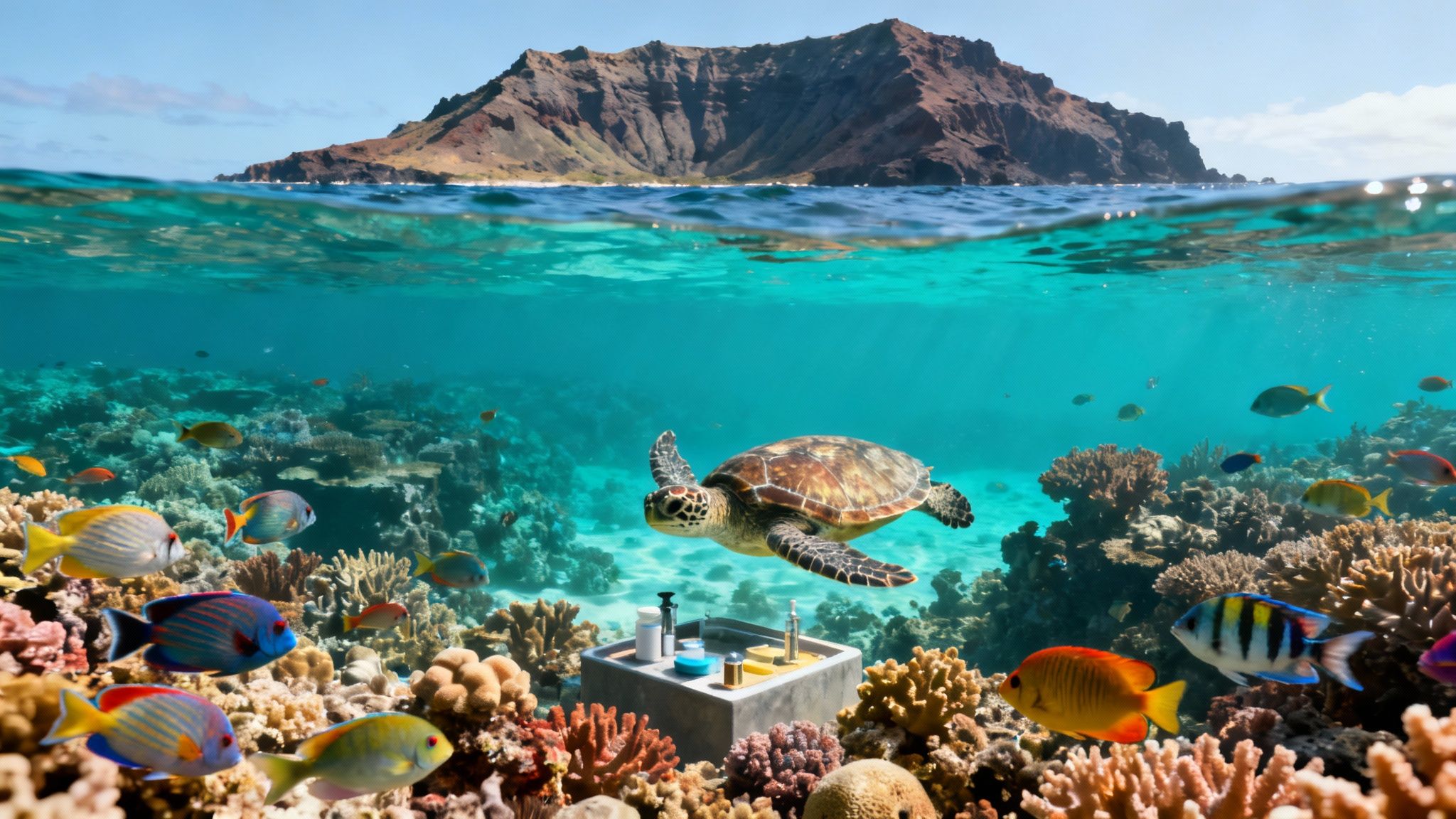
While the Big Island often gets the nod for the best overall diving in Hawaii, Maui brings something completely different—and equally compelling—to the table. Known as "The Valley Isle," Maui’s claim to fame isn’t the dramatic lava tubes or the famous manta ray night dive. Instead, it’s all about the sheer health and vibrancy of its reef ecosystems.
If you’re a diver who gets excited about healthy coral, clouds of fish, and spotting species you can’t find anywhere else on the planet, then Maui is your spot. It delivers a classic tropical diving experience, but one that’s polished to perfection.
This makes Maui an absolute dream for underwater photographers and anyone who just loves watching a reef buzz with life. The conditions are typically fantastic, with calm water and great visibility, especially along the protected south and west shores.
Molokini Crater: The Crown Jewel
Talk about Maui diving, and one name always comes up: Molokini Crater. This iconic, crescent-shaped volcanic crater is more than just a dive site; it’s a state Marine Life Conservation District and a Bird Sanctuary. That protection has turned it into one of the most pristine underwater environments in all of Hawaii.
Just a few miles off the coast, Molokini’s unique shape acts as a natural shield, protecting the inner reef from open-ocean swells. The result? Water so clear that visibility often hits an incredible 150 feet. This stunning clarity has allowed a dense, colorful, and wildly diverse ecosystem to thrive.
Inside the crater, you'll glide over sloping coral gardens absolutely swarming with life. Expect to be surrounded by huge schools of butterflyfish, parrotfish, and Moorish idols. It's a perfect spot for divers of any skill level, offering a calm, safe, and truly beautiful experience.
Beyond the Crater: The Thrill of the Back Wall
For those with a bit more experience under their weight belt, the real adventure is on the outside of the crater. The "Back Wall" is a breathtaking vertical drop that plunges more than 300 feet straight down into the deep blue. It’s a world-class drift dive.
- Who it’s for: This is an advanced dive, plain and simple. You need the certification and experience to handle the depth and potential currents.
- What you’ll see: This is where the big stuff hangs out. It's common to spot reef sharks, large jacks, and even manta rays or whale sharks cruising by during the winter months.
- The landscape: The wall itself is a dramatic tapestry of sponges and corals, a stark and beautiful contrast to the gentle slopes inside the crater.
This two-for-one experience is what makes Molokini so special. You can spend the morning on a relaxed, picture-perfect reef dive, then get your adrenaline fix on a deep drift dive in the afternoon.
Turtles and Unique Fish: Maui's Signature Encounters
One of the best things about diving Maui is the sheer abundance of unique marine life. Roughly 25% of all fish species in Hawaii are endemic, meaning this is the only place on Earth you can see them. Maui's sprawling coral reefs, particularly along the south and west coasts, are prime territory for spotting these special creatures. These reefs are built from a handful of dominant coral types, part of the more than 90 coral species found in Hawaiian waters. You can learn more about the incredible reef ecosystems of Maui at banyantreedivers.com.
And then there are the turtles. Maui is legendary for its population of Hawaiian green sea turtles, or honu. The coastline is dotted with "turtle cleaning stations"—specific spots on the reef where turtles gather to let smaller fish pick off algae and parasites. Sites like Turtle Town offer virtually guaranteed encounters, giving you a front-row seat to watch these serene animals in their natural element.
While the Big Island has the volcanic drama and the manta ray show, Maui's strength is the incredible life of its reefs and the laid-back charm of its turtle population. It’s a classic tropical dive experience, just elevated to a whole new level.
So, while Maui might not have Kona’s signature lava tubes or guaranteed megafauna spectacles, it’s a world-class dive destination in its own right. If your idea of the perfect dive involves brilliant coral gardens, unbelievable fish density, and peaceful moments with sea turtles, then Maui should be at the very top of your list.
Diving Oahu: Where History and Marine Life Collide
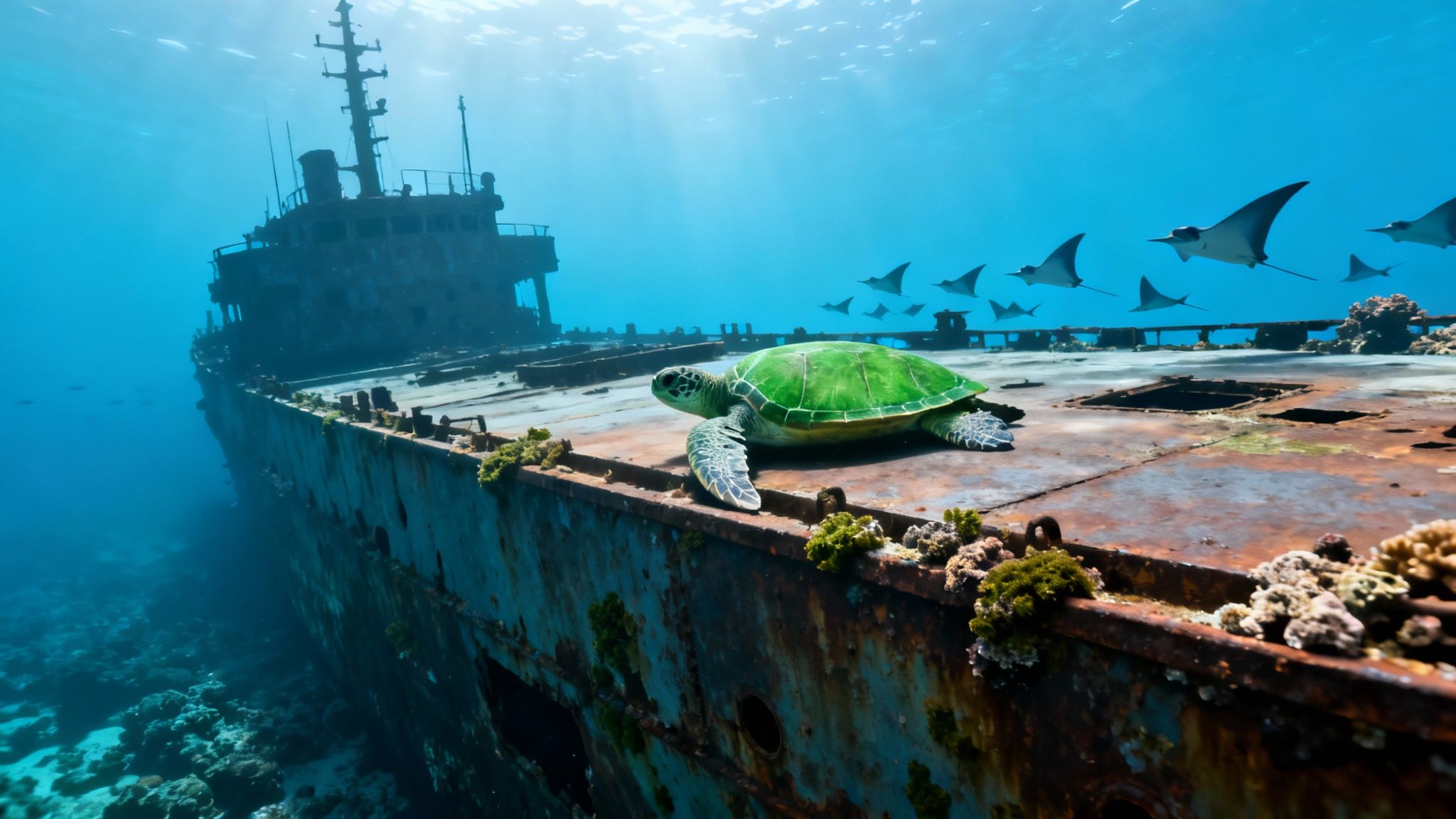
While Maui and the Big Island get a lot of attention for their natural volcanic landscapes, Oahu offers a completely different kind of underwater thrill. Here, diving is all about history. The island’s identity is forged in the silent, sunken world of shipwrecks, creating some of the most compelling artificial reefs you'll find anywhere in the Pacific.
So, if your answer to "which Hawaii island is best for scuba diving?" involves a fascination with maritime history, Oahu is your place. For anyone staying in Honolulu, the convenience factor is off the charts. You can be on a world-class wreck dive just a quick boat trip from the city buzz.
But don't mistake these wrecks for just rusty metal. They are absolutely teeming with life. Over the decades, they've transformed into vibrant underwater cities, acting as magnets for everything from massive schools of fish to the occasional pelagic visitor.
Oahu’s Sunken Treasures
Oahu is a wreck diver’s paradise, with several famous sites, each with its own story. Two of the absolute must-dives are the YO-257 and the Sea Tiger, both sunk intentionally to create the thriving reefs we see today.
The YO-257, a former Navy yard oiler, rests perfectly upright in about 100 feet of water right off Waikiki. It's an incredible sight. For properly certified divers, its open structure allows for safe and exciting penetration, letting you glide through its decks and old cargo holds.
And just a short swim away lies the San Pedro, another purpose-sunk vessel, making a two-wreck dive in one trip a very popular charter. Keep your eyes peeled. These sites are regularly patrolled by graceful eagle rays, white-tip reef sharks, and huge Hawaiian green sea turtles that love to nap right on the ship's deck.
Life in the Protected Zones
Beyond the wrecks, Oahu's reef systems are remarkably healthy, especially inside its Marine Life Conservation Districts (MLCDs). These protected zones are like underwater nurseries, fostering incredible biodiversity.
Believe it or not, Oahu's MLCDs are home to over 400 species of inshore and reef fishes. The island’s marine world is a massive economic engine, with activities like spinner dolphin viewing valued at $102 million USD as far back as 2013.
One of the most famous MLCDs is Pupukea Beach Park on the legendary North Shore, which includes Shark's Cove. In the calm summer months, this spot offers some of the best shore diving around, with intricate lava tubes, caverns, and a dizzying number of reef fish. It’s a true underwater playground.
Oahu delivers a fantastic diving experience, especially for wreck fanatics. But it's important to have the right expectations. Visibility can be more variable than on the Kona coast, and you won't find the same unique volcanic topography or the almost-guaranteed megafauna encounters that make the Big Island so iconic.
Finding the Right Dive Shop
The island has a mature and well-established dive industry, so you’ll have plenty of great operators to choose from. Picking the right one really can make or break your trip.
- Convenience: Most shops are clustered around Honolulu and Waikiki, which means easy access to all the famous south shore wrecks.
- Expertise: Look for an operator who really knows the history of the wrecks. Hearing the stories behind the ships adds a whole new dimension to the dive.
- Safety: This is non-negotiable. Always go with a reputable company with a solid safety record.
Doing a bit of research before you go is key. To give you a head start, we put together a guide on the best dive shops in Oahu, Hawaii, which should help you find the perfect match for your dive style.
Ultimately, for divers who love history, wrecks, and the energy of a major city hub, Oahu is an unbeatable destination and a very strong contender for Hawaii's best diving island.
Planning Your Big Island Diving Adventure
So, you’ve settled on the Big Island for your Hawaiian dive trip. Smart choice. Now comes the fun part: planning the adventure. Luckily, putting together a dive trip on the Kona coast is about as stress-free as it gets, thanks to its year-round calm weather and a world-class dive community.
One of the best things about diving Kona is just how dependable it is. The island's massive volcanoes act as a natural shield for the western shoreline, blessing it with calm, clear water pretty much any day you want to go. There really isn’t a "bad" time to visit. Water temperatures hover around a comfortable 75°F (24°C) in the winter and warm up to a toasty 82°F (28°C) in the summer.
Choosing Your Dives and Operator
With more than 80 distinct dive sites scattered along the Kona and Kohala coasts, you're spoiled for choice. Your dive operator is the key to unlocking the best of what this underwater world has to offer. For a top-tier experience that nails the trifecta of safety, local expertise, and a genuine passion for the ocean, Kona Honu Divers consistently stands out.
A great operator doesn't just take you to a spot on the map; they tailor the day to your skill level and what you're excited to see. Whether you're hoping to glide through ancient lava tubes, photograph fish you can't find anywhere else on Earth, or have a big animal encounter, the right crew will make it happen.
Do I Need an Advanced Certification?
While Kona is incredibly welcoming to divers of all levels, a few of its most famous dives do have specific prerequisites. It's always best to know what's required before you get your heart set on something.
- Manta Ray Night Dive: Good news! This world-famous dive is open to anyone with a basic Open Water certification. You don’t need to be an advanced diver to witness the incredible manta ballet.
- Daytime Reef Dives: Most of the vibrant coastal reefs are perfect for all certification levels. This makes Kona a fantastic place for new divers to build confidence in beautiful, easy-going conditions.
- Blackwater Dive: Now this is a different beast. This unique, open-ocean night dive is for the truly adventurous and requires an Advanced Open Water certification and a solid comfort level in the water. It's an experience like no other.
- Advanced Dives: If you've got the experience, Kona delivers. There are thrilling deep dives on submerged volcanic pinnacles and complex lava formations to explore. These sites typically require an Advanced Open Water certification and a good number of logged dives.
Kona Honu Divers offers a full range of diving tours, from relaxed reef explorations to more challenging advanced diving opportunities.
Booking Your Trip and Protecting the Reef
It’s a really good idea to book your dives in advance, especially for bucket-list trips like the manta ray dive. Those spots can fill up weeks ahead of time, particularly during peak travel seasons. Locking in your dives early means you get a spot on the boat and can plan the rest of your vacation around it.
As you plan your trip, think about how you can dive responsibly. Supporting broader efforts for marine environmental protection and ocean conservation starts with small actions. Things like using reef-safe sunscreen and perfecting your buoyancy so you never touch the coral make a massive difference in preserving the very ecosystem you came to see.
When you choose a reputable operator and dive with care, you become part of the solution, helping to ensure Kona’s underwater paradise remains healthy for years to come. With its dramatic volcanic landscapes, reliable marine life, and a dive community that feels like family, the Big Island is ready to show you exactly why it’s the best for scuba in Hawaii.
Ready to jump in?
Check Availability
Your Hawaii Scuba Diving Questions Answered
Even after you've zeroed in on an island, you probably have a few more questions rattling around. I get it—planning the perfect dive trip is all in the details. Here are some quick, straightforward answers to the most common questions I hear, which should help you prepare and show you why the Big Island consistently comes out on top.
What’s the Best Time of Year to Dive in Hawaii?
One of the best things about diving in Hawaii is that there really isn't a bad time to go. It’s a year-round destination. The summer months, from May through September, generally offer the flattest, calmest ocean conditions, especially on the north-facing shores.
But don't count out the winter. Even when big swells roll in from December to March, the leeward coasts stay incredibly protected. The Kona coast on the Big Island, for instance, is sheltered by massive volcanoes that act as a natural shield, giving us amazing dive conditions nearly every single day of the year.
The water is always inviting, too. It hovers around a comfortable 75°F (24°C) in the winter and warms up to a balmy 82°F (28°C) in the peak of summer.
Do I Need an Advanced Certification to Dive on the Big Island?
Nope, not at all! This is actually one of the biggest reasons the Big Island is such a phenomenal place to dive—it’s fantastic for every experience level. Many of the most stunning dive sites along the Kona coast are in calm, shallow water, making them perfect for beginners, people getting certified, or divers who just want a relaxed, beautiful reef tour.
Even the world-famous Manta Ray Night Dive is accessible to Open Water certified divers. Of course, if you do have more experience, the Big Island delivers with thrilling advanced diving opportunities. We're talking deep dives, exploring ancient lava tubes, and the one-of-a-kind Pelagic Blackwater Dive. Reputable operators like Kona Honu Divers offer a whole range of diving tours designed for every skill set.
Check Availability
What Kind of Marine Life Can I Expect to See in Kona?
Kona is legendary for its sheer abundance and diversity of marine life. On just about any dive, you’ve got a fantastic shot at spotting Hawaiian green sea turtles (honu), moray eels peeking out from crevices, octopuses, and a whole spectrum of colorful reef fish that you can't find anywhere else on the planet.
But let’s be honest, the big animals are the main draw here. Kona is the most reliable place in the world to encounter majestic manta rays—they are the true stars of the show. It’s also common to see pods of spinner dolphins, graceful eagle rays, and several types of sharks, most often whitetip reef sharks resting on the sandy bottom.
For an experience that's completely out of this world, the Kona Blackwater dive takes you into a hidden universe. You’ll see bizarre larval creatures and glowing organisms that migrate up from the deep ocean abyss every night.
It’s this reliable access to both vibrant reefs and incredible megafauna that really cements the Big Island's reputation.
Is Shore Diving a Good Option on the Big Island?
Absolutely! The Big Island has some of the best and most accessible shore diving in all of Hawaii. It's a paradise for certified divers who love the freedom of exploring on their own schedule.
The Kona and Kohala coasts are dotted with great entry points that lead right to healthy, beautiful coral reefs. Popular spots like Two Step at Honaunau Bay are a favorite for locals and visitors alike, offering a super-easy entry and a great chance of seeing dolphins and turtles.
While boat dives will get you to those premier offshore sites and signature experiences like the manta dive, mixing in a few shore dives is a fantastic way to maximize your time underwater. It adds a whole other layer of adventure to your trip and really highlights why the Big Island is the best answer to the question, "which Hawaii island is best for scuba diving?".