
The search for the perfect dive is a universal quest among underwater enthusiasts. But what truly defines "the most beautiful place to scuba dive?" Is it the sheer biodiversity of a thriving coral reef, the adrenaline rush of encountering large pelagic species, or the surreal experience of drifting through otherworldly underwater topography? The answer is deeply personal, varying with every diver's experience level, interests, and sense of adventure. A beginner might find paradise in the calm, clear waters of a protected bay, while a seasoned technical diver might seek the challenge of a deep-water pinnacle teeming with sharks.
This comprehensive guide is designed to navigate that very question. We will explore a curated list of the world's most renowned diving destinations, moving beyond surface-level descriptions to provide the practical details you need. For each location, we'll break down the signature marine life, unique site characteristics, and essential logistical considerations. This resource will help you compare top-tier spots, understand what makes each one a contender for the ultimate underwater paradise, and ultimately decide which destination best aligns with your personal diving aspirations. We've compiled the data so you can focus on planning your next unforgettable underwater journey.
1. Great Barrier Reef, Australia
The Great Barrier Reef isn't just a dive destination; it's a living wonder of the world. As the planet's largest coral reef system, this UNESCO World Heritage Site stretches over 2,300 kilometers, offering an unparalleled scale of biodiversity. Divers can encounter everything from tiny nudibranchs to majestic humpback whales, making it an essential entry on any list of the most beautiful places to scuba dive. The sheer size means there’s a dive site suitable for every experience level, from shallow coral gardens for beginners to challenging deep wrecks for technical divers.
Highlights and Practical Tips
The reef's vastness makes choosing a site the biggest challenge. For a truly immersive experience, book a liveaboard trip to the remote Ribbon Reefs, where you can visit iconic spots like Cod Hole. Wreck enthusiasts should prioritize the SS Yongala, often cited as one of the best wreck dives globally due to its incredible concentration of marine life.
Implementation Considerations:
- Best Time to Visit: Plan your trip between June and November for optimal visibility, calmer seas, and lower humidity.
- Logistics: Cairns is the primary hub for day trips and certifications, but Port Douglas offers access to different reef systems.
- Booking: Popular sites and liveaboards, especially those heading to Osprey Reef for shark encounters, should be booked many months in advance.
- Conservation: The reef is a fragile ecosystem. Always use reef-safe sunscreen and practice perfect buoyancy control to avoid damaging the delicate coral structures.
2. Raja Ampat, Indonesia
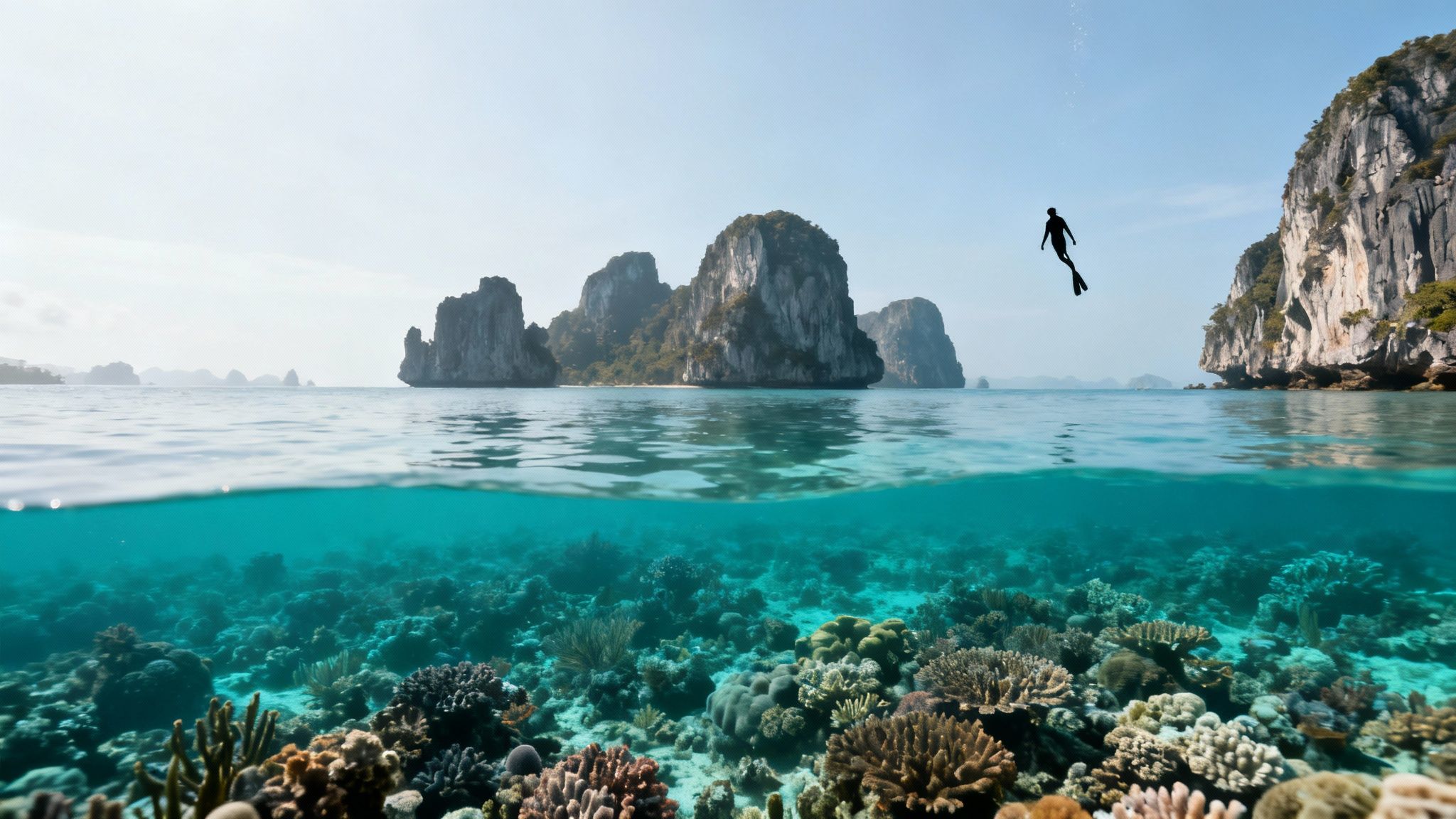
Raja Ampat, translating to 'The Four Kings', is an archipelago at the heart of the Coral Triangle, widely considered the epicenter of marine biodiversity. This remote Indonesian paradise contains an astonishing 75% of the world's known coral species and over 1,400 species of reef fish. For divers asking where is the most beautiful place to scuba dive, Raja Ampat offers an experience akin to diving in a prehistoric aquarium, with staggering biomass and pristine ecosystems that feel untouched by time. The sheer density and variety of life, from pygmy seahorses to massive oceanic manta rays, make every dive a unique adventure.
Highlights and Practical Tips
The region's vastness is best explored via a liveaboard, which can access legendary sites across its different areas. In Misool, you’ll find some of the planet’s most vibrant soft coral gardens, while Cape Kri holds the world record for the most fish species (374) identified on a single dive. Other must-see spots include Manta Sandy for reliable ray encounters and Blue Magic for its swirling schools of fish. For divers interested in unique underwater topographies, Raja Ampat offers a different experience compared to other Southeast Asian hotspots, as detailed in this guide on diving in Puerto Galera, Philippines on konahonudivers.com.
Implementation Considerations:
- Best Time to Visit: The primary diving season runs from October to April, offering the calmest seas and best overall conditions.
- Logistics: The main entry point is Sorong (SOQ). Most divers opt for a liveaboard, but high-quality, eco-conscious resorts are also available.
- Booking: Liveaboards are the most popular option and often sell out 6 to 12 months in advance, so early planning is crucial.
- Conservation: This is a heavily protected area. Bring reef-safe toiletries, practice immaculate buoyancy, and be aware that ATMs are nonexistent outside of Sorong, so bring sufficient cash. Advanced certification with drift diving experience is highly recommended.
3. Galápagos Islands, Ecuador
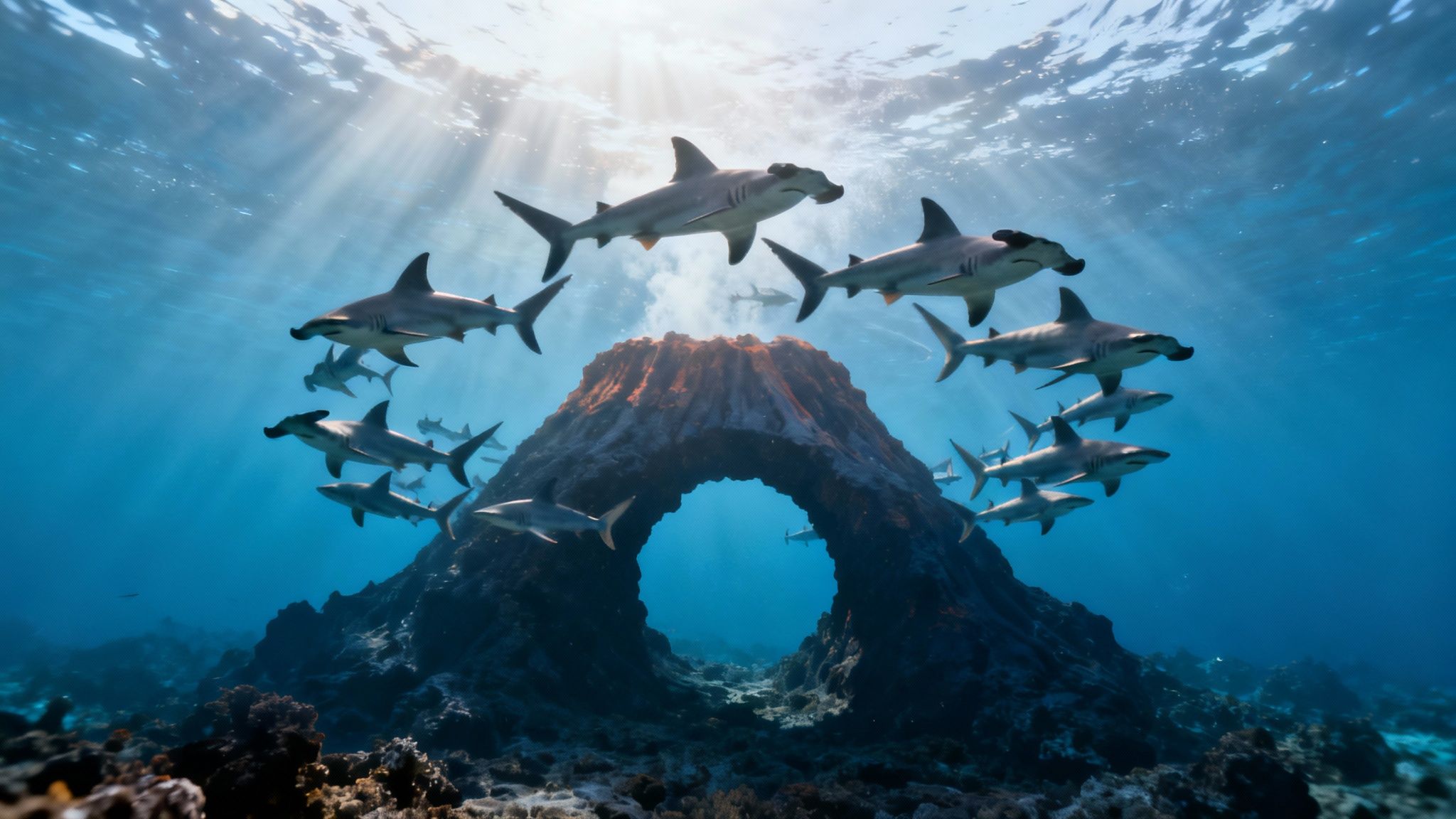
Diving in the Galápagos Islands is less about colorful coral reefs and more about a raw, powerful encounter with evolution in action. This volcanic archipelago, famously studied by Charles Darwin, is a convergence point for multiple ocean currents, creating a nutrient-rich environment that attracts an unparalleled concentration of large pelagic life. Divers come here for the adrenaline rush of seeing massive schools of hammerhead sharks, whale sharks, and unique creatures like marine iguanas feeding underwater. It’s an advanced, high-voltage destination that offers some of the most extraordinary underwater wildlife encounters on Earth, making it a bucket-list contender for where is the most beautiful place to scuba dive.
Highlights and Practical Tips
The most legendary sites, like Darwin's Arch and Wolf Island, are accessible only by liveaboard and are considered the pinnacle of big animal diving. Here, you can witness aggregations of hundreds of hammerhead sharks, Galápagos sharks, and silky sharks. Closer to the central islands, Gordon Rocks offers an exciting drift dive with sea lions and schooling fish, while Punta Vicente Roca is famous for mola mola, red-lipped batfish, and seahorses.
Implementation Considerations:
- Best Time to Visit: June to November is whale shark season and offers the best chance for megafauna sightings, though diving is excellent year-round.
- Logistics: This is not a beginner's destination. Most liveaboards require an advanced certification with a minimum of 50-100 logged dives due to strong currents, surge, and cold water.
- Booking: Liveaboard permits are strictly limited to protect the ecosystem. You must book your trip at least a year, sometimes two, in advance.
- Preparation: Pack a 7mm wetsuit, hood, and gloves, as water temperatures can drop significantly. The open ocean crossings are often rough, so come prepared with seasickness medication.
4. Red Sea, Egypt
The Red Sea is a legendary corridor of water that separates Africa from Asia, offering some of the planet’s most breathtaking underwater scenery. Renowned for its exceptional visibility, vibrant coral reefs, and comfortably warm waters year-round, it stands as a pillar of the global diving community. Its unique geography, with minimal freshwater runoff, results in high salinity and crystal-clear conditions, fostering an explosion of marine life and spectacular coral formations. From world-class wrecks to dramatic offshore pinnacles, the Red Sea rightfully earns its place as one of the most beautiful places to scuba dive.
Highlights and Practical Tips
The diversity of sites here is staggering. For wreck diving, nothing compares to the SS Thistlegorm, a WWII cargo ship perfectly preserved as an underwater museum. For pristine reefs and thrilling drift dives, Ras Mohammed National Park is a must-visit. More remote destinations like the Brothers Islands and Elphinstone Reef are magnets for oceanic whitetip sharks and other pelagic species, best accessed via liveaboard.
Implementation Considerations:
- Best Time to Visit: Plan your trip for March to May or September to November for the best balance of warm water and comfortable surface temperatures.
- Logistics: Sharm el-Sheikh is the gateway to the northern reefs and Sinai, while Marsa Alam provides access to the deeper south. Liveaboards are essential for reaching remote offshore sites.
- Booking: Booking a liveaboard, especially for a popular itinerary, should be done many months in advance. Research operators thoroughly as quality and safety standards can vary significantly.
- Conservation: Many wrecks, like the Thistlegorm, are war graves. Treat them with the utmost respect. Adhere to all park rules and practice excellent buoyancy to protect the delicate reef systems from damage.
5. Palau, Micronesia
Palau is not merely a diving spot; it’s a pioneering conservation success story and an underwater sanctuary. This Pacific archipelago, composed of over 500 islands, offers some of the most dramatic and pristine underwater landscapes on Earth. Famous for establishing the world's first shark sanctuary, Palau delivers an incredible density of marine life against a backdrop of sheer walls, historic wrecks, and unique geological formations. This commitment to preservation makes it one of the most beautiful and rewarding places to scuba dive, providing encounters with thriving, protected ecosystems rarely seen elsewhere.
Highlights and Practical Tips
The diversity of dive sites in Palau is staggering. For adrenaline-seekers, Blue Corner is a legendary drift dive where reef hooks are essential for watching sharks, tuna, and eagle rays patrol the current-swept plateau. The German Channel offers a completely different experience, serving as a famous cleaning station where majestic manta rays congregate. Beyond pelagics, divers can explore the multi-chambered Chandelier Cave or discover perfectly preserved WWII history at the Jake Seaplane wreck.
Implementation Considerations:
- Best Time to Visit: The dry season from November to May offers the calmest seas and best visibility, though diving is excellent year-round.
- Logistics: Most dive operations are based in Koror. Advanced certification and experience with strong currents are highly recommended for many of the top sites.
- Booking: Palau is a world-class destination. Book liveaboards and popular dive centers like Sam's Tours or Fish 'n Fins at least six months in advance.
- Conservation: Visitors must pay a "Pristine Paradise Environmental Fee" upon arrival. Be sure to visit the non-stinging Jellyfish Lake, a unique snorkeling experience that contributes to local conservation funds.
6. Maldives
The Maldives is the definition of a tropical paradise, both above and below the water. This island nation, comprised of 26 atolls scattered across the Indian Ocean, offers some of the clearest water on the planet. Its unique geography of atolls and channels (kandus) creates nutrient-rich currents, making it a world-renowned hotspot for large pelagic species. Divers flock here for breathtaking encounters with whale sharks and massive aggregations of manta rays, solidifying its reputation as one of the most beautiful places to scuba dive. The calm, protected lagoons also provide ideal conditions for novice divers to build their confidence.
Highlights and Practical Tips
The best way to experience the Maldives is often by liveaboard, which allows you to explore multiple atolls in a single trip. For manta ray lovers, a visit to Hanifaru Bay between May and November is a must, as this UNESCO Biosphere Reserve hosts one of the largest gatherings of mantas in the world. Night dives at Maaya Thila are legendary for encounters with hunting sharks and morays, while channel dives like Fish Head offer thrilling drift experiences past schools of fish and sharks. For a detailed trip report, you can learn more about a Maldives diving adventure.
Implementation Considerations:
- Best Time to Visit: December to May offers the best weather and visibility on the western side of the atolls, while May to November is ideal for manta sightings on the eastern side.
- Logistics: Most international visitors fly into Velana International Airport (MLE) near the capital, Malé, which is the main departure point for liveaboards and seaplane transfers to resorts.
- Booking: Liveaboards are the most popular option and should be booked well in advance. Alternatively, many resort islands feature excellent house reefs for unlimited shore diving.
- Conservation: Respect local customs and laws, especially the no-alcohol rule on inhabited local islands (resorts are exempt). Use reef-safe sunscreen to protect the fragile marine environment.
7. Cozumel, Mexico
Cozumel offers some of the most exhilarating and effortless drift diving in the world. Situated on the Mesoamerican Barrier Reef, the second-largest reef system globally, this Caribbean island is renowned for its consistent currents and astounding visibility, often exceeding 100 feet. Divers simply ride the gentle "conveyor belt" along spectacular coral walls teeming with life, from loggerhead turtles and eagle rays to countless species of tropical fish. The island's accessibility and variety of sites make it a premier destination for both new divers and seasoned veterans seeking a truly beautiful place to scuba dive.
Highlights and Practical Tips
The Cozumel Marine Park protects a stunning array of dive sites. Technical divers can challenge themselves with the famous cavern dive, Devil's Throat, while beginners can marvel at the shallow coral gardens of Paradise Reef. For most, the iconic Palancar Reef and the dramatic Santa Rosa Wall are must-do dives, offering massive coral formations, exciting swim-throughs, and encounters with large groupers. The deliberately sunk C-53 Felipe Xicotencatl wreck has also become a thriving artificial reef. To learn more about diving in this iconic location, you can explore a comprehensive guide about Cozumel, Mexico from Kona Honu Divers.
Implementation Considerations:
- Best Time to Visit: Plan your trip between December and April for the best combination of calm seas, great visibility, and dry weather.
- Logistics: Stay in or near the town of San Miguel to have easy access to a wider variety of dive operators and local restaurants.
- Booking: Book dive packages in advance for the best value. Consider operators that use larger tanks for extended bottom time, a popular practice in Cozumel.
- Conservation: Currents can be strong. A reef hook can be useful for pausing to observe marine life without touching the fragile reef. Always follow your dive guide's instructions.
8. Sipadan, Malaysia
Famously described by Jacques Cousteau as "an untouched piece of art," Sipadan is a legendary oceanic island rising 600 meters from the seabed. Located in the vibrant Celebes Sea, it's Malaysia's only oceanic island and a protected marine park renowned for its staggering biodiversity and dramatic underwater topography. The island is essentially the tip of an extinct volcano, fringed by a shallow reef that plummets into the abyss, creating spectacular wall dives that attract an abundance of large pelagic species. This unique formation makes Sipadan one of the most beautiful and sought-after places to scuba dive in the world.
Highlights and Practical Tips
The highlight of Sipadan is undoubtedly Barracuda Point, where divers can be enveloped by a swirling vortex of thousands of chevron barracudas. Other must-see sites include South Point for its healthy shark population and the Drop Off, a sheer wall right off the beach. Due to strict conservation efforts, a permit system limits the number of daily divers, making it an exclusive experience.
Implementation Considerations:
- Best Time to Visit: The prime diving season runs from April to December, offering the best visibility and calmest sea conditions.
- Logistics: No one can stay on Sipadan island itself. Divers must stay on the nearby islands of Mabul or Kapalai and book with a registered dive operator who holds permits.
- Booking: Permits are extremely limited and in high demand. It is essential to book your dive package with a resort at least 6 to 12 months in advance to secure a spot.
- Conservation: Sipadan is a protected park with strict rules. Practice excellent buoyancy, never touch marine life (especially the numerous turtles), and leave nothing behind.
9. Komodo National Park, Indonesia
Known for its legendary dragons on land, Komodo National Park offers an equally dramatic and primal world beneath the waves. This UNESCO World Heritage Site is situated at the confluence of the Indian and Pacific Oceans, creating a vortex of nutrient-rich currents that fuel an astonishing level of marine biodiversity. Divers here are immersed in a dynamic environment, witnessing everything from powerful pelagic hunters to some of the planet's most bizarre macro critters, making it an undeniably beautiful and exhilarating place to scuba dive.
Highlights and Practical Tips
The park’s sheer intensity and variety are its main draw. For encounters with graceful giants, head to Manta Alley or Manta Point, both reliable cleaning and feeding stations. For a high-voltage thrill, drop in at Castle Rock or Batu Bolong, submerged pinnacles swarming with sharks, giant trevallies, and dense schools of fish. Macro photographers will find paradise at sites like Cannibal Rock, home to an incredible array of tiny, strange creatures.
Implementation Considerations:
- Best Time to Visit: The dry season, from April to November, offers the best diving conditions with calmer seas and better visibility.
- Logistics: The best way to access the park's premier and remote dive sites is via a liveaboard departing from Labuan Bajo. Ensure you have an advanced certification and are comfortable in strong, unpredictable currents.
- Booking: Liveaboards are the most popular option and fill up quickly, especially during peak season. Book your trip at least six to twelve months in advance.
- Conservation: This is a protected area. Practice excellent buoyancy, use reef hooks responsibly where permitted, and never touch marine life. Remember to schedule a topside tour to see the iconic Komodo dragons.
10. Cocos Island, Costa Rica
Cocos Island is not just a dive spot; it's a legendary, remote sanctuary for massive pelagic species. Located 550 kilometers off Costa Rica’s Pacific coast, this uninhabited UNESCO World Heritage Site is an adrenaline-fueled dream for advanced divers. The island's dramatic underwater volcanic pinnacles and seamounts act as cleaning stations and navigational beacons, attracting breathtaking aggregations of marine life. It's a place of raw, untamed beauty, where divers come face-to-face with the ocean's most impressive inhabitants in a truly pristine environment.
Highlights and Practical Tips
The island's allure lies in its legendary shark encounters. Divers travel here for the near-guaranteed sightings of enormous schools of scalloped hammerheads, a spectacle best witnessed at the world-famous seamount, Bajo Alcyone. Other notable sites include Dirty Rock and Manuelita Outside, where whitetip reef sharks, Galapagos sharks, tiger sharks, and vast schools of jacks and tuna patrol the waters. Due to its extreme remoteness, Cocos Island is accessible only via liveaboard.
Implementation Considerations:
- Best Time to Visit: The rainy season from June to November brings nutrient-rich upwellings, attracting the largest congregations of hammerhead sharks.
- Logistics: All trips are via liveaboard, departing from Puntarenas, Costa Rica. The crossing is notoriously rough and takes approximately 36 hours.
- Booking: With a limited number of permits and trips per year, it is essential to book your liveaboard spot 12 to 18 months in advance.
- Experience Level: This is a destination for seasoned divers. Most operators require a minimum of 100 logged dives, with recent experience in deep and drift diving. Prepare for physically demanding conditions with strong currents and multiple dives per day.
Top 10 Scuba Diving Destinations Comparison
| Dive Destination | Core Features / Highlights | User Experience ★ & Visibility | Value 💰 & Accessibility | Target Audience 👥 | Unique Selling Points ✨ |
|---|---|---|---|---|---|
| Great Barrier Reef, AUS | Largest reef system, 400+ corals, sea turtles | ★★★★☆ / 20-40m | 💰 Moderate, multiple access points | Beginner to Advanced | Iconic Cod Hole, diverse zones 🏆 |
| Raja Ampat, IND | Highest biodiversity, remote pristine reefs | ★★★★★ / 15-30m | 💰 High, remote travel required | Intermediate to Advanced | Macro life, endemic species, conservation ✨ |
| Galápagos Islands, ECU | Endemic species, pelagic megafauna | ★★★★☆ / 10-25m | 💰 Very high, limited permits | Advanced only | Hammerhead schools, marine iguanas 🏆 |
| Red Sea, EGYPT | Exceptional clarity, WWII wrecks, warm year-round | ★★★★☆ / 20-40m | 💰 Affordable, easy Europe access | Beginner to Advanced | Thistlegorm wreck, diverse dive types ✨ |
| Palau, MICRONESIA | Shark sanctuary, jellyfish lakes, WWII wrecks | ★★★★★ / 20-40m | 💰 Expensive, remote | Intermediate to Advanced | Blue Corner drift dives, stingless jellyfish ✨ |
| Maldives | Year-round manta rays, whale sharks, luxury resorts | ★★★★☆ / 20-40m | 💰 High, resort & liveaboard options | Beginner to Advanced | Manta cleaning stations, luxury diving 🏆 |
| Cozumel, MEXICO | Drift diving, Mesoamerican reef, excellent visibility | ★★★★☆ / 25-40+m | 💰 Affordable, easy US access | Beginner to Advanced | Effortless drift dives, rich Mayan culture ✨ |
| Sipadan, MALAYSIA | 600m walls, barracuda tornado, strict permits | ★★★★★ / 20-40m | 💰 Moderate, permit required | Intermediate to Advanced | Barracuda Point, guaranteed turtles 🏆 |
| Komodo National Park, IND | Indian-Pacific currents, manta rays, macro critters | ★★★★☆ / 15-30m | 💰 Moderate, primarily liveaboard | Intermediate to Advanced | Komodo dragons topside, diverse pelagics ✨ |
| Cocos Island, COSTA RICA | Massive hammerhead aggregations, remote pristine reef | ★★★★☆ / 15-30m | 💰 Very high, long boat journey | Advanced to Expert | Legendary big pelagic dives, strict protections🏆 |
Finding Your Own ‘Most Beautiful’ Place
From the coral gardens of the Great Barrier Reef to the evolutionary wonders of the Galápagos Islands, our journey through the world's premier scuba destinations reveals a profound and universal truth: beauty beneath the waves is deeply personal. Answering the question, "Where is the most beautiful place to scuba dive?" isn't about finding a single, definitive location. Instead, it's about discovering the place that resonates most with your own sense of awe and adventure.
What one diver finds in the macro-paradise of Raja Ampat's bustling reefs, another might discover in the silent, deep-blue drop-offs of Palau, surrounded by cruising sharks. Your perfect dive might be a gentle drift along Cozumel's vibrant walls, a thrilling encounter with hammerheads at Cocos Island, or a surreal night float among the gentle giants of the Maldives. Each destination offers a unique dialect of the ocean's language, spoken through its currents, creatures, and underwater topography.
Key Takeaways for Your Next Dive Adventure
As you plan your next underwater expedition, consider the factors that truly define "beautiful" for you.
- Marine Life vs. Landscape: Are you drawn to massive schools of fish and megafauna like those found in the Galápagos and Komodo, or do the intricate coral structures and volcanic landscapes of places like the Red Sea capture your imagination? Prioritize what you most want to see.
- Accessibility and Skill Level: A destination like Sipadan offers world-class diving but requires more logistical planning and is best suited for experienced divers. In contrast, many sites in the Maldives or Cozumel are incredibly accessible for all skill levels, from beginners to seasoned professionals.
- Topside Experience: The adventure doesn't end when you surface. Consider what you want from your time on land. Do you prefer the remote, liveaboard-focused isolation of Raja Ampat or the rich cultural history and desert landscapes of Egypt? Your surface intervals are a crucial part of the overall experience.
Planning Your Path to Discovery
The true value in exploring these world-class locations is not just about ticking boxes on a list; it's about expanding your skills, deepening your appreciation for marine ecosystems, and understanding your own preferences as a diver. The journey to finding your 'most beautiful' place is a continuous process of exploration.
Start by assessing your current certification level and comfort in the water. Use that as a baseline to select a destination that both excites and appropriately challenges you. Research the best seasons for visibility and marine life encounters, and connect with dive operators who prioritize safety and conservation. Ultimately, the most beautiful place to scuba dive is the one that leaves you with an unforgettable sense of wonder and a powerful desire to protect our planet's incredible underwater realms. It’s the dive you’ll be talking about for years to come, the one that sets the standard for all others that follow.
While the world's oceans offer countless wonders, you don't have to travel to the farthest corners of the globe to find a truly world-class and beautiful diving experience. For a destination that combines unique volcanic topography, incredible biodiversity, and iconic encounters like the world-famous Manta Ray Night Dive, look no further than the crystal-clear waters of Hawaii. Discover your own version of 'beautiful' with the expert guides at Kona Honu Divers, who are dedicated to showing you the magic of the Big Island's underwater world.