
So, when is the perfect time to book your Kona manta ray dive? Let's dive right in.
While you can technically see manta rays year-round in Kona, the absolute prime season runs from late spring to early fall. Think April through October. During these months, the Pacific tends to be much calmer, the water is warmer, and most importantly, the plankton is booming.
The Best Time for Your Kona Manta Ray Dive
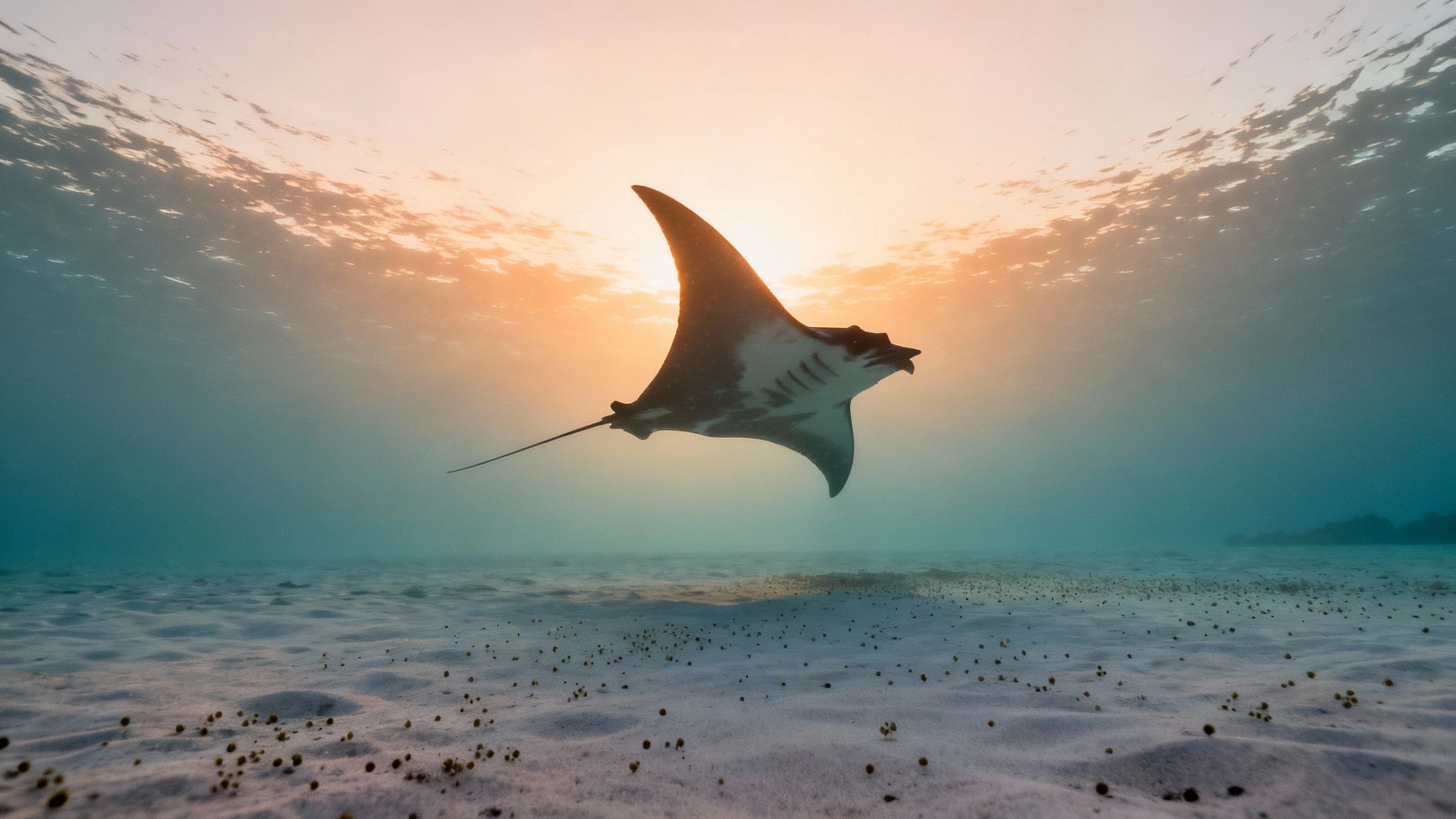
Kona isn't just a good spot for manta encounters; it's a world-famous one. The unique underwater topography here acts like a natural pantry, attracting these gentle giants every single night for a feeding frenzy that has to be seen to be believed.
This reliable food source is what makes Kona so special. It leads to one of the highest sighting success rates you'll find anywhere. We're talking an incredible 80% to 90% success rate on most nights, which is why around 80,000 people flock here each year just for this experience. That kind of consistency is almost unheard of in wildlife encounters, but Kona's shallow, plankton-rich waters make it happen. You can discover more insights about Kona's manta ray seasons to get a feel for the yearly patterns.
Why Kona's Conditions Are Ideal
So, what makes these peak months so magical? It’s the perfect storm of calm seas and a massive plankton buffet. This combination sets the stage for the famous "manta ballet," creating a predictable and safe environment for both the mantas and the divers.
Of course, going with a seasoned crew makes all the difference. Reputable operators like Kona Honu Divers have the experience to get you in the best possible position to witness the spectacle safely and respectfully.
To give you a quick overview, here’s a breakdown of what to expect throughout the year.
Kona Manta Ray Diving Seasons at a Glance
| Season | Months | Typical Ocean Conditions | Sighting Probability |
|---|---|---|---|
| Peak Season | April – October | Calm, warm water | Very High (80-90%+) |
| Off-Peak Season | November – March | Cooler water, potential for more swell | Good (Still high, but weather-dependent) |
While the peak season offers the most reliable conditions, don't rule out the "off-peak" months. The mantas are still there, but you'll want to keep a closer eye on the weather forecast.
Navigating Kona’s Manta Ray Seasons

When you're trying to figure out the best time for a manta dive in Kona, it’s easy to get hung up on the wrong question. People always ask, "When are the mantas there?" The answer is simple: they live here. They show up every night.
The real question you should be asking is, "When is the ocean going to cooperate?" The "best" time to dive isn't about the animals; it’s all about the sea conditions, which directly affect your comfort, safety, and whether the trip runs at all.
While you can see mantas any month of the year, conditions are most predictable and calm from late spring through early fall—think April to October. During this window, the seas are generally flatter, making for a much more pleasant and reliable experience. On the flip side, the winter months from December to March often bring bigger swells, which can lead to cancellations. You can learn more about Hawaii's seasonal manta conditions to get a better feel for these patterns.
Peak Season vs. Winter Swells
From April through October, the Pacific tends to be much gentler. This peak season means fewer trip cancellations and a smoother boat ride out to the site. Once you’re in the water, the calmer conditions make the whole dive more comfortable and enjoyable.
Come winter, particularly from November to March, the ocean gets a bit more attitude. The swells can get pretty big, and the water can be choppy. While the diving can still be incredible, there's a higher risk your tour operator will have to call off the trip for safety.
The key takeaway is simple: your chance of seeing mantas is high any night of the year, but your chance of having a smooth, uninterrupted tour is highest during the summer months.
The Sweet Spot: Shoulder Months
For those of us who have been doing this for a while, the shoulder months are often the magic ticket. They give you the best of both worlds.
- April & May: This is right as the calm season kicks in. You get beautiful weather and great ocean conditions, but without the peak summer crowds.
- September & October: The summer rush is over, but the ocean usually stays nice and flat. Fewer boats on the water often means a more intimate encounter.
Booking your manta ray dive tour during these windows is a savvy move. You get fantastic conditions with a little more breathing room, creating a truly unforgettable experience with these gentle giants.
Decoding the Daily Dive Schedule
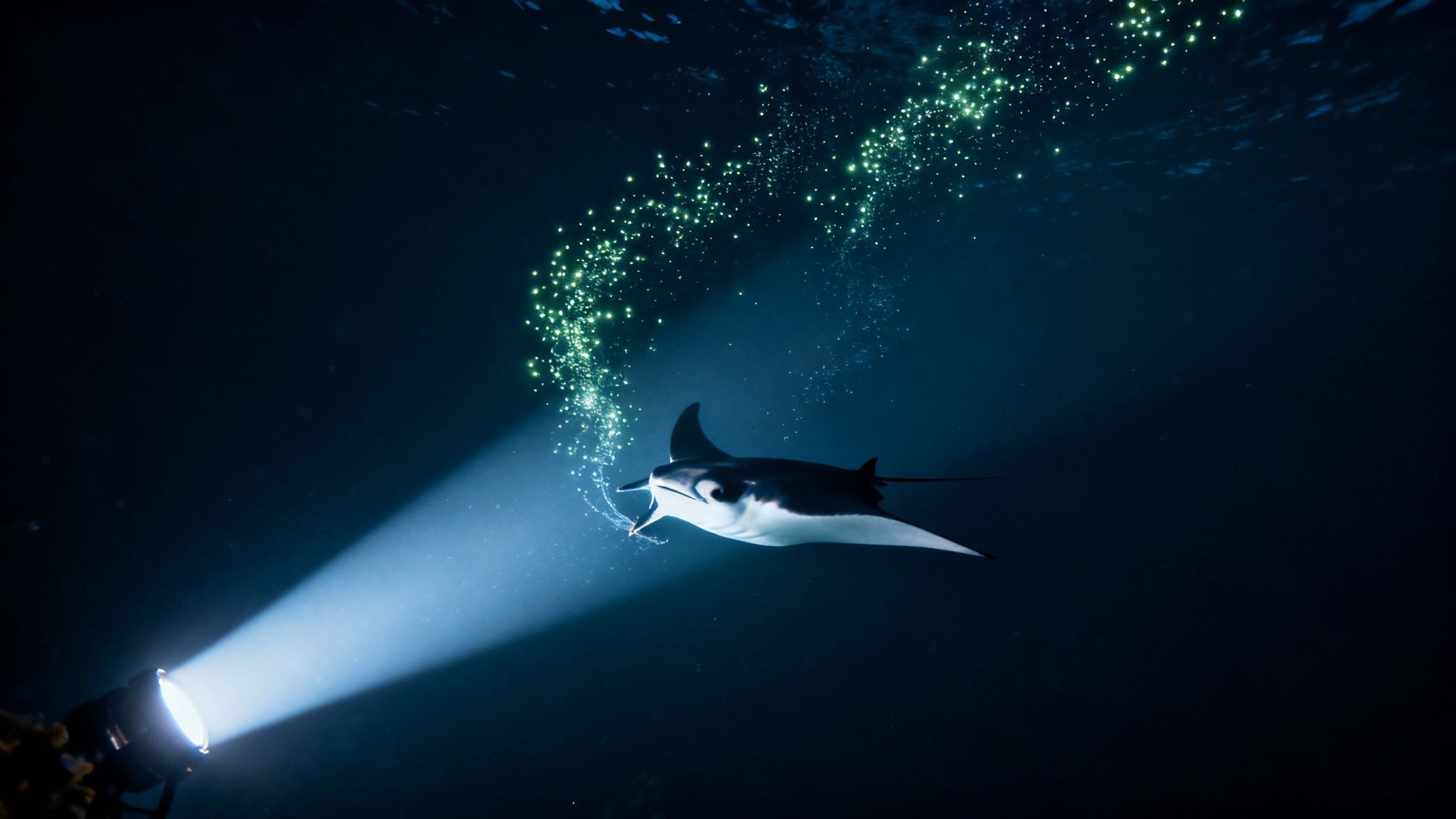
While picking the right time of year is a great start, nailing the daily timing is what really stacks the odds in your favor for an amazing encounter. The world-famous Kona manta dive is strictly a nighttime event, and for a very good reason—it’s all about creating the perfect dinner invitation.
Dive operators have this down to a science. They don't just guess where the mantas will be; they bring the buffet directly to them. As the sun dips below the horizon, boats head out to the site and drop powerful lights into the water.
This is where the magic starts. These bright lights act like a magnet for plankton, the tiny organisms that manta rays love to eat. Soon, the illuminated water is thick with a plankton cloud, and for the local mantas, it's an all-you-can-eat feast they simply can't ignore. They swoop in, mouths wide open, to enjoy the meal.
Timing is Everything
While the lights are the main draw, the natural rhythms of the ocean can turn a good night into an unforgettable one.
- Moon Phases: Think contrast. A darker night, especially around the new moon, makes the dive lights stand out even more. With less ambient light from the moon, the plankton gathers in a much denser cloud, which can trigger a more spectacular feeding frenzy.
- Tidal Movements: Tides create currents, and currents are the delivery system for plankton. A savvy boat captain knows how the incoming and outgoing tides move food around the dive site, and they use that knowledge to position the boat in the sweet spot.
The best tours time their departure to arrive right at sunset. This allows them to get anchored and switch on the lights—the official "dinner bell"—the second it gets dark, maximizing the window for the mantas to show up.
Getting a feel for these daily patterns helps you choose the absolute best night for your dive. Of course, it also pays to get familiar with the local sea conditions. You can get a leg up by learning how to check ocean conditions for the Big Island. A little homework can make all the difference.
Choosing Your Ideal Manta Ray Dive Site
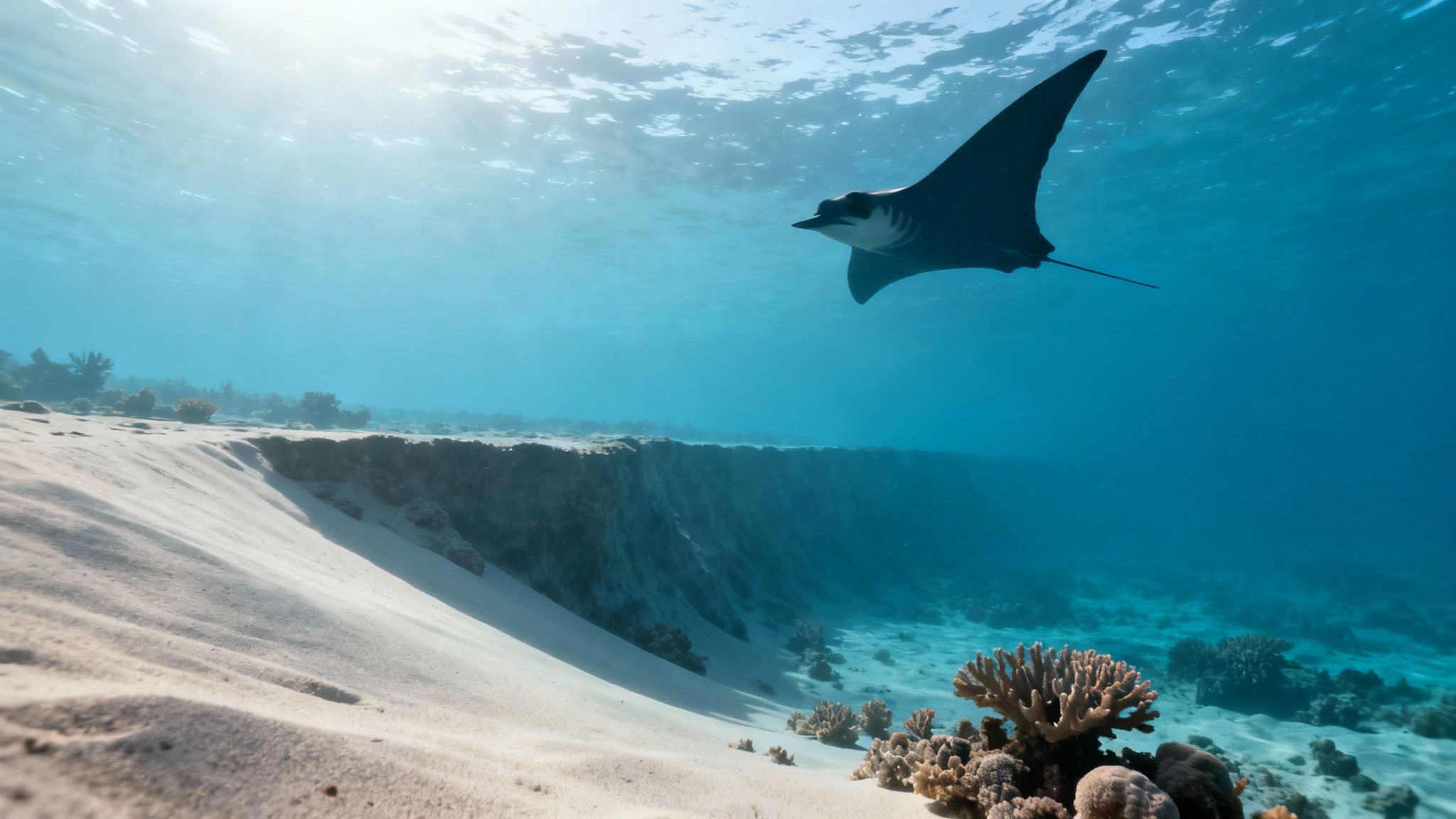
When you dive with manta rays in Kona, the show takes place at one of two incredible spots: Manta Village (Kaukalaelae Point) or Manta Heaven (Garden Eel Cove). Choosing between them isn't a random guess. Instead, the best operators make a strategic call each day based on ocean conditions to give you the best possible encounter.
Think of Manta Village as the classic, reliable theater. It's the original site, and its shallower, more protected waters often make it a comfortable choice for first-time night divers and snorkelers. The consistency here is legendary.
Manta Heaven, on the other hand, can feel like a more adventurous, off-broadway show. It's a bit deeper and can have stronger currents, which often appeals to experienced divers looking for a different kind of experience and some unique photo opportunities.
Matching the Site to the Conditions
Top-tier operators like Kona Honu Divers don't just flip a coin. They meticulously check the ocean conditions every single day to pick the location that promises the safest and most spectacular experience for everyone, from rookies to salty veterans. You can learn more about how they find the perfect spot for the Kona manta ray night dive.
The secret ingredient is flexibility. A seasoned crew understands that a site that was perfect last night—calm seas, tons of mantas—might not be the best bet tonight. Their local expertise is your guarantee for a front-row seat to the action.
The differences between the sites are real. Depth and current play a huge role in matching the dive to your skill level. Research has even shown that environmental factors like big ocean swells can impact manta numbers and sometimes force cancellations, particularly during the winter. You can read the full research about these environmental factors and see how they influence the dive.
This daily, careful evaluation means that no matter which site your captain chooses, you're set up for a truly mind-blowing evening with Kona’s gentle giants. It's what turns a great dive into an unforgettable one.
Ready to Book Your Manta Ray Adventure?
So, you're ready to jump in and see the famous Kona manta ray ballet for yourself? Awesome. Securing a spot on this world-famous dive is pretty simple, but the single most important thing to remember is to book well in advance.
This is especially true during the peak season from April to October. These tours are incredibly popular—often the highlight of a trip to the Big Island—and they fill up fast. You really don't want to miss out.
Choosing the Right Dive Operator
The key to having an amazing and responsible experience is picking the right company. You'll want to find an operator that is Manta Ray Green Listed. This certification is your assurance that the company is serious about the safety and well-being of the mantas and their guests.
A top-notch, certified operator like Kona Honu Divers runs their tours in a way that’s respectful and sustainable for the long haul.
What to Expect on the Boat and in the Water
Once you've got your spot, you can sit back and look forward to a well-run trip. The adventure starts with a comprehensive safety briefing from the crew. They’ll walk you through everything you need to know for the dive and explain how to interact with the mantas—which is to say, not at all!
They'll also get you kitted out with all the necessary gear, including a nice warm wetsuit to keep you comfortable once the sun goes down.
The whole experience is built around passive observation, and that’s precisely what makes it so magical.
You won’t be swimming to the mantas. Instead, you'll simply float—either at the surface with a snorkel or settled on the sandy bottom as a diver. The underwater lights draw in the plankton, and the gentle giants come right to you, swooping and barrel-rolling just inches from your face.
This hands-off approach lets you get incredibly close without ever stressing the animals. It’s an unforgettable spectacle, putting you front and center for one of nature’s most graceful performances.
Kona Manta Ray Dive FAQ
Even with the best-laid plans, it's totally normal to have a few questions before you head out on a bucket-list adventure like this. We've put together some simple, direct answers to the things we get asked most often. Our goal is to make sure you feel confident and ready for an unforgettable night with Kona's gentle giants.
Can I See Manta Rays Any Month of the Year?
Yes, you absolutely can! The wonderful thing about Kona's mantas is that they're residents. They don’t migrate, so they stick around all year to feed.
The main difference you'll notice throughout the year is the weather. For the calmest seas and most predictable conditions, plan your trip between April and October. While the winter months are still incredible, there’s a slightly higher chance that a tour might get canceled due to rougher surf.
What Happens if We Don't See Manta Rays?
While sightings are incredibly reliable—most nights have a success rate over 85%—we have to remember that manta rays are wild animals. There’s no way to guarantee they’ll show up.
Top-tier operators like Kona Honu Divers know this, which is why most offer some kind of "manta guarantee." If your tour doesn't see any mantas, you can usually come back another night for free. Just be sure to ask about the specific policy when you book your manta ray dive tour.
Is the Manta Ray Night Dive Safe for Beginners?
Absolutely. The manta dive is an exceptionally well-managed experience that’s perfect for certified divers of all skill levels, even if you just got your open-water card.
This isn't a complex dive. You simply descend to a shallow, sandy bottom and stay put. Your divemaster gives a detailed briefing beforehand and stays with the group the entire time, making sure everyone feels safe and comfortable.
Do I Need to Be a Certified Diver?
Not at all! You don't need a scuba certification to have a mind-blowing experience with these animals. Snorkeling is an equally amazing and very popular option.
Snorkelers hang out on the surface, holding onto a specially designed light board that shines down into the water. The mantas often glide right up to the surface to feed, sometimes just inches away, giving you a front-row seat. Wondering which is right for you? Check out our guide on whether it's better to snorkel or dive with manta rays.