
Let's cut right to the chase. You can technically see manta rays in Kona any day of the year, but if you want the absolute best shot at a calm, clear, and truly breathtaking experience, you should aim to book your dive between May and October.
The Best Time to Dive with Kona Manta Rays
Here’s a little secret about timing your manta ray dive: it has less to do with the mantas and everything to do with the ocean. Kona is incredibly lucky to have a resident population of manta rays that hang around 365 days a year. So, you can forget about a typical "manta season."
The real game-changer is the ocean swell.
From late spring through early fall, Hawaii’s waters are at their calmest. The powerful Pacific swells that churn up the ocean during the winter months die down, giving us much more predictable and pleasant conditions. This makes a huge difference for your dive.
Why Summer Is the Sweet Spot
Calmer seas aren't just about a comfortable boat ride out to the site. They are probably the single most important ingredient for a successful and magical manta encounter.
- Fewer Canceled Trips: Big winter swells can create unsafe conditions, forcing dive operators to cancel tours. Booking between May and October dramatically lowers that risk.
- Crystal-Clear Water: Less churning means better underwater visibility. You'll be able to see these gentle giants gliding in from further away in all their glory.
- A More Relaxing Dive: Whether you're floating on the surface or settled on the seafloor, calm water makes the whole experience feel more serene and less like a workout.
To help you visualize the ideal timing, here's a quick breakdown of what to expect throughout the year.
Kona Manta Ray Dive Seasons at a Glance
This table sums up the conditions so you can easily pick the best time for your trip.
| Season | Months | Ocean Conditions | Manta Ray Sightings |
|---|---|---|---|
| Peak Season | May – October | Calm seas, minimal swell (3-6 feet), excellent visibility | Consistently High |
| Shoulder Season | March-April, Nov | Variable, can be calm or have moderate swells | Good, but trips may be canceled |
| Winter Season | December – February | Larger swells common, potentially rough surface | Good, but higher chance of cancellations |
Ultimately, it all comes down to safety and visibility. The data, and years of experience on the water, show that from May to October, the ocean swell is often minimal—sometimes just three to six feet or even less. This is what creates those perfect, glassy nights for diving. You can learn more about Hawaii’s unique ocean patterns and how they affect marine life from expert seasonal analysis.
Ready for an unforgettable night under the waves? Check out our top-rated manta ray dive tours.
To see everything else the Big Island's underwater world has to offer, explore all our Kona scuba diving tours.
Why Kona Has a Year-Round Manta Population
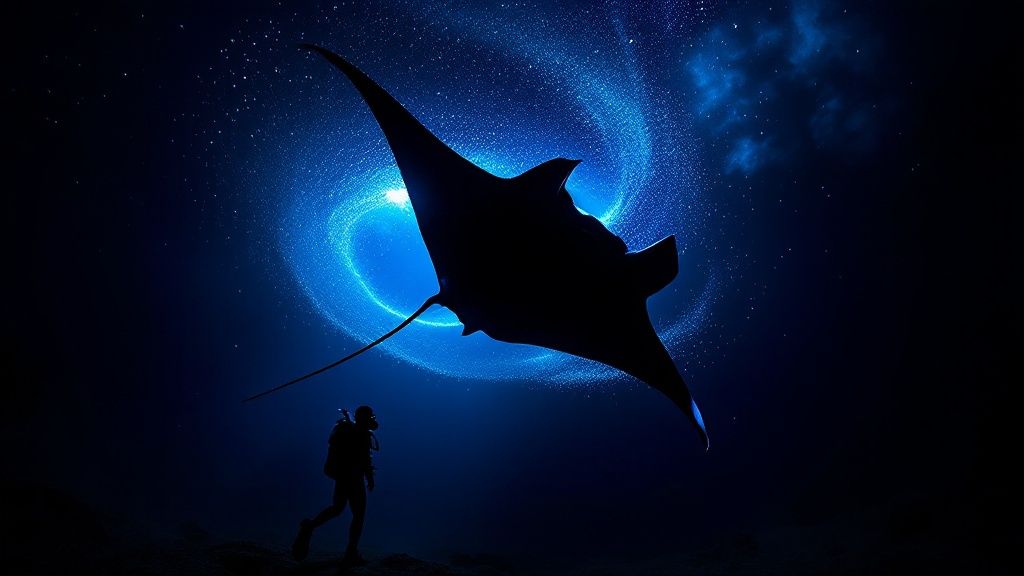
What makes Kona one of the most reliable places on the planet to see manta rays? The answer is surprisingly simple: they live here. Unlike so many other large marine animals that undertake epic migrations, Kona's manta rays are total homebodies, sticking around 365 days a year.
This incredible loyalty isn't an accident. It's all thanks to a perfect storm of environmental factors. The unique underwater landscape of the Kona coast provides a safe, sheltered habitat, and the nutrient-rich waters serve up a constant buffet of plankton. Simply put, the mantas have everything they need, so there's no reason to leave.
Meet the Locals
For decades, local researchers and dive operators have been getting to know this amazing population. It turns out that every manta ray has a unique pattern of spots on its belly, much like a human fingerprint.
This has allowed the local community to identify and name nearly 200 individual rays, turning your dive into a chance to meet genuine underwater celebrities. You're not just seeing a manta ray; you could be meeting "Big Bertha," "Lefty," or any of the other well-known residents.
Because the mantas are always here, the real question isn't if they'll show up, but what the ocean conditions will be like for your dive. The data backs this up in a big way.
Local research and tour logs confirm that manta rays are present along the Kona coast virtually every night of the year. In fact, one popular dive site reported a staggering 96% success rate in spotting mantas over a full year.
This level of predictability is almost unheard of in wildlife encounters. It gives divers and snorkelers the confidence that no matter when they visit, the "gentle giants" will likely be there. The high success rate removes the guesswork, letting you focus on planning your trip for the best possible water clarity and comfort. You can dive deeper into the science behind Kona's manta ray sightings to see the numbers for yourself.
Booking your manta ray night dive with a seasoned operator like Kona Honu Divers means you'll be with experts who know these mantas by name.
How Ocean Conditions Shape Your Manta Dive
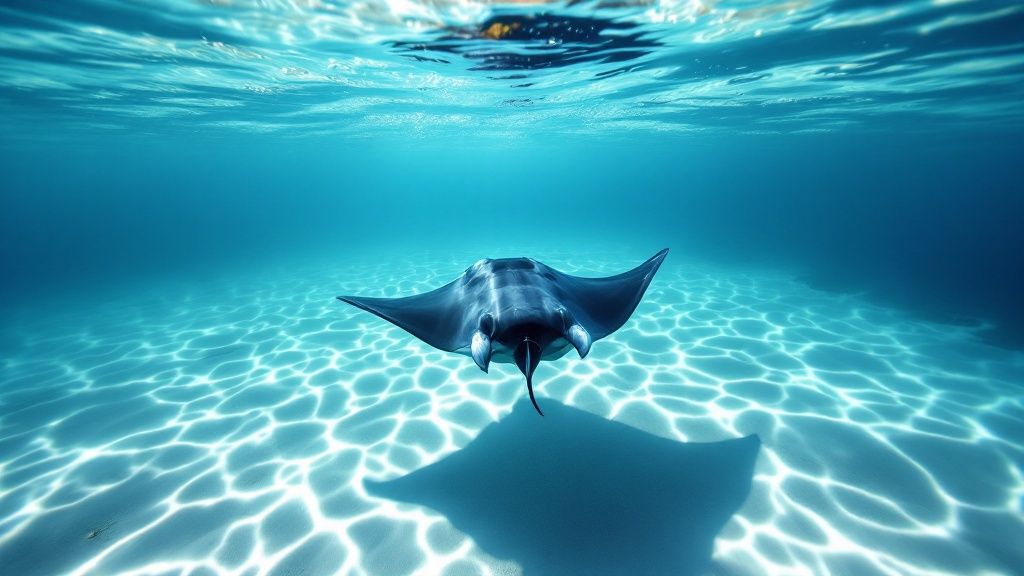
When you're planning a manta ray dive, the single biggest wild card isn't the mantas themselves—it's Mother Nature. Kona’s manta population is here all year, but the ocean conditions can change everything, making the difference between a magical night and a cancelled trip. The main thing you need to watch for is the ocean swell.
Swell is just a term for waves that are born from faraway storms and travel across the ocean. For us, a big swell means a bumpy boat ride, murky water, and sometimes conditions that are just too rough to go out in.
Summer Calm vs. Winter Swell
The contrast between the seasons here is pretty stark. Summer, which runs from about May to October, is famous for its calm, almost glassy waters. The big Pacific storms are taking a break, which means the swell is minimal. This creates the ideal backdrop for a smooth boat ride and a crystal-clear view of the mantas.
On the other hand, the winter months from December to March can bring some powerful, unpredictable swells. It's not a deal-breaker, as plenty of winter days are perfectly beautiful for diving. But you should know there’s a higher chance of running into rough seas.
The real secret to timing your trip isn't about when the mantas are here, but about picking a time when the ocean is most likely to be calm and safe for diving.
Ultimately, your best bet is to learn how to read the local forecast. Our guide on how to check ocean conditions for the Big Island is a great place to start. Choosing the right season just stacks the deck in your favor for an incredible, once-in-a-lifetime encounter.
What to Expect on Your Manta Ray Night Dive
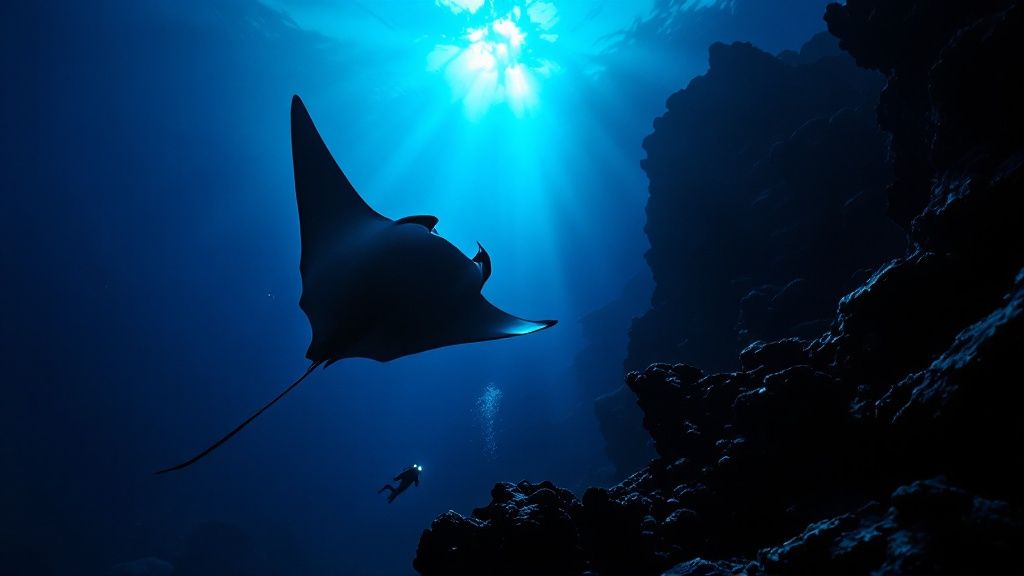
Picture this: you’re floating in the warm, inky-black Pacific. Suddenly, enormous, graceful shadows emerge from the deep, gliding and dancing through brilliant beams of light. This is the heart of the Kona manta ray night dive, and it’s an adventure that starts well before you even get your fins wet.
Your journey begins on the boat with a thorough pre-dive briefing. The crew will walk you through the dive plan, review safety protocols, and, most importantly, explain how we can all interact with these majestic animals respectfully and safely.
Out at the dive site, the crew drops a powerful array of lights onto the ocean floor, creating what we affectionately call the "campfire." This underwater beacon attracts swarms of plankton, lighting up an all-you-can-eat buffet that draws the mantas in from the surrounding darkness. It’s dinner time, and we have front-row seats.
Setting Sighting Expectations
Kona is world-famous for this dive for a reason—the success rate is incredibly high. That said, nature is never a guarantee, so it's good to know what a typical night looks like. The number of mantas can vary, but most nights are nothing short of spectacular.
- An Average Night: You can usually count on seeing about 5 to 6 different manta rays feeding and swirling around the lights.
- An Exceptional Night: When conditions are just right, the experience becomes truly magical. It’s not uncommon for over 20 mantas to join the party, performing incredible underwater acrobatics.
- A Rare Quiet Night: Once in a blue moon, the mantas might be a no-show. This is extremely rare and usually tied to environmental factors we can't control.
The record for a single site is a mind-blowing 36 manta rays documented on one epic night, though that’s definitely not the everyday experience!
If you do happen to be on one of those very rare quiet nights, a good, reputable operator will almost always offer you a chance to come back and try again for free. This is exactly why choosing the right guide is so important. A professional crew is there to keep you safe, manage expectations, and make things right on the off chance the stars (or mantas) don't align.
For a deeper look into the entire experience, check out our complete guide to the manta ray night dive in Kailua-Kona.
What’s the Next Epic Kona Night Dive?
Once you’ve experienced the magic of the manta ray dive, it’s hard not to get hooked on exploring the ocean after dark. If that underwater world has you captivated, Kona has another, even more surreal adventure waiting for you: the Black Water Dive.
This isn't your typical reef dive. It’s a completely different kind of thrill, trading the graceful giants of the manta dive for a peek into the mysterious, deep-ocean twilight zone.
From a Seafloor Campfire to Deep Space
Think of the manta dive like sitting around a well-lit campfire on the seafloor, watching the main event unfold. The Black Water Dive, on the other hand, is like floating through outer space.
You'll be miles offshore, safely tethered to the boat, suspended in the pitch-black water over thousands of feet of ocean. It's a journey into the abyss.
Your dive light won’t be illuminating giant filter feeders. Instead, it will reveal a universe of bizarre, beautiful, and often tiny creatures making their nightly vertical migration from the deep. You’ll see lifeforms you’ve likely never imagined, many in their larval stages, looking like they swam right out of a sci-fi movie.
The Black Water Dive is often called an "intergalactic" experience. It’s your chance to witness animals that are rarely, if ever, seen on a reef, offering a true sense of discovery.
If you’re a certified diver looking for the perfect follow-up to your manta encounter, this is it. It’s an incredible display of the sheer diversity of life that emerges from the depths when the sun goes down.
Ready for a dive that’s truly out of this world? Learn more about Kona's famous Black Water Dive.
Your Manta Dive Questions Answered
Alright, let's tackle some of the most common questions we hear from divers and snorkelers getting ready for this amazing experience. Think of this as the final briefing before you commit to one of the world's greatest wildlife encounters.
We want you to feel completely prepared and incredibly excited, so let’s clear up a few things.
Is One Time of Night Better Than Another?
Pretty much every manta tour in Kona heads out just after the sun goes down, and there’s a simple reason for that: darkness. The entire operation hinges on powerful lights placed on the seafloor.
Once it's dark, these lights illuminate a massive cloud of plankton, ringing the dinner bell for the mantas. As long as it's dark and the lights are on, the mantas show up. So, don't sweat the specific hour; the action is consistently amazing all evening.
Do I Need to Worry About the Phase of the Moon?
This is a great question, as the moon cycles influence so much in the ocean. But for the Kona mantas, it's not really a factor. Their nightly appearance is driven almost entirely by that big, bright, all-you-can-eat plankton buffet created by the tour lights.
You can expect a fantastic show whether the moon is full and bright or brand new. Bottom line: plan your trip around your schedule and the ocean conditions, not the lunar calendar.
What Happens if the Weather is Bad and My Dive is Canceled?
Safety always, always comes first. No reputable operator will take you out if the surf is too high or conditions are unsafe. If a company has to cancel a tour, they’ll almost always give you two options:
- Hop on another tour on a different night, completely free of charge.
- Get a full refund if you can't find another time that works.
This is exactly why we always recommend booking your manta dive early in your trip. It gives you a built-in buffer, so if the weather doesn't cooperate, you have plenty of time to reschedule.
Should I Snorkel or Scuba Dive?
Honestly, you can't go wrong either way. Both offer a jaw-dropping view, just from a different angle. The right choice really comes down to your personal comfort and certification level.
Snorkelers get to float on the surface and watch the mantas perform their graceful acrobatics just inches below them. It's an incredible, eye-level perspective that’s accessible to almost anyone.
Scuba divers, on the other hand, get to settle on the sandy bottom and look up. From there, you get to see these gentle giants soaring overhead like majestic starships. Both experiences are pure magic.
Ready to see this underwater ballet for yourself? Kona Honu Divers runs world-class manta ray dive tours that are safe, respectful, and led by a crew that loves these animals. We’ve been helping people make memories that last a lifetime, and we’d be honored to do the same for you.