
So, you're planning a trip to see Kona's incredible manta rays? The first question everyone asks is, "When should I go?" Let's break it down so you can pick the perfect time for your adventure.
The short answer is you can see manta rays here any night of the year, which is fantastic news! They are residents, not migratory visitors. However, the experience of seeing them changes quite a bit with the seasons.
The Sweet Spot for Manta Ray Viewing
For the best possible conditions, aim for a trip between April and October. This is Kona's "dry season," and it's when the Pacific tends to be at its calmest. Think glassy water, minimal wind, and warm, comfortable temperatures.
This window gives you the highest probability of a smooth boat ride and an amazing, uninterrupted time in the water. It’s no surprise that tour operators report an 80-90% success rate for sightings during this period. Booking within these months simply stacks the odds in your favor for that perfect, magical encounter.
What About the Rest of the Year?
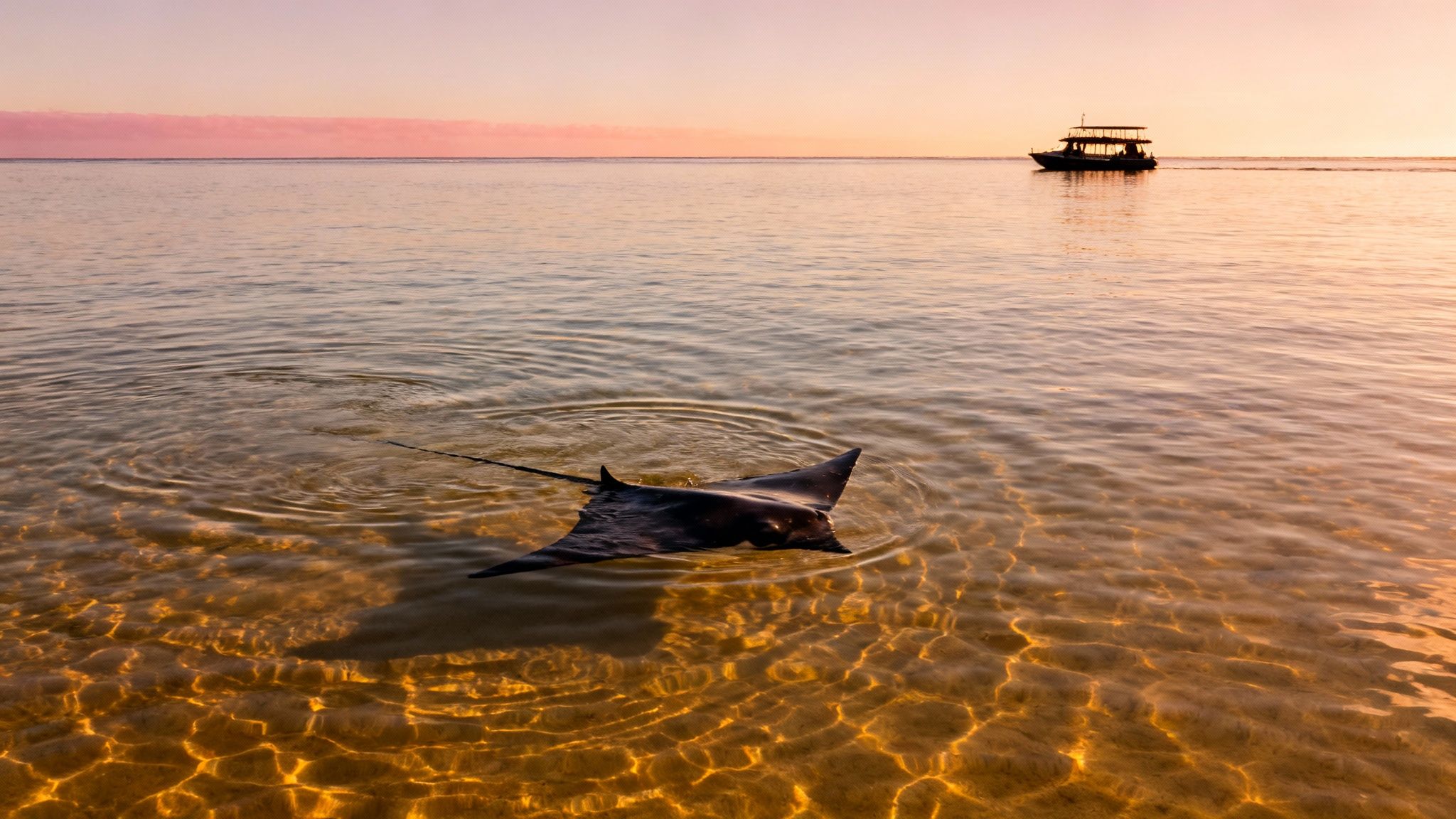
Now, does that mean you shouldn't come between November and March? Absolutely not! The manta rays are still here, feeding every night. The main difference is the weather. This is our "winter" or wet season, which can bring bigger ocean swells and more wind.
While the sightings are still very consistent, there's a higher chance that a tour might get canceled due to rough seas. If you're planning a winter trip, it's a good idea to book your manta tour for the beginning of your stay. That way, if it gets rescheduled, you still have other nights to try again.
Understanding these seasonal patterns is also really helpful if you're thinking about other underwater adventures. You can learn more about what are the best months to scuba dive in hawaii to plan all your dives.
Kona Manta Ray Viewing Conditions by Season
To make it even clearer, this table gives you a snapshot of what to expect throughout the year. It's a quick reference to help you decide when to book your trip for the best manta ray viewing experience.
| Season | Ocean Conditions | Manta Sightings | Overall Experience |
|---|---|---|---|
| Peak Season (Apr-Oct) | Calm, glassy seas with excellent visibility and warm water. | Very consistent and reliable. | Excellent. Ideal for both snorkelers and divers, with minimal tour cancellations. |
| Off-Season (Nov-Mar) | Can be rough with higher swells and stronger winds. | Still consistent, but tours may be canceled due to weather. | Good but unpredictable. Requires more flexibility in your travel plans. |
Ultimately, there isn't a truly "bad" time to see the mantas in Kona. It really comes down to balancing your travel dates with the kind of ocean conditions you're most comfortable with.
Why Kona Is a Manta Ray Hotspot Year-Round
Unlike a lot of marine life that migrates with the seasons, Kona's manta rays are true homebodies. They're a resident population, which means they stick around all year long. This is the secret sauce to why you can have an incredible encounter pretty much any night you decide to go.
This amazing consistency gives tour operators a success rate of 80-90%, no matter the time of year. Kona's unique underwater volcanic landscape and steady currents create a constant buffet of plankton. That reliable food source keeps the mantas fed, happy, and close to shore.
So, the question "when is the best time to see manta rays in Kona?" isn't really about if they'll show up. It's more about what the ocean conditions will be like for your trip.
Getting to Know the Locals
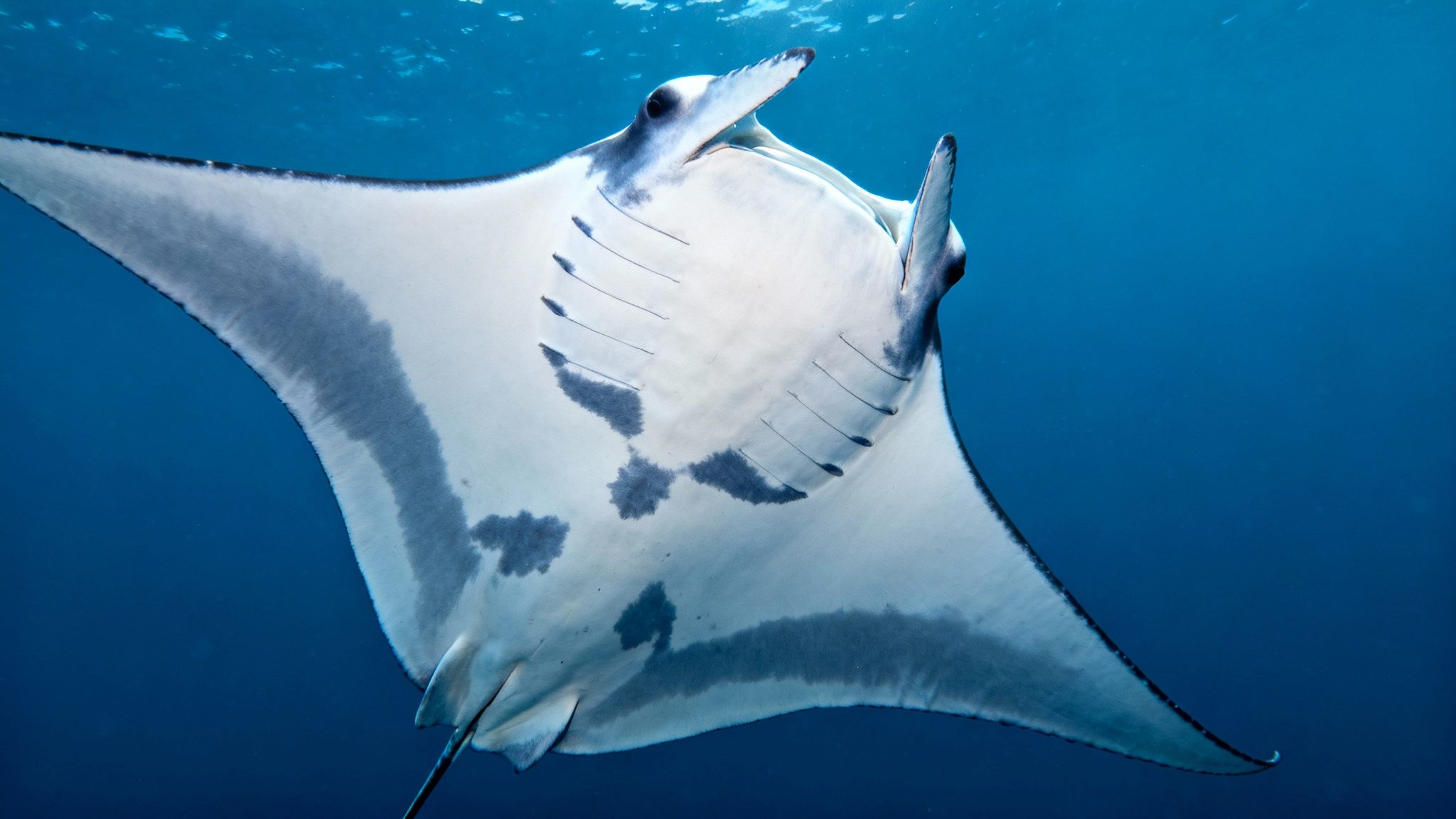
What makes this experience so special is that you're not just seeing any manta rays; you're meeting a community of individuals. Researchers have identified hundreds of local rays, each with unique spot patterns on their bellies that act like a human fingerprint.
This research has been going on for years, turning every dive into a chance for a little citizen science. Many of the regulars even have names given to them by the dive community, like the famous "Lefty," who is easy to spot because of a damaged cephalic fin.
Kona's resident manta ray community is one of the most studied in the world. Long-term monitoring has identified and cataloged nearly 200 individual rays that stay in the area, with estimates suggesting the total population could exceed 450. You can discover more insights about this resident population on UW Photography Guide.
This incredible familiarity means your guides can often share stories and facts about the specific mantas you're swimming with. When you're ready to meet them yourself, you can book an unforgettable manta ray dive tour and become part of their story.
How Weather Shapes Your Manta Ray Encounter
You might be thinking, "If the mantas are here every night, why does the season matter?" That's a great question, and the answer is all about the weather. Your chances of having an incredible, comfortable, and safe experience hinge on the ocean conditions.
Kona is famous for its relatively calm waters, but there's a definite shift between summer and winter. The sweet spot is the period from April to October. This is when the ocean is often as flat as glass, making for a buttery-smooth boat ride and a relaxing time in the water.
Summer Calm vs. Winter Swells
During these prime months, tour cancellations are few and far between. The predictable, gentle seas mean operators can run their trips almost every single night, which is why the statistics show the highest number of successful tours happen during this time.
Come winter, from November to March, the story can change. This season often brings larger ocean swells from the north. The mantas are still there, feeding just like always, but the journey out can be a bit more… adventurous. Choppy seas can make for a bumpy ride and a challenging time in the water.
Let's be clear: a winter tour cancellation has nothing to do with a lack of mantas. It's purely a safety call. In fact, sightings happen over 80% of the time year-round, but most cancellations get chalked up to rough seas between January and mid-March. You can dive deeper into the fascinating statistics behind Kona's manta sightings to see the data for yourself.
If you're planning a winter trip, here’s a pro tip: book your manta tour for the beginning of your vacation. That way, if rough weather forces a cancellation, you have a built-in buffer to reschedule.
You can also get ahead of the game by learning how to check ocean conditions for the Big Island, Hawaii. A quick look at the forecast will give you a great idea of what to expect before you even leave your hotel.
Choosing Your Perfect Manta Ray Experience
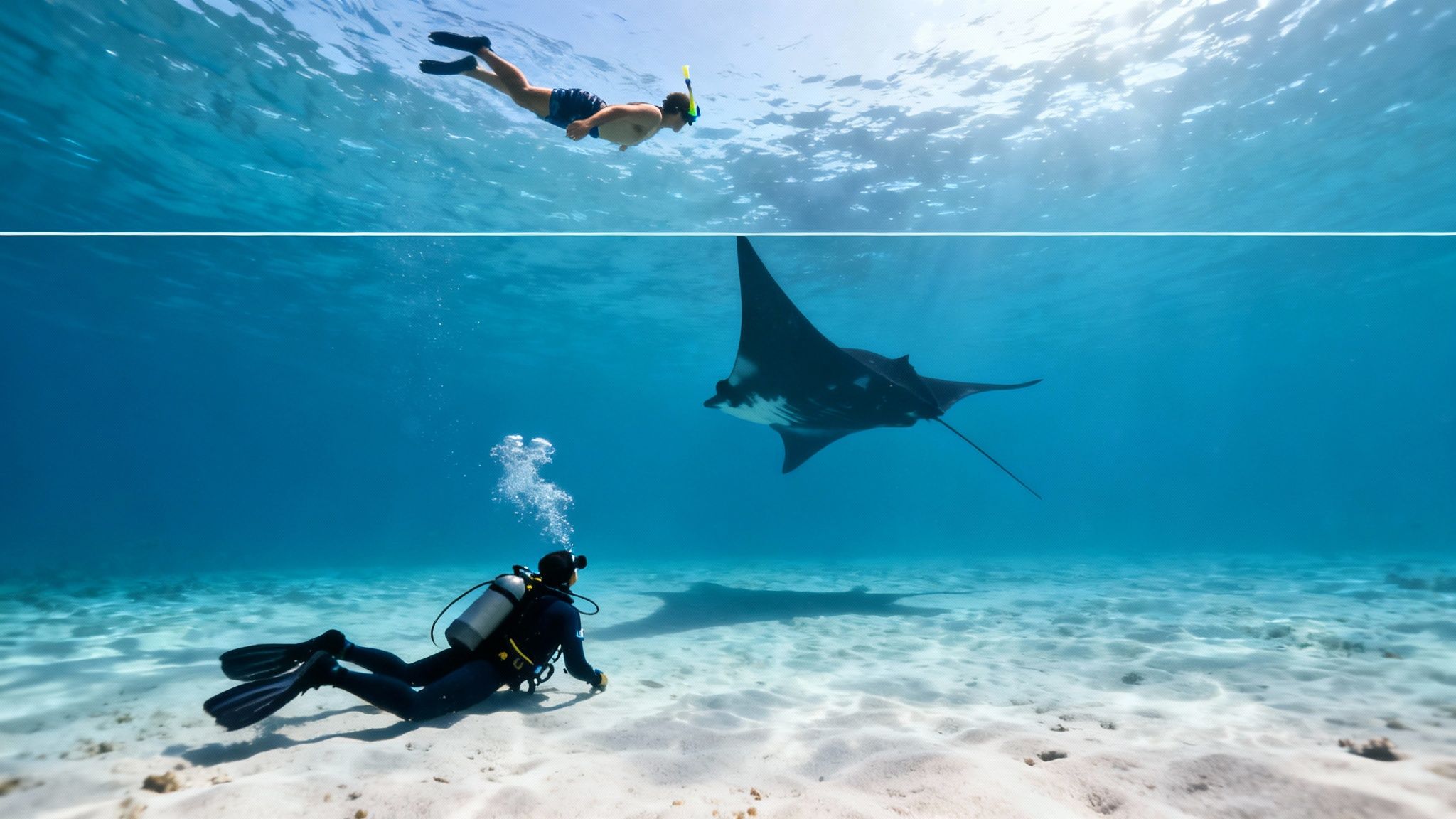
Alright, you've figured out when to come see Kona's famous manta rays. Now for the fun part: deciding how you want to meet them. You have two incredible front-row seats to choose from—snorkeling on the surface or scuba diving below.
Each option gives you a totally different, yet equally mind-blowing, perspective on these gentle giants.
Snorkeling is the easiest way to get in on the action and is perfect for almost everyone, from families with kids to first-timers. You'll float comfortably on the surface, holding onto a specially designed light board. These lights act like a magnet for plankton, and in turn, the mantas. They’ll swoop, glide, and perform an acrobatic "underwater ballet" just inches beneath you.
Scuba diving, however, flips the script entirely. If you're a certified diver, you'll descend to the ocean floor, find a spot to settle in, and simply look up. The view from below is absolutely surreal. You'll watch the massive silhouettes of the mantas as they dance in the beams of light above. When you start planning, you'll see tons of amazing diving and snorkeling adventures available for this very encounter.
Snorkeling vs. Diving: A Quick Comparison
So, which one is right for you? It really just boils down to your comfort level in the water and what kind of view you're after. Honestly, you can't go wrong with either.
- Snorkeling: Perfect if you aren't dive certified or have kids in your group. You get an amazing bird's-eye view of the mantas from the surface.
- Scuba Diving: The go-to for certified divers who want a unique, bottom-up perspective. It’s a quiet, almost meditative experience watching the show unfold overhead.
If you're still on the fence, we put together a detailed guide exploring whether it's better to snorkel or dive with manta rays that can help you make the final call.
No matter which adventure you choose, going with a top-notch, reputable operator is what makes the experience truly magical and safe. We take immense pride in our expert-led manta ray dive tours, where our passionate guides share their knowledge to ensure every interaction is both respectful and unforgettable.
Ultimately, whether you're floating on top or watching from below, you're witnessing one of the most incredible shows in the natural world. The best time to see the manta rays in Kona is any time you're in the water with them, making memories that will stick with you forever.
What Is the Best Time of Night for Manta Rays
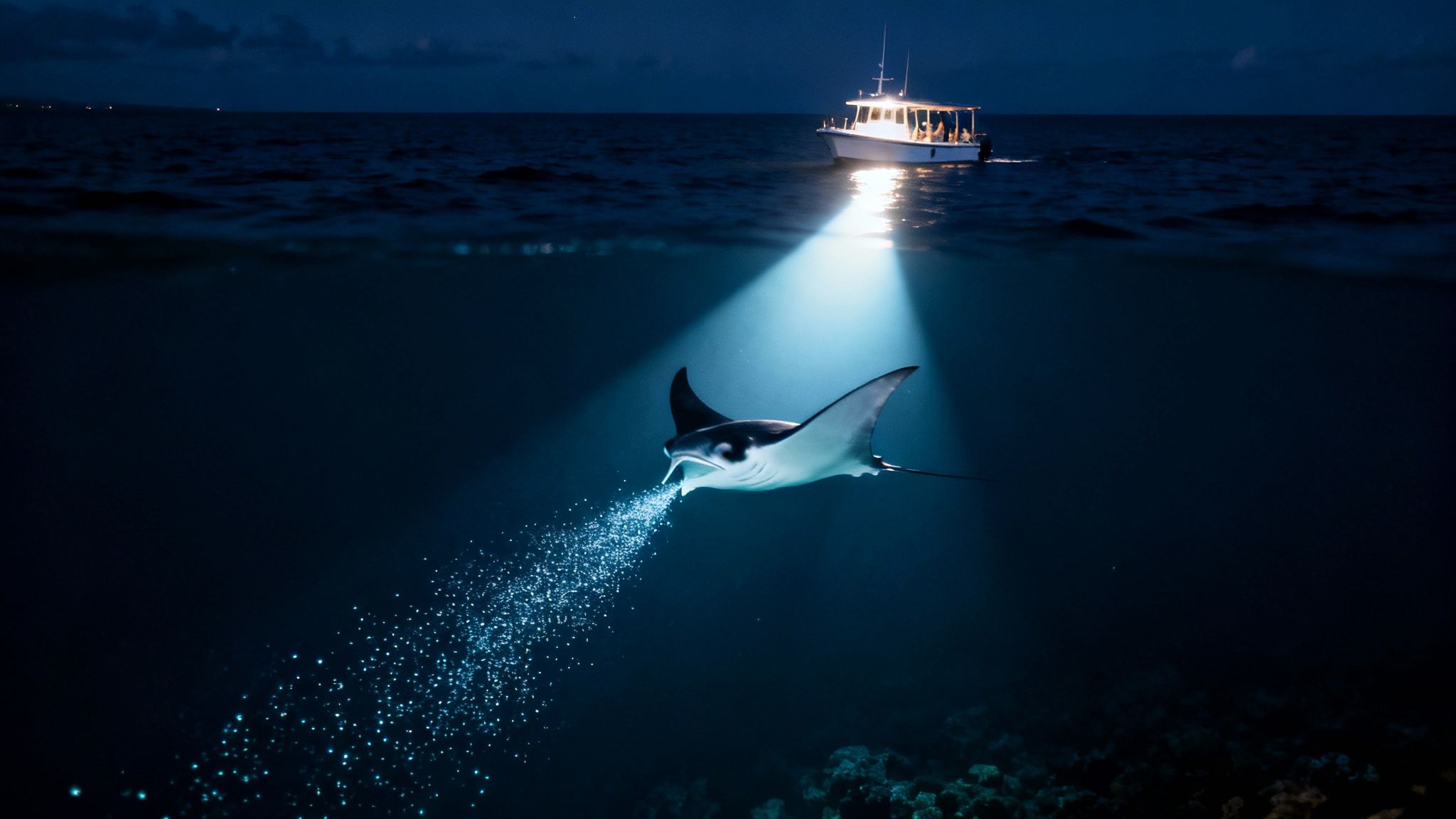
You’ve nailed down the right time of year, but what about the right time of night? It’s a great question, and the answer is surprisingly simple: the real show starts right after the sun disappears. Darkness is absolutely essential for a great manta ray experience.
Think of it like this: tour operators create a glowing, underwater campfire with powerful submerged lights. These bright lights attract clouds of plankton—the manta rays' favorite meal. Once the sky is dark, this all-you-can-eat buffet becomes the hottest restaurant in town, and the mantas show up for dinner. This is precisely why all the real-deal tours head out after sunset.
What to Expect on a Typical Tour
Most manta ray trips follow a well-practiced schedule designed to get you in the water at the peak of the action. Here’s a quick rundown of how the evening usually unfolds:
- Sunset Check-In: You'll typically meet the crew just before sunset. They’ll run through a safety briefing and share some cool facts about the local manta population.
- Golden Hour Departure: The boat often cruises out to the site as the sun dips below the horizon, treating you to a stunning Hawaiian sunset on the water.
- Lights, Plankton, Action: As soon as it’s properly dark, the lights go into the water. It doesn’t take long for the plankton to swarm.
- Prime Viewing Time: You’ll get in the water for about 40-50 minutes as the mantas arrive to glide, swoop, and feed right before your eyes.
People often ask if the first or second tour of the evening is better. Honestly, they’re both incredible. The mantas are there to feed, and they do so for hours. Your chances of having a mind-blowing encounter are just as good on either trip.
So, the best time of night is really any time after dark when the lights are on and the plankton feast has begun. When you’re ready to see this amazing natural wonder for yourself, you can book your unforgettable manta ray dive tour and know you're in for a treat.
Your Manta Ray Tour Questions, Answered
Alright, let's tackle some of the most common questions that pop up when planning this incredible adventure. Getting these details sorted out beforehand means you can just relax and enjoy the show.
Is It Safe to Swim With Manta Rays?
Absolutely. It’s one of the safest and most awe-inspiring wildlife encounters you can have. Manta rays are often called "gentle giants" for a reason—they have no teeth, no stingers, and no barbs.
They're filter feeders, so their only interest is in the plankton attracted by the dive lights, not the funny-looking humans floating nearby. Your guides will make sure everyone keeps a respectful distance, which keeps both you and the mantas safe and comfortable.
What Should I Bring on the Tour?
Think simple and practical. All you really need to bring is a towel and a set of dry clothes for the boat ride back.
Most reputable tour operators, like Kona Honu Divers, provide everything else you'll need—wetsuits, snorkel gear, and flotation devices. It never hurts to double-check what's included when you book, but you can usually travel light.
Can I Touch the Manta Rays?
This is a big one: no, you can never touch a manta ray. It might be tempting as they glide gracefully past, but it's incredibly important to resist.
Their skin is covered in a protective mucous coating, kind of like a shield against infection. Touching them can rub this layer off, leaving them vulnerable to diseases. The rule is simple and strict: look, don't touch. This is all about protecting these magnificent creatures for generations to come.
What If I Get Seasick?
If you know you're prone to motion sickness, it's a smart move to take some medication before you even get on the boat.
While the boat ride to the manta site is usually pretty short, the ocean can be unpredictable. A little bit of planning can be the difference between an amazing experience and a miserable one. It’s better to be safe than sorry!
And while the manta rays are definitely a main attraction, don't forget that Kona's waters are teeming with other amazing sights. If you're looking to fill your itinerary with more underwater adventures, you can find a great roundup of the best snorkel tours and picks in Kona.