
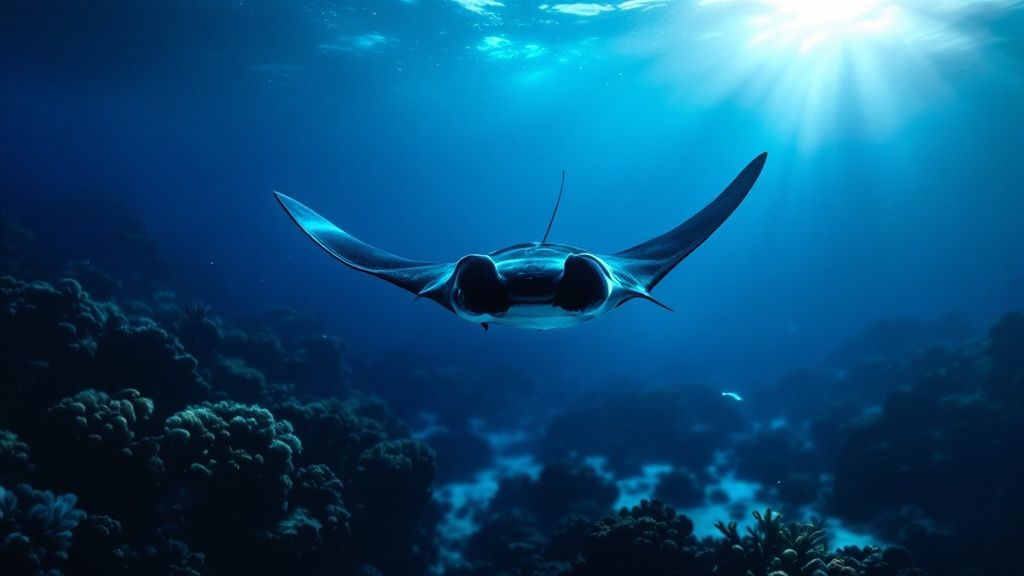
Let’s get straight to it: the absolute best time to see manta rays in Kona is between April and October. This is when the ocean is at its calmest and clearest, setting the stage for a truly magical underwater encounter.
Timing Your Kona Manta Ray Adventure
While you can technically find manta rays in Kona’s waters any night of the year, timing your trip right can make all the difference. Think of it as aligning your schedule with nature's. Getting this right is what turns a good trip into an unforgettable one.
The peak season, which runs from late spring through early fall, offers the most predictable and pleasant conditions. During these months, Kona's coastline is shielded from the big ocean swells, resulting in calmer currents and better water clarity. It's simply more comfortable for everyone—divers, snorkelers, and the mantas themselves.
This stability in the water directly translates to incredible viewing opportunities, with tour operators reporting a staggering 80-90% success rate for sightings. For a deeper dive into planning your visit, you can learn more about the ideal timing for manta encounters in Kona.
Kona Manta Ray Viewing Conditions by Season
To help you visualize what to expect, this table summarizes the typical conditions for viewing manta rays in Kona throughout the year. It's a great tool for deciding on the best time for your trip.
| Season | Months | Ocean Conditions | Sighting Success Rate |
|---|---|---|---|
| Spring/Summer (Peak Season) | April – October | Generally calm, clear waters with minimal swells. Ideal for diving and snorkeling. | Very High (80-90%) |
| Fall/Winter (Off-Peak) | November – March | Can be rougher with potential for larger swells and reduced visibility due to winter storms. | High, but more weather-dependent. |
Ultimately, there’s no truly bad time to go. The manta rays are always here, and local operators are experts at finding them. But if you want to give yourself the best possible shot at calm, comfortable, and crystal-clear conditions, aim for that spring and summer window. It’s the sweet spot for a perfect manta ray dive tour.
Why Kona Is a Manta Ray Magnet
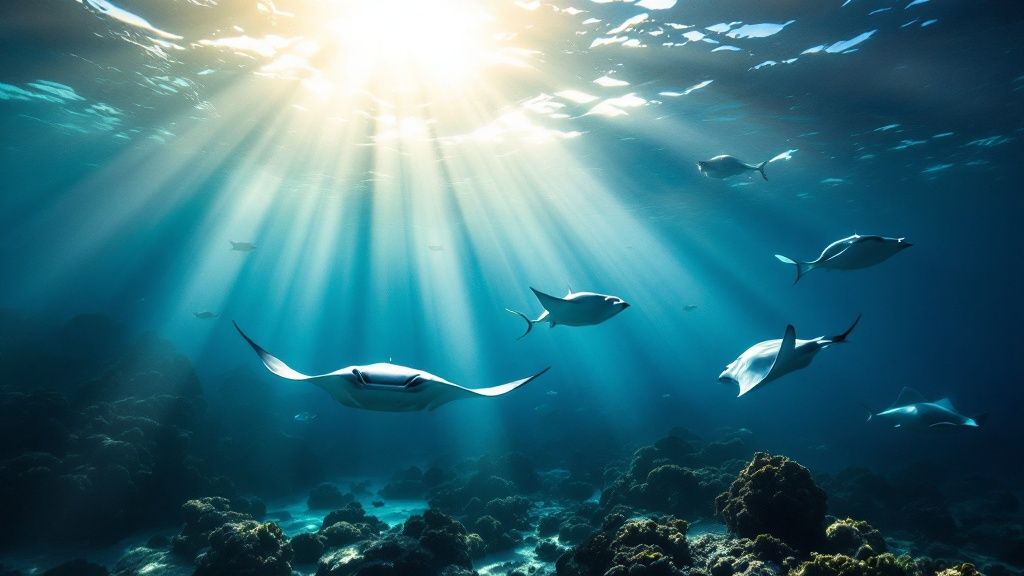
What is it about Kona that makes it the place in the world for seeing manta rays? It's not just a lucky accident. It’s a fascinating story of how a man-made quirk created the perfect natural dining experience for these gentle giants.
The secret ingredient is light. Every evening, tour boats head out and shine powerful lights into the ocean. These beams act like a giant magnet for plankton, the tiny organisms that manta rays love to eat.
As the plankton swarm to the light, the mantas follow close behind for an easy, all-you-can-eat buffet. It's this simple, brilliant setup that turns the Kona coast into a nightly spectacle.
Kona's Famous Manta Feeding Sites
This nightly dinner bell has effectively trained the local manta population. They’ve learned that the lights mean food, and they consistently show up at two primary locations along the coast: Manta Village and Manta Heaven.
These aren't just clever names; they're the established "restaurants" where the mantas gather to feast. This learned behavior is why Kona's sighting rates are so incredibly high. We’re not just hoping to find them—we know where they’ll be.
The local manta population includes over 450 identified individuals, and their predictable habits make for one of the most reliable wildlife encounters you can find anywhere on Earth.
Manta ray night dives off the Kona Coast boast sighting success rates that often top 90%. Dives usually last between 45 and 60 minutes in relatively shallow water—around 30 to 40 feet—giving you an unbelievable, up-close view of the feeding ballet.
It’s this consistency that draws people from all over the world. A trip here isn't just another dive; it's a front-row seat to one of nature's most mesmerizing performances. You can discover more about the Kona manta ray night dive to see why it belongs on every adventurer's bucket list.
Reading the Ocean to Maximize Your Chances
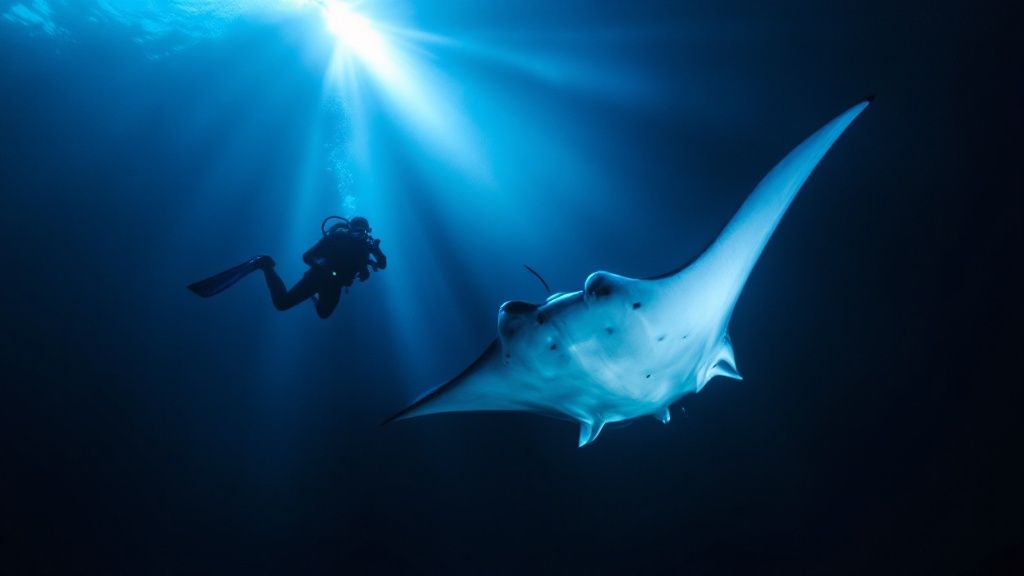
While picking the right time of year gives you a great head start, a few other natural forces can make the difference between a good night and an absolutely unforgettable one. Learning to read these environmental cues will help you know what to expect and adds a whole new layer of appreciation for the experience.
One of the biggest factors is the moon's phase. Think of it this way: our dive lights are like a single, bright campfire in the dark. On a new moon night, when the sky is pitch-black, this campfire is the only thing attracting the plankton.
This creates a super-concentrated buffet for the mantas, which often leads to more intense feeding and incredible up-close encounters.
Moon Phases and Ocean Swells
When the moon is brighter and fuller, its light can scatter the plankton over a much wider area on the surface. You'll almost certainly still see mantas, but the darkest nights tend to pull them in like a magnet and produce the most spectacular action.
Ocean conditions are another huge piece of the puzzle. Things like currents, local weather, and water clarity all shape the dive. For example, rough seas or a big swell—think waves of 3-6 feet or more—can stir things up, reducing visibility and making the experience less comfortable and safe. If you want to learn how to read the signs yourself, check out our guide on how to check ocean conditions for the Big Island, Hawaii.
Understanding these natural cycles is key to appreciating the entire experience. It’s not just about seeing the mantas, but also about connecting with the dynamic ocean environment they call home.
Keeping an eye on the moon and the ocean's mood helps you set the right expectations and appreciate the unique conditions of your specific tour. You go from being just a spectator to a more informed participant in one of nature's greatest shows.
How to Choose Your Manta Ray Experience
Alright, so you've nailed down when to see the Kona mantas. Now for the fun part: deciding how you want to see them. This really comes down to one question: do you want to snorkel or scuba dive?
There's no wrong answer here. Both give you an absolutely unforgettable look at this underwater spectacle, but they offer completely different perspectives. It all depends on the kind of experience you're after.
Snorkeling: The Bird's-Eye View
Snorkeling is the easiest way to get in on the action. It's a fantastic choice for just about everyone—families, folks who aren't strong swimmers, or anyone who just wants an incredible view from the surface.
You'll hold onto a specially designed floatation board that has powerful lights pointing straight down. Think of it like a floating campfire. The light draws in the plankton, which in turn brings the mantas. From your spot on the surface, you get a perfect top-down view of these gentle giants as they loop and barrel roll right below you. It's mesmerizing, and you can learn more about what to expect on the best manta snorkel on the Big Island.
Scuba Diving: The Immersive Encounter
If you’re a certified diver, this is a whole different ballgame. Instead of watching the show from above, you get to be part of the audience on the ocean floor. You'll descend about 35 feet, settle into a sandy spot, and simply look up. This is just one of many diving tours in Kona, Hawaii that will leave you speechless.
From down there, the mantas glide so close they're practically within arm's reach. You'll see them swoop in, mouths agape, somersaulting just inches above your head. It’s an incredibly humbling and powerful experience to be that close to such massive, graceful creatures in their own element.
No matter how you choose to see the mantas, going with a top-notch operator is what makes the experience truly special. A crew like Kona Honu Divers isn't just focused on giving you a great tour; they're passionate about protecting the rays and ensuring every interaction is safe and respectful.
Whether you're floating on the surface or sitting on the seafloor, you're guaranteed a front-row seat to one of nature's greatest shows. An expert-led manta ray dive is something you'll talk about for years to come.
See what other divers have to say about their adventures with Kona Honu Divers.
What to Expect on Your Manta Adventure
Knowing the play-by-play of your manta ray tour can help you relax and soak in every moment. The whole evening is designed to build anticipation while making sure you’re safe, comfortable, and ready for the main event.
Your adventure starts on land with a pre-trip briefing. This isn’t just a boring safety talk; it's your first real glimpse into the world of Kona’s mantas. The guides share incredible facts about these gentle giants and walk you through what’s about to happen.
Next, you'll hop on the boat for a quick ride out to one of the famous manta sites. The trip usually times up perfectly with a spectacular Kona sunset, so have your camera ready. It’s a beautiful, calm moment to get settled before the real excitement begins.
Entering the Water
Once the boat is anchored, the crew flips a switch, and powerful lights illuminate the water below. Think of it as a dinner bell for plankton, which in turn brings the mantas. The feeling of slipping into the dark ocean, guided by that otherworldly blue glow, is a thrill all on its own.
Your guides will get you into the perfect spot, whether you're snorkeling on the surface or diving below. Then, it's time for the show to start.
The real magic is watching these huge, graceful creatures perform an underwater ballet. Seeing them somersault and glide through the beams of light just inches away is something that will stick with you forever.
What to Bring for Your Trip
You’ll have a much better time if you’re comfortable. The tour operators provide all the main gear (like wetsuits and masks), but a few extra items can make a huge difference.
Here’s a quick list of must-haves:
- Towel: An obvious one, but essential for when you get out of the water.
- Warm Jacket or Hoodie: The boat ride back can feel pretty chilly after your swim. Trust us on this.
- Dry Clothes: Nothing beats changing into something warm and dry for the ride home.
- Reusable Water Bottle: It’s easy to get dehydrated, even on a short trip.
When you know what’s coming, you can just sit back and enjoy the incredible experience. To get a feel for it from someone who's been there, check out this story on what it's like to go on the manta ray dive in Kona, Hawaii.
Your Kona Manta Ray Tour Questions, Answered
Even the most seasoned travelers have questions before a big adventure. Getting a few details ironed out beforehand can make all the difference, helping you feel relaxed and ready for the experience of a lifetime. Let's dive into some of the most common questions we get from fellow ocean lovers.
Is It Safe to Swim with Manta Rays at Night?
Absolutely. There's a reason they're called "gentle giants." Manta rays are completely harmless to people. They're filter feeders, meaning they glide through the water with their mouths open to scoop up tiny plankton.
Because of their diet, they have no teeth, stingers, or barbs to worry about. On top of that, established operators like Kona Honu Divers prioritize safety above all else. You'll have expert guides in the water with you the entire time, and snorkelers are given flotation devices for a secure, worry-free experience.
Do I Need to Be a Strong Swimmer?
Not at all. For the snorkeling version of the tour, you don't really "swim" in the traditional sense. Instead, you'll hold onto a large, custom-designed floatation board.
These boards are equipped with bright lights that attract the plankton (and therefore the mantas!). You simply float comfortably on the surface and watch the show unfold right beneath you. If you're comfortable in the water, you're good to go.
What Happens If No Manta Rays Show Up?
Kona is famous for having one of the most reliable wildlife encounters in the world, with sighting rates often hitting 90% or higher. Still, these are wild animals with their own agenda, and on very rare occasions, they might not make an appearance.
That’s why most tour companies have a "manta guarantee." If you're on one of those rare unlucky trips, they'll typically let you come back on another night for free. Just make sure to ask about the specific policy when you're booking your tour.
How Cold Is the Water at Night?
The water temperature here is beautiful year-round, usually staying in a comfortable range of 75-80°F (24-27°C).
That said, you can still get a bit chilly after floating in the ocean for an hour at night. Don't worry, though—all the best tours provide you with a well-fitting wetsuit to keep you warm and cozy from start to finish.
Ready to see the manta ballet for yourself?