
So, when is the best time to dive in Kona? The honest answer is, there’s no single ‘best’ season—just the best season for you and the kind of dive trip you’re dreaming of. Kona offers incredible scuba diving in Hawaii all year round, but every season brings something a little different to the table.
Your Guide to Kona’s Best Diving Seasons
Are you looking for those bathtub-warm, flat-calm days perfect for a relaxing getaway? Or is your goal to hear the haunting songs of humpback whales echoing through the water on a crystal-clear winter day? This guide breaks down what makes each season unique so you can pick the perfect time for your trip. We'll get into the nitty-gritty of water temps, visibility, what you'll see, and even the crowds.
This side-by-side comparison will help you figure out which time of year lines up with your perfect underwater adventure. Understanding the little differences, like how the water feels between summer and winter, is what planning a great dive trip is all about. For a closer look at what to expect from the ocean itself, you can learn more about how warm the water in Kona is throughout the year.
Key Takeaway: The "best" season really comes down to what you care about most—whether that’s the incredible visibility of winter, the calm and toasty seas of summer, or the happy medium of the shoulder seasons.
Ultimately, once you understand these seasonal shifts, you can choose the perfect window to explore the vibrant reefs and amazing marine life that make the Big Island a world-class diving destination. Your perfect dive is waiting, no matter what month you decide to visit.
Winter Diving Wonders: December Through March
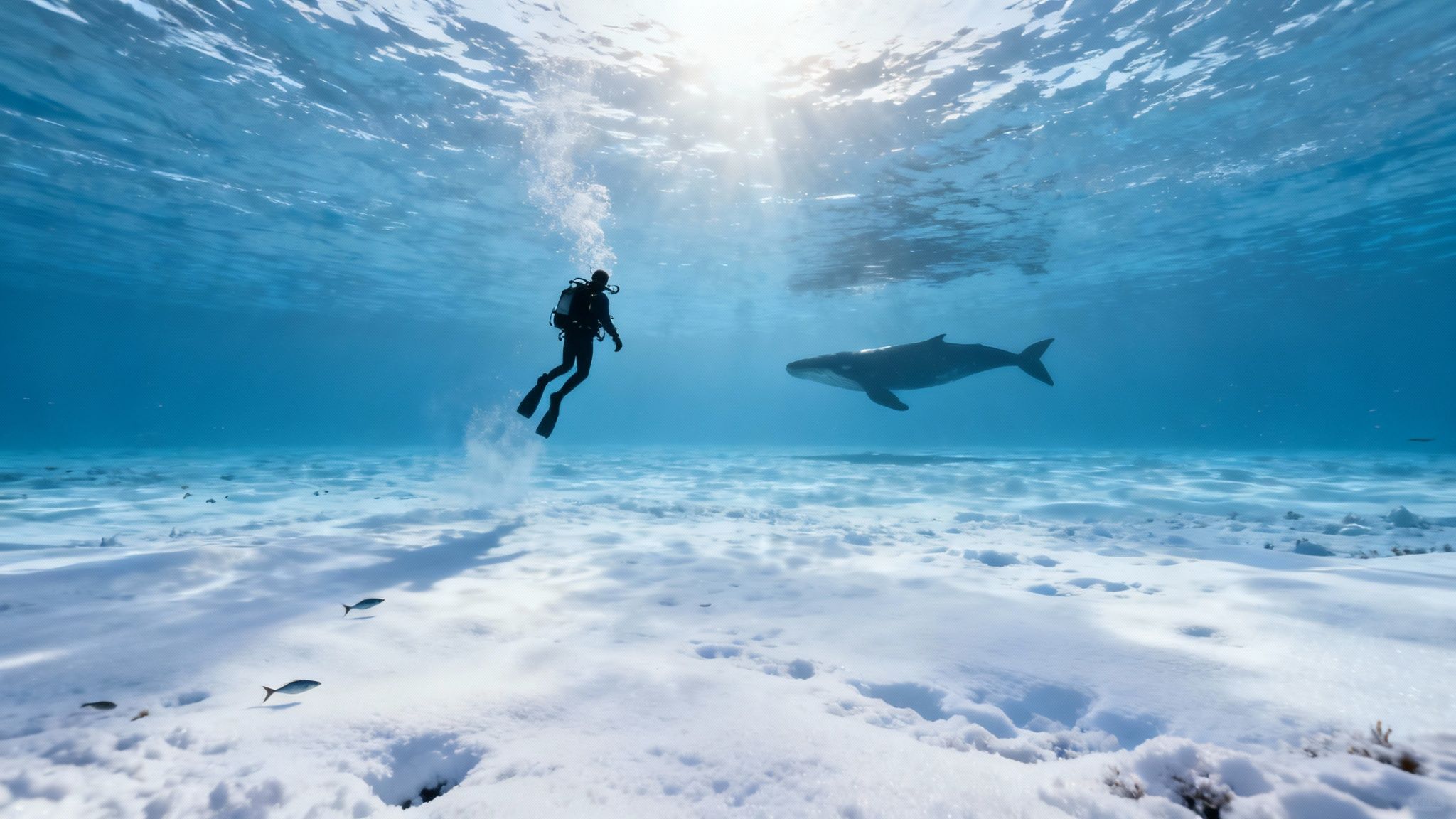
Winter in Kona completely transforms the underwater world. For many experienced divers, this is the season. It brings a unique combination of incredible clarity and sound that you just don't get any other time of year.
If you’re a diver who lives for visibility, this is your time to shine. The water often becomes exceptionally clear, giving you those breathtaking, wide-angle views of Kona’s dramatic lava-formed landscapes.
Crystal Clear Conditions
Kona offers fantastic diving year-round, but the winter months have something truly special going on. Water temperatures hover between 75–78°F (24–26°C), and visibility can easily hit 80–100+ feet.
These are the kind of conditions that make photographers weep with joy. Sure, the surface can be a little choppier, but the payoff is an underwater view that seems to stretch on forever.
The Soundtrack of the Season
The real magic of winter diving, though? It’s the arrival of migrating humpback whales. From December through March, their complex, haunting songs become the literal soundtrack to your dive.
There's nothing quite like it. Imagine descending into the deep blue while the powerful calls of these gentle giants echo all around you. It’s a humbling, almost mystical experience that stays with you long after you surface.
Staying Comfortable and What to Expect
While the songs of whales fill the water, the surface can be a bit more active than in the dead-calm of summer. This often comes with a silver lining: fewer crowds at popular dive sites, which means a more serene and personal adventure for you.
To stay comfortable in the slightly cooler water, we highly recommend a 5mm wetsuit. That extra bit of insulation makes all the difference, ensuring you stay warm and can fully appreciate the stunning views and unique marine life.
Curious about who you might meet down there? We've got a great guide on which animals you can see during scuba diving in Hawaii in December.
If your dream dive involves unparalleled clarity and the chance for epic big animal encounters, winter is your season. The combination of stunning visibility and the presence of humpback whales makes it a truly special time to explore Kona’s waters.
Summer Diving Bliss: June Through September
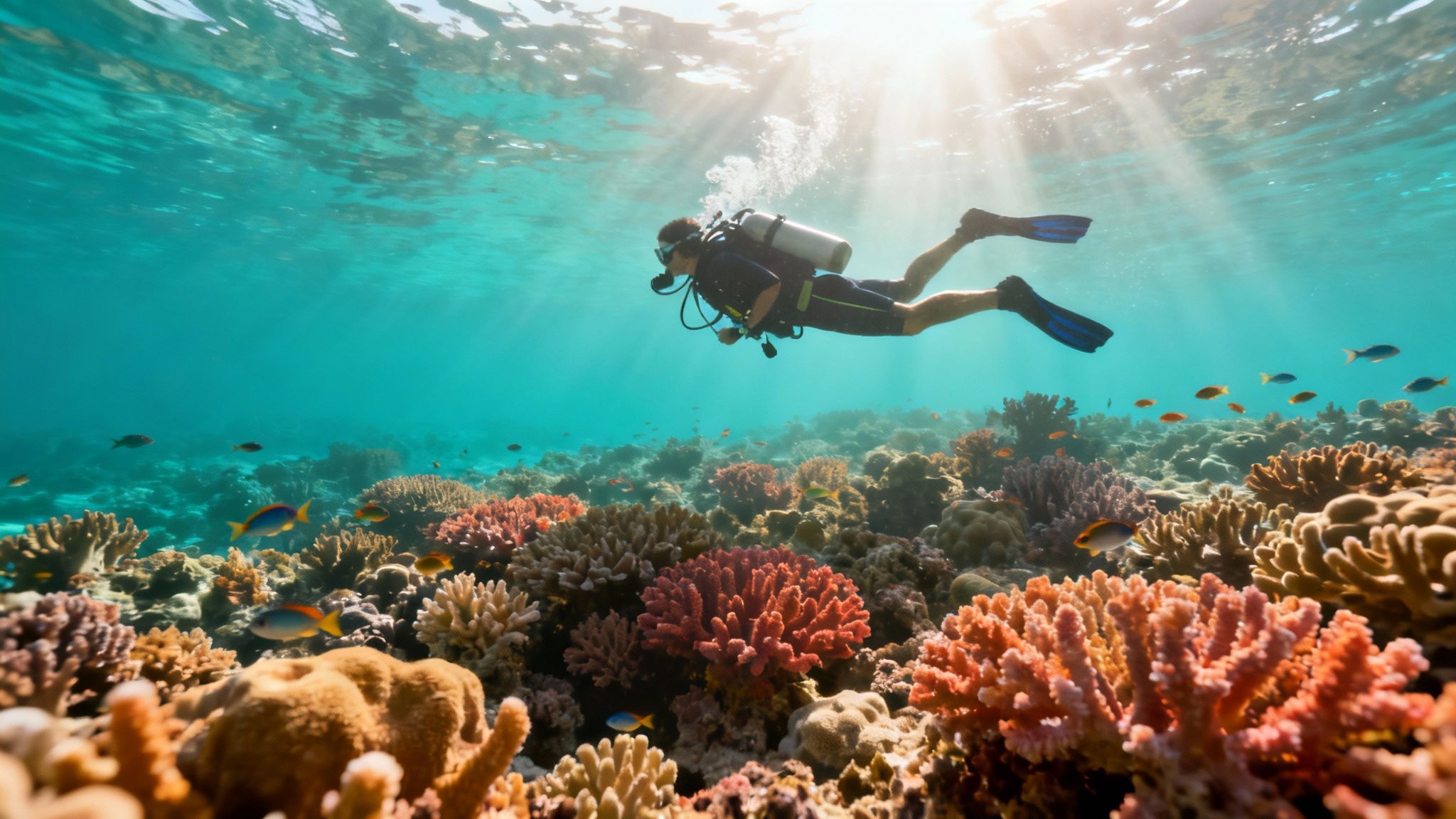
If you picture your perfect dive as slipping into warm, glassy seas under a bright Hawaiian sun, then Kona in the summer is your paradise. It’s pretty much the postcard image of tropical diving, and for good reason.
The water temperature climbs into the low 80s, which is pure bliss. Forget thick wetsuits; this is comfortable, easy-going diving. We find these balmy conditions are absolutely perfect for new divers getting their fins wet, underwater photographers who need that extra bottom time without getting chilled, and really, anyone who just wants to relax and enjoy the reef.
Another huge plus? The ocean surface is often incredibly calm. This means boat rides are smooth as silk, and it opens up a bunch of shore diving spots that can be a bit tricky to get to when the waves kick up in other seasons.
Peak Season Perks
Now, it's true that you'll be sharing the water with more fellow divers during these months—it's no secret how great the conditions are. But the trade-off is absolutely worth it. You get consistently fantastic weather and diving. The reefs are just buzzing with activity under those sunny skies.
It’s the ideal time to explore the full menu of scuba diving tours on the Big Island, from classic two-tank morning dives on the reef to the magic of a manta ray night dive.
Kona's summer season is the definition of "easy diving." The combination of warm water, calm seas, and high marine activity creates a welcoming environment for divers of all experience levels to enjoy the best the Big Island has to offer.
While the big animal encounters can be less predictable this time of year, those calm seas can sometimes surprise you. We've found that the tranquil conditions of summer and fall occasionally improve the odds of a chance encounter with pelagics. If you're curious about one of the ocean's most incredible giants, check out our guide that answers the question, "are there whale sharks in Kona?"
Ultimately, the long, sunny days and placid ocean make summer an unbeatable choice for anyone looking to get as much comfortable, beautiful diving in as possible. It’s the perfect backdrop for making some amazing underwater memories.
The Sweet Spot of Shoulder Season Diving
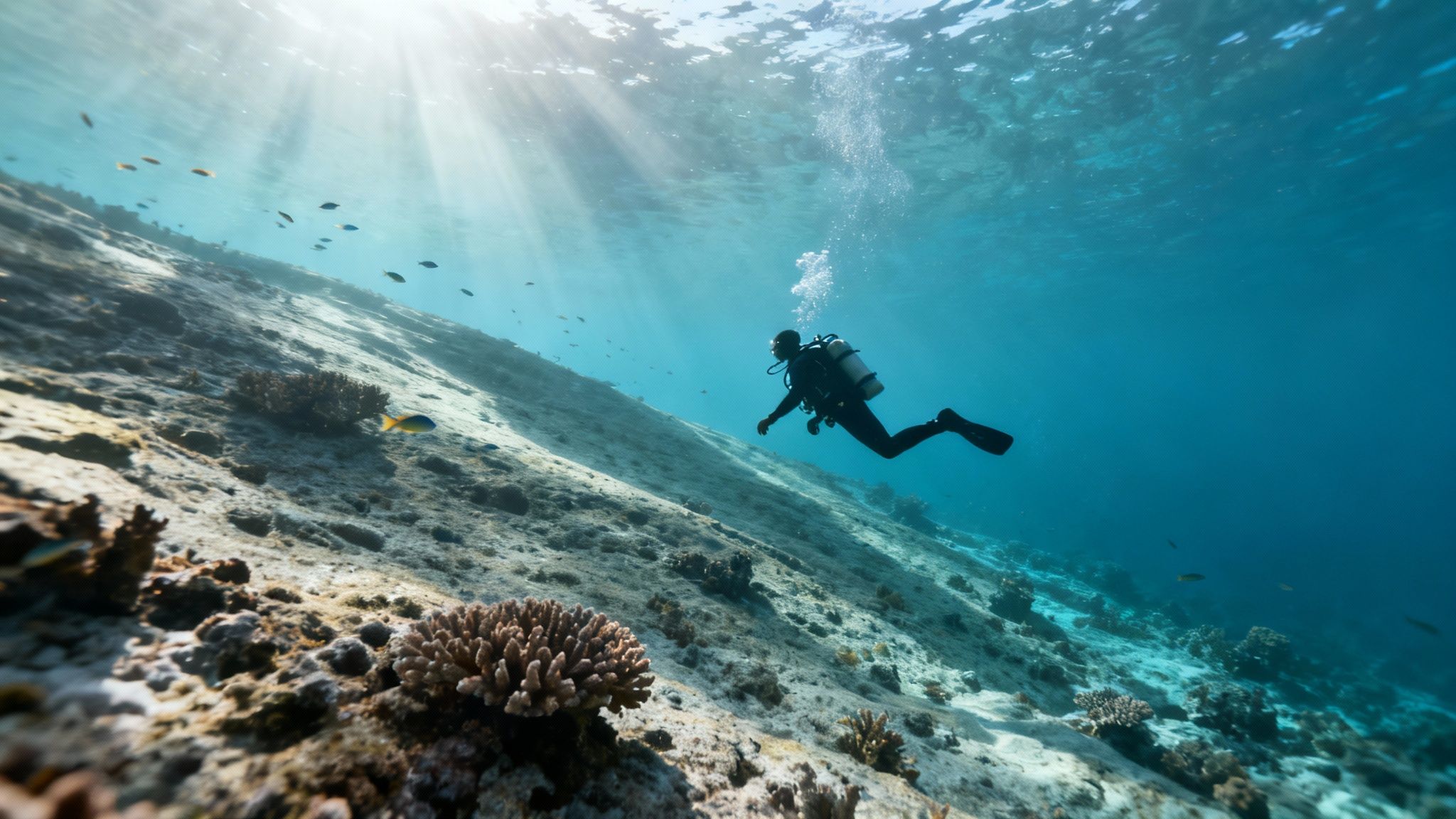
If you're an experienced diver looking for that perfect window to visit Kona, let me let you in on a little secret: the shoulder seasons. We're talking about spring (April-June) and fall (October-November). This is when you get the best of both worlds—the warm water of summer mixed with the crystal-clear visibility of winter, but without the crowds.
These transitional months are truly special here. Spring brings this incredible energy to the island, with everything looking lush and vibrant. Then, in the fall, the ocean feels wonderfully calm after the summer rush dies down.
That quieter vibe means a much more relaxed experience, both in and out of the water. You’ll find it’s easier to book scuba diving tours on the Big Island, you might snag better deals on travel, and best of all, you'll have more of our underwater paradise to yourself.
Why Shoulder Seasons Shine
Look, Kona is fantastic year-round, but the number of visitors definitely changes. Summer is peak season, and dive boats can get packed. But months like September and May? That’s the sweet spot. You get warm water, amazing visibility, and way fewer people.
If your goal is to find that ideal intersection of great conditions, fewer divers, and better value, planning your trip during these transitional months is a game-changing strategy.
Knowing what to expect can make all the difference in your trip. For divers who love to be prepared, check out our guide on how to check ocean conditions for the Big Island, Hawaii before you even start packing. It'll help you see why the calm, clear waters of the shoulder season are so darn rewarding.
How Seasons Influence Kona’s Marine Life
While the water conditions change a bit throughout the year, the real show is dictated by the marine life's own calendar. This is a huge factor when you're deciding on the best season to dive in Kona—your bucket list might just line up perfectly with a specific time of year.
Some encounters here are wonderfully reliable, while others are strictly seasonal. Knowing these patterns is the secret to planning an unforgettable underwater trip.
Year-Round Wonders and Seasonal Visitors
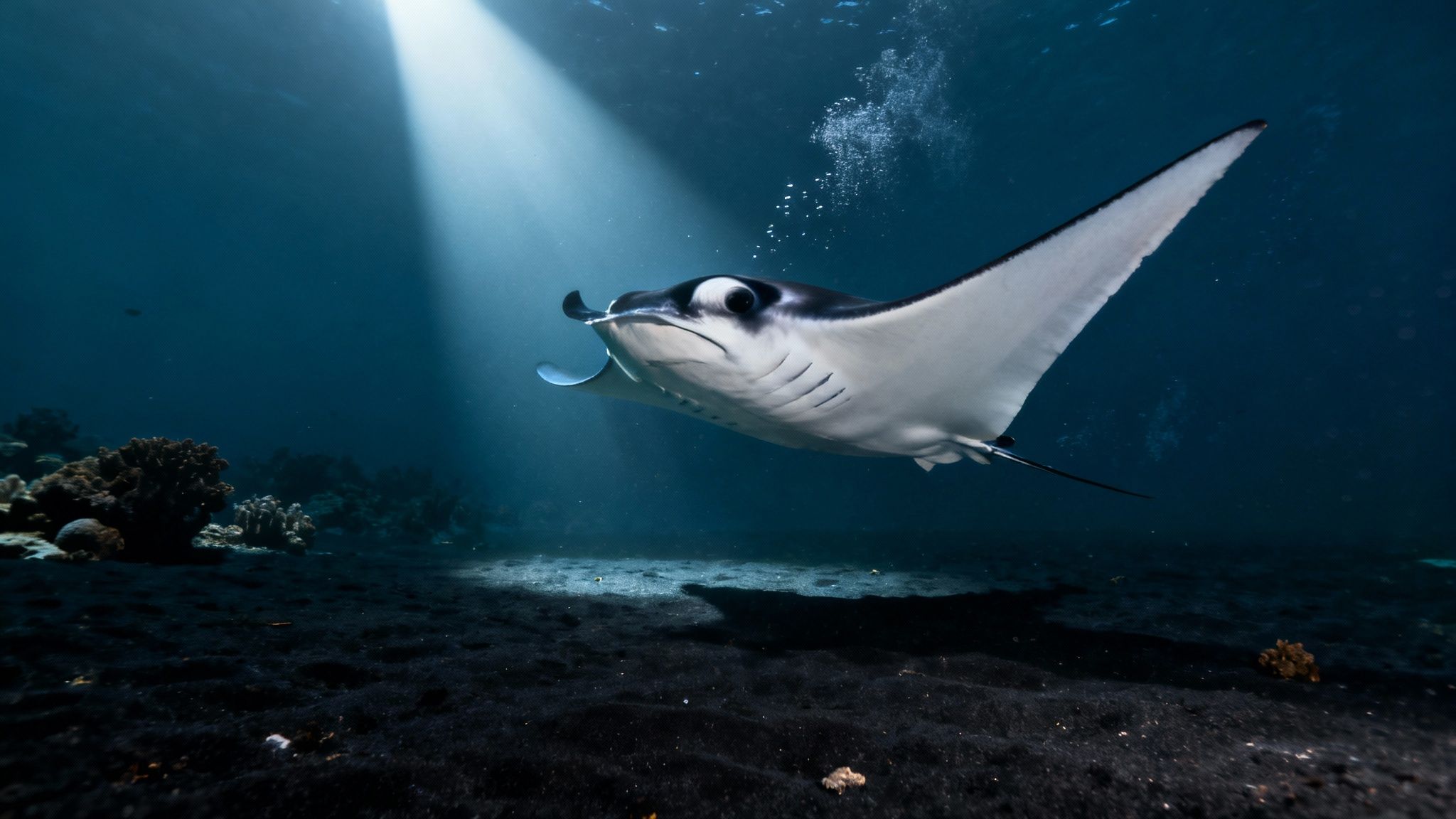
The world-famous manta ray night dive is the perfect example of a dependable, year-round spectacle. Local operators will tell you that mantas show up on over 80% of night dives, no matter the month. It’s about as close to a guarantee as you can get in the wild! For more on this, check out the high success rate of manta encounters on konahonudivers.com.
On the other hand, humpback whales are our special winter guests. You'll only hear their incredible songs and maybe catch a glimpse of them from December to March. It's a truly magical, but very time-sensitive, window.
Key Takeaway: Some of Kona’s best dives, like the manta ray experience, are available all year long. But for others, like seeing humpback whales, you’ll need to plan your trip for a specific season to have a shot.
Other amazing sightings, like whale sharks, are less predictable but tend to pop up more often during the calm seas of summer and fall. Even the reef life changes its tune, with certain critters being more active when the water is warmer or cooler. This is especially true if you’re hoping to spot the truly bizarre creatures on a Kona blackwater dive—those subtle seasonal shifts can make all the difference.
By lining up your visit with the natural rhythms of Kona’s marine life, you can really dial in your dive trip to see what you've been dreaming of. Ready to see what's waiting for you?
Ready to Dive Kona? Let’s Get You Booked
Knowing the best time of year to visit is one thing, but who you dive with? That’s what makes or breaks a trip.
Here in Kona, we're all about making sure every single dive is exceptional, safe, and something you'll talk about for years. That’s why we run our boats with small groups—it just makes for a better, more personal experience for everyone. It’s less about just seeing the reef and more about truly connecting with the ocean.
Our guides are the heart of our operation. They're not just leading a tour; they're sharing a passion. Whether you're a brand new diver looking for a confidence-boosting first experience or an old pro looking for a challenge on one of our advanced dive tours, our crew has your back.
If you're looking to really immerse yourself for a few days, options like liveaboard diving are out there, but we think you'll find plenty of adventure right here with our daily trips.
Don't just take our word for it, though. The proof is in the pudding, as they say. Check out what fellow divers have to say about their adventures with us. These are real experiences from people just like you who came to see what Kona's underwater world is all about.
Your Kona Diving Questions, Answered
Even after breaking down the seasons, you probably still have a few questions rolling around in your head. That's totally normal. Here are some of the most common things we get asked, with some straight-up answers to help you plan the perfect dive trip.
Will I Freeze in a 3mm Wetsuit During the Winter?
While you might see some tough-as-nails local guides rocking a 3mm year-round, most of us mere mortals will be way more comfortable in a 5mm wetsuit during the winter. From about December through March, the water temperature likes to hang out between 75-78°F.
On a single dive, you might be fine. But for those awesome two-tank dive days, that 5mm suit is your best friend. It makes the difference between loving every second of your surface interval and shivering while trying to eat your snacks. Stay warm, stay happy.
Does Kona Have a Rainy Season I Need to Worry About?
Nope, not really. One of the best things about diving in Kona is that we're on the dry side of the Big Island. This place is practically a desert compared to the Hilo side! While winter might see a few more passing showers, it’s almost never enough to cancel a trip.
The rain that does show up is usually quick and gone before you know it. Most importantly, it has virtually zero impact on our underwater visibility. So go ahead and book any of our scuba diving tours on the Big Island with confidence, rain or shine.
Are the Dive Sites a Total Zoo in the Summer?
It's true that summer—especially June through August—is peak season here in Kona. That definitely means more people on the island, and yeah, more people on the boats. But this is where choosing a top-notch dive operator really pays off. A good crew knows the schedule, the sites, and how to zig when everyone else zags to give you a great experience.
Insider Tip: If you're not a fan of crowds, think about hitting up the "shoulder seasons." Months like September, May, and early June are the sweet spot—you get fantastic diving conditions without the peak summer crowds. It’s the best of both worlds.
Ready to jump in? Here at Kona Honu Divers, we live and breathe this stuff, and we're dedicated to making your dive trip unforgettable, no matter when you visit.