
Trying to pin down the perfect time for your Hawaiian dive adventure? I get it. The good news is, there’s no truly “bad” time to dive here. The real question is, what kind of experience are you looking for?
It really boils down to two main seasons. If you're chasing calm, bathtub-warm water with visibility that seems to go on forever, aim for summer (May to September). But if the thought of hearing the haunting songs of humpback whales as you explore the reefs gives you goosebumps, then winter (December to March) is your ticket.

Unlike a lot of dive destinations that have strict on and off seasons, Hawaii is a year-round paradise. The volcanic origins of the islands blessed us with an incredible underwater landscape full of lava tubes, massive archways, and sprawling reefs. This rugged topography creates endless nooks and crannies, providing shelter and habitat for marine life all year long.
So, it's less about if you can dive and more about what you'll see and feel when you do.
Hawaii Scuba Diving Seasons at a Glance
To make it simple, let's break down what each season brings to the table. This table gives you a quick snapshot to help you decide which time of year best fits your dream dive trip.
| Feature | Summer Season (May – September) | Winter Season (December – March) |
|---|---|---|
| Water Temperature | Warmest, averaging 77-80°F (25-27°C). | Cooler, around 74-76°F (23-24°C). |
| Sea Conditions | Generally calm and flat, especially on Kona side. | Can have larger swells, particularly on north shores. |
| Visibility | Excellent, often exceeding 100 feet. | Good, but can be variable due to ocean churn. |
| Marine Life Highlight | Perfect for spotting smaller critters and reef fish. | Humpback whale songs provide an epic soundtrack. |
| Best For… | New divers, photographers, and warm-water lovers. | Adventurous divers and anyone wanting to experience whales. |
Ultimately, both seasons offer something truly special. Your choice just depends on what you want to prioritize for your underwater adventure.
Summer Diving: The Calm and Clear Season
From May through September, Hawaii's waters are at their most inviting. This is what I call "glassy season." The seas tend to be flatter, and the water temperature creeps up to a balmy 77-80°F.
For new divers or underwater photographers, it doesn’t get much better. The visibility is often phenomenal, sometimes pushing well past 100 feet, which lets you soak in the full grandeur of the vibrant coral reefs.
Winter Diving: The Season of Giants
Now, winter is a whole different kind of magic. While the water is a bit cooler and the surface can be more active, December to March is prime time for humpback whales.
You almost certainly won't see them on a dive, but you will hear them. The experience of being 60 feet down and hearing their powerful, complex songs reverberate through your entire body is something you’ll never, ever forget. It adds a completely surreal and humbling dimension to the dive.
So, what's it going to be? Do you want those picture-perfect, calm conditions for exploring reef details, or are you drawn by the incredible soundtrack of the ocean's most majestic visitors?
No matter when you come, the underwater world here is always alive and waiting. To help you weigh the options further, check out our thoughts on whether scuba diving is worth it in Hawaii. This overview should help you line up your expectations with the perfect season for your trip.
Summer Diving: The Season for Calm Seas and Crystal-Clear Waters
Imagine slipping into warm, impossibly clear water, the Hawaiian sun shimmering down and making the vibrant coral reefs pop with color. That’s what summer diving in Hawaii is all about. From May through September, the Pacific tends to settle down, offering some of the most blissful and predictable diving conditions on the planet.
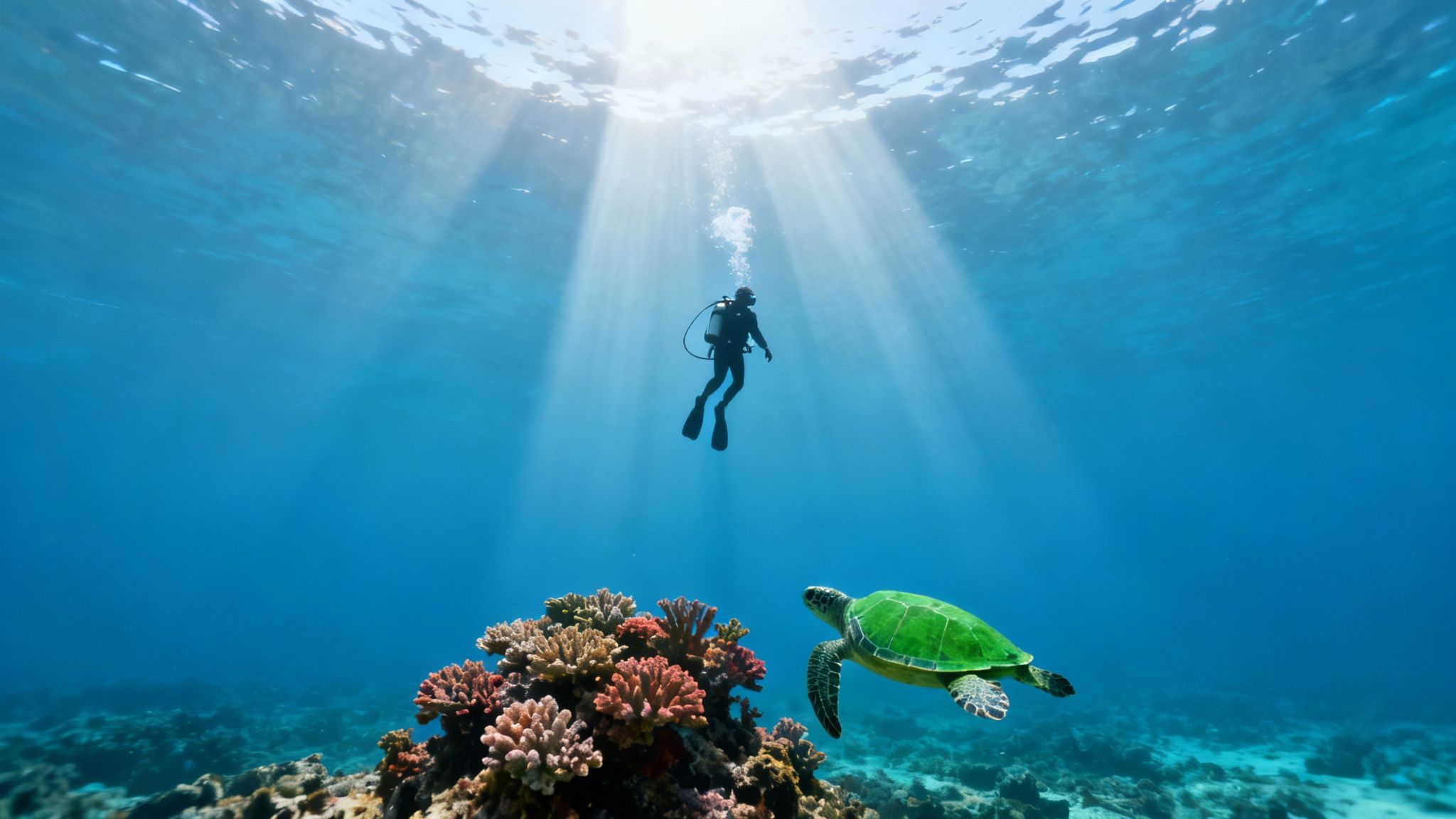
During these prime months, the water feels like bathwater, reaching a balmy 79–82°F (26–28°C). Forget thick, cumbersome wetsuits; you can often get away with just a thin layer, giving you so much more freedom to move. Better yet, the underwater visibility is often stunning, frequently stretching well beyond 100 feet. It’s like being dropped into a high-definition aquarium.
These incredibly clear and calm conditions make summer the perfect time for divers of every skill level.
An Ideal Time for Every Diver
Whether you’re gearing up for your very first open-water dive or you’re a seasoned pro ready to tackle complex lava tubes, summer has you covered. The gentle seas mean smoother boat rides and much easier entries and exits—a huge bonus for anyone new to diving or who gets a bit queasy on the water.
For experienced divers, the incredible visibility unlocks a whole new world. Exploring Hawaii's unique underwater landscapes, like ancient lava tubes and dramatic volcanic archways, is just breathtaking when you can see the entire structure from a distance. These months are absolutely perfect for navigating these intricate sites and spotting the rare creatures hiding within. If you're looking for a real challenge, Kona offers some of the best advanced dive tours you'll find anywhere.
Peak Marine Life and Iconic Dives
Summer is a fantastic time for wildlife encounters. The calm, warm waters are absolutely bustling with activity. It's common to see:
- Honu (Green Sea Turtles): You’ll often find them resting on the reef or just gracefully cruising by.
- Frogfish: These masters of camouflage are a real treat to find for any diver with a sharp eye.
- Colorful Eels: Moray eels are everywhere, peeking out from their rocky dens to see what’s going on.
But the true star of a Hawaiian summer dive trip is, without a doubt, the world-famous Kona manta ray night dive. The calmer ocean surface during these months makes for more reliable and comfortable trips, which seriously boosts your chances of having that mind-blowing encounter. Watching those gentle giants glide through the beams of light is something every diver needs to experience at least once. The manta ray dive is a must-do, plain and simple.
Now, summer does overlap with hurricane season (June to November), but Hawaii's unique spot in the central Pacific means direct hits are pretty rare. Still, it's always smart to keep an eye on the weather forecast before your trip. For the absolute best of both worlds—amazing conditions with slightly smaller crowds—think about booking for the shoulder months of May or September. All in all, summer is the prime season for diving in Hawaii, especially on the southern shores where the lava tubes and caverns are just teeming with life. Learn more about the Big Island's top dive sites and see for yourself.
Winter Diving with Whales and Underwater Wonders
When winter rolls into Hawaii, from about December through March, the whole vibe of the ocean changes. It becomes this incredible, dynamic theater of natural wonders. The conditions can be a little more challenging, sure, but the rewards are something you'll never forget. This entire season is dominated by one awe-inspiring event: the arrival of migrating humpback whales.
Hearing their powerful songs becomes the soundtrack to your dive, creating an underwater symphony that's truly profound. Now, direct underwater encounters with these gentle giants are rare—and for good reason, as they're strictly protected. But hearing them? That’s almost a guarantee.
The deep, resonant calls travel for miles, and you can literally feel the vibrations in your chest. It’s a humbling, moving experience that adds a layer of raw, powerful beauty to every single moment you spend beneath the surface.
Navigating Winter Conditions
The trade-off for this incredible spectacle is that the ocean conditions can be a bit more unpredictable. Water temperatures cool down slightly to a very comfortable 76–80°F, but the real change is the arrival of the winter swells.
These powerful waves, which primarily hit the northern-facing shores, can sometimes make certain dive sites inaccessible. This is where knowing the islands really pays off.
The Big Island's Kona coast, for example, is perfectly sheltered by its massive volcanoes. Its leeward position acts as a natural shield against the big winter waves, which means the diving here stays calm and clear pretty much year-round. While other islands might be dealing with rough seas, Kona is still serving up world-class underwater adventures.
The annual migration of humpback whales is what makes winter so special. These massive animals travel over 3,500 miles from their Alaskan feeding grounds to mate and calve in Hawaii’s warmer waters, transforming the entire underwater environment.
A Different Kind of Thrill
Winter diving in Hawaii isn't just about the whales you hear; it's also about what their presence brings. The same nutrient-rich waters and increased plankton that attract the whales also create a thriving ecosystem for a ton of other incredible marine life.
This makes winter a fantastic time to spot sea turtles, reef sharks, and majestic manta rays. The energy in the ocean is just palpable. You're not just observing nature; you're feeling the untamed beauty of the Pacific and its inhabitants all around you.
This unique mix of thrilling conditions and spectacular wildlife makes it one of the absolute best times to scuba dive in Hawaii, especially if you have an adventurous spirit.
If you’re planning a trip during this magical season, you’ll definitely want to check out our guide on the specific animals you can see while scuba diving in Hawaii in December. It’ll give you a great idea of what to keep an eye out for on your underwater journey.
Discovering the Kona Coast’s Year-Round Advantage
Ever wish you didn’t have to plan your dive trip around the “perfect” season? For divers looking for the most dependable conditions in Hawaii, the answer is always the same: head to the west coast of the Big Island. Welcome to Kona, a place where incredible [scuba diving](https://konahonudivers.com/diving-tours/?ref=blog) isn’t a seasonal treat—it’s a year-round guarantee.
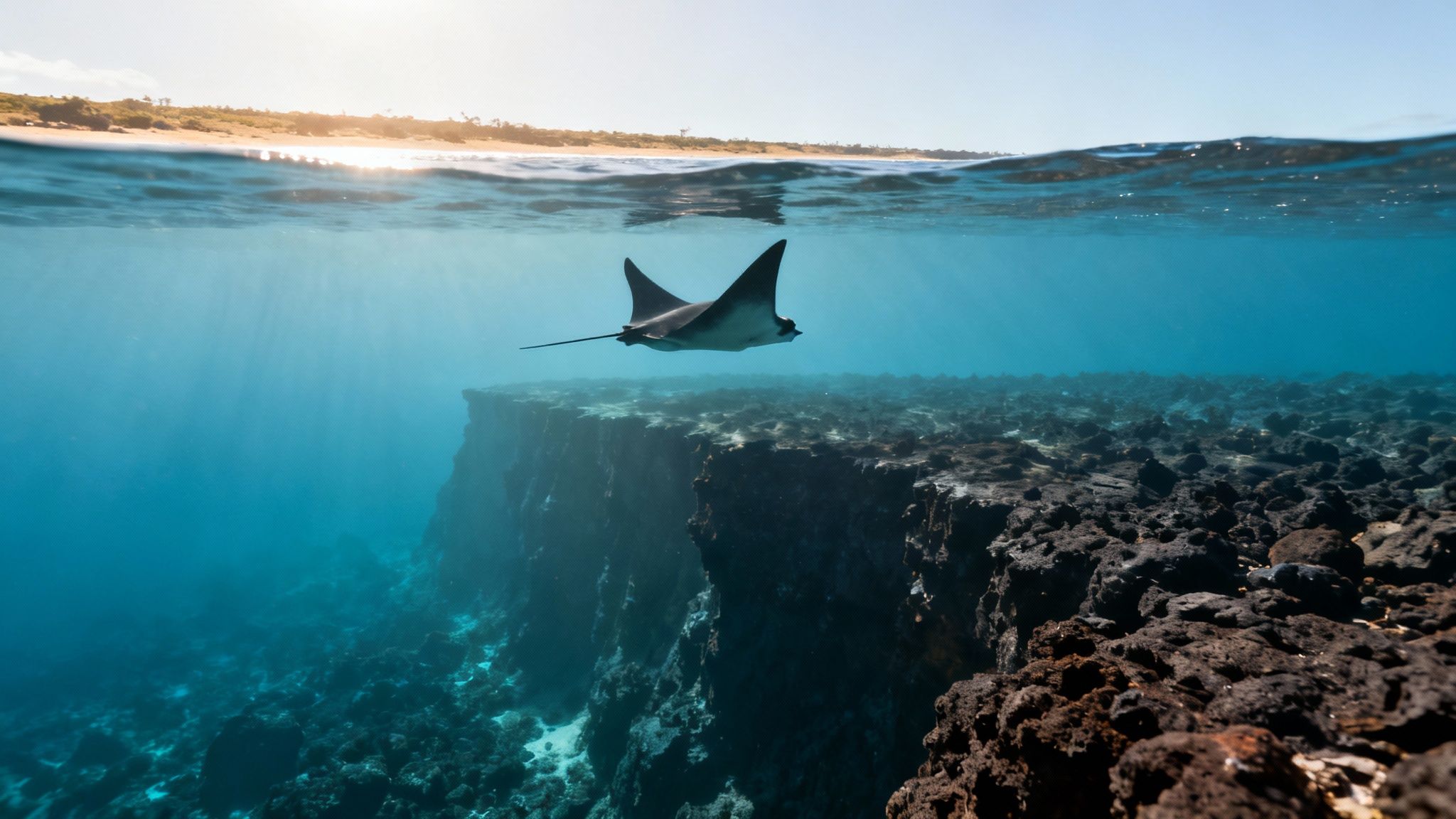
So, what's Kona's secret? It's all about geography. The coastline is tucked into the protective lee of two of the largest volcanoes on Earth, Mauna Kea and Mauna Loa. These colossal mountains act as a natural shield, blocking the powerful trade winds and heavy ocean swells that can churn up the waters on the northern and eastern shores of the other islands.
The result is a diver’s dream. The water here stays remarkably calm and clear pretty much all the time. This consistency makes Kona the most reliable and rewarding dive destination in the entire state. When people ask, "What are the best months to scuba dive in Hawaii?" we can honestly say: any month you can get here.
A Volcanic Underwater Playground
The underwater world off the Kona coast is a direct result of its volcanic past. Thousands of years of lava flows have sculpted a stunning and complex environment, creating a natural playground for divers. You can navigate ancient lava tubes, drift along breathtaking vertical walls, and explore vibrant reefs that are just buzzing with life.
This unique topography is home to an incredible diversity of marine animals, making every single dive a chance to see something new. Thanks to its steady conditions, Kona is where you'll find some of the most iconic dives on the planet.
- The Manta Ray Night Dive: This is a true bucket-list experience. The world-famous Manta Ray Night Dive is a ballet of gentle giants that you simply have to see to believe.
- The Blackwater Night Dive: For seasoned divers looking for a real adventure, the Blackwater Night Dive is an unforgettable plunge into the deep. You’ll witness a mysterious world of deep-sea creatures as they migrate toward the surface under the cover of darkness.
Kona isn't just another dive spot; it's an entire ecosystem that seems tailor-made for divers. The volcanic shelter creates a natural aquarium with conditions that are hard to beat anywhere else in the world, any day of the year.
This combination of unique geography and world-class dive sites cements Kona's reputation. Whether you visit during the sunny peak of summer or the winter whale season, the diving is always exceptional. You can plan your trip with confidence, knowing that an incredible underwater adventure is waiting for you.
To show why Kona stands out, we've broken down its key advantages.
Why Kona is a Premier Year-Round Diving Destination
| Feature | Description | Best Season |
|---|---|---|
| Geographic Shelter | The massive Mauna Kea and Mauna Loa volcanoes block strong trade winds and ocean swells, resulting in consistently calm waters. | Year-Round |
| Excellent Visibility | Calm seas and minimal runoff from the dry coastline typically result in water clarity exceeding 100 feet (30 meters). | Year-Round |
| Volcanic Topography | The underwater landscape features lava tubes, arches, and dramatic drop-offs, providing diverse habitats for marine life. | Year-Round |
| Iconic Dives | Home to world-renowned experiences like the Manta Ray Night Dive and the thrilling Blackwater Night Dive. | Year-Round |
| Rich Marine Life | The protected conditions support a healthy and vibrant ecosystem, with frequent sightings of turtles, eels, and endemic fish. | Year-Round |
These factors work together to create an environment where you can almost always count on a fantastic day of diving.
Here at Kona Honu Divers, we get to share this incredible place with divers every single day. Our guests' experiences speak for themselves.
Ready to see for yourself why Kona is the best choice, no matter the season? Take a look at all our available Kona diving tours and find the perfect underwater journey for your trip. The calm, clear waters of the Big Island are calling.
Planning Your Dive Trip with Kona Honu Divers
Figuring out the best time to dive in Hawaii is a great start, but who you dive with can make all the difference. A great guide doesn’t just show you where to go; they turn a fun dive into a truly unforgettable adventure. That’s what we’re all about here at Kona Honu Divers.
We live and breathe the Big Island’s underwater world. Our team is made up of passionate ocean advocates who are experts in their field, and nothing makes us happier than sharing that magic with you. We’re deeply committed to safety and respectful marine life encounters on every single trip.
When you board one of our boats, you're not just another diver on the roster—you're part of our dive ‘ohana (family). We work hard to create a supportive, friendly vibe where everyone feels comfortable and ready to have an amazing time.
Tours for Every Diver
Every diver is on a different journey. Maybe you're about to take your very first breath underwater, or maybe you've got hundreds of dives logged and are looking for something new. We get it. That’s why we offer a wide range of diving tours tailored to different skill levels and interests.
We intentionally keep our groups small. This isn't just a talking point; it means you get more personalized guidance from our crew and a much better, less crowded experience in the water.
- Introductory Dives: Curious about scuba but not ready for a full certification course? This is the perfect way to get your feet wet (literally!) and discover the wonder of breathing underwater.
- Advanced Dives: If you're a certified diver craving a bigger challenge, we'll take you to explore deeper sites, navigate incredible lava tubes, and see more of Kona's dynamic underwater landscapes. Our premium advanced dives are designed for exactly this kind of adventure.
- The Manta Ray Night Dive: Let's be honest—this is the one you've heard about. Our world-famous Manta Ray Night Dive is more than just a dive; it's a surreal, bucket-list experience that you'll be telling stories about for the rest of your life.
Planning on being in the water for a few days? Check out our multi-day Kona diving packages. They offer fantastic value and give you the chance to see a bunch of our best dive spots.
See What Our Divers Say
But you don't have to take our word for it. The experiences of our divers say it all. We’re incredibly proud of the community we’ve built and the amazing memories we've helped create.
Your Kona adventure is waiting. We can't wait to share it with you.
Common Questions About Scuba Diving in Hawaii
Even after breaking down the seasons, you probably still have a few questions rolling around in your head. Let’s tackle some of the most common ones so you can feel completely prepared for your trip.
What Kind of Wetsuit Should I Pack for Hawaii?
Hawaii’s water is wonderfully warm, hovering between a comfortable 76-82°F (24-28°C) all year. Because of this, a standard 3mm wetsuit is what you’ll see most divers wearing. It really is the sweet spot, giving you just enough warmth without restricting your movement.
Now, if you’re the person who’s always cold or you’re planning on doing several dives a day during the slightly cooler winter months, you might be happier in a 5mm wetsuit. It really comes down to your personal preference, but for most people, the 3mm is a perfect fit.
Can I Try Scuba Diving in Hawaii if I'm Not Certified?
You absolutely can! If you’ve always dreamed of breathing underwater but don't have a certification, the PADI Discover Scuba Diving program is your ticket. It's a fully guided, safe introduction to the underwater world. Top-notch operators like Kona Honu Divers run these experiences, so you'll be in great hands.
Keep in mind, though, that for most boat dives and to explore Hawaii’s more famous sites, you’ll need at least an Open Water certification. This is the standard pretty much everywhere. If you're certified and ready to go, you can browse all the available Kona diving tours to find the perfect one for your skill level.
Should I Be Worried About Sharks?
For most of us who dive regularly, seeing a shark is the highlight of the day, not a reason to panic. Sharks are a vital sign of a thriving ocean, and the species we see most often, like the whitetip reef shark, are typically shy and uninterested in divers.
The best way to ensure a positive and safe encounter is to dive with a professional, local guide. They know the area, understand animal behavior, and will put you in the right position to simply admire these incredible creatures from a respectful distance.
Is It Possible to See Manta Rays in Kona Year-Round?
Yes, and it’s one of the things that makes Kona so special! The Kona coast is home to a massive, resident population of manta rays that stick around all year long. This isn't a seasonal migration; they are here every single month, which makes Kona one of the most reliable places on the planet for a manta encounter.
You can book a manta ray dive literally any night of the year. That said, the glassy-calm surface conditions we often get in the summer can make the famous night dive experience even more spectacular.
Your underwater adventure is just a click away. At Kona Honu Divers, we are dedicated to providing safe, unforgettable experiences in the pristine waters of the Big Island.