
If you've ever dreamt of floating through water so clear it feels like flying, then you're dreaming of diving on the Big Island. Here along the Kona coast, visibility often pushes past 100 feet, making it one of the most sought-after diving destinations on the planet. The underwater clarity isn't just a lucky break—it's the standard.
What Makes the Big Island a Diver’s Paradise
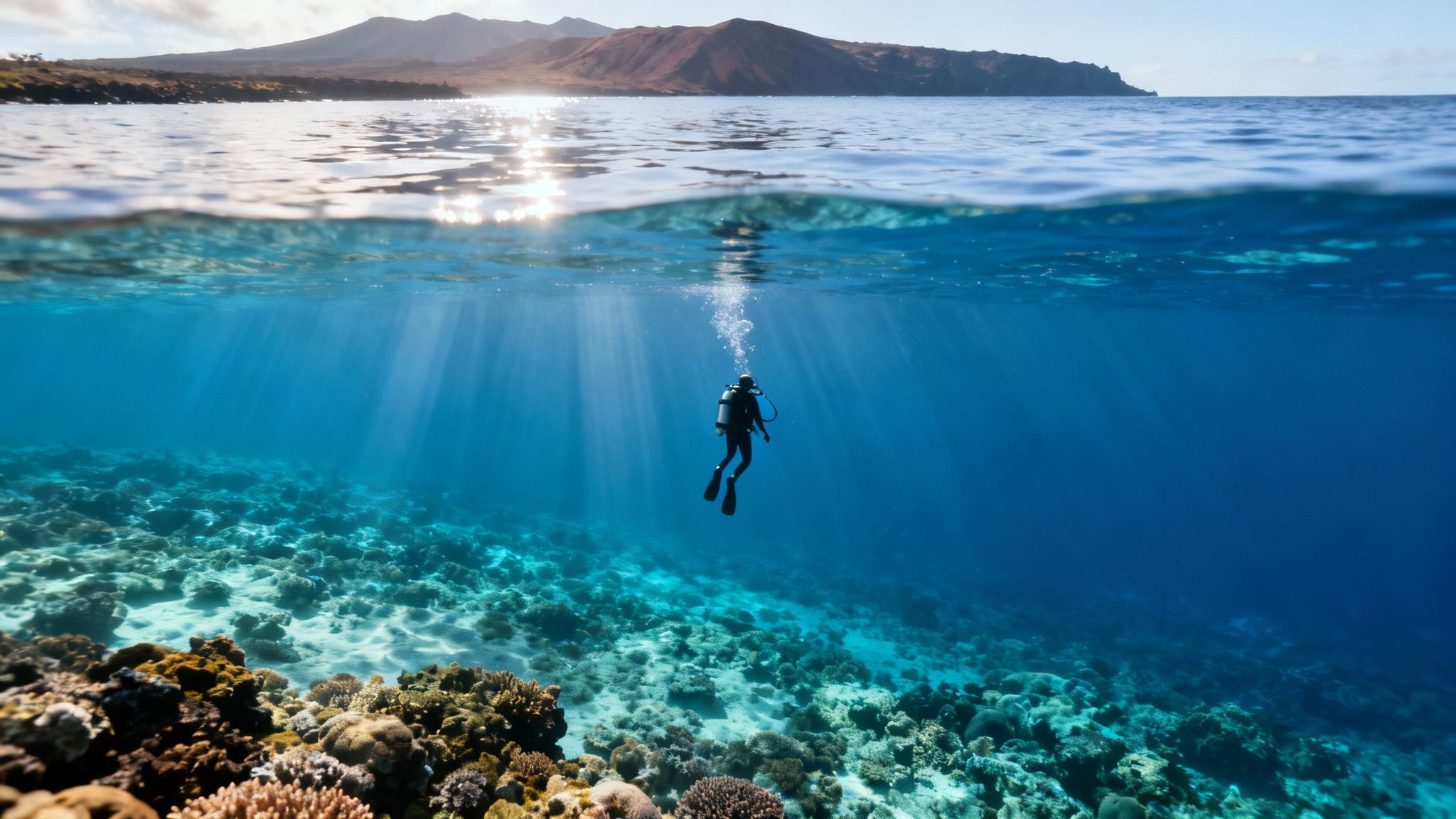
So, what’s Kona’s secret? It's all about the island's unique geology. The massive volcanoes, Mauna Loa and Hualalai, act like a giant wall, shielding the western coastline from the blustery trade winds that can stir up sediment and reduce visibility on other islands.
This natural protection creates exceptionally calm, glass-like water for most of the year. It transforms every single Big Island scuba diving experience into an incredible visual spectacle, whether you're exploring a shallow coral garden or navigating the ancient lava tubes deep below. Plus, the island's porous volcanic rock and lack of major rivers mean there's very little runoff to cloud the water, a common issue in other tropical spots.
Year-Round Diving Excellence
When we talk about the Big Island, we’re talking about a place where you can confidently plan a dive trip months in advance. You don't have to cross your fingers and hope for good conditions; incredible underwater views are the norm.
Summer is when things get truly epic, with visibility frequently exceeding the 100-foot mark. This level of clarity means you can spot a turtle munching on algae from far across the reef, watch entire schools of fish move as one through lava formations, and easily find those shy eels peering out from their rocky homes. For a deeper look at what makes this island so special, this guide to Big Island scuba diving covers it all.
Planning Your Trip with Seasonal Visibility in Mind
While any time is a good time to dive in Kona, knowing the subtle shifts between seasons can help you tailor your trip. Here’s a quick breakdown of what you can generally expect throughout the year.
Seasonal Diving Visibility on the Big Island (Kona Coast)
The table below gives you a snapshot of visibility and marine life highlights, helping you choose the perfect time for your underwater adventure.
| Season | Average Visibility | Marine Life Highlights |
|---|---|---|
| Summer (May-Sept) | 100-150+ feet | Calmest seas, warmest water, perfect for seeing the full reef panorama. |
| Fall (Oct-Nov) | 90-120 feet | Excellent clarity continues with fewer crowds as the peak season winds down. |
| Winter (Dec-Mar) | 80-100+ feet | Humpback whale songs provide an incredible underwater soundtrack. |
| Spring (Apr-May) | 90-120 feet | Water warms up, and conditions become exceptionally calm and clear again. |
No matter when you decide to visit, the underwater world of Kona is ready to show off. Ready to see it for yourself? We know just where to find the absolute best conditions on our premier diving tours.
The Science Behind Kona’s Crystal-Clear Water
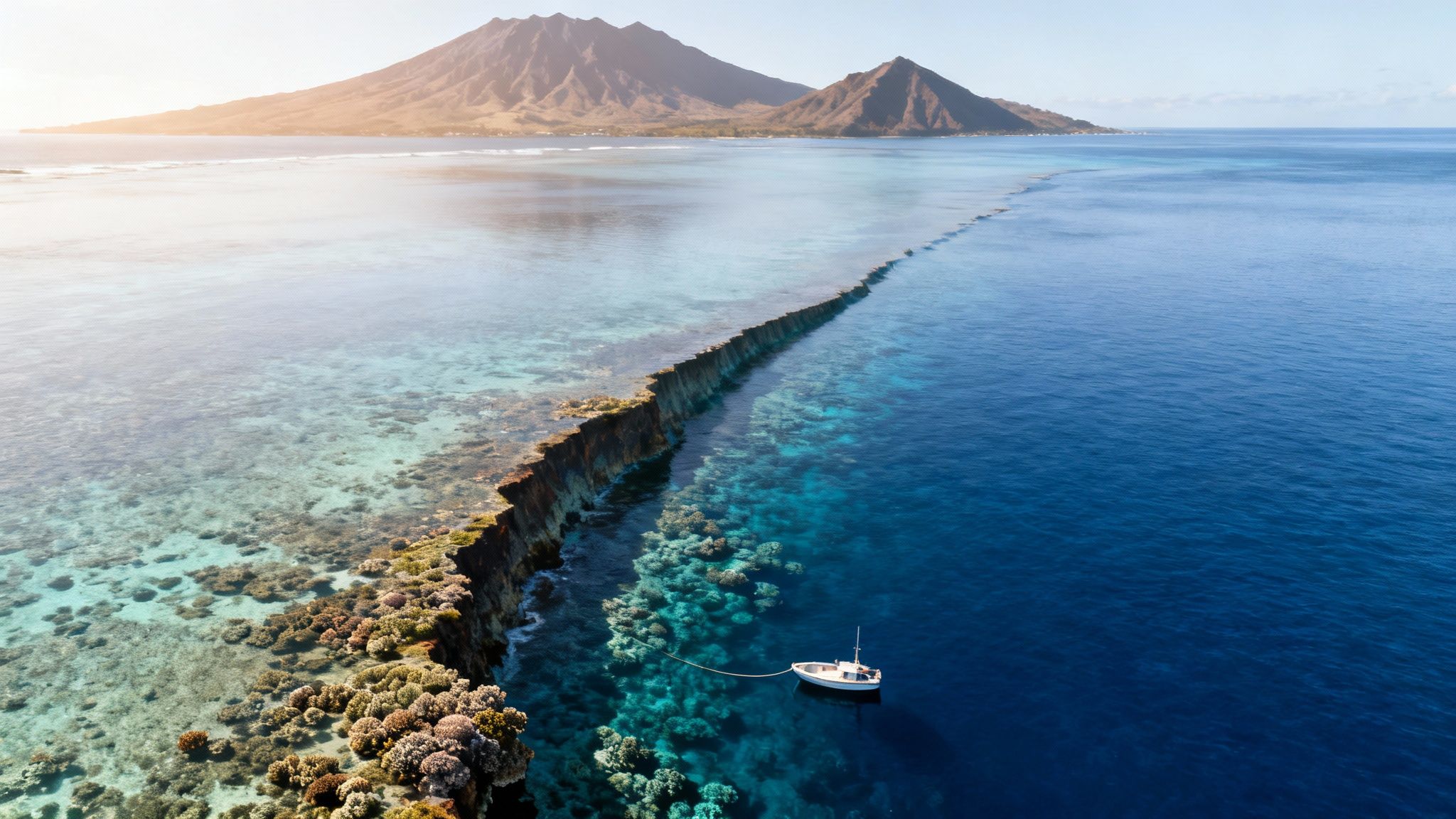
The incredible visibility we get on the Big Island isn't just a lucky break—it's the direct result of some pretty amazing geology and oceanography. The Kona coast is blessed with a perfect storm of natural conditions that come together to create that gin-clear water divers travel halfway around the world to see.
Picture the island’s massive volcanoes, Hualalai and Mauna Loa, acting like giant bodyguards for the western coastline. These peaks tower nearly 14,000 feet into the sky, creating a natural shield that blocks the blustery trade winds and weather systems that often stir up the ocean on other parts of the island. This creates a calm, almost lake-like environment where particles can settle, leaving the water column beautifully clear.
This "rain shadow" effect is no joke. The Kona coast gets far less rainfall than the Hilo side, and less rain means less freshwater runoff. That runoff is what typically carries silt and sediment into the ocean, turning tropical waters murky elsewhere.
Deep Water and Steep Slopes
Another huge piece of the puzzle is Kona’s dramatic underwater landscape. The island's volcanic slopes don't just gently taper off into the sea; they plummet sharply into the deep blue of the Pacific.
This steep drop-off is critical for a few reasons:
- No Sediment Buildup: We don't have large, shallow continental shelves where sediment can collect and get stirred up. Any rain has a short trip over land, so it doesn't have much chance to pick up a lot of dirt.
- Deep Currents: With deep water so close to shore, any particles that do make it into the ocean are quickly whisked away by currents, keeping our dive sites clean.
- Natural Filtration: The island itself is made of porous lava rock, which acts like a massive sponge, soaking up a ton of rainwater before it can even think about reaching the coast.
Basically, the coastline is perfectly designed to keep itself clean. This unique structure is a huge reason why the visibility in Big Island scuba diving stays so consistently phenomenal year-round.
The Reef as a Living Filter
Last but not least, Kona's healthy, vibrant coral reefs are active partners in keeping the water pristine. A thriving reef is more than just a pretty backdrop; it's a living, breathing filtration system.
Corals, sponges, sea squirts, and countless other critters on the reef are filter feeders. They spend their days pulling plankton and other tiny organic bits out of the water. As they eat, they are literally cleaning the water for us.
Sure, we get the occasional short-lived plankton bloom that can knock the viz down for a bit, but these are rare and usually pass within a day or two. The powerful combination of volcanic shelter, deep offshore water, and a hard-working reef ensures these events are the exception, not the rule. It all adds up to the world-class conditions that make Kona diving so special and is a key factor when planning for the best months to scuba dive in Hawaii.
How Visibility Shapes Kona’s Signature Dives
On the Big Island, visibility isn't just a number we log after a dive; it's the master choreographer of the entire underwater show. The legendary clarity of Kona's waters fundamentally changes how we experience the marine world, turning every single dive into a unique and unforgettable performance.
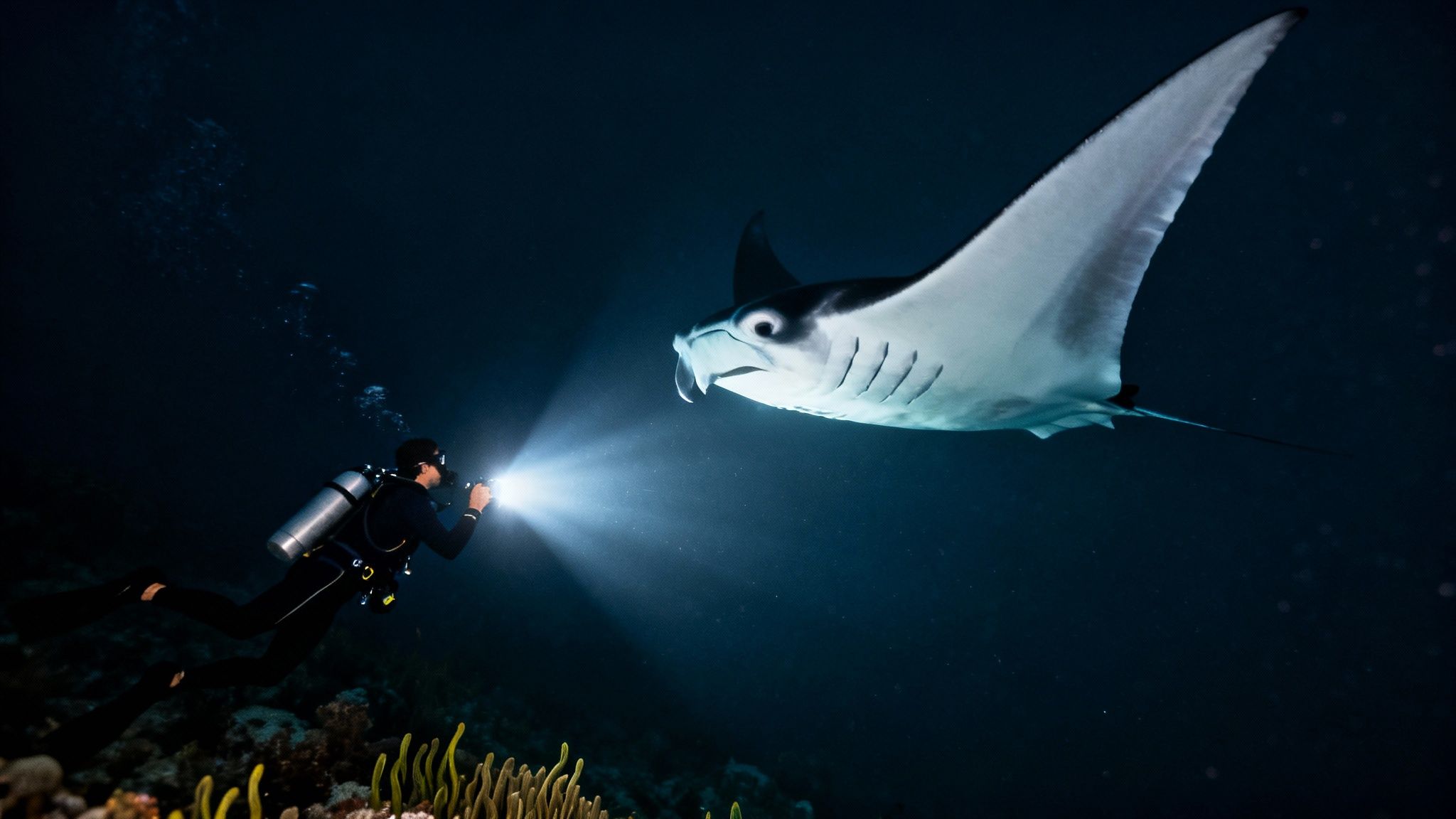
This is never more true than on Kona's world-famous Manta Ray Night Dive. Out there in the dark, we essentially create our own visibility. Powerful lights are set up on the seafloor, punching a hole in the darkness and creating a focused "stadium effect." This bright stage attracts clouds of plankton, which in turn draws in the majestic manta rays for their nightly feast. The premier location for this is Garden Eel Cove, which is protected from swell and features superior reefs and a better viewing area for divers.
The result is a breathtaking underwater ballet. Everything outside the light beams melts away into blackness, forcing all your attention onto the graceful giants gliding, looping, and barrel-rolling just inches from your face. This manufactured clarity, often giving you 50 to 100 feet of perfect viewing within the light field, is what makes the encounter so incredibly personal and awe-inspiring.
The Daytime Reef Experience
Switch to a classic two-tank morning dive, and the role of visibility completely changes. Instead of a tight spotlight, you get an expansive, wide-screen spectacle. With water clarity often pushing past 100 feet, the whole reef lays itself out before you in a stunning panorama.
You can look down and see the intricate details of the sandy bottom, trace the coral structures rising up from the seafloor, and then glance up to see the sun shimmering on the surface far above—all in the same view. This incredible visibility in Big Island scuba diving lets you appreciate the sheer scale of Kona’s underwater architecture, from ancient lava tubes to sprawling coral gardens. It’s what allows you to spot a distant eagle ray cruising along the edge of the reef or a pod of dolphins passing through the deep blue.
You can get a better sense of the incredible underwater landscapes you'll explore by checking out some of Kona's premier dive sites. The conditions are consistently good, especially for the mantas. We descend to about 40 feet and settle in on the sand. Those gentle giants, some with 10 to 15-foot wingspans, put on a show in water so clear you feel like you could reach out and touch them.
Visibility in Specialized Dives
For our more specialized trips, visibility shifts from being part of the scenery to being a critical tool for discovery and safety. Each dive leverages Kona's famous clarity in a totally different way.
- Advanced Pinnacle Dives: When we’re exploring deep pinnacles and seamounts on an advanced dive tour, that excellent visibility is crucial for navigation. It keeps the group together and ensures everyone has a clear line of sight back to the boat's anchor line, which is a big deal when you're diving deeper.
- Kona Blackwater Dives: This is a whole different ballgame. The famous Kona Blackwater Dive happens miles offshore, dangling in thousands of feet of water. Here, your world shrinks to the narrow beam of your high-powered dive light. That intense focus cuts through the inky black, revealing bizarre and beautiful deep-water creatures as they migrate toward the surface.
In essence, each dive type is a different kind of underwater theater. The manta dive is a brightly lit stage show, a morning reef dive is a wide-screen epic, and a blackwater dive is an intimate, single-spotlight performance. Visibility is what sets the scene for all of them.
From sun-drenched reefs to the mysterious open ocean, the exceptional clarity of Kona’s water is what ties all these world-class adventures together. It elevates every dive from a simple swim into a genuine connection with the ocean.
Ready to see it all for yourself?
Diving with Experts to Maximize Your Views
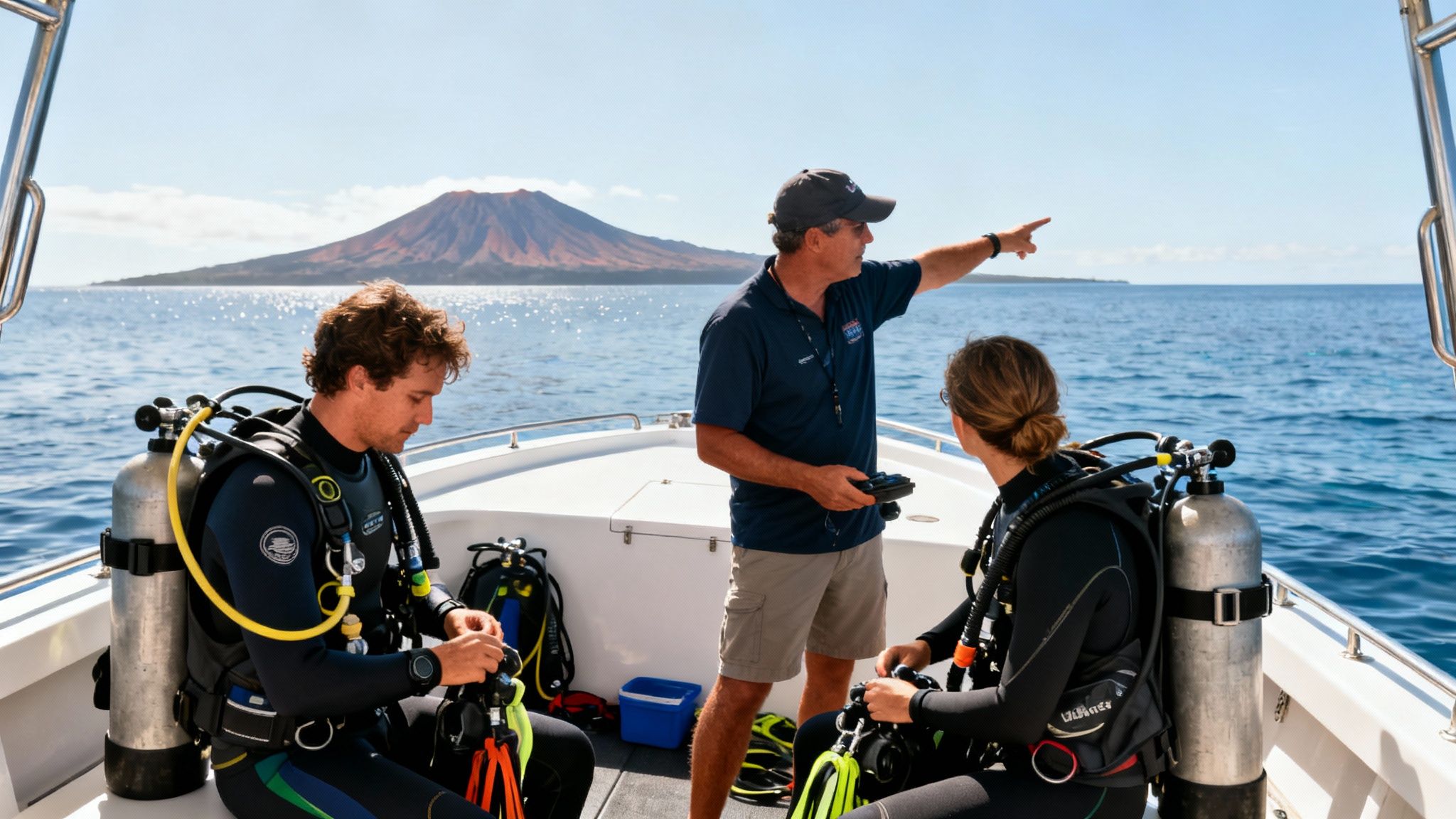
While Mother Nature gives us an incredible canvas to work with, it’s the skill of your dive crew that truly transforms great conditions into a day you'll never forget. Honestly, choosing the right operator is the single biggest factor in capitalizing on the amazing visibility in Big Island scuba diving. A top-notch charter doesn't just motor out to a random spot; they're on a mission to find the absolute best underwater views available that day.
This all starts long before you even step on the boat. A seasoned captain at a shop like Kona Honu Divers lives and breathes our local microclimates. They're constantly checking real-time weather data, swell charts, and current reports to hand-pick sites that are not only safe but also bathed in that pristine, gin-clear water we all dream about. This kind of expert planning means you’ll steer clear of areas affected by runoff from a rare downpour or weird currents stirring up the bottom.
The Small Group Advantage
Think about this: one of the quickest ways to ruin good visibility is to have too many fins kicking around the bottom. It’s simple physics. A large, crowded dive group inevitably stirs up sand and silt, which can cloud the water for everyone in seconds.
This is where diving in small groups makes a night-and-day difference. By keeping the number of divers per guide low, you get a much more relaxed and controlled dive. The benefits are huge:
- Less Silt, More Sight: Fewer divers means a drastically lower chance of someone accidentally kicking up a sand cloud.
- Better Marine Life Encounters: Animals are far less intimidated by small, quiet groups, which means you get closer, more natural interactions.
- Personalized Coaching: Your guide has the time to offer individual tips on buoyancy, helping everyone become a better, more aware diver.
When the experience is calm and respectful, the focus stays where it should be: on the breathtaking scenery, not on dodging other divers' bubbles.
Enhancing Your Time Underwater
Finding clear water is one thing, but the best operators also give you the tools to fully enjoy it. Having access to well-maintained, high-quality rental gear means you're not fiddling with a leaky mask or a finicky regulator. You can just relax and focus on the vibrant reef around you. It's that attention to detail that signals you're with a professional crew.
At Kona Honu Divers, we take it a step further by offering complimentary nitrox for certified divers. This lets you extend your bottom time, giving you precious extra minutes to explore those incredible lava tubes and soak in the massive underwater landscapes that make Kona famous.
This blend of smart site selection, small groups, and excellent support is what takes a dive from good to truly extraordinary. It’s what lets you get the absolute most out of every single moment you spend below the surface. The consistently great reviews from fellow divers really tell the whole story.
Ready to see the difference for yourself?
Practical Tips for Every Visibility Scenario
The mark of a great diver isn't just about perfect conditions; it's about adapting and finding the magic in whatever the ocean offers that day. Luckily for us in Kona, fantastic visibility in Big Island scuba diving is pretty much the standard, not a special treat.
When you're blessed with that crystal-clear water, the best advice is simple: expand your field of vision. It's easy to get mesmerized by the intricate details on the reef, but don't forget to look up, look out, and peer into the deep blue. That's where you'll catch the fly-bys from spinner dolphins, eagle rays, or even the occasional shark. This is also where sharp buoyancy skills really shine, letting you hover effortlessly over massive, fragile coral gardens without a single touch.
Adapting to Less-Than-Perfect Conditions
Once in a while, things might get a little soupy, maybe from a passing plankton bloom or a bit of swell. But lower visibility doesn't have to ruin a dive. In fact, it's a fantastic excuse to shift your focus from the wide-angle seascape to the macro world.
When the water gets a bit murky, here's how to switch gears:
- Tuck in Closer: Keep your buddy and guide well within sight. It’s not just safer; it makes communication a breeze.
- Bring a Light: A good dive torch isn't just for night diving. It punches through the haze, brings back the reef's true colors, and helps you spot critters hiding in dark corners.
- Think Small: This is your chance to become a macro hunter. Go slow and scan the reef for camouflaged masters like frogfish, tiny nudibranchs, and the elusive ornate octopus.
By changing your focus, you turn a potentially frustrating dive into a fascinating treasure hunt. The Big Island’s reefs are packed with tiny, intricate life that is just as spectacular as the big picture.
Tips for Underwater Photographers
Visibility is a game-changer for photography. In clear, bright water, you can shoot with a wider aperture and let the natural light paint your reefscapes. But as soon as particles appear in the water column, hitting that internal flash becomes an instant recipe for backscatter.
This is where external strobes are worth their weight in gold. By positioning them out to the sides of your camera, you light your subject from an angle, which dramatically cuts down on the light bouncing off the specks in the water. This makes your subject pop while keeping the background clean. It also helps to get a sense of the day's conditions, which is why we always recommend learning how to check ocean conditions for the Big Island before you even leave the dock.
Even a specialized dive like our Kona blackwater requires its own approach. On these dives, we're using powerful lights to create a beacon in the vast, deep ocean. A fascinating NOAA study on Kona’s nocturnal dives highlights the need for bright torches—at least 1,200 lumens—to illuminate a big enough area to spot the bizarre and beautiful creatures that migrate up from the depths each night.
Your Top Questions About Kona’s Diving Visibility, Answered
Alright, we’ve talked about the science, what to expect on our signature dives, and some pro tips for getting the most out of your time underwater. Now, let’s nail down some of the most common questions we hear from divers just like you.
Think of this as a quick-reference guide to help you plan your trip and know exactly what to expect from the legendary visibility in Big Island scuba diving.
What Time of Year Has the Best Visibility?
Honestly, the water here in Kona is fantastic year-round. But if you're looking for that absolute peak, postcard-perfect clarity, the summer months usually deliver. From about May to September, the Pacific often lays down flat and glassy, and it’s not uncommon for visibility to push well past 120 feet.
That said, don't sleep on winter diving! Sure, you might get bigger ocean swells, but Kona's coastline is so well-protected that we can almost always find a calm, clear spot to dive. The huge bonus? You get to hear the haunting songs of humpback whales echoing through the water on your dives—it's an experience you'll never forget.
Does Rain Affect Underwater Visibility in Kona?
This is a great question, especially for divers who have been to other tropical spots where a downpour can ruin the viz for days. Here in Kona, a typical rain shower has surprisingly little effect on what you see underwater.
Two big things work in our favor. First, the island's steep volcanic slopes are incredibly porous, so they soak up rainwater like a giant sponge instead of letting it all run off into the ocean. Second, the seafloor drops off fast and deep right off the coast. There’s no wide, shallow shelf for silty runoff to hang around and cloud up the dive sites. It would take a massive, sustained storm to make a dent in our visibility, and even then, it clears up quickly.
How Does Kona's Visibility Compare to Other Hawaiian Islands?
Ask any seasoned diver in Hawaii, and they'll likely tell you that Kona has the most consistently clear water in the state. This isn't just local pride—it's pure geography.
The massive volcanoes of Mauna Loa and Hualalai act as a giant shield, blocking the prevailing trade winds that often churn up the water around islands like Maui or Oahu. Their coastlines are far more exposed to wind and weather, which can really stir things up and drop underwater clarity.
This unique geological gift is the secret to why the visibility in Big Island scuba diving is so reliably amazing, day in and day out.
What's Visibility Like on a Night Dive?
Night dive visibility is a whole different ballgame because we create our own "daylight" with dive lights. On the world-famous Manta Ray Night Dive, we set up powerful, stationary lights on the seafloor. This creates a brightly lit "stage" to attract plankton, and within this bubble of light, you'll have a focused view of 50 to 100 feet. It makes for an incredibly dramatic and up-close encounter with the mantas.
On the Kona Blackwater Dive, your entire world shrinks to the beam of your torch. You're suspended over thousands of feet of inky black water, and your light is the only thing cutting through the darkness, revealing the strange and wonderful creatures migrating up from the deep.
Will I Have Good Visibility on a Shore Dive?
Absolutely. Kona has some fantastic shore diving with good visibility. The catch is that conditions can be a lot more variable than when you're out on a boat. Factors like recent surf, tide changes, and even the specific entry point can stir things up closer to the coast.
If you're after those consistently epic, crystal-clear views, boat diving is the way to go. Our crew uses their local knowledge every single day to pick sites that are completely sheltered from any near-shore chop, guaranteeing you get the absolute best visibility the island has to offer. The difference can be night and day.
At Kona Honu Divers, our passion is showing you the very best of Kona's underwater world, with safety and service that are second to none. Our experienced crew knows exactly where to find the clearest water and the most vibrant marine life, ensuring every trip is an unforgettable one. Ready to see it for yourself?
Explore our full range of diving tours and find the perfect adventure for you.