
Picture this: you descend into the warm, blue waters off the Kona coast, and the world opens up around you. Visibility often stretches out to 100 feet or more, creating a feeling of flying through an endless underwater cathedral. This incredible clarity is the hallmark of Big Island scuba diving, especially along the sheltered Kona side, making it an absolute paradise for divers.
Why is Kona’s Water So Incredibly Clear?
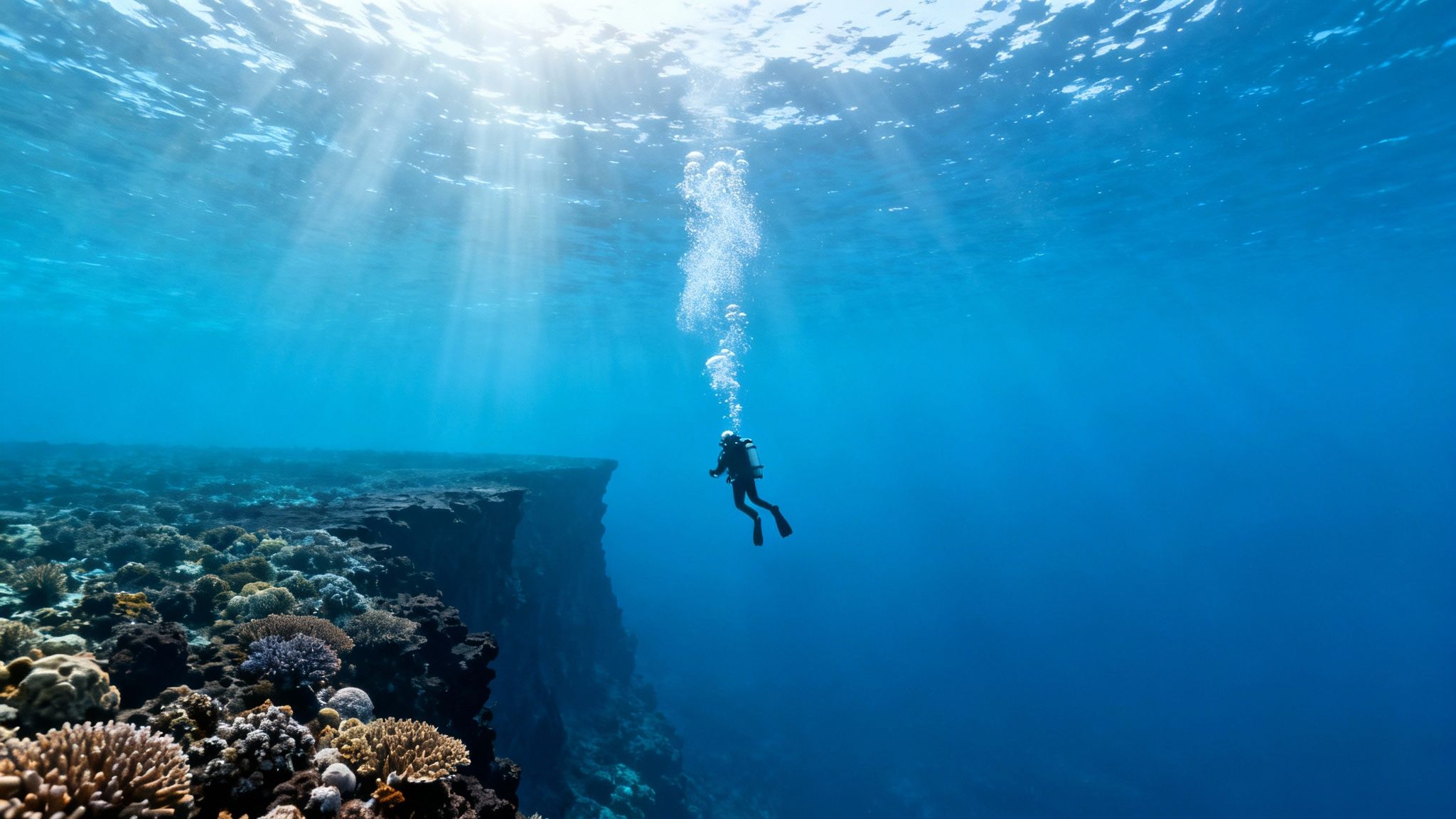
So, what’s Kona’s secret to consistently spectacular visibility? It all comes down to a perfect storm of geology and geography.
Unlike many tropical destinations where heavy rains wash sediment and mud into the ocean, the Big Island’s Kona coast is built from porous volcanic rock. This unique landscape acts like a giant natural filter, soaking up rainwater before it ever has a chance to cloud up the coastal waters.
The island's massive size also plays a huge part. The colossal volcanoes, Mauna Loa and Hualalai, stand as powerful shields, blocking the trade winds and creating a calm, protected leeward coast. Without the constant churn of wind and waves, any fine particles suspended in the water column have a chance to settle, leaving behind the gin-clear conditions Kona is famous for.
What to Expect Year-Round
There's one more piece to the puzzle: the deep oceanic trenches that lie just offshore. These trenches constantly cycle in fresh, clear water from the open Pacific, effectively flushing the coastline and keeping the water pristine. This powerful combination means divers can count on fantastic conditions nearly any day of the year.
In fact, Hawaii's remote oceanic location gives it a major advantage. Median visibility at leeward sites near Kona often hits 100-150 feet, a solid 40% clearer than what you might find in popular Caribbean or Florida dive spots. For seasoned divers, that difference is night and day. During the peak summer months from May to October, seeing 100 feet is pretty much the standard. You can learn more about what makes the Big Island a world-class diving destination and sets it apart from the rest.
To give you a better idea of what to expect when planning your trip, we’ve put together this quick summary of Kona’s visibility conditions.
Kona Diving Visibility At A Glance
This table breaks down the typical visibility you'll encounter on the Big Island, depending on the season and type of dive.
| Condition | Typical Visibility | Best Time of Year | Key Influences |
|---|---|---|---|
| Average Day | 80 – 120 ft (24 – 37 m) | Year-Round | Volcanic filtration, calm leeward coast |
| Peak Season | 100 – 150+ ft (30 – 46+ m) | May – October | Calmest seas, maximum sunlight |
| Winter Swells | 60 – 100 ft (18 – 30 m) | November – April | North swells can stir up particles |
| Night Dives | 50 – 100 ft (15 – 30 m) | Year-Round | Dependent on dive light power |
As you can see, there’s really no bad time to dive in Kona, just different shades of amazing.
Ready to experience this amazing clarity for yourself? The expert crew at Kona Honu Divers lives and breathes these waters, and they know exactly where to find the best conditions every single day. Explore their range of world-class diving tours and prepare to have your mind blown.
The Geological Secrets Behind Kona’s Crystal-Clear Water
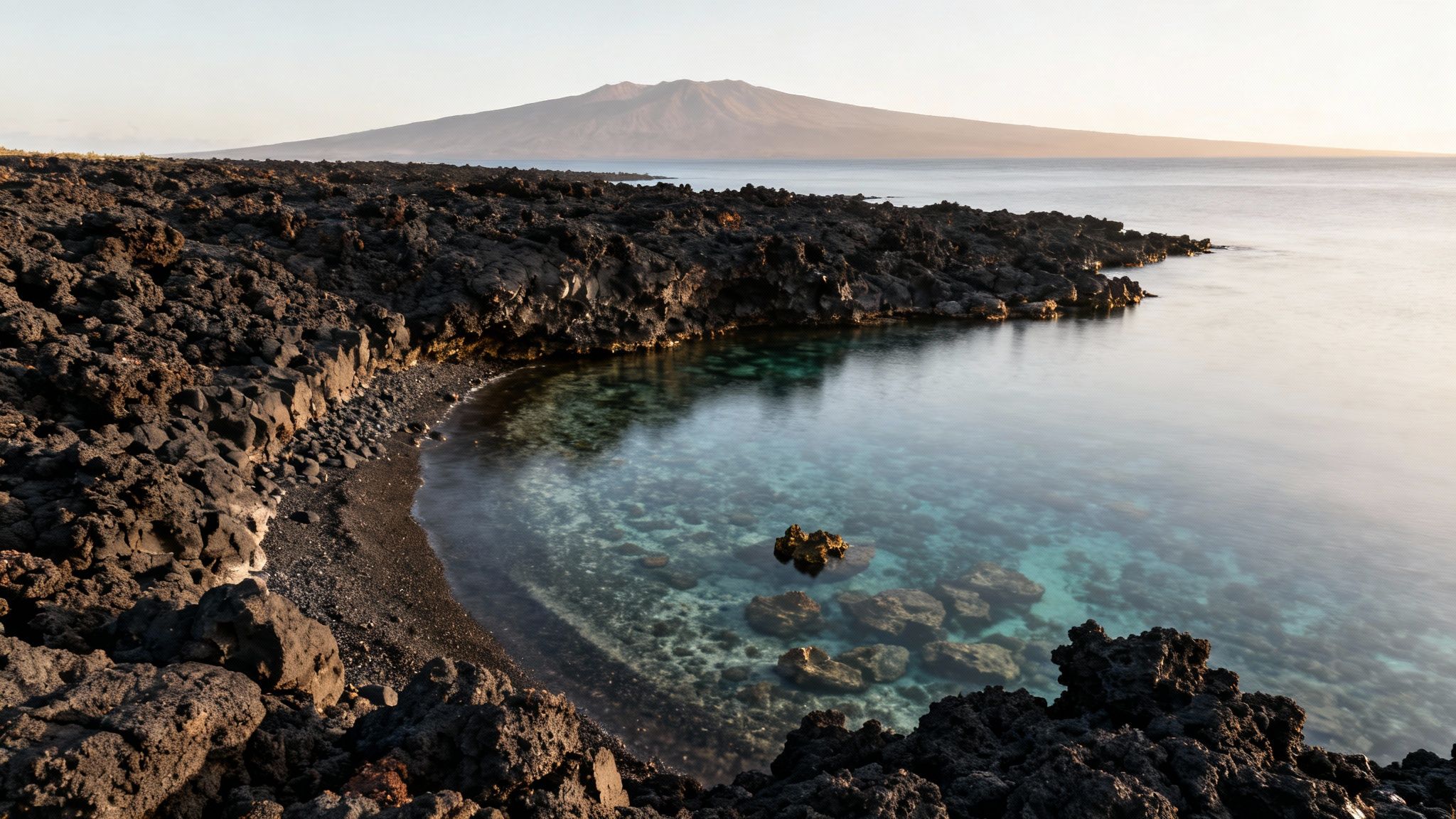
Ever wondered what makes the visibility here in Kona so consistently incredible? It's not just luck; it’s a perfect storm of geology. The Big Island's volcanic origins have created an underwater world where amazing clarity isn't just a bonus—it's the norm.
The secret starts with the island itself. The Kona coast is made of young, porous lava rock. Unlike older islands with heavy soil and big river systems that dump mud into the ocean, the Big Island works like a giant natural filter.
When it rains—and it does rain in paradise—the water doesn't create a ton of muddy runoff. Instead, it soaks right down into the volcanic rock, leaving the ocean amazingly clear. This is a huge advantage for us divers, meaning great conditions are possible even right after a downpour.
The Leeward Effect: Kona's Natural Shield
The island's two massive volcanoes, Hualalai and Mauna Loa, give us another major leg up. These giants, towering almost 14,000 feet, act as a massive barrier, blocking the powerful trade winds that blow across the Pacific. This is called the leeward effect.
This natural shield keeps the entire Kona coast calm and protected. While the east side of the island is getting hammered by wind and waves, we're often diving in glassy, serene water. With less wind and wave action to stir things up, any particles in the water settle quickly, leaving behind that pristine visibility we love.
Think of it like a snow globe. On the windy side of the island, the globe is constantly being shaken, keeping the "snow" swirling. Here in Kona, the volcanoes hold the globe steady, letting everything settle for a perfectly clear view.
This protection is a huge part of why Kona diving is so reliable and comfortable all year. It lets you focus on the incredible marine life, not on fighting surge and current. You can learn more about what sets our little corner of the world apart by reading our guide on what is unique about diving in Kona.
Deep Drop-Offs and Clean Currents
The final piece of the clarity puzzle is what happens just offshore. The seafloor here doesn't gently slope out to sea; it plunges dramatically into the deep. The specific underwater topography, or bathymetry, of our coast plays a critical role.
Picture the coastline as the edge of a deep swimming pool, not a shallow, sandy beach. This steep drop-off helps maintain visibility in two key ways:
- Less Stir-Up: There isn't a wide, shallow shelf where sand and silt can build up and get kicked around by waves.
- Constant Flushing: The deep water so close to shore allows clean, clear currents from the open ocean to constantly sweep the coastline. This brings in fresh, nutrient-rich water and carries away any potential cloudiness.
This powerful trio—natural filtration, wind protection, and deep-water currents—is the recipe for Kona's legendary underwater views. It’s a geological gift that creates a true diver's paradise, where 100-foot visibility is just another beautiful day on the job.
Planning Your Dive Around Seasonal Conditions
Knowing the subtle rhythms of the seasons on the Big Island can turn a great dive trip into an unforgettable one. While Kona’s protected coastline offers spectacular diving all year long, understanding the small shifts between summer and winter helps you perfectly time your adventure.
The sweet spot for glassy seas and consistently epic visibility hits between May and October. During these summer months, the Pacific usually calms down, giving us smooth boat rides and water so clear it often pushes well past 100 feet. The water warms up to a delightful 80°F, making for incredibly comfortable dives where the reef seems to stretch on forever.
Summer Diving The Kona Coast
Summer brings the most predictable and tranquil conditions. With fewer ocean swells stirring things up, the water column stays crystal clear, allowing sunlight to pour in and light up the reef. This is what creates that picture-perfect, gin-clear water that makes visibility in Big Island scuba diving so famous.
- Glassy Seas: Expect exceptionally calm surface conditions—a huge plus for anyone prone to seasickness and a treat for everyone on the boat.
- Peak Visibility: This is your best bet for consistently clear water, often hitting 100-120 feet. It's a photographer's paradise.
- Warm Water: With temperatures at their peak, many divers are perfectly comfortable in a thin 3mm wetsuit or even just a rash guard.
Winter Diving And Unique Encounters
Winter, from November through April, brings a different kind of magic. While big northern swells can roll into other parts of the island, Kona’s leeward coast stays remarkably protected. Our captains are masters of this coastline; they know exactly which coves and reefs will be shielded from the energy, ensuring we always have a safe and clear place to dive.
The real highlight of winter diving isn't just what you see, but what you hear. From December to March, thousands of humpback whales migrate to Hawaiian waters. Their powerful and beautiful songs travel for miles underwater, creating an awe-inspiring, natural soundtrack for your entire dive.
Even with the possibility of swells, visibility stays fantastic, typically in the 60 to 100-foot range. The water dips slightly to around 75°F, but the trade-off is this incredible, once-in-a-lifetime auditory experience. You can get a deeper look at what to expect each month in our guide to the best months to scuba dive in Hawaii.
Let's break down the key differences to help you decide on the perfect time for your trip.
Seasonal Diving Conditions On The Kona Coast
| Factor | Summer (May – October) | Winter (November – April) |
|---|---|---|
| Visibility | Consistently excellent, often 100-120 feet | Very good, typically 60-100 feet |
| Water Temperature | Warm, peaking around 80-82°F | Cooler, around 75-77°F |
| Surface Conditions | Generally calm and glassy | Can have some swells, but Kona is protected |
| Marine Life Highlight | Manta rays, dolphins, sharks, vibrant reef life | Humpback whale songs (Dec-Mar), mantas, sharks |
No matter which season calls to you, you're in for an amazing experience. The key takeaway is that Kona delivers incredible diving year-round, with each season offering its own unique charm.
At Kona Honu Divers, our team's deep understanding of the ocean means we always find the best spot for an incredible dive, regardless of the time of year. We know these waters like the back of our hand, and we're ready to share their secrets with you.
Discovering Kona’s Top High-Visibility Dive Sites
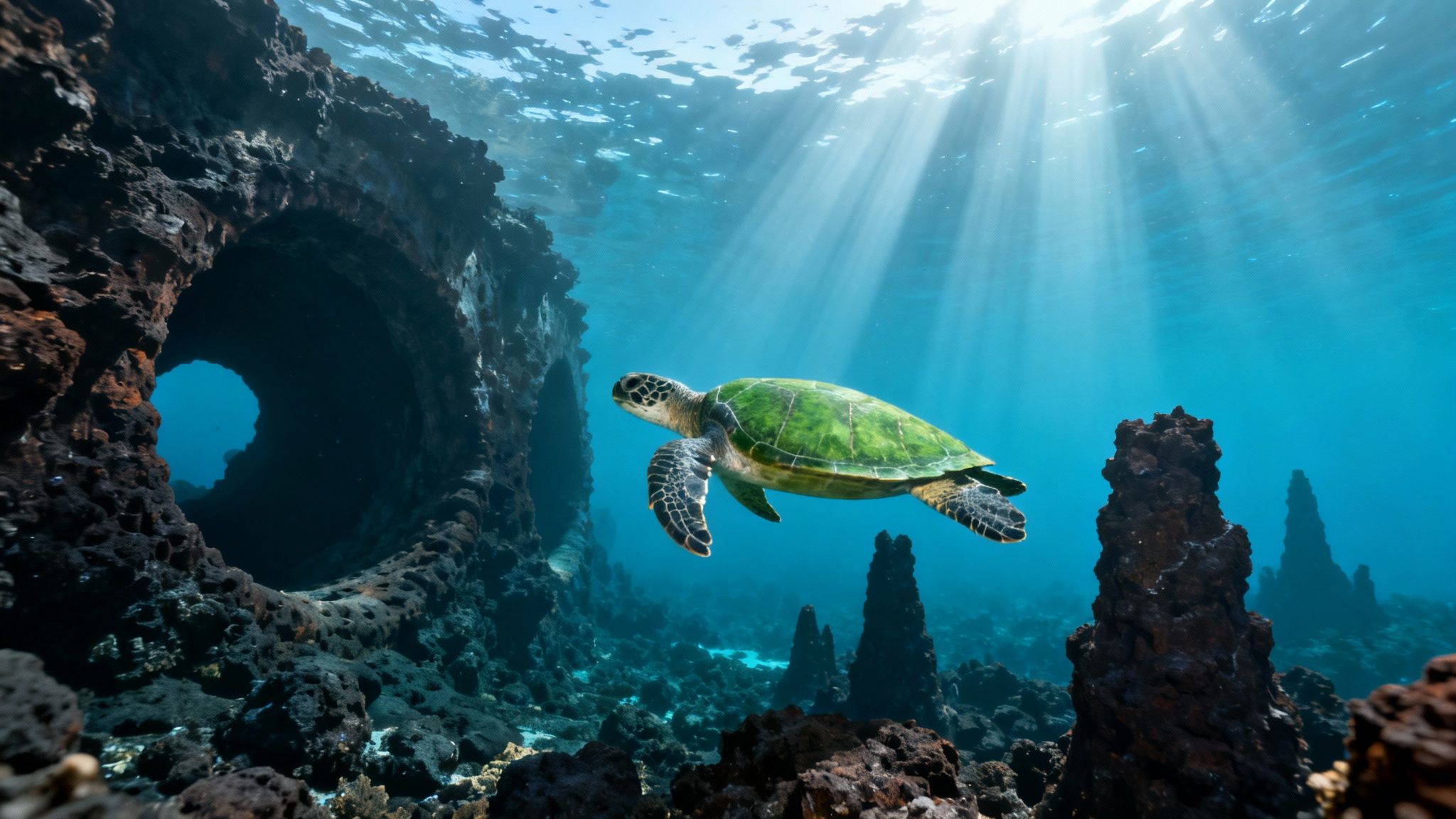
With water this consistently clear, pretty much every dive site along the Kona coast feels like you're looking through a giant window into a vibrant underwater world. The exceptional visibility in Big Island scuba diving is what turns a great dive into a legendary one. Let's talk about some of the spots that are famous for their jaw-dropping clarity.
The Superior Manta Ray Experience at Garden Eel Cove
When it comes to the world-famous Manta Ray Night Dive, the location makes all the difference, and Garden Eel Cove is hands-down the best stage for the show. Its north-facing position naturally shields it from southerly swells, which means calmer conditions more often than not. This protection creates a tranquil, amphitheater-like setting on the seafloor.
What this means for divers is you can settle in comfortably without getting knocked around by surge. You get a steadier, more immersive view of the main event: a silent, up-close ballet of giant mantas gliding through the light beams to feed. This blend of calm water and a perfect viewing layout makes it the undisputed champion for this bucket-list dive.
Night diving off Kona completely changes the game. At Garden Eel Cove, we see 85-90% success rates for manta sightings. The artificial lights often cut through the dark for 50-100 feet, lighting up the glowing plankton and the magnificent rays themselves. To get a sense of just how reliable these encounters are, you can check out the detailed manta ray reports from recent years.
If you're ready for an experience that feels truly magical, Kona Honu Divers runs an expertly guided Manta Ray Night Dive tour that takes full advantage of the prime conditions at Garden Eel Cove.
Journeying Through Volcanic Wonderlands
Beyond the manta spectacle, Kona's clear water takes the beauty of its unique volcanic underwater landscapes and cranks it up to eleven. Every site tells a piece of the island's fiery creation story, now bursting with life.
-
Turtle Pinnacle: This spot is a bustling "cleaning station" where Hawaiian green sea turtles (honu) come to get spruced up. The visibility, often 80-100 feet, lets you watch this incredible natural behavior from a respectful distance. You can see surgeonfish meticulously cleaning algae off the turtles' shells, all playing out against a vibrant reef.
-
Au Au Crater: Here, a collapsed lava dome has formed a stunning underwater crater, offering one of the most unique dive topographies in Hawaii. Visibility frequently tops 100 feet, revealing the crater's dramatic walls, swim-throughs, and the resident whitetip reef sharks often found resting on the sandy bottom. It's a photographer's playground with endless angles and perfect light.
These sites are just a taste of what's waiting for you. The crystal-clear water makes every detail pop, from the intricate patterns on a camouflaged frogfish to the brilliant colors of the endemic butterflyfish.
Exclusive Sites for the Experienced Diver
For those with a few more dives in their logbook, Kona's incredible visibility opens up a whole different world of deeper, more challenging sites. These spots feature dramatic drop-offs, complex lava tubes, and encounters with the big pelagic species that patrol the deep blue.
These advanced sites are where clarity truly shines. Peering over a ledge into the seemingly endless blue, you can often spot eagle rays, sharks, and even dolphins cruising in the distance—sights you would miss in less clear water.
Exploring these deep pinnacles and walls takes skill and confidence, but the payoff is an unforgettable adventure into Kona's wilder side. Visibility can often push towards 150 feet, giving you a profound sense of scale and awe.
Kona Honu Divers caters to certified divers looking to push their boundaries with a specialized Premium Advanced 2-Tank Trip. This trip is specifically designed to explore these exclusive deep-water sites safely with an experienced guide.
Simple Tricks to Make Good Visibility Even Better
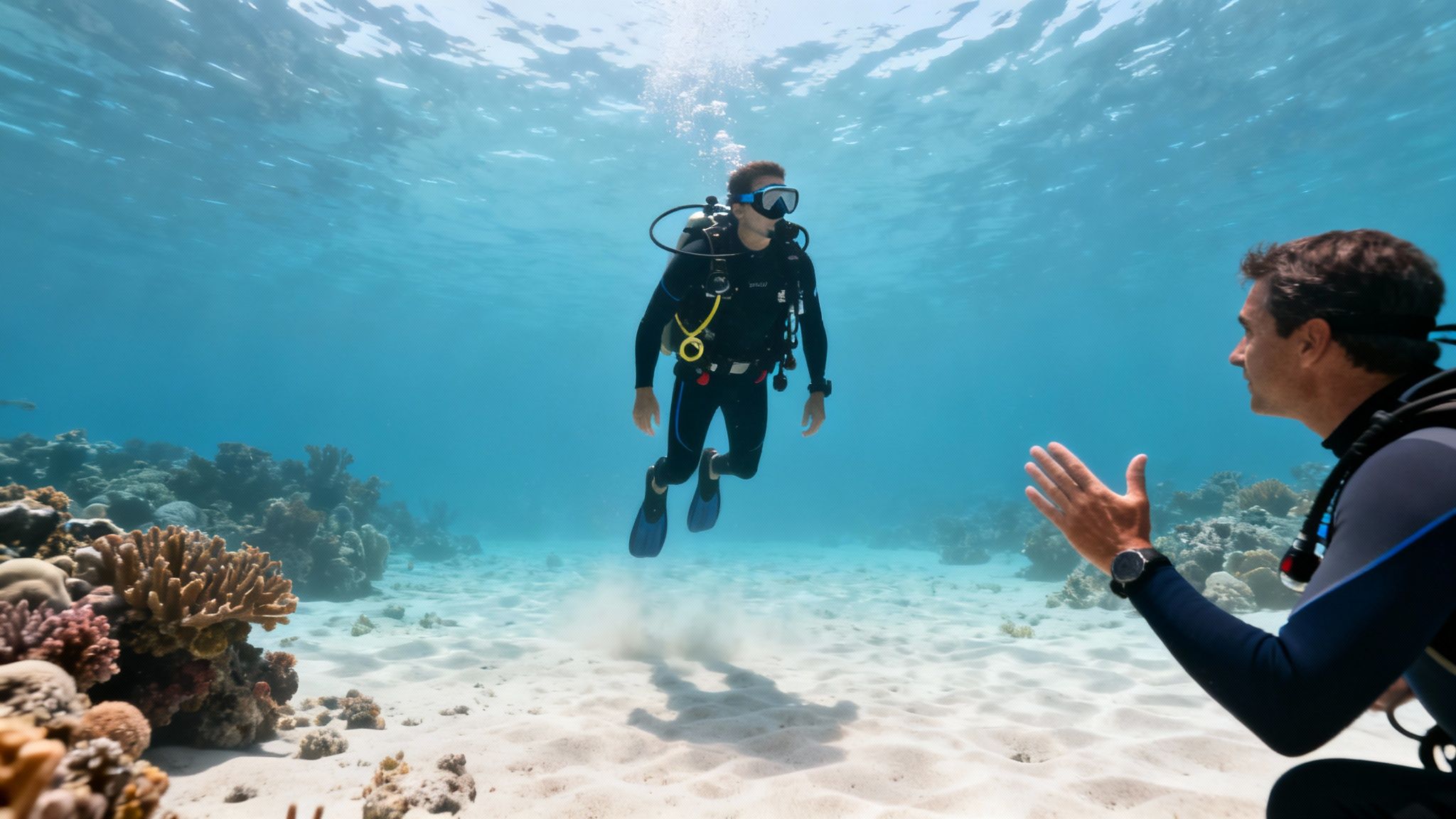
While Kona’s unique geography gives us a huge head start on amazing underwater clarity, a few simple skills can turn a great view into an unforgettable one. By taking an active role in how you dive, you can dial in your personal viewing window and really make the most of the epic visibility in Big Island scuba diving.
The single biggest thing you can do to keep the water clear is to master your buoyancy control. Think about it: if you walk into a dusty room and shuffle your feet, you kick up a cloud that ruins the view for everyone. It’s the exact same principle underwater when a diver’s fins stir up sand or silt from the bottom.
When you nail your buoyancy, you can float effortlessly just above the reef like an astronaut. Not only does this protect the fragile ecosystem, but it guarantees that you and your buddies get to enjoy the crystal-clear water Kona is famous for. It’s the mark of a truly skilled and considerate diver.
Fine-Tuning Your Gear and Timing
A little prep work before you even leave the dock can make a world of difference. There's nothing more frustrating than a foggy mask, and it’s an easy problem to solve. Just like with glasses, properly cleaning your eyewear is key to a crystal-clear view. A deep clean before your trip and a good dose of anti-fog solution before you get in the water are absolute musts.
Your timing matters, too. Morning dives often have the best light, as the high sun penetrates deep into the water, making the colors of the reef explode. And of course, always check the local conditions before you head out; our guide on how to check ocean conditions for the Big Island is a great place to start.
Pro Tip: Give your mask a final rinse with fresh water just before you put it on. This helps the anti-fog do its job. Try your best not to touch the inside of the lenses—the oils from your fingers are a primary cause of fogging.
Get More Time in the Clear Blue
Want to spend more time soaking in those incredible sights? Diving with Enriched Air Nitrox is the answer. Nitrox has a lower percentage of nitrogen, which means your body absorbs less of it during a dive. The practical result? You can safely extend your bottom time, giving you more minutes to explore lava tubes and watch the vibrant marine life go by.
Here at Kona Honu Divers, we want every diver to have the best experience possible. That’s why we offer free Nitrox for all certified divers who join us on the boat. It's a simple perk that lets you squeeze more out of every moment you spend in Kona's amazing waters.
And for those looking for a completely different take on "visibility," the famous Kona Blackwater Dive is an experience like no other. You’re suspended miles offshore over thousands of feet of water, and your visibility is only as far as your high-powered flashlight can reach into the pitch-black abyss. It’s a mind-blowing encounter with the weird and wonderful creatures that migrate from the deep each night—a dive where you literally create your own window of clarity.
Why Kona Honu Divers Is Your Partner for the Clearest Dives
Seeing the Big Island’s legendary visibility for yourself isn't just about luck. It’s about diving with a team that knows these waters inside and out. At Kona Honu Divers, our whole focus is on giving you the safest, most comfortable, and clearest dive possible, and that all starts with our crew.
Our captains and divemasters aren't just guides; they're seasoned locals who have spent decades reading the subtle clues of Kona's coast. They have a sixth sense for how the currents, weather, and even the time of day will affect water clarity. This means we don't just stick to a rigid schedule—we actively hunt for the calmest, clearest sites for you that day, giving you the best shot at an epic view on every dive.
Five-Star Service, From the Dock to the Reef
We know a great dive trip is about more than just what you see underwater. It’s about feeling relaxed, confident, and well-cared-for from start to finish. That’s why we’re so committed to keeping our dive groups small. Fewer divers means more space, more personalized attention, and a more intimate connection with the incredible marine life.
Our boats are built for divers. Hop out of the water and into a hot freshwater shower. Relax in the shade between dives on our spacious decks. And you can count on our rental gear—it's impeccably maintained because your safety and comfort are non-negotiable. We handle all the details so you can just soak in the view.
Don’t Just Take Our Word For It
We can talk all day about our commitment to an amazing experience, but our divers really say it best. The reviews from thousands of guests who have dived with us tell the real story.
Ready to see it for yourself? Let us show you why so many divers choose us to explore Kona's crystal-clear waters. Book your ultimate clear-water scuba diving tour and get ready for an unforgettable view.
Kona Dive Visibility: Your Questions Answered
Let’s tackle some of the most common questions we hear from divers about the visibility here on the Big Island. Think of this as your quick-start guide to knowing what to expect when you get in the water.
What’s the Average Underwater Visibility in Kona?
You can usually count on exceptional visibility along the Kona coast, typically somewhere between 80 and 120 feet. It’s not at all unusual for that number to climb well past 100 feet during our calm summer season, which runs from about May through October.
Why so clear? It really comes down to the island’s unique geology. The porous volcanic rock acts like a giant natural filter, deep offshore waters keep fresh, clean ocean circulating, and the massive shield volcanoes protect the coastline from winds that would otherwise stir up sediment.
Is the Visibility Still Good for the Manta Ray Night Dive?
Absolutely. Even though the sun is down, the powerful lights we use on the Manta Ray Night Dive create their own world of visibility, often cutting through the darkness for 50 to 100 feet. The water at protected sites like Garden Eel Cove is so clear that you get an unobstructed, front-row seat to the plankton-fueled ballet of the giant mantas.
It makes for an incredibly sharp and up-close encounter. You can see exactly what we mean on our Manta Ray Night Dive tour page.
Does Rain Actually Affect Scuba Diving Visibility on the Big Island?
This is a great question, especially for divers coming from other tropical spots. Here in Kona, rain has a surprisingly small impact on visibility. Our coastline is mostly porous lava rock, which means rainwater soaks in quickly instead of creating muddy rivers that flow into the ocean.
Sure, a massive, prolonged downpour might cause a bit of temporary cloudiness right near the shore, but the offshore reefs where we dive almost always stay crystal clear.
The takeaway here is that Kona's natural filtration system is so efficient that a rainy day almost never translates to a cloudy dive. It's a huge geological advantage that makes our visibility so consistently good.
How Can I Get the Best Possible Visibility on My Dive?
A few things can help stack the deck in your favor. First, dive with an experienced crew like ours at Kona Honu Divers—our captains are masters at reading the daily conditions and picking the absolute best site for the day.
For your part, focus on your technique. Nailing your buoyancy is key to avoiding kicking up sand or silt from the bottom. A good defog on your mask makes a world of difference, and morning dives often have the best light as the sun gets higher in the sky.
Booking your trip during the summer months is generally a safe bet for the calmest and clearest conditions. With a little bit of planning and solid dive skills, you’ll be set to enjoy Kona’s world-class underwater scenery.
Ready to see this amazing clarity for yourself? Kona Honu Divers is all about providing the safest and most incredible underwater adventures on the Big Island. Let our expert crew show you the way through Kona's crystal-clear waters.