
Picture this: you're floating weightlessly in warm, turquoise water, and a majestic Hawaiian green sea turtle glides by, just a few feet away. That's the kind of magic waiting for you when you go snorkeling on the Big Island. Thanks to its incredible volcanic geography, the island is dotted with naturally protected bays, creating some of the calmest, clearest water you'll find anywhere.
Why The Big Island Is a Snorkeler’s Paradise
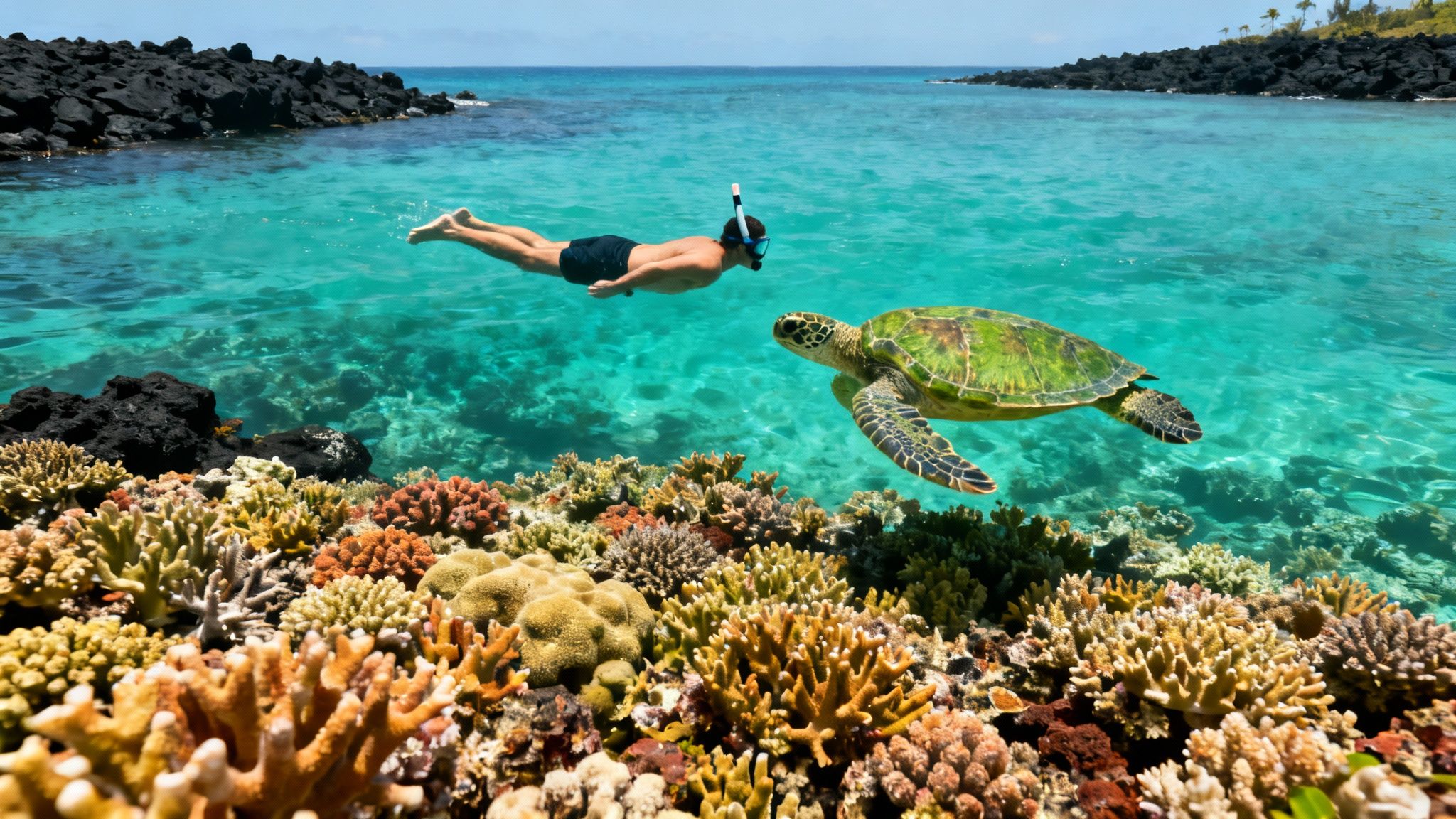
The Big Island isn't just another pretty spot in Hawaii; it’s a world-class destination for anyone with a mask and fins. The island’s west side, the Kona coast, is tucked behind the massive volcanoes of Mauna Kea and Mauna Loa. These towering peaks act as a natural shield, blocking the gusty trade winds that hit the other islands.
The result is an incredibly calm ocean surface, with water so clear that visibility often stretches beyond 100 feet. You'll spend less time battling waves and more time just soaking in the view. The coastline itself, sculpted by ancient lava flows, is a patchwork of coves and bays that are perfect nurseries for marine life, allowing delicate coral gardens to thrive.
A Vibrant Underwater Ecosystem
What really makes the Big Island special is the sheer variety of life packed into its waters. Much of what you'll see here can't be found anywhere else on the planet. This isn't just a quick dip; it's a front-row seat to a bustling underwater neighborhood.
Get ready to meet some of the locals:
- Hawaiian Green Sea Turtles (Honu): These gentle giants are practically a guaranteed sighting. You'll often spot them munching on algae in the shallows.
- Spinner Dolphins: Famous for their incredible aerial acrobatics, pods of these energetic dolphins often cruise just offshore.
- Colorful Reef Fish: The reefs are a kaleidoscope of color, home to everything from bright yellow tangs and elegant butterflyfish to Hawaii's state fish, the hard-to-pronounce but easy-to-love humuhumunukunukuāpuaʻa.
This incredible biodiversity isn't an accident. Many of the top snorkeling areas are protected as Marine Life Conservation Districts. These regulations help keep the habitats healthy and ensure the fish populations are thriving for everyone to enjoy.
Exploring the Big Island's underwater world is like swimming in a perfectly curated aquarium. The clarity of the water and the sheer number of creatures make it an unforgettable experience, no matter how many times you've done it.
Whether you're a complete beginner looking for a calm spot to get your fins wet or a seasoned snorkeler hunting for new adventures, the Big Island delivers. And when you go with local experts like Kona Honu Divers, you know you're not just seeing the best spots—you're doing it safely and responsibly. This guide is your roadmap to planning the ultimate snorkeling Big Island trip.
Exploring The Big Island’s Top Snorkel Havens
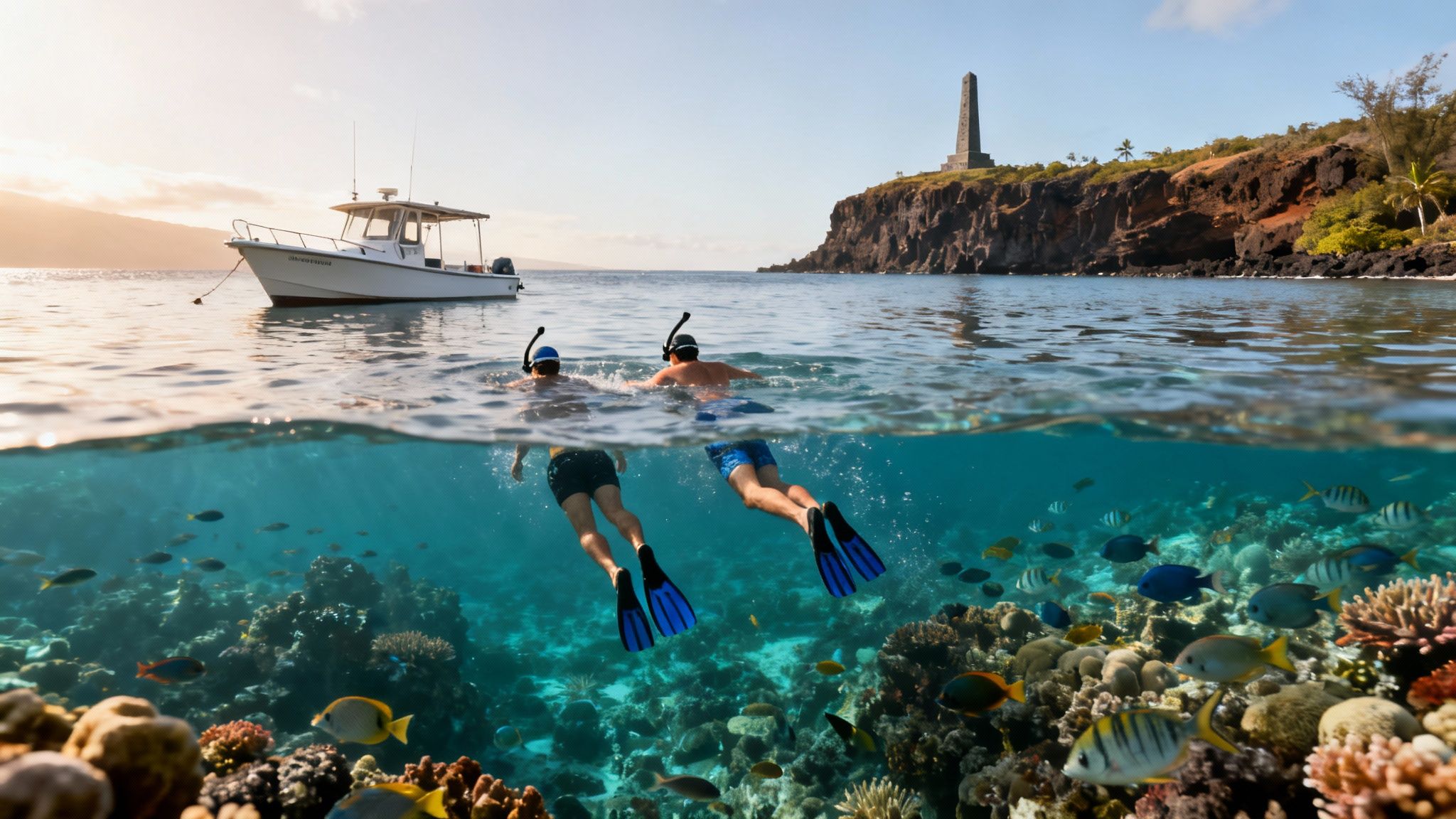
The Big Island is a snorkeler’s paradise, and for a good reason. The protected waters along the Kona and Kohala coasts are calm, clear, and brimming with life. This side of the island is dotted with underwater treasures, each offering a unique window into Hawaii's marine world. While you can find great spots all over, a few legendary locations stand out for their incredible visibility, abundant wildlife, and rich history.
Two of the most famous are Kealakekua Bay, home to the Captain Cook Monument, and Honaunau Bay, better known to locals as "Two Step." These aren't just pins on a map; they are thriving ecosystems that showcase the very best of snorkeling the Big Island. Getting to know what makes each one special is the key to picking the perfect adventure.
It's no secret that the word is out. The Big Island has cemented its reputation as a world-class snorkeling destination, with Hawaiian waters attracting an estimated 3 million snorkelers every year. This massive number really highlights the magnetic pull of the islands' underwater world. Places like Kealakekua Bay, Honaunau Bay, and Kahalu'u Beach Park are now on the global snorkeling map, drawing people from all corners of the earth for a chance to swim with green sea turtles, colorful reef fish, and swaying coral gardens.
Kealakekua Bay (Captain Cook Monument)
Kealakekua Bay isn't just a snorkeling spot; it's a living sanctuary. As a designated Marine Life Conservation District, its waters are fiercely protected, which has allowed some of the most vibrant and healthy coral reefs in all of Hawaii to flourish here. The bay is legendary for its visibility, which can often stretch beyond 100 feet, letting you see the entire reef unfolding below you right from the surface.
The bay is also steeped in history. This is where Captain James Cook first made contact with the island in 1779 and where he ultimately met his fate. A stark white obelisk—the Captain Cook Monument—stands on the shoreline, adding a layer of historical weight to your underwater journey.
Pro Tip: You can’t just drive up to the best part of Kealakekua Bay. Access from land is extremely difficult and discouraged. The only practical and respectful way to experience this pristine environment is by boat. A guided tour ensures you get to the most stunning parts of the reef safely while minimizing your impact.
Honaunau Bay (Two Step)
If you prefer the ease of snorkeling right from the shore, Honaunau Bay, or "Two Step," is an absolute must-do. It sits right next to the Puʻuhonua o Hōnaunau National Historical Park and gets its nickname from the two natural lava rock "steps" that make getting into the water a breeze. It's as easy as it sounds!
This bay is a fantastic spot for beginners and families. The water is usually calm and shallow right at the entry point, but it quickly deepens to reveal a sprawling reef just teeming with activity. It's one of the most reliable places to spot Hawaiian green sea turtles (honu) cruising by, along with huge schools of yellow tangs. If you're lucky, you might even see a pod of spinner dolphins resting in the deeper water.
So, which one is for you? Kealakekua offers an unmatched, boat-access-only reef experience in a protected, remote setting. Two Step, on the other hand, provides incredible shore snorkeling with easy access and almost-guaranteed turtle sightings. For an even deeper look at what makes this part of the island so incredible, check out our guide on snorkeling in Kona, Hawaii.
Big Island Top Snorkel Spots Comparison
To help you decide, here's a quick look at how our two favorite spots stack up. This table breaks down what makes each location unique, so you can pick the one that best fits your snorkeling style.
| Location | Access Type | Best For | Common Marine Life |
|---|---|---|---|
| Kealakekua Bay | Boat Only | Unmatched coral health, incredible visibility, and historical context. | Dense schools of reef fish, vibrant corals, eels, and spinner dolphins. |
| Honaunau Bay (Two Step) | Shore Access | Easy entry, beginner-friendly conditions, and reliable turtle sightings. | Hawaiian green sea turtles, yellow tangs, butterflyfish, and dolphins. |
Whether you choose the historic sanctuary of Kealakekua or the easy-access wonders of Two Step, you really can't go wrong. The west coast of the Big Island is ready to offer an underwater journey you won’t soon forget.
Mastering Ocean Safety for a Worry-Free Snorkel
The ocean around Hawaii is a living, breathing force—gorgeous, powerful, and deserving of your full respect. Getting a handle on a few key safety principles is what separates a good day in the water from a truly great one, making sure your snorkeling adventure is memorable for all the right reasons. This is about more than just a checklist; it's about developing a real feel for the ocean.
True ocean awareness starts before your toes even hit the sand. It’s about learning to spot the subtle clues the water gives you, like a slight shift in the current or a change in visibility. And the number one, non-negotiable rule? Always go with a buddy. It’s not just a friendly suggestion—it’s the most critical safety net you have.
Understanding the Risks and Staying Prepared
It’s crucial to be realistic about the ocean's power. Snorkeling has, unfortunately, become the leading cause of visitor drownings in Hawaii. Between 2019 and 2023, drowning accounted for the deaths of about 45 tourists annually in Hawaiian waters. Over 90% of snorkeling-related fatalities involved visitors, not locals.
That statistic isn't meant to scare you, but to underscore the importance of local knowledge and preparation. Simple things can make all the difference. Drink plenty of water, as the sun and salt will dehydrate you quickly. Slather on reef-safe sunscreen to protect your skin and the coral. And most importantly, listen to your body. If you start feeling chilled or your muscles begin to cramp, it’s time to get out and rest.
Key Safety Practices for Big Island Snorkeling
Make these habits second nature, and you can keep your focus on the fish, not on fighting the conditions.
- Check Ocean Conditions: The ocean’s mood can change in a heartbeat. Always check the surf and wind reports before heading out. A calm, glassy morning can easily become a choppy, challenging afternoon. You can learn more about reading the signs in our guide on how to check ocean conditions for the Big Island Hawaii.
- Use Proper Gear and Flotation: A leaky mask can ruin a whole trip. Make sure yours fits well and your snorkel is clear. If you aren't a super-confident swimmer (or even if you are), using a flotation device like a vest or a simple pool noodle is a brilliant move. It lets you relax and save your energy for exploring.
- Never Turn Your Back on the Ocean: This is the golden rule in Hawaii. Even in a protected-looking bay, a rogue wave or a sudden surge can knock you off your feet. Always keep an eye on the water, especially when you’re getting in or out.
Why a Guided Tour is the Smartest Choice
If you're new to snorkeling, visiting with family, or just aren't familiar with Hawaii's waters, going with a professional guide is easily the safest and most rewarding way to experience the reefs. This is where a company like Kona Honu Divers really shines, offering not just a boat ride to a great spot, but a whole layer of expertise and safety.
Their guides are professionals trained in first aid, CPR, and ocean rescue. They take care of everything—from fitting you with high-quality, sanitized gear to picking the best spot based on that day's specific conditions. Best of all, they keep a constant, watchful eye on everyone in the group. This allows you to completely relax and lose yourself in the underwater world, confident that a pro has your back.
Witnessing The Legendary Manta Ray Night Snorkel
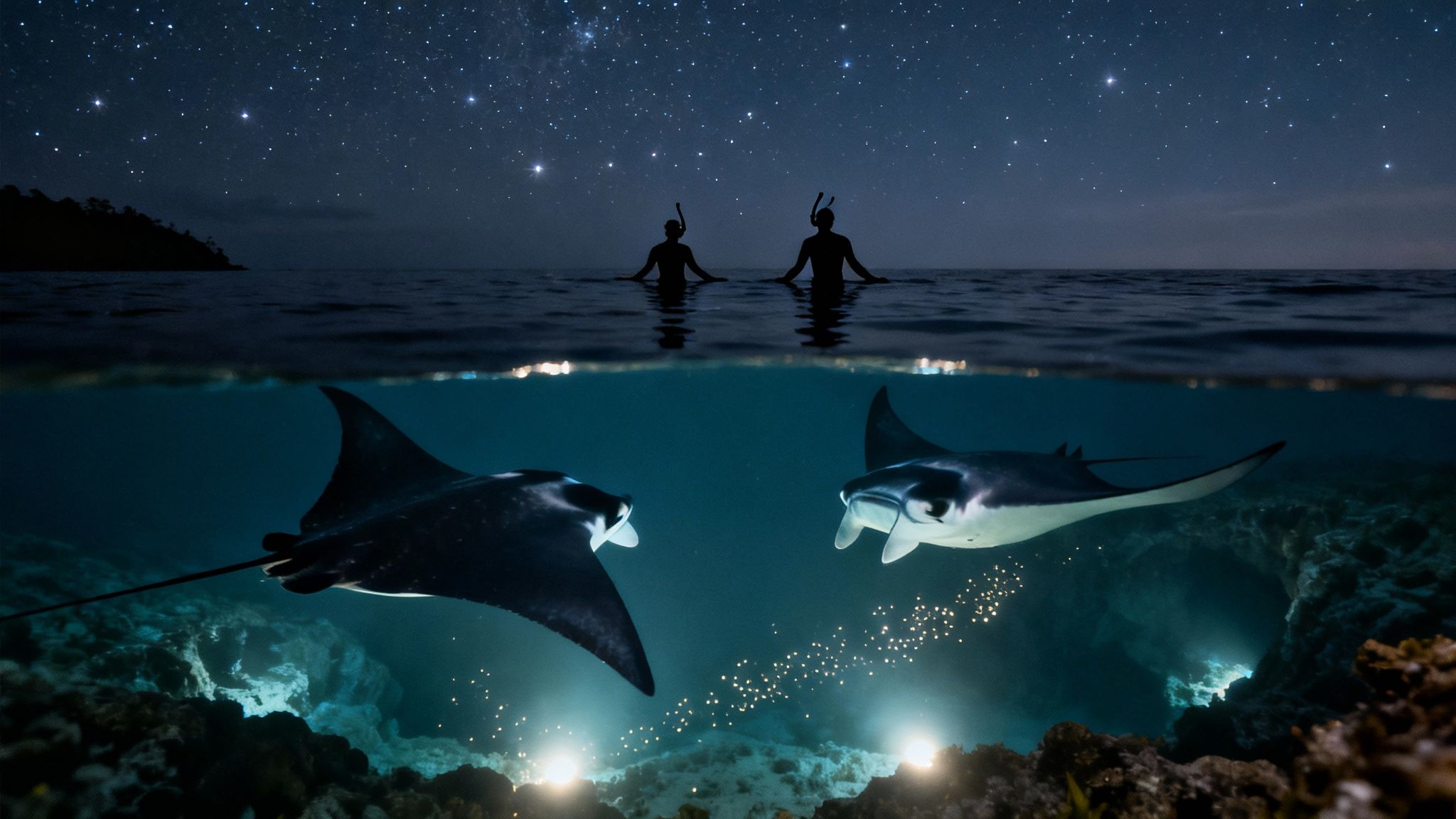
Get ready for an experience that people consistently rank among the top ten wildlife encounters on the planet. The manta ray night snorkel is more than just a boat trip; it’s a surreal, almost magical event that has become a cornerstone of snorkeling Big Island. The whole spectacle unfolds every night just off the Kona coast, thanks to a simple, brilliant setup.
Here's how it works: boats shine powerful, eco-friendly lights into the dark water. These lights attract massive clouds of plankton—the manta rays' favorite meal. Lured by the all-you-can-eat buffet, these gentle giants glide out of the deep to feed. You just float on the surface, watching as these magnificent creatures, with wingspans stretching up to 16 feet, perform a silent, weightless ballet just inches beneath you.
What's amazing is how reliable this encounter is. Local operators report seeing mantas on 85-90% of their nightly tours. It's not uncommon for guests to see anywhere from a couple of rays to more than thirty on a single trip.
Why Garden Eel Cove Is The Premier Viewing Location
While mantas gather at a few spots, Garden Eel Cove (fittingly nicknamed Manta Heaven) is hands-down the best place for this adventure. It's tucked into a more protected part of the coastline, which means the water is usually much calmer. That makes for a far more comfortable and enjoyable snorkel, especially when the open ocean gets a little choppy.
But it's not just about calm seas. The reef here is healthier and more vibrant. A thriving reef supports a richer food web, which in turn attracts and sustains a larger, more consistent population of manta rays. It’s the perfect combination of a sheltered stage and a five-star menu for the nightly show.
Watching these gentle giants glide and somersault through the light beams is a profoundly moving experience. It connects you to the ocean's magic in a way that few other activities can.
The Kona Honu Divers Manta Ray Experience
Choosing the right tour operator is key to having a safe, respectful, and truly breathtaking experience. We’ve built our reputation on providing an exceptional tour that puts both guest safety and the well-being of the mantas first. Our entire trip is designed to give you the best possible view while sticking to strict eco-friendly guidelines.
From the moment you step on board, our experienced crew walks you through everything you need to know, from manta ray behavior to how to be a passive, respectful observer. Our custom-built light boards are designed to attract plankton effectively, giving you the best chance of seeing a spectacular feeding frenzy. You can learn more about what makes the manta ray night dive in Hawaii such a unique and sought-after activity.
With a stellar track record for sightings and a deep commitment to marine conservation, Kona Honu Divers has become a top choice for anyone looking for this once-in-a-lifetime adventure.
How to Choose The Best Snorkel Tour and Gear
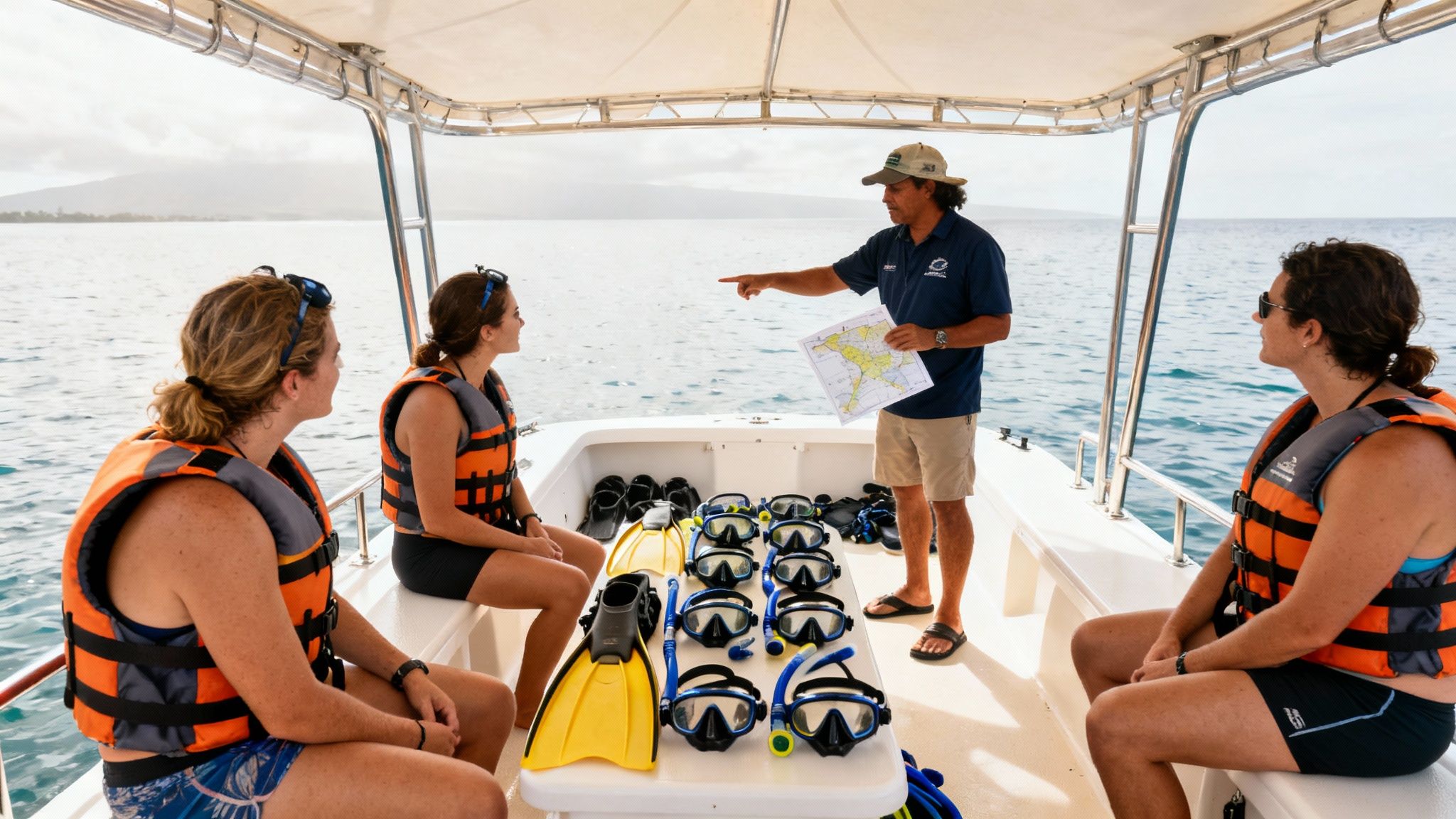
With so many companies offering snorkeling Big Island adventures, picking the right one can feel a little overwhelming. But here’s the inside scoop: how you choose to see the reefs can make or break your entire experience.
While you can certainly snorkel from shore, hopping on a professionally guided boat tour unlocks a whole different world. You get access to pristine, remote sites you simply can’t get to otherwise. Think of it as the VIP pass to the island’s most spectacular underwater secrets.
Boat tours can whisk you away to protected marine sanctuaries like Kealakekua Bay, where the coral is brighter and the fish are more plentiful precisely because fewer people can get there. You’re not just getting a ride, either. You’re getting expert guides, top-notch gear, and a safety net that lets you relax and just soak it all in.
Vetting Your Tour Operator
So, how do you spot a great tour from a mediocre one? It’s all about knowing what to look for. A few minutes of research before you book will pay off big time.
Here are a few things I always tell people to check:
- Small Group Sizes: Look for a low guide-to-guest ratio. This isn't just about avoiding a crowd; it’s about getting personal attention and having a guide who can actually point out the cool stuff.
- Quality Boat Amenities: Comfort matters more than you think. Is there plenty of shade? Is it easy to get in and out of the water? A hot freshwater rinse after a swim feels like pure luxury.
- Stellar Safety Record: This is non-negotiable. The best companies have experienced, certified guides and a proven history of keeping their guests safe. Don't be afraid to ask about their safety protocols.
Operators like Kona Honu Divers are a perfect example of a company that gets it right. They really focus on small groups and making sure everyone is comfortable, and you can see it in the glowing reviews they get.
Demystifying Your Snorkel Gear
The right gear is just as critical as the right location. Nothing ruins a snorkel session faster than a leaky mask or fins that give you blisters. This is another huge reason to go with a professional tour.
They provide high-quality, well-maintained equipment that’s worlds better than those cheap, shrink-wrapped sets from the big-box stores. Everything is inspected, sanitized, and fitted just for you.
A perfectly fitting mask is the single most important piece of snorkel gear. It should create a gentle, comfortable seal around your face without needing to be overtightened. A good seal means no distracting leaks, allowing you to focus completely on the incredible underwater scenery.
The crew on a good charter are pros at this. They’ll find the right size mask and fins for you and show you how to check the seal so you can enjoy a leak-free afternoon. That professional fitting makes all the difference. While the tour provides the main items, thinking through your own essential gear checklist ensures you don't forget personal items like sunscreen and a camera.
At the end of the day, a top-tier snorkel tour is an investment in your vacation. You aren't just paying for a boat ride—you're getting expertise, safety, comfort, and access to the absolute best snorkeling the Big Island has to offer.
Your Snorkeling Questions Answered
We've covered the best spots, safety tips, and the can't-miss manta ray swim. To wrap things up, let's tackle some of the most common questions people have before they dip their toes in the water. Think of this as the final piece of the puzzle to help you plan your Big Island snorkeling adventure with total confidence.
When Is The Best Time of Year for Snorkeling on The Big Island?
Honestly, any time is a good time! That’s one of the best things about snorkeling here. The Kona coast is uniquely protected by the island's massive volcanoes, which means the water is almost always calm and clear, no matter the season.
That said, if you're looking for the absolute best conditions, the summer months from April to October tend to be a bit calmer and flatter. This is when the ocean is often like glass.
But even in the winter, when other parts of the island might get bigger surf, Kona's bays stay pretty mellow. Visibility is almost always fantastic—we're talking over 100 feet on a good day—so you really can't go wrong.
Do I Need to Be a Strong Swimmer to Snorkel?
Not at all. You definitely need to be comfortable in the water, but you don't have to be Michael Phelps to have an incredible time. The real trick to snorkeling is just relaxing and floating.
The most important skill for snorkeling isn't swimming prowess; it's the ability to remain calm and breathe steadily. Flotation devices make this accessible to almost everyone, allowing you to conserve energy and focus on the marine life below.
Good tour operators like Kona Honu Divers will always have flotation vests or pool noodles on hand, which let you just hang out on the surface without any effort. If you're not a super confident swimmer, going on a guided tour is absolutely the way to go. You'll have pros watching out for you, which makes the whole experience completely stress-free.
What Kinds of Marine Animals Will I See?
Get ready, because the water here is like a real-life aquarium. You're pretty much guaranteed to see schools of colorful reef fish—look for the bright yellow tangs, striped butterflyfish, and of course, Hawaii's state fish, the humuhumunukunukuāpuaʻa (try saying that one three times fast!).
Hawaiian green sea turtles, or honu, are everywhere, and seeing one gracefully glide by is always a trip highlight. It's really common to spot them munching on algae or just chilling on the reef.
From the boat, keep your eyes peeled for playful spinner dolphins. Once you're in the water, you might see moray eels peeking out of rocks, majestic eagle rays cruising over the sand, and, if you do a night tour, the unforgettable manta rays.
Is a Boat Tour Better Than Snorkeling from Shore?
While it’s fun to just walk in from the beach, a boat tour takes the experience to a whole new level. I always recommend it, and here’s why:
- Access to Premier Sites: Boats can get you to incredible spots that are hard or impossible to reach from land, like the protected marine sanctuary at Kealakekua Bay. These places are pristine, less crowded, and have much healthier coral.
- More Marine Life: Because these offshore reefs don't get as much foot traffic, the fish and other animals are often more abundant and varied. It just feels wilder and more immersive out there.
- Safety and Comfort: On a good tour, you get high-quality gear that actually fits, expert guides watching over you, and nice perks like shade, snacks, and drinks. It turns a simple activity into a comfortable, all-inclusive day on the water.
Ultimately, a boat tour transforms snorkeling the Big Island from just another activity into a real adventure. You simply can't match the access and expertise on your own.