
You're probably looking at flight options, checking your certification card, and trying to separate real Kona advice from recycled island travel copy. That's smart. Scuba diving kona big island can be one of the most memorable dive trips you'll ever take, but only if you build the trip around the right coast, the right conditions, and the right dives for your skill level.
Kona rewards divers who plan well. The west side gives you clear water, volcanic structure instead of generic reef scenery, and signature dives that few places can match. It also punishes rushed decisions. People book the wrong nights for manta dives, underestimate what blackwater demands, or assume every shore entry is easy because Hawaii looks mellow in photos.
This is the version I'd give a visiting diver on the dock before their first Kona week. Keep it practical, respect the ocean, and choose dives that fit your actual comfort in the water.
Your Ultimate Guide to Scuba Diving in Kona
A strong Kona trip starts with one moment. You descend, level off, and the water opens up so cleanly that the site seems to arrange itself in front of you. Lava contours point you down the reef. Turtles move through the blue like they've done this route all morning. You don't feel like you're searching for the dive. You feel like you arrived where the dive was always waiting.
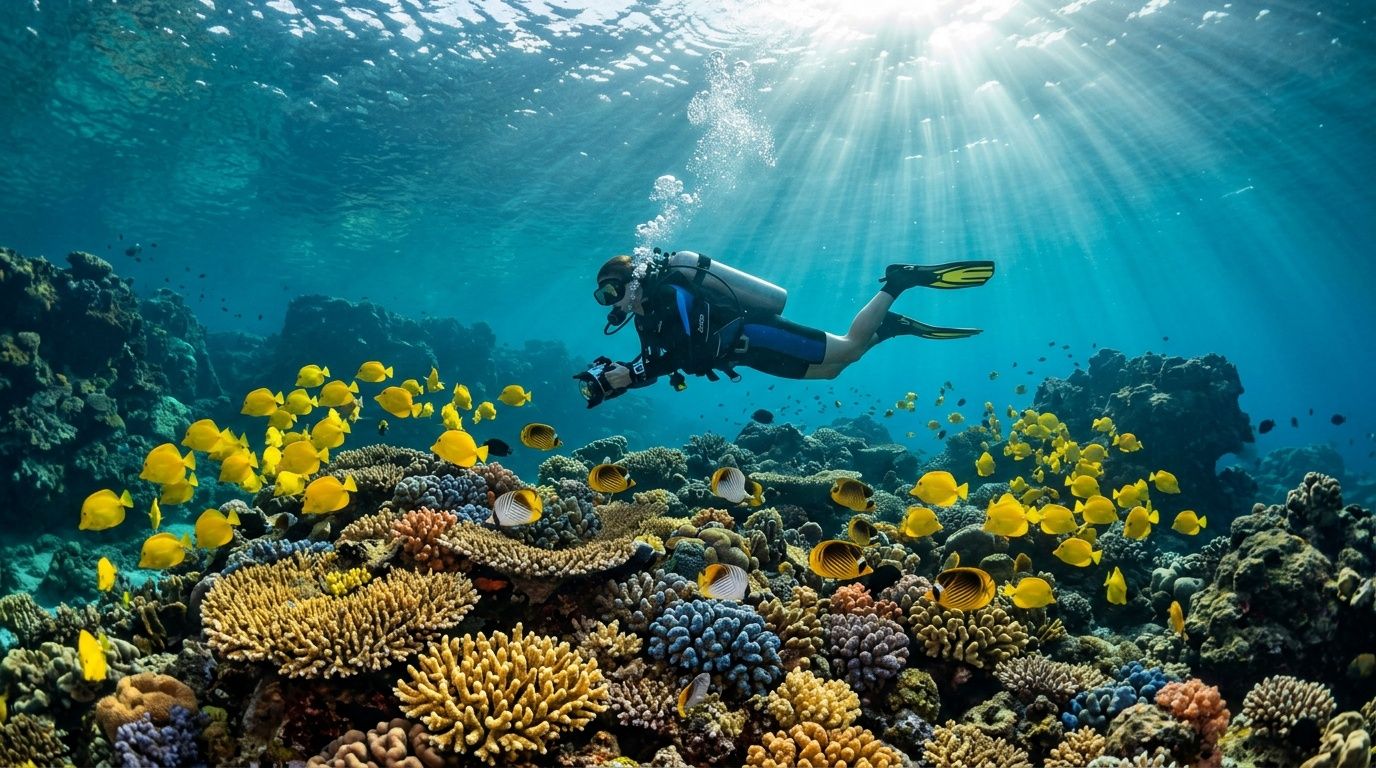
That consistency is why divers come back. The Kona coast has over 50 unique scuba dive sites along its shoreline, with visibility that often exceeds 100 feet year-round and water temperatures that stay in the 75-81°F (24-27°C) range, according to this Big Island scuba overview. Those are not small advantages. They change how much of your vacation goes toward diving instead of waiting for conditions to improve.
Why divers choose Kona over “somewhere in Hawaii”
The Big Island doesn't dive the same way everywhere. Kona is where many visiting divers end up focusing their trip because the coast is sheltered and the underwater terrain has shape. Instead of long, flat sightseeing swims, you get lava-built architecture, reef life, and specialty dives that justify dedicating real time to the island.
If you want another useful pre-trip read, Kona Snorkel Trips' scuba guide does a good job of framing why Kona is the side of the island divers usually build around first.
Good Kona diving feels organized before you even hit the water. The ocean is calmer, the entries are cleaner, and the site usually reveals itself early in the descent.
What a well-planned trip looks like
For most divers, the sweet spot is simple:
- Start with daytime reef diving so you settle into local conditions and weighting.
- Add one marquee experience like manta or blackwater based on your certification and comfort.
- Leave room for site flexibility because Kona rewards operators who choose for the day, not from a rigid script.
If you're still sorting out the basics of diving this island, the Scuba Hawaii planning page is a useful place to get your bearings before you lock in dates.
What Makes Kona Diving So Special
Kona isn't famous by accident. The conditions that make this coast work come from geography first, then geology, then operator judgment. If you understand those three pieces, a lot of Kona's reputation makes sense.
The leeward coast changes everything
The west side sits in the lee of the island's massive volcanoes. That matters because the coastline gets protection from trade winds that rough up more exposed areas. Divers experience the result as calmer surface conditions, clearer water, and more reliable diving windows.
That's the practical reason Kona feels easier than many tropical destinations. You spend less energy dealing with surface slop and more attention on buoyancy, navigation, and marine life. For newer divers, that often means a calmer first descent. For experienced divers, it means you can appreciate the site instead of just managing it.
A helpful local breakdown of that advantage is in this article on what is unique about diving in Kona.
Lava built the underwater terrain
Kona's underwater topography doesn't look generic because it isn't. Ancient lava flows created arches, tubes, caverns, ledges, and steep contours that give even a modest reef dive more personality. You're not just drifting over coral. You're moving through a volcanic terrain that still reads clearly underwater.
That structure changes how dives feel.
| Feature | What it means underwater | Who benefits most |
|---|---|---|
| Lava arches | Natural frames, swim-through appeal, strong visual landmarks | Photographers and intermediate divers |
| Tubes and caverns | More dramatic terrain and habitat pockets | Divers with solid buoyancy |
| Drop-offs and ledges | Cleaner site definition and changing light | Anyone who likes topography |
Why marine life feels concentrated here
Structure creates habitat. Habitat creates encounters. Kona's volcanic forms give turtles, reef fish, eels, and other marine life places to feed, shelter, and move through. That's one reason dives here often feel active without becoming chaotic.
The other factor is visibility. When the water is clear, you read the site sooner and spot movement earlier. Fish schools stand out. A turtle crossing the blue doesn't disappear into haze. The whole dive becomes easier to interpret.
Local rule: Kona rewards divers who slow down. The terrain is dramatic, but the best marine life sightings usually go to the diver who pauses at the ledge, checks the crevice, and lets the site come to them.
What doesn't work in Kona
Two mistakes show up often.
- Rushing through lava structure. If you swim fast, you miss the detail that makes Kona different.
- Treating all sites as beginner sites. Calm water does not make every route simple. Some lava features demand control and good trim.
The divers who get the most from Kona are usually the ones who stay honest about their current skill level, then choose dives that fit it.
Kona's Most Unforgettable Dive Experiences
The boat leaves Honokohau before sunset. You finish a calm afternoon dive on black lava structure, eat a quick snack on deck, and head back out as the coast goes dark. By the end of the night, you may have watched manta rays sweep inches above your mask or suspended over blue water with larval creatures rising out of the deep. Few destinations can give you both experiences on the same stretch of coastline. Kona can, because the island's volcanic shelf drops into deep ocean fast and the leeward side usually stays protected enough to run these trips consistently.
The manta ray night dive
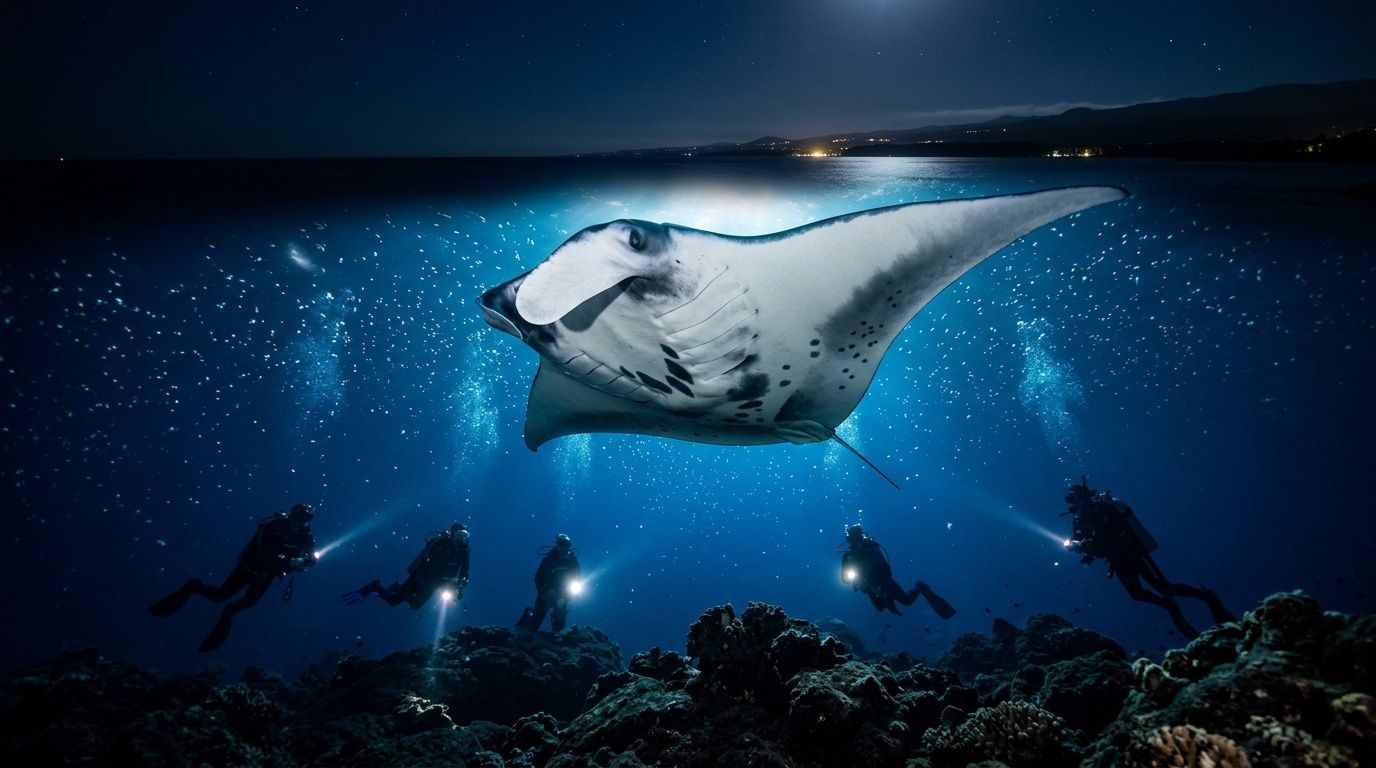
This is the experience that puts Kona on many divers' calendars. The dive happens on a shallow reef shelf, which keeps the profile manageable, but the setting still feels dramatic once the lights come on and the mantas start feeding above the group.
What makes Kona's manta dive stand out is consistency and structure. Operators know how to set the site, place divers, and manage lights so the animals can feed without the chaos that ruins encounters elsewhere. As described in this manta dive overview, local conditions and a resident manta population make sightings far more dependable than in many destination marketing photos would suggest.
Why Garden Eel Cove usually gets my vote
If divers ask me which manta site I prefer, I usually say Garden Eel Cove. The site is protected, the layout is straightforward, and the viewing area tends to feel more controlled. That matters at night. A clean setup helps newer night divers settle down faster, and calm divers always get a better show.
It also gives you a better overall dive, not just a better manta moment. The reef itself has enough life and structure to hold your attention while the group gets organized.
For divers in your group who want the encounter without scuba, the manta ray snorkel overview lays out the surface option clearly.
How to get more from it
- Stay planted unless the guide tells you to move. Mantas come to the lights and plankton. Chasing them breaks the pattern.
- Keep your fins tucked up and your body quiet. Good trim protects the reef and the diver next to you.
- Use the briefing. The light position, entry, and exit plan are part of what makes this dive work well.
I have seen very average divers have extraordinary manta dives because they listened, settled in, and stopped trying to improve the encounter.
The blackwater dive
Blackwater is Kona's other signature experience, and it attracts a different diver. You are tethered in open ocean at night, with no reef, no bottom reference, and no lava wall to orient yourself. The point is to watch pelagic and larval animals rise from deep water under cover of darkness. This blackwater dive description explains the format and the training background expected.
The challenge is mental as much as technical. Good buoyancy in daylight over a reef is one thing. Holding position in dark open water while strange, transparent animals drift through your beam is another.
Who should actually book it
Blackwater suits divers who:
- Control buoyancy without using the bottom as a crutch
- Stay relaxed when there is no visual reference
- Care more about rare ocean life than classic reef scenery
It is a poor choice for divers who are still uneasy at night, get task-loaded fast, or book advanced dives for the story rather than the fit. Kona Honu Divers runs this well, but a well-run blackwater still asks for honest self-assessment.
Daytime reef and lava dives
Day diving in Kona deserves more respect than it often gets. These dives explain why the night experiences work here in the first place. Volcanic topography creates ledges, fingers, bowls, arches, and abrupt changes in depth, and the coast drops into deep water close to shore. That geology shapes current, light, habitat, and site selection from one boat ride to the next.
On a good morning, the best route is not always the most famous site. It is the site that matches that day's swell direction, wind, visibility, and the skill mix on board. Experienced local crews make these calls constantly, sometimes changing the plan after they see conditions on arrival. That judgment is part of the value of booking with a Kona operator that dives this coast every day.
For travelers arriving by ship, it helps to compare cruise ships before the trip and confirm timing carefully. Port schedules can squeeze your surface interval and make same-day planning harder than it looks on paper.
Advanced opportunities beyond blackwater
Some divers want more demanding daytime profiles after they get a feel for Kona. That usually means longer runs, sites with less margin for sloppy buoyancy, and conditions that need patience rather than bravado. The reward is access to areas that feel wilder and less trafficked, with more exposure to blue water and more technical route choices around lava structure.
If that sounds like your kind of day, the advanced long-range dive tour is the right place to review trip details.
Here is the trade-off in plain terms:
| Dive type | Best for | What can go wrong if you choose badly |
|---|---|---|
| Manta night dive | Certified divers comfortable at night | Too much movement and poor light discipline |
| Blackwater | Advanced divers with strong buoyancy and calm focus | Anxiety, task loading, and poor control in open water |
| Day reef and lava | Most certified divers | Choosing a route that exceeds your comfort with structure |
| Advanced long-range | Experienced divers seeking tougher profiles | Fatigue, changing conditions, and overestimating your readiness |
A sample order that works
For a multi-day Kona trip, I usually recommend starting with daytime reef dives. That lets you adjust weighting, settle into the water, and see how you handle local conditions. Put manta next while you are still fresh and excited. Save blackwater for later in the trip if you are qualified and still feel sharp. Add an advanced long-range day only if energy, weather, and skill all line up.
That plan gives you the widest range of Kona diving without forcing the hardest experience too early.
Essential Dive Trip Planning for Kona
You arrive in Kona with four dive days, fresh batteries, and a list of famous sites. By the second morning, the trip can still go sideways if your exposure suit is wrong, your boat tolerance is poor, or you booked dives that ask more of you than your current skills support. Good planning fixes that before you ever step on the boat.
Season and water comfort
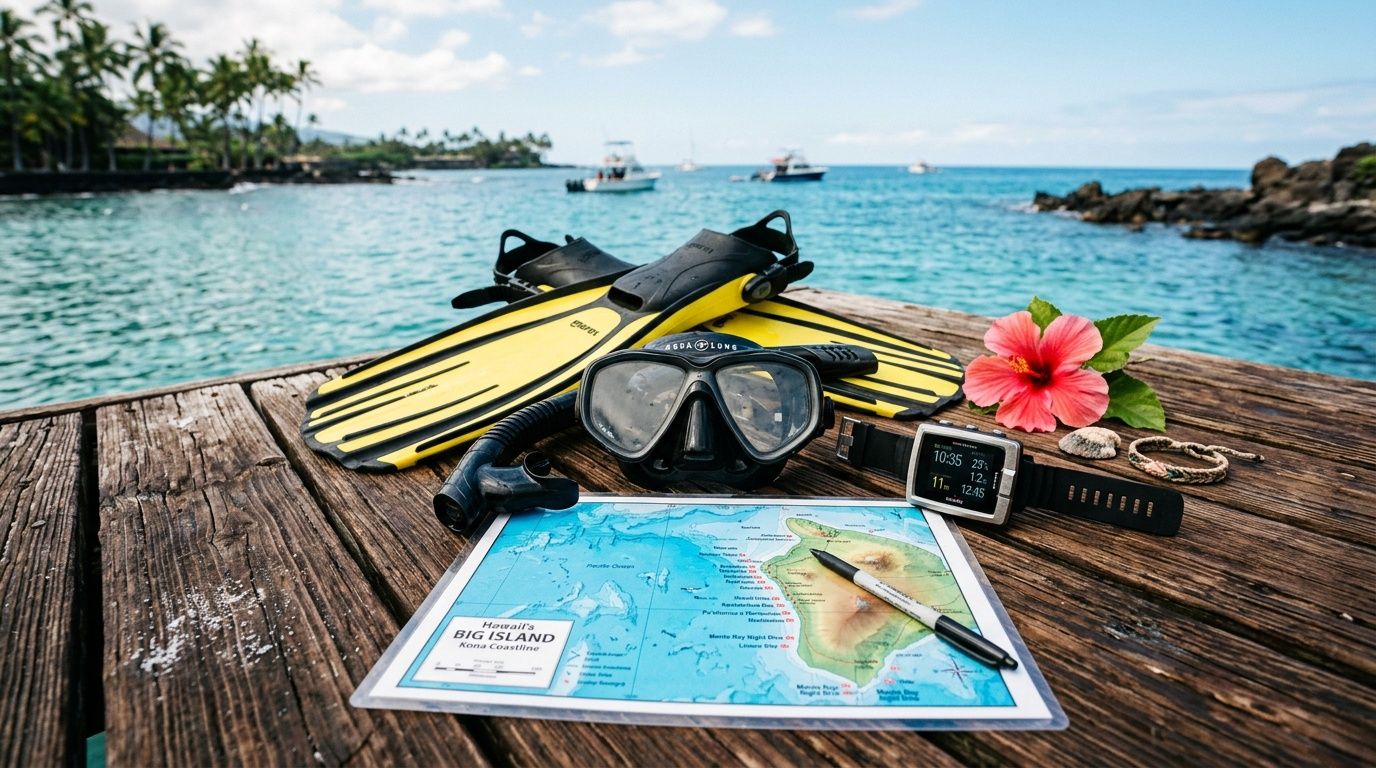
Kona is diveable year-round because the west side of the Big Island sits in the lee of the island's massive volcanic slopes. That shelter is one reason the coast stays accessible so often, but conditions still shift with swell direction, wind, and the type of site you want to dive.
Pack for repeated dives, not for the warmest moment of the day. A suit that feels fine on one daytime dive may feel thin by the second tank or after sunset. Divers who run cold should plan for that possibility. I see more trips improved by an extra layer than ruined by bringing one.
Before you lock in shore plans or commit to a more exposed day, check a local breakdown of how to check ocean conditions for the Big Island. It helps you read the coast the way local captains and divemasters do.
Certification and skills
Kona offers easy reef profiles and demanding specialty dives on the same trip calendar. Certification card level matters, but recent experience matters just as much.
For specialty dives, ask three blunt questions before you book:
- Night awareness: Can you stay calm and oriented with limited visual reference?
- Buoyancy control: Can you hold depth and position without constant finning or hand movement?
- Task management: Can you monitor your gas, follow instructions, and handle lights or other gear without getting overloaded?
If any of those answers is shaky, fix it on a daytime charter first. That is not a setback. It is how smart divers set themselves up for a better trip.
Shore diving versus boat diving
The lava coastline that makes Kona so memorable underwater also affects how you enter the water. Shore diving can be excellent here, but it is rarely casual for visitors. Uneven lava, surge at the entry, and exit timing all matter. A site that looks simple from shore can become awkward with full gear.
Boat diving removes a lot of that friction. You save energy, get access to better route selection, and dive with a crew that adjusts to conditions along the coast. That matters in Kona because volcanic topography creates many good sites, but not all of them suit every day or every diver.
| Option | Strongest advantage | Main downside |
|---|---|---|
| Shore diving | Flexible schedule and lower cost | Harder entries, more gear handling, more local knowledge required |
| Boat diving | Easier access, site support, better use of vacation time | Higher trip cost |
My advice for first-time Kona divers is simple. Start by boat. Learn how the coast behaves, see how local operators pick sites, and add shore dives later if you still want the independence.
If you're extending a Hawaii trip with a cruise before or after diving, compare cruise ships can help sort the non-dive side of the logistics.
Seasickness and basic comfort
Boat comfort gets ignored until it ruins a morning. If you know you get motion sick, treat that as a planning item, not a personality test. Nausea leads to missed briefings, poor hydration, fast breathing, and shorter dives.
Common options people use include Ship-EEZ Seasickness Patch, Dramamine pills, Bonine pills, Sea Band wristbands, and Ginger chews. Use whatever has worked for you before, and test it on land rather than gambling on a full dive day.
Booking Your Adventure with Kona Honu Divers
Once your dive priorities are clear, booking gets easier. You don't need a giant menu. You need a schedule that respects fatigue, certification limits, and the fact that specialty dives are more enjoyable when they're placed well.
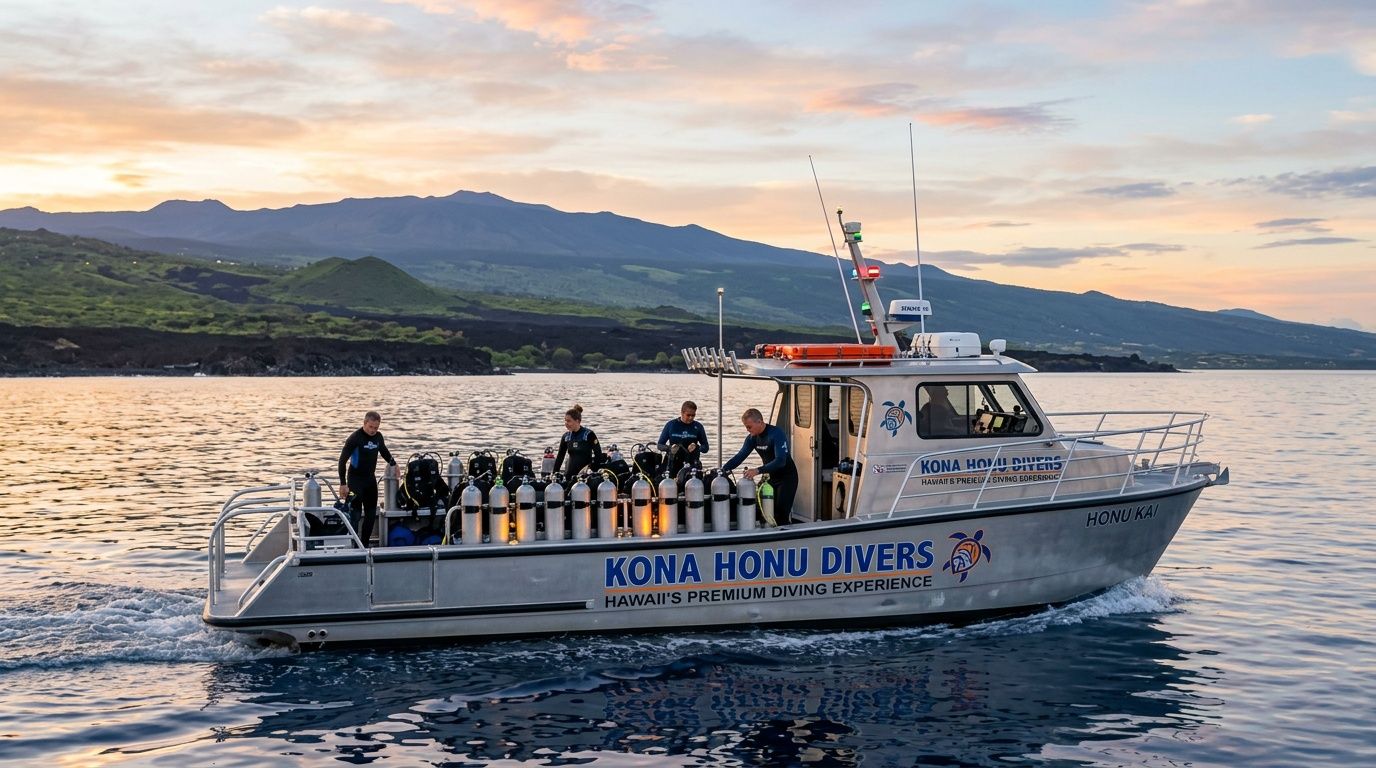
A practical starting point is this page on diving the Big Island of Hawaii with Kona Honu Divers. It gives you a direct sense of the trip types available without having to piece the week together blindly.
How to build a better Kona schedule
Most divers book too much too early. They stack demanding dives back to back, arrive tired, and end up enjoying less of what they paid for. A better schedule spaces intensity.
A workable structure looks like this:
Day one
Daytime reef diving. Shake out gear issues, dial in weighting, get used to the coast.Day two
Manta night dive. By now you're more relaxed, and that helps at night.Day three or four
Blackwater or a more advanced charter, only if your certification and comfort support it.
What to look for in an operator
I'll mention one local option directly here. Kona Honu Divers offers general dive tours, manta trips, blackwater dives, advanced charters, and trip planning support through its dive tours page. That's useful if you want one operator to handle multiple parts of the itinerary rather than stitching together separate bookings.
When you compare operators in Kona, focus on practical points:
- Boat workflow: Is gear handling straightforward?
- Trip mix: Can they support both easy reef dives and specialty dives?
- Briefing quality: Do they explain who a dive is for, not just what makes it famous?
Sample itineraries that make sense
Different divers should book different weeks.
| Trip style | Good fit | Smart booking approach |
|---|---|---|
| Short getaway | Diver with limited time | One reef day and one manta night |
| Balanced Kona week | Most certified vacation divers | Reef dives, manta, optional extra boat day |
| Advanced-focused trip | Current, experienced diver | Reef warm-up, blackwater, advanced charter |
Don't try to prove anything on vacation. Build the week so your best dive happens when you're settled, not when you're still jet-lagged and fumbling with gear setup.
Kona Scuba Diving FAQs
Is Kona safe for beginner divers
It can be, yes. Kona's sheltered side gives many divers a gentler environment than more exposed coastlines. But beginner-friendly conditions don't make every dive beginner-friendly. Newer divers should stick with straightforward daytime reef dives first and treat night or advanced specialty dives as something to earn into, not rush into.
What marine life will I realistically see
Expect reef life, turtles, and the kind of volcanic reef scenery that makes the whole site feel active. Specialty dives shift the focus. Manta dives are about mantas. Blackwater is about pelagic and larval life. The key is not chasing a checklist. Let the site show you what it's offering that day.
Should I bring all my own gear
Bring the gear that affects comfort and control most. For most divers, that means your mask, computer, and exposure protection if you have strong preferences. Rental gear is often fine for the rest, but your own familiar setup reduces task loading, especially on night dives.
Can non-divers join the trip and still have a good time
Yes, if you plan around it. Kona works well for mixed groups because divers can book scuba days while non-divers choose snorkeling, sightseeing, or shoreline time. Manta is especially useful here because some people want the encounter on scuba while others prefer it from the surface.
Is shore diving worth adding to the trip
Sometimes. Shore diving makes sense if you're comfortable managing your own entry, navigation, and gear logistics. If this is your first Kona visit, I'd treat shore diving as optional rather than foundational. Learn the coast from guided diving first.
What should I pack besides dive gear
Bring a dry layer for boat rides, hydration you'll drink, reef-safe sun protection, and anything you rely on for motion sensitivity. Also bring patience. Kona rewards divers who don't force the day.
If you're ready to turn all of this into an actual dive plan, start with Kona Honu Divers. They cover the classic Kona boat dives, manta nights, blackwater trips, and advanced options, which makes it easier to build one clean itinerary around the dives that fit your certification and goals.