
A lot of Hawaii dive trips go sideways before the first giant stride. Someone books the wrong island for their skill level. Someone else tries to finish certification on vacation and spends the whole week stressed. Another diver picks a famous site without thinking about boat comfort, current, or whether they even enjoy night diving.
That's avoidable.
Scuba diving in Hawaii can be one of the most memorable trips you'll ever take if you match the island, operator, and dive style to the diver you are, not the one you hope to be on day one. The payoff is huge. Warm water, volcanic structure, rare marine life, and dive experiences that feel completely different from the Caribbean or a quarry checkout weekend.
Your Hawaiian Underwater Adventure Awaits
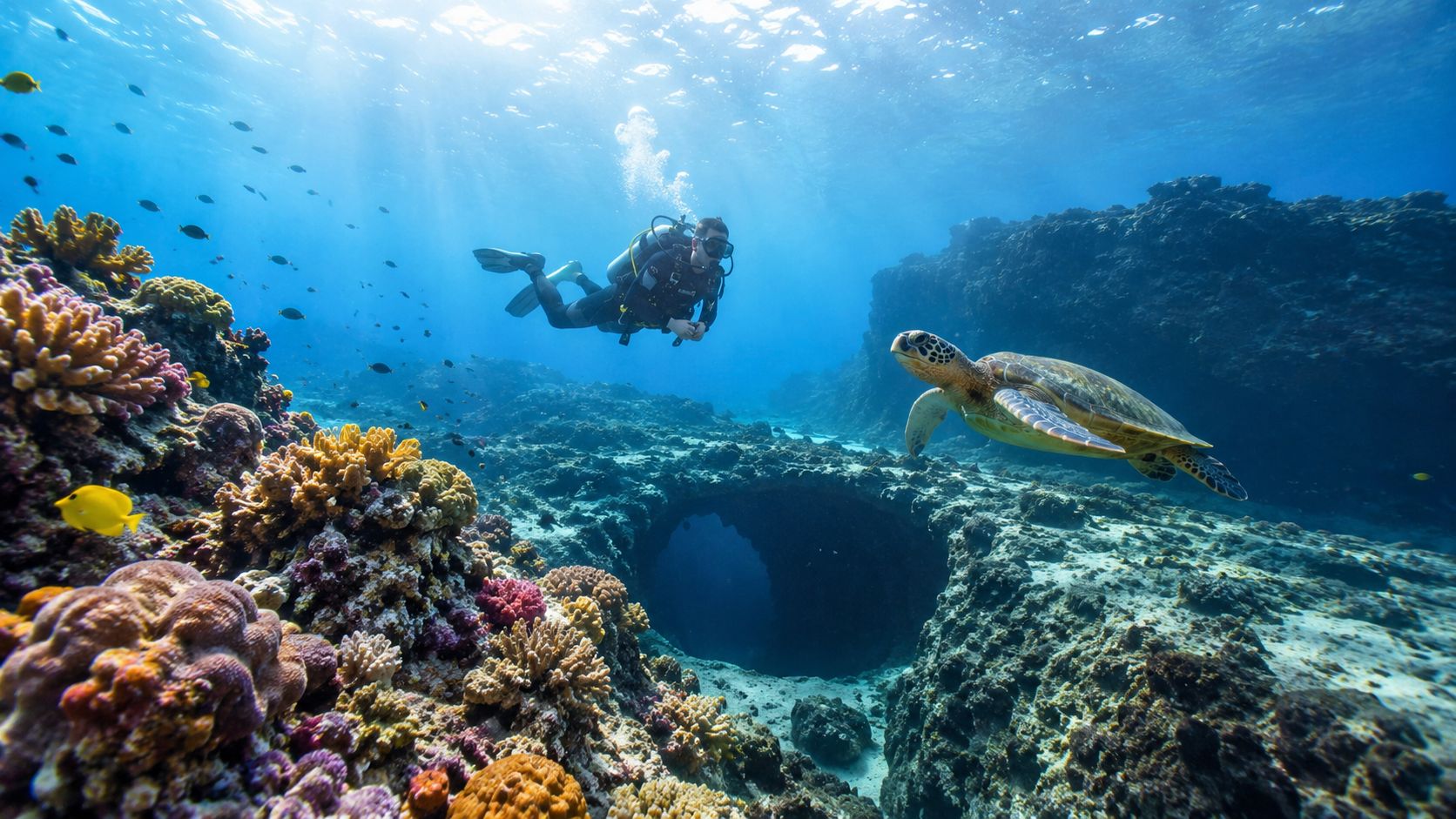
You splash in on your first Kona morning, look down through clear blue water, and can already make out the lava fingers below the boat. Before the descent is over, a turtle is off your left shoulder and the reef opens into cracks, shelves, and swim-throughs that feel built for divers.
That first impression is a big reason Hawaii stays on so many repeat-trip lists. Water conditions are often comfortable for recreational divers, visibility is regularly strong, and the volcanic topography gives each island a different personality in the water. The catch is simple. A good Hawaii dive trip depends on matching the island and operator to the kind of diving you want to do.
Generic travel guides usually stop at "Hawaii has great diving." That does not help much once you start booking. Oahu gives you access and variety. Maui can be a strong fit for mixed-activity family trips. Kauai appeals to divers who do not mind planning around conditions. The Big Island, especially Kona, stands out for consistent diving on the leeward side and for specialty dives that justify building a trip around them. If you're still sorting that out, this guide on which Hawaiian island is best for scuba diving will help you choose based on dive style, not just vacation marketing.
One rule saves a lot of Hawaii trips.
Practical rule: Your first Hawaii dive should be your easiest planned dive, not your most ambitious one.
I give that advice all the time in Kona because I have seen the alternative. Divers fly in tired, book the signature dive first, then spend the day dealing with motion sickness, equalization trouble, or a site that asks more of them than they expected. Start with an easy boat, a straightforward site, and an operator who does not rush the briefing. The rest of the trip usually goes much better.
The payoff is real. Pick well, and Hawaii gives you the kind of diving people talk about for years after the gear is dry.
What to Expect When Diving in Hawaii
Hawaii doesn't dive like a soft coral postcard destination. The first difference is geology. You're not just hovering over reef. You're moving through lava shelves, broken rock, arches, ledges, and hard volcanic contours that shape every site differently.
The second difference is water quality. The water is warm enough that most recreational divers stay comfortable with light exposure protection, and the clarity often lets you see the full structure of a site instead of only the piece directly in front of you.
What the water feels like
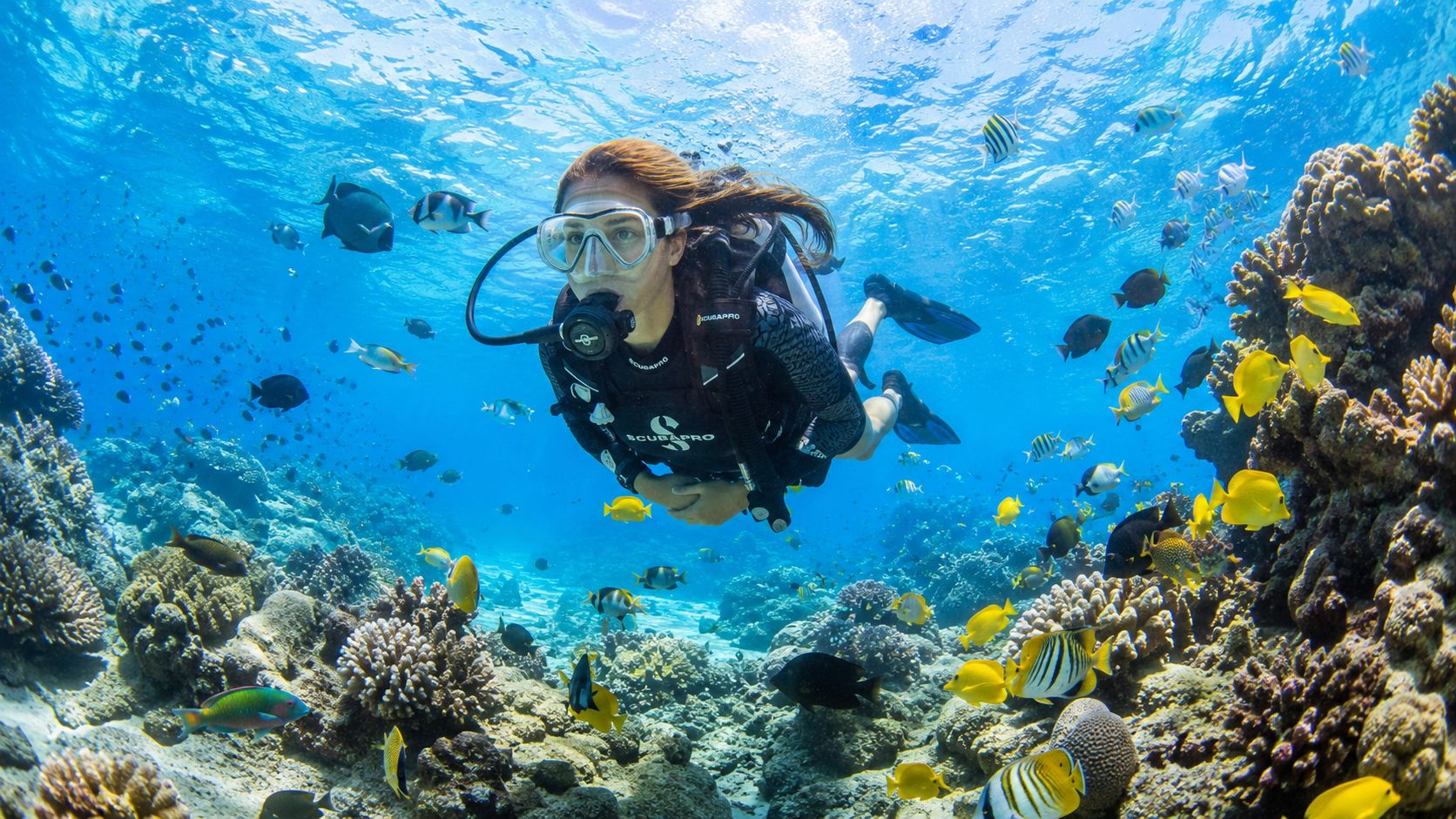
Warm water in Hawaii is one reason the destination works for both newer and experienced divers. You're not fighting cold stress the way you might in many mainland destinations. That changes gas consumption, comfort, and how much attention you can give to buoyancy and marine life.
Visibility also changes how a dive feels psychologically. Good visibility lowers stress for a lot of people. Descents feel simpler. Buddy awareness improves. Site orientation gets easier. That matters more than most vacation divers realize.
What you'll see underwater
Marine life in Hawaii has its own personality. Turtles are common enough that many visitors stop reacting after the first couple of encounters, which is funny because most divers would build an entire trip around those sightings somewhere else. Endemic fish add another layer. Even simple reef dives feel distinctive because the fish community looks different from what many divers know from the Caribbean.
The underwater terrain matters just as much as the animals. Hawaiian dives often feel architectural. Lava fingers, cutouts, and old flow shapes create natural routes through a site. That makes even a relaxed reef profile feel more exploratory.
The divers who enjoy Hawaii most are the ones who slow down. This isn't a place to race from fish to fish.
How to handle boat motion before it ruins the day
If you're prone to seasickness, solve it before the boat leaves the harbor. Don't wait until you feel bad. By then, your hydration, focus, and energy are already slipping.
A few commonly used options include:
- Patch option: Ship-EEZ Seasickness Patch
- Classic medication: Dramamine pills
- Less drowsy favorite for some travelers: Bonine pills
- Non-medication option: Sea Band wristbands
- Simple natural backup: Ginger chews
A few habits work well too:
| Situation | What works | What usually doesn't |
|---|---|---|
| Before departure | Eat light, hydrate, take prevention early | Skipping food entirely |
| On the ride out | Stay outside, watch the horizon, avoid heavy camera setup | Looking down at your phone |
| Between dives | Sip water, keep snacks simple, stay cool | Chugging lots of coffee |
If you know you get queasy, tell the crew early. Good crews would rather help you prevent a problem than manage one after you're already miserable.
Kona The Crown Jewel of Hawaiian Diving
Walk onto a Kona boat at daybreak and you can usually tell within ten minutes why divers keep coming back here. The lee side of the Big Island often gives you calmer water, cleaner visibility, and more reliable access than visitors expect from a Pacific island chain.
That combination changes the whole trip. You spend less time scrambling around weather and more time diving.
For a broader look at local conditions and site styles, this guide to diving Kona on the Big Island gives a solid overview.
Why Kona stands apart
Kona rewards smart planning. The volcanic coastline blocks a lot of the prevailing wind and swell, so operators can reach good sites more consistently than on many exposed coasts in Hawaii. For new divers, that often means easier entries, simpler descents, and less task loading. For experienced divers, it means you can stack several quality dives across a week instead of hoping one weather window opens.
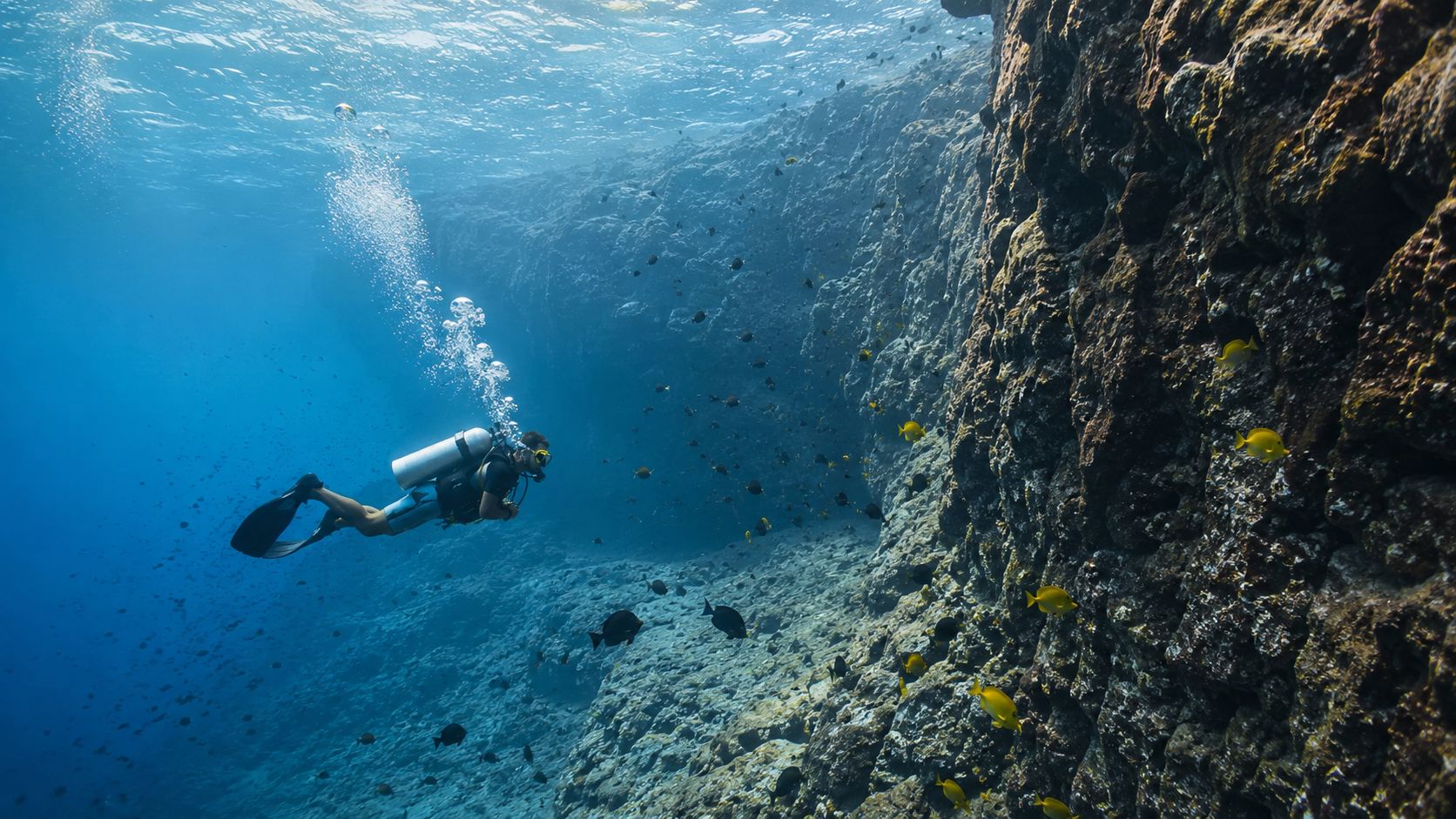
The underwater terrain helps too. Kona reefs are built around lava structure, not soft rolling coral gardens. You get arches, fingers, shelves, and hard relief that create navigation lines you can read underwater. That makes briefings matter more here than at flatter reef systems. A crew that knows how current wraps around a lava point or where surge builds on a ledge can turn the same site from average to excellent.
Marine life is part of the draw, but site choice is what makes the experience better. Kona is one of the few places where a diver can mix easy daytime reef diving with highly specialized night diving in the same trip without long run times or complicated logistics.
The manta dive that deserves the hype
The manta night dive earns its reputation because the format works. Divers settle into a controlled position near the light source, plankton gathers in the beam, and the mantas come to feed. Good operators keep the group organized, keep lights positioned correctly, and choose a site that still dives well even if the surface is a little lumpy.
In Kona, Garden Eel Cove is often the smarter call for that reason. It is typically more protected than other manta areas, and the bottom layout supports a calmer setup for both divers and guides. That matters more than visitors realize. A manta dive is better when the group can stay stable, the brief is simple to follow, and the site still has reef life worth seeing before the main event starts.
I tell newer divers to judge this trip by control, not hype. Ask where you kneel or hover, how the operator handles light placement, how many divers are in the group, and what the plan is if conditions change. Those answers usually tell you more than the marketing photos.
The dive for people who want something stranger
Black water diving is Kona's other standout experience, and it is for a different diver. You are clipped into a downline offshore at night, suspended over deep ocean with no reef below, watching larval and pelagic animals rise from the depths. It is one of the most unusual dives in Hawaii and one of the easiest to misjudge if you book it just because it sounds exciting.
Divers who do well on black water are comfortable with buoyancy, calm in open water, and able to manage their own focus in a low-reference environment. Divers who are still working on trim or get uneasy without a bottom in sight usually enjoy Kona more by starting with reefs and the manta dive first. That is not a knock on skill. It is just the right progression.
What to book in Kona
A strong Kona schedule usually starts simple, then adds the specialty dives.
- Day one: Two daytime reef dives to sort out weighting, check air use, and get used to the volcanic terrain.
- Next step: Book the manta night dive once you feel settled.
- After that: Add black water only if your comfort level and recent experience support it.
- Extra days: Use them for more reef diving, advanced profiles, or a second manta night if that is the main reason you came.
That order gives you a better trip than chasing every headline dive at once. It also gives the crew a chance to see how you dive before putting you on the more demanding stuff.
Check AvailabilityExploring Dive Sites Beyond the Big Island
Kona gets most of the attention for good reason, but the other islands still deserve a real look. The right choice depends on what kind of diving you want, how much flexibility you have, and whether your trip is dive-centered or part of a broader family vacation.
Maui appeals to divers who want clear water and easy vacation logistics. Oahu tends to attract wreck fans. Kauai rewards divers who enjoy rugged topography and don't mind plans that depend more on conditions.
How the islands differ in practice
| Island | What stands out | Good fit for |
|---|---|---|
| Maui | Easy resort pairing, popular boat diving | Mixed vacation groups |
| Oahu | Wreck focus, urban convenience | Divers who want topside variety too |
| Kauai | Dramatic terrain, more weather sensitivity | Flexible divers |
| Big Island | Specialty dives, volcanic structure, consistency | Divers building the trip around diving |
If your group includes non-divers planning surface activities on another island, this page on Oahu snorkel tours can help sort out that side of the itinerary.
What counts as advanced in Hawaii
A lot of divers use the word advanced too loosely. In Hawaii, an advanced dive usually means one or more of the following: deeper profiles, stronger current potential, night conditions, offshore exposure, more task loading, or terrain that demands better buoyancy than a simple sandy reef.
Black water diving is a perfect example. Kona's black water format places divers about one mile offshore at night, descending to 50 to 60 feet while tethered, to watch pelagic creatures migrate upward from depths of thousands of feet, as described in this Kona black water dive overview.
That dive is unforgettable for the right diver. It's also a poor choice for anyone who still feels uneasy without a visible bottom or who treats night diving as a novelty.
If a diver loves unusual marine life but gets anxious when visual references disappear, I'd put them on mantas before black water every time.
When to add a longer-range trip
Once your buoyancy, gas management, and situational awareness are solid, advanced charters start making sense. These trips work best for certified divers who don't need hand-holding and want access to more remote or demanding sites. A premium advanced long-range dive tour is the kind of booking that pays off only when the diver is ready for it.
That's the Hawaii trade-off. You can push for the flashy dive too soon and survive it, or you can build your trip in the right order and enjoy it.
Certification Gear and Trip Preparation
The easiest way to improve your Hawaii trip is to arrive certified, current, and comfortable in your own basic kit. That sounds obvious, but a lot of people still try to use their vacation to squeeze in open water skills they haven't practiced enough.
That usually backfires. The ocean adds surge, task loading, and nerves. Vacation divers often assume warm water means easy learning. It doesn't.
Certification timing that works
Experienced instructors strongly advise completing pool skills and theory before arriving in Hawaii for referral dives because that avoids the anxiety and skill gaps that show up in unfamiliar, sometimes high-surge open water, according to this beginner guide to scuba diving in Hawaii.
If you're still deciding how to train, this page on learning to scuba is worth reviewing before you commit to a referral plan.
Here's the practical ranking:
- Best choice: Get fully certified before the trip.
- Acceptable choice: Finish pool and academic work before arrival, then complete referral dives only if you're already confident.
- Weak choice: Start from zero on vacation and hope warm water carries you.
What to pack and what to rent
You do not need to fly to Hawaii with every piece of dive gear you own. Most divers are happier renting the bulky items and bringing the equipment that most affects fit and comfort.
Bring these if you can:
- Mask: Nothing ruins a dive day faster than fighting leaks in an unfamiliar rental mask.
- Dive computer: Familiar displays reduce stress and let you focus on the dive instead of the interface.
- Exposure layer: If you know what thickness keeps you comfortable, trust your own history.
- Certification card and logbook: Digital is fine if it's accessible without cell service.
- Reef-safe sun protection: A rash guard, hat, and shade habits help as much as lotion.
Rent these if you prefer:
- BCD and regulator: Easier than hauling a full setup across the Pacific.
- Weights and tanks: Standard boat-rental territory.
- Fins: Rent them unless fit is a chronic issue for you.
Prep that saves dives
A few simple steps prevent a lot of vacation mistakes:
- Check your last dive date: If it's been a while, schedule an easy first day.
- Try on rental gear before departure: Don't wait until the boat is moving.
- Ask direct questions: Night dive? Current? Ladder type? Entry style?
- Protect your surface interval: Don't stack diving onto an already exhausted itinerary.
People remember the manta rays. They forget how much of that good experience came from arriving prepared enough to enjoy them.
How to Choose a Safe and Reputable Dive Operator
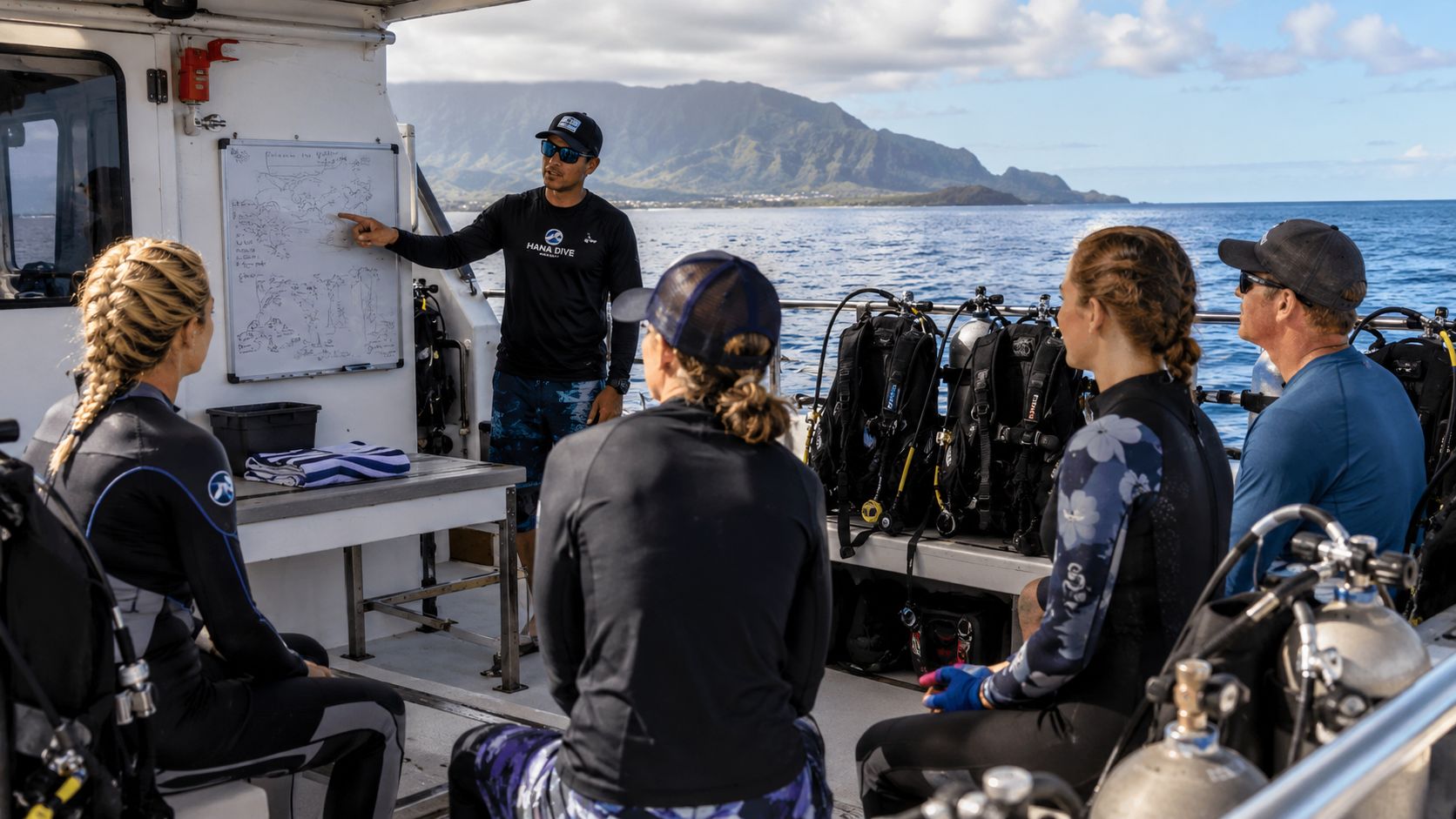
You feel the operator choice fast in Kona. It shows up in the first briefing, in how the crew checks your experience, in whether the site matches the ocean that day, and in how calm the boat feels when someone is slow on setup or uneasy on the back roll.
A good crew does more than take you to a pretty reef. They control pace, keep the group tight enough to manage, and make sensible calls when conditions shift. In Hawaii, that matters more than glossy photos or a long list of tour names.
That also shapes safety. Diving here is generally safe with a disciplined operation, clear briefings, and divers who stay within their training, as discussed in this article on scuba diving safety in Hawaii.
What to look for before you book
Start with how the operator talks about the day. If the staff can explain likely conditions, entry style, current, depth range, and backup plans in plain language, that is usually a good sign. If every answer sounds like sales copy, keep looking.
Use this filter:
- Clear safety communication: Briefings should cover the actual site, not a generic script.
- Sensible group size: Newer divers do better when guides can see and manage the group.
- Boat design and crew workflow: Stable benches, straightforward exits, and unhurried gear setup make a real difference, especially for older divers or anyone returning after a long break.
- Site selection based on conditions: Strong operators change plans when surge, current, or visibility say it is the right call.
- Instruction mindset: Operators who teach regularly tend to be better at spotting stress early and correcting small problems before they turn into bigger ones.
If you want a side by side starting point, this rundown of top Kona diving companies for different trip styles is useful.
Questions worth asking
Ask questions that show how they run the boat, not just what animals you might see.
Good ones include:
- How are divers grouped underwater?
- Do you separate newly certified divers from advanced divers when needed?
- What do you do if a guest is rusty, overweighted, or anxious?
- How often do you change sites because of conditions?
- How much in-water guidance should I expect on this specific trip?
- Is this charter built for certified divers only, or does it often mix students and fun divers?
Those answers tell you a lot. In Kona, I would rather hear an operator say, "We may change the site in the morning if the swell wraps in," than promise the same marquee spot every day. Flexibility usually means judgment.
One example in Kona is Kona Honu Divers, which offers guided reef dives, manta dives, black water dives, and training. The useful question is not whether an operator offers a lot. It is whether those trips fit your certification, comfort in current, and the kind of supervision you want on vacation.
Green flags and red flags
| Green flag | Why it matters | Red flag |
|---|---|---|
| Crew asks about recent experience | They are trying to place you on the right boat and site | They assume your certification card answers everything |
| Briefings include site specific hazards | Lava structure, surge, and entries vary a lot in Kona | Same briefing for every dive |
| Site choice changes with the ocean | Good operators work with conditions instead of forcing the plan | “We always go there” |
| Crew notices small problems early | Weighting, equalization trouble, and gas use are easier to fix at the start | Crew ignores issues until the diver is stressed |
| Staff answers direct questions without defensiveness | Calm, honest communication usually carries into the water | Vague answers, rushed check-in, annoyance at basic concerns |
The right operator is the one that runs a day you can enjoy without feeling pushed past your training or comfort level.
Sample Itinerary and Frequently Asked Questions
You land in Kona, sleep poorly because of the time change, and feel tempted to book every high-profile dive on day one. That is how divers turn a great trip into a tiring one. A better plan is to build the week so your first dives are simple, your signature dives land after you have your weighting and buoyancy dialed in, and your last day leaves enough cushion before flying.
That pacing matters in Kona. The diving is friendly for many certified divers, but the experience improves fast when you stop treating each day like a checklist and start matching the schedule to how your body and skills feel in the water.
A smart five-day Kona plan
Day 1
Book a morning two-tank reef charter. Use this day to settle your weighting, confirm that all rental gear fits, and get used to Kona's lava topography, entries, and sight lines underwater. If anything feels off, mask fit, trim, air use, equalization, this is the easiest day to fix it.
Day 2
Stay with a daytime boat dive and choose sites with structure. Arches, swim-throughs, and lava fingers give you a better feel for how Hawaiian reef diving flows. New arrivals often chase big-animal sightings too early. I would rather see a diver get comfortable first, then enjoy the marquee dives without task loading.
Day 3
Do the manta night dive. By the third day, divers are usually calmer in the water, better weighted, and less distracted by basic gear management. That makes the whole experience better. You spend less energy on yourself and more on the show above the lights.
Day 4
Take the day off from diving. Really off. Eat, hydrate, walk around town, and let the fatigue come down. Kona rewards divers who leave room in the schedule instead of stuffing every weather window with another boat ride.
Day 5
Pick the finale that fits your actual ability, not the story you want to tell at dinner. If you are experienced, comfortable in open-ocean conditions, and have listened carefully to the briefing all week, this is a good day for black water or a longer-range advanced trip. If not, finish with another daytime reef charter. A relaxed final dive day usually beats an overreaching one.
Questions divers usually ask at the last minute
What's the best time of year to dive
Kona dives well year-round. Summer often brings calmer seas and easy visibility. Winter can be excellent too, but weather changes faster, and offshore plans get moved around more often. Whale season adds a lot topside, and hearing whales underwater on a calm dive is one of those Kona details generic travel guides tend to miss.
Can I dive if I wear glasses
Yes. Contacts work for many divers, and a prescription mask is better if you already know you dislike contacts in saltwater. Handle that before the trip. A leaking or blurry mask can ruin a simple dive faster than any marine life issue.
Are there sharks in Hawaii
Yes. Seeing one is usually a memorable part of the dive, not a problem. Reef sharks are part of a healthy system. Good habits matter more than fear. Stay with the group, follow the briefing, and keep your movements calm and predictable.
How much should I budget for diving
Plan for Hawaii boat diving to be priced higher than many mainland destinations. A standard two-tank charter often includes tanks and weights, while rental gear, nitrox, and specialty dives may cost extra. Manta night dives and black water trips usually sit above a basic daytime reef charter, so check the full price, not just the base seat.
How long are typical boat dives
It depends on the operator, the site, and the day's conditions. Some Kona charters allow a generous in-water profile rather than rushing everyone back to the boat on a tight timer. For example, Big Island Divers notes on its Kona local two-tank scuba dive page that divers may stay down until 700 psi or 60 minutes, whichever comes first. That kind of policy matters if you value a calm dive over a fast turn.
Check AvailabilityIf you want a trip built around Kona diving, start by comparing the schedule and trip types at Kona Honu Divers. It gives you a straightforward way to line up daytime reef dives, manta nights, black water outings, and training before you book the rest of the vacation.