
You're probably doing what a lot of divers do before booking Hawaii. You're scrolling photos of blue water, turtles, lava rock, mantas, and coral, trying to figure out whether the diving is world-class or just marketed that way.
Here's the straight answer. Scuba diving in Hawaii is absolutely worth doing, but not for the reason many first-timers expect. If you're coming for endless, soft, coral-covered reef walls like Fiji or the Maldives, you're setting yourself up for the wrong trip. If you're coming for volcanic structure, clear water, dramatic topography, pelagic encounters, and night dives you won't forget, Hawaii delivers in a big way.
That distinction matters. It helps you book the right island, the right coast, and the right dives instead of chasing a fantasy version of Hawaii that doesn't match what's underwater.
An Introduction to Hawaii's Unique Underwater World
A Hawaii dive trip often begins with a postcard in mind. Divers might expect sprawling coral gardens, saturated reef color, and easy tropical diving that looks the same everywhere across the Pacific.
That's the wrong frame.
Most content oversells Hawaii as a top coral reef destination, but diver discussions repeatedly point out the same reality: Hawaii doesn't offer the huge coral reef systems people associate with places like Fiji. What it does offer is rocky volcanic topography, encrusting corals, lava formations, and standout night diving, which is where the destination becomes special, as noted in this diver discussion about diving in Hawaii.
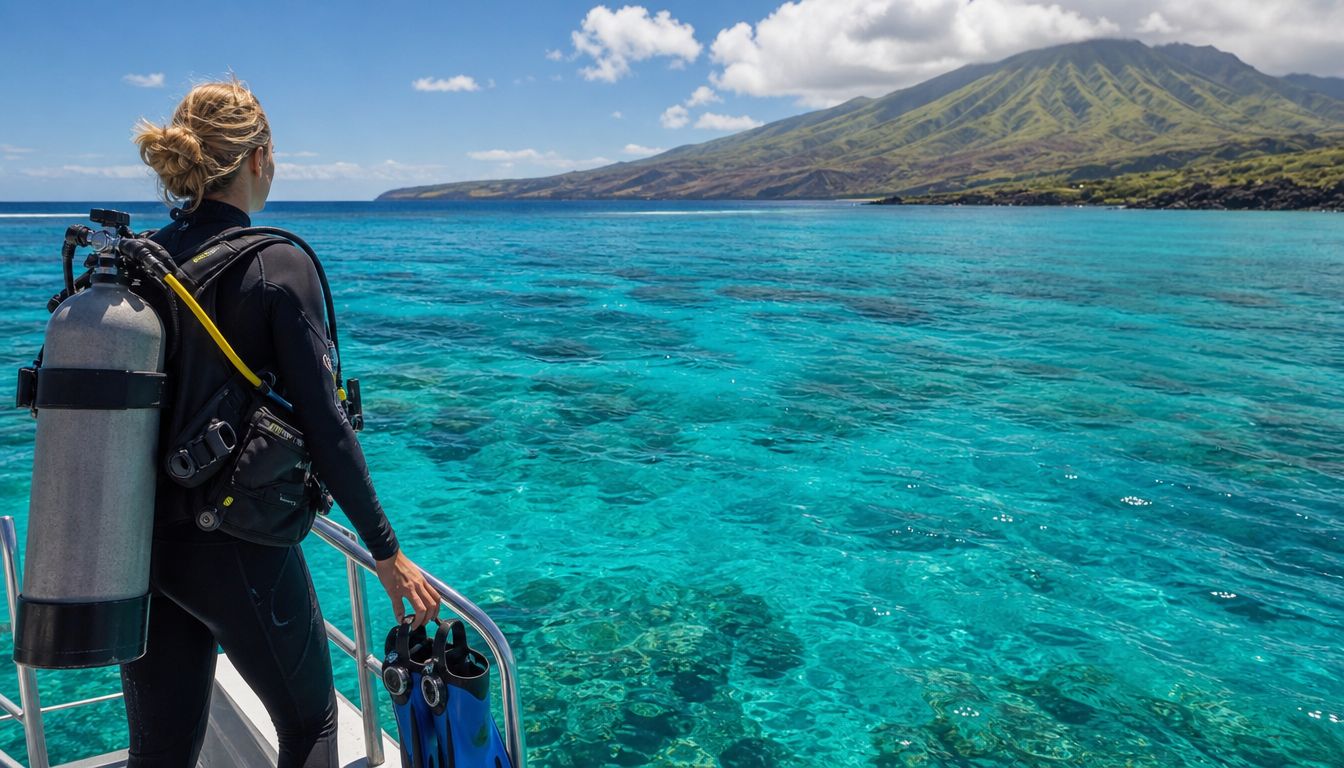
What Hawaii does better than reef-hype destinations
Hawaii's underwater world is shaped by volcanoes first, coral second. That changes the whole feel of a dive.
You're not dropping onto endless reef flats. You're moving along lava fingers, arches, ledges, cracks, bowls, and old flows that turned into habitat over time. The scenery feels geologic. Older. More dramatic.
That's why experienced divers often leave Hawaii talking about:
- Lava structure: swim-throughs, contours, shelves, and terrain that feels sculpted rather than grown
- Big-animal moments: manta encounters, turtles, and the chance for more open-ocean style excitement
- Night diving: the kind of dives that become the centerpiece of the trip, not an optional add-on
- Contrast: black lava, blue water, shafts of light, and fish life tucked into hard volcanic shape
Hawaii isn't a lesser coral destination. It's a different kind of destination.
Manage your expectations and you'll enjoy it more
If you show up demanding coral abundance, you may spend the week comparing Hawaii to somewhere else.
If you show up ready for clear water, lava terrain, endemic marine life, and signature night dives, you'll understand why so many divers come back. Hawaii rewards the diver who wants character, not just color.
That's especially true on the Big Island. Kona is where the islands stop being a generic bucket-list idea and become a proper dive trip.
Why Kona is Hawaii's Premier Scuba Diving Destination
You book a Hawaii dive trip hoping for warm water, clear conditions, and dives that feel different from the Caribbean or Southeast Asia. Kona is the coast that delivers that with the least guesswork.
The reason is simple. The west side of the Big Island sits in the lee of massive volcanoes, so it usually gets calmer water and cleaner visibility than the windward coasts. That matters more than glossy photos. A protected coast gives you more usable dive days, easier entries, and a better chance of spending your trip underwater instead of watching whitecaps from shore.
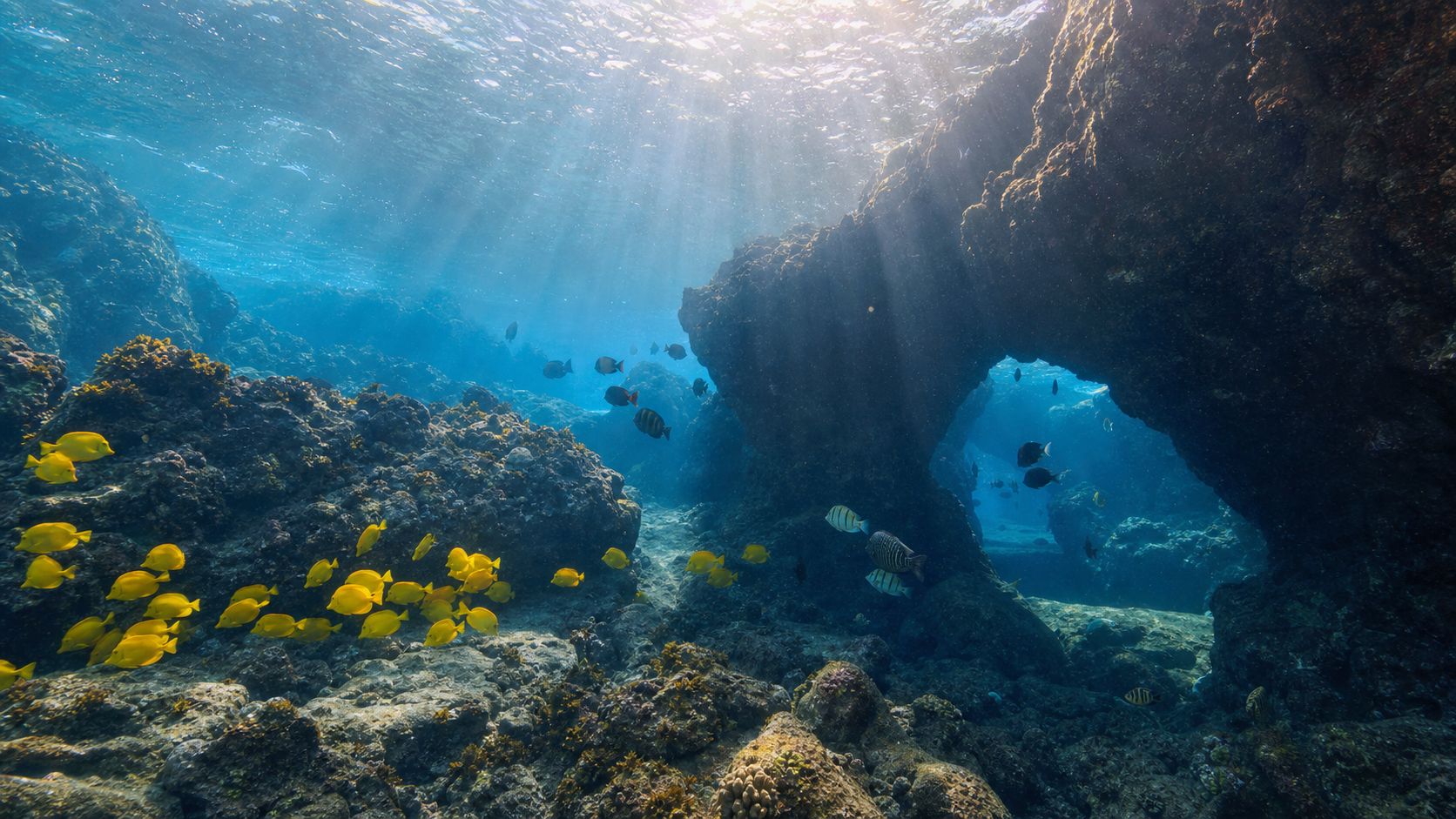
Why the west side wins
Divers who treat every Hawaiian island as basically the same usually pick based on airfare or hotel deals. That's a mistake.
Kona gives you the most dependable conditions and the strongest range of dives in one area. You can do calm daytime lava dives, a manta night dive, and a pelagic blackwater dive from the same base. Few destinations offer that mix without long transfers, tricky scheduling, or a lot of luck with weather.
That is the reason Kona leads Hawaii for scuba. It is not because it has the most lush coral in the state. It's because the diving has more character, more consistency, and more signature experiences.
A few reasons experienced divers keep choosing Kona:
- Protected coastline: better odds of comfortable boat rides and workable conditions
- Clearer water more often: lava structure, ledges, and blue-water drop-offs show far better when visibility cooperates
- Stronger variety: beginner-friendly sites and advanced bucket-list dives are close together
- Night diving that matters: manta and blackwater dives are not side attractions here. They are core reasons to come
Better trip planning, better diving
Kona also makes trip planning easier. If you're traveling with mixed experience levels, the coast gives newer divers a fair shot at relaxed ocean dives while still giving advanced divers something worth getting excited about.
That balance is rare.
Plenty of destinations work well for beginners or challenge seasoned divers. Kona does both, and it does it without pretending the main draw is wall-to-wall coral. If you want a closer look at the coast's real appeal, read this guide on what makes diving in Kona unique.
Spend for the right operation
Kona is not the place to bargain hunt for the cheapest seat on a boat.
Choose the operator that runs tight briefings, keeps groups under control, and knows how to match divers to the right sites. That matters on every Hawaii trip, but especially in Kona, where the headline dives reward good timing, good boat handling, and crews who know the water well. Kona Honu Divers has built its reputation around exactly that approach.
If your goal is to get the strongest overall scuba diving Hawaii trip, pick Kona first. Then pick an operator that knows how to show you the coast beyond the postcard version.
Hawaii's Signature Dives You Cannot Miss
If you come to Hawaii and only do basic daytime reef dives, you're missing the point.
The primary argument for scuba diving Hawaii isn't that the daytime diving is bad. It's that the most unforgettable experiences happen after dark. That's where Hawaii separates itself from a lot of tropical destinations.
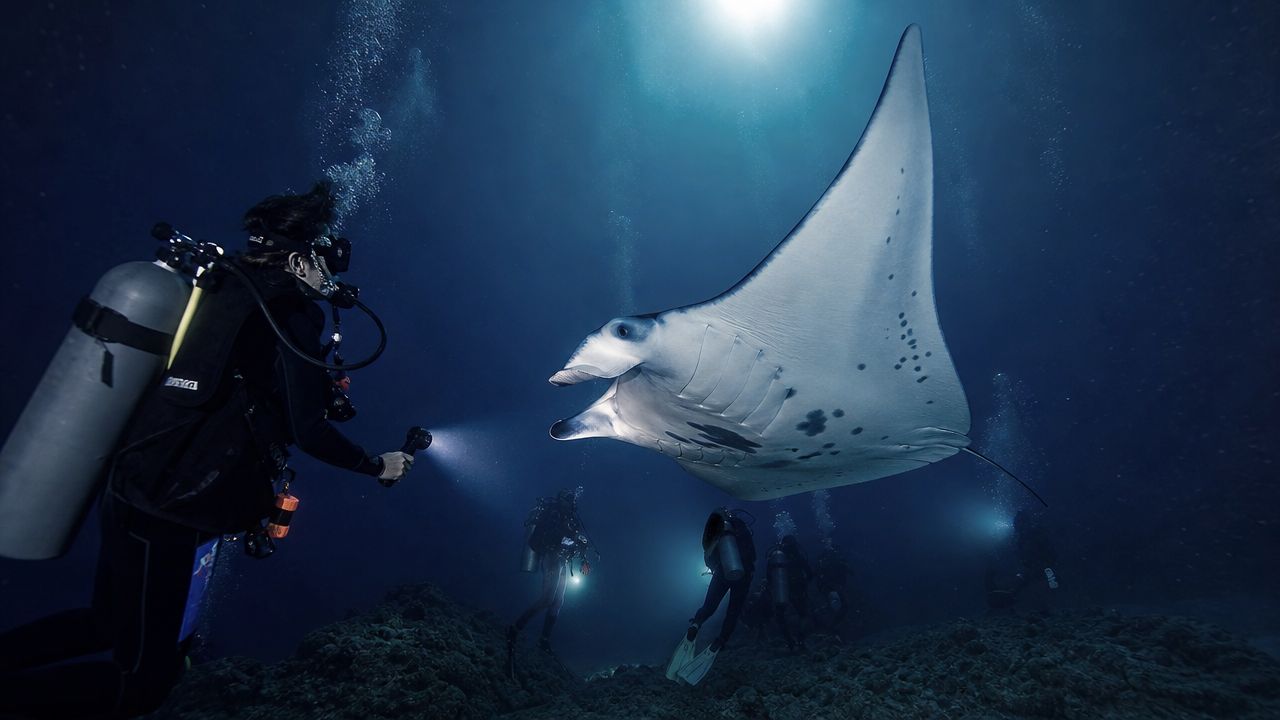
The manta ray night dive
This is the dive people talk about for years.
You descend after sunset, settle on the bottom, aim your light upward, and wait while plankton gathers in the beams. Then the mantas arrive. They bank, roll, circle, and sweep overhead with a kind of calm precision that doesn't look real the first time you see it.
In Kona, these manta rays can have wingspans over 15 feet, and the dive is typically conducted near 12 to 15 meters, which is one reason certification matters. The dive exceeds the 12 meter limit for PADI Discover Scuba and requires low-light control and solid buoyancy, as explained in this breakdown of why non-certified divers can't do the manta night dive.
Garden Eel Cove is the site I'd point divers toward. It's the stronger choice because the location is more protected, the viewing layout works better, and the surrounding reef is better suited to the overall experience. If you're booking this dive, don't treat all manta trips as equal. Site choice changes everything.
You can compare details and book a spot through this Kona manta ray night dive tour. If you want a quick read on local favorites, this page on the best dive in Kona points in the same direction.
The blackwater dive
The blackwater dive isn't just another night dive. It's a completely different category of experience.
You head offshore at night, suspend in deep open ocean, and watch the vertical migration unfold beneath and around you. Strange larval creatures, transparent hunters, gelatinous drifters, and animals most divers never see in their lives rise toward the surface under cover of darkness.
There's no reef to orient to. No lava wall beside you. Just darkness, tethered structure, your instruments, your light, and a stream of life moving up from the deep.
That's why the blackwater dive gets under people's skin. It feels exploratory. It feels wild. It also isn't a dive for someone who wants a casual tourist checkbox.
If that's your kind of diving, take a look at this Kona blackwater night dive tour.
Some destinations are about pretty reef scenes. Hawaii earns its reputation with experiences that feel impossible anywhere else.
Which one should you prioritize
If you only have room for one signature dive, pick the manta dive first. It's iconic for a reason, and it has broad appeal even for divers who don't usually chase specialty experiences.
If you have the experience, comfort level, and schedule for two big nights, do both:
- Choose manta first if you want a famous, structured, highly visual encounter
- Choose blackwater first if you're an experienced diver who values unusual marine life over spectacle
- Do both if you want to understand what makes Kona special underwater
And if you're a newer diver, don't force a specialty profile you're not ready for. Hawaii rewards patience. A clean, controlled dive is always better than an ambitious one you spend enduring.
Planning Your Dive Trip What to Know Before You Go
You land in Hawaii expecting a Caribbean-style coral showcase, then the first thing you see underwater is lava rock, structure, and blue water. Good. Set that expectation now and you'll plan the trip the right way.
Hawaii is not a coral-paradise destination in the classic sense. The reefs are volcanic, the topography is dramatic, and the primary reward is in the encounters and the style of diving. If you want the strongest version of this trip, build it around Kona and book the experiences that only make sense here.
When to come
You can dive Hawaii year-round, but your trip gets easier if you choose your season with some discipline.
Summer usually gives you calmer seas and a more predictable week, especially if you want to stack several boat dives and add night diving. Winter can be excellent too, but it demands flexibility. Boats can shuffle schedules, surge can pick up, and the right attitude matters.
If your priority is smooth logistics, come in summer. If your schedule only allows winter, leave space in the itinerary and avoid packing every day too tightly.
What to pack for a real dive trip
Pack for repetitive boat diving, not for a resort vacation with one token checkout dive.
Bring:
- Your certification card and logbook: digital is fine if you can pull it up fast
- Dive computer: rent one only if you have to
- Exposure protection you know you like: Hawaiian water is warm, but multiple dives and long boat rides still chill people
- Reef-safe sunscreen: put it on before boarding or well before you gear up
- Dry bag and spare towel: simple gear control makes boat days better
- Reusable water bottle: hydration matters more than another shirt in your bag
If you want a realistic budget before you book, read this breakdown of how expensive scuba diving in Hawaii can be.
Seasickness can ruin a good dive day
Strong divers get seasick all the time. Pride does not help.
Handle it before the boat leaves. Eat light, drink water, stay off your phone in the harbor, and look at the horizon if the ride gets sloppy. If you already know you're prone to motion sickness, bring your fix and use it early.
Useful options people commonly pack include the Ship-EEZ Seasickness Patch, Dramamine pills, Bonine pills, Sea Band wristbands, and Ginger chews.
Prevention works better than trying to recover once you're queasy in full gear.
Book your must-do dives first
Start with the dives that justify the flight.
If manta or blackwater is the reason you're coming to the Big Island, lock those in first and build the rest of the week around them. Day boats are easier to fit in later. The rare mistake is spending days on ordinary dives, then finding out the signature nights are full or weathered out.
That approach also keeps your expectations in the right place. You are not coming to Hawaii for endless coral gardens. You are coming for lava formations, pelagics, and signature dives that few destinations can match. Kona does that better than anywhere else in the state, which is why experienced divers plan around those slots first and fill the gaps after.
Certification Skills and Safety in Hawaiian Waters
You drop in expecting an easy tropical cruise because the water is warm and clear. Then the surge starts pushing you off the lava, your trim falls apart, and the dive turns into work.
That is the fundamental Hawaii adjustment. Visitors who show up expecting a soft coral-paradise profile often misread these islands. Hawaii is volcanic first. The reef is not the headline. Control is. If your buoyancy, awareness, and comfort in moving water are solid, Hawaii rewards you with dramatic topography and signature dives that are hard to match anywhere. If those skills are shaky, the ocean exposes it fast.
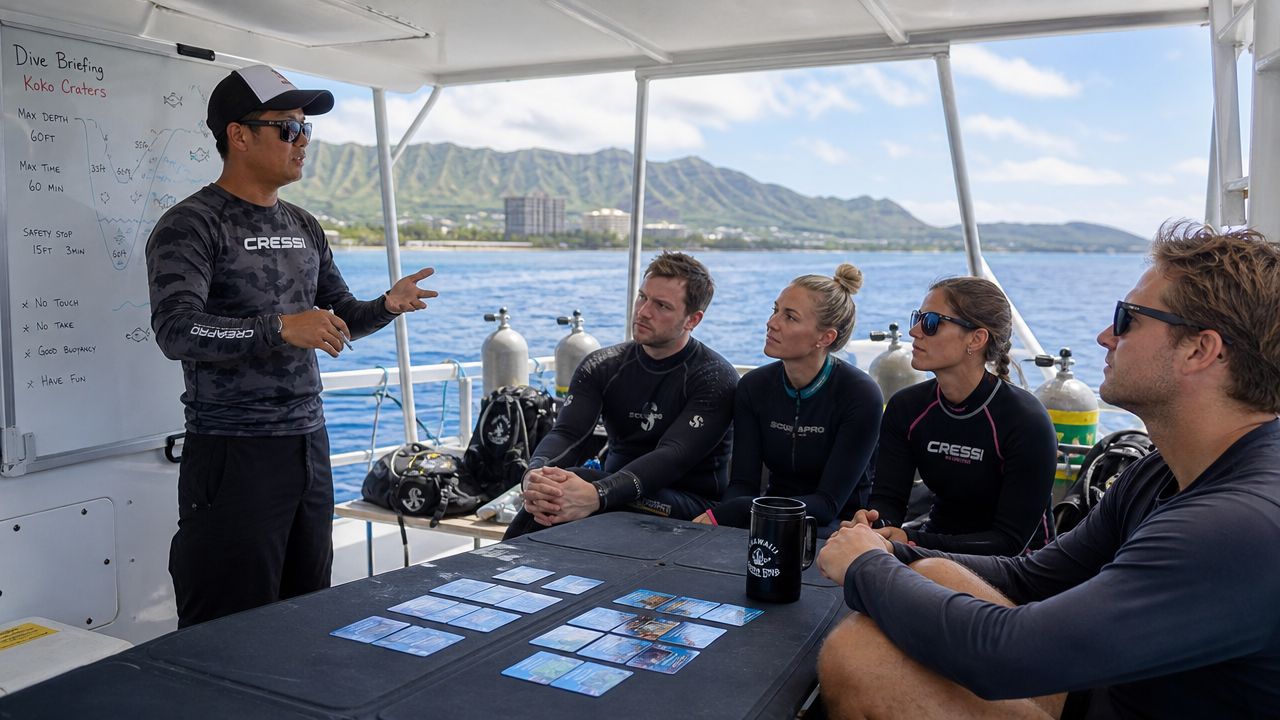
What certification level you actually need
An Open Water certification covers a lot of Hawaii diving, especially straightforward daytime boat dives along the Kona coast.
Specialty dives demand more than a card in your wallet. The manta night dive calls for calm positioning, precise buoyancy, and the discipline to stay controlled in darkness around lights, other divers, and wildlife. Some operators also set higher experience standards for that reason, as explained in this article on experience requirements for Big Island dives.
If you are not certified yet, get trained properly before you build a trip around Hawaii's signature dives. A solid Open Water scuba certification course on the Big Island gives you the base skills you need here.
The skills that matter in Hawaiian water
Hawaii punishes sloppy fundamentals. The two problems that catch visitors are surge and current.
You do not need a dramatic statistic to understand the point. Seasonal swell and local conditions can turn a simple site into a task-loading dive, especially around lava rock, ledges, and entries where surge is easy to underestimate. According to Hawaii Eco Divers in its beginner guide to scuba diving in Hawaii, winter conditions on the Kona coast can bring stronger surge that new divers should take seriously.
Three skills matter more here than people expect:
- Neutral buoyancy: volcanic bottom structure is unforgiving, and bouncing off lava or reef is both unsafe and damaging
- Clean finning and trim: bad body position turns mild surge into constant correction
- Task control: if adding a camera, light, or navigation responsibility makes you scatterbrained, your site selection should stay conservative
The state's voluntary recreational scuba standard for West Hawaii also puts buoyancy and diver supervision front and center, including pre-dive buoyancy checks, weight checks, continuous observation, and neutral buoyancy practices to protect reef and bottom habitat, as outlined in the West Hawaii recreational scuba standard.
Local rules and judgment calls
Two safety points deserve more respect than they usually get.
- Use a dive flag: Hawaii requires a dive flag for scuba and freediving activity under state rules, as noted in this Hawaii recreational diving safety reminder
- Be honest about your real comfort zone: the right call is sometimes skipping a dive, choosing the easier site, or sitting out the advanced profile
That second point matters most in Kona, because the dives people remember forever here are not the ones with the most coral. They are the ones that are uniquely Hawaiian. Manta. Blackwater. Lava tubes and ledges with real structure and life around them. Those dives are worth planning around, but only if your skills are ready for them.
Good divers do not chase every drop. They choose the dives they can do well.
Choosing Your Dive Operator The Kona Honu Divers Difference
You can book the wrong operator in Kona and still see fish. You will not get the same trip.
Hawaii rewards good decision-making underwater, and that starts on the boat. The reefs here are volcanic, the conditions can change, and the signature dives people fly here for often happen at night or in blue water. That means operator choice affects more than comfort. It affects safety, site selection, pacing, and whether the dive matches your skill level.
What to look for before you book
Start with fit, not marketing.
If a shop mainly sells Hawaii as a coral postcard, I would keep looking. Kona is worth diving because of the lava structure, the visibility, the pelagic encounters, the manta night dive, and the blackwater experience. A good operator says that plainly and helps you book the dives that make Hawaii special.
Use a short checklist:
- Safety standards: clear briefings, honest site calls, and no pressure to do a profile you are not ready for
- Group size: smaller groups make supervision better and the dive calmer
- Boat setup: easy entries, sensible tank layout, shade, and enough room to gear up without bumping into everyone
- Gear quality: equipment should be clean, maintained, and fitted correctly
- Trip focus: some boats are built for mixed sightseeing crowds, others are built for divers who came to dive
Why many divers choose Kona Honu Divers
Kona Honu Divers makes sense for divers who want the trip built around the underwater experience. The operation runs day charters, manta dives, blackwater dives, courses, and rentals, with small groups, purpose-built boats, maintained gear, and nitrox for qualified divers. More important, the crew understands how to match divers to the right dives instead of selling every seat the same way.
That matters in Hawaii.
If your goal is to log an easy reef dive and call it good, you have options. If your goal is to come home talking about mantas over your head at night, a blackwater drift in the open ocean, or lava formations that look unmistakably Hawaiian, book with a crew that does those dives well and does them regularly.
My advice on making the final choice
Call before you book. Ask direct questions.
Ask which dives fit your certification and recent experience. Ask how they handle rusty divers. Ask how many divers are in each guide group. Ask whether the boat suits photographers, newer divers, or people booking advanced profiles. A good operator answers fast and answers clearly.
If you are still sorting out logistics, use this guide on where divers should stay on the Big Island and keep your base close to the harbor. Less driving means easier mornings and better dive days.
Your Complete Hawaii Adventure Starts Here
The nice thing about a Big Island dive trip is that it doesn't have to be only for divers. Families, mixed-skill groups, and non-diving partners can still have a strong Kona vacation without getting dragged through a schedule that only works for one person.
If someone in your group doesn't dive, snorkeling is the obvious add-on. It gives them access to the same clear water and marine life without the training and logistics that scuba requires. That makes Kona a practical trip for couples and families, not just dedicated dive buddies.
The key takeaway
The smartest way to think about scuba diving Hawaii is this:
- Hawaii is not the place to chase fantasy coral expectations
- Hawaii is the place to dive volcanic terrain, clear blue water, and signature night dives
- Kona is the coast that gives you the strongest odds of a smooth, rewarding dive week
- Trip quality depends heavily on booking the right dives with the right crew
You don't need to oversell Hawaii to love it. You just need to understand what it does well.
Build the trip around the right base
Stay close to your diving. Don't waste your vacation commuting across the island every morning if most of your diving is out of Kona. This guide on where divers should stay on the Big Island is a useful starting point when you're choosing your base.
And book with intention. Put manta and blackwater at the center if those are your priorities. Add daytime dives around them. Leave margin in the schedule for weather, recovery, and enjoying Hawaii above the surface too.
The people who have the best dive trips here usually aren't the ones trying to do everything. They're the ones who understand what makes the island special and lean into it.
If you're ready to stop comparing Hawaii to somewhere else and start planning the dive trip that fits the Big Island, take a look at Kona Honu Divers. They offer the core experiences most divers come to Kona for, including reef dives, manta trips, blackwater dives, and training, with the kind of structure that helps both newer and experienced divers get more out of the week.