
Scuba diving on the Big Island is, in a word, epic. It’s an underwater experience shaped by raw volcanic power, offering crystal-clear water and a mind-blowing variety of marine life. The Kona coast, sheltered and calm, is a year-round playground for divers of every stripe, from those taking their first breath underwater to salty veterans. This is a place where you can explore ancient lava tubes, drift alongside sea turtles, and witness underwater phenomena you literally can't find anywhere else on the planet.
Why the Big Island Is a Diver’s Paradise
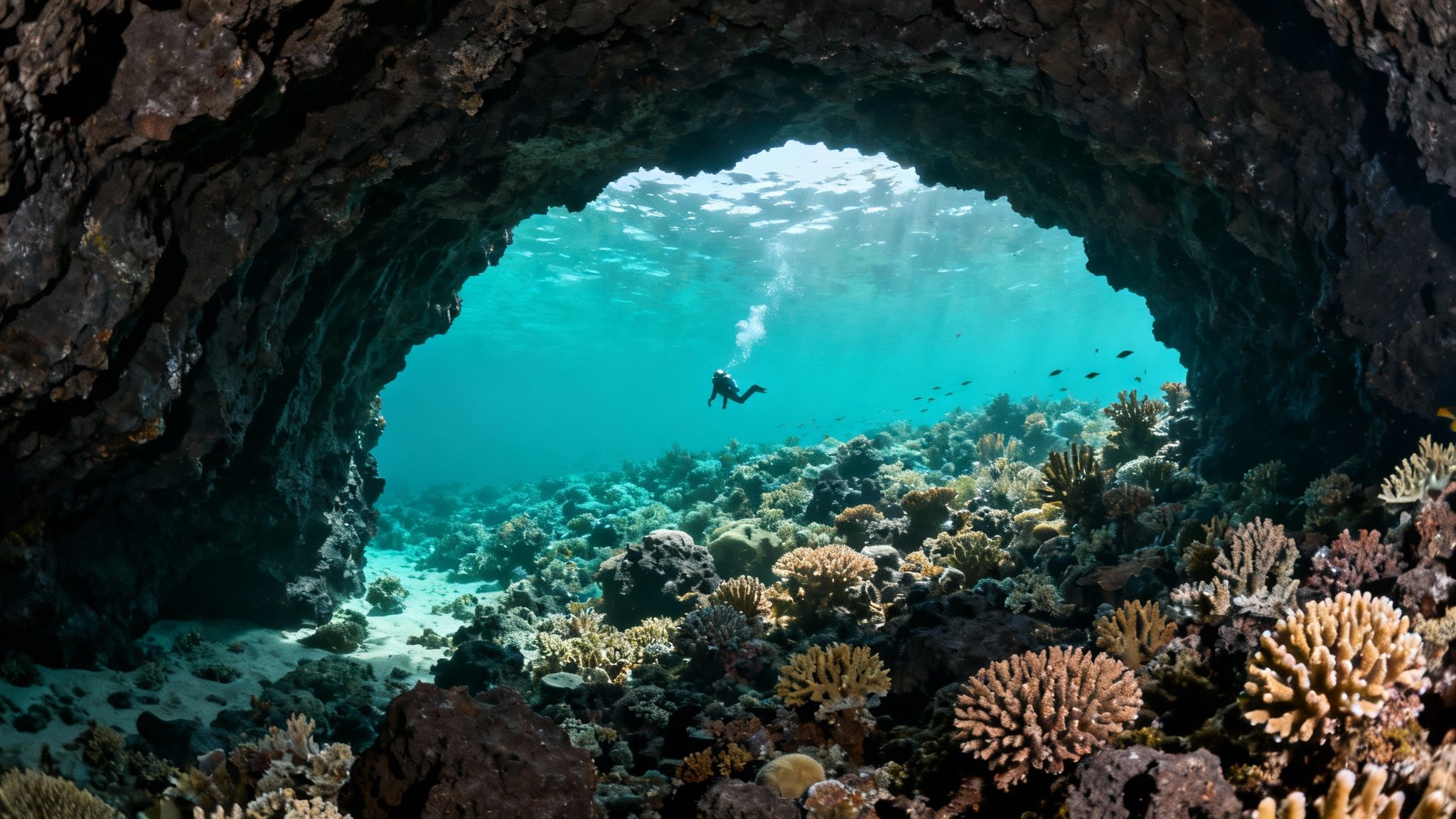
This isn't just another pretty spot in the tropics; the Big Island is a completely unique underwater frontier forged by volcanoes. The island's fiery geology has sculpted a stunning subaquatic world of lava tubes, intricate archways, and breathtaking drop-offs that make the perfect backdrop for any dive. It's this dynamic environment that supports such an incredible variety of sea creatures.
The ecosystem here is home to roughly 1,100 distinct marine species. What’s really special is that 129 of them are endemic—they exist only in the Hawaiian Island chain. This rich biodiversity is packed along the Kona coast, where you might find anything from white-tip reef sharks snoozing in caves to eagle rays soaring through volcanic archways. You can dive deeper into why the Big Island is so good for scuba diving and what makes its marine environment a world-class destination.
Let's take a quick look at what makes diving here so special.
Big Island Diving Highlights at a Glance
| Feature | Description |
|---|---|
| Volcanic Topography | Explore a dramatic underwater world of lava tubes, caverns, and massive archways created by ancient lava flows. |
| Incredible Marine Life | Encounter a rich diversity of life, including endemic species, green sea turtles, spinner dolphins, and, of course, manta rays. |
| Exceptional Clarity | The water is famously clear, with visibility often exceeding 100 feet, making it a paradise for underwater photographers and sightseers. |
| Calm Conditions | The Kona coast is shielded from trade winds by massive volcanoes, resulting in calm, protected waters that are perfect for diving nearly every day of the year. |
| Unique Dives | Home to world-famous, bucket-list experiences like the Manta Ray Night Dive and the thrilling Kona Blackwater Dive, offering encounters you can't get anywhere else. |
These features come together to create an underwater experience that's truly unforgettable.
An Underwater World for Everyone
One of the best things about diving on the Big Island is just how accessible it is. The colossal volcanoes, Mauna Loa and Hualalai, act as a natural shield for the Kona coast, blocking the prevailing trade winds and leaving the waters consistently calm and clear. This protection makes it a fantastic spot for divers of all backgrounds to get in the water.
- For Beginners: The sheltered bays provide gentle, forgiving conditions—perfect for learning the ropes and building confidence.
- For Experienced Divers: Deeper sites, lava tube penetrations, and exciting drift dives offer more than enough to keep seasoned pros engaged.
- For Photographers: With visibility that can easily top 100 feet, you have the perfect canvas to capture the vibrant coral gardens and teeming fish life.
The blend of unique underwater landscapes and sheltered conditions creates a playground unlike any other. Whether you're navigating a lava arch or watching a green sea turtle at a cleaning station, every single dive promises a new adventure.
Bucket-List Underwater Encounters
Beyond the gorgeous reefs, the Big Island is home to signature dives that are truly once-in-a-lifetime. These are the experiences people travel across the globe for. The world-renowned Manta Ray Night Dive is a surreal, underwater ballet where these gentle giants swoop and glide through illuminated water to feed on plankton.
And for those who want a completely different kind of thrill, the Kona Blackwater Dive takes you miles offshore into the deep ocean. You float in the dark, watching the nightly vertical migration of bizarre, bioluminescent creatures that rise from the abyss. It’s like a trip to another planet.
Exploring the Kona Coast Dive Sites
When you dream of scuba diving Big Island Hawaii, what you're really picturing is the Kona coast. This is the heart and soul of the island’s diving scene, and there’s a very good reason for that. The island's massive volcanoes, like Mauna Loa and Hualalai, act as a gigantic natural wall, blocking the gusty trade winds that batter the other side of the island.
This creates a diver's paradise. The leeward coast is blessed with water that's consistently calm, startlingly clear, and wonderfully warm. It means perfect conditions are the daily standard, not a lucky break. We're talking visibility that often punches past 100 feet, making every dive feel like you’re swimming in an IMAX theater.
This sheltered environment is also the perfect nursery for vibrant, delicate coral gardens to thrive. It's a sanctuary for a staggering amount of marine life, a place where underwater photographers get their "money shot" and new divers find their fins. The Kona coast isn't just a place to dive; it's a perfectly engineered natural aquarium.
Iconic Kona Dive Sites You Must Experience
While you could spend a lifetime exploring the dozens of dive sites here, a few are true legends that belong on every diver's bucket list. Each one tells a different story about the Big Island’s volcanic past and incredible biodiversity.
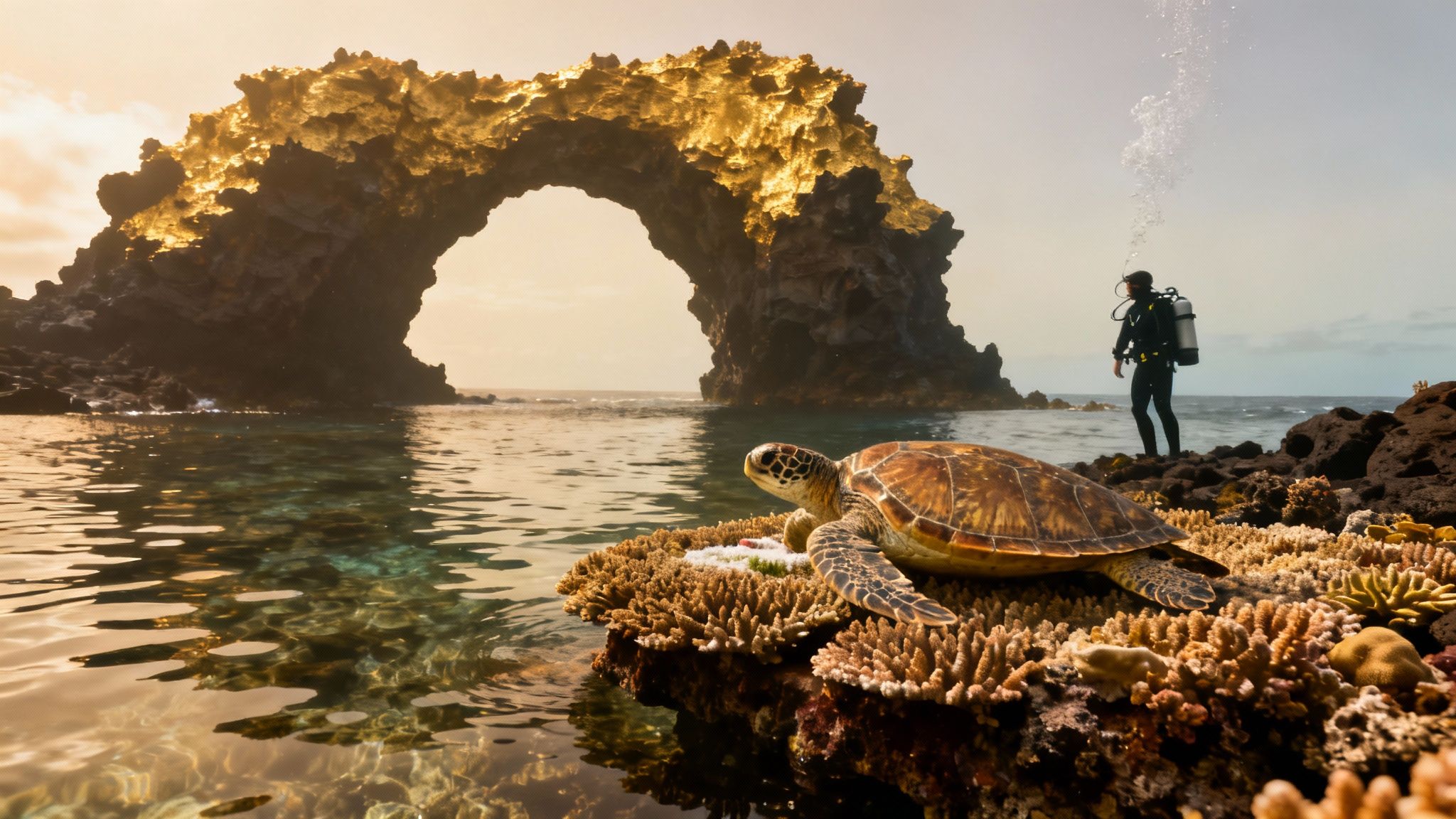
- Golden Arches: Just like the name suggests, this spot is famous for its incredible lava formations, creating a series of dramatic archways you can actually swim through. The way the sunlight streams through these ancient lava tubes is absolutely unreal, often lighting up huge schools of yellow tangs that hang out there.
- Turtle Pinnacle: This isn't just a place where you might see a turtle; it's a full-on "cleaning station" for Hawaiian green sea turtles, or honu. It's an amazing sight to see them patiently line up while surgeonfish pick algae and parasites off their shells. You get a front-row seat to one of nature's coolest symbiotic relationships.
- Suck 'Em Up Cavern: If you're looking for a little thrill, this is your spot. It's a massive lava tube where the ocean surge pushes water in and out. If you time it right, you get this fun, gentle "suck and blow" effect that feels like a bit of an amusement park ride. It’s a blast.
Of course, these are just a few highlights. The real magic is exploring them with a local guide who knows all their secrets and can show you things you'd never find on your own.
Meet the Local Residents Underwater
The underwater architecture is stunning, but the life that calls it home is what truly makes Kona special. Because the Hawaiian islands are so isolated, a huge number of fish species here are endemic—you literally can't find them anywhere else on Earth.
The reefs are a living art gallery of unique Hawaiian marine life. Keep an eye out for the Potter's angelfish with its brilliant orange and blue coloring, or the milletseed butterflyfish, which can swarm in massive, shimmering schools.
And it’s not just the small stuff. Encounters with big animals are practically a given. You'll see graceful eagle rays gliding through the deep blue, moray eels peeking out from their rocky homes, and even pods of spinner dolphins playing in the boat's wake on the way to the dive site. You never know what you'll see on any given dive.
Choosing Your Guide with Kona Honu Divers
To really get the most out of these world-class sites, you need to go with a top-notch crew. Kona Honu Divers has built its reputation as one of the best on the island for a reason. They're laser-focused on safety, passionate about protecting the reefs, and completely dedicated to making sure every diver has an amazing experience. Their guides know these sites like the back of their hand—from the best time of day to dive to where the rarest critters hide.
Their love for the ocean is infectious, and their commitment to conservation helps ensure these incredible spots will be around for future generations of divers. But don't just take our word for it; see what other divers have to say.
Whether you’re exploring lava tubes or hanging out with turtles, the right team changes everything. Ready to see the best of the Big Island underwater? Check out the full lineup of Kona diving tours and find the adventure that's right for you.
The World-Famous Manta Ray Night Dive
Get ready for what is, without a doubt, one of the most sublime and unforgettable underwater encounters you can have anywhere on the planet. The Manta Ray Night Dive isn't just another item to tick off a bucket list; it's the signature experience that truly defines scuba diving Big Island Hawaii. It’s an awe-inspiring spectacle that draws people from every corner of the globe, and for very good reason.
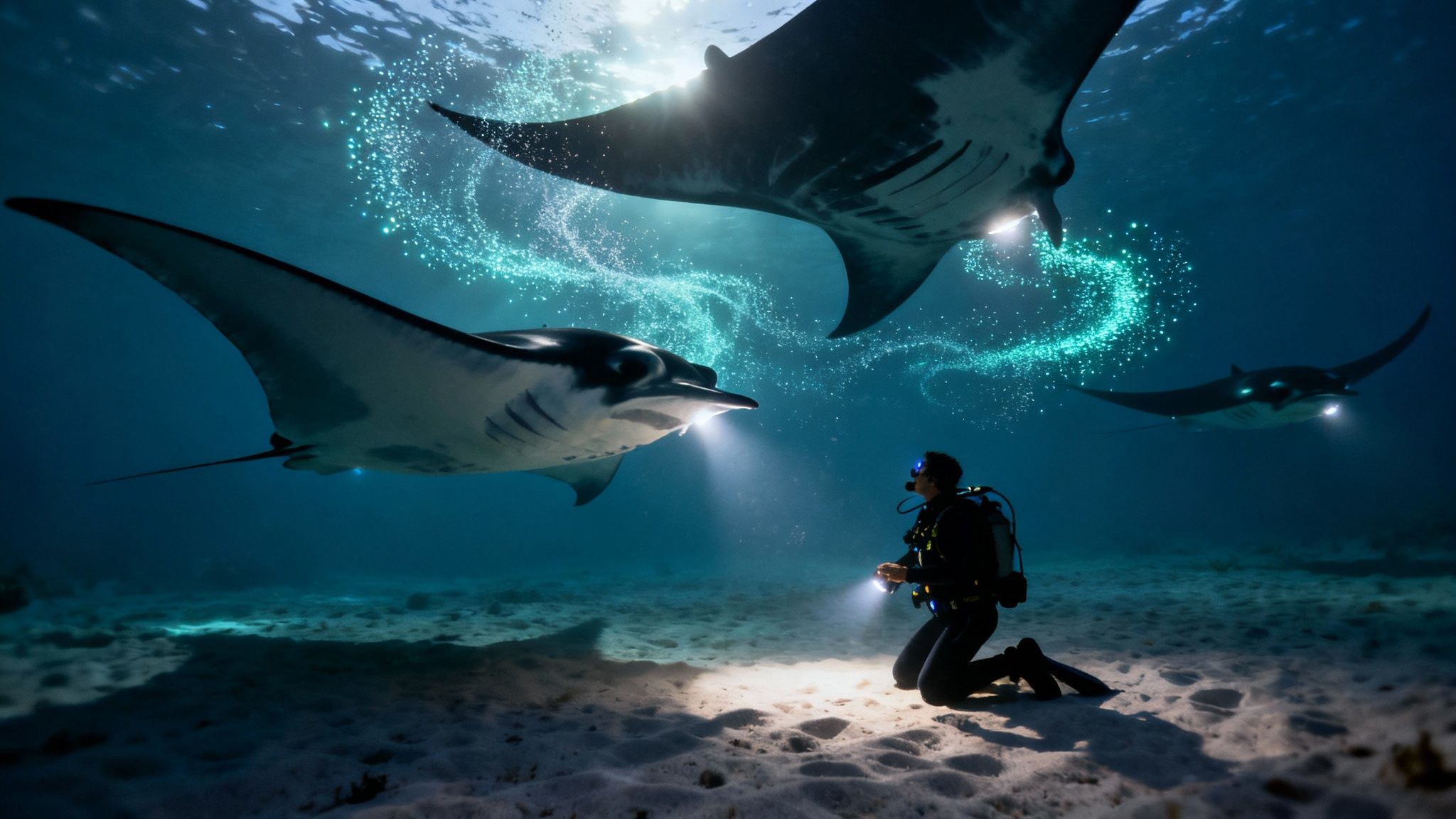
The idea behind this world-renowned dive is beautifully simple. After the sun goes down, we head out to a specific spot and set up powerful underwater lights on the ocean floor. Divers often call this setup "the campfire," because it creates a big, glowing beacon in the dark.
This light acts like a giant magnet for microscopic plankton, which is the manta rays' favorite meal. As the plankton swarms into dense, shimmering clouds under the lights, the real show begins. Drawn in by the promise of an all-you-can-eat buffet, the majestic manta rays emerge from the darkness. These gentle giants, with wingspans that can stretch up to an incredible 16 feet, perform a silent, weightless ballet, gliding and somersaulting through the light beams just inches above your head.
What to Expect on Your Dive
Picture this: you're kneeling on a sandy patch of the ocean floor, about 35 feet down. Your world shrinks to the cone of light from your dive torch and the massive glow from the central "campfire." Then, out of the dark, the first graceful silhouette appears. Soon, another joins, and then another, until you're surrounded by these magnificent creatures.
They swoop in with their mouths wide open, filtering the plankton-rich water. It's an experience that’s completely immersive and surprisingly peaceful. There’s no sound but the rhythm of your own breathing as you watch these massive animals move with a grace that seems to defy their size. To truly grasp the magic of this encounter, you can learn more about what the manta ray night dive is really like.
One of the most reliable spots for this dive is just off Keauhou Bay, right here near Kona. It’s an incredibly consistent site—we see mantas on 85-90% of nights. It's not uncommon for groups of 10 or more giant rays to show up for dinner.
Safe and Respectful Manta Encounters
The mantas you'll meet are our local residents, and the entire Kona dive community is deeply committed to their protection. It’s important to know that manta rays are covered in a protective mucus layer that acts as a shield against infection. Touching them can strip this coating and cause them serious harm.
Because of this, we strictly enforce a few simple guidelines to make sure every interaction is safe for both the divers and the mantas.
- Observe Only: The number one rule is to never, ever touch a manta ray. Just relax and let them control the encounter.
- Stay on the Bottom: We ask all divers to remain on or very near the sandy bottom. This keeps the water column clear for the mantas to swoop and glide freely.
- Light Positioning: You’ll be instructed to point your dive light straight up. This helps attract even more plankton to keep the "dinner table" full and the show going.
Following these simple rules is our shared responsibility. It ensures the long-term health of our local manta population, allowing this incredible experience to continue for generations to come. It’s a genuine privilege to be a guest in their underwater dining room.
Booking Your Unforgettable Manta Dive
Choosing the right dive operator is the key to having a fantastic and safe experience. You want to go with a team that has a deep respect for the marine environment and a long-standing reputation for excellent, safe service. For a trip you'll never forget, booking this dive with a seasoned operator like Kona Honu Divers is your best bet. We're known for our highly experienced guides and our unwavering commitment to manta ray conservation.
Our specialized tour is designed to give you the best possible encounter with these gentle giants. This is your chance to witness one of nature's most spectacular underwater shows—don't miss it. You can see available manta ray dive tours here.
Ready for the Deep? Advanced Diving Adventures
Sure, the colorful reefs and the manta ray ballet are mind-blowing for any diver. But if you’re an experienced diver, you know there’s always something more, something wilder just beyond the edge of the map. On the Big Island, that's where the real expedition begins. This is where scuba diving Big Island Hawaii goes from a scenic tour to a full-blown adventure into the deep blue.
Once you leave the standard reef profiles behind, you get to explore the raw, volcanic heart of the island. We're talking about dropping down over deep ledges that just fall away into the abyss or navigating intricate lava tube systems that test your buoyancy and nerve. These dives aren't for everyone—they demand sharp skills and a cool head—but the payoff is huge: untouched environments and encounters with animals that just don't hang out in the shallows.
The Kona Blackwater Dive: An Otherworldly Trip
Of all the advanced dives you can do here, one is in a league of its own. It's surreal, it's bizarre, and it's something you'll talk about for the rest of your life: the Kona Blackwater Dive.
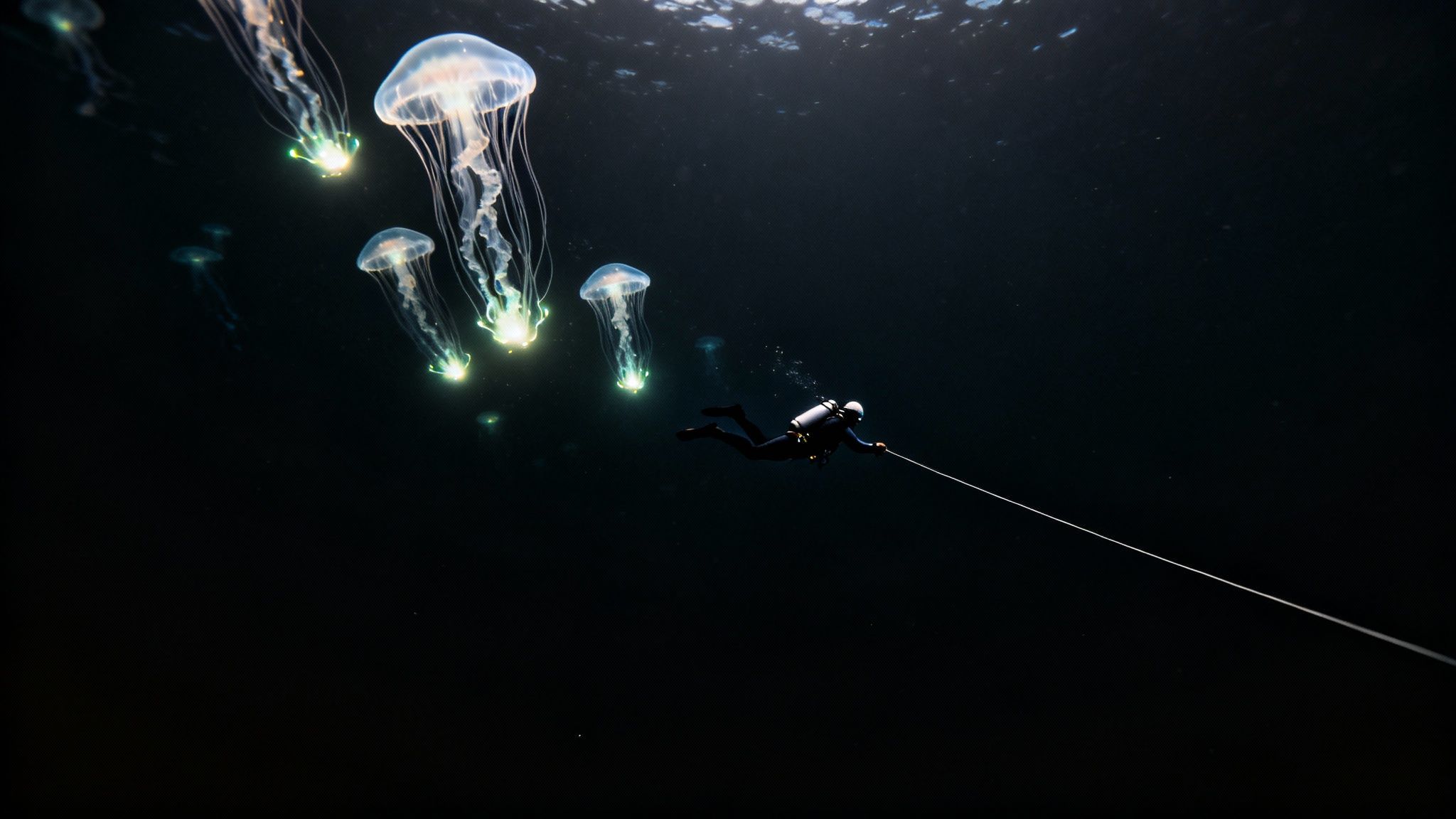
Forget everything you know about a typical night dive. This is different. We head miles offshore, shut off the engines, and tether ourselves to the boat. Then, we simply drop into the immense, inky blackness of the open Pacific and drift. You're suspended in the middle of the water column, watching the planet's largest daily migration happen right in front of your dive light.
From the crushing depths, a parade of strange, tiny, and often bioluminescent creatures rises to feed near the surface. You'll see things that look like they're straight out of a sci-fi movie—larval fish that look nothing like their adult selves, pulsing jellies that glow from within, and invertebrates so alien you'll wonder if you're still on Earth.
The blackwater dive isn’t about spotting sharks or turtles. It’s about witnessing a hidden universe of macro life. The deep ocean transforms into a living galaxy of light, and honestly, it redefines what you think a scuba dive can be.
You absolutely need to be comfortable in the dark and have your buoyancy dialed in, but if you're ready, it's an experience that’s truly second to none.
Pushing Your Limits, The Smart Way
Venturing into more demanding environments is all about having the right guide. Exploring deep walls or drifting in the open ocean isn't something you just jump into; it requires deep local knowledge of currents, conditions, and safety protocols.
An advanced dive should be a thrill, not a scare. Our crew makes sure you’re fully briefed, properly equipped, and 100% ready for the unique challenges ahead. That way, you can just relax and soak in the incredible sights.
- Deeper Ledges: Get a chance to see species that only live at depth as you explore volcanic walls that plummet into the blue.
- Technical Lava Tubes: Test your skills by navigating complex underwater caverns and swim-throughs that demand perfect finning and buoyancy.
- Open Ocean Drifts: Feel the rush of drifting with the current over vast, uncharted underwater landscapes.
These kinds of dives really sharpen your skills and show you a whole new side of scuba diving Big Island Hawaii.
Are You Ready for the Abyss?
If you’re an experienced diver hungry for something beyond the usual reef tour, Kona's advanced dives are calling. The Kona Blackwater Dive, especially, is a bucket-list trip that will fundamentally change how you see the ocean.
For those who feel the pull of this strange and wonderful journey, you can learn more and book our specialized Kona Blackwater Dive tour. If you'd rather explore deep reefs and complex volcanic formations, check out our premium advanced dive trips designed for divers who are ready for a challenge.
How to Plan Your Big Island Dive Trip
Planning your dream dive trip to the Big Island is a lot easier than you might think. The best part? There’s really no “bad” time to come visit us. Thanks to the unique geography of the Kona coast, we're lucky to have fantastic diving conditions pretty much all year long, which makes scheduling your getaway a total breeze.
Scuba diving is a huge part of life here, and for good reason. The island's volcanic underwater landscapes, incredible biodiversity, and numerous protected marine areas draw divers from all corners of the globe. The water temperature is one of the biggest draws, staying in a comfortable sweet spot of 75-80°F (24-27°C) year-round. This warmth, combined with calm bays and stunning water clarity, means the dive industry thrives no matter the season. Getting here is simple, too, with most divers flying into Kona International Airport (KOA).
Picking the Perfect Time to Visit
While you can’t go wrong with any date on the calendar, different seasons do offer their own unique magic. Knowing the subtle differences can help you craft the perfect trip based on what you want to see and do.
- Summer (May – October): This is when you'll find the absolute calmest ocean conditions. We're talking glassy, smooth seas that are perfect for divers who get a little seasick or want the best possible conditions for underwater photography.
- Winter (December – March): The water might be a few degrees cooler, but the trade-off is nothing short of spectacular. This is humpback whale season. Hearing their hauntingly beautiful songs echo through the water while you're on a dive is an experience that will stay with you forever.
Packing and Gear Checklist
When it comes to dive gear, you have a choice: bring your own for that perfect, familiar fit, or rent our top-notch, well-maintained equipment and travel light. There’s no wrong answer, it just comes down to personal preference.
Pro Tip: A 3mm or 5mm full wetsuit is just about perfect for the Big Island's water temperatures. If you tend to get chilly or plan on doing multiple dives a day (especially night dives!), we'd recommend the 5mm for extra warmth.
Here are a few other essentials you won't want to forget:
- Certification Cards & Logbook: You'll need these to get on the boat.
- Dive Computer: Absolutely essential for safety, particularly on multi-dive days.
- Reef-Safe Sunscreen: Let's work together to protect our delicate coral reefs.
- Reusable Water Bottle: Staying hydrated is always a good idea.
Logistics and Accommodations
Getting here is straightforward—just fly right into Kona International Airport (KOA), which is super close to all the main dive boat harbors. As with any adventure, being prepared is key. For diving, this means having a plan for communication in an emergency. This guide on Search and Rescue Communication Devices provides a great overview of equipment that can be invaluable in a critical situation.
Where you choose to stay can make a big difference in the flow of your trip. Staying in or around Kailua-Kona puts you right in the middle of everything, with easy access to the boats, great restaurants, and local shops. For a deeper dive into our top recommendations, check out our guide on the best places for divers to stay on the Big Island.
With your dates picked and a plan in hand, you're all set to book your next underwater adventure.
Your Top Big Island Diving Questions, Answered
As you get ready for your trip to scuba dive on the Big Island, you probably have a few questions. We get it. Here are some quick, straightforward answers to the things we're asked most often, so you can feel completely prepared for an amazing adventure.
What’s the Best Time of Year to Dive Here?
Honestly, there’s no bad time to dive in Kona. The water is always warm and inviting, staying in that perfect 75-80°F (24-27°C) range all year long.
What really matters is the kind of experience you're looking for:
- Summer (May-October): This is when the ocean is at its calmest. If you're worried about seasickness or are an underwater photographer hoping for glassy, flat water, these months are your best bet.
- Winter (December-March): The diving is still fantastic, but with an incredible bonus—it’s humpback whale season. There’s nothing quite like hearing whale songs echoing through the water on your dive. It's an experience you'll never forget.
Do I Need to Be an Advanced Diver?
Absolutely not! That’s one of the best things about the Kona coast. We have an incredible variety of dive sites perfect for every skill level, from people trying their very first dive to seasoned technical divers. Many of our most beautiful spots are tucked away in protected bays with gentle slopes and almost no current.
Dive shops like ours offer a whole range of scuba diving tours tailored to different certification levels. We make sure everyone gets to see Hawaii’s underwater magic safely.
What Kind of Marine Life Will I See?
Get ready for a show! The reefs here are buzzing with life. You’re pretty much guaranteed to see our famous Hawaiian green sea turtles (honu), plenty of different moray eels, graceful eagle rays, and a whole spectrum of colorful reef fish. Many of these, like the vibrant Potter's angelfish, are found only in Hawaii.
And depending on where you dive (and with a little luck), you might also get a visit from a pod of spinner dolphins, see a whitetip reef shark resting on the sand, or, of course, meet the gentle giants on the world-famous manta ray night dive.
Should I Bring My Own Dive Gear?
That really comes down to personal choice. If you're comfortable with your own gear and love the fit, by all means, bring it. But let's be honest, lugging a full set of dive equipment through an airport is no one's idea of fun.
Most divers find a happy middle ground. They bring their personal, easy-to-pack items like their mask, fins, and dive computer, then rent the heavier stuff like the BCD and regulator here. We offer top-notch, meticulously cared-for rental gear, so you'll be in great hands either way.
Ready to see why scuba diving on the Big Island of Hawaii is a bucket-list experience? The team here at Kona Honu Divers would love to show you everything from our stunning coral reefs to the unforgettable Manta Ray Night Dive.