
Diving into the ocean at night is like visiting an entirely different planet. The moment you slip beneath the waves after sunset, everything you thought you knew about a dive site changes. It’s a chance to witness the ocean’s nocturnal world burst into life, a unique mix of pure tranquility and heart-pounding discovery. Honestly, for many divers, their first night dive becomes the one they talk about for years.
Why the Ocean Comes Alive After Dark
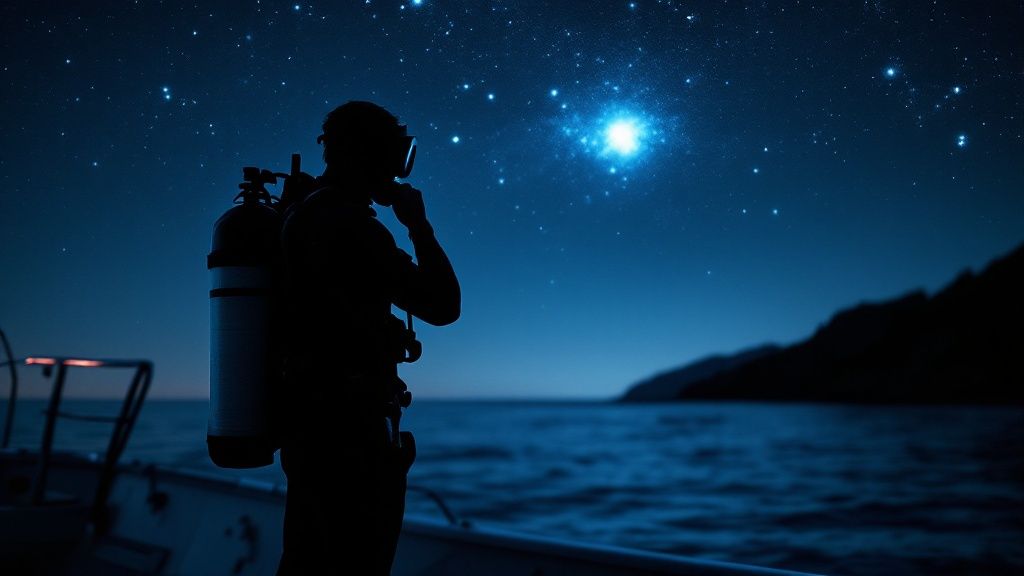
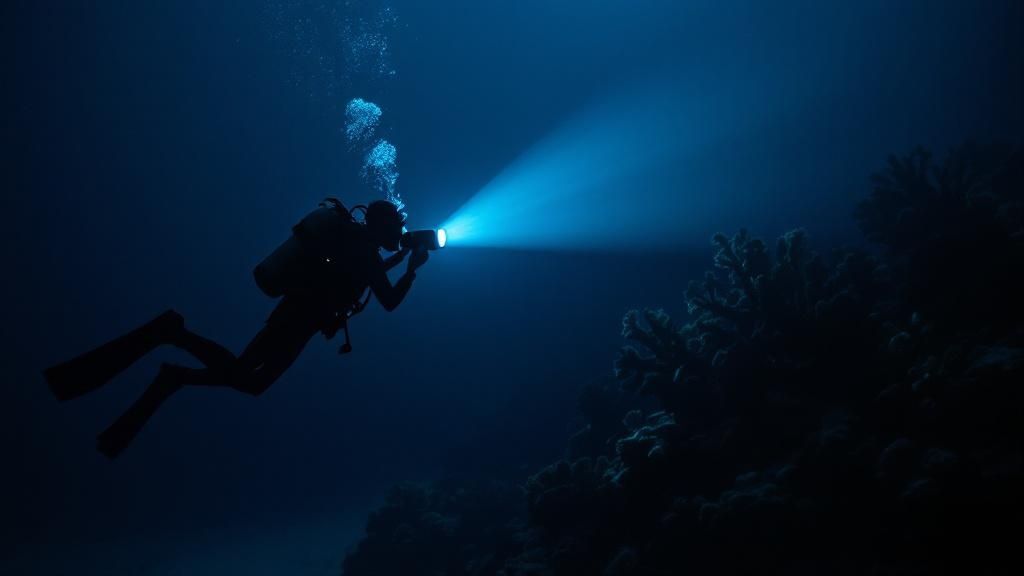
Picture this: you descend as the last sliver of sunlight vanishes, and your entire world shrinks to the focused beam of your dive light. It might sound limiting, but it's the exact opposite. This narrow perspective sharpens your senses, forcing you to focus intently on the patch of reef right in front of you.
This focused view brings out details you'd almost certainly miss during a sunny, panoramic day dive. Under your light, the true colors of corals and fish—normally washed out by water and sunlight—explode with unbelievable vibrancy. Reds look like they're on fire, and oranges practically glow. It's a visual feast you just don't get during the day.
The Great Marine Shift Change
The real magic of scuba diving at night is seeing the reef's "great shift change." Just as the daytime fish tuck themselves away for the night, a completely new crew of nocturnal creatures emerges from the shadows.
- The Hunters Are Out: Octopuses, eels, and all sorts of crustaceans leave their dens to hunt under the cover of darkness. It’s an incredible feeling to catch a moray eel free-swimming or an octopus gliding across the reef, actively searching for its next meal.
- A Natural Light Show: In some spots, you can just wave your hand through the water and set off a sparkling trail of bioluminescent plankton. It's pure magic.
- Weird and Wonderful Behaviors: You might find parrotfish sleeping inside protective mucous cocoons they create each night or see coral polyps fully extended and feeding—things you’d never see in the daylight.
The ocean after dark isn't sleeping; it's a bustling, active metropolis. The quiet and intense focus makes you feel less like a tourist and more like a silent visitor to an alien world.
A Growing Underwater Passion
This is exactly why night diving has become so popular. The number of divers giving it a go for the first time has nearly tripled in the last thirty years. It makes sense, especially when you hear that marine creatures are reportedly 300% more active after sunset. It transforms a reef you thought you knew into a brand-new adventure.
People often describe the feeling as surprisingly serene, despite the darkness. Without the constant buzz of daytime boat traffic and with fewer divers around, the experience becomes profoundly peaceful. It's just you, your buddy, and the incredible world illuminated by your light. You can learn more about who you might meet down there in our guide on which marine life hides in Kona's waters.
Gearing Up for a Dive in the Dark
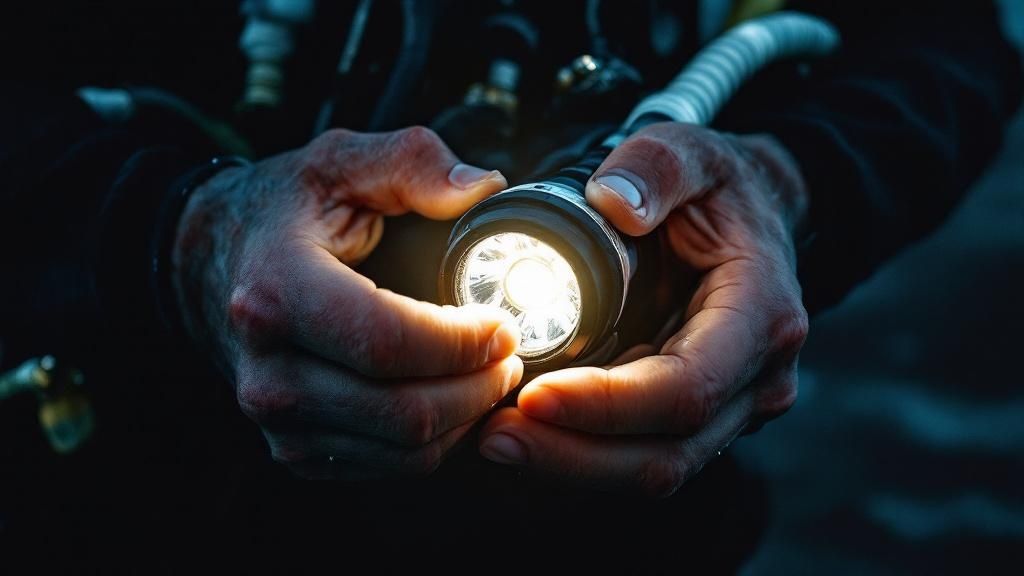
When it comes to a successful scuba dive at night, everything boils down to one simple truth: you have to be properly prepared. Your equipment is more than just a matter of comfort; it's the very foundation of a safe and unforgettable underwater experience after the sun goes down.
While you'll use much of your standard kit, the darkness changes the game. It demands a few specific, crucial additions to help you see, find your way, and stay connected with your dive buddy. Think of each piece of gear as your lifeline.
The Unmissable Trio of Lights
Let’s be clear: your lighting system is the single most critical part of your night diving setup. Heading into the dark with just one light is a rookie mistake and a risk you should never take. A proper, redundant system has three distinct parts, and each one has a specific job.
Your lighting setup is your key to unlocking the underwater world at night. Having a reliable primary, a tested backup, and a visible tank marker ensures you can see, be seen, and handle any situation that arises. Here’s a quick checklist to make sure you have everything you need.
| Light Type | Purpose | Recommended Minimum Lumens | Key Feature |
|---|---|---|---|
| Primary Dive Light | Your main source of illumination for navigation and spotting marine life. | 800-1000 lumens | Adjustable beam angle (wide for navigating, narrow for spotting) |
| Backup Dive Light | Your emergency light in case the primary fails. | 400-500 lumens | Compact, easily stowed, and has a long battery life |
| Tank Marker Light | A small beacon that makes you visible to your buddy and the divemaster. | N/A (Glow stick or LED) | Secure attachment for a tank valve and 360-degree visibility |
This simple system is non-negotiable. Always test all three lights before you even think about getting in the water.
Your lights are more than just tools for seeing—they are your primary means of communication and navigation. Treat them with respect, check them meticulously, and always have a backup.
Beyond the Beam: Essential Night Dive Gear
While lights get all the attention, a few other pieces of gear become absolutely essential once you're diving in the dark. These items help you navigate and communicate when the usual visual cues are gone.
A dive computer with a bright, easy-to-read backlight is a must-have. You’ll need to check your depth and no-deco time constantly, and you don't want to be fumbling to see your screen. Your underwater compass also becomes your new best friend. It’s incredibly easy to get turned around without the sun or familiar landmarks, and a good compass will always point you home.
Don’t forget about sound. An audible signaling device, like a simple tank banger or an underwater horn, is perfect for getting your buddy’s attention. Waving a light around works, but a sharp sound cuts through the dark much more effectively.
For a complete rundown, take a look at our comprehensive guide on the gear you will need for your Kona diving adventure. And as you get your gear together, it’s a good idea to learn how to pack efficiently for your diving adventures, because there’s nothing worse than realizing you left a critical piece of equipment at home.
Essential Skills for Navigating the Night
Diving after dark isn't about being fearless; it's about being prepared. The darkness actually simplifies things, stripping away distractions and forcing you to tune into your core skills: sharp awareness, rock-solid buoyancy, and crystal-clear communication. When you nail these, a potentially disorienting dive becomes a truly serene and controlled adventure.
A solid dive plan is your foundation, and it starts long before you get wet. Your best bet is to choose a site you already know like the back of your hand from daytime dives. Knowing the terrain and landmarks gives you a mental map, so there are fewer surprises once you’re down.
Your pre-dive briefing needs to be more thorough than usual. Cover every night-specific detail—entry and exit strategies, emergency protocols for low visibility, and exactly what to do if you get separated. Everyone needs to be 100% clear on the plan before a single fin hits the water.
Perfecting Your Entry and Buoyancy
Getting into the water in total darkness calls for a slow and steady hand. Whether you're taking a giant stride off the boat or wading in from shore, take your time. Double-check that all your gear is secure and exactly where it should be.
Once you’re in, just float for a minute. Get your bearings, give your buddy a final "all-good," and make sure you're both completely ready before you even think about starting your descent.
Buoyancy is everything at night. Without the usual visual cues of the surface or the seafloor, you have to rely on feel and instinct. Make small, deliberate adjustments to your BCD and use your breathing to fine-tune your depth. The last thing you want to do is accidentally kick up a cloud of silt or bump into delicate coral that you can't see.
Slow is smooth, and smooth is fast. Rushing just burns air and can get you turned around. The goal is to glide, letting the reef reveal itself one piece at a time in the beam of your light.
Underwater Communication with Light
Your dive light isn't just for seeing; it’s your voice underwater. Hand signals are tough to make out, so you’ll use your light beam to talk. Make sure you and your buddy agree on these signals before you descend.
- "OK" Signal: Make a slow, clear circle on the seabed or out in the water for your buddy to see. They should return the same signal.
- "Attention" Signal: A gentle side-to-side sweep of your light beam gets your buddy’s attention so you can point something out.
- "Distress" Signal: This is an unmistakable one—a rapid, urgent up-and-down or side-to-side slash of light. It means you need help, now.
Crucial Safety Rule: Never, ever shine your light directly in another diver's face. It's blinding and completely disorienting. When you're talking face-to-face, aim your beam down or toward your own chest.
Navigation and Buddy Protocols
At night, your compass is your new best friend. Without the sun to orient yourself, it's the most reliable tool you have. Set your bearing before you go down and check it often.
You can also use what I call "lighthouses"—unique underwater landmarks like a specific coral head or a big rock that you can spot with your torch. Make a mental note of these on your way out so you can use them to guide you back.
The buddy system is non-negotiable, and it's even more critical in the dark. You should always be close enough to see your buddy’s tank marker light. Frequent check-ins every few minutes with the "OK" light signal are a must. That constant connection is your lifeline.
This shared sense of adventure is what brings divers together for events like Diversnight. What started in Norway back in 2005 has grown into a global celebration. In 2009, a record-breaking 2,749 divers all hit the water at the same time for a night dive, proving just how many of us love exploring the ocean after sunset. You can learn more about this global night diving event on Wikipedia.
And a final piece of hard-won advice: end your dive with plenty of gas. I always plan to surface with more air in my tank than I would during the day. That extra cushion gives you a buffer for any hiccups during your ascent or on the surface.
Kona’s World-Famous Manta Ray and Blackwater Dives
When you start talking about unforgettable scuba diving at night, the conversation almost always turns to the scuba diving the Big Island of Hawaii. Kona, specifically, has earned its reputation as a global mecca for divers looking for something truly different once the sun goes down.
The island is legendary for two bucket-list dives that couldn’t be more different from each other: the Manta Ray Night Dive and the Kona Blackwater Dive. One is an ethereal, mesmerizing ballet. The other is a thrilling drift through the deep, dark abyss. Both are a testament to the wild biodiversity that makes scuba diving in Kona an adventure you'll be telling stories about for years.
The Graceful Giants of the Manta Ray Night Dive
Picture this: you're kneeling on the sand in the dark, and a collection of powerful lights illuminates the water column above you. Out of the black, massive shadows emerge, gliding through the water like starships. This is the world-famous Kona Manta Ray Night Dive, and it’s every bit as magical as it sounds.
For decades, local operators have known exactly where to set up. They establish a "campfire" of lights that attract a massive cloud of plankton. This, in turn, brings in the main attraction: dozens of giant manta rays, some with wingspans stretching up to 16 feet.
They put on a show, performing effortless barrel rolls and swooping just inches over your head to feed on the plankton. It's a silent, beautiful, and utterly surreal dance.
This isn't just another dive on your logbook; it's a humbling, almost spiritual experience. Watching these gentle giants up close, in their element, really puts the majesty of the ocean into perspective.
To keep this encounter safe and respectful for everyone—divers and mantas alike—there are a few hard-and-fast rules:
- Stay on the Bottom: Everyone settles on the sandy floor. This creates a clear, predictable "stage" for the mantas to perform their feeding ballet.
- No Touching: This one is non-negotiable. Never reach out to touch a manta. Their skin has a protective slime coat that our touch can damage. Let them control the proximity.
- Lights Point Up: Your dive light should always be aimed up into the water column. This keeps the plankton concentrated and the "dinner table" set for the show.
Honestly, this dive is a must-do for anyone visiting the Big Island. It's an evening you will be talking about for the rest of your life.
Plunging into the Abyss on a Blackwater Dive
If you've got a real taste for adventure and want an experience that feels truly out-of-this-world, the Kona Blackwater Dive is calling your name. Forget the reef. This dive takes you miles offshore, tethered in the dark over thousands of feet of water, to witness one of the planet's largest migrations.
Every single night, a countless host of tiny, bizarre, and often bioluminescent creatures rise from the crushing depths to feed near the surface. You'll drop to about 50 feet, clip onto a downline, and just drift, watching this incredible vertical migration happen right in the beam of your high-powered torch.
You will see things that look like they're straight out of a sci-fi movie:
- Pteropods: Tiny, transparent sea snails that "fly" through the water with delicate, wing-like feet.
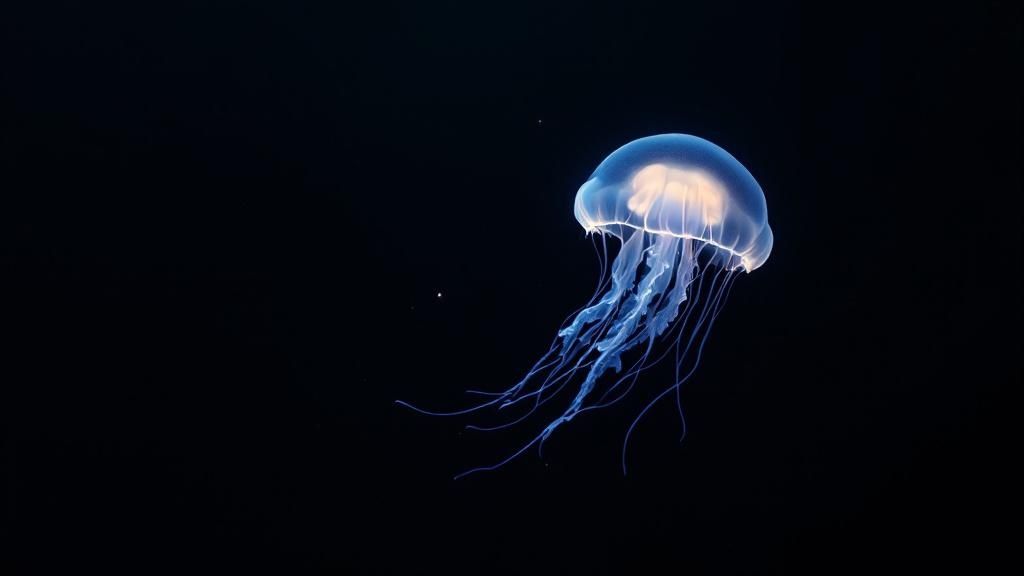
- Ctenophores: Comb jellies that don’t sting but refract your light into dazzling, pulsing rainbows.
- Larval Creatures: The alien-looking juvenile stages of fish, eels, and crustaceans before they settle into their adult forms.
This dive is a sensory trip into the pelagic zone—a world of gelatinous, otherworldly life that most people never see. Because you're in the open ocean in total darkness, this one is best for more experienced diving opportunities and for those who have their buoyancy absolutely dialed in. Want to learn more about what it takes? You can get all the details on the Kona blackwater dive in our detailed guide.
Choosing the Right Dive Operator in Kona
Let’s be honest: your night dive experience, especially somewhere as legendary as Kona, hinges entirely on the crew you go with. A great dive operator is more than just a boat ride. They're your lifeline, your underwater insider, and your ticket to a smooth, mind-blowing adventure. Getting this choice right is probably the single most important decision you'll make.
When you start looking at operators for a night dive, you need to be picky. Safety is everything, and it's not just a word they should throw around on their website. You're looking for a crew with a proven track record and guides who are genuine night-diving experts, not just seasoned daytime divers. They need to know these dive sites like the back of their hand, in complete darkness, and be absolute pros at handling any situation that could pop up after sunset.
What to Look For in a Night Dive Charter
The best operations really sweat the small stuff. As you're comparing your options for an after-dark trip, keep these things at the top of your list:
- Well-Maintained Gear: If you plan on renting, give the equipment a once-over. Does it look clean and well-cared-for? Top-notch shops are meticulous about servicing their regulators, BCDs, and especially their dive lights. Frayed gear is a major red flag.
- Experienced Guides: Don't be shy about asking about the divemasters. How long have they been leading night dives right here in Kona? A fantastic guide makes all the difference, pointing out a perfectly camouflaged octopus you’d swim right past on your own.
- Small Group Sizes: This is huge. Smaller groups are safer, easier to keep track of in the dark, and just plain better. You get a much more personal and less crowded experience, which is exactly what you want when the manta rays show up.
Think of choosing a dive operator as an investment in your safety and enjoyment. The best companies insist on small groups, flawless gear, and expert guides so you can focus on the magic of the dive, not worry about the logistics.
Why We Trust Kona Honu Divers
For anyone diving into the Big Island's incredible nightlife, Kona Honu Divers consistently raises the bar. Their whole philosophy is built on a foundation of diver safety, respect for the marine environment, and making sure every single customer has an amazing time, from the moment they book to their last giant stride.
They've earned their stellar reputation by offering top-tier diving tours in Kona, Hawaii led by people who are genuinely passionate about what they do. Whether it's your first night dive and you have some jitters or you've logged hundreds, their crew has a knack for making everyone feel comfortable and ready.
But don't just take our word for it—see what other divers are saying:
Their commitment to small, manageable groups is a game-changer. It ensures you get the attention you need to have a truly unforgettable and safe night dive. If you're ready to see Kona's underwater world light up after dark, this is your crew.
Your Night Diving Questions Answered
It's completely normal to have a few questions before your first plunge into the ocean after dark. I've seen even the most seasoned divers get a little quiet before their first night dive. It’s a different world down there.
This section is all about tackling those common worries head-on. We'll go through the things that are probably on your mind so you can feel less anxious and more excited for the adventure ahead.
Is Night Diving Scary or Dangerous?
This is always the first question, and I get it. The short answer? No, not if you’re properly prepared and diving with a good crew.
The thought of a vast, dark ocean can be a bit intimidating, but the reality is surprisingly peaceful. Your world shrinks to the beam of your dive light, creating this incredibly calm and focused experience. You actually notice more because there are fewer distractions.
Statistically, night diving is just as safe as diving during the day, provided everyone follows the rules. The real keys to safety are diving with a reputable operator, having a primary and a backup light, and staying glued to your buddy. It’s less about being scared and more about a quiet, focused exploration.
What Will I See That I Can’t See During the Day?
Once the sun goes down, the reef’s day shift clocks out and the night shift comes on duty. It’s a completely different cast of characters.
Here's what you can expect to see:
- Active Cephalopods: Octopuses and squid are out and about, hunting and showing off in a way they rarely do in the daylight.
- Crustacean Parades: Lobsters, crabs, and all sorts of shrimp leave their hiding spots to wander the reef floor.
- Eels on the Hunt: Moray eels, usually tucked away in a crevice, are often seen free-swimming at night, which is an incredible sight.
- Bioluminescence: This one is pure magic. Turn off your light for a moment (with your guide's permission!) and wave your hand through the water. You’ll create a trail of sparkling light from microscopic plankton.
The coolest part, for me, is seeing the daytime fish in a totally new way. You might find a parrotfish fast asleep in a mucus cocoon it created for protection, or see coral polyps fully extended and feeding. It’s a side of the reef you’d otherwise completely miss.
What Should I Do if My Light Fails?
This is exactly why your pre-dive briefing will stress carrying a backup light. It’s not just a suggestion; it's a requirement.
If your primary light dies, the first step is to stay calm. You've planned for this. Simply grab your backup light and turn it on.
Next, get your buddy's attention with the light signal you learned in your briefing and let the divemaster know what's going on. From there, you'll end the dive. There's no reason to push your luck—it's a standard "thumb it" situation, and you'll make a calm, safe ascent together.
How Has Night Diving Evolved?
Night diving has gone from a niche specialty for hardcore divers to a must-do adventure for people all over the world. It’s amazing to see how popular it’s become.
The community has grown so much that there are even organized events celebrating it. Back in 2016, a dive event in Italy brought 133 divers together for a simultaneous underwater plunge, setting a new world record for the largest group night dive. You can discover more insights about this record-setting dive and the community around it.
This kind of enthusiasm shows just how accessible and loved night diving is today. When you're planning your own adventures, especially to incredible spots overseas, understanding the importance of travel insurance when diving in Asia is a smart move. It’s just another piece of gear that ensures you can focus on the amazing experience without worrying about the what-ifs.
At Kona Honu Divers, we're here to make your first or next night dive an unforgettable experience. Learn more about our world-class diving tours in Kona, Hawaii.