
Picture this: you descend into impossibly clear, blue water. The sun's rays dance around you as you glide over a surreal landscape of ancient lava flows, now home to a kaleidoscope of marine life. This is the reality of scuba diving off the Big Island of Hawaii.
Thanks to the massive volcanoes that shield the Kona coast from trade winds, the water here is often as calm and warm as a bathtub. Visibility frequently stretches past 100 feet, creating pristine, world-class diving conditions almost every day of the year.
Why Kona Is a World-Class Diving Destination
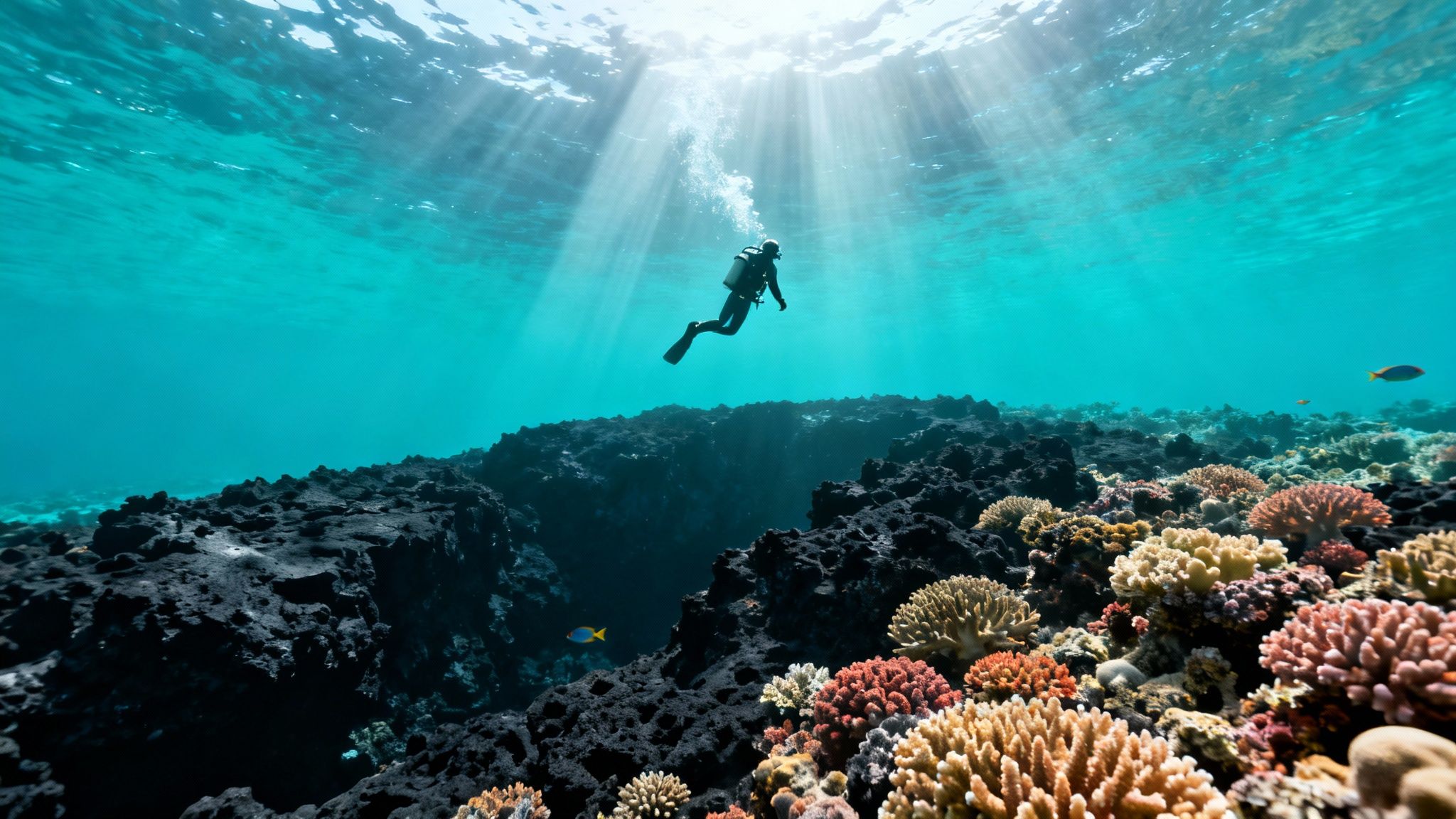
The Big Island isn't just another beautiful spot to get wet; it’s a global destination for serious underwater exploration. Its unique geology, forged by five massive shield volcanoes, has sculpted a dramatic underwater world you won't find anywhere else.
This volcanic activity created an incredible playground for divers. Imagine exploring intricate lava tubes, swimming through majestic archways, and descending alongside deep pinnacles swarming with schools of fish. Because the Kona coast is tucked in the lee of Mauna Loa and Hualālai, the ocean stays remarkably predictable and calm—perfect for brand-new divers and salty veterans alike.
To get a quick overview, here's a snapshot of what makes diving here so special.
Scuba Diving on the Big Island At a Glance
| Attribute | Details |
|---|---|
| Visibility | Typically 80-100+ feet |
| Water Temperature | 76-81°F (24-27°C) year-round |
| Key Dive Types | Manta Ray Night Dive, Black Water Dive, Lava Tubes, Reefs, Pinnacles |
| Marine Life | Manta Rays, Turtles (Honu), Dolphins, Whales (seasonal), Reef Sharks, Endemic Fish |
| Best Time to Go | Year-round, with calmer conditions in summer and whale season in winter |
| Skill Level | Suitable for all levels, from discover scuba to advanced technical diving |
This table only scratches the surface, but it gives you an idea of the incredible conditions and diversity awaiting you.
A Thriving Hub for Divers
The Big Island has firmly established itself as the top spot for scuba in the Hawaiian islands. It attracts around 150,000 dive tourists annually who log roughly 100,000 certified dives each year.
The Kona coast has come a long way since the 1960s and 70s, when only a couple of pioneering shops existed. Today, you'll find over 50 dive shops and charters operating here. This boom means more opportunities for you to explore world-class sites with incredible clarity, healthy reefs, and almost-guaranteed sightings of green sea turtles, or honu as they're known locally. You can learn more about the fascinating history of Big Island scuba diving on konahonudivers.com.
Think of this guide as your map to this volcanic paradise. We'll cover everything from the legendary Manta Ray Night Dive to hidden grottos and vibrant coral gardens. We’ll break down what makes Kona so unique and how you can plan the perfect underwater adventure.
Whether you're looking to get certified for the first time or an experienced diver searching for your next big thrill, let’s get started. Top-tier operators like Kona Honu Divers offer a whole range of diving tours on the Big Island that cater to every skill level.
Kona Honu Divers has built an incredible reputation for safety, professionalism, and creating unforgettable dive experiences. Their commitment to customer satisfaction is reflected in thousands of five-star reviews from divers around the world.
Exploring Kona's Top Underwater Dive Sites
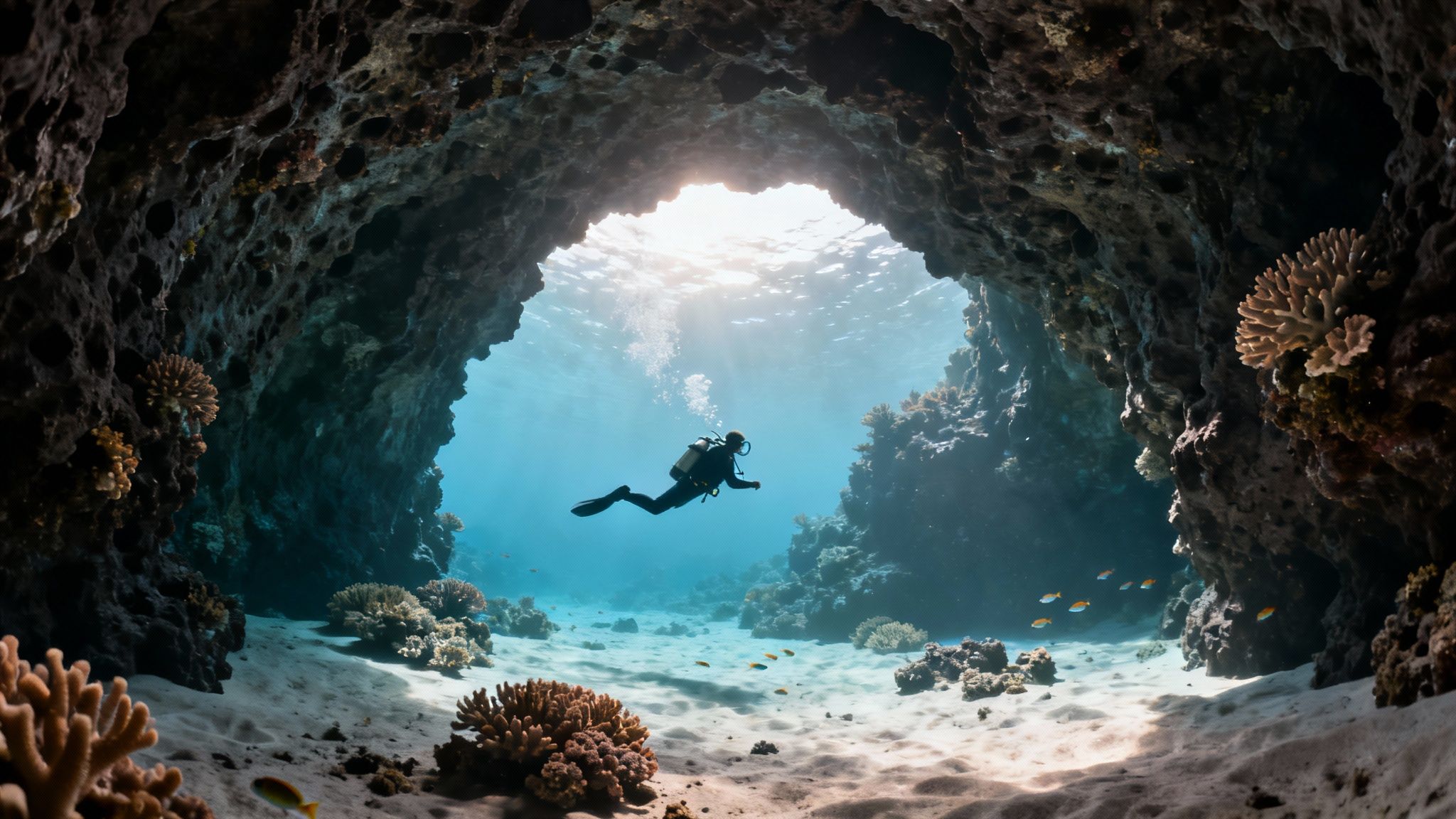
The Kona coast is an underwater gallery sculpted by ancient volcanic fire, home to over 80 distinct dive sites. Each one is a unique masterpiece, from dramatic lava rock cathedrals to sprawling coral gardens bursting with life. Think of this as your treasure map to some of the very best spots for your scuba Big Island Hawaii adventure.
To really unlock these underwater secrets, you'll want to go with people who know the area like the back of their hand. A trusted local charter like Kona Honu Divers offers a whole menu of expertly guided diving tours that cater to every skill level.
Let's dive into what makes these sites so incredible.
Kealakekua Bay: A Protected Sanctuary
Kealakekua Bay isn’t just another pretty spot; it’s a State Historical Park and Marine Life Conservation District. That special protection means the coral reefs here are ridiculously healthy and vibrant, creating a bustling metropolis for countless marine species. The water is usually calm and crystal clear, often with visibility so good it feels like you're swimming inside an aquarium.
Keep your eyes peeled for:
- Pristine Coral Formations: Huge, intricate structures that act as apartment buildings for thousands of reef fish.
- Clouds of Fish: You'll see massive schools of yellow tang, butterflyfish, and parrotfish moving as one.
- Spinner Dolphins: It's common to see pods resting in the bay's calm waters from the boat during the day.
Golden Arches and Lava Tube Swim-Throughs
If you're a fan of dramatic underwater landscapes, Golden Arches is your playground. The site is famous for a massive lava tube that has collapsed to form a stunning archway you can swim right through. When the sun hits just right, beams of light pierce through the openings, creating an almost religious experience.
Winding your way through these volcanic structures is a total thrill. You can explore caverns and grottos, searching for tiny critters like colorful nudibranchs and cleverly camouflaged frogfish hiding in the cracks. It’s a perfect reminder that the Big Island’s volcanic heart is what makes its diving so unique.
Turtle Pinnacle: A Natural Cleaning Station
Picture a day spa, but for Hawaiian green sea turtles (honu). That's Turtle Pinnacle. This incredible site is a known "cleaning station," a specific spot where turtles line up to have parasites and algae nibbled off their shells by helpful surgeonfish and other small reef fish.
It’s a rare chance to see these ancient mariners completely at ease in their natural habitat. Of course, we always keep a respectful distance, allowing the turtles to go about their spa day undisturbed. Watching several honu hover gracefully while getting spruced up is a memory that will stick with you long after you surface.
The sheer variety of dive sites along the Kona coast is just staggering. In a single day, you can go from a serene, protected bay to a complex maze of lava tubes, and each site offers a completely different world to discover.
Exploring these places with a knowledgeable guide is the best way to see the highlights safely. Let a top-tier dive operator show you the way.
The Magic of Diving After Dark in Kona
When the sun finally dips below the horizon in Kona, the ocean doesn't go dark and quiet. Instead, it flips a switch. The underwater world transforms, hosting two of the most incredible spectacles any diver could hope to witness.
Night diving on the Big Island isn’t just about exploring familiar reefs with a flashlight. It's about witnessing natural phenomena that are so extraordinary, they've put Kona on the map for divers worldwide. The first is the world-renowned Manta Ray Night Dive, an unforgettable ballet of gentle giants. The second is the Kona Blackwater Dive—a surreal, mesmerizing plunge into the deep that feels less like a dive and more like a trip to another dimension.
The World-Famous Manta Ray Night Dive
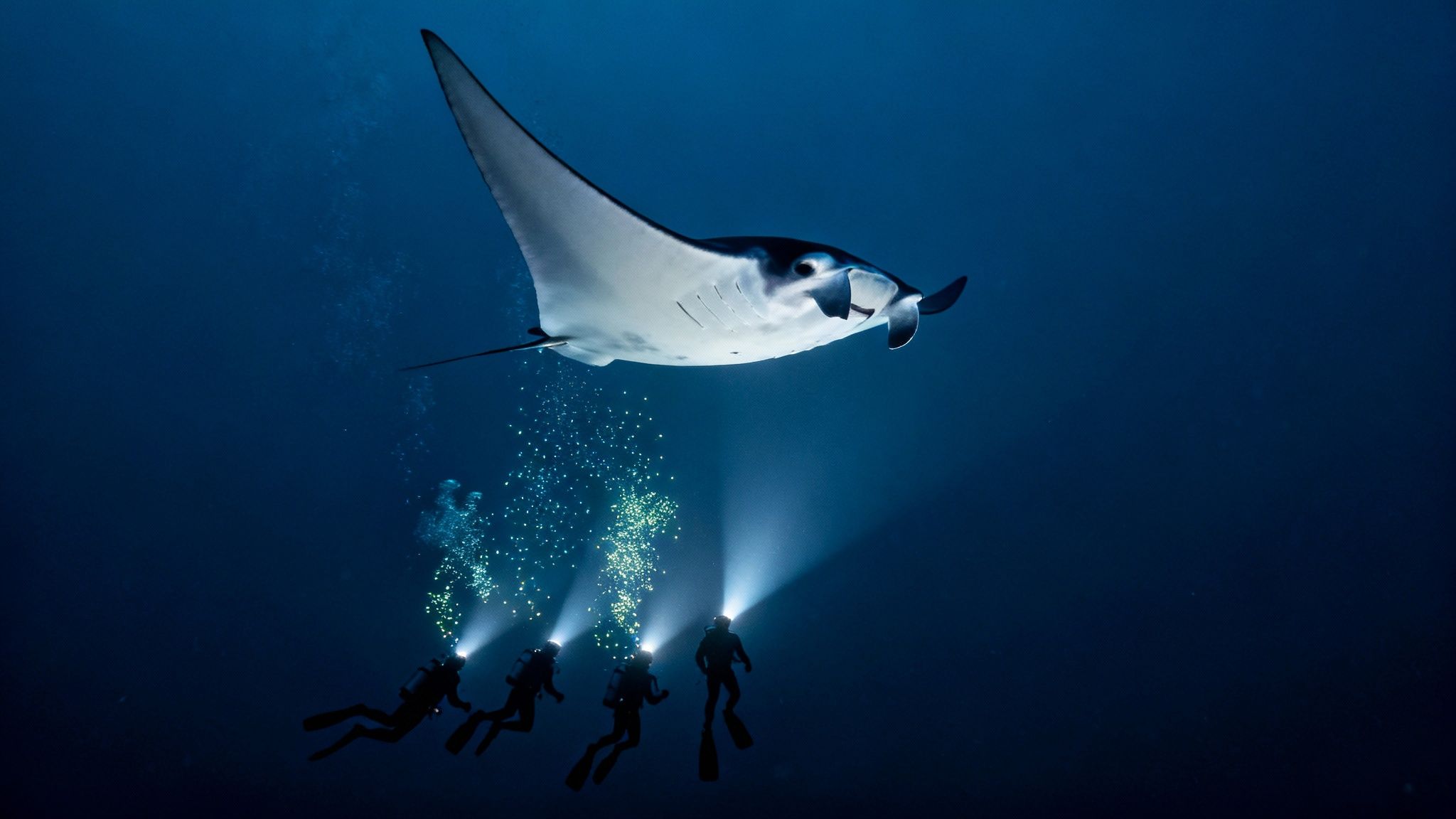
Picture this: you’re settled on the sandy ocean floor as dusk fades to black, pointing your dive light straight up. The beams cut through the water, illuminating a thick cloud of plankton and creating an irresistible buffet. Before long, a huge, graceful shadow emerges from the darkness. Then another, and another.
Soon, you're surrounded by giant manta rays, some with wingspans stretching 12 feet, gliding and swooping right into the light. They perform effortless barrel rolls and somersaults as they feed, often coming just inches from your head.
This experience is consistently voted one of the best night dives on the planet, and once you’ve done it, you’ll understand why. There is simply nothing that compares to the sight of a majestic manta soaring directly overhead, its massive form silhouetted against the glow.
The sheer grace of these creatures is breathtaking. It’s impossible to describe the feeling of watching a massive fish the shape of a stealth bomber glide into view. It’s a truly humbling and unforgettable encounter.
To get a closer look at what this experience entails, you can explore the full details of the Kona manta ray night dive.
Why Garden Eel Cove Is the Premier Manta Destination
While you can see mantas at a couple of different spots, Garden Eel Cove (also known as Manta Heaven) is hands-down the best place to go. From a diver's perspective, this site just offers a superior experience from start to finish.
- Protected Location: The cove is tucked away from the open ocean, which means calmer water and a much smoother ride on the boat.
- Better Viewing Area: The bottom is shaped like a natural amphitheater, giving every diver a front-row seat on the sand with a perfect, unobstructed view of the action above.
- Better Reefs: The reefs surrounding the main viewing area are vibrant and teeming with life, making the trip down and back up just as interesting.
- More Consistent Sightings: Plain and simple, this spot is famous for a reason—it reliably attracts large numbers of mantas almost every single night.
You can book your once-in-a-lifetime experience on a manta ray dive tour and see the magic for yourself.
The Blackwater Dive: An Otherworldly Adventure
Now, for those who are truly adventurous and have plenty of dives under their belt, the Kona Blackwater Dive is something else entirely. Forget the reef. On this dive, you’re tethered to a boat miles offshore, drifting in the deep, dark, open ocean.
As you hang suspended in the abyss, you become a witness to the largest animal migration on Earth. Every night, countless bizarre, alien-like bioluminescent creatures journey from the crushing depths toward the surface to feed. You’ll see things that look like they were pulled from a sci-fi film—strange larval fish, glowing jellies, and shimmering squid that are almost never seen in the daylight. It's a humbling, mind-bending journey into one of the planet's last true wildernesses. You can sign up for this unique experience on the Blackwater Dive tour.
Choosing Between Boat Dives and Shore Dives
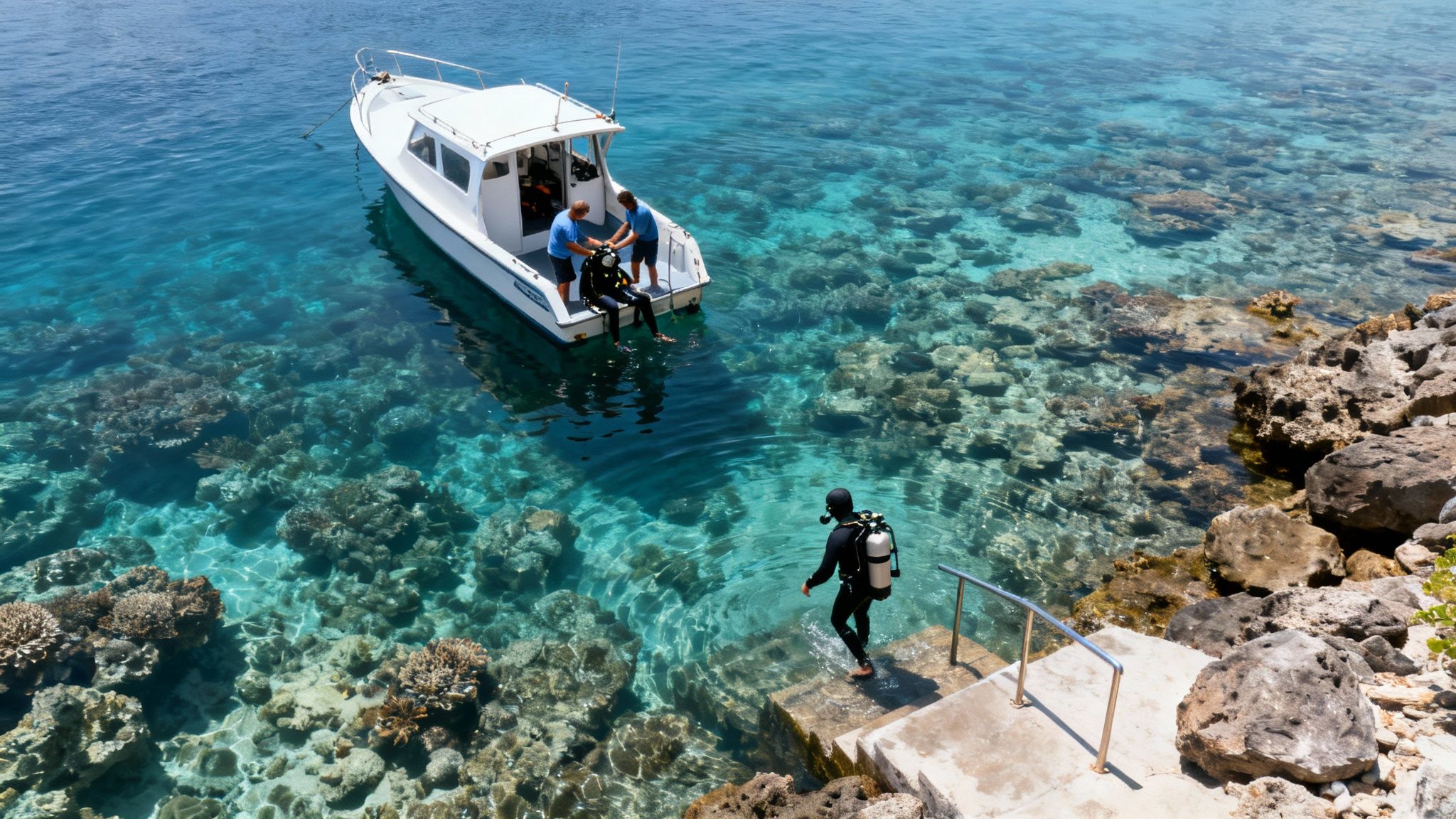
When you're planning your scuba Big Island Hawaii adventure, one of the first questions you'll face is: boat or shore? Both are options here in Kona, but they offer two totally different days out. Figuring out which one is right for you is key to having an amazing time.
Shore diving gives you a real sense of independence. You set your own schedule, explore at your own pace, and it can be a bit lighter on the wallet. But with that freedom comes a lot of responsibility. You're the one in charge of researching dive sites, reading the local conditions, and navigating tricky entries over sharp lava rock, like at the famous Two Step. You also have to haul all your gear yourself, which can wear you out before you even hit the water.
On the other hand, boat diving with a professional charter is like getting the VIP treatment. It's the safest, easiest, and most effective way to see the very best of Kona's underwater world.
The All-Inclusive Comfort of Boat Diving
Choosing a dive boat, especially with a seasoned operator like Kona Honu Divers, turns your dive day from a logistical puzzle into a pure vacation. It’s a true valet service. The crew loads your gear, sets everything up, guides you to the prime spots, and helps you get in and out of the water safely.
Forget hauling heavy tanks. Instead, think about the surface interval. You’re relaxing in the shade, enjoying snacks, and maybe taking a hot freshwater shower. More importantly, the boat gets you to pristine, secluded dive sites you simply can’t reach from shore. These spots are often healthier, see fewer divers, and offer a much more vibrant and peaceful dive.
For almost everyone visiting the island, a well-run dive charter provides a far better experience. You spend your energy enjoying the incredible underwater scenery, not wrestling with gear—all with experienced pros watching over you.
You can dive deeper into this topic by exploring this detailed breakdown of boat diving vs. shore diving on the Big Island.
A Quick Comparison
To help you choose the best dive style for your skill level, budget, and vacation goals, let's break down how the two options compare side-by-side.
Boat Diving vs. Shore Diving on the Big Island
| Feature | Boat Diving (e.g., Kona Honu Divers) | Shore Diving |
|---|---|---|
| Access to Sites | Reaches dozens of remote, pristine reefs and pinnacles that are inaccessible from land. | Limited to sites with safe, accessible entry points from the coastline. |
| Convenience | Full valet service; crew handles all gear, tanks, and logistics. Includes amenities like showers and snacks. | DIY approach; you are responsible for researching, transporting, and setting up all of your own equipment. |
| Safety & Guidance | Professional crew provides dive briefings, expert navigation, and emergency support. | You are entirely responsible for your own safety, navigation, and emergency planning. |
| Effort Level | Minimal physical effort required; simple entry/exit from the boat. Ideal for a relaxing vacation. | Can be physically demanding, requiring walks over uneven lava rock while carrying heavy gear. |
| Best For | Divers of all levels who want to maximize their time underwater and see the best, most protected sites. | Experienced, self-reliant divers with extensive local knowledge and their own full set of gear. |
In the end, while shore diving can be a rewarding challenge for the right person, boat diving is the way to go for a safer, more comfortable, and truly comprehensive look at the magic of Kona’s reefs.
Getting Certified or Advancing Your Dive Skills
The Big Island’s calm, clear, and warm waters make it one of the world’s best natural classrooms for scuba diving. Seriously. Whether you're dreaming of taking your first breath underwater or you're already a seasoned diver looking to master new skills, Kona provides the perfect backdrop for learning and growing.
If you're completely new to the sport, your journey starts with the PADI Open Water Diver course. This is the real deal—your full certification that teaches you everything you need to know to dive safely and confidently anywhere on the planet. It’s an amazing experience that unlocks a lifetime of underwater adventure.
First Steps into the Blue
Not sure you want to commit to a full course just yet? No problem. If you’re short on time but still want to feel the magic of breathing underwater, the Discover Scuba Diving program is a fantastic choice.
It isn't a certification, but it’s a fully supervised introduction that gets you into the water and exploring a shallow reef with a PADI professional right by your side. It's the perfect way to find out if scuba on the Big Island of Hawaii is for you.
Choosing a top-tier PADI 5-Star facility like Kona Honu Divers is a game-changer. It’s your guarantee of safe, personalized, and high-quality instruction from pros who know these waters like the back of their hand.
Their commitment to safety and fun shines through in the countless rave reviews from divers who've trained with them.
Taking Your Skills to the Next Level
Already have your certification card? Kona is the place to keep the momentum going. The conditions here are ideal for building confidence and expanding what you can do underwater.
Many divers take the next logical step with the PADI Advanced Open Water course. Don't let the name intimidate you; this course isn't about extreme technical challenges. It's all about refining your skills and trying out new types of diving. You’ll complete five "adventure dives," including a deep dive and an underwater navigation dive, which officially certifies you to explore depths down to 100 feet.
This advanced training unlocks some of Kona’s most incredible sites, from deep-water pinnacles to intricate lava tube swim-throughs. It’s the key to seeing a whole other side of the Big Island’s underwater world. You can discover more about how to get your Big Island scuba certification and figure out which course is the right fit for you.
Specialized Training and Advanced Opportunities
Beyond the core courses, Kona is a great place to pick up a specialty certification that can make you a safer, more skilled diver. One of the most popular (and practical) is the Enriched Air Nitrox specialty.
Diving with nitrox—a gas mix with a bit more oxygen—allows you to safely extend your time at depth, meaning more time to explore. In a huge bonus, Kona Honu Divers actually offers free nitrox on all their boats for certified divers, making this the perfect place to get this valuable certification.
For seasoned divers looking for a bigger challenge, Kona delivers. There are exclusive advanced dive trips designed for exploring deeper, more complex environments that are off-limits to most. These premium charters will take you to remote pinnacles and unique underwater structures to witness marine life and geology that few others ever get to see. It's the ultimate way to put your skills to the test in a truly unforgettable setting.
If you’re ready for that kind of adventure, check out the premium advanced 2-tank trip for an experience you won't forget.
How to Plan Your Big Island Dive Adventure
A little bit of planning can make the difference between a good dive trip and an absolutely epic one. While you can dive Kona pretty much any day of the year thanks to its amazing conditions, timing your visit and booking ahead will make your entire experience smoother.
So, when's the best time to come? It really depends on what you're hoping to experience. If you love warm, glassy-calm water, the summer months are fantastic, with temperatures often hitting a balmy 81°F (27°C). But if you visit during the winter (think December through March), you’ll be here for humpback whale season. There's nothing quite like hearing whale songs reverberate through the water on a safety stop—it's pure magic.
Booking and Packing Essentials
If I can give you one single piece of advice, it’s this: book your dives well in advance. I can't tell you how many people show up hoping to get on the Manta Ray Night Dive only to find it's been sold out for weeks. The most popular trips fill up fast, so locking in your spot early means you won't miss out.
As for packing, my philosophy is to travel light and smart. You can absolutely lug your own gear across the ocean, but renting high-quality, well-maintained equipment from a top-tier shop like Kona Honu Divers saves a ton of hassle (and airline baggage fees).
Here’s a quick list of what you absolutely should bring:
- Your C-Card and Logbook: You’ve earned it, so don't forget to pack the proof!
- Dive Computer: This is a critical piece of safety gear. For us, it’s not optional.
- Reef-Safe Sunscreen: Help us protect our incredible coral. Hawaii state law bans sunscreens with oxybenzone and octinoxate, so be sure to check the label.
- Swimsuit and a Light Jacket: Even on warm days, a light layer feels great on the boat ride back to shore after a dive.
The secret to a relaxed dive vacation is getting the logistics handled before you even leave home. Book early, pack the essentials, and you can spend your energy on what matters: exploring the underwater world.
Don't just take my word for it. See what other divers have to say about their adventures with a great crew. The right guides and a well-run operation make all the difference.
With these tips in hand, you're all set. Your Big Island dive adventure—from swimming through ancient lava tubes to hearing the songs of giant whales—is right around the corner. Just don't wait too long to grab your spot on the boat!
Ready to jump in? Secure your spot on one of the best diving tours the Big Island has to offer.
Frequently Asked Questions About Kona Diving
Got a few lingering questions before you take the plunge? You’re not alone. Let’s clear up some of the most common things people ask when planning a dive trip to the Big Island.
What Happens if We Don't See Manta Rays on the Night Dive?
This is a super rare situation, as mantas show up on over 90% of our dives. But hey, these are wild animals on their own schedule. On the off chance the mantas decide to be a no-show, a good operator like Kona Honu Divers will usually let you come back another night for free.
That's why we always tell people to book their manta dive early in their vacation—it gives you a backup plan, just in case.
Is There a Specific "Manta Ray Season"?
Nope! The giant manta rays you'll see here are full-time residents, not snowbirds. They hang out along the Kona coast all year, reliably appearing at their favorite plankton buffets. This means any time is a great time to book the world-famous manta ray night dive.
Do I Need to Be a Certified Diver for All Dives?
Not at all. While you'll need at least an Open Water certification for most boat dives (like the Manta Ray Night Dive and our deeper sites), there are fantastic options if you're just starting out. Our Discover Scuba Diving program is the perfect way to get in the water and see a real reef with a pro by your side, no certification needed.
A common misconception is that you need to be an expert to enjoy Kona's diving. The truth is, with its calm waters and huge variety of sites, this is one of the best places in the world to learn or to just kick back and enjoy a beautiful, relaxed reef dive.
Is It Safe to Dive with Manta Rays?
Absolutely. Manta rays are total gentle giants. Even though they’re related to stingrays, they have no teeth, no barbs, and no stinger. They are filter feeders, which means they are only interested in microscopic plankton—not divers!
Their curiosity about us is completely harmless. The most important rule is to never touch them. Our hands can remove the protective mucous coating on their skin, leaving them vulnerable to infection. Just look, don't touch.
Should I Bring My Own Gear or Rent?
That’s totally up to you, but renting high-quality equipment from a professional shop like ours has some major perks. You'll dodge those hefty airline baggage fees and get to use modern, well-maintained gear that's perfectly suited for Kona's dive conditions.
The only piece of gear we require you to bring is your own dive computer. Everything else, we’ve got you covered.
Kona Honu Divers is ready to show you the best of the Big Island's underwater world, from your very first bubbles to advanced charters.