
You're on the boat, the sun has already dropped, and the harbor lights are disappearing behind you. The ocean looks black, but the first time that light cone hits the water, everything changes. A manta can glide in so close that the wingtip feels like it's brushing the edge of the beam, and suddenly the night manta ray dive Kona stops being a bucket-list idea and becomes a very real, very quiet encounter.
That's the draw here. Kona isn't a random wildlife roll of the dice, it's a documented manta feeding phenomenon that has been observed for decades along the coast, with a sustained tourism and research footprint behind it. The practical side matters just as much as the magic, though, because wild animals don't work on human schedules. Sometimes you get one manta. Sometimes you get a parade. No operator can guarantee a sighting, and that honesty is part of why this experience stays special.
Why the Night Manta Ray Dive in Kona Belongs on Your Bucket List
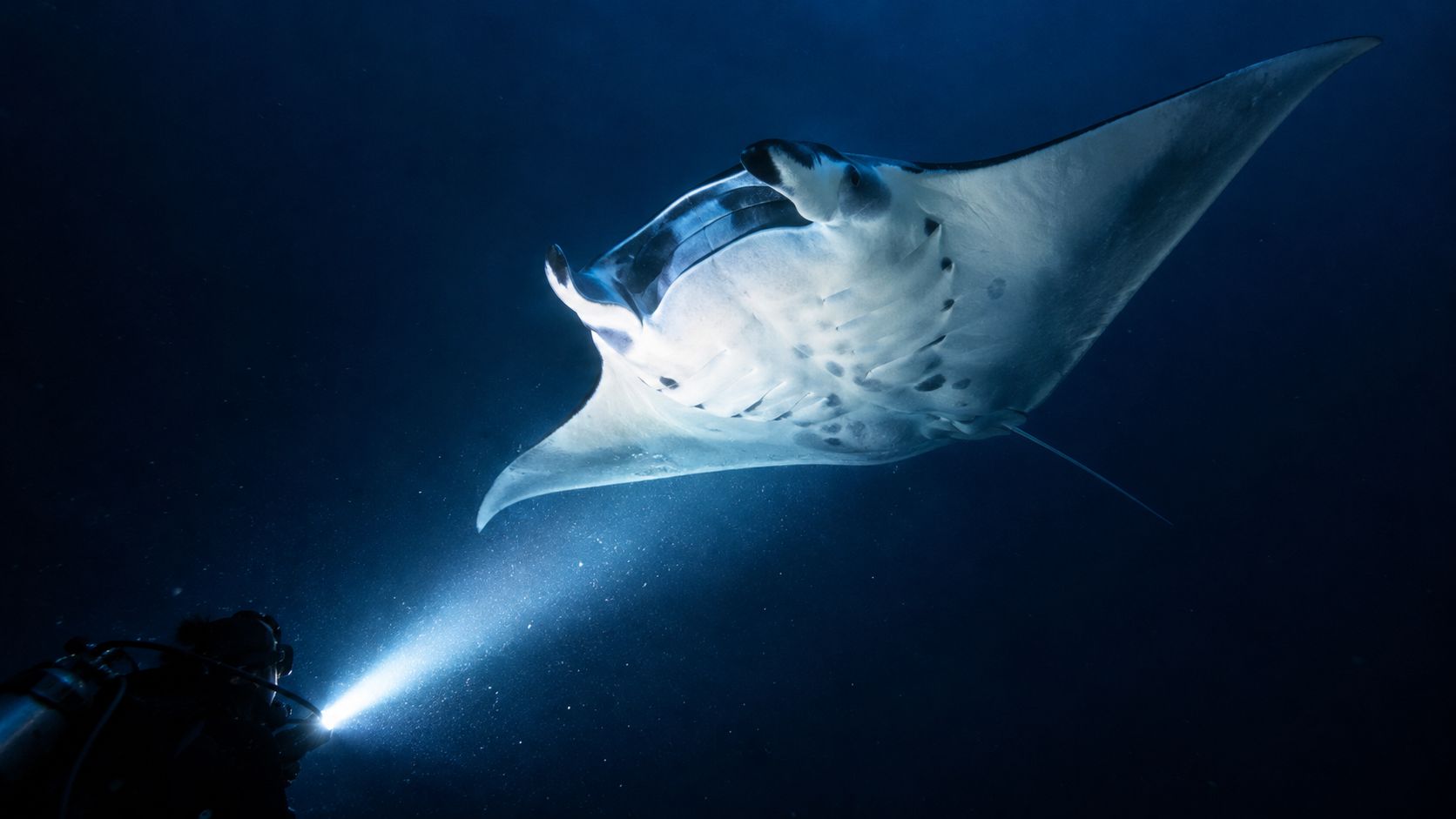
The first time a manta rolls into the beam, most first-timers go quiet. The white belly appears, then the dark back, then the full shape slides through the light as if it knows the route by heart. That is the true appeal of the night manta ray dive Kona, it is a wildlife encounter that feels immediate, but still depends on animals that make their own choices.
Kona's manta tradition began in the late 1970s, when artificial lights near a Keauhou oceanfront hotel drew plankton close and the rays followed. By 2002, about 11,000 snorkelers and scuba divers had joined manta tours that year, participating shops generated about $920,000 in direct revenue, and manta ecotourism was estimated to contribute more than $2.5 million annually to Hawaiʻi's economy source. That history matters because it shows a pattern that held up over time, not a passing novelty.
What makes Kona different
Researchers did not just find an attractive night dive. They documented a sustained phenomenon along the coast through repeated surveys at Keauhou and Ho'ona Bay, which is why the experience became part of Kona's marine-tourism routine rather than a one-off attraction. Historical testimony also reported manta rays on about 80% of dives at Garden Eel Cove. That figure does not guarantee a sighting on your night, but it does explain why divers plan around this site and accept the trade-off that wildlife still runs on wildlife time.
For divers who want a practical overview of local conditions, Kona diving conditions are worth reviewing before you book.
How the Encounter Actually Works
The lights do the work. Underwater beams pull zooplankton into the upper water column, and reef manta rays, Mobula alfredi, return again and again to feed in that lit zone source. That is why this dive feels less like covering ground and more like setting up a wildlife station and waiting for the animals to arrive.
A NOAA-hosted study documented two regular sites near Kailua-Kona, Manta Village at Kaukalaelae Point and Manta Heaven at Makako Bay, with sightings occurring almost nightly at both locations. Observation dives in that study began right after sunset, around 18:00, and lasted about an hour. In a separate six-year study, researchers recorded 25,444 observations involving 118 individually identified manta rays, which helps explain why experienced operators treat this as a repeatable nighttime pattern rather than a random luck shot source.
Timing and conditions matter
The night manta ray dive Kona still depends on plankton density, sea state, visibility, and local site conditions. I would rather run a calm, slightly less dramatic night than a rough one where people are fighting buoyancy or feeling seasick. The mantas notice that, too. When the ocean is unsettled, the whole encounter changes, and the cleanest setup comes from giving the animals a steady light field to work with.
The practical expectation is straightforward. Treat it as a wildlife encounter, not a promised performance.
For planning, the 30 to 45 minute in-water observation window is a useful working range, but the mantas set the pace, not the clock source. A close look at how deep the Kona manta dive runs helps with ladder readiness and comfort, because depth, darkness, and exit control matter more than most first-time divers expect. Visitors should also understand the trade-off here. Sometimes one manta shows up, sometimes more, and anyone promising a fixed outcome is selling the ocean, not the dive.
Why Garden Eel Cove Is the Best Site for Your Manta Dive
Garden Eel Cove earns its reputation because the site handles the hard parts for you. It is naturally sheltered from open-ocean swell and wind, so conditions are often calmer, the viewing setup is cleaner, and the group spends less time fighting the water source. That matters because a manta dive succeeds on control and positioning, not on covering distance.
Protected water beats exposed water
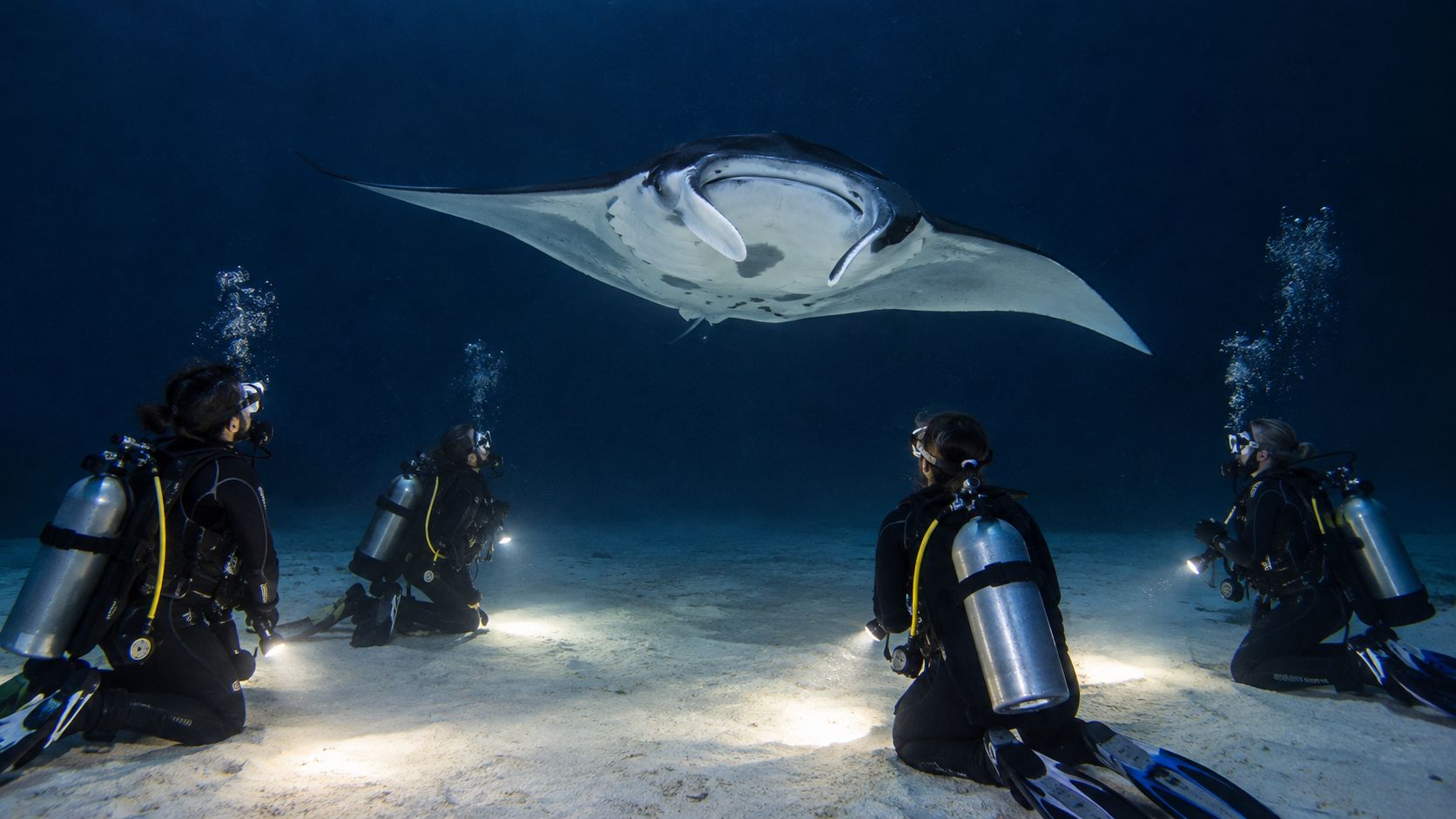
The cove has a defined sandy area instead of a broken-up reef edge. That gives the group one place to settle while the mantas pass overhead, and it keeps divers away from live coral. On a night dive, people commonly position on sand at about 30 to 40 feet and point their lights upward, with the reef slope toward the sand flat creating a natural staging area. For a guided manta encounter, that layout works well.
Exposed sites can still produce manta activity, but they are less forgiving. Surge moves divers around, visibility gets messier, and people who cannot hold position turn a clean encounter into crowd control. A protected site usually feels better before the first manta appears, because you spend less energy managing the water and more time watching the animal do what it came to do.
A practical way to compare tour options is to start with the site layout, then look at the boat and briefing style. A close look at Kona Honu Divers' manta ray dive page and the general diving tours page helps you see how a run at Garden Eel Cove is set up. When the site is calm and the group is well placed, the experience is usually better organized, with good separation between observers and reef structure. That still does not guarantee mantas. They are wild animals, and the ocean decides the final result.
Booking Logistics and Your Equipment Checklist
Book early if the manta dive is a must-do for your trip. These trips sell into busy travel windows fast, and the smartest move is to reserve before you build the rest of your schedule around them. That gives you room to shift other plans if weather, surf, or seasickness changes your night.
The evening usually starts with check-in at the harbor, a gear handoff, and a briefing before the boat heads out. That's where the crew covers entry, exit, lights, and the way the site works. If you like to travel light, that's realistic here, because free nitrox is included and rental gear is proactively serviced, which cuts down on the amount of personal gear you need to drag through an airport or hotel room.
Night Manta Dive Packing Checklist
| Item | Why You Need It | Rental Available |
|---|---|---|
| Exposure protection | A stationary night dive can feel colder than a moving daytime dive | Yes, through the operator's rental setup |
| Primary dive light | Lets you manage your space and helps the crew keep the observation area organized | Yes |
| Backup light | Good redundancy if a primary light fails | Yes |
| Camera or action rig | Useful if you want footage, but keep it streamlined | No, bring your own |
| Mask and fin comfort items | Better fit means less fumbling in the dark | Yes |
| Seasickness prevention | Night boats and a stationary dive can be rough on prone stomachs | No, bring your own |
| Certification card | Required for the scuba portion | No |
Check beginner gear options before you travel
Don't ignore seasickness prep
A lot of divers think of seasickness as a surface problem, but the combo of night boat, gearing up, and a still-water wait can do a number on prone stomachs. If you know you're sensitive, plan ahead with the Ship-EEZ Seasickness Patch (purchase option), Dramamine pills (purchase option), Bonine pills (purchase option), Sea Band wristbands (purchase option), or ginger chews (purchase option). The goal isn't to medicate casually, it's to remove the one problem that can ruin an otherwise perfect night.
Night Dive Procedures Safety and Manta Etiquette
A good night manta dive in Kona starts with structure. The crew briefs the group before entry, everyone drops in together, and the divers settle into the sandy viewing area in a loose semicircle with the water column left open in front. That layout gives the mantas room to feed and keeps divers off the reef.
Light placement and body position
Divers hold their lights above their heads and point them upward. That keeps the beam in the plankton column and off the bottom and living coral source. The main mistakes are easy to avoid, drifting into the feeding lane, settling onto coral, chasing the rays, or reaching out to touch them. Each one disrupts the encounter.
NOAA guidance is clear that this is an observation-only event because contact can strip the rays' protective mucus coating. The job is simple, stay still, keep your space, and let the animal choose the distance.
Golden rule, stay low, stay still, let the mantas come to you.
The etiquette works because mantas return to places that feel predictable and low-stress. A calm group creates a cleaner feeding pattern and a better chance of repeat passes.
For a practical breakdown of that approach, see the diver etiquette used in Kona.
What the Dive Feels Like Plus Honest Readiness and Camera Tips
The first few minutes underwater are always the same. The world narrows to a dark column, your lamp starts finding suspended particles, and then one shadow appears at the edge of visibility. When the first manta rolls overhead, the motion is so smooth it almost looks slow, even when it's moving fast enough to vanish and return on the next pass.
Readiness is more than swimming ability
The question isn't just whether you can swim. It's whether you can stay calm, manage equipment, keep track of the boat, and climb a ladder vertically after time in dark open water. That's where older travelers, anxious beginners, and lapsed divers should be honest with themselves. A private briefing or a refresher makes sense if you're rusty, and the same goes for anyone who knows they get tired, cold, or disoriented faster than they'd like.
Crew support and trip design matter. A guide can't swim for you, but a good brief can reduce surprises before they happen. That's especially true on a night dive, when the combination of darkness, mild current, limited visibility, and gear handling can feel bigger than the actual exertion.
If ladder exits make you tense on a daytime boat, don't pretend night will feel easier.
For photographers, the best shots usually come from restraint. Keep fin movement minimal, hold cameras close to your body, and don't block the light cone with your rig. Fast-moving subjects in the dark reward simple, responsive settings more than complicated setups, and the biggest win is usually clean positioning rather than fancy gear.
If you want a deeper dive day after this one, the blackwater night dive and the premium advanced two-tank trip are natural add-ons. For social proof, the Kona Honu Divers review widget belongs here:
Final Thoughts and Common Questions
This is one of the most reliable wildlife experiences a certified diver or confident snorkeler can book in Hawaiʻi, and the preparation is what turns it from nerve-racking into unforgettable. A mixed family trip works well, snorkelers and divers can absolutely share the same outing, and the scuba portion does require certification while the snorkel side does not. First-time night divers can handle it too, as long as they're honest about comfort, follow the briefing, and don't rush the ladder or the gear.
Kona Honu Divers runs guided manta nights with the kind of operational discipline this dive needs, from the briefing to the boat to the underwater setup. If you're ready to plan a night manta ray dive Kona with a team that understands both the wildlife and the logistics, visit Kona Honu Divers and reserve a spot before your dates fill up.