
You can stand on a Kona dock with your fins already clipped, the boat rocking gently, and still feel unprepared for what this coast asks of you. The water looks calm from shore, the sunset looks easy, and then the crew starts talking about surge, site choice, mantas, blackwater, and whether today is a boat day or a no-go day. Diving Kona rewards people who understand those trade-offs before they book, because the best dive here is rarely the one with the biggest promise, it's the one that matches the ocean in front of you.
Welcome to Diving Kona
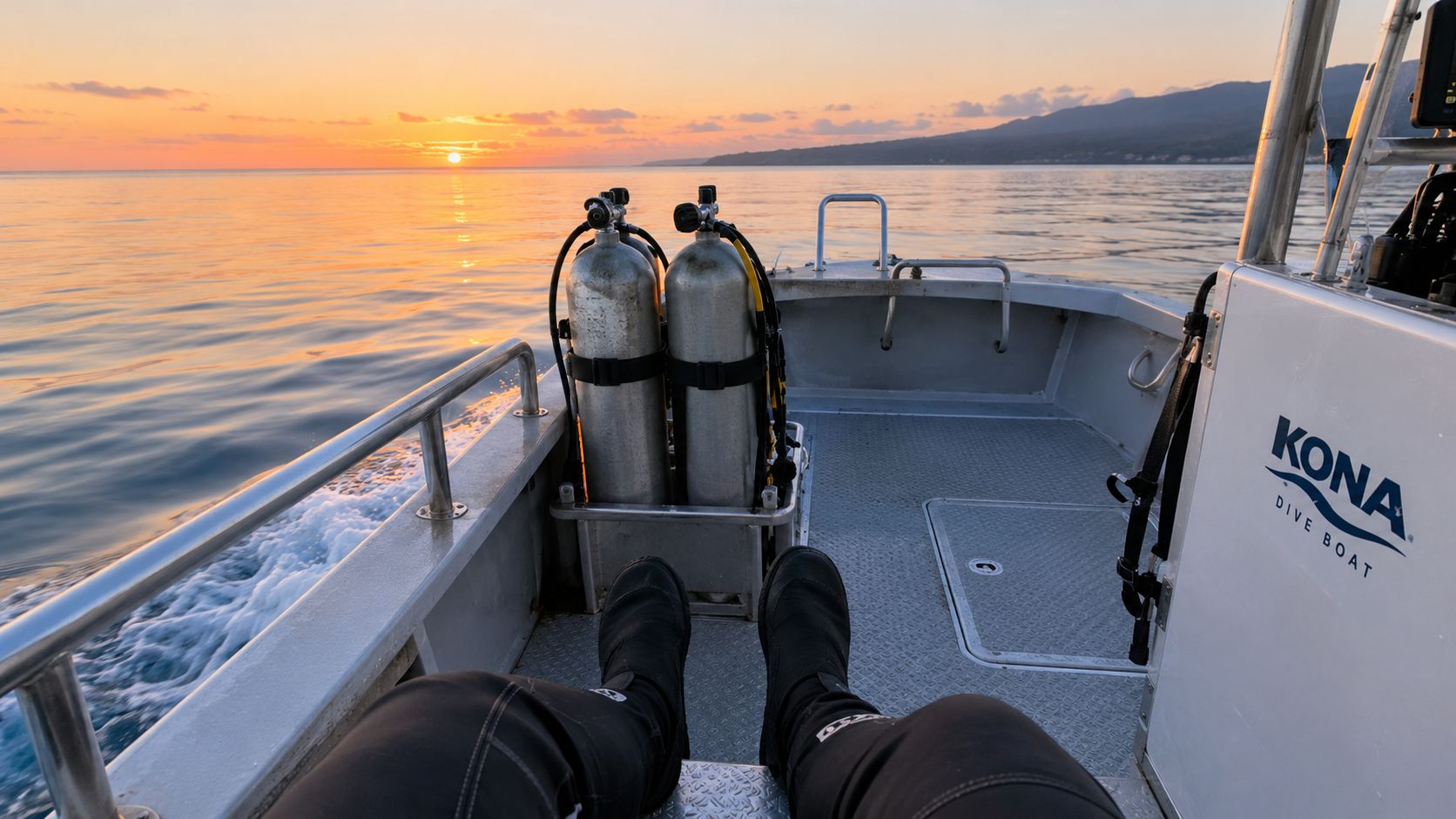
The first time I stepped onto a Kona dive boat before sunrise, the coastline was just a dark line and the engine noise felt louder than the conversation. By the time we cleared the harbor, the sky had turned peach, the water had gone from glassy to textured, and the crew was already reminding people that Kona isn't a postcard reef with a single personality. It's a working volcanic coast with real weather, real current, and marine life that shows up on its own terms.
That's why people come here for very different reasons. Some want shallow reef time and lava topography, some want a manta night, some want the dark, open-water weirdness of blackwater, and some want a site with arches, tubes, or deeper pinnacles. Kona can deliver all of that, but not all on the same day, and not always from the same entry style.
The honest part of a Kona plan is just as important as the fun part. Surge, swell direction, entry risk, and crowding all matter here, and so does animal welfare, especially at the manta sites where many boats and many lights are trying to share one natural feeding pattern. A smart diver doesn't ask only “What can I see?” The better question is, “What's the safest, lowest-impact way to see it today?”
For a broader look at charter options, you can also review Kona Honu Divers' diving tours.
How the Kona Coast Shapes Every Dive
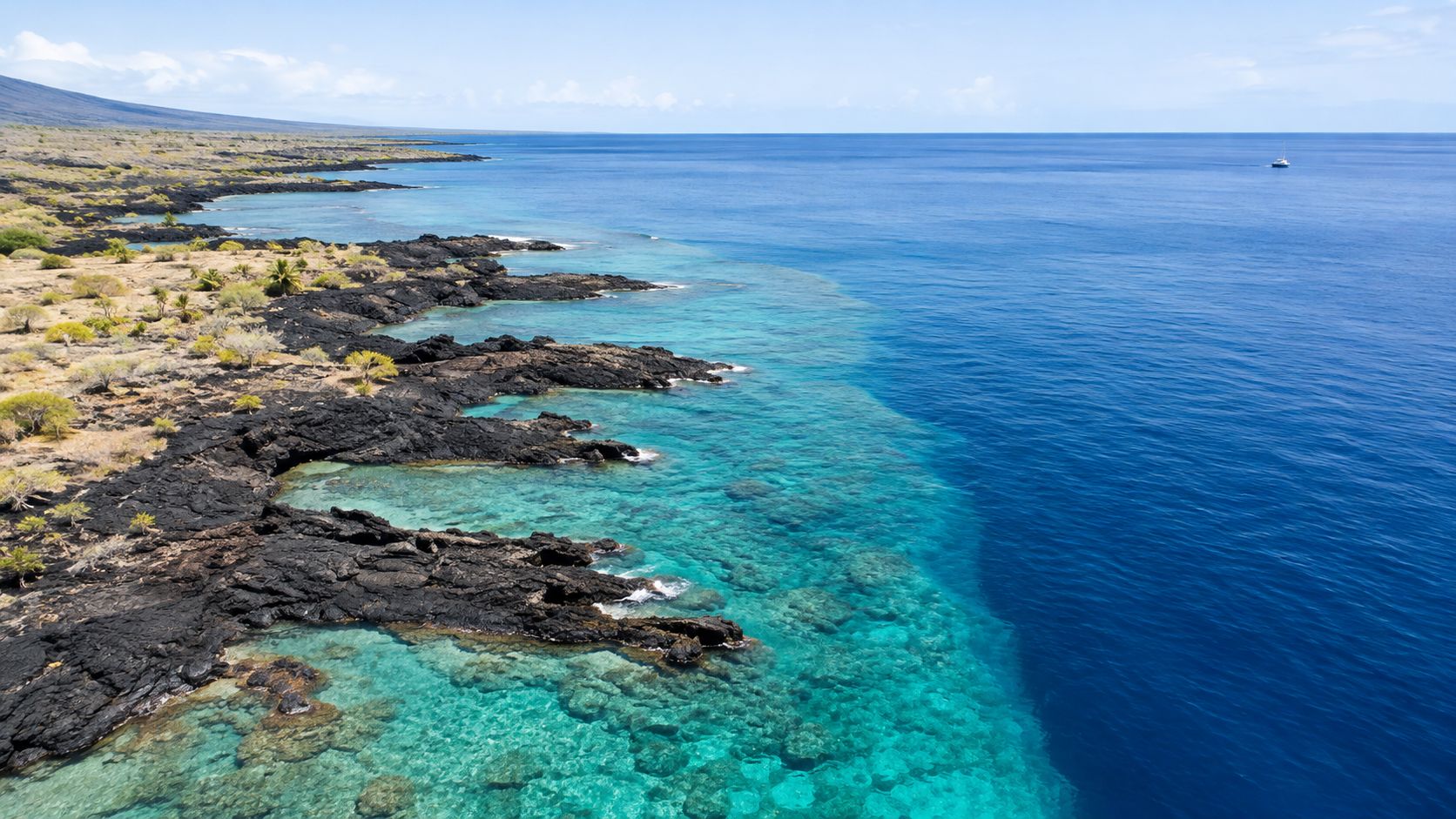
Kona diving makes sense once you picture how the island was built. Lava cooled into benches, fingers, tubes, and ledges, then the coast dropped away fast enough that a shallow entry can turn into deep water almost immediately. At the Old Kona Airport Marine Life Conservation District, the nearshore lava fingers reach to about 50 feet (15 meters) before the bottom falls quickly into much deeper water, and that steep profile explains why some sites feel forgiving while others demand precise buoyancy and clean timing on entry and exit (DLNR marine life conservation district information).
What that means underwater
The Kona side sits in the island's rain shadow, so the coast often avoids the runoff and sediment that can cloud other shores. That's one reason divers talk about good visibility here so often. The protected bays and coves can stay comfortable for snorkeling and shore scuba when conditions are calm to moderate, but the same lava rock that gives you beautiful topography can make a sloppy entry or a rushed exit feel rough in a hurry.
Practical rule: if the surface looks marginal at the shoreline, don't let a pretty underwater forecast talk you into a bad entry.
Kona Coast Access at a Glance
| Access Type | Typical Depth Profile | Best Conditions | Main Limitation |
|---|---|---|---|
| Shore entry | Shallow start, then rapid drop | Calm seas, low surge | Lava-rock entries can turn hazardous fast |
| Boat dive | Site-dependent, often easier to control | Stable marine forecast | More logistics, less flexibility |
| Snorkel from shore | Shallow reef and cove zones | Protected water, light wind | Surface exposure and crowding |
| Night boat dive | Managed depth and lighting | Calm sea state, clear briefing | Motion sensitivity and light discipline |
If you've only dived tropical destinations where the shoreline feels soft and gradual, Kona can surprise you. The coast gives you depth access close to shore, but it also compresses the risk into the places where people step in and out. That's why local divers read the marine forecast first and the map second.
For visibility-specific planning, see this Kona visibility guide.
The Core Kona Dive Experiences Explained
Kona's signature dives fall into a few clear categories, and each one solves a different problem for the diver. Some days you want color and structure. Other days you want a big animal encounter or a stranger, more scientific night experience. If you know which category you're after, booking gets much easier.
Reef, pinnacles, and lava topography
Reef dives around Kona are about reading the lava first and the fish second. The terrain itself does a lot of the work, with ledges, slopes, coral heads, and the occasional cave or arch creating different pockets of life. These sites fit certified divers who want a relaxed daytime dive with time to look around, photograph, and drift through the structure without racing a current or a depth goal.
Shallow-to-moderate reef dives also suit mixed groups because the bottom time can feel generous when the profile stays forgiving. That's the kind of dive where you notice turtles, eels, tangs, and the way the lava and coral have grown together over time.
Lava tubes and swim-throughs
A lava tube is not a technical cave dive just because it has an overhead element. In Kona, many swim-throughs stay well within the comfort zone of recreational divers who have decent buoyancy and don't kick hard. The key is control, not bravado.
Stay flat, stay slow, and don't treat an overhead as a place to hover. If a swim-through feels tight, skip it and keep the dive open.
These dives fit people who want a bit more structure and drama than a simple reef drift. The best ones feel like moving through a volcanic hallway with sunlight on one end and blue water on the other.
Deeper pinnacles and advanced sites
Some Kona sites ask for more experience, and the reason is usually not just depth. It's the combination of ladder exits, surface logistics, and a site that rewards good trim, good buoyancy, and comfort in less forgiving water. If you're chasing bigger jacks, sharks, or the occasional pelagic passerby, those dives make sense only when your planning is as solid as your skills.
For a broader comparison of what the island offers, this Big Island diving overview is a useful next step.
Manta Nights and Blackwater Compared
The manta night dive and the blackwater dive both happen after dark, but they're different in almost every practical way. One is a predictable feeding event at a known coastal site. The other is an offshore drift into deep darkness where the animals are small, drifting, and often unfamiliar even to experienced divers.
What the manta dive is actually doing
Kona's manta night dive works because light concentrates plankton, and plankton attracts mantas. The county safety assessment identifies Makako Bay and Keauhou Bay as the two principal viewing areas and says underwater lights gather zooplankton into a predictable feeding zone. The same assessment also notes substantial nighttime congestion and says at least 42 commercial operators were identified at the two sites as of August 2015 (county safety assessment).
That makes manta diving feel theatrical, but it also means you should think like a guest in a managed wildlife zone, not like you're on a normal reef dive. Lights, body position, and distance from the animals matter. So does operator discipline.
What blackwater gives you instead
Blackwater diving is a different kind of attention. NOAA-associated research on Kona night dives used 59 night-dive surveys off Hawaiʻi Island between November 2013 and May 2015 and found the most abundant groups were salps, siphonophores, and ctenophores. The environmental model showed that water temperature, local bathymetry, and the El Niño–Southern Oscillation index were the strongest predictors of pelagic diversity, and those variables explained 43% of the observed variation in biodiversity (NOAA-associated blackwater research).
That's why the experience feels more like a floating observation station than a reef dive. You're not watching big animals sweep overhead in a bright cone of light. You're hanging in open water with the dark all around you and tiny life drifting into view.
For the blackwater side of Kona, this blackwater dive page is the cleanest place to compare trip styles.
How to choose between them
Choose manta if you want a high-confidence wildlife encounter, a social group setting, and a dive that's easier to explain to first-timers. Choose blackwater if you want novelty, open-water calm, and a more demanding mental frame. Manta is about presence. Blackwater is about curiosity.
When to Go and How Long to Stay
Kona can be dived nearly year-round, but not every month feels the same. The three things that matter most are surface conditions, water temperature, and how crowded the boats and sites feel. If your schedule is flexible, use those three filters before you decide what kind of trip to book.
How season changes the feel
Summer and early fall usually give you the calmest entries and the warmest water, which makes shore sites and long relaxed boat days more comfortable. Winter tends to bring cooler water and bigger swell, and that affects shore diving more sharply than a guided charter. The water on the Kona side can be diveable in many seasons, but the shoreline is where the weather announces itself first.
Manta diving is different because the feeding pattern is not tied to a natural reef boom in the way many daytime dives are. The lights still draw plankton, and the plankton still draws the mantas, so the encounter remains a year-round possibility. That doesn't guarantee a show, but it does mean the basic setup isn't seasonal in the same way a surf or visibility window can be.
A realistic itinerary
For a three-day plan, I'd keep it simple. Day one, do a reef or pinnacle charter and settle in. Day two, book the manta night. Day three, leave room for a shore dive, a snorkel, or a rest day if the surface forecast looks uneven.
For a five-day plan, add a deeper or more advanced daytime dive, then put blackwater on a separate night if you are comfortable in open water after dark. Leave one day unscheduled. Kona punishes people who stack every dive back-to-back and then act surprised when fatigue or motion sickness catches up.
Go/no-go rule: a high-surf advisory is a no for shore entries, even if the water looks inviting from a parking lot.
The night before you commit, check the National Weather Service Honolulu surf and marine forecast and the local forecast for west-facing shores. If the surface looks wrong, there's always another day.
Choosing a Safe and Responsible Kona Operator
A good Kona operator is easy to spot if you know what to ask. Don't start with the logo. Start with the operating style, the group size, and whether the crew talks clearly about risk, lighting, and animal contact before anyone boards. The right questions tell you more than a polished website does.
What to ask before you book
- Group size and guide load: Ask how many divers are in the water together, not just how many seats are on the boat. Smaller groups usually mean better spacing, easier briefings, and less crowding at the site.
- Lighting behavior: Ask how the crew places lights and whether they avoid blasting the water column in ways that spread the group too wide. That matters especially on manta night dives.
- Distance from animals: Ask how the operator frames animal contact. A serious shop will talk about observation, not chasing.
- Rerouting and cancellation rules: Ask what happens if the site is crowded or the sea state changes. A flexible operator should be able to move, delay, or cancel without drama.
- Gear and servicing: Ask whether the rental fleet is actively maintained and whether nitrox is available for certified divers who want it.
The safety side matters just as much as the experience side. Hawaiʻi Ocean Watch reports that 25% of regularly observed manta rays show injuries attributed to humans and warns that overcapacity can increase risks to rays, participants, and crews (Hawaiʻi Ocean Watch). That's a strong reason to favor operators who treat crowd control as part of conservation, not just logistics.
A simple operator filter
If you're comparing shops, look for these signs of seriousness:
- Clear briefings before the dive instead of rushed pile-ons at the dock.
- Specific guidance on buoyancy, hand position, and where to stay in the water.
- Evidence of boat discipline, including orderly loading and realistic weather calls.
- Transparent booking flow that shows dates, departure times, and trip type before you pay.
For shops in town, this Kona dive shop directory is a practical starting point when you want to compare trip styles without guessing.
Getting Ready for the Water
The best Kona day starts the night before. If you're prone to motion sickness, boat prep matters more than camera settings, and if you're traveling with family, the gear plan matters more than the marketing photos. Packing well keeps the morning calm.
Seasickness, packing, and cameras
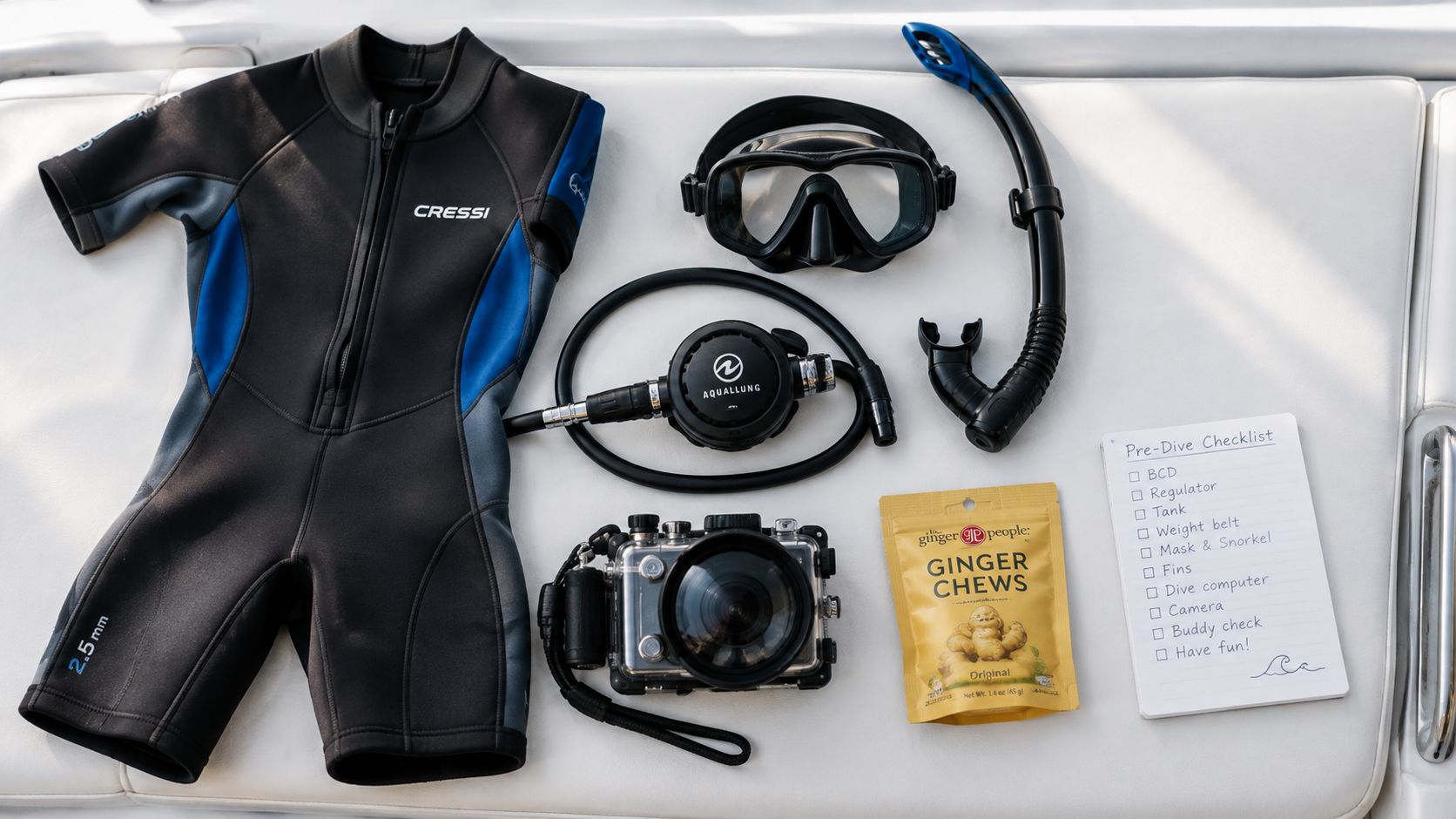
If you get queasy on boats, don't wait for the run out to figure it out. Some people do fine with a patch, some prefer pills, some like wristbands, and some need a layered approach. A backup like ginger chews is smart because it's easy to keep in your day bag and use early, before you're already uncomfortable.
For gear, bring what helps you stay efficient and what the shop doesn't usually hand out. That usually means personal mask, sun protection, and anything you rely on for comfort in and out of the water. Underwater photography in Kona night conditions usually works better with a camera you know well than with a complicated setup you've never practiced with in the dark.
Mixed groups need a plan
Families and mixed-certification groups do best when each person's role is set before boarding. The diver shouldn't be waiting on the snorkeler, and the snorkeler shouldn't feel like an afterthought. If one person wants a blackwater dive and another only wants a surface encounter, the right operator can keep that split manageable, but only if you say it clearly at booking time.
A simple readiness checklist helps:
- Certification cards and logbook notes for divers who may be asked about recent activity.
- Motion-sickness plan taken before departure, not after.
- Camera batteries and spare memory already packed.
- Warm layer or change of clothes for the ride back.
- Snacks and water for anyone traveling with kids or non-divers.
If you want a gear baseline before you fly, this beginner scuba gear guide covers the right kind of simplicity.
Questions Divers Ask Before Booking
Do I need certification for a manta dive? Not always, because many manta trips take snorkelers too, while the diver side obviously requires certification. If you want the most direct booking path, start with the manta ray night dive tour page.
How cold is the water? Kona is usually comfortable with a standard wetsuit, though winter dives can feel cooler and some divers prefer extra thermal protection.
What if one person wants blackwater and another wants to snorkel? Book a mixed trip only if the operator clearly supports both roles on the same outing, or split the group and keep the expectations honest.
If you're worried the dive will feel too intense, that's normal. A good crew gives a clear briefing, sets up the entry calmly, and keeps the sequence simple so you're never guessing what comes next.
Kona Honu Divers runs day trips, manta night dives, blackwater dives, and advanced options along the Kona Coast, with the kind of site planning that matters when conditions, crowding, and comfort all affect the experience. If you want to turn this guide into a real dive date, visit Kona Honu Divers and check the current schedule, then pick the trip that fits your certification level and the day's ocean conditions.