
You're on a Kona boat at dusk, your mask is in your hand, and the crew is clipping lights to a floating frame while the horizon goes purple. You're excited, a little nervous, and probably wondering whether the whole thing will feel as wild in the water as it sounds on the brochure. It will, if you pick the right site, listen to the briefing, and behave like a guest in the mantas' house.
For manta rays Hawaii, Kona is extraordinary. These are not captive animals, and they're not doing a choreographed show. They're wild reef mantas that keep showing up because the food shows up, the lighting works, and the local population is resident enough that researchers can track individuals over time, including 106 identified manta rays along the Kona Coast between 1992 and 2007 and a broader local population estimated at fewer than 200 in the same testimony state testimony.
If you want the straight version, this guide tells you what matters, where boats should go, how the night works, and how to act so you don't ruin the encounter for everyone else. It also points you toward the kind of Kona trip that makes sense for a first-timer, not just a gear nerd.
A First Night With Kona's Manta Rays
The best first night starts before you ever hit the water. You're standing on a boat in fading light, the crew is doing the briefing, and nobody's pretending this is a casual sunset cruise. The mood changes the second the lights go on, because the ocean stops feeling empty and starts looking staged by nature itself.
On a good Kona night, you're not hunting for mantas across the sea. You're waiting at a fixed viewing area while the lights pull plankton into a tight column, and then the mantas rise out of the dark below. The first pass usually looks bigger and slower than people expect, and that's when first-timers stop whispering and just stare.
What makes this worth the hype is not just the size of the animals. It's the consistency, which comes from resident mantas, repeat feeding behavior, and a long local history of boats learning where to position themselves. The encounter feels polished because the ecosystem has taught operators where the action tends to happen, not because anybody is feeding or chasing the rays.
See what the night dive setting looks like before you go.
Practical rule: show up thinking like a viewer, not a participant. The mantas should control the encounter, not you.
If you've never worn fins before, don't let that scare you off. A good crew keeps the process simple, the lights do most of the work, and the whole point is to float, watch, and let the ocean do the impressive part.
Why Manta Rays Show Up Night After Night in Kona
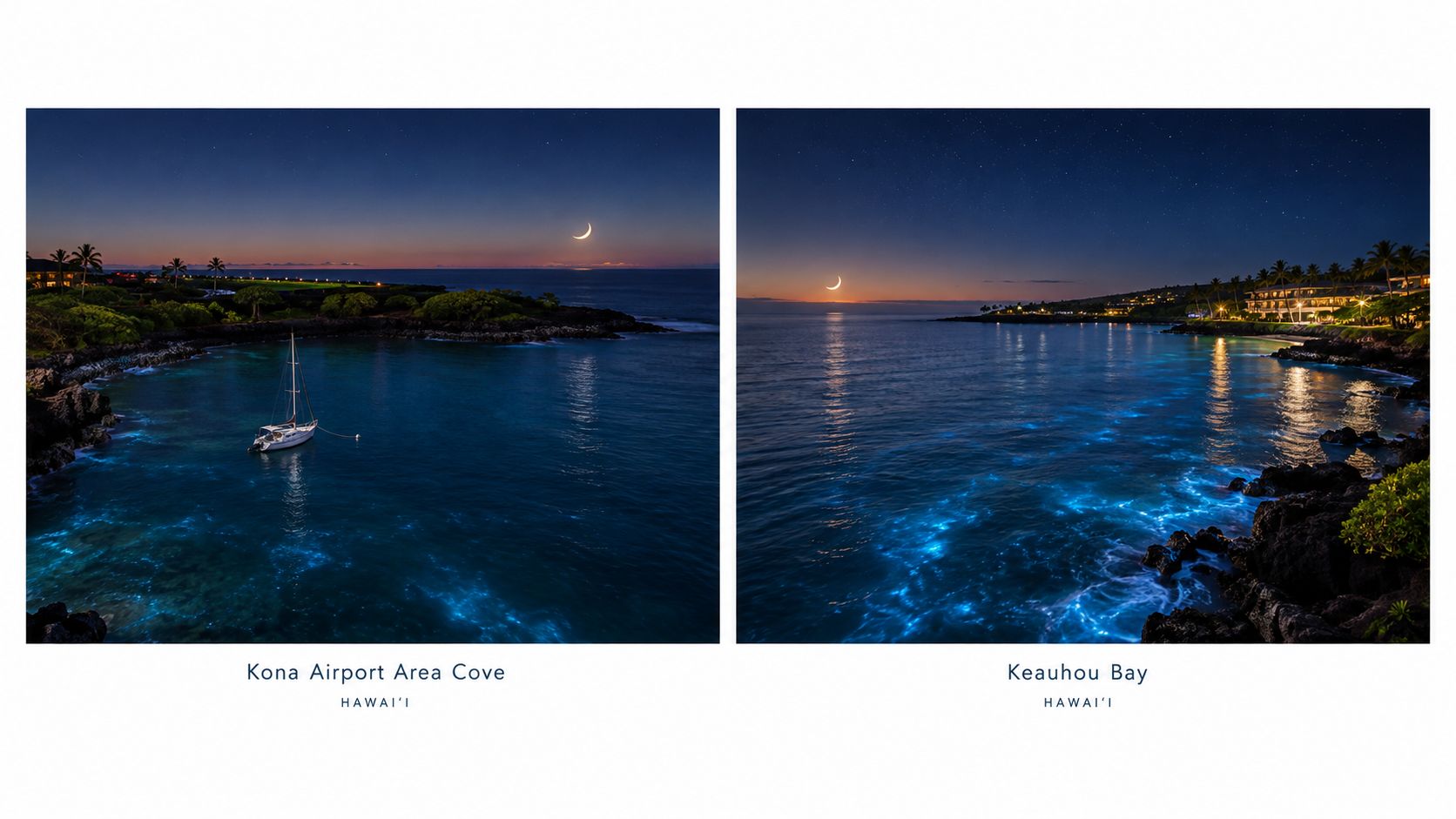
Kona's manta pattern is straightforward once you watch the food chain instead of the folklore. Lights pull plankton into a tight column, plankton draw in mantas, and the same feeding zones keep getting used. The night dive is straightforward feeding ecology, visible in real time.
What the mantas are doing
Reef manta rays feed by swimming through plankton-rich water with their mouths open. Their underside spot patterns are unique, which lets researchers identify individuals and track site fidelity, residency, and recruitment by photo-ID. That turns a tourist encounter into a living animal population that can be followed over time.
The local population is small, and visitors should treat it that way. Hawaii legislative testimony described Kona's reef manta population as small, resident, and unusually well documented, with an average of 57 unique manta rays observed per year in the preceding four-year period and only two to three newly observed pups annually state testimony. Those numbers explain why the encounters feel dependable without losing their wild edge.
Why the lights work
Operators use underwater lights to concentrate plankton in the illuminated water column. The mantas come up from below and feed where the food is densest. DLNR guidance makes the rule clear, people should not touch, chase, harass, or ride the animals.
Bottom line: the lights do not create manta rays out of nowhere. They make food easier to find in a predictable patch of water.
That is why Kona nights feel so repeatable. You are watching a feeding pattern shaped by ecology, local geography, and years of careful observation.
Garden Eel Cove vs Keauhou and Why Most Boats Pick the Cove
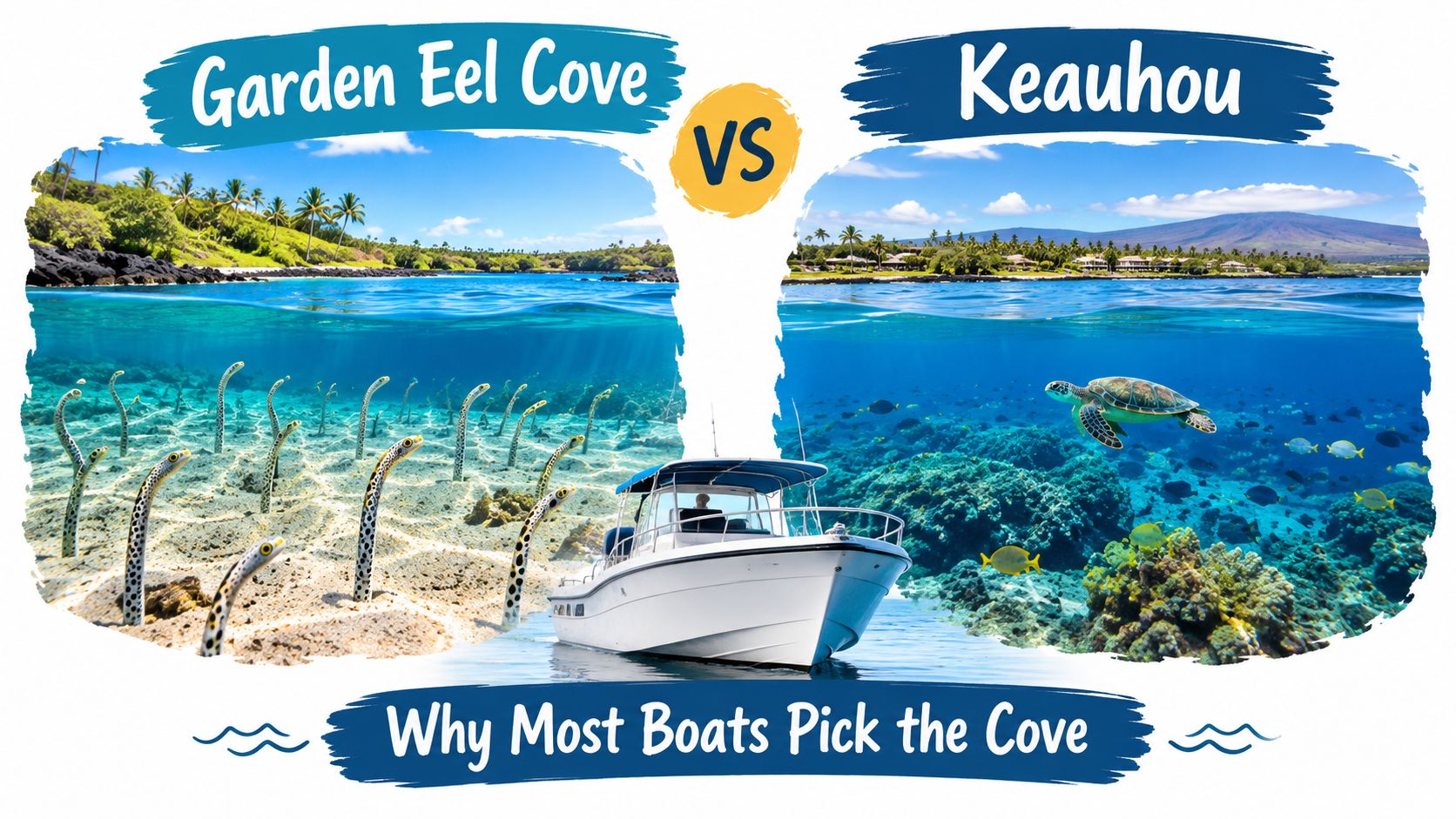
If you want the straight operator answer, Garden Eel Cove is the better pick for most visitors. It gives crews a cleaner setup, gives guests a clearer view, and handles a first manta night with less fuss. Keauhou has real value, but the cove is the site I would send a new visitor to when conditions line up.
How the two sites differ
Garden Eel Cove, also called Manta Heaven, sits on the Kona airport side and draws a lot of nighttime traffic. Keauhou Bay, known as Manta Village, is the south-side alternative. A University of Hawaiʻi study drew on more than 23,000 sightings of 167 individually identified manta rays across 13 years of community-sourced observations at both sites, which gives a strong picture of how each location behaves over time.
That same study found Garden Eel Cove usually supported larger aggregations, while Keauhou was visited mostly by females. The combined sites showed an overall roughly 1:1 sex ratio. For visitors, the practical takeaway is simple, Garden Eel Cove is usually the stronger choice if you want the better chance of seeing a bigger, more open group of mantas.
Why operators favor the cove
The reason is site shape, viewing angle, and how boats hold position. A protected location gives the crew a steadier platform, the guests a better line of sight, and the mantas a clean open-water lane to feed through. Add nearby reef structure and the result works well for both snorkelers and divers.
Read the side-by-side site breakdown before you book.
If this is your first manta night, choose the site that gives the crew the cleanest setup and the mantas the least clutter.
That is Garden Eel Cove in plain English. It is the site I would trust for a smoother first trip, and it should be the first site most visitors ask about.
Snorkel or Scuba With the Mantas
The right format depends on your comfort in the water, not on bragging rights. Snorkeling is the easier entry point, and scuba is the more immersive option if you're already certified and comfortable spending time on the bottom. Both work, but they feel very different.
What snorkelers do
On a manta snorkel, you stay at the surface, hold onto a float or viewing mat, and watch the mantas feed below you. You don't need a scuba certification, but you do need to swim confidently and stay calm while you float in dark open water. This is the better call for first-timers, families, and anyone who'd rather keep breathing normally through a snorkel than manage tank, buoyancy, and depth.
What divers do
On the dive side, you settle on the sand in a controlled area and look up while the mantas pass overhead. The experience feels more enclosed and more dramatic because the animals come through your whole field of view. If you're certified, comfortable in low light, and want the fuller underwater feel, scuba is the stronger choice.
See the practical snorkel-vs-dive comparison here.
My call: if this is your first manta night and you're not already a diver, snorkel. If you're certified and want the better underwater perspective, dive.
Kona Honu Divers runs a 2-tank manta ray dive option that pairs well with divers who want a full evening around the encounter. That's the format to look at if you want a structured dive day leading into the night show, not just a single quick splash.
If you're choosing purely for comfort, don't overthink it. Snorkel if you want ease, scuba if you want immersion, and don't force the dive version just because it sounds cooler.
What a Manta Night Feels Like
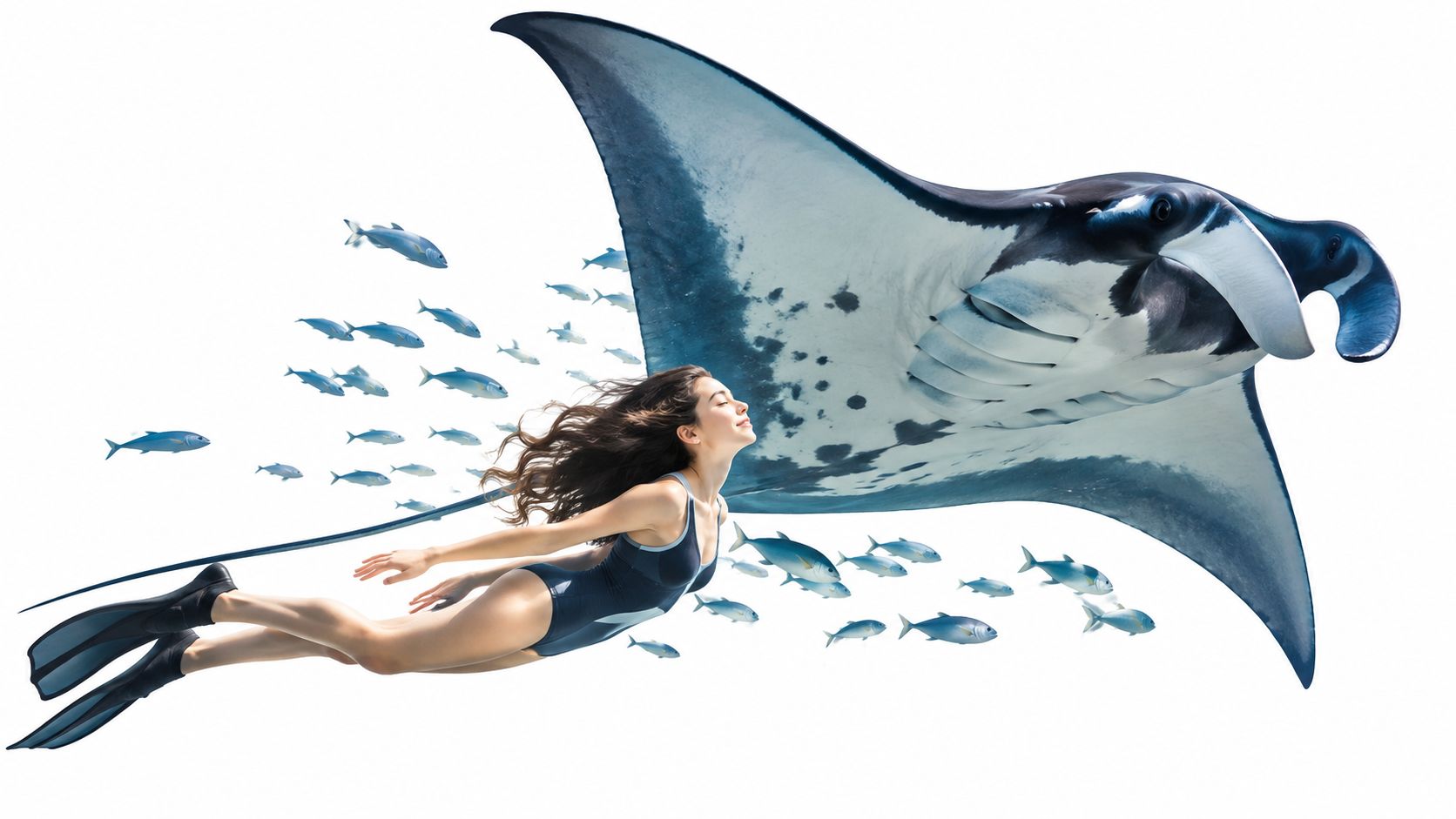
The night starts with check-in, a briefing, and a boat ride out in the fading light. The crew keeps it calm and organized. By the time you reach the site, the ocean feels darker, the stars stand out more clearly, and the deck lights seem sharper than they did on shore.
The sequence in the water
The lights go in first. Plankton gathers. Then the mantas show up, usually from below, and the whole scene shifts from waiting to constant watching.
They do not move like sharks or dolphins. They roll slowly, with their cephalic fins unfurled and their mouths open, and that smooth, deliberate movement is what makes the encounter feel so strange and memorable.
A manta can come very close, closer than many first-timers expect. Stay still and let the animal work the space. Do not try to steer the moment.
What surprises first-timers
The water is darker than daytime snorkeling, but the light columns make the action easy to follow. The wingspan looks bigger in person than it does in photos, and the pass-by often feels quieter than people expect. The other surprise is how fast nervous guests relax once they realize they do not need to chase anything.
Guests who do well keep their position, watch the manta, and let it choose the approach. That is the right mindset for this dive.
The rhythm of the night is patience, while one of the most polished wild encounters in the islands unfolds in front of you.
Manta Etiquette and Why It Matters
Kona's mantas are not an endless resource. They are part of a small, genetically isolated population, so careless behavior has a real effect. The rules are there because the biology is fragile, and the encounter depends on keeping that biology intact.
The core rules
- Don't touch. Hands can damage the manta's protective mucous layer, and Hawaiʻi law protects manta rays in state marine waters.
- Don't chase. Let the animals choose the pass. Chasing burns energy and spoils the encounter.
- Don't block feeding paths. Stay where the crew places you so the mantas can move through the water column cleanly.
- Keep your lights where they belong. Divers shine up, snorkelers shine down, and nobody sweeps light around like they are signaling a plane.
Why the rules matter
NOAA's genetic work found strong female reproductive philopatry, which means females generally reproduce at the island where they were born. Mature females produce only one pup every 1 to 7 years NOAA. Adult breeders were estimated at about 104 around Hawaiʻi Island and 129 across Maui Nui, so the replacement pool is limited.
That is why you should take the operator briefing seriously and follow the operator code of conduct that guides good behavior.
Conservation rule: if your behavior would be annoying in a crowded room, it is worse in front of a feeding manta.
Stay still, stay neutral, and give the animals room to work. That protects the experience for everyone else and for the resident population that makes it possible.
Planning Your Manta Trip Like a Local
Book around the ocean you will get, not the glossy version on a brochure. Manta nights happen year-round, but calm water makes the ride easier and the whole outing more comfortable. If you get seasick, prepare before you step on the boat. Do not hope to tough it out.
Gear and comfort
For scuba, bring proper warm-water exposure protection. For snorkeling, expect to float and stay still for a while. People get cold on the ride home because they plan for the water and forget the wind.
If seasickness hits you, bring what works before you leave the dock. Common choices include the Ship-EEZ Seasickness Patch, Dramamine pills, Bonine pills, Sea Band wristbands, and ginger chews. Pick one that fits your body and your doctor's guidance, then use it before nausea starts.
Rules, timing, and why boats stay put
Hawaii's boating guidance sets a 4:00 p.m. to 4:00 a.m. operating window for manta-viewing activity, with commercial mooring use during the viewing period and rafting prohibited in that window state boating assessment. Boats hold position for safety and to keep the mantas moving through a predictable feeding area.
For a full season-by-season walkthrough, see the 2026 Kona manta ray dive guide. If the site changes or a trip gets canceled, do not assume the operator made a mistake. Surf, weather, plankton, and harbor conditions decide what is possible on a given night.
Book the manta dive or snorkel option that matches your comfort level with Kona Honu Divers. If you are already certified and want more challenge after manta night, plan an advanced Kona dive next, not a harder manta encounter.
Manta Ray Hawaii Questions Answered
Will I definitely see mantas? No. Anyone promising that is selling certainty they cannot control. Kona has a resident population and a strong feeding setup, but mantas still decide whether they show.
Should I book early in my trip? Yes. That gives you room to reschedule if the ocean turns rough or the site changes. It also protects your shot at the dive if weather wipes out your first night.
Why do some nights look smaller than others? Food availability changes, and that changes the size of the gathering. The 2025 University of Hawaiʻi study cited earlier found aggregation size tracked zooplankton density, which explains why the same site can feel busy one night and quieter the next.
What if I'm already an experienced diver and want more? Move on from manta night and choose a different kind of Kona challenge. A blackwater night dive or an advanced long-range dive trip gives you a different environment and a different set of skills to use.
Start with the manta tour that fits your comfort level, then build the rest of your Kona diving around that night. Kona Honu Divers runs guided manta trips for divers and snorkelers, and that is the practical place to begin if you want the encounter handled properly. Visit Kona Honu Divers, choose the manta option that fits your trip, and show up ready to float, watch, and let the mantas do the work.