
Picture this: you're descending into the warm, inky black of the Pacific Ocean. Your dive light cuts a beam through the darkness, illuminating a sandy patch of the seafloor that feels like a stage. Then, out of the deep blue, a massive, elegant shadow glides into view. That's the moment you'll never forget on the Kona manta ray night dive—an encounter that easily ranks as one of the most incredible dives you'll ever do.
Experience Kona’s Underwater Ballet
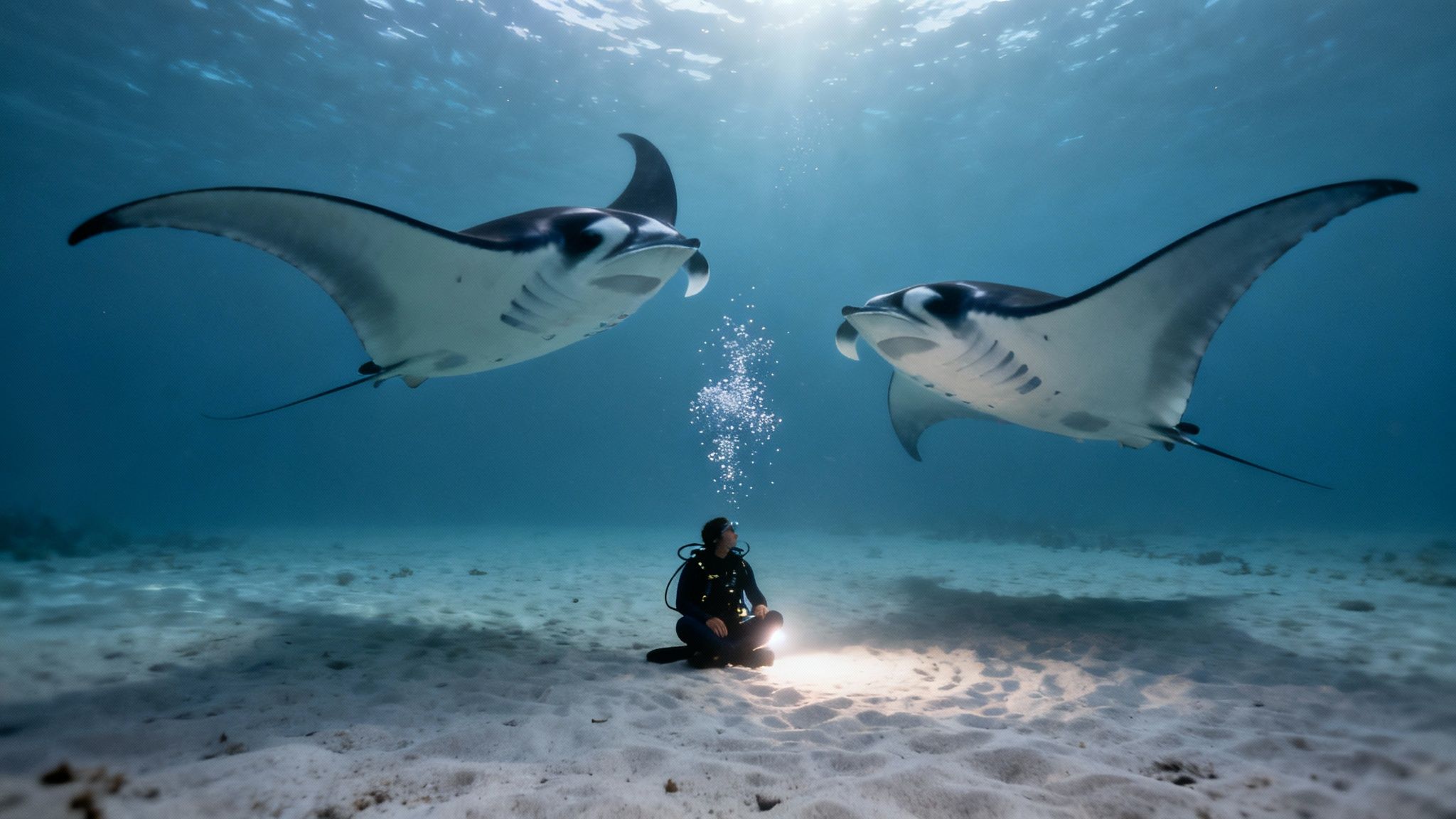
This is so much more than just another dive. It’s an immersive, almost otherworldly experience. While you can see mantas in other places, they're often spotted at cleaning stations. Kona is unique because it's a reliable feeding station. The mantas here are residents, not just passing through, and they show up almost every single night for dinner.
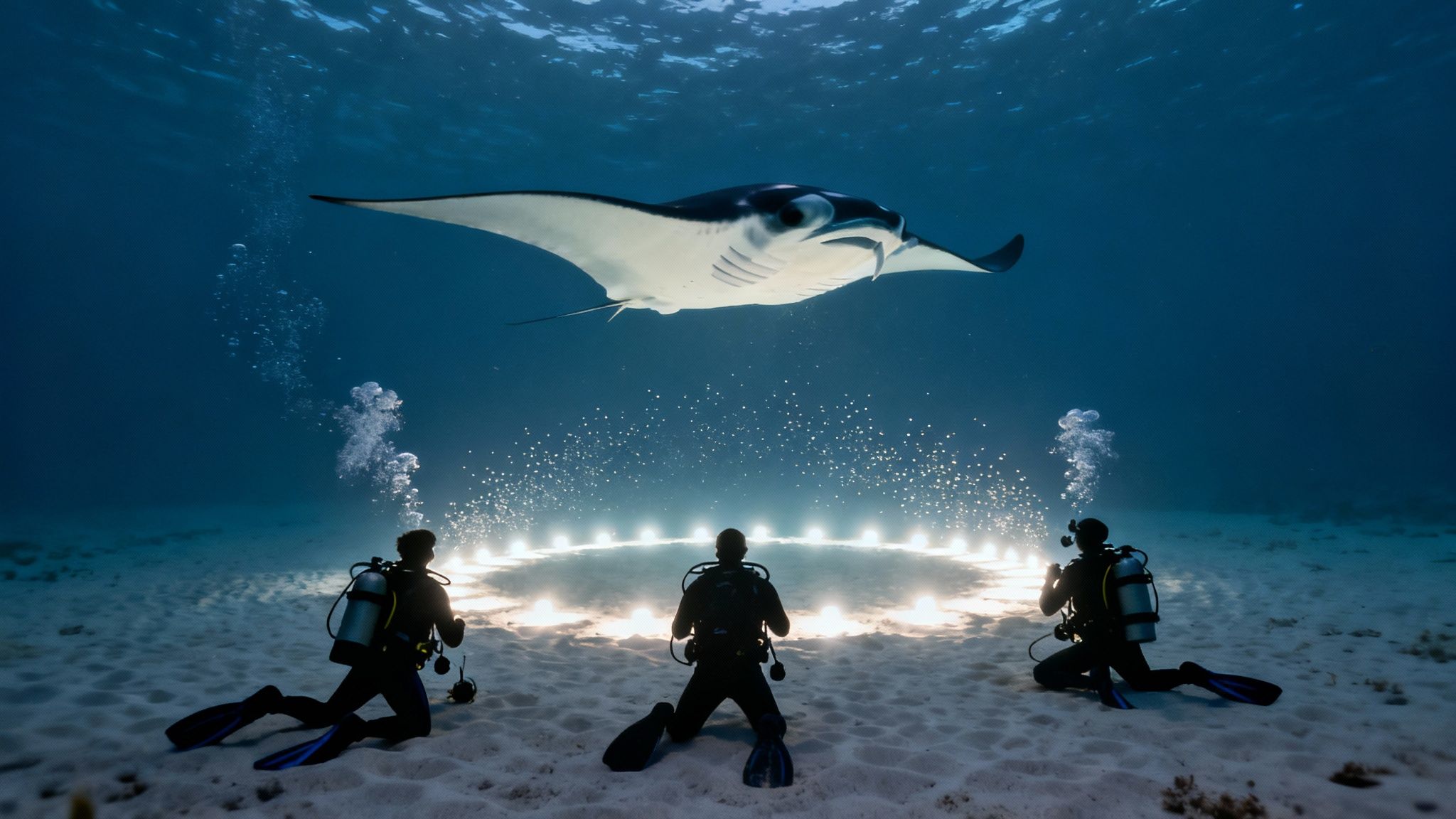
The whole thing feels like a carefully choreographed performance, which is why people often call it an underwater ballet. Dive operators set up what we call a "campfire of light" on the ocean floor. This light attracts huge clouds of plankton, which is exactly what the mantas are there to eat. For a beautiful description of this, check out the Manta Ray Kona Hawaii: Into the Underwater Night Ballet guide.
The Manta Campfire Explained
The idea behind the "campfire" is brilliantly simple. As a diver, you'll get settled on a sandy spot on the bottom and point your dive light straight up. All the divers’ lights together create a massive column of light, which acts like a giant magnet for plankton.
What comes next is pure magic. The manta rays, some with wingspans over 12 feet, swoop in to feast on the plankton buffet. They perform graceful barrel rolls and summersaults just inches above your head, mouths wide open to filter the water. You’re not just a spectator; you're sitting on the ocean floor, part of the show. It’s a truly humbling experience, and you can get more details on why it feels like an underwater nightclub here.
Ready to see it with your own eyes? Premier manta ray dive tours give you a front-row seat to one of the most breathtaking spectacles in the natural world.
Choosing The Best Kona Manta Ray Dive Site

When you start looking into the manta ray night dive in Kona, you'll quickly realize there are two main spots where all the action happens. While both sites attract manta rays, they are definitely not created equal. Picking the right one can be the difference between a good night and an absolutely unforgettable one.
The two go-to locations are Manta Village (near Keauhou Bay) and Garden Eel Cove (also known as Manta Heaven). For the most consistent, breathtaking, and comfortable adventure, Garden Eel Cove is the superior choice. Its protected location, superior viewing area, and healthier reefs make it the premier destination for the manta ray night dive.
Why Garden Eel Cove Is The Superior Choice
Garden Eel Cove sits in a naturally sheltered bay just north of Kona, and that protection from the open ocean is its superpower. What does that mean for you? Calmer water, far fewer cancellations due to rough seas, and a much more pleasant time on the boat and below the surface.
This spot is also home to a healthier, more vibrant coral reef. Many manta ray dive tours are two-tank trips, and the first dive at twilight here is just stunning. You get to explore a thriving underwater world, which is a fantastic bonus to the main event.
But the real game-changer at Garden Eel Cove is the "campfire" area. It's a huge sandy bottom where all the dive lights are placed. This setup allows multiple groups to spread out without feeling cramped, giving everyone a front-row seat for the manta ballet.
This prime location is a big reason why the manta ray experience draws around 80,000 visitors to Kona each year. Its dependable conditions are key to the incredible 80% to 90% sighting success rate that makes this dive so famous.
Understanding Manta Village
Manta Village, located further south, is much more exposed to the open ocean. This means you’re more likely to encounter choppy surface conditions and stronger underwater surge. Consequently, tour cancellations are more common here when the weather doesn't cooperate.
While mantas do frequent Manta Village, the viewing area is smaller and rockier, which can lead to a more crowded and less comfortable experience compared to the spacious, sandy bottom of Garden Eel Cove.
Garden Eel Cove vs Manta Village At a Glance
So, how do the two sites really stack up? Here’s a quick comparison to help you see why top operators almost always head north to Garden Eel Cove.
| Feature | Garden Eel Cove (Manta Heaven) | Manta Village (Keauhou Bay) |
|---|---|---|
| Location | North of Kona, naturally sheltered bay | South of Kona, exposed to open ocean |
| Water Conditions | Generally calm, less surge | Often choppy with stronger surge |
| Cancellation Rate | Very low | Higher due to weather |
| Viewing Area | Large, sandy bottom for comfortable viewing | Smaller, rocky area, can feel crowded |
| Reef Health | Excellent, vibrant coral for the first dive | Good, but less vibrant than Garden Eel Cove |
| Manta Sightings | Highly consistent and reliable | Consistent, but more variable |
Ultimately, understanding where to see manta rays in Hawaii is the first step in planning the perfect trip. By choosing an operator that prioritizes Garden Eel Cove, you're giving yourself the best possible shot at a smooth, awe-inspiring, and reliable encounter with Kona’s famous gentle giants.
What to Expect on Your Manta Ray Adventure
Your experience will likely start in the late afternoon at the harbor. After hopping on board, the crew will give you a full rundown of the plan, covering safety protocols and sharing some incredible facts about the very manta rays you're about to meet. It’s a great way to get comfortable and build the excitement for the night ahead.
Many of the top-rated manta ray dive tours are two-tank trips. This usually means your first dive is a beautiful twilight exploration of a Kona reef. You'll get to see the reef transition from day to night, which is a magical experience in itself as nocturnal critters begin to emerge.
The Main Event Unfolds
Once darkness falls, the real show gets underway. The dive crew sets up a powerful light source on the ocean floor, creating what everyone lovingly calls the manta "campfire." This intense beacon of light acts like a magnet for plankton, the mantas' primary food source.
You and your group will descend and settle onto the sandy bottom, shining your own dive lights up to add to the glowing buffet. And then, you wait.
All of a sudden, a huge, silent shadow glides out of the darkness. The first manta ray arrives, swooping into the light and performing an effortless barrel roll just inches over your head. Before you know it, others join in, creating a mesmerizing underwater ballet as they feed on the clouds of plankton.
Kona is truly a special place, home to one of the largest and most reliable populations of resident manta rays in the world. With water temperatures holding steady between 75-79°F (24-26°C) year-round, these encounters are possible any time you visit. Local operators know the mantas' patterns inside and out, which is why the manta ray viewing on UWPhotographyGuide.com is considered world-class.
This is the heart of the manta ray night dive in Kona—a front-row seat to one of nature's most spectacular performances.
Check Availability
How To Choose The Right Manta Ray Tour
Picking the right tour operator is probably the single most important decision you'll make for your manta ray night dive in Kona. The right company doesn't just take you out on a boat; they create an unforgettable experience built on safety, respect for the animals, and genuine aloha. When you're looking at different options, focus on operators with a solid reputation, seasoned guides, and a real commitment to protecting the mantas.
If you want a truly incredible encounter, look for small group sizes. It’s that simple. Fewer people in the water means you’re not bumping elbows on the seafloor, and you get a much more personal, unobstructed view as these gentle giants glide just inches above you.
An operator's preferred dive site also tells you a lot. As we've covered, the best companies stick to Garden Eel Cove. They know it offers calmer conditions and far more consistent manta sightings, which means a better dive for you.
The Kona Honu Divers Difference
Time and again, Kona Honu Divers proves they're a cut above the rest. Their guides are pros, their boats are top-notch, and their commitment to smaller groups makes all the difference.
They run most of their trips at Garden Eel Cove, which right away tells you they’re focused on giving you the best, most reliable manta experience possible. When you book with a crew that truly respects the ocean and its inhabitants, you’re not just going for a dive—you’re actively supporting responsible tourism. To get a better sense of what goes into a world-class tour, you can learn more about the Kona manta ray dive.
But don't just take our word for it. See what other divers have to say about their experience.
Ready to book your spot? Securing your place on one of the best manta ray dive tours is easy. The button below will take you straight to their booking calendar so you can lock in your date for this bucket-list adventure.
Check Availability
Preparing For Your Kona Manta Night Dive
A little prep work can make all the difference between a good dive and an unforgettable one. Getting ready for your Kona manta ray night dive is pretty straightforward, but a few key details will help you relax and fully enjoy the show once you’re in the water.
Let’s start with the basics: your certification. You’ll need a minimum of an Open Water Diver certification to join the fun. If it’s been a year or more since you last blew bubbles, do yourself a favor and book a refresher dive. Getting your skills dialed in beforehand means you’ll be confident and comfortable when it's time to meet the mantas. For those interested in other scuba diving tours on the Big Island, it's always a good idea to be current on your skills.
And you will meet them. The success rate for this dive is incredible, with local operators reporting manta sightings on 85-90% of trips. This isn't just luck; it's a testament to years of conservation and understanding these animals' behavior. You can dive deeper into the long-term data over at Manta Ray Advocates.
Your Pre-Dive Checklist
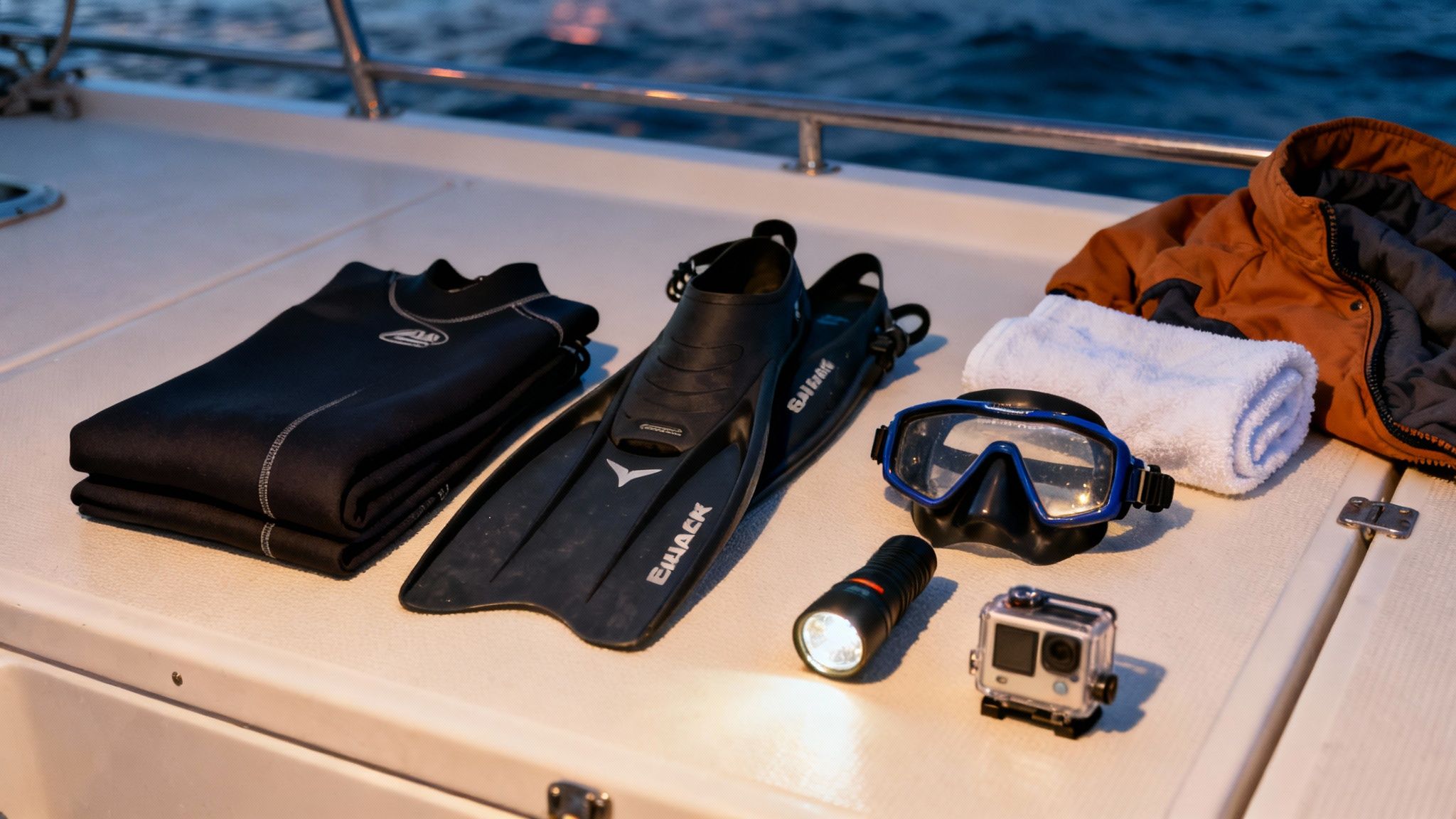
Knowing what to toss in your bag will make the whole experience smoother. Here are the essentials you won't want to forget:
- Warm Layers: Don't let the Hawaiian sun fool you. That boat ride back to shore after a night dive can get seriously chilly. A dry hoodie or a windbreaker will be your best friend.
- Towel: Seems obvious, but you’d be surprised how often people forget one!
- Motion Sickness Meds: If you even think you might get seasick, take something before you leave the dock. The last thing you want is a queasy stomach ruining your view.
- Your Personal Dive Gear: Most operators have quality rental gear, but nothing beats your own mask that you know fits perfectly. Bringing your own dive computer is also a smart move.
Tips for Underwater Photographers
Getting that perfect shot of a manta swooping overhead is the ultimate prize for many photographers. The key is to do it without stressing the animals.
Try pointing your strobes outward, not directly at the mantas. This technique, called side-lighting, illuminates them beautifully without blinding them. In the dark, you’ll be playing a constant game with your settings, so be ready to adjust your ISO, aperture, and shutter speed on the fly to capture their fluid movements.
Your Top Questions About the Kona Manta Ray Night Dive
Thinking about booking the famous manta ray night dive in Kona? It’s an incredible experience, but it's totally normal to have a few questions before you commit. Let's clear up some of the most common things people ask so you can feel completely ready for the adventure.
I’m A New Diver. Is This Dive Safe For Me?
You bet. In fact, this is one of the safest and most well-supervised dives you can do, making it a perfect first night dive for many. You’ll be in relatively shallow water, usually just 30-40 feet deep, so you won’t have to worry about complex depth management.
The best part is that it’s a stationary dive. You’ll have a professional divemaster guiding you every step of the way, and the whole operation is incredibly controlled. As long as you have your Open Water certification and feel comfortable in the water, you're good to go. Operators like Kona Honu Divers are known for their stellar safety records and really look after their guests.
What Happens If The Manta Rays Don’t Show Up?
It's a valid question—we are dealing with wild animals, after all. While it’s technically possible for the mantas to skip a night, it’s extremely rare. This spot has an astonishing success rate of around 90%, which is why it's considered one of the most reliable big animal encounters on the planet.
Still, the best tour companies have your back. Most offer a "manta guarantee." In the very unlikely event that you don't see any mantas on your trip, they'll let you come back and try again on another night for free, based on when they have space.
Can My Non-Diver Friends Or Family Snorkel With The Mantas?
Absolutely! The snorkel experience is just as magical and is a fantastic way for everyone to get in on the action. Snorkelers get their own custom-built floatation board to hang onto, which has powerful lights pointing down into the water.
This setup makes it easy to float on the surface and watch the show from above. You'll see the mantas gracefully gliding and barrel-rolling just a few feet beneath you. Many boats are set up for both, so you can check out these manta dive and snorkel tours that welcome everyone.
Are There Any Other Cool Night Dives In Kona?
If you’re a certified diver looking for a completely different kind of nighttime thrill, you have to try the Kona Blackwater Dive. This is a totally unique and more advanced dive that’s nothing like the manta experience.
Imagine drifting in the deep, dark open ocean at night, tethered safely to the boat. You'll watch as strange and wonderful bioluminescent creatures rise up from the depths—it’s often described as floating through outer space. It's a surreal adventure you won't forget. You can see what this unique Blackwater Dive tour is all about here.
Ready to see the magic for yourself? The friendly pros at Kona Honu Divers are ready to show you an unforgettable night under the waves.
Check Availability