
Picture this: you’re floating in the warm, dark Pacific waters just after sunset. Suddenly, a majestic, gentle giant with a wingspan of up to 16 feet soars into view, gliding effortlessly just inches above you. This isn’t a scene from a movie; it's the manta ray night dive in Kona, Hawaii, and it’s one of the most magical and reliable underwater encounters on the planet.
Why Kona is the Manta Ray Capital of the World
The Kona coast of the Big Island has earned its reputation as the world's premier destination for manta ray encounters for a reason. This guide will walk you through everything you need to know to prepare for this bucket-list adventure. We'll dive into what makes this "underwater ballet" so special and why it happens with such amazing consistency, night after night.
This incredible spectacle brings in about 80,000 visitors every year, all hoping to see these gentle giants feed. And they usually do! With a resident population of nearly 200 individually identified mantas, the odds are incredible, with a sighting success rate that hovers between 80% to 90%.
A Truly Gentle Giant
So, what exactly is a manta ray? First and foremost, they are completely harmless to humans. These gentle giants are filter-feeders, meaning they have no teeth, stingers, or barbs. They simply glide through the water with their mouths wide open to scoop up huge quantities of microscopic plankton. The whole experience is about passive observation—you’re a guest in their world, watching nature unfold. If you're curious about the logistics, check out our deeper dive into what the manta ray night dive is all about.
To have a truly safe, educational, and conservation-minded experience, choosing the right dive operator is everything. At Kona Honu Divers, our mission is to protect these magnificent animals while giving our guests an adventure they’ll never forget. But you don't have to take our word for it—see what fellow divers have to say.
What Makes This Dive So Special?
The Kona manta ray night dive is more than just a cool dive—it’s an immersive spectacle. Here are a few things that make it a genuine must-do activity:
- Unmatched Reliability: Unlike many wildlife tours where sightings are a matter of luck, the Kona manta dive is about as close to a sure thing as you can get. This makes it a dependable highlight for any vacation.
- Incredible Proximity: The mantas often glide within inches of divers and snorkelers. It’s a breathtakingly personal connection that’s hard to describe until you’ve experienced it.
- Accessible for Everyone: You don't have to be a seasoned diver! The experience is open to both certified scuba divers and snorkelers, making it a fantastic activity for families and groups with different comfort levels in the water.
- Meaningful Conservation: By joining a tour, you're supporting a local ecotourism economy that actively works to protect Kona's resident manta ray population.
What Makes the Manta Encounter Possible
The incredible consistency of the manta ray night dive in Kona isn’t just a happy accident—it’s a beautiful dance between biology and responsible human interaction. The whole spectacle really boils down to a simple, brilliant idea. Just picture the dive site as a giant, underwater campfire.
We bring powerful, eco-friendly lights and shine them up from the seafloor into the dark water. Like moths to a flame, these bright beams attract billions of tiny organisms called plankton. This dense cloud of plankton quickly becomes an irresistible, all-you-can-eat buffet for Kona's resident manta rays.
Mantas are smart. They've figured out that these lights mean an easy, reliable meal. So, night after night, they show up to feast, performing their famous underwater ballet—effortless barrel rolls and graceful swoops—to gulp down as much plankton as they can. This dependable food source is the secret that keeps them coming back.
The Secret is Passive Observation
A huge part of what makes this encounter feel so up-close and personal is the core principle of passive observation. This is the golden rule out on the water. We simply ask everyone to stay put and become part of the scenery, rather than trying to swim after the mantas.
This simple act of being still is what makes the experience so profound. By not chasing them, we signal that we're not a threat, allowing the mantas to feel completely safe and comfortable.
This calm approach encourages them to go about their natural feeding, often bringing them just inches from your face. You're not just watching a show from the sidelines; you become a silent, respectful guest in their underwater theater.
By remaining stationary, divers and snorkelers signal to the mantas that they are not a threat. This trust is what allows for the breathtakingly close passes and interactions that make the Kona dive famous worldwide.
This hands-off policy is also critical for protecting the delicate mucus coating on a manta's skin, which acts as their shield against infection. Following these guidelines makes sure the encounter is safe for the animals and for us, preserving this natural wonder for years to come.
Kona’s Loyal Manta Ray Population
Another piece of the puzzle is Kona’s unique, non-migratory manta population. Unlike in many other parts of the world, our reef mantas are true locals. Researchers have actually identified and named nearly 200 individual manta rays who live right here along the Kona coast.
These mantas have shown incredible loyalty to the established feeding sites. It’s their predictable return to these "underwater campfires" that allows us to offer this adventure with such high confidence. While sightings are fantastic all year, knowing the best time to see the manta rays in Kona can give you that extra edge.
When you put it all together, you see the perfect storm for an unforgettable night:
- A Plankton Buffet: Powerful lights gather a feast of plankton, the mantas' favorite food.
- Learned Behavior: The mantas have linked the lights to dinner time, creating a reliable nightly show.
- A Resident Population: With nearly 200 local mantas, there are always some ready to join the party.
- Passive Observation Rules: Our strict "no-touching, no-chasing" rules create a safe space for truly magical, close encounters.
Understanding how these elements work together gives you a much deeper appreciation for the manta ray night dive in Kona. It’s so much more than a tour; it’s a chance to take part in a unique and sustainable ecological event.
How To Choose Your Manta Ray Dive Site
So, you're planning your manta ray night dive in Kona, and now you've got to pick a spot. This is one of the most important decisions you'll make. The Kona coast is home to a few incredible manta locations, but two, in particular, are the go-to sites for most operators.
Each spot has its own vibe and personality. It really comes down to a classic trade-off: are you looking for the biggest crowd of mantas, or a more intimate experience with fewer people? Knowing the difference will help you pick the perfect underwater adventure.
Manta Village: The Original Classic
Just south of Kailua-Kona, right near Keauhou Bay, you'll find Manta Village. This is the original, the one that started it all. The story goes that a nearby hotel turned on its lights, which attracted plankton, and the mantas followed. Just like that, an underwater spectacle was born.
This site is legendary for its consistency. Because it's tucked into a sheltered bay, the water is usually calm, which is a big plus if you're new to night diving or get seasick. The reliability here is off the charts, making it the premier choice for that classic, can't-miss Kona experience.
Manta Heaven: A Feast for the Eyes
Head a bit further north, closer to the Kona airport, and you’ll discover Manta Heaven. Also known as Garden Eel Cove, this spot is famous for one thing: numbers. It has a well-earned reputation for attracting huge gatherings of manta rays.
On a great night here, you might see a dozen or more mantas swooping and barrel-rolling through the light beams. It’s absolutely breathtaking. The trade-off? Manta Heaven is more exposed to the open ocean, so conditions can be a little choppier. It's also where many of the bigger tour boats head, so the underwater "campfire" can get crowded. But if your goal is to see a massive squadron of mantas, this place is tough to beat.
Kona Manta Ray Dive Site Comparison
Deciding between the main manta ray viewing sites in Kona can be tough, as each offers a unique experience. To help you figure out which location best suits your preferences, here’s a quick breakdown of what to expect at each of the main spots.
| Dive Site | Typical Sighting Success | Average Manta Count | Crowd Level | Best For |
|---|---|---|---|---|
| Manta Village | Very High (80-90%) | Consistent, smaller groups (avg. 4) | Moderate to High | Reliability, calm waters, and easy access from Kona town. |
| Manta Heaven | High | Larger groups, often 10+ | High | Maximizing the number of manta rays you see at once. |
| Kohala Coast | Less Predictable | Varies greatly | Low | Divers seeking a quieter, more intimate and exclusive experience. |
While Manta Village and Manta Heaven are the headliners, some operators will occasionally visit sites along the Kohala Coast for a more secluded adventure. Learn more about the different Big Island manta ray night dive sites to get the full picture.
Ultimately, you can't go wrong. The expert guides at Kona Honu Divers know these locations inside and out and will always choose the best spot based on the day's conditions. They're focused on making sure you have a safe and truly spectacular manta ray night dive in Kona.
Ready to see the underwater ballet for yourself?
Preparing for Your Manta Ray Adventure
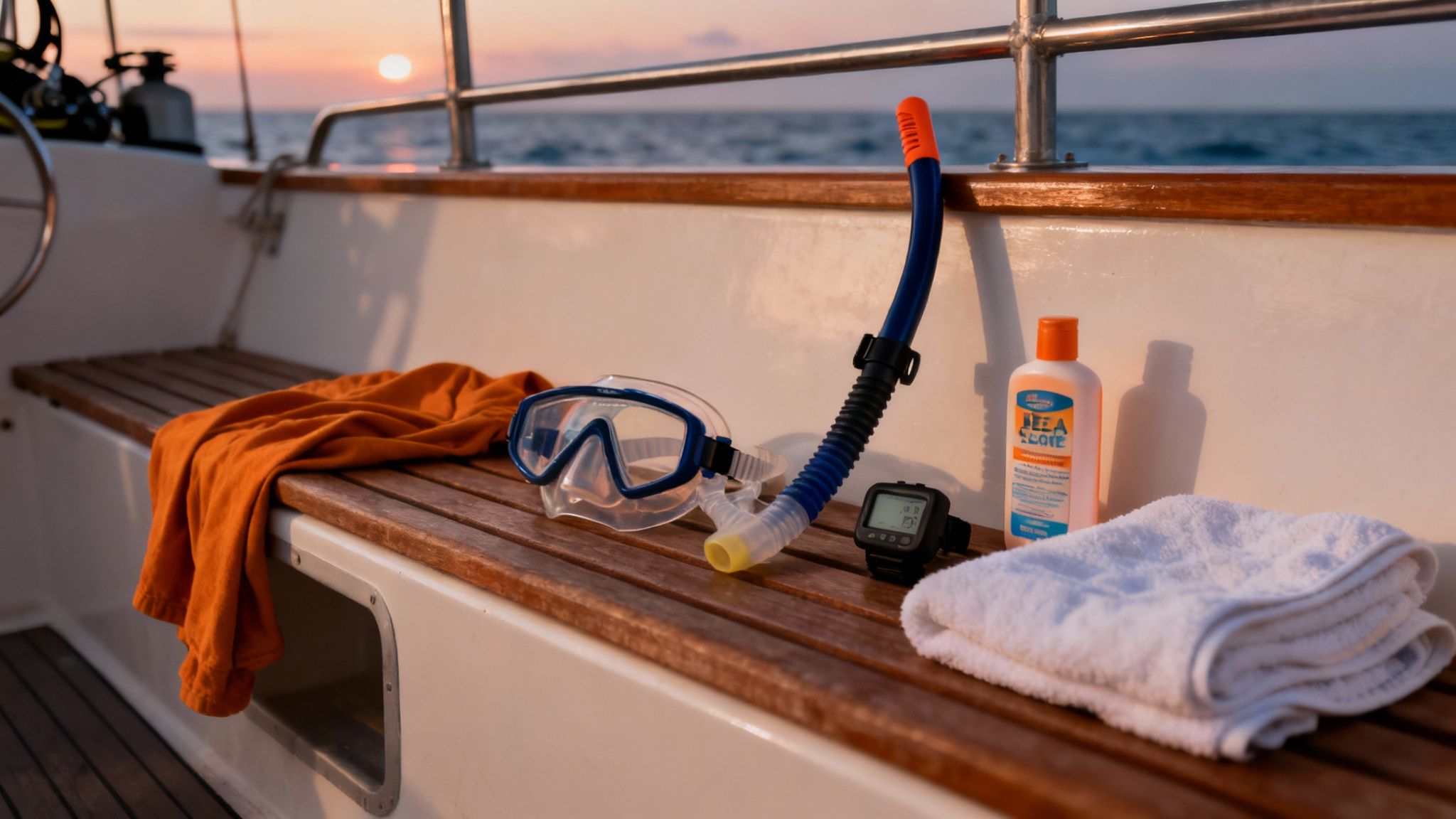
The secret to an unforgettable manta ray night dive in Kona isn't just what happens in the water—it's having a little insider knowledge before you even step on the boat. A bit of prep work means you can ditch the stress, relax completely, and just soak in the magic of the whole experience.
Most manta tours are actually two-tank trips, which is a fantastic bonus. You get two completely different, amazing dives in one evening. The boat usually heads out in the late afternoon for the first dive on a gorgeous reef as the sun starts to dip. This "dusk dive" is the perfect way to get your fins wet, check your gear, and watch the reef's daily shift change from day creatures to night creatures. After you surface, you'll have some time for snacks and to watch a world-class Kona sunset before the main event begins.
What to Pack for Your Trip
Thinking ahead about what to bring will make a huge difference in your comfort, especially once you're out of the water. Even with Hawaii's warm waters, the boat ride back after dark can get surprisingly chilly.
Here’s a quick and easy checklist of must-haves:
- A Towel: Seems obvious, but you’d be surprised how often it's forgotten!
- Something Warm: A hoodie or a windbreaker is a lifesaver for the ride back to the harbor.
- Reef-Safe Sunscreen: Put it on before you head out to protect both your skin and our fragile coral.
- Reusable Water Bottle: Staying hydrated is always a good idea, and you’ll be helping to cut down on plastic waste.
- Your Own Gear (Optional): While we provide everything, many divers feel more comfortable in their own mask, fins, or dive computer.
Nailing down these simple items means you can spend less time worrying and more time watching the underwater ballet.
Taming the Waves: Motion Sickness Tips
Even on the calmest Kona day, the ocean’s gentle rhythm can get to some people. If you know you're prone to motion sickness, don't let it ruin your dive! A few simple steps can make all the difference.
Taking an over-the-counter remedy like Dramamine or Bonine about an hour before you get on the boat is a game-changer. It needs time to kick in. Not a fan of medication? Ginger chews and acupressure wristbands are great natural alternatives. On the boat, try to stay hydrated and keep your eyes fixed on the steady horizon line—it really helps.
What to Expect From the Briefing and Gear
Knowing the pre-dive routine can help calm any first-timer nerves. When you arrive, your dive guides will give you a detailed briefing covering safety, dive procedures, and how to interact respectfully with the mantas. Listen closely—this is key to ensuring everyone (including the mantas) has a safe and enjoyable time.
At Kona Honu Divers, we take care of all the big stuff. We provide the essential scuba gear, including:
- Tanks
- Weights and a weight belt
- A powerful underwater light
This setup lets you travel light without lugging heavy equipment. That said, bringing your own mask for a perfect, no-leak fit is always a good move. For a deeper dive into the specifics, check out our guide on the gear you will need for your Kona diving adventure. With the logistics handled, you can just show up, gear up, and get ready for an absolutely incredible night.
Keeping It Safe: How We Protect Kona’s Manta Rays
The breathtaking magic of the manta ray night dive in Kona only exists because of a deep, shared respect for these gentle giants and their ocean home. For every reputable dive operator here, protecting Kona’s cherished manta ray population isn’t just a rule—it’s our number one priority. It’s how we ensure this unforgettable experience will be around for our kids and their kids to enjoy.
This commitment to the mantas is built into every single step of the dive, starting with a simple truth: we are guests in their world. To make sure the mantas feel safe and unstressed, the entire Kona dive community follows a strict set of guidelines that put the animals first.
The Golden Rules of Manta Interaction
A few simple rules are all it takes for a successful and ethical dive. Think of these guidelines as a way to not only protect the mantas but to actually make your own experience better. When the mantas feel comfortable, they’ll get much closer and put on the incredible feeding show you came to see.
The main principles are easy to remember:
- Observe, Don’t Touch: This is the big one. Manta rays are covered in a delicate mucus layer that works like our own skin, protecting them from infection. Touching them strips this layer away and can make them sick.
- Don't Chase or Ride: We know it’s tempting, but never swim after a manta. Chasing them is stressful and interrupts their feeding. Just relax and let them come to you—they will!
- Don't Block Their Path: Always give the mantas plenty of room to swim. They need lots of open space above you to perform their famous, graceful barrel rolls.
The whole experience is designed around passive observation. Whether you're resting on the sandy bottom as a diver or holding onto a light board as a snorkeler, you become part of the scenery. This lets the mantas approach on their own terms, turning you from a spectator into part of their world.
Getting ready for any big adventure means thinking about safety first. It’s always a good idea to review essential precautions for adventure activities to make sure you're prepared.
How Your Dive Directly Helps Manta Ray Conservation
When you join a Kona manta ray night dive, you're not just a tourist—you're a citizen scientist. Every photo and video taken by divers and snorkelers becomes a valuable piece of data for researchers. The unique pattern of black spots on a manta's belly is just like a human fingerprint, allowing scientists to identify and track individuals over their entire lives.
This ongoing monitoring has given us an incredible window into their world. For example, between 2009 and 2014, researchers used thousands of photos to track individuals, leading to over 10,000 recorded sightings. This effort helped confirm a healthy resident population of about 200 manta rays right here off the Kona coast.
By choosing a responsible, safety-conscious operator for your manta ray night dive in Kona, you’re casting a vote for a type of tourism that puts conservation first. It's a collective effort that keeps this underwater ballet going strong for generations to come.
Booking Your Tour with Kona Honu Divers
Alright, you're ready to see the famous underwater ballet for yourself. Fantastic. The single most important decision you'll make is choosing who to go with, and we believe we've got something special here at Kona Honu Divers. Our entire philosophy is built around offering a safe, intimate, and deeply respectful experience.
We intentionally keep our groups small. This isn't just a talking point; it means you get more one-on-one time with our guides and a much more personal, less crowded encounter with the mantas. It's about quality over quantity, every single time. Our guests often tell us it’s this commitment to safety and our genuine passion for the ocean that makes the trip.
Our Signature Manta Ray Adventure
Our most popular trip, and for good reason, is the 2-Tank Manta Dive & Snorkel tour. We've designed it to be an incredible evening from start to finish. We kick things off with a beautiful reef dive at dusk, a magical time when the whole ecosystem is shifting from day to night.
Afterward, you’ll surface to a stunning Kona sunset, enjoy some light snacks, and then we get ready for the main event. As the sky goes dark, we head to the manta site for a night dive or snorkel that you'll be talking about for years to come.
What really makes the difference is our crew. They aren't just dive experts; they're passionate storytellers who love sharing what they know about the mantas and their world. Combine that with our comfortable, well-maintained boat, and you've got an experience where all you have to do is relax and soak in the magic.
When you choose a reputable, conservation-focused company like Kona Honu Divers, you're doing more than just booking a tour. You're ensuring your amazing encounter is done responsibly and helps protect Kona’s beloved manta ray population.
For certified divers hungry for more, we've got other incredible night-time adventures. Have you ever heard of a Blackwater Dive tour? It's a truly unique dive where you'll see bizarre and beautiful creatures rising from the deep ocean after dark. If a daytime challenge is more your speed, our advanced dive tour page has all the details on trips to more remote, demanding sites.
Ready to book your spot? It's easy. Just click the button below to see our schedule and reserve your adventure.
Your Manta Dive Questions, Answered
We've walked through everything from picking a dive site to booking your trip, but you probably still have a few questions floating around. Let's tackle some of the most common ones we hear so you can head out on your adventure feeling confident and excited.
Do I Have to Be Scuba Certified to See the Manta Rays?
Nope, not at all! While scuba divers get an incredible view from the seafloor looking up, snorkeling is an equally breathtaking way to see the mantas. It's wildly popular for a reason.
As a snorkeler, you'll hold onto a custom-built light board that floats on the surface. These powerful lights are like a dinner bell for plankton, drawing the mantas right up to feed. You'll see them glide and barrel roll just inches away. It’s a fantastic option, and we always have spots for both divers and snorkelers on the same boat, which makes it perfect for families and groups with mixed experience levels.
When Is the Best Time of Year to Go?
Here’s one of the best parts about this dive: it’s amazing year-round. We're lucky to have a large, resident population of manta rays that stick around, so there's no real "off-season." The sightings are remarkably consistent no matter when you visit.
The only thing that really changes is the ocean itself. The summer months usually bring calmer, glassier seas. Winter can sometimes stir up bigger swells. But don't worry—safety is always the top priority. We only go out when the conditions are right for a comfortable and unforgettable experience.
What Happens if We Don't See Any Manta Rays?
It's a fair question. While our sighting rate for the manta ray night dive in Kona is incredibly high—typically hovering between 80-90%—we are dealing with wild animals. There's never a 100% guarantee.
On the rare night the mantas decide to be shy, reputable operators like Kona Honu Divers have what we call a "manta guarantee." If you don't see them, you can come back and try again on another night, completely on us (subject to availability). It’s our commitment to giving you a chance to see the magic. Just be sure to confirm the specific policy when you book.
Is the Manta Ray Night Dive Safe?
Absolutely. When you go with a professional, experienced crew, the manta ray night dive is very safe. We live and breathe safety protocols here. Before anyone gets in the water, you'll get a thorough briefing that covers everything from dive procedures to the golden rules of interacting with the mantas respectfully.
Our divemasters know these sites like the back of their hands and are experts at guiding night dives. But the most important thing to know is that the mantas themselves are gentle giants. They're filter feeders with no teeth, no stingers, and no barbs. They pose zero threat to people and are simply there for the plankton buffet.