
Ask anyone who's done it, and they'll tell you: the Kona manta ray night dive is one of the most mesmerizing wildlife encounters on the planet. You slip into the dark Pacific, guided by powerful underwater lights that create an illuminated stage. This beacon draws in clouds of plankton, and right behind them come the majestic manta rays.
For those ready to see this magic unfold, a proven, eco-conscious operator like Kona Honu Divers offers highly-rated manta ray dive tours that really set the standard for a world-class experience.
An Underwater Ballet of Light and Life
Picture this: you're floating weightlessly in the warm, dark ocean. Suddenly, a gentle giant with a wingspan of over 12 feet glides into view, barrel-rolling just inches above your head. It sounds like something from a nature documentary, but it's the real deal here in Kona—an experience that consistently tops bucket lists for divers around the world.
So, what’s the secret behind this incredible spectacle?
It all starts with a brilliant, yet simple, idea. Dive operators set up what we call an underwater "campfire" using powerful lights on the ocean floor. This bright beacon acts like a magnet for plankton, the manta rays' favorite meal. The rays, in turn, show up for the all-you-can-eat buffet, putting on a stunning and remarkably predictable feeding frenzy.
This carefully managed interaction allows everyone to witness an unbelievable underwater performance. Divers kneel on the sandy bottom, looking up as the mantas swoop gracefully through the beams of light. Snorkelers get a similar view from the surface, holding onto custom-made light boards that attract the plankton from above. It's not uncommon for them to get just as close to the action.
Why Kona is the World’s Manta Ray Capital
The Kona Coast on the Big Island of Hawaii isn't just a great spot for this dive; it's the best spot. The unique geography, with its calm and protected bays, creates the perfect natural amphitheater for this nightly show.
The odds are overwhelmingly in your favor here. Local operators report an 85–90% success rate for spotting mantas on any given night. Of course, with wild animals, nothing is ever 100% guaranteed. But Kona’s reliable plankton supply creates feeding conditions so ideal that the rays show up with amazing consistency.
This isn't just another dive. It’s an immersive performance. You're a silent spectator in a theater of liquid darkness, where the only actors are giant, graceful rays dancing in brilliant beams of light.
If you're trying to decide when to book, here’s a quick overview of what to expect from the dive itself.
Kona Manta Ray Night Dive At a Glance
The table below breaks down the key details so you know exactly what you’re signing up for.
| Aspect | Details |
|---|---|
| Location | Primarily off the Kona Coast, Big Island, Hawaii |
| Depth | 25-40 feet, making it accessible for most certified divers |
| Duration | 45-60 minutes of bottom time |
| Sighting Success | Consistently high, with an 85-90% success rate |
| Manta Size | Wingspans can exceed 12 feet |
| Best Time to Go | Year-round, with calm conditions and reliable sightings |
This dive is designed to be a safe, accessible, and truly unforgettable adventure for divers of all levels.
A Reliable and Unforgettable Experience
What truly sets Kona apart is the predictability of the encounter. In many other parts of the world, seeing a manta ray is a matter of pure luck. Here, the experience has been refined over decades, turning a chance discovery into a world-renowned and sustainable eco-tourism activity.
The combination of expert guides, well-established sites, and a healthy resident manta population makes this a bucket-list adventure you can actually count on. To get a better sense of the logistics, you can learn more about what the manta ray night dive entails.
Comparing the Top Manta Ray Dive Sites in Kona
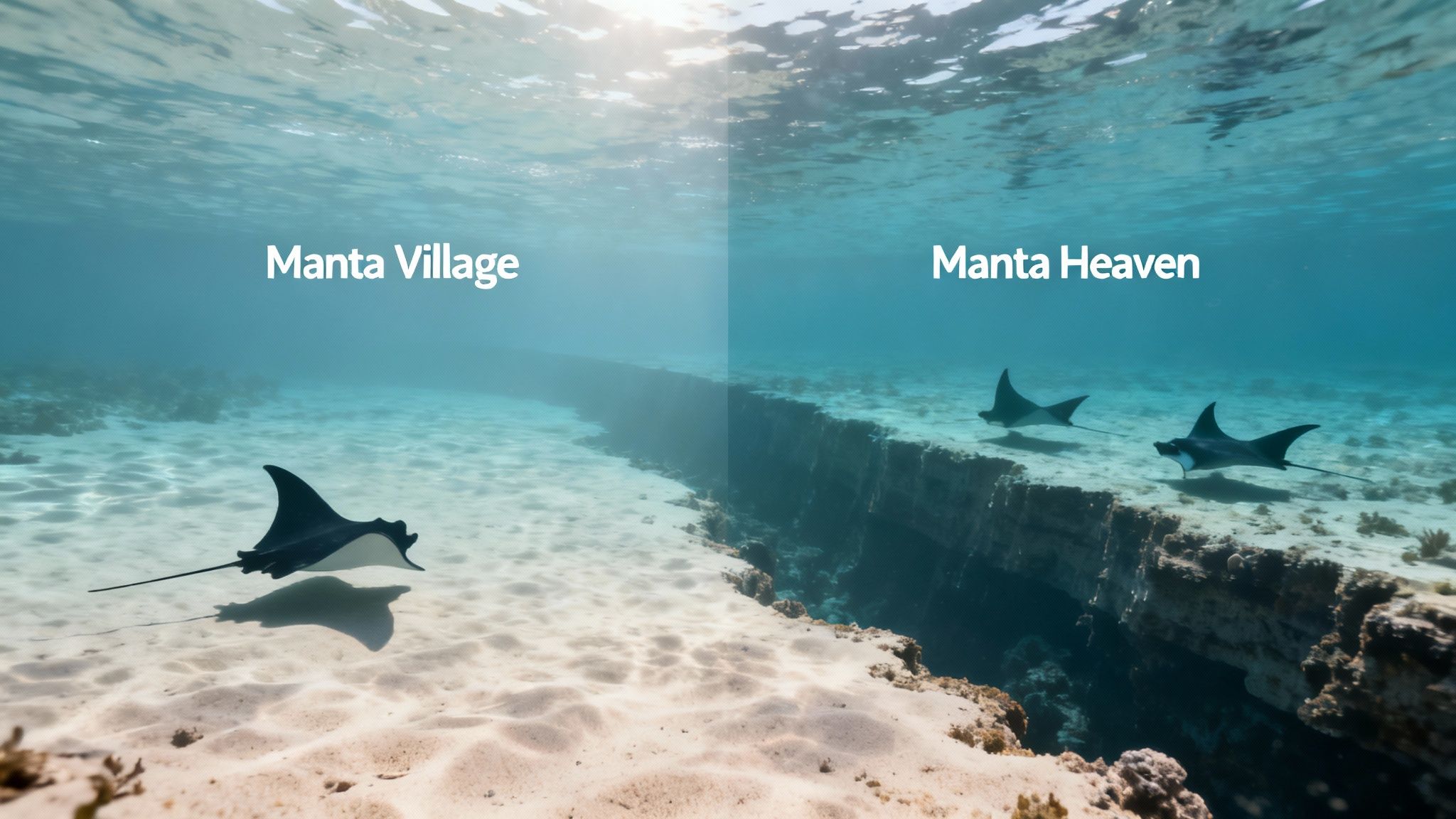
So you're ready to dive with the mantas in Kona. The first thing to know is that not all dive sites are the same. Along the coast, you'll find two world-famous spots and a third, lesser-known option. Each one offers a totally unique vibe, and picking the right one is the key to having an unforgettable experience.
The main two go by the nicknames "Manta Village" and "Manta Heaven." While both are incredible, they differ in depth, accessibility, and even the number of mantas you're likely to see. Let's break down what makes each spot special so you can match the dive to your own style and comfort level.
Manta Village: The Original Classic
Just off Kaukalaelae Point near Keauhou Bay, you'll find Manta Village. This is the O.G. of manta night dives, the one that started it all. The spot is known for being relatively shallow, with a sandy bottom sitting at about 25 to 40 feet, and the water is usually calm and protected.
This setup makes it an ideal choice for a few types of people:
- Newer Divers: The shallow depth and calm conditions are a lot less nerve-wracking if you're still getting your sea legs.
- Snorkelers: It’s a much more comfortable and stable place to float on the surface.
- Anyone Prone to Seasickness: The boat ride from Keauhou Harbor is short and sweet.
While the manta count here can sometimes be a bit less predictable than at the other main site, the success rate is still incredibly high. What you get is a wonderfully intimate and personal encounter.
Manta Heaven: The Grand Amphitheater
A bit further north, closer to the Kona Airport, is Manta Heaven (also known as Garden Eel Cove). If you're looking for sheer numbers, this is often the most reliable place to be. It's a little deeper, with most divers settling in on the sand at 35 to 45 feet.
What makes Manta Heaven so consistent? It’s all about the topography. The underwater landscape funnels plankton-rich currents right into the area, creating a massive, all-you-can-eat buffet that the mantas just can't resist. This often draws in a huge crowd of rays, sometimes a dozen or more at once!
The trade-off? It's a longer boat ride from Kona's main harbors. But for many, the chance to witness a swirling ballet of giant mantas is absolutely worth the extra travel time. It’s a huge favorite for underwater photographers and experienced divers who want the full-scale spectacle. You can explore more about what makes the underwater world here so special and learn more about the unique dive sites Kona Honu Divers visits to get a feel for the area.
There's also a third, much quieter site up near the Kohala Coast resorts. It’s a good choice if you want to avoid the crowds, as there are far fewer boats. Just know that manta sightings aren't as consistent there. It’s really for those who value solitude over a guaranteed show.
How to Choose the Best Manta Ray Tour Operator
Picking the right tour operator is easily the most critical decision you’ll make for your manta ray night dive. It’s the one thing that can make or break your entire experience, and frankly, it also impacts the well-being of the mantas themselves. The best companies out there are all about safety, sustainability, and keeping their groups small for a much more personal and respectful encounter.
A huge clue to a quality operator is how seriously they take conservation. You want a company with experienced marine naturalist guides who give a solid, comprehensive briefing before you even get in the water. This isn't just about telling you what you'll see; it's about explaining how to behave around these amazing animals—like the strict no-touching rule that protects their delicate skin.
What to Look for in a Tour Operator
When you start digging into your options, a few things really separate the great operators from the merely good ones. You're looking for a company with a stellar reputation, iron-clad safety protocols, and a genuine commitment to protecting the very ecosystem that makes this dive possible.
Think about it this way: you want a guide who delivers an unforgettable show while also being a fierce guardian of the stars of that show.
Here are the non-negotiables to look for:
- Safety Record: This is paramount. Look for established shops with experienced, certified divemasters and captains who know these waters like the back of their hand.
- Small Group Sizes: This is a big one. Smaller groups mean you aren't fighting for a view, and it puts far less pressure on the mantas. The result is a more intimate, meaningful interaction.
- A Real Educational Briefing: The best operators get you excited by teaching you about manta biology, their behaviors, and why this Kona dive is so unique. You'll appreciate the experience so much more.
- Eco-Conscious Practices: Find operators who walk the walk. They follow strict guidelines, maintain their boats properly, and are serious about the "passive observation" rule.
For a deeper dive, our guide on how to choose a Kona dive shop has even more tips to help you pick a winner.
The Impact of Ecotourism
The manta ray night dive in Kona is a true ecotourism success story, drawing around 80,000 people every year. This incredible popularity didn't just happen overnight; it was built on decades of local knowledge and a profound respect for the animals. In fact, local divers have been documenting manta behavior here every single night since at least 2009, creating an invaluable library of information that directly helps in protecting them. You can learn more about Hawaii's manta ray phenomenon to get the full backstory.
Kona Honu Divers is a perfect example of an operator that gets it right. To see what a top-notch experience really looks like, just see what other divers are saying about their manta ray dive tour.
Ready to book your spot for this amazing adventure? You can secure your place on this world-famous dive now.
Your Manta Ray Adventure: A Practical Checklist
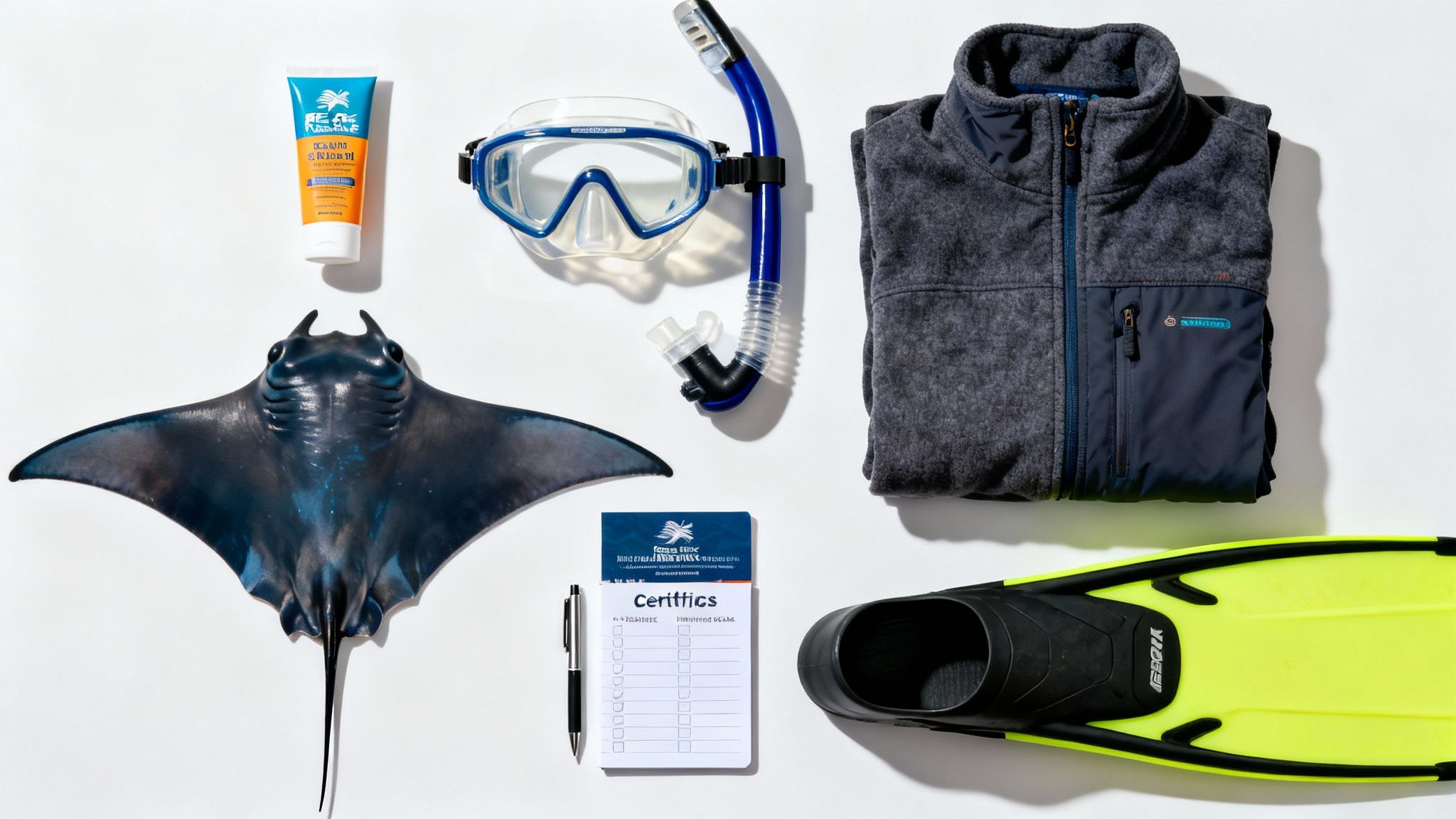
A little prep work goes a long way in making your manta ray night dive in Kona truly unforgettable. When you know what to bring and what to expect, you can simply relax and soak in the underwater magic. This checklist covers everything you’ll need, whether you're scuba diving or snorkeling.
One of the most common things people forget? The ride back to shore. After an incredible hour in the warm Pacific, the night air on a moving boat can feel surprisingly cold. Always pack a dry towel and a warm jacket or sweatshirt to make the trip back comfortable.
And while it's a night dive, your adventure begins with a boat ride during a classic Kona sunset. It’s a good idea to apply some reef-safe sunscreen before you even leave the harbor to protect both your skin and Hawaii's fragile coral reefs.
Gearing Up for the Main Event
If you're a certified diver, getting in the water is easy. A standard Open Water certification is all you need to join the dive. All the reputable tour operators provide the necessary gear, but if you’re more comfortable with your own well-maintained equipment, feel free to bring it.
Snorkelers get an equally breathtaking view from the surface. You'll be set up with a custom-built raft equipped with high-powered lights. All you do is hold on, float, and watch the show as the lights draw in the plankton, which in turn brings in the majestic mantas.
Nothing ruins a boat trip faster than seasickness. To make sure you don't miss a single moment, think about taking a non-drowsy motion sickness remedy about an hour before you depart. Staying hydrated and keeping your eyes fixed on the horizon can also work wonders.
Your Must-Have Items
To make your trip as smooth as possible, here’s a quick list of what you should definitely pack for your tour.
- Warm Layers: Seriously, don't forget a jacket or hoodie for the ride back. You'll thank yourself later.
- Dry Towel: A must-have for after you get out of the water.
- Reef-Safe Sunscreen: Put it on before you board to enjoy the sunset cruise without the burn.
- Reusable Water Bottle: Staying hydrated is key, especially when you're out on the ocean.
- Waterproof Camera: An action cam is perfect for capturing those once-in-a-lifetime moments.
- Proof of Certification: If you’re diving, you’ll need to bring your certification card.
With these simple things packed, you'll be all set to enjoy one of the most incredible wildlife encounters you can have. For a closer look at the different trip options, you can check out some of the manta ray dive tours on offer.
What Happens During the Manta Ray Encounter
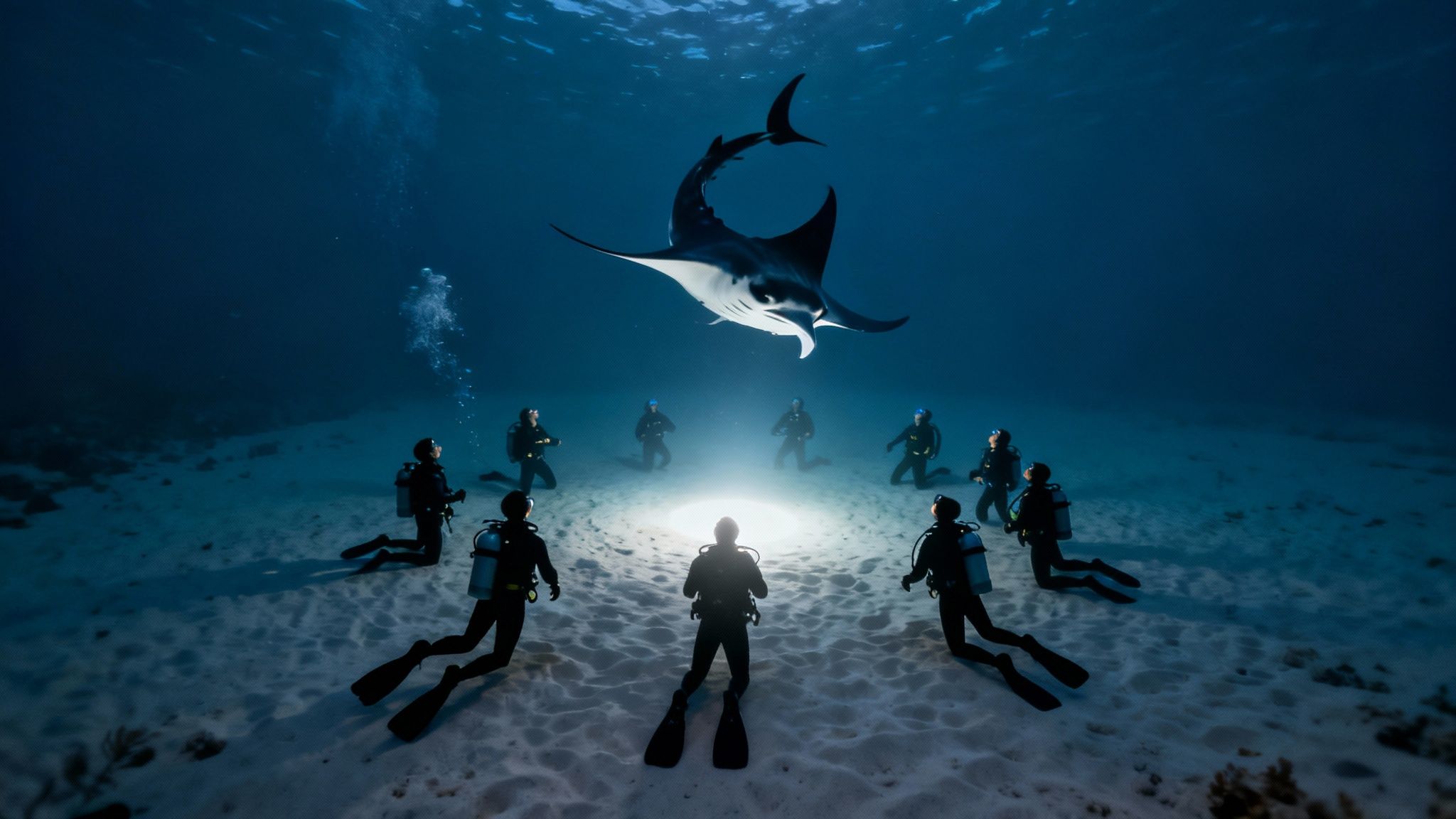
The whole adventure kicks off with a boat ride right as the sun starts to set, which is a show in itself. As the sky turns from orange to deep blue, your guides will walk you through a detailed briefing. This part is incredibly important—it’s where you learn how to be a good guest in the mantas' world and keep both them and the reef safe.
Once you get to the dive site and the last light fades, it's time to get in the water. The whole operation is set up like an underwater theater, cleverly designed to give everyone the best possible view, whether you're diving or snorkeling.
Finding Your Place in the Underwater Theater
If you're a certified diver, you'll head down to the sandy bottom, usually somewhere between 30-40 feet. There, you and your group will settle in a circle around a powerful light array that the locals affectionately call the "campfire." This light is the secret sauce for the entire experience.
Snorkelers get their own unique perspective from the surface. You'll hold onto a custom-built float that has its own lights pointing straight down. This creates a beacon from above, so no matter where you are, you've got a front-row seat.
What are all these lights for? Simple: they attract plankton, the manta rays' favorite meal. The light beams essentially create a concentrated, all-you-can-eat buffet, drawing in clouds of these tiny organisms from the surrounding water.
The Grand Arrival and Graceful Dance
It doesn't take long for the main event to begin. Soon enough, the stars of the show start to arrive. Majestic manta rays emerge from the darkness, gliding effortlessly into the light to feast on the plankton. What happens next is a silent, mesmerizing ballet that you really have to see to believe.
You'll watch these gentle giants perform graceful barrel rolls, swooping and gliding just inches away from you. With their huge mouths open, they filter the plankton from the water in a display of pure, fluid motion.
The one golden rule is passive observation. You have to stay still and fight the urge to reach out and touch them. This protects the mantas' delicate mucus coating and ensures they can feed without feeling threatened, which is key to keeping this incredible natural encounter going for years. If you're ready to see it for yourself, it's worth checking out the different manta ray dive tours available.
While sightings are never guaranteed, Kona's reputation is built on consistency. The "Manta Heaven" site averages 11 mantas per night, and "Manta Village" usually sees around four. Of course, some nights are truly spectacular, with huge numbers showing up. Researchers have identified nearly 200 individual rays in the area, each recognized by the unique spot pattern on its belly. You can learn more about these amazing Big Island sightings and the local population.
Your Manta Ray Night Dive Questions Answered
It’s completely normal to have a few questions swirling in your head before committing to an adventure like this. Even with all the excitement, a little clarity goes a long way.
Let’s tackle some of the most common questions we hear, so you can feel totally prepared and confident when you book your manta ray night dive in Kona.
Is the Manta Ray Night Dive Safe?
Yes, absolutely. Safety is the top priority, and the experience itself is incredibly safe. Manta rays are often called "gentle giants" for a good reason—they're filter feeders with no teeth, stingers, or barbs to speak of. They pose zero threat to humans and are usually more curious about us than anything else.
Every respected tour operator in Kona runs a tight ship. You'll get a thorough safety briefing from experienced guides before you even touch the water, and they manage the dive sites carefully to make sure everyone has a secure and amazing time.
What if We Don't See Any Manta Rays?
This is a great question. While Kona is one of the most reliable places on Earth to see mantas, with a sighting success rate over 85%, they are still wild animals on their own schedule. Nature doesn't offer a 100% guarantee.
That's why most top-notch operators have a "manta guarantee."
If your trip happens to be one of the rare nights the mantas don't show up, you can usually go again on another night for free. Just be sure to ask about the specifics of the guarantee policy when you book, as some might have a small rebooking fee.
Do I Have to Be a Certified Scuba Diver?
Not at all! You don't need a scuba certification to have a front-row seat. The snorkeling experience is just as mind-blowing.
Snorkelers hang onto a custom-made float on the surface. This floating raft has powerful lights that shine down, attracting the plankton and, in turn, the mantas. You'll watch them glide and barrel-roll right below you, often getting just as close to the action as the divers on the ocean floor.
What Other Night Dives Can I Do in Kona?
If you're a certified diver looking for another otherworldly nighttime thrill, you have to check out the Kona Blackwater Dive. It’s a completely different kind of adventure and famous in its own right.
For this dive, you head miles offshore and drift in the deep open ocean, safely tethered to the boat. As you float in the darkness, you'll witness the planet's largest nightly migration, as bizarre and often bioluminescent creatures rise from the depths. Divers often say it feels more like floating through deep space than the deep sea.
If that piques your interest, you can learn more about a Blackwater Dive tour.
Ready to see the underwater ballet with your own eyes? Kona Honu Divers runs world-class manta ray night dive trips with expert guides who care deeply about your safety and the well-being of the mantas. You can check out their award-winning manta ray dive tours and book an unforgettable adventure today.