
The manta ray night dive in Kona is legendary for a reason. Imagine watching giant, graceful rays glide through a spotlight of ocean, feeding on plankton just inches from your face. It's consistently ranked as one of the best night dives on the planet, and for good reason—it’s an unforgettable, up-close encounter right off the Big Island's Kona Coast.
Why the Kona Manta Ray Night Dive is a Bucket-List Experience
Here's how it works: you drop into the warm, dark Pacific after sunset. Your guide places powerful lights on the ocean floor, pointing them straight up. These lights attract swarms of microscopic plankton, creating a glowing column of food. It's like ringing a dinner bell.
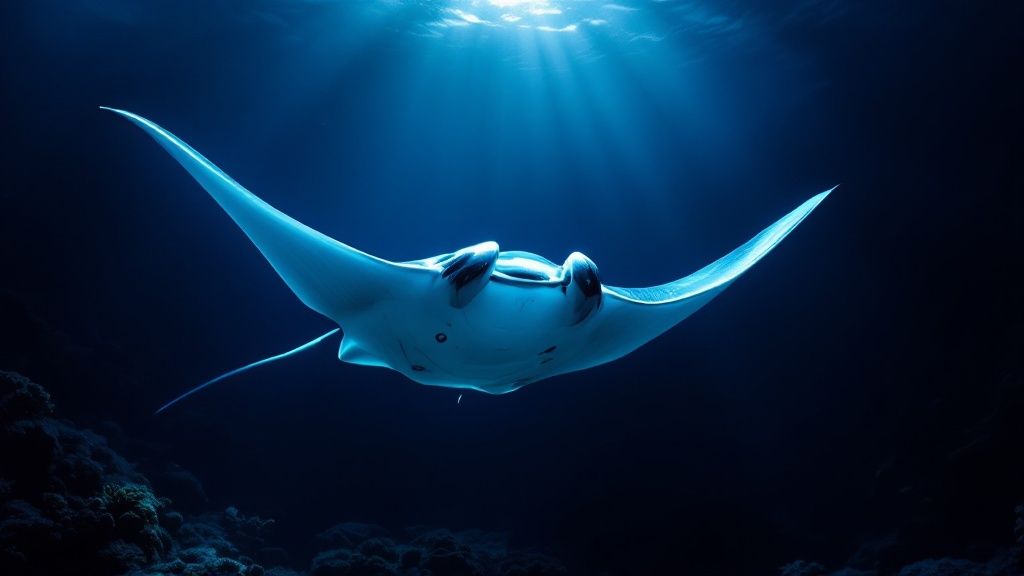
Within minutes, the show starts. Giant manta rays, some with wingspans stretching over 12 feet, appear from the darkness. They perform effortless somersaults and barrel rolls, swooping right over your head to scoop up the plankton. This isn't just a quick fly-by; you spend the entire dive surrounded by these incredible animals. It's a front-row seat to one of nature's greatest performances.
A Unique Recipe for Reliable Encounters
So, what makes Kona the global hotspot for this? It's a perfect combination of geography and biology. The underwater volcanic slopes of the Kona Coast and the nutrient-rich currents create an ideal environment for plankton to thrive. This constant food source has led to a large, resident population of manta rays that stick around all year. They know exactly where to find their meal every single night.
This reliability is what truly sets the manta ray night dive in Kona apart from anywhere else. We're not just hoping for a chance encounter.
The Kona Coast is the place in the world for manta ray night dives. Years of data show an 80% to 90% success rate for seeing mantas on these trips. That's an incredibly high number, and it speaks volumes about Kona's unique marine ecosystem. You can even check out the detailed sighting statistics to see for yourself how consistent it is.
This remarkable consistency means your odds of having an amazing experience are incredibly high. For anyone ready to see this underwater magic, the adventure is waiting. You can book a spot on a guided manta ray dive tour and get ready for a night you'll never forget.
Manta Ray Night Dive Kona At a Glance
Here's a quick rundown of what to expect from this unique Kona adventure, helping you decide if it's the right experience for you.
| Aspect | What to Expect |
|---|---|
| Experience Level | Suitable for certified divers and snorkelers of all levels. |
| Water Temperature | Averages 75-80°F (24-27°C) year-round. A 3mm or 5mm wetsuit is recommended. |
| Manta Ray Size | Wingspans can reach up to 16 feet (5 meters), though most are 8-12 feet. |
| Sighting Success Rate | Consistently high, with an 80% to 90% chance of seeing mantas. |
| Best Time to Go | Year-round! The manta population is resident, not migratory. |
| Interaction Rules | Strictly no touching. You'll observe from a stationary position on the seafloor. |
| Dive Profile | Shallow dive, typically around 30-40 feet deep, with a bottom time of about 45 minutes. |
This table should give you a solid idea of what the trip entails. It's a truly accessible and reliable wildlife encounter that's unlike anything else in the world.
Finding the Best Manta Ray Tour in Kona
Let's be honest, picking the right operator is probably the single most important decision you'll make for your manta ray night dive in Kona. It can be the difference between a decent trip and an absolutely mind-blowing, unforgettable experience.
With a handful of boats heading out each night, how do you choose? It really boils down to this: a great company doesn’t just get you in the water. They manage everything from the quality of the pre-dive briefing and the comfort of the boat to the professionalism of the crew and, most importantly, the respect shown to the mantas. A top-notch operator ensures you have a seamless adventure from the moment you check in to the moment you’re back on the dock, buzzing from what you just saw.
What to Look for in a Manta Ray Tour Operator
When you're comparing your options, look past the price tag. The best experiences are built on a few key factors that should be non-negotiable.
- Safety First: Does the company have a squeaky-clean safety record? You want to see experienced, certified divemasters and captains who run a tight ship and deliver thorough, clear briefings. No shortcuts.
- Eco-Conscious Practices: This is a big one. Reputable operators follow strict, manta-safe guidelines. That means a strict no-touching policy and clear instructions on how to position yourself in the water to let the mantas do their thing without interference.
- Small Group Sizes: A packed boat means a crowded experience underwater. Smaller groups allow for better views, a more personal feel, and more one-on-one time with your guides.
- Boat Comfort and Quality: A well-maintained boat with amenities like a marine head (restroom) and a freshwater rinse makes a huge difference. You'll be much happier before and after your dive.
At Kona Honu Divers, we believe a world-class experience is built on a foundation of safety, respect for marine life, and exceptional customer care. Our experienced crew is dedicated to providing an adventure that is as educational as it is breathtaking, ensuring you leave with a deeper appreciation for Kona's incredible manta rays.
For a complete rundown of this incredible adventure, you can learn more about the Kona manta ray dive and what makes it a bucket-list activity for divers worldwide.
Our Top Recommendation for a Kona Manta Dive
While several operators offer quality tours, we personally recommend the 2-Tank Manta Dive with Kona Honu Divers. Their commitment to safety, conservation, and creating a premium guest experience really sets them apart. From their comfortable, custom-built dive boats to a professional crew that consistently gets rave reviews for their knowledge and pure enthusiasm, they have it dialed in.
But don't just take our word for it. See for yourself what other divers have to say.
Of course, other respected operators like Jack's Diving Locker and Big Island Divers also have long-standing, solid reputations in the Kona diving community. The key is to do a little homework. By choosing an operator that aligns with these principles, you're setting yourself up for the underwater experience of a lifetime.
How the Underwater ‘Campfire’ Brings in the Mantas
The incredible consistency of the manta ray night dive in Kona isn't a happy accident—it’s a bit of clever, simple science. The entire show revolves around what we call the underwater "campfire," a setup that turns a patch of the dark seafloor into an all-you-can-eat buffet for manta rays.
Dive operators have this down to a fine art. They place powerful, eco-friendly lights on the ocean bottom, pointing them straight up to the surface. This creates a brilliant column of light that cuts through the darkness, and it’s an irresistible magnet for zooplankton, the tiny microscopic organisms that manta rays love to eat.
In just a few minutes, millions of these little critters swarm the light, forming a thick, shimmering cloud. To a manta ray, this glowing beacon is like seeing the lights of their favorite restaurant. They know exactly where to go for an easy meal, and it’s this predictable food source that brings them back night after night.
Building the Plankton Buffet
This whole feeding frenzy is made possible by the 'campfire' or 'bonfire' technique. The bright underwater lights concentrate millions of plankton into one spot, which in turn draws in the mantas. It's a perfect chain reaction.
Kona’s unique underwater landscape also plays a huge part. The topography naturally funnels nutrient-rich currents, which helps plankton thrive and creates reliable feeding areas all year long. This setup guarantees that you, the diver or snorkeler, get a front-row seat without ever disrupting the mantas' natural feeding behavior. It’s a beautifully passive and respectful way to witness one of nature’s greatest spectacles.
Your Part in the Manta Show
So, where do you fit in? Think of yourself as a quiet audience member.
-
Scuba Divers: Your guide will lead you to a spot on the sandy bottom, usually arranged in a semi-circle around the 'campfire' lights. You'll hold onto a rock to stay put, giving you a breathtaking view looking up as the mantas swoop and barrel-roll just feet above you.
-
Snorkelers: You'll be at the surface, holding onto a specially designed light board. This board shines light down, creating another plankton-rich zone just below you. From there, you get a bird's-eye view of the mantas as they perform their graceful underwater dance.
This hands-off approach is the key to a safe and ethical encounter. By staying still and becoming part of the scenery, you allow the mantas to feel safe enough to come incredibly close, giving you a truly unforgettable and non-intrusive experience.
Both methods put you right in the middle of the action without getting in the way. To get a better feel for the vibe, check out our guide to what makes this dive feel like Kona's one-of-a-kind underwater nightclub.
How to Prepare for Your Manta Ray Dive
A little prep work before you even leave for the harbor can make a world of difference. Getting a few details sorted out ahead of time means you can relax and focus on the incredible show you're about to witness. It's the key to making your manta ray night dive in Kona a smooth, comfortable, and truly unforgettable experience.
First and foremost, think about staying warm. Even though Kona’s waters are a balmy 75-80°F (24-27°C), you’ll be sitting relatively still on the ocean floor at night. That can make you feel the chill a lot faster. Most operators, including us at Kona Honu Divers, will have wetsuits for you. A 3mm wetsuit is plenty for most of the year, but if you’re diving in the winter months, a 5mm wetsuit will be your best friend.
What to Bring and What to Wear
Beyond your dive gear, a few simple items in your bag will make the whole trip more comfortable, especially for the ride back to shore.
Here’s a quick checklist of what I always recommend people bring along:
- A Towel and Dry Clothes: Trust me, you'll be so glad you have something warm and dry to change into after the dive. A hoodie or a light windbreaker is perfect for cutting the breeze on the boat ride home.
- Reef-Safe Sunscreen: If you're on a two-tank charter that starts in the afternoon sun, make sure you've applied some before you board.
- Reusable Water Bottle: Diving is dehydrating, even when you don't feel like you're sweating. Keep a water bottle handy.
- Seasickness Medication: If you have even the slightest suspicion you might get seasick, take your preferred remedy before you get on the boat. Once you start feeling queasy, it's often too late.
- Your Camera: You're going to want photos. A GoPro or another underwater camera that performs well in low light is perfect. Just a heads-up: absolutely no flash photography. The bright, sudden strobes can startle and disorient the mantas.
On the Boat: Pay Attention to the Briefing
Once you’re on board and heading out, the single most important thing you can do is listen carefully to the dive briefing. This isn't just your standard "here's the plan" talk; it’s a detailed guide to a safe and respectful encounter.
Your guide will explain everything from how to safely get in and out of the water to the crucial rules for interacting with the mantas. They'll show you where to position yourself at the "campfire," how to aim your light, and why the "look, don't touch" rule is non-negotiable for protecting these gentle giants.
Good buoyancy is also a huge plus for the manta ray night dive in Kona. Even though you’ll be stationary on the bottom, staying neutral and calm helps you conserve air and avoids kicking up sand, which keeps the water clear for everyone. It's just one of the many skills you can hone on the different Kona scuba diving tours available.
By showing up ready, you’re setting the stage for a perfect dive where you can just relax and soak in every incredible moment of this underwater ballet.
What It’s Really Like in the Water
This is the moment everything has been building towards. After a quick boat ride and your dive briefing, you'll slip over the side and begin your descent into the dark, surprisingly warm Pacific waters. The only thing piercing the blackness is the glow from the underwater "campfire" on the seafloor below, a beacon that guides you down.
Once you find your spot and get settled, a quiet calm takes over. You're just floating in the dark, waiting. And then it happens.
The first manta appears—a massive, silent shadow gliding effortlessly into the light. It's a surreal, heart-stopping moment that no photo or video can ever do justice. Before you can even process it, another one joins, and then another. Suddenly, you're surrounded by these magnificent gentle giants.
The Underwater Ballet
You’ll be positioned just a few feet from the action as the mantas put on an incredible show. They perform a mesmerizing underwater ballet, executing graceful somersaults and barrel rolls as they swoop through the light beams, scooping up clouds of plankton. Their movements are so fluid and hypnotic it feels like you're watching a choreographed performance.
Your job? Do absolutely nothing. Just stay still, breathe, and take it all in. This passive, humbling encounter is precisely what makes the manta ray night dive Kona a world-famous experience. You're a silent guest in their dining room, witnessing a raw, natural behavior that feels both intimate and impossibly grand. For a deeper dive into this part of the experience, check out this ultimate guide to the Manta Ray Night Snorkel Kona.
You can try to describe it, but words fall short. Watching a creature the size of a small car glide inches above your head with such impossible grace is profoundly moving. It’s a powerful reminder of the incredible beauty hidden just beneath the surface.
While the manta ray night dive is one of a kind, Kona has other nighttime adventures for certified divers. If you're chasing a different kind of thrill, the Kona Blackwater Dive plunges you into the deep open ocean to see the strange and wonderful creatures that rise from the abyss after dark.
For those wanting to explore more challenging and remote locations by day, there are also advanced dive tours. These trips get you away from the crowds to see Kona’s dramatic underwater lava tubes and unique marine life. Each dive offers a completely different window into the Big Island's spectacular underwater world.
Your Manta Ray Night Dive Questions Answered
It's totally normal to have a few questions running through your head before booking a big adventure like the manta ray night dive in Kona. We get asked these all the time, so we've put together some straight-up answers to help you feel confident and excited for what’s ahead.
Is This Dive Safe for Beginners?
Yes, absolutely. This is probably one of the most beginner-friendly night dives you could ever do. If you're diving, you won't be swimming around in the dark. Instead, you'll settle on a sandy patch on the ocean floor, sometimes holding onto a rock, and just watch the show unfold above you. No need for perfect buoyancy here.
Snorkelers have it just as easy. You'll be floating at the surface, holding onto a specially designed light board. It gives you stability and also happens to be what draws the plankton in. Before anyone even dips a toe in the water, the crew runs through a very thorough safety briefing, so everyone knows the plan and feels completely comfortable.
What Is the Best Time of Year to See Mantas in Kona?
Here’s the great news: there isn't one. Kona's manta rays are a resident population, meaning they live here and don't migrate. You can see them feeding any night of the year.
This isn't like whale watching where you have a specific season. Whether you book your trip for the middle of January or the peak of July, your odds of a fantastic encounter are pretty much the same. The success rate for sightings stays between 80-90% year-round, making this one of the most dependable big-animal encounters in the world.
The real wild card isn't the mantas—it's the ocean. Winter can sometimes stir up bigger swells, but the boat captains are pros and will only head out when conditions are safe. The mantas will be there, ready when the water is.
Can I Touch the Manta Rays?
This is a hard no. You must never touch a manta ray. It's the golden rule of this experience, and it's for their protection. Manta rays have a protective mucus layer covering their skin, which is basically their immune system. Touching them strips this layer away, making them extremely vulnerable to skin infections and parasites.
Every good tour operator enforces a strict "passive interaction" rule. It’s simple: let them come to you. If a manta glides so close that it brushes against you (which can happen!), just stay still and savor the moment. Protecting these animals is a huge priority, and you can learn more about the community's efforts by reading this open letter regarding manta ray regulations.
What's the Difference Between the Dive and Snorkel Experience?
Both options are incredible—it really just comes down to the perspective you want.
- Divers: You get the "bottom-up" view. You'll be on the ocean floor, around 30-40 feet deep, looking up as the mantas swoop and perform their barrel rolls right over your head. It’s an amazing way to see their giant white bellies silhouetted by the lights.
- Snorkelers: You get the "top-down" view. Floating on the surface and holding onto the light board, you're looking directly down into the action. It's like having a bird's-eye view of the entire ballet as the mantas feed just feet below you.
Honestly, you can't go wrong either way. Both experiences put you right in the middle of the feeding frenzy, guaranteeing an unforgettable adventure.
At Kona Honu Divers, we're all about creating a manta ray experience that is safe, respectful, and absolutely unforgettable. Our expert crew is here to guide you on the adventure of a lifetime.