
Picture this: you're floating in the warm, dark waters of the Pacific just after sunset. Suddenly, a massive, graceful shadow emerges from the deep, gliding and barrel-rolling just inches from your face. This isn't a scene from a documentary; it's the world-famous manta ray night dive in Kona, and it's an experience you'll carry with you forever.
This guide is your personal ticket to witnessing one of the planet's most incredible marine spectacles.
Experience the Magic of Kona's Manta Rays
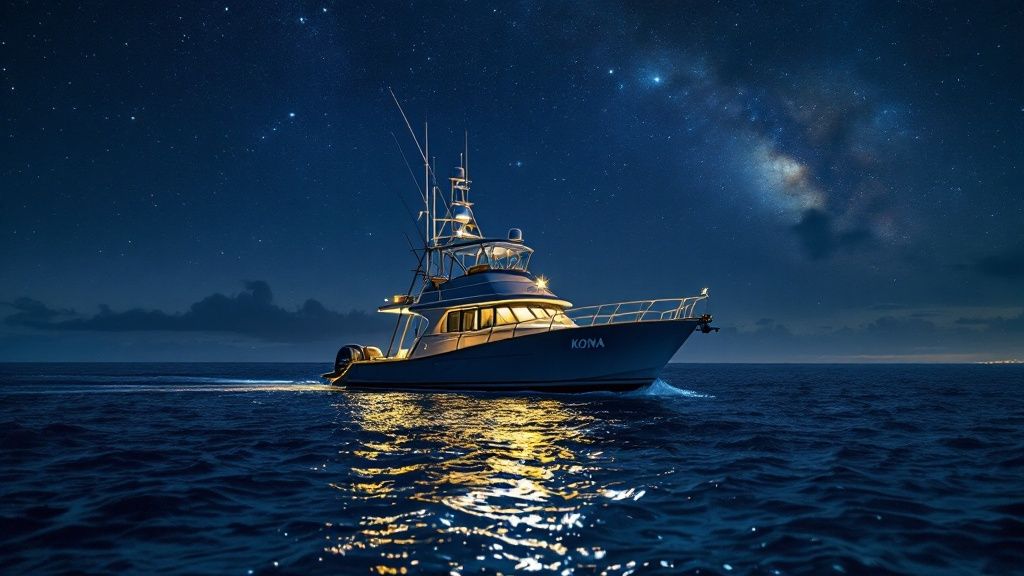
There’s a reason divers and ocean lovers from around the globe flock to the Kona coast of the Big Island. It's hands down the best place on Earth to get up close and personal with manta rays. This isn't by accident; a unique blend of geography and marine biology has created the perfect natural theater for this nightly underwater ballet.
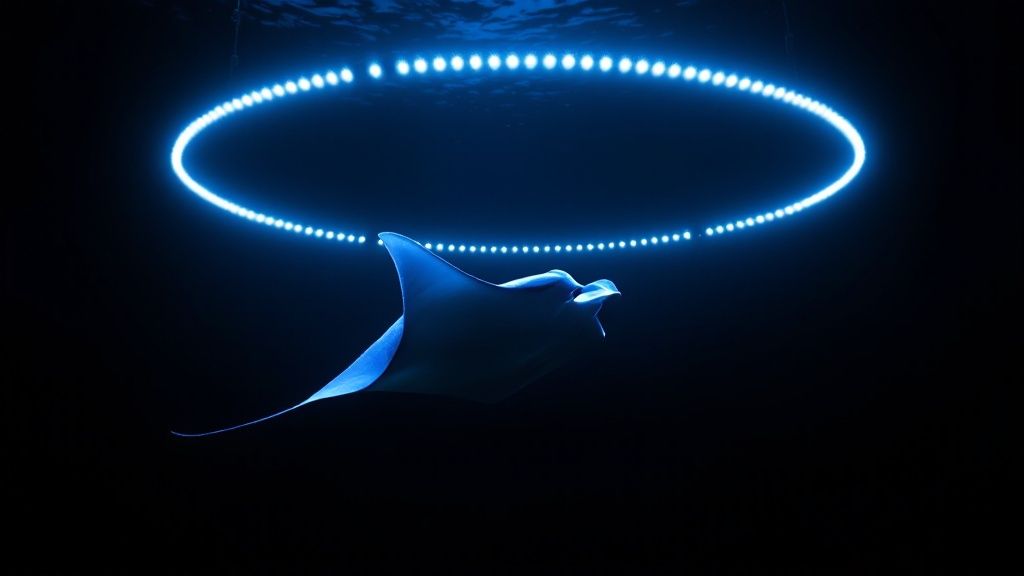
While seeing mantas in other parts of the world can be a hit-or-miss affair, Kona's encounters are astonishingly reliable. The secret? We create an underwater "campfire." Dive operators set up powerful, stationary lights on the ocean floor. These lights attract massive clouds of phytoplankton, which are tiny marine organisms that happen to be a manta ray's favorite meal.
Why Kona Is Uniquely Reliable
The volcanic landscape of the Kona coast is the real hero here. The sheltered bays and unique underwater lava rock formations act like a natural funnel, concentrating the plankton in specific areas night after night. It’s like setting a dinner table that the local manta population knows they can always count on.
This consistent food source is why the success rate for seeing mantas is so incredibly high. We're talking an 80-90% success rate on any given night, based on years of collected data. It's what makes Kona the most dependable spot in the world for this kind of encounter.
The whole experience is completely immersive. As a diver, you'll settle onto the sandy bottom, looking up as these gentle giants swoop down. Snorkelers get a bird's-eye view from the surface, watching the mantas ascend right below them to feed in the light beams. It’s a choreographed dance between light, plankton, and these magnificent creatures.
What to Expect From the Dive
This adventure is about so much more than just spotting an animal. You're witnessing a natural feeding frenzy in a way that feels intimate and completely wild. The mantas perform effortless, acrobatic somersaults right through the light beams, their cavernous mouths wide open to scoop up plankton.
Seeing their massive wingspans—some over 15 feet—create silent, sweeping shadows in the water is a sight that truly stays with you. To get a real feel for the magic, take a look at these stunning manta ray dive pictures from Kona. Now, let's walk through everything you need to know to be fully prepared for this once-in-a-lifetime dive.
Choosing the Best Manta Ray Tour in Kona
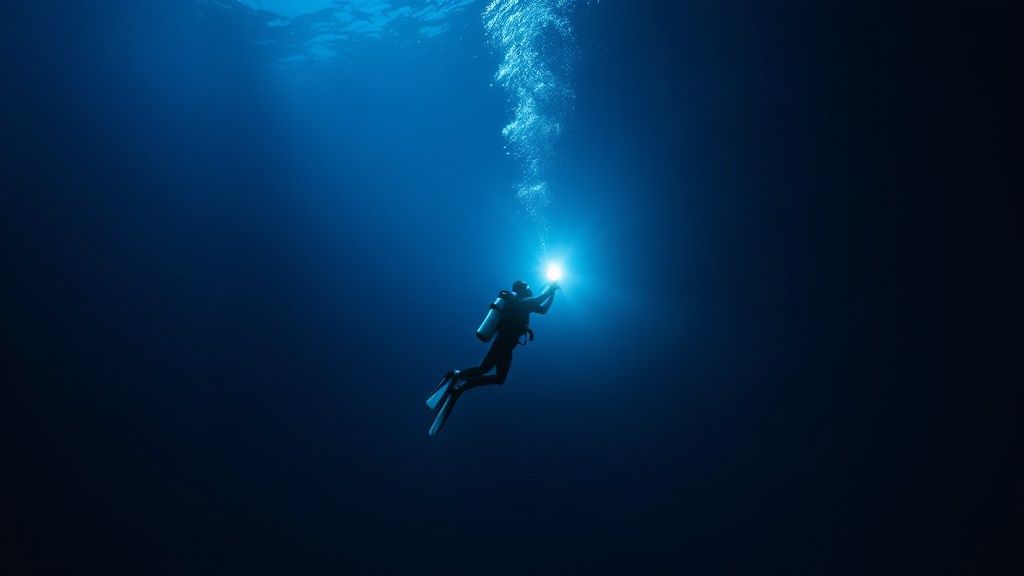
With so many boats offering the manta ray night dive in Kona, figuring out which one to choose can feel a little daunting. But don't worry—a few key details can make the difference between a good dive and an absolutely unforgettable one. The best tours are always built on a foundation of safety, respect for the environment, and a genuine passion for the incredible animals you’re about to meet.
A great tour really comes down to the crew. You want guides who do more than just lead a dive; you want educators who are excited to share their knowledge about manta ray behavior, their unique personalities, and local conservation efforts. I've also found that smaller group sizes almost always lead to a more personal and less crowded encounter, letting you soak in the magic without bumping fins with other divers.
What Separates a Good Tour from a Great One?
Honestly, it all boils down to a deep commitment to responsible tourism. The top-tier operators adhere to the strictest standards for interacting with the mantas, making sure the well-being of the animals is always the number one priority. This means they brief you thoroughly on proper etiquette, like how to maintain a safe distance and why you should never, ever touch a manta ray.
When you're weighing your options, keep these points in mind:
- Group Size: Smaller boats and more intimate tour groups almost guarantee a better, less chaotic time in the water. It’s that simple.
- Safety Standards: Look for a company with a squeaky-clean safety record. They should give a comprehensive, clear briefing before anyone even thinks about getting in the water.
- Environmental Commitment: I always recommend choosing operators who are actively involved in conservation and follow the Manta Ray Green List standards for sustainable tourism.
- Guide Expertise: A knowledgeable guide can completely transform your dive. They can point out fascinating behaviors and even help you identify individual mantas by their unique spot patterns.
Choosing a reputable operator isn't just about having a better time; it's about supporting the long-term health of Kona's resident manta population. Your choice directly contributes to the preservation of this incredible natural wonder.
For a more comprehensive look at what makes a great dive operation, we've put together a full guide on how to choose a Kona dive shop.
Our Top Recommendation for Your Manta Adventure
We proudly and confidently recommend Kona Honu Divers. Their commitment to safety, education, and sustainable practices is second to none. The crew's passion for the ocean is infectious, and their dedication to giving you a world-class experience shines through in every detail of their manta ray dive tour.
The number of mantas you'll see can vary from night to night, but Kona's dive sites are famous for being incredibly reliable. While some nights might bring a handful of graceful visitors, others can turn into a true feeding frenzy. The local record for a single night is an astonishing 36 individual mantas!
This is a testament to how healthy the local population is. Each ray is identifiable by its unique belly spots, and researchers have cataloged nearly 200 individuals that call these waters home year-round. You can learn more about these Kona manta ray facts and figures on UWPhotographyGuide.com.
But you don't have to take our word for it—see what fellow divers have to say about their experiences with Kona Honu Divers.
Ready to book the adventure of a lifetime?
How to Prepare for Your Manta Ray Encounter
The secret to a truly unforgettable adventure is feeling completely prepared. When you know you’ve got everything covered, you can relax and soak in every moment of the manta ray night dive in Kona. A little bit of planning beforehand makes all the difference once you're on the boat.
People always ask what they need to bring. While your tour operator will handle all the essential gear for being in the water, your personal comfort before and after the dive is what turns a good night into a great one.
Your Personal Packing List
The boat ride back to the harbor can get surprisingly chilly, even after a warm Hawaiian day. Once the sun goes down and you’re wet from the dive, the ocean breeze has a bite to it. Tossing a warm, dry layer into your bag is a pro move you won't regret.
Here’s a quick rundown of what I always recommend packing:
- Warm Clothing: A simple hoodie, sweatshirt, or windbreaker is perfect for the ride home.
- A Dry Towel: You’ll be glad you have it the second you climb back on the boat.
- Reusable Water Bottle: Staying hydrated is key, especially after being in saltwater.
- Underwater Camera: GoPros are fantastic for this. Just remember the golden rule: no flash photography. The bright, sudden light can startle and disorient the mantas.
- Seasickness Medication: If you even think you might get motion sick, take something before you get on the boat. It's too late once you start feeling queasy.
Don't worry about lugging your own scuba gear. Most reputable outfits, like Kona Honu Divers, provide top-notch wetsuits, masks, fins, and lights. Unless you're deeply attached to your own equipment, it's easier to leave it behind.
Dive Certifications and the All-Important Briefing
If you're planning to scuba, you absolutely must be a certified diver. The dive itself isn't particularly deep or technical, but for everyone's safety, operators need to see proof of certification. Have your C-card (physical or digital) ready when you check in. If you want to maximize your time in the water, a 2-Tank Manta Ray Dive tour is an incredible option.
The single most important part of your preparation happens right on the boat deck: the pre-dive briefing. This is where your guides lay down the rules of engagement—how to position yourself in the water, where to point your light, and, most importantly, the strict no-touching policy.
Pay close attention. This briefing isn't just for your safety; it's about protecting the mantas and ensuring these encounters remain sustainable for generations to come. By the time you get the signal to jump in, you’ll feel totally ready for one of the most amazing experiences of your life.
Your Experience in the Water with Mantas
This is what it's all about. After all the planning and anticipation, the moment finally arrives. As the Hawaiian sun melts into the Pacific, the energy on the boat is palpable. The ride out to the site is stunning, no doubt, but it's really just the opening act for the main event: your manta ray night dive in Kona.
Once the boat anchors at one of the legendary manta sites like Manta Village or Manta Heaven, the crew moves with a practiced rhythm. They’ll lower a powerful, custom-built light array—we call it the "campfire"—which comes to rest on the ocean floor about 30-40 feet below. Almost instantly, this beacon starts attracting swarms of plankton, creating a glowing buffet that the local mantas simply can't ignore.
Finding Your Front-Row Seat
Your spot in the water will look a little different depending on whether you're diving or snorkeling, but both offer a mind-blowing perspective.
- For Divers: You’ll follow your guide down to the sandy bottom and find a place to settle in, usually in a semi-circle around the campfire. Once you're comfortable, you just kneel, relax, and look up. The show is about to begin.
- For Snorkelers: You'll hang out on the surface, holding onto a large, custom-designed float. These boards are equipped with their own high-powered lights that shine down, creating another plankton-rich hotspot just below you.
Both setups are designed to do one thing: concentrate the food. The lights gather the plankton, and the mantas know exactly where to show up for dinner. It's this reliable, well-orchestrated setup that makes the manta ray dive tour such a consistently breathtaking experience.
The Magic Unfolds
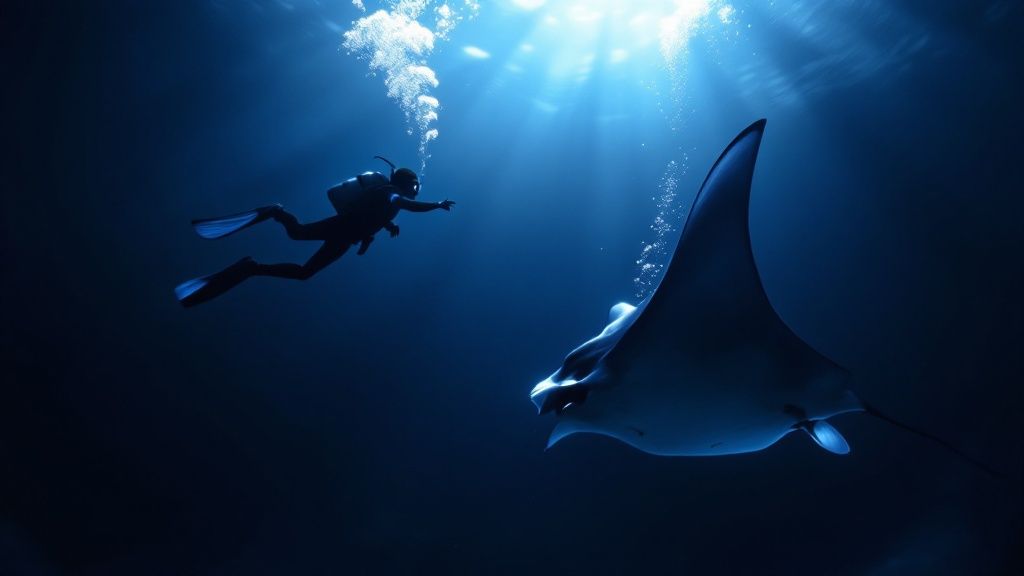
And then, it happens. A huge, dark silhouette glides out of the inky blackness and into the light. The first manta has arrived. Before you know it, another appears, and then another. They perform this incredible, silent underwater ballet, swooping and barrel-rolling as they feast on the clouds of plankton.
There are no words for the feeling of a manta with a 12-foot wingspan soaring inches over your head. You can actually feel the water displaced by its massive wings, yet they navigate with such impossible grace that they never touch you. It’s a completely silent, awe-inspiring spectacle that feels both intensely personal and profoundly wild.
You are a guest in their dining room. The whole experience is built around passive observation, allowing the mantas to go about their natural feeding behavior without being disturbed. That deep respect for their space is what makes the encounter so pure.
The Simple Rules of Engagement
To keep everyone—mantas and people—safe, we follow a few simple but non-negotiable rules. Your guide will cover them in detail, but they boil down to this:
- Stay in Your Spot: Whether you're on the bottom or at the surface, holding your position creates a predictable, safe environment for the mantas to fly through.
- No Touching. Ever: Manta rays have a delicate, protective mucus coating on their skin that acts as their immune system. Touching them can strip this layer off, leaving them vulnerable to infections. Let them initiate any close passes.
- Point Your Light Correctly: If you're diving, you'll point your light up toward the surface to help attract plankton. Snorkelers' lights are built into the floats and point down. This keeps the buffet in one place.
Following these guidelines is our shared responsibility, ensuring these incredible animals continue to thrive and that divers can experience this magic for generations to come.
Understanding and Protecting Kona's Manta Rays
A manta ray night dive in Kona isn’t just another cool thing to do on vacation; it’s an invitation to step into the world of a well-studied and carefully protected marine population. When you understand a bit about the lives of these gentle giants, the whole experience deepens. It stops being just a dive and becomes something more meaningful—a chance to connect with and support ocean conservation.
The Kona coast just happens to be the perfect home for these incredible creatures. Thanks to its unique underwater landscape, a reliable food source is always available, which is why a large resident manta population can live here year-round. This special environment has turned Kona into a world-renowned hub for manta ray research, giving scientists a front-row seat to their lives.
A Living Laboratory for Marine Research
Did you know that individual manta rays can be identified by the unique spot patterns on their bellies? They're like fingerprints, and it’s how researchers have been able to name and track hundreds of them over decades. This long-term familiarity with the local population is a huge part of what makes the Kona experience so special.
The research here is no joke. The manta ray night dive is actually one of the most well-documented wildlife interactions on the planet. For years, scientists have kept meticulous records. Just to give you an idea, in 2013 alone, researchers identified around 200 individual mantas. You can dig into the detailed manta ray sighting statistics on MantaRayAdvocates.com if you’re curious.
Your Role in Conservation
This whole beautiful system depends on one thing: responsible tourism. When you book a trip with an operator who follows strict, manta-safe guidelines (like those on the Manta Ray Green List), you're casting a vote for the well-being of these animals. It’s the only way to ensure these encounters are sustainable.
Being a good guest in their home means being aware of broader marine environmental protection efforts. Your participation goes beyond just watching; it becomes an act of stewardship for the ocean.
By following your guide's instructions—like never, ever touching the mantas and staying put in the water—you become an active participant in their conservation. It's a simple act, but it's what ensures these magical encounters will be here for future generations.
Knowing how to act in the water is critical. We put together a guide on responsible and considerate diver etiquette that will help you feel prepared and confident. This knowledge empowers you to be a positive force for the entire marine ecosystem.
If this conservation-focused dive inspires you to see more of what Kona’s underwater world has to offer, there are some incredible advanced diving opportunities that will take you to more remote and breathtaking sites.
Your Manta Ray Night Dive Questions, Answered
Even after planning everything out, it’s completely normal to have a few last-minute questions buzzing around. We get it. You want to be sure you know exactly what you’re getting into.
Let’s tackle some of the most common questions we hear from divers and snorkelers, so you can show up feeling confident, prepared, and ready for an incredible night.
Is the Manta Ray Night Dive Safe?
This is usually the first question people ask, and the answer is a resounding yes. First and foremost, manta rays are true gentle giants. They're filter feeders with no teeth, no stingers, and no barbs. Their sheer size can be intimidating, but they pose absolutely no threat to us. They're just curious.
Every reputable tour company in Kona puts safety above all else. Your trip will always start with a detailed safety briefing, and professional guides will be in the water with you every step of the way. The golden rule is simple: relax, listen to your guides, and never, ever touch the mantas.
What if I'm Not a Certified Scuba Diver?
No certification? No problem at all! The snorkeling experience is just as breathtaking as the dive—some people actually prefer the top-down view it provides.
Snorkelers hang on to a custom-made float board that has powerful lights pointing down into the dark water. These lights are like a dinner bell, attracting the plankton that the mantas feed on. You'll watch in awe as these massive, graceful creatures glide and barrel roll just inches beneath the surface. It's a fantastic option for families, non-divers, or anyone wanting a different perspective.
When Is the Best Time of Year to Go?
Here's the best part: there is no bad time to see the mantas in Kona. They are a resident population, meaning they live here all year long. They don't migrate, so you have an excellent chance of an amazing encounter whenever you visit.
Sighting success rates consistently hover over 90%, regardless of the season.
That said, if you're looking for the most comfortable conditions, many people aim for the months between April and October. The ocean is typically calmer and the weather is warmer, making for a smoother boat ride.
Will I Get Cold During the Dive or Snorkel?
The water in Hawaii is beautiful and warm, but hanging out in the ocean at night can definitely leave you feeling a bit chilly. That's why every professional operator provides high-quality wetsuits, usually 3mm or 5mm thick, to keep you warm and comfortable.
Here’s a pro tip from years of experience: think about after you get out of the water. Bring a dry towel and something warm like a hoodie or jacket for the boat ride back to the harbor. It makes a world of difference.
We've helped thousands of guests experience this incredible adventure. See what they have to say about their trip with Kona Honu Divers.
Ready to witness the magic for yourself? The professional and passionate crew at Kona Honu Divers is ready to guide you on the adventure of a lifetime. Book your unforgettable manta ray night dive tour today.