
Picture this: you're sinking into the warm, dark Pacific waters just as the sun dips below the horizon. Your dive light cuts a bright beam through the deep blue, illuminating a world that’s just waking up. This isn't a scene from a nature documentary—it's the world-famous manta ray night dive in Kona, a dive that tops bucket lists around the globe for a very good reason.
You're about to witness something truly unforgettable.
An Unforgettable Encounter With Gentle Giants
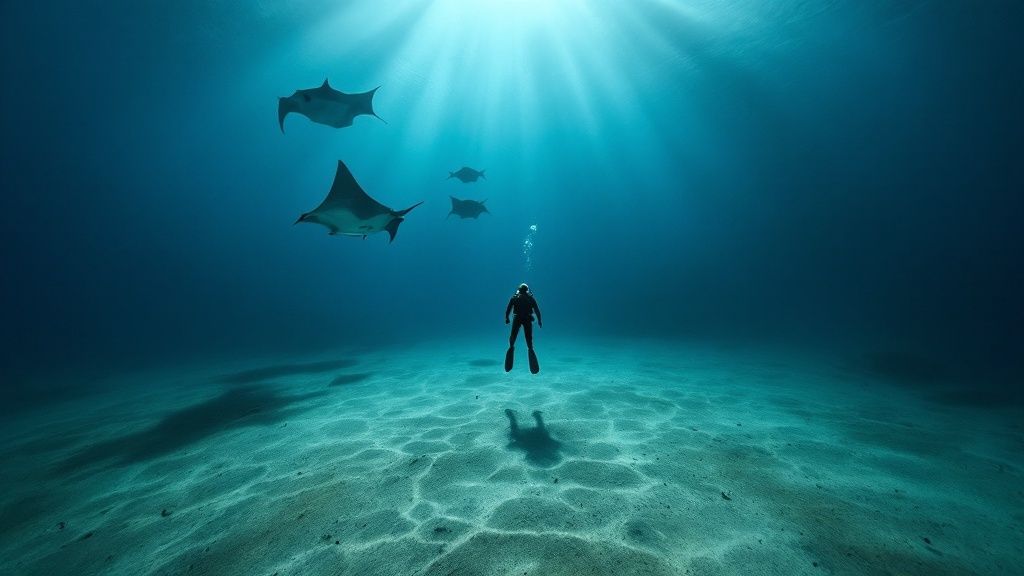
Once you're settled on the ocean floor, your group’s lights create an underwater stage. Then, out of the darkness, they appear. Giant manta rays, some with wingspans wider than a car, glide silently into the light, their cavernous mouths open to feed on the microscopic plankton drawn to the beams. It's a breathtaking, silent ballet that every ocean lover needs to experience at least once.
This guide is your go-to resource for making that happen. We'll cover everything from why Kona is the place for this dive to how to choose the right operator and what to expect from start to finish. Let's dive in.
What to Expect on Your Dive
The manta ray night dive is less of a passive observation and more of an immersive, front-row seat to one of nature's greatest shows. Divers and snorkelers gather around a central point with powerful lights aimed toward the surface. These lights attract a thick cloud of zooplankton, which is basically a dinner bell for Kona's resident manta population.
Here’s a little of what you can expect:
- Up-Close Encounters: The mantas aren't shy. They'll often perform graceful barrel rolls and swoops, sometimes coming within inches of you as they feed. Don't worry, they're gentle giants.
- A Glimpse into Natural Behavior: You'll be witnessing a completely natural feeding behavior in a safe, controlled setting. It’s wild, but organized.
- Expert Guidance: Every reputable tour is led by professional guides who are there to ensure the safety of both the divers and the mantas. They're also full of fascinating facts about these incredible animals.
To get a real feel for this underwater spectacle, check out this gallery of manta ray dive pictures from Kona. It really helps capture the magic.
The Kona manta ray night dive is an extraordinary display of nature. The sheer size and grace of these gentle giants as they feed in the illuminated water is a humbling and awe-inspiring experience that stays with you long after you surface.
It's this unique combination of reliable wildlife sightings, crystal-clear water, and top-notch local operators that makes Kona the undisputed king of manta ray encounters.
Before we get into the nitty-gritty of planning your trip, here’s a quick snapshot of what the experience involves.
Kona Manta Ray Night Dive At a Glance
This table gives you a quick summary of what to expect on your Manta Ray Night Dive adventure in Kona.
| Aspect | Details |
|---|---|
| Location | Kona Coast, Big Island of Hawaii |
| Best Time to Go | Year-round, with peak conditions from April to October |
| Experience Level | Suitable for certified scuba divers and snorkelers of all levels |
| Manta Wingspan | Averages 8-12 feet, with some individuals reaching over 16 feet |
| Sighting Success | Consistently high, often exceeding 90% |
| Water Depth | Typically 25-40 feet, allowing for extended bottom time |
| Key Attraction | Watching giant manta rays feed on plankton attracted by underwater lights |
Now that you have the basics down, let's explore what makes this dive so special and how you can plan your own adventure.
Why Kona is the World’s Premier Manta Destination
So, what’s the big deal about the manta ray night dive in Kona? You can find manta rays in warm waters all over the world, but Kona is, without a doubt, the global capital for getting up-close and personal with them on a consistent basis. It’s a perfect storm of geography, biology, and a really clever learned behavior that creates a show you just won't find anywhere else.
The magic really starts with the Big Island's unique geology. The underwater slopes of the Hualalai and Mauna Loa volcanoes drop off sharply, creating the ideal channels for nutrient-rich currents. These currents bring a constant supply of plankton—the main course on any manta’s menu. Think of the Kona coast as a permanent, all-you-can-eat buffet for these gentle giants.
Over many years, something incredible happened. Kona's resident mantas figured out that the lights from boats and divers meant an easy, concentrated meal. The lights attract the plankton, which in turn brings the mantas. This simple, learned behavior is the secret sauce that makes the experience so ridiculously reliable.
The Underwater Campfire Phenomenon
This partnership between humans and mantas has created what we locals call the "underwater campfire." Dive operators have set up specific spots with powerful lights where divers gather on the sandy bottom. All those beams pointing upward create a massive, glowing column of plankton that draws the mantas in like moths to a flame, night after night.
This isn't just a happy accident; it's a conditioned response that has been observed for generations. The result is a success rate that’s almost unheard of in wildlife tourism.
Kona is famous for this reliability, with a sighting success rate that hovers between 85% and over 95%. At the most popular sites, you’re almost guaranteed a show, with encounters happening on more than 95% of trips. We've identified over 450 individuals in the local population, and many of them have wingspans of around 12 feet. The dives are also accessible, taking place in just 30 to 40 feet of water, which allows for long bottom times of 45 to 60 minutes. It's no wonder this spectacle draws about 80,000 visitors a year. You can learn more about the whole Kona manta ray night dive ecosystem and what to expect.
This learned behavior is key. The mantas are not baited with food; they are drawn to the light that concentrates their natural food source. It's a testament to their intelligence and adaptability.
This incredible reliability is what changes the game. It’s not a "hope-we-see-something" dive; it's a "get-ready-for-the-show" dive. You can just relax and take in the silent, graceful ballet happening inches from your face. Plus, the shallow, protected sites make this amazing experience accessible to divers and even snorkelers of all skill levels.
A Robust and Well-Studied Population
Another thing that makes Kona so special is how well we know our mantas. Every manta ray has a unique pattern of spots on its belly, like a human fingerprint. For decades, marine biologists and local dive guides have been using these patterns to identify and name hundreds of individuals.
This ongoing research gives us an amazing window into their world:
- Population Health: By tracking individuals, scientists can keep an eye on the health and size of the local manta community.
- Behavioral Patterns: It helps us understand their social lives, mating rituals, and how they travel along the coast.
- Longevity: Some of our most famous residents, like "Lefty" and "Big Bertha," have been regulars at the campfire for decades!
Having this deep knowledge of the local population just makes the whole experience richer. Your guide can often point out a manta by name and share a bit of its life story, creating a real connection between you and these incredible animals. It’s this blend of predictable encounters, easy diving, and a celebrated local population that truly makes Kona the best place on Earth to see manta rays.
Choosing Your Adventure: Scuba Dive or Snorkel
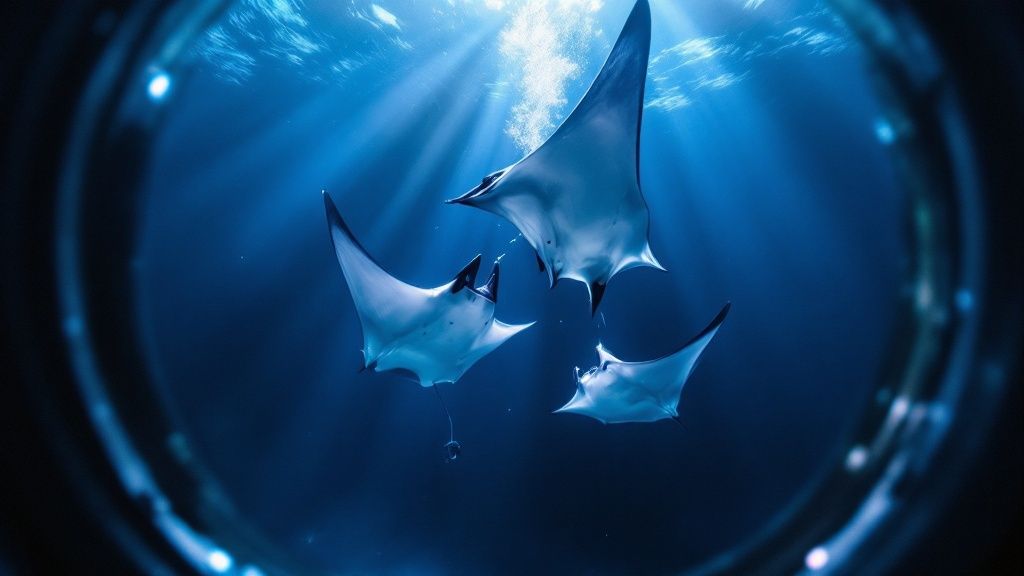
So, how do you want to experience the show—from the front-row seats on the ocean floor or the balcony view from the surface? Deciding between scuba diving and snorkeling is your first big choice when planning your Kona manta ray adventure. Honestly, you can't go wrong, as each offers a completely unique and magical perspective on this incredible underwater ballet.
The Scuba Diving Experience
Choosing to scuba dive puts you right in the front row. You’ll descend with your guide to the sandy bottom, usually somewhere between 30 to 40 feet, and settle in around a "campfire" of powerful lights that points straight up.
From this vantage point, the experience is profoundly immersive. You’re literally looking up as these gentle giants glide, swoop, and perform graceful barrel rolls just inches above your head. It’s a quiet, mesmerizing world down there, and you truly feel like a guest in their domain.
The best part about the scuba option is that it gives you a stable, ground-level view. You can just relax on the seafloor and soak it all in without having to think about staying afloat.
To join the dive group, you will need to be a certified diver. If it’s been a while since your last logbook entry, don’t sweat it—a quick refresher course is usually all you need. The dive itself isn't technically difficult, thanks to the shallow depth and typically calm conditions, but being comfortable in the water at night is key.
- Pros: Unobstructed, upward view of the mantas; highly immersive and stable position.
- Cons: Requires scuba certification; involves more equipment.
The feeling of a 12-foot manta ray gracefully gliding directly over your head, so close you can see every detail of its unique spot pattern, is a moment that is simply impossible to forget.
The Snorkeling Experience
If you aren't a certified diver (or just prefer to stay on the surface), the snorkeling adventure offers an equally breathtaking "balcony" view. You'll float comfortably at the surface, holding onto a custom-built light board that shines down into the water.
This massive floating light is what attracts the plankton, drawing the mantas right up to you for their dinner.
From up top, you get a fantastic bird's-eye view of the whole scene. Watching the mantas appear from the dark depths, their white bellies glowing as they feed just inches below your body, is an absolutely exhilarating experience. Best of all, it's accessible to almost everyone, from families with kids to folks who have never even worn a snorkel mask before.
Top-tier operators provide all the gear you need, including wetsuits to keep you warm and flotation devices for extra support. This makes the whole thing safe, comfortable, and perfect for all ages and swimming abilities.
No matter which option you choose, a professionally guided tour is the way to go for a safe, respectful, and unforgettable encounter. And while the manta ray dive is a world-famous nighttime activity, don't forget that Kona also has incredible daytime snorkeling. Many visitors pair their manta trip with one of the classic Captain Cook snorkel tours to see the vibrant reefs in the daylight.
Kona’s Premier Manta Ray Viewing Spots
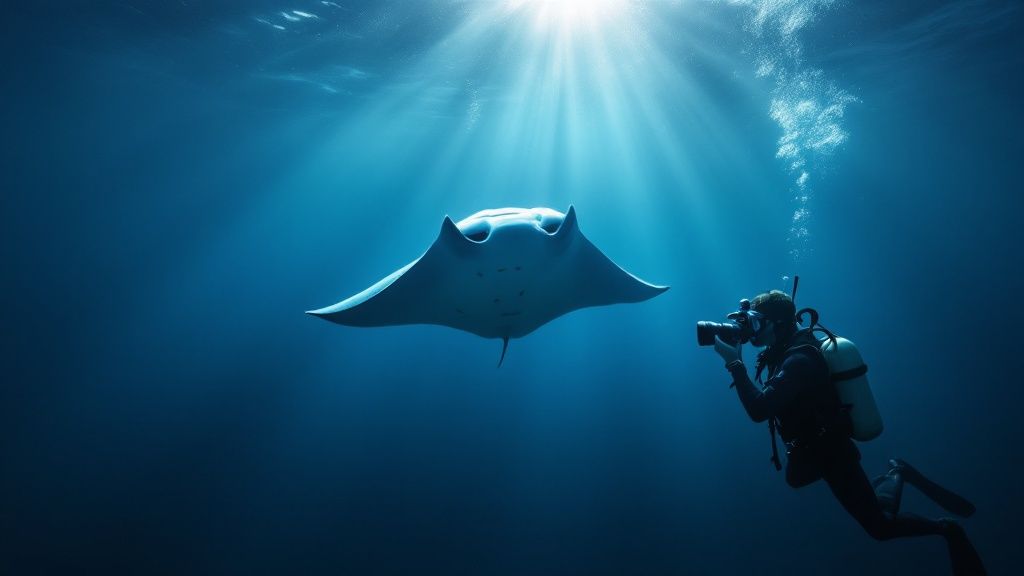
While you might spot a manta ray cruising just about anywhere along the Kona coast, two specific sites have become legendary for their nightly underwater ballet. These world-famous locations, affectionately known as "Manta Heaven" and "Manta Village," are the go-to destinations for the manta ray night dive in Kona. Each offers its own unique vibe, and knowing the difference can help you pick the perfect trip.
The whole operation is a finely tuned system. Long before you splash into the water, your guide will give you a thorough pre-dive briefing. This isn't just a formality; it's where you'll learn about manta behavior, why passive interaction (absolutely no touching!) is critical, and how the "underwater campfire" of dive lights creates a plankton buffet.
This briefing is crucial. It’s all about ensuring a safe and respectful encounter that keeps the mantas protected while giving you an unforgettable front-row seat.
Manta Heaven: North of Kona
Known officially as Garden Eel Cove, Manta Heaven is located a bit north, just off the coast near Kona International Airport. And it truly lives up to its name. This spot is famous for attracting massive groups of mantas, sometimes creating a swirling vortex of wings that you have to see to believe.
The seafloor here is a sandy arena surrounded by coral reefs, which perfectly stages the feeding frenzy. Because it's a bit farther out, the boat ride can sometimes be a little longer or choppier, but the potential payoff is huge.
- Best For: Divers hoping to see a high number of mantas in a single dive.
- Bottom Time: Usually around 45 minutes at a depth of 30-40 feet.
- Conditions: Can be more exposed to open ocean swells, so conditions can vary.
Believe it or not, people have been tracking this for years. A fascinating 2013 statistical report on Kona manta ray sightings showed that divers at Manta Heaven saw an average of 11 manta rays per night. Even more impressive, the success rate for seeing at least one manta was nearly 90%.
Manta Village: South of Kona
Head just south of Kailua-Kona and you'll find Manta Village, also called Kaukalaelae Point. This site is the old classic, celebrated for its rock-solid consistency and calmer, more protected waters. Situated right in front of the Outrigger Kona Resort & Spa, the hotel's lights have been drawing mantas to this exact spot for decades.
Manta Village is where the Kona manta ray night dive was born. Its reliability is legendary, making it a favorite for many operators and a great choice for those who might be prone to seasickness, thanks to the shorter boat ride and sheltered bay.
While the same 2013 report clocked an average of 4 mantas per night here, don't let that fool you—the consistency is incredible. Some of Kona’s most famous and frequently identified mantas are regulars at Manta Village.
Both Manta Heaven and Manta Village offer world-class experiences. The choice often comes down to logistics and a preference for either potentially larger numbers (Manta Heaven) or incredible consistency and calmer waters (Manta Village).
No matter which site your operator chooses for the night, the experience is meticulously managed. Guides position everyone to create an optimal viewing circle that doesn't disturb the mantas' natural feeding patterns. This organized approach ensures you get the best possible show while prioritizing the well-being of these magnificent animals. Booking a professional manta ray dive tour guarantees you’re part of a sustainable and truly unforgettable experience at either of these amazing locations.
Being a Responsible Guest in the Manta’s World
Seeing Kona's manta rays up close is a genuine privilege, not a performance at an aquatic park. These are wild animals, and the incredible spectacle we get to witness depends entirely on a fragile truce between us and them. To make sure this experience lasts for generations, the Kona dive community works under a strict set of guidelines for ethical, sustainable encounters.
At the heart of it all is a concept called the passive interaction model. This is the golden rule, and every reputable operator out here lives by it. It’s a simple idea, but it’s absolutely critical for the well-being of the mantas.
The #1 Rule: Do Not Touch
If you remember only one thing, make it this: never, ever touch a manta ray. This isn't just about being polite; it’s about protecting their health. Manta rays have a special mucus coating on their skin that acts like a shield, protecting them from nasty bacteria and infections.
When a person touches a manta, that protective slime layer gets wiped away. This leaves the manta vulnerable to diseases it would normally be able to fend off. It’s like scraping off a patch of your own skin—you’re leaving them exposed.
Following the passive interaction model is the single most important thing you can do. Your respectful behavior directly protects the health and safety of Kona's beloved manta ray population.
Beyond not touching, being a passive observer also means:
- No Chasing: Don't ever swim after a manta ray or try to follow it. Let them approach you on their own terms. They control the entire encounter.
- No Blocking: Always give them a clear path to swim. Never get in their way or make them feel trapped.
- Hold Your Position: Whether you're a diver on the sandy bottom or a snorkeler at the surface, stay in your designated spot. This creates a predictable and calm environment for everyone.
For a more detailed look at proper underwater behavior, it's worth reviewing this guide on responsible and considerate diver etiquette.
How Ecotourism Protects the Mantas
The tour operator you choose makes a huge difference. When you book with a company like Kona Honu Divers, which is fully committed to these ethical standards, you’re actively taking part in a conservation success story. Revenue from these dives helps fund crucial research and advocacy to protect these animals.
This brand of ecotourism sends a powerful message: these incredible animals are worth far more alive and thriving in the wild than they could ever be otherwise.
You're Helping Science, Too
Here’s a cool fact: every manta ray has a unique spot pattern on its belly, just like a human fingerprint. Local guides and researchers use photos and videos from dives to identify individual mantas.
This “citizen science” helps track the population’s size, overall health, and their movement patterns around the island. So when you hear your guide call out a manta by name—"Hey, there's Lefty!"—it's because of a massive photo-ID catalog built over decades, with help from divers just like you. The data is priceless for conservation.
When you choose a responsible operator for your Kona manta ray night dive, you're not just a tourist. You're becoming an ally for these gentle giants.
Essential Tips for Planning Your Manta Dive
Alright, you're convinced. You're ready to see the famous underwater ballet for yourself. So, how do you go from dreaming about it to actually doing it? Planning your manta ray night dive in Kona is actually pretty simple once you know the key details.
Let's walk through everything you need to know, from the best time of year to visit to what you should toss in your bag.
When Is the Best Time to Go?
I've got great news for you: there's really no bad time to do this dive. Kona's resident manta rays stick around all year, so you have an excellent shot at an incredible encounter no matter when you visit. They don't pack up and leave for the winter!
That said, if you're looking for the absolute calmest, glassiest ocean conditions, aim for sometime between April and October. The seas tend to lie down during these months, which makes for a much smoother boat ride out to the site and a more relaxing experience overall.
What to Bring and What Is Provided
You can pack pretty light for this adventure. The dive operators handle all the heavy lifting, but a few personal items will make your trip much more comfortable.
What You Should Bring:
- Swimsuit: The easiest thing to do is just wear it under your clothes to the harbor. You'll be ready to go in no time.
- Towel: You'll definitely want one for drying off after you get out of the water.
- A Warm Jacket or Sweatshirt: It might be tropical, but the boat ride back in the dark can get surprisingly chilly once the ocean breeze hits your wet hair.
- Motion Sickness Meds: If you even think you might get seasick, take something beforehand. It's cheap insurance to make sure you enjoy every minute of the experience.
Your tour company, like the pros over at Kona Honu Divers, will have all the essential gear waiting for you. This means a wetsuit that fits, a mask, fins, and all the scuba gear for divers (BCD, regulator) or a light board for snorkelers. They almost always have snacks and drinks on board, too.
Understanding the Tour Schedule
Most manta ray trips are set up as a two-tank evening charter, giving you a full-on Kona diving experience. While every operator has its own rhythm, the schedule usually follows a pretty classic pattern.
- Afternoon Check-in: You'll show up at the harbor, get your paperwork sorted, and get fitted for your gear.
- Sunset Boat Ride: The boat heads out while the sun is still up, giving you a front-row seat to a spectacular Kona sunset from the water. It's a show in itself.
- Twilight Reef Dive: Your first dive isn't with the mantas. It's a warm-up dive on a beautiful nearby reef as dusk settles in. This is when all the nocturnal critters start to wake up and come out.
- The Main Event: After a break back on the boat, you'll head over to the manta site for your second dive. This is it—the reason you came!
This two-tank setup is a fantastic way to do it. You get more time in the water and see a wider slice of the local marine life. It's no wonder this dive is so popular—it draws around 80,000 visitors every year, which is hugely important for the local economy and for raising awareness about manta conservation. With an 80-90% sighting success rate, your chances are incredibly high. That consistency is all thanks to Kona's unique volcanic geography, which creates the perfect conditions for plankton to gather, ringing the dinner bell for the mantas. You can get a deeper dive into the timing and local conditions by checking out this guide to the manta ray ecosystem.
Pro Tip: Don't wait until the last minute to book this! The manta dive is world-famous, and spots disappear fast, especially during the busy summer months and winter holidays. Book well in advance.
Keep these simple tips in mind, and you'll be all set for an unforgettable adventure.
Your Top Manta Dive Questions, Answered
We've covered a lot, but you probably still have a few things you're wondering about before booking your manta ray night dive in Kona. Let's tackle some of the most common questions we get from divers and snorkelers just like you.
So, Is It Actually Safe?
Absolutely. Safety is the number one priority for every reputable operator in Kona. You’ll be in the hands of experienced guides who know these waters like the back of their hand and run a tight ship when it comes to safety procedures.
As for the mantas? They're total gentle giants. They are filter feeders without teeth or stingers, so they pose zero threat to people. They're just there for the plankton buffet!
What if I'm Not Scuba Certified?
No certification, no problem at all! The snorkeling option is just as breathtaking. You'll hold onto a specially designed light board on the surface, which attracts the plankton and brings the mantas right up to you.
It's an incredible way to see them soar and barrel roll just inches below. This makes it a perfect experience for families, kids, or anyone who isn't a certified diver.
Are We Guaranteed to See Manta Rays?
We're dealing with wild animals here, so a 100% guarantee is never on the table. That said, the Kona manta dive has one of the highest success rates for any wildlife encounter on the planet, often topping 90%.
The mantas have come to learn that our lights mean an easy meal, making them remarkably reliable dinner guests night after night.
How Cold Is the Water?
You can expect cozy water temperatures year-round. The ocean off Kona typically stays between a comfortable 75-80°F (24-27°C).
Your tour operator will set you up with a good-fitting wetsuit to keep you warm for the whole trip. Honestly, once the mantas show up, you’ll be so mesmerized you won't even think about the temperature!
Ready to jump in? You can find all the details on the manta ray dive tour and book an adventure you’ll be talking about for years.