
The manta ray night dive in Kona isn’t just another dive; it’s something else entirely. It's consistently ranked as one of the best night dives in the world, and for good reason. You're not just observing marine life from a distance—you're part of an incredible, otherworldly ballet as dozens of giant manta rays feed on plankton just inches from your mask.
A Front-Row Seat to an Underwater Spectacle
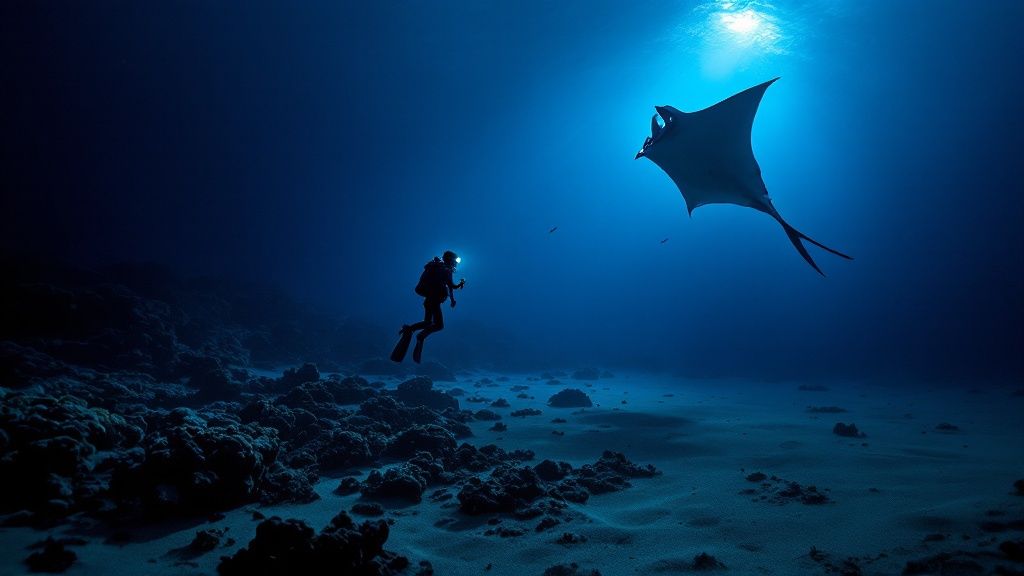
Picture this: you're kneeling on the sandy ocean floor, the last bit of daylight fading from the surface above. The world around you is a deep, peaceful blue, with the only light coming from a central gathering of powerful dive lights we call the "campfire." This bright glow is a magnet for tiny, microscopic plankton—the favorite meal of Kona's famous manta rays.
Out of the darkness, a massive shadow glides into view. Then another appears, and another. Before you know it, you’re surrounded by these gentle giants, some with wingspans stretching over 12 feet. They swoop and soar through the water, performing graceful barrel rolls and somersaults to scoop up the plankton. This is no ordinary scuba diving Kona, Hawaii experience; it’s a full-blown performance, and you've got the best seat in the house.
The Kona coast is famous for a reason. Our unique underwater landscape and a steady supply of food make this one of the most reliable places on Earth to see manta rays. We're talking about a sighting success rate that consistently tops 90%, with many nights even hitting 95% or higher. We have a local population of over 450 identified mantas that show up regularly.
More Than Just a Dive
What really makes this experience stick with you is the connection you feel. Manta rays are incredibly intelligent and curious creatures. While we have a strict no-touching policy to protect them, they often get incredibly close, sometimes making direct eye contact. It’s a powerful moment with one of the ocean's most majestic animals.
And you don't have to be a scuba diver to join in! Snorkelers get an equally amazing view from the surface. You'll hold onto a custom-built light board that floats, attracting plankton and bringing the mantas right up to you.
The feeling of watching a massive fish the shape of a stealth bomber glide into vision is impossible to describe. It’s a moment of pure awe that stays with you forever.
With Kona Honu Divers, you're in the hands of an expert crew that puts safety and marine conservation first. We’re committed to making sure our encounters are respectful and don't disturb the animals, ensuring they'll be here for generations to come.
Want a sneak peek of the magic? Check out our gallery of breathtaking manta ray dive Kona pictures.
What to Expect on Your Manta Adventure
So, what’s it actually like to dive with these gentle giants? Your evening with us starts at the harbor with a warm welcome from our crew. We’ll get you checked in, geared up, and get the pre-dive buzz going. We usually head out just as the sun begins to dip, giving you a front-row seat to a classic Kona sunset from the water.
The boat ride out to the site is part of the magic. As the sky puts on a show, our crew will walk you through a detailed dive briefing. We cover everything: safety checks, hand signals, and most importantly, how to be a respectful guest in the mantas' world. We want everyone—from divers with hundreds of logs to first-time snorkelers—to feel completely comfortable and ready for what’s next.
Arriving at the Manta Site
We’ll anchor at one of the world-famous manta spots, like Manta Heaven or Manta Village, right as the last light fades. This is where our crew springs into action, setting up what we affectionately call the "campfire"—a powerful set of underwater lights placed on the ocean floor.
This isn’t just for show. The bright lights attract huge clouds of plankton, the mantas' favorite food. Essentially, we’re setting up a massive buffet that draws the mantas in from all around. You’ll see the water column start to shimmer and dance with life, a sure sign that the main attraction is on its way.
The Experience for Scuba Divers
If you’re a certified diver, you get a truly unique, bottom-up perspective. After gearing up, you’ll descend with your guide to a sandy patch about 35-40 feet deep. We arrange ourselves in a semi-circle around the light, creating an underwater amphitheater for the show to begin.
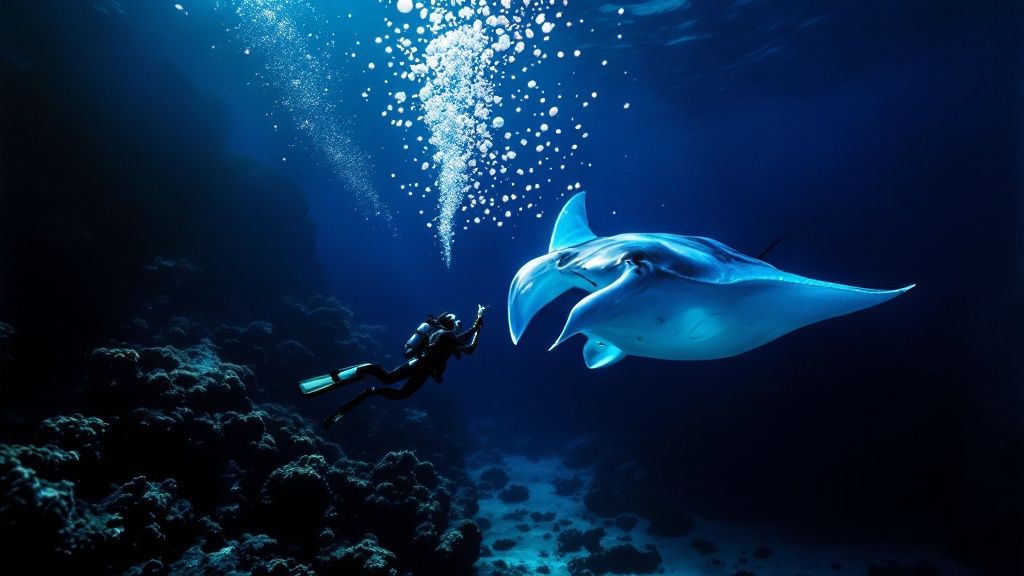
From the ocean floor, the view is just breathtaking. You'll be looking up as these massive, graceful creatures glide, swoop, and perform their iconic barrel rolls just inches over your head. It’s a completely immersive and humbling experience to witness their silent ballet from below.
The best part is that you don’t have to move a muscle. Just relax on the sand and take it all in. Trust me, the feeling of a 12-foot wingspan casting a shadow over you is something you’ll never, ever forget.
The Experience for Snorkelers
Don't have a scuba certification? No problem. The view from the surface is just as spectacular. Snorkelers float comfortably while holding onto a custom-made light board, which shines its own bright beams down into the water.
This creates another plankton buffet right at the surface, and the mantas are more than happy to swim right up to it. You’ll see their huge mouths open wide as they filter-feed, sometimes coming within inches of the board. It's a fantastic, up-close-and-personal way to experience the action without needing to dive deep.
Whether you're looking up from the bottom or down from the surface, the experience is pure magic. We spend about 45 minutes in the water before climbing back aboard for hot chocolate, snacks, and excited chatter on the ride back to shore.
Ready to book your spot for this unforgettable ballet? Kona Honu Divers offers the premier manta ray dive tour experience on the Big Island.
Choosing the Right Guide for Your Dive
Let’s be honest, picking the right operator for your manta ray night dive in Kona is the most critical choice you’ll make. It’s what separates a decent trip from an absolutely unforgettable, safe, and responsible one. With so many boats out there, it really pays to know what to look for.
A great dive company is built on a foundation of safety. That means a crew that knows their stuff inside and out, boats that are meticulously maintained, and rental gear you can trust. The best operators give crystal-clear briefings that make everyone—from a first-time snorkeler to a veteran diver—feel completely comfortable before even hitting the water.
Just as important is their commitment to the mantas themselves. These are wild animals, and we're guests in their home. The top-tier companies are serious about following strict "passive observation" rules, which means no touching, no chasing, and no interfering. The mantas are always in control of the encounter, which keeps them safe and willing to return night after night.
What Sets the Best Apart
Beyond the basics of safety and ethics, what truly makes a dive shop stand out is its people and the kind of experience they create. A crew that is genuinely passionate and knowledgeable can turn a cool dive into something truly inspiring. You want guides who are excited to share amazing facts about manta biology and behavior—it adds a whole new layer to what you're seeing.
Group size is another huge factor. Smaller groups simply mean a better, more personal experience. You get more one-on-one attention from your guide and less chaos in the water, creating a calm, respectful atmosphere that’s better for you and the mantas.
Choosing a guide isn't just about booking a spot on a boat. You're trusting a company with your safety and, for a few hours, becoming a guardian of the ocean. The best guides have a deep respect for the marine world and are genuinely dedicated to its conservation.
If you want to get into the nitty-gritty, we have a whole article on how to choose a Kona dive shop.
Why Kona Honu Divers is the Premier Choice
At Kona Honu Divers, we don't just aim to meet these standards—we live and breathe them on every trip. Our reputation as Kona's top-rated and most-awarded dive company wasn't earned by accident. Our crew members aren’t just certified; they're die-hard ocean lovers with thousands of dives logged right here in these waters.
We run custom-built dive boats designed for your comfort and safety, ensuring a smooth trip out and back. We also keep our groups small on purpose. This allows for a premium, intimate experience where you can have a truly magical and uncrowded encounter with the mantas. We firmly believe that an educational, respectful approach is the only way to do business, ensuring Kona’s mantas will be here for generations to come.
But don’t just take our word for it. Hearing from our guests says it all.
When you’re ready for this world-class adventure, remember that the right guide changes everything. We’d love for you to join us for a safe, ethical, and truly awe-inspiring evening with Kona’s majestic manta rays.
How to Prepare for Your Manta Ray Night Dive
A little prep work can be the difference between a good dive and an unforgettable one. The secret to truly soaking in the magic of the Kona manta ray night dive is feeling comfortable and confident from the moment you step on the boat. We handle all the heavy lifting so you can focus on the incredible ballet happening right in front of your mask.
That means you don't need to stress about tanks, weights, or other dive essentials—Kona Honu Divers has you covered. We've got all the scuba or snorkeling gear you'll need, plus snacks and hot drinks for when you get back on board.
Your job is simple: bring the personal items that will keep you cozy. Think of it like packing for a beach day that extends into a cool, breezy evening. Having a few key things on hand makes all the difference when you climb out of the water and into the night air.
Manta Ray Night Dive Checklist
To make sure you're all set, we've put together a quick checklist. Packing a small bag with these essentials will ensure your trip is comfortable from start to finish.
| What to Bring (Required) | What to Bring (Recommended) | What is Provided by Kona Honu Divers |
|---|---|---|
| Swimsuit (wear it there) | Towel | Scuba/Snorkel Gear (mask, fins, etc.) |
| Any personal medications | Warm, dry clothes (sweatshirt, jacket) | Wetsuit |
| Certification card (for divers) | Reusable water bottle | Tanks and Weights |
| Reef-safe sunscreen | Professional Guides | |
| Motion sickness remedy | Snacks & Hot Drinks | |
| Underwater camera (no strobes) | Our powerful underwater "campfire" lights |
The most common thing people forget? A warm jacket. Even in Hawaii, the boat ride home can feel chilly after an evening in the water. Having a dry layer to change into makes the ride back so much more enjoyable.
For a more detailed look at the equipment we use and what you might want for other types of dives, check out our guide on the gear you will need for your Kona diving adventure.
Capturing the Moment: Photography Tips
Bringing an underwater camera is a great idea, but shooting at night is a whole different ballgame. The low-light conditions mean your usual settings probably won't cut it.
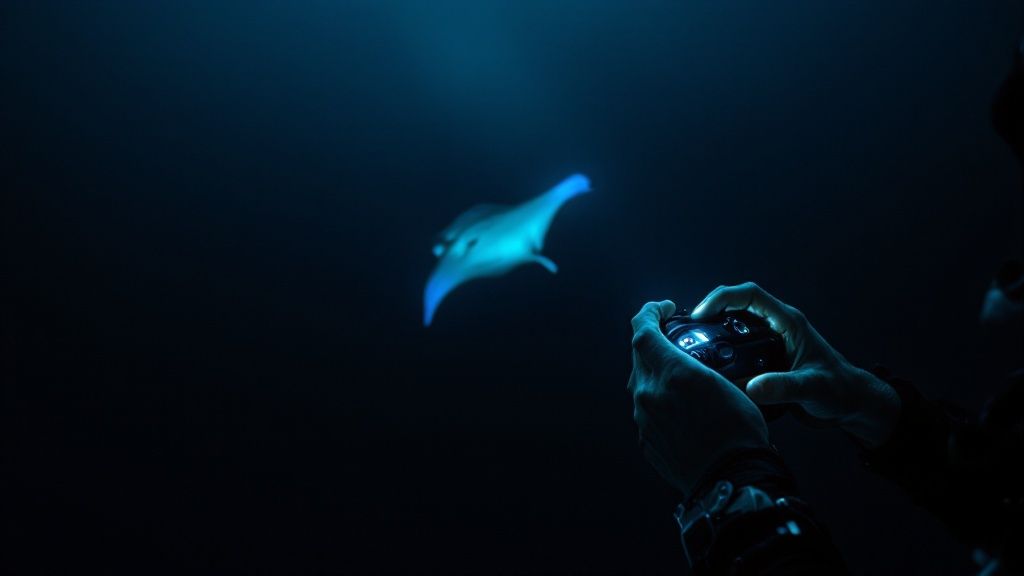
If you're bringing a camera, try bumping up the ISO to make it more light-sensitive and use a wide-angle lens to capture the sheer size of the mantas. The key is to stay as still as possible to avoid blurry shots.
Now, for a really important rule: absolutely no personal strobes or external flashes. Those sudden bursts of light can frighten and disorient the manta rays, ruining the experience for everyone and disrupting their natural behavior. Our powerful, stationary "campfire" lights are all you need—they provide more than enough steady, brilliant light for amazing photos without harming the animals.
The Science Behind Kona’s Manta Spectacle
Ever wonder what makes the manta ray night dive in Kona so unbelievably reliable? It isn't some happy accident. The whole phenomenon is a masterclass in marine biology, powered by a simple food chain reaction that we humans get to kickstart every night.
It all starts with light. Dive operators set up powerful lights on the seafloor, and just like a porch light on a summer night attracts bugs, these underwater beams attract staggering clouds of microscopic critters called zooplankton. For manta rays, this is like ringing a dinner bell.
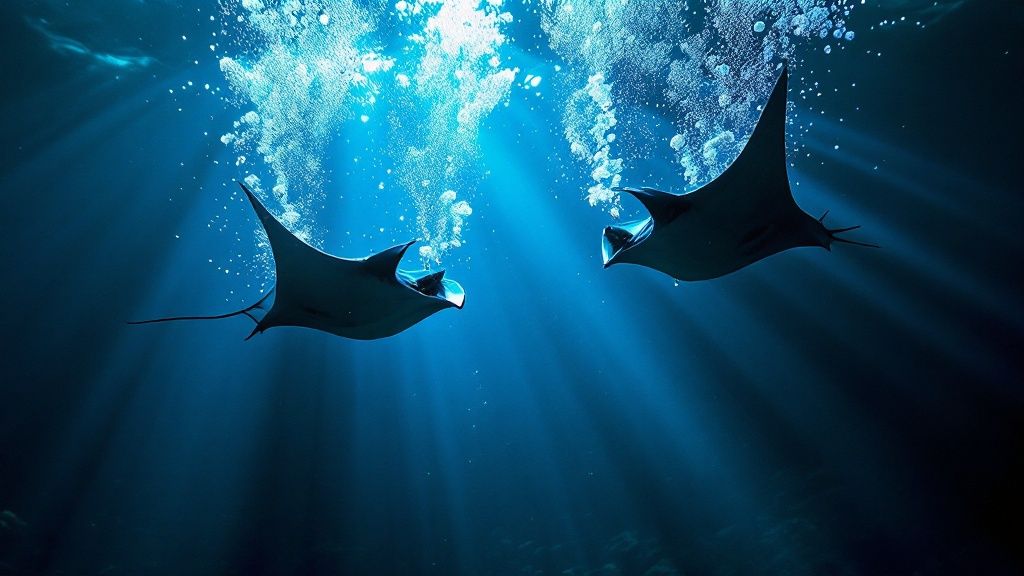
This dense, shimmering cloud of plankton becomes an irresistible, all-you-can-eat buffet. The mantas glide in from the dark, open their massive mouths, and perform graceful barrel rolls to gulp down as much of their favorite food as possible. This nightly feast is precisely why Kona is one of the most dependable places in the world to encounter these gentle giants.
Kona’s Perfect Manta Habitat
Okay, so why here? Why Kona? The coastline itself is uniquely suited for this. The Big Island’s steep underwater drop-offs and protected bays create calm conditions where plankton can gather in huge numbers without getting swept away by strong ocean currents. The food is naturally abundant, so the mantas never have to wander far.
Fascinatingly, the whole thing started by chance back in the 1970s. A hotel began shining lights into the ocean for its guests, which drew in the plankton, and the mantas followed close behind. Divers caught on, and the world's most famous night dive was born. Today, certified Manta Ray Green Listed Operators carry on this tradition, ensuring the encounter is both magical and sustainable.
The real magic here is in the simplicity. When you understand the science, you're no longer just a spectator. You're witnessing a natural food chain, brilliantly amplified by a bit of light.
Getting to Know the Locals
The mantas you meet aren't just tourists passing through; they're residents. Researchers have been studying Kona's manta population for decades, and they can identify hundreds of individuals by the unique spot patterns on their undersides. Much like a human fingerprint, no two are the same.
This long-term research has given us some incredible data. A study tracking manta sightings along the Kona coast revealed some impressive numbers. On an average night at 'Manta Heaven,' you can expect to see around 11 manta rays, while 'Manta Village' averages about 4. But on a truly spectacular evening, divers have reported seeing as many as 36 different mantas in one go!
This ability to recognize individual mantas is crucial for conservation, helping us protect these animals for generations. When you book a manta ray dive tour with an operator who supports this research, you're doing more than just going on an adventure—you're contributing to the well-being of this incredible local population. Knowing the science behind it all changes everything, turning a cool dive into a profound appreciation for the amazing ecosystem you're a part of.
Common Questions About the Manta Ray Dive
Diving with manta rays at night is an incredible experience, but it’s totally normal to have questions before you jump in. We get asked a lot of the same things, so we’ve put together the answers to help you feel confident and ready for the adventure.
Our goal is simple: to make sure you know exactly what to expect so you can relax and just soak in the magic. Let's clear up any questions you might have.
Is the Manta Ray Night Dive Safe for Beginners?
Absolutely. Guest safety is our number one priority, and this dive is designed to be as safe as it is spectacular. We operate in a very controlled setting at a shallow depth of about 35 to 40 feet, which is perfect even if you’re not a seasoned night diver.
Our professional divemasters give a thorough safety briefing before you hit the water and are right there with you the entire time. You'll feel secure from the moment you descend to the moment you surface. It's often called one of the safest and most amazing night dives you can do anywhere in the world.
What if I Am Not a Certified Scuba Diver?
No certification? No problem. You don't have to miss out on the action. The snorkeling experience is just as incredible and gives you a completely different, but equally stunning, point of view.
As a snorkeler, you'll float on the surface while holding onto a specially designed light board. These boards illuminate the water below, attracting the plankton that manta rays feed on. The mantas will come right up to you, gliding and feeding just inches beneath the surface.
Honestly, many people say the view from the surface is even better than the dive. Watching these gentle giants barrel roll towards the light from above is a sight you will never, ever forget.
Is There a Best Time of Year to See Manta Rays?
Here's the great news: any time is a good time! The manta ray night dive in Kona is an amazing year-round activity. Unlike whales that migrate, Kona has a massive resident population of manta rays that call this place home all year long.
Because the ocean conditions are so consistent and we provide a reliable buffet for them with our lights, the success rate for sightings is incredibly high no matter when you book. Whether you’re here in January or July, the mantas are almost always ready to put on a show.
Are We Allowed to Touch the Manta Rays?
No, and this is the most important rule we have. Touching the manta rays is strictly forbidden. It’s all about protecting them. Manta rays are covered in a delicate mucus layer that acts like their immune system, shielding them from nasty bacteria and infections.
When a person touches them, it can rub off this protective coating and make them vulnerable to getting sick. In our pre-dive briefing, we’ll cover how to practice "passive observation." Think of it this way: you're a visitor in their home, and the best way to be a good guest is to look but don't touch.
Ready for an adventure you’ll be talking about for years? Kona Honu Divers runs the top manta ray dive tour on the Big Island, led by experts who live and breathe safety and conservation.