
Picture this: you're floating in the warm, dark waters of the Pacific. Suddenly, a colossal shape emerges from the gloom. A giant manta ray, with a wingspan easily stretching over 12 feet, glides silently towards you, performing an underwater ballet just inches from your face. This isn't a scene from a nature documentary—it's the world-famous manta ray night dive right here in Kona, an adventure that lands on "best of" lists for a very good reason.
Your First Look at the Manta Ray Night Dive
This isn't just another dive; it's one of the most reliable and mind-blowing wildlife encounters on the entire planet. The whole operation is built on a brilliantly simple idea. Dive operators set up powerful underwater lights on the ocean floor, creating a "campfire" effect that attracts swarms of plankton.
This plankton is the mantas' favorite meal, and our local resident population knows exactly where to find this nightly buffet. They've learned the routine. As soon as the lights switch on, they cruise in from the darkness, swooping and barrel-rolling through the light beams to scoop up mouthfuls of food. It's an absolutely mesmerizing show, and you get a front-row seat. To really get into the nuts and bolts of it all, check out our guide on what makes the manta ray night dive so unique.
To give you a quick snapshot of what to expect, here are the core details of the experience.
Manta Ray Night Dive At a Glance
This table breaks down the essential details for your manta ray adventure.
| Attribute | Details |
|---|---|
| Typical Duration | 2.5 – 3 hours total, including boat ride and in-water time. |
| In-Water Time | Approximately 40-45 minutes for diving or snorkeling. |
| Depth | 25-40 feet (7-12 meters) for divers. Snorkelers stay on the surface. |
| Best Season | Year-round, with excellent viewing opportunities every night. |
| Success Rate | Consistently over 90% chance of seeing manta rays. |
| Water Temperature | 74-80°F (23-27°C). A wetsuit is highly recommended and usually provided. |
| Required Certification | Open Water Diver for diving. No certification is needed for snorkeling. |
This truly is an accessible adventure for almost everyone, whether you're a seasoned diver or have never put on a snorkel mask before.
Key Kona Manta Dive Sites
While you might spot a manta anywhere along the coast, the main event happens at two world-renowned locations. Each spot has its own vibe, but both deliver an unbelievably high chance of having a magical night.
- Manta Heaven (Garden Eel Cove): Just north of Kailua-Kona, this site is legendary for attracting huge numbers of mantas. It's a bit more exposed to the open ocean, so the boat ride can sometimes be a little bumpy, but the payoff is often a bigger, more dramatic show.
- Manta Village (Keauhou Bay): Tucked into a protected bay south of town, this spot usually offers calmer, glassier conditions. It's a fantastic choice if you're new to night diving or prone to seasickness, and the manta sightings are just as reliable and spectacular.
The success rate for seeing mantas on these tours is consistently over 90%. That makes the Kona manta ray night dive one of the most dependable wildlife encounters in the world.
So whether you opt for the grand theater of Manta Heaven or the calmer waters of Manta Village, you're setting yourself up for an experience that’s both a huge thrill and genuinely moving. It’s a chance to connect with one of the ocean's most magnificent creatures in a way that’s respectful, sustainable, and completely unforgettable.
What a Manta Ray Encounter Truly Feels Like
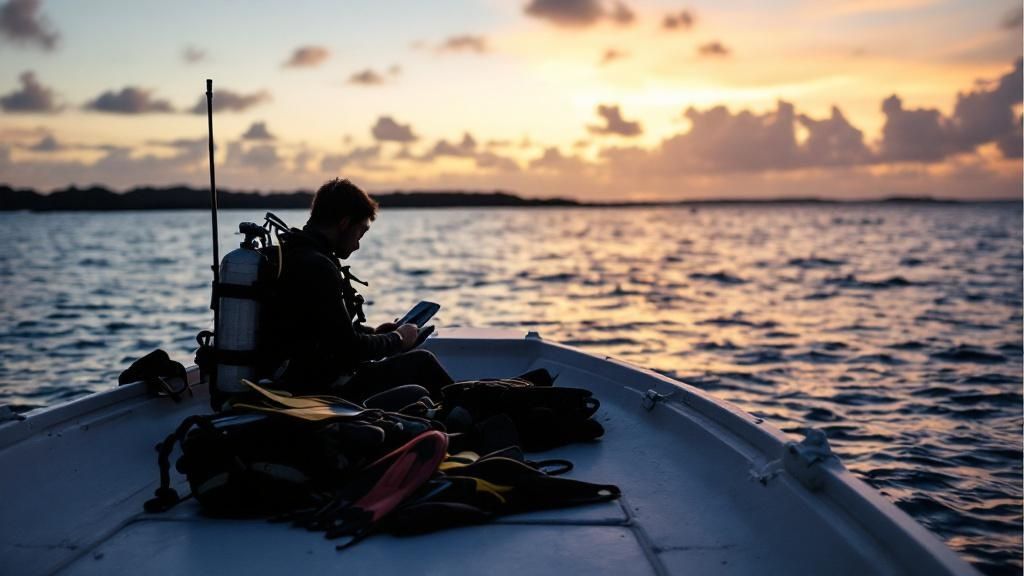
You can look at all the pictures and watch all the videos you want, but nothing—and I mean nothing—can prepare you for the real thing. To give you a taste of the magic, let’s walk through what it actually feels like, from the moment you step on the boat to that first jaw-dropping encounter on the ocean floor.
Your adventure doesn't start in the water. It begins on the deck of a Kona Honu Divers boat as the Hawaiian sun puts on its evening show, melting into the Pacific.
This is when our expert guides run through the pre-dive briefing. It’s more than just a safety check; it’s your first introduction to the stars of the night. You’ll learn the essential rules of a respectful encounter, what we call “manta manners.” The biggest takeaway is simple: be a passive observer. Let the mantas run the show.
As the last streaks of orange fade from the sky, it's time to gear up. Descending into the deep blue at twilight is a surreal feeling. The underwater world you might know from daytime dives is transformed, and your entire universe shrinks to the beam of your dive light cutting through the darkness. You'll follow your guide down to a sandy patch about 30-40 feet deep, where a massive light structure—the "campfire"—is already glowing, setting the stage.
The Underwater Stage is Set
Once you settle onto the sandy bottom with your group, you become part of the audience for a spectacle that’s been running for decades. A short distance away, those powerful lights are doing their job, attracting a swirling vortex of plankton. It honestly looks like you're inside a snow globe.
You can feel the anticipation in the water. It's palpable. The only sounds are the rhythmic inhale and exhale of your own regulator and the soft fizz of bubbles from the divers around you. Everyone's eyes are glued to the edges of the light, searching the darkness, waiting.
And then, it happens. A massive, dark shape detaches itself from the gloom. It doesn't just swim; it soars. The first manta ray glides into the light, its huge wings propelling it with a silent, effortless grace. It’s a moment that literally takes your breath away and silences your mind. Any jitters you had just vanish, replaced by pure, unadulterated awe.
The sheer scale is what gets most people. With wingspans that can stretch over 12 feet, these gentle giants are so much bigger and more majestic in person than any video can ever capture.
The Manta Ballet Begins
Before you can even process the first one, another appears, and then another. They begin an improvised, weightless ballet, swooping and barrel-rolling just inches above your head. They open their cavernous mouths to filter the plankton-rich water, turning over and over again in the bright beams. It's mesmerizing.
As they dance, you’ll notice incredible details:
- Unique Belly Patterns: When they roll overhead, you get a perfect view of the unique spot patterns on their undersides. These are like fingerprints, and they’re how researchers have identified over 250 individual mantas here in Kona.
- Cephalic Fins: You’ll see two fins on either side of their mouths, called cephalic fins, unfurled to help funnel the plankton right in.
- A Profound Connection: Despite their immense size, you never feel a sense of danger. Their movements are deliberate, controlled, and gentle. When one makes eye contact as it glides past, you feel a humbling, profound connection to an ancient and intelligent creature.
The experience is intensely personal and deeply moving. Going with a premier operator like Kona Honu Divers ensures you're on a safe, ethically run tour that puts the animals' well-being first. Our experienced crew makes sure you're in the perfect spot for the best views while upholding the highest standards of marine conservation. For an even more detailed, first-hand account, check out our post on what it's truly like to go on the manta ray dive.
The Science and Conservation Behind the Magic
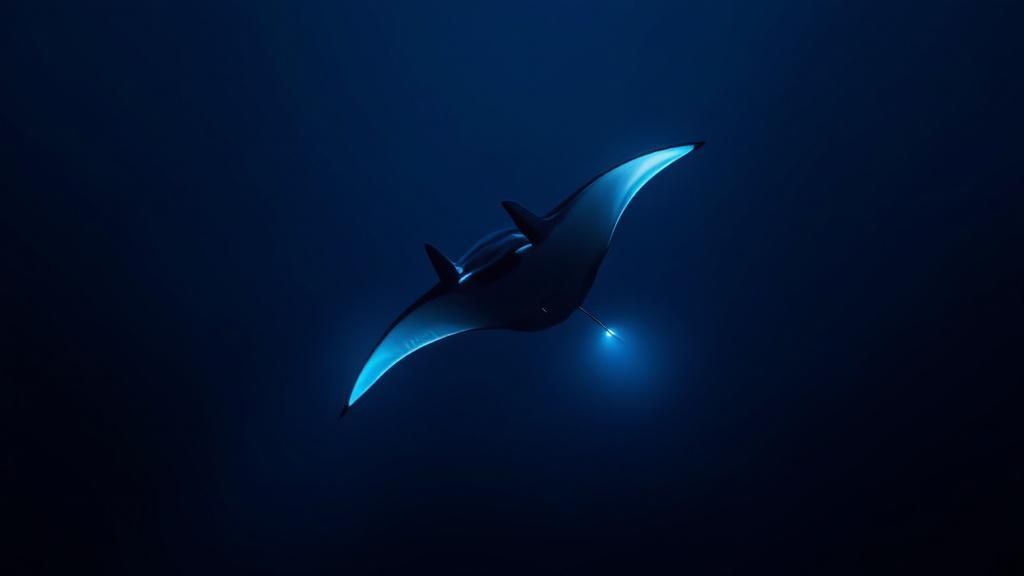
The Kona manta ray night dive feels like pure magic, but it’s actually something even cooler: a perfect, accidental harmony between people and nature. This whole world-famous spectacle wasn’t designed in a lab; it was discovered by sheer luck. It all boils down to a simple formula that has made the Kona coast the most reliable place on Earth to see manta rays.
It started decades ago when a hotel flipped on its bright lights facing the ocean. Those lights attracted clouds of microscopic plankton, which is what manta rays eat. The local mantas, being incredibly smart, figured out that this glowing spot was a dependable, all-you-can-eat buffet.
This created a conditioned behavior. The mantas learned to associate the bright lights with an easy meal, and just like that, a legendary wildlife encounter was born. Today, dive operators like us have refined this idea, using powerful underwater lights to create a focused feeding area. The result is a spectacular show almost every single night.
A Living Laboratory Under the Sea
What makes the manta ray night dive in Kona so incredible is that you’re not just a tourist watching from the sidelines—you're part of a living science project. The local manta population is one of the most studied anywhere, with researchers having identified over 250 individual mantas right here on our coast.
So how do they tell them apart? Each manta ray has a unique pattern of black spots on its white belly. These markings are as distinct as a human fingerprint. This allows scientists and our dive guides to recognize specific individuals, track their habits, and keep an eye on their health. Don't be surprised if you hear your guide call out a name like "Big Bertha" or "Lefty" when a familiar local glides by.
This ongoing research gives us priceless information about their lives and social structures. To get a better feel for what makes this dive so compelling, check out our post on why you should go on a manta ray dive in Kona.
The Power of Responsible Tourism
The amazing success of this dive is built on a solid foundation of strict, industry-wide conservation rules. Every reputable operator follows a code of conduct to protect these gentle giants.
The Golden Rule: Look, don't touch. Touching a manta ray can wipe off its protective mucous coating, leaving it vulnerable to nasty infections. By just relaxing and staying still, you let the mantas feel safe, which is what encourages them to come right up to you.
These standards are all about ensuring the long-term health of the manta population. This commitment means your incredible adventure is also a powerful force for good, supporting the local economy and funding the research that helps protect these animals.
A long-term study by marine biologists from 2009 to 2014 tracked individual mantas along the Kona coast, revealing regular seasonal and monthly patterns in their movements. This data helps us predict peak viewing times with amazing accuracy and gives us one of the most complete pictures of a manta feeding aggregation anywhere in the world.
Choosing Your Dive Site: Manta Heaven or Manta Village?
When you start looking into a manta ray night dive in Kona, two names will pop up everywhere: Manta Heaven and Manta Village. They both offer a world-class chance to see these incredible animals, but the experience at each site is quite different. Knowing what to expect from each is the key to picking the right adventure.
Ultimately, the choice boils down to a classic trade-off: do you want the chance for a bigger, more dramatic show, or do you prefer the comfort of a calmer, more protected spot? We always pick the best site based on the nightly conditions, but it helps to understand what makes each location special.
Manta Heaven: The Grand Amphitheater
North of town, near the airport, you'll find Garden Eel Cove, but everyone really knows it by its more famous name: "Manta Heaven." It lives up to the hype. This spot really does feel like a grand underwater amphitheater built just for the mantas and is known for attracting huge numbers of rays on a good night.
- The Vibe: This site is more exposed to the open ocean. That can sometimes mean a bumpier boat ride and a little more chop on the surface once you're there.
- The Reward: If you're okay with a bit of a boat ride, the payoff can be absolutely spectacular. There's nothing quite like watching a dozen or more mantas barrel-rolling through the light beams. It’s a sight that makes the journey completely worth it.
- Best For: Divers and snorkelers who are comfortable on the water and are hoping for that massive, high-volume manta encounter.
Manta Village: The Protected Bay
Just south of Kailua-Kona, tucked away in the sheltered Keauhou Bay, is "Manta Village." This is where the whole manta ray dive phenomenon started, and it's still one of the most reliable wildlife encounters you'll find anywhere on Earth. Its biggest plus is how protected it is.
The Kona manta ray night dive is famous for its ridiculously high success rate, which often hits 85–90%. We typically dive in about 30-40 feet of water, which gives everyone plenty of time on the bottom. While Manta Heaven might get more mantas on certain nights, the calm, bay-like waters of Manta Village are perfect for first-timers or anyone who gets a little seasick. You can dive deeper into what makes the Kona manta dive so special on our blog.
Here at Kona Honu Divers, we've built our reputation on creating unforgettable manta experiences. Our crew are experts at handling all the details so you can just relax and watch the magic happen.
Honestly, you can't make a bad choice here. Both sites give you a front-row seat to one of nature's greatest shows. As long as you go with a great operator, your manta ray night dive will be safe, respectful, and an adventure you'll be talking about for years.
When you're ready to see this incredible underwater ballet for yourself, you can book your spot on our world-famous manta ray dive tour.
How to Prepare for Your Manta Ray Adventure
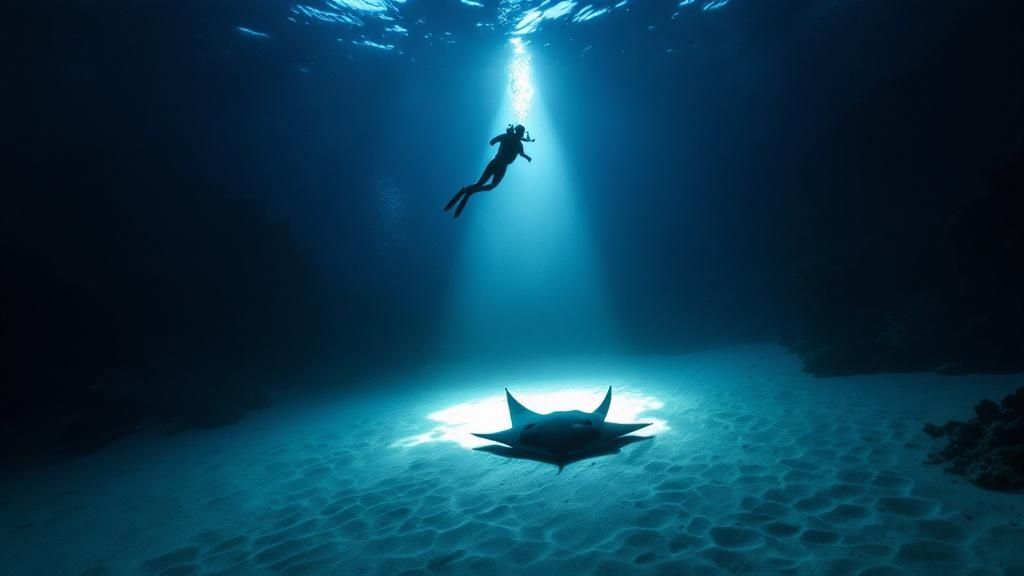
Putting in a little prep time beforehand is the secret to making sure your manta ray night dive in Kona is comfortable, seamless, and an experience you'll never forget. This isn't some deep, technical dive, but being ready lets you soak in every single moment of the main event.
And the best part? You don't need a bunch of fancy certifications to join the party. If you're a certified Open Water Diver, you're good to go. The dive site is deliberately shallow, usually only 30-40 feet, which gives you plenty of bottom time to just sit back and watch the show.
What to Pack and What to Expect
When you dive with a top-notch crew like Kona Honu Divers, all the big-ticket scuba gear is already sorted for you. That includes a wetsuit—and you'll want it. Even in Hawaii, you can get a little chilly when you're hanging out in one spot after the sun goes down.
Still, you'll want to toss a few personal items in your bag to make the whole trip more comfortable:
- Swimsuit: The easiest thing is to just wear it under your clothes to the marina.
- Towel and Dry Clothes: You’ll be very happy to have these for a cozy boat ride back to shore.
- Reef-Safe Sunscreen: Definitely a good idea for the ride out while the sun is still setting.
- Personal Dive Gear: If you love your own mask (especially a prescription one) or prefer your own dive computer, feel free to bring it along.
Getting ready is about more than just what’s in your bag; it's about getting in the right frame of mind. If this is your first night dive, it's totally normal to have some pre-dive jitters. Just remember, you’re in great hands with expert guides in a well-lit, controlled spot.
Getting in the Right Mindset
The real magic to an unbelievable manta encounter is to be completely calm and still. Your job is to become part of the underwater scenery, letting the mantas feel comfortable enough to swoop and glide right over you. This means keeping your breathing slow and steady and nailing your buoyancy so you can stay put on the sand without kicking anything up.
If it’s been a while since your last dive, feeling sharp on your skills is key. A quick refresher course is the perfect way to dust off the cobwebs, particularly with buoyancy, so you can just relax and enjoy the spectacle. Even a simple daytime dive before the big night can help you get your sea legs back. You can check out all kinds of Kona diving tours, including refreshers, to make sure you feel totally dialed in.
To get the full rundown on what the experience is like from the moment you step on the boat, our definitive guide to the Kona manta ray night dive covers every single detail.
Don’t Stop at the Mantas—There’s a Whole Underwater World to Explore
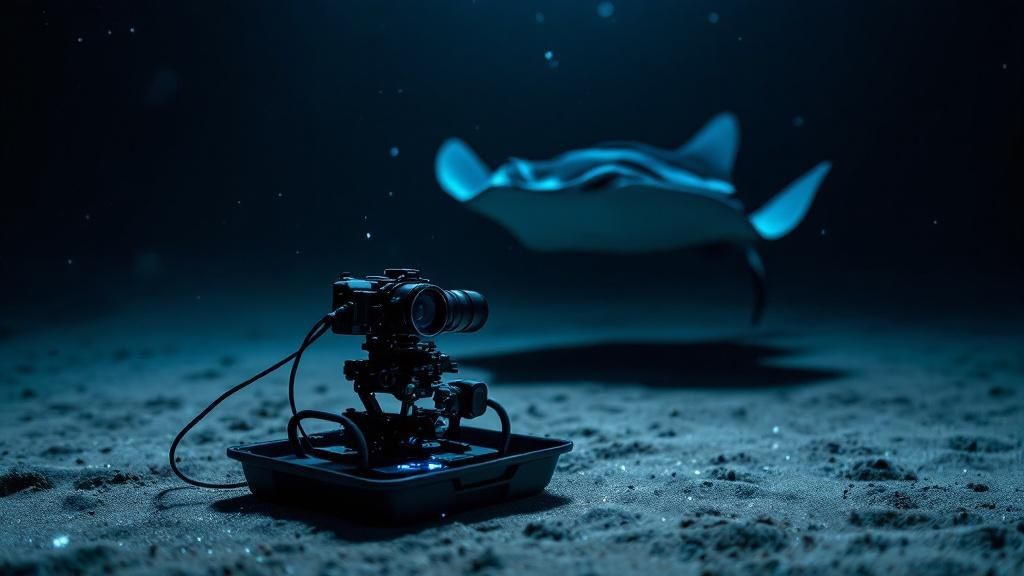
The manta ray night dive is an absolute showstopper. It's the kind of bucket-list experience that pulls people to Kona from all corners of the globe, and for good reason. But thinking the mantas are the only reason to get in the water here would be a huge mistake. That graceful manta ballet is just the opening act.
Kona's coastline is a geological masterpiece, literally sculpted by volcanoes. This has created a true playground for divers. We're talking about dramatic drop-offs that fall away into the deep blue, ancient lava tubes you can actually swim through, and sprawling coral gardens bursting with color and life. A daytime dive reveals a completely different, yet equally stunning, side of scuba diving Kona, Hawaii.
These unique underwater structures are the perfect home for a staggering amount of marine life, a lot of which you won't find anywhere else on the planet. To see it for yourself, there are a ton of amazing diving tours in Kona, Hawaii that go way beyond the manta sites. It’s the perfect way to round out your dive trip.
The Thrill of the Blackwater Dive
If the manta dive ignited a love for night diving, Kona has another, completely different kind of thrill for you: the blackwater dive. Forget the reef. This is an otherworldly experience where you drift in the deep, open ocean, suspended over thousands of feet of inky black water.
Tethered securely to the boat, you just float in the darkness and wait. You're watching for one of the largest migrations on Earth, as bizarre and beautiful creatures rise from the crushing depths to feed near the surface under the cover of night.
This dive is less like exploring a reef and more like floating through deep space. You’ll come face-to-face with strange, bioluminescent critters and alien-looking larval fish that are rarely, if ever, seen by human eyes. It’s an absolute must for adventurous divers looking for something truly unique.
For anyone ready to trade the familiar reef for the mysterious abyss, the Kona Blackwater Dive is an unforgettable plunge into the unknown.
Advanced Diving Opportunities
For certified divers with a few more logbook entries, Kona offers challenges that come with some serious rewards. Our underwater landscape has deeper, more remote sites that are off-limits to most, promising pristine conditions and wilder encounters.
These advanced charters might take you to explore:
- Deep Ledges and Pinnacles: Discover jaw-dropping topography and see the different species that only hang out in deeper waters.
- Remote Lava Formations: Explore intricate underwater architecture far from the more crowded dive sites.
- Potential Shark Encounters: Some of our favorite spots are known nurseries or cleaning stations for various shark species.
Here at Kona Honu Divers, we run exclusive advanced diving opportunities for seasoned divers who want to push their limits and see the wilder side of Kona’s underwater realm.
The manta ray night dive in Kona is an incredible gateway experience, drawing about 80,000 people every single year and solidifying its place as a major global wildlife attraction. This brings huge economic benefits, but it also shines a spotlight on the need for careful, sustainable management to protect this entire precious ecosystem—for all the adventures still waiting to be had. You can learn more about how the Kona manta ray night dive balances tourism and conservation.
Common Questions About the Manta Ray Night Dive
Even after reading all about this incredible adventure, it's natural to have a few last-minute questions floating around. To help you feel completely confident and ready for your manta ray night dive in Kona, here are some straightforward answers to the questions we hear most often.
Is the Manta Ray Night Dive Safe for Beginners?
Yes, absolutely. We get this question a lot, and the answer is a resounding yes! The experience is specifically designed to be safe and accessible for just about everyone.
The dive itself happens in pretty shallow water, usually around 35 feet. For most of the time, you'll be settled on the sandy bottom, just watching the show. This makes it a perfect first night dive for anyone with an Open Water Diver certification. Our expert divemasters give a thorough briefing before anyone hits the water and are right there with you to make sure everything goes off without a hitch.
And for the non-divers? The snorkeling option is just as breathtaking, giving you a front-row seat to the whole spectacle from the surface.
What Is the Best Time of Year for This Dive?
One of the coolest things about the Kona manta ray dive is that you can do it all year long, and the success rate is fantastic. The local manta population doesn't migrate; they’re full-time residents of the Kona coast. That means we have consistently reliable sightings no matter when you decide to visit.
While the winter can sometimes stir up bigger ocean swells, the dive itself is rarely impacted. Because this experience is so popular, booking your tour well in advance is always a smart move, regardless of the season. For a complete deep dive into the experience, check out our guide on the Big Island manta ray night dive.
Are We Allowed to Touch the Manta Rays?
No. This is the single most important rule of the entire encounter, and it's non-negotiable. Touching the manta rays is strictly forbidden.
Manta rays have a protective mucous coating on their skin, which is basically their immune system. It shields them from nasty bacteria. When a person touches them, it can rub off this slime layer, leaving them vulnerable to infections. Think of it like a cut on our own skin.
The golden rule is passive observation. By simply relaxing and staying still, you let the mantas know you're not a threat. This is what encourages them to feel comfortable and glide incredibly close for a truly magical encounter.
What if No Mantas Show Up?
While sightings are incredibly reliable (we're talking over a 90% success rate), manta rays are wild animals, and we can never guarantee their appearance 100%. That’s just nature!
This is why reputable operators like Kona Honu Divers have what's called a "manta guarantee." If for some reason the mantas decide not to come out and play on your tour, you can come back again on another night for free (subject to availability, of course). It’s always a good idea to confirm the specific policy when you book, just for that extra peace of mind.