
Picture this: you're floating in the warm, dark Pacific waters off the Kona coast. Suddenly, a colossal, graceful shadow emerges from the deep. A giant manta ray, with a wingspan stretching up to 16 feet, soars through the water, gliding just inches from your face. This isn't science fiction—it's the world-famous Kona manta ray night dive, one of the most incredible wildlife encounters you can have anywhere on the planet.
Your Essential Guide to the Kona Manta Ray Night Dive
For anyone visiting the Big Island, this experience is an absolute must-do. It’s an underwater ballet that has to be seen to be believed. In this guide, I'll walk you through everything you need to know to make this bucket-list adventure happen, from picking the right tour to knowing what to expect when you hit the water.
Whether you're a seasoned diver with hundreds of log entries or a first-time snorkeler, this guide will help you prepare for an unforgettable night with these gentle giants.
What Makes This Experience So Unique?
First, we'll get into what makes Kona's resident manta population so special and why they gather here every single night. Then, we'll cover the practical stuff:
- Diving vs. Snorkeling: We'll break down the differences so you can decide which option is the best fit for you and your group.
- Safety and Respect: I'll share the crucial "dos and don'ts" for interacting with the mantas to ensure both your safety and their well-being.
- Planning Your Trip: We'll go over the logistics, from booking the right charter to finding a great place to stay nearby.
For a quick overview of what to expect, here's a simple table summarizing the key details.
Kona Manta Ray Night Dive At-a-Glance
| Aspect | Details |
|---|---|
| Location | Off the Kona Coast, Big Island, Hawaii |
| Best Time to Go | Year-round, with calm seas common in summer |
| Water Temperature | 75-80°F (24-27°C) |
| Manta Wingspan | Up to 16 feet (5 meters) |
| Experience Options | Scuba Diving & Snorkeling |
| Typical Depth | 30-40 feet (9-12 meters) |
| Key Attraction | Plankton attracted by tour lights, which in turn attracts mantas to feed |
This is just a snapshot, of course. The real magic happens when you're actually in the water.
The feeling of watching a massive fish the shape of a stealth bomber coming into vision is impossible to describe. It's akin to finding a winning lottery ticket.
This dive is consistently ranked as one of the best in the world for a reason. It's more than just seeing an animal; it’s a powerful connection to the ocean. If you're bringing the whole family along for the adventure, you might find this ultimate guide to traveling with young children incredibly helpful for the rest of your trip planning.
Of course, a great dive experience starts long before you get on the boat. Finding the right place to stay is key. To make things easier, we've put together a list of the best places to stay in Kona to ensure your entire vacation is as smooth as a manta's glide.
Now, let's dive into the details.
What Makes the Kona Manta Ray Experience World Famous
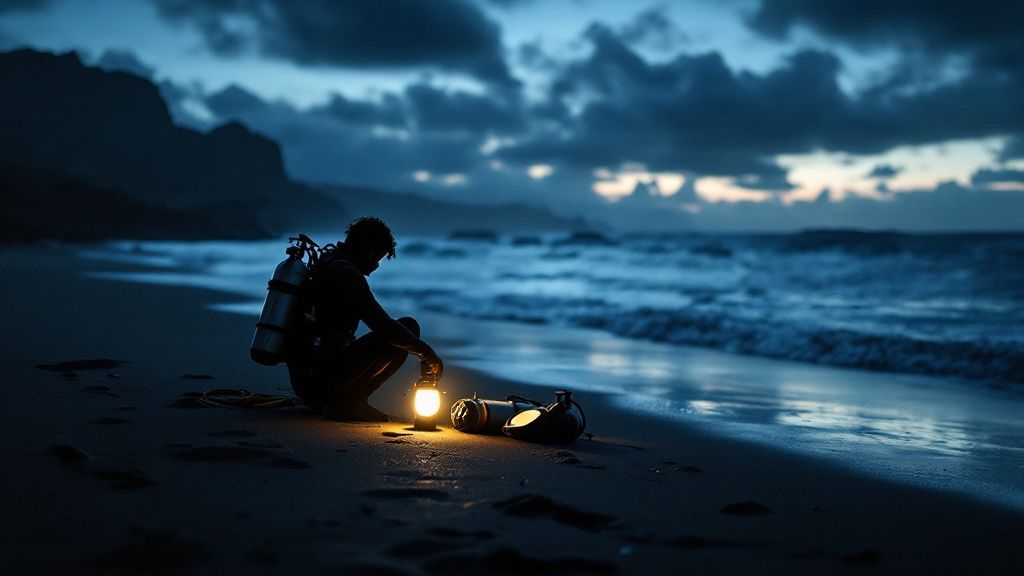
The Kona manta ray night dive isn't just another excursion; it's a global phenomenon. While most wildlife encounters rely on seasonal migrations and a heavy dose of luck, Kona offers something truly unique: a dependable, year-round spectacle built on a fascinating relationship between humans and nature.
So what's the secret? How did this one spot on the Big Island become the world's most famous stage for these gentle giants? It all comes down to a brilliantly simple idea that turns the ocean floor into a five-star restaurant for mantas, night after night.
The Science of the Spectacle
At its heart, the experience is a clever use of nature's own food chain. Dive operators create what I like to call an "underwater campfire." They submerge powerful lights on the seafloor, pointing them up toward the surface.
These bright beams act like a massive magnet for phytoplankton, the tiny, free-floating organisms that are the foundation of the marine food web. As the plankton swarm into the light, they create a thick, soupy buffet that Kona’s resident manta rays simply can’t resist.
This nightly feeding frenzy is what gives divers and snorkelers a front-row seat to the mantas' natural behavior. You’re not just a passive observer; you’re witnessing a vital part of their lives in a way that’s possible almost nowhere else on Earth.
It’s this reliable food source that makes Kona the single most consistent place on the planet to see these incredible animals.
A Happy Accident
Believe it or not, this whole incredible encounter started by accident. Decades ago, the Sheraton Keauhou Bay Resort & Spa (which was the Kona Surf Hotel back then) installed powerful floodlights to illuminate the beautiful coastline for its guests.
Before long, people noticed something spectacular was happening. The lights drew in plankton from the surrounding water, and soon, giant manta rays began showing up every evening to feast in the glow. A few forward-thinking local dive masters saw the potential, and what began with hotel lights has since evolved into the safe, eco-conscious tours we have today.
This origin story really captures the spirit of the Kona experience—it grew from a simple observation into one of the world's most beloved marine adventures. The dive now draws around 80,000 visitors a year, with a sighting success rate that hovers between an astounding 80-90%. That level of reliability is almost unheard of for wild animal encounters and is only possible because Kona has a resident manta population that stays here year-round. You can learn more by checking out the details of the Kona manta ray night dive.
Why Kona Stands Apart
You can dive with manta rays in other places, of course. But those encounters usually happen at "cleaning stations," where mantas pause to let smaller fish nibble parasites off their skin. While fascinating, those moments are often fleeting.
The Big Island manta ray night dive is entirely different. You’re watching an active, dynamic feeding event. The sight of these massive creatures performing graceful, effortless barrel rolls to funnel plankton into their mouths is an underwater ballet you’ll never forget. This unique feeding behavior, combined with the community's deep commitment to conservation, has cemented Kona’s reputation as the ultimate manta ray destination.
Meet Kona’s Famous Manta Ray Residents
The real stars of the show in Kona are, of course, the manta rays. But what makes this dive so incredible is that you’re not just observing wildlife from a distance; you’re being introduced to a community of regulars, each with its own name and personality. This isn't just seeing an animal in the wild—it's like meeting the locals.
Every single manta ray has a unique pattern of black spots on its belly. Think of it like a human fingerprint; no two are ever the same. This natural ID tag is what allows local researchers, conservationists, and divemasters to identify, name, and track individual rays over decades. The result is a fascinating underwater "who's who" of Kona's most beloved residents.
This simple fact completely changes the dive from a cool spectacle into a genuinely personal connection.
An Underwater Celebrity Roster
Over the years, the catalog of identified manta rays has swelled to include well over 200 individuals. Many have been given fun, memorable names by the dive community, like the legendary "Big Bertha," "Lefty," and even one clever moniker, "Amanda Ray." These aren't just cute nicknames; they represent years of careful observation and data.
Your guide will likely point out a specific ray gliding gracefully overhead and share its backstory. You might learn about its estimated age, how it recovered from an old fishing line injury, or even its quirky feeding habits. This personal touch fosters a much deeper appreciation for these gentle giants, turning you from a mere spectator into someone who feels like they truly know them.
Knowing the story behind the manta barrel-rolling just inches from your face elevates the entire experience. Suddenly, you're not just watching a manta ray; you're watching that manta ray—an individual with a history.
This is the magic that makes the manta ray night dive Kona so unforgettable. It builds a bridge between our world and theirs, sparking a real sense of wonder. You can even get a sneak peek at some of the regulars before your trip by checking out the photo gallery on a manta ray dive tour operator's website.
Conservation Through Identification
Being able to tell the mantas apart is more than just a neat trick for tourists; it's the foundation of local conservation efforts. Tracking these animals gives scientists a treasure trove of data on their behavior and life cycles.
- Social Structures: Researchers can map out relationships, seeing which mantas frequently show up to the "dinner party" together.
- Migration Patterns: By logging where and when specific mantas are seen, scientists get a clearer picture of their movements along the Kona coast.
- Population Health: The system acts as an early warning for the manta community's health, allowing guides to spot new injuries or signs of trouble.
This long-running study is one of the great success stories in marine tourism. The photographic catalogs of Kona’s manta community now feature nearly 200 regulars, a testament to this commitment. On a typical night, you might see around six different mantas, but on truly epic evenings, crews have counted over 36 individuals at once! This well-organized approach, led by experienced teams who know the rays by name, ensures a high-quality and safe encounter for both divers and the mantas. To get a deeper dive into this amazing research, you can discover more insights about Kona's manta ray diving.
This careful monitoring is what helps ensure the nightly dives are sustainable, minimizing the impact on the manta population and protecting this incredible experience for future generations.
How to Choose the Best Manta Ray Night Dive Tour
Picking the right tour operator for your manta ray night dive in Kona is probably the single most important decision you'll make for this trip. It truly is. The quality of your guide, the condition of the boat, and the company’s attitude toward safety can easily be the difference between a decent dive and a mind-blowing, unforgettable experience. With so many boats heading out each night, it helps to know what sets the great ones apart.
A top-notch tour isn't just about getting you in the water with mantas. It's about doing it safely, comfortably, and with respect for the animals. When you choose wisely, you not only guarantee a better adventure for yourself but also support businesses that genuinely care for Kona's incredible marine life.
Safety First and Foremost
This can't be overstated: your top priority must be safety. A reputable operator will have a stellar safety record and a crew that knows their stuff inside and out. Look for companies that are open about their safety protocols, emergency plans, and the certifications their staff hold.
An experienced crew is worth its weight in gold. They know how to manage a group in the dark, give briefings that are actually clear and helpful, and handle any curveballs the ocean might throw. This is especially vital on a night dive, where things are a little different. Never hesitate to ask about a company's safety history or the experience level of their divemasters.
Boat Comfort and Group Size
The boat itself is a huge part of the experience. Think about it—you'll be spending a good chunk of time on it. A comfortable, roomy boat with amenities like a marine head (that's a toilet), a freshwater rinse for after your dive, and some snacks makes the whole evening so much more pleasant.
Just as important is the group size. Smaller groups almost always lead to a more personal and powerful encounter with the mantas. With fewer divers and snorkelers in the water, you get more room to breathe and much better, unobstructed views of the action.
Operators that focus on a premium experience, like Kona Honu Divers, tend to run less crowded boats, which means you get more personalized attention from the guides who can point out interesting behaviors and ensure you're having a great time.
Understanding Tour Options
Most companies offer a couple of different ways to experience the mantas, so it’s good to know what your options are. Hands down, one of the most popular choices is the two-tank trip. It’s a fantastic value and typically includes:
- A beautiful reef dive at dusk: Your first dip is on one of Kona's vibrant coral reefs as the sun goes down. You get to see the daytime fish head to bed while the nocturnal critters start their "day."
- The manta ray night dive: After a nice surface interval, you'll head back down for the main event at one of the famous manta sites.
This combo lets you maximize your time on the water and see two completely different sides of the underwater world in one evening. When you're ready to book, the Manta Ray Dive Tour page is the place to check out these options and lock in your spot.
Commitment to Conservation
A truly responsible operator does more than just provide a spectacle; they actively work to protect it. Look for companies that follow the established Manta Ray Tour Operator Standards. These guidelines are all about passive observation—no touching, no chasing—and educating everyone on board about how to be a respectful guest in the mantas' world.
By choosing a company that's all-in on manta conservation, you ensure your money helps protect this amazing natural encounter for future generations. For a deeper dive on this, take a look at our complete guide on how to choose a Kona dive shop.
Once you know what to look for, making the right choice is easy. Just focus on safety, comfort, and conservation, and you're on your way to a truly magical night with Kona's gentle giants.
Preparing for Your Manta Dive or Snorkel
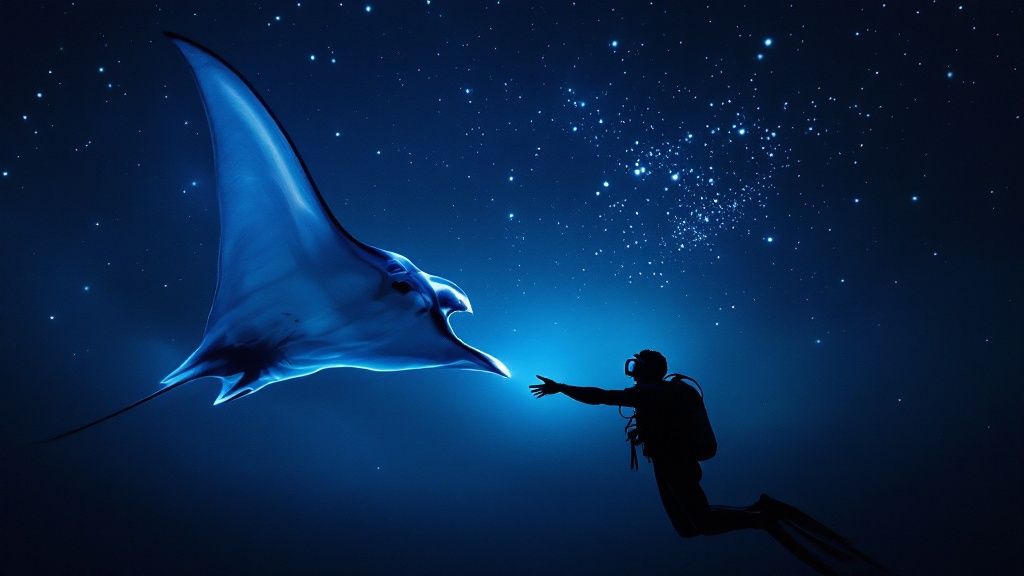
A little prep work is all it takes to turn a good manta ray trip into an absolutely mind-blowing one. Whether you’re a seasoned diver or just dipping your toes in as a snorkeler, knowing what to do in the water is key. It ensures everyone—and every manta—stays safe, making the experience something you’ll remember for a lifetime. This is everything you need to know before you go.
This isn't just a random encounter; it's a phenomenon built on decades of careful observation. Thanks to local underwater videographers who have been tracking these animals for years, we have a pretty good idea of their patterns. This dedicated work has helped dial in sighting success rates to an incredible 85-90%. Your trip is actually part of a bigger picture where tourism and research work hand-in-hand to protect these amazing creatures.
For Scuba Divers: The Underwater Amphitheater
If you're a certified diver, you're in for a treat. You’ll need your Open Water Diver certification at a minimum. The dive itself isn't deep—we're talking about 30-40 feet—but your buoyancy control has to be on point. This is non-negotiable.
Once we descend, you and the other divers will settle on a sandy patch, arranging yourselves in a semi-circle. Picture it like front-row seats in an underwater amphitheater. From there, you'll point your dive light straight up, creating beams that attract plankton. All you have to do is relax and watch the show as the mantas swoop and glide right over your head. Staying perfectly still and neutrally buoyant is crucial so you don't stir up the sand or risk touching the reef or the animals.
For Snorkelers: The Floating Light Show
Don't have a dive certification? No problem. The snorkeling experience is every bit as magical, offering a completely different, top-down perspective. It requires zero experience, so literally anyone can do it.
We'll set you up with a custom-made floatation board that has powerful lights built right in, pointing down into the dark water. You just hang on, float comfortably on the surface, and witness the ballet unfold below. The mantas are drawn to the plankton that gathers in the light, and they'll often perform graceful barrel rolls just a few feet beneath you. It’s an incredibly close and personal encounter.
Essential Rules for a Respectful Encounter
No matter how you join the experience, one principle guides everything we do: passive observation. These guidelines are here to protect the mantas and ensure this incredible interaction can continue for generations to come.
The single most important rule is to never touch a manta ray. Their skin is covered by a delicate mucous coating that works like an immune system, protecting them from infection. Touching them can strip away this protective slime and leave them vulnerable to disease. Trust me, if you let them, they will come unbelievably close on their own.
A few other key rules to live by:
- Stay in your spot: Divers stay on the bottom, snorkelers stay on the surface. This creates a clear "dance floor" in the middle of the water column for the mantas to move freely.
- No sudden movements: Think slow and steady. Quick, jerky motions can easily spook the animals.
- Tuck in your gear: Keep your gauges, octopus, and camera secured and close to your body to avoid any accidental bumps. For a full rundown, check out our guide on the gear you will need for your Kona diving adventure.
By following these simple rules, we get to be respectful guests in their world and help preserve one of the most spectacular wildlife encounters on the planet.
Exploring More Kona Diving Adventures
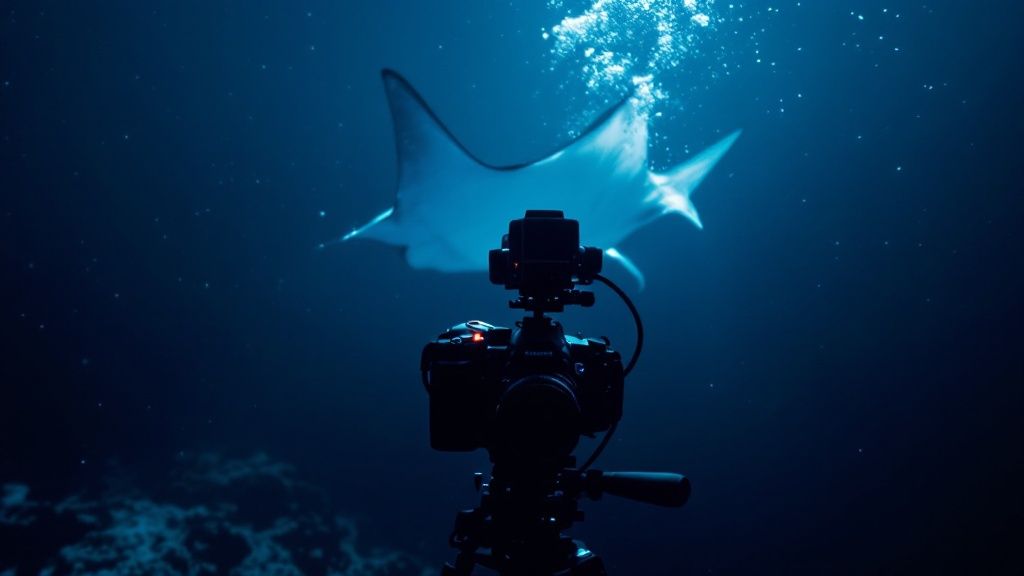
The manta ray night dive is without a doubt a bucket-list experience, but believe me, it’s just the beginning of what the Big Island has to offer. After you’ve seen the famous manta ballet, you’ll be itching to discover what other secrets are hiding beneath the waves.
Kona’s volcanic coastline has created a playground for divers of every skill level. From surreal, deep-ocean drifts to exploring ancient lava tubes, the adventure doesn't stop when the mantas go home. For a full list of incredible scuba diving tours on the Big Island, you can explore our offerings.
The Famous Kona Blackwater Dive
If you're an experienced diver looking for something completely different, the Kona Blackwater Dive is it. This isn't your typical reef dive. It’s an otherworldly experience where you drift miles offshore in the deep, dark ocean, tethered to the boat.
You're there to witness the largest migration on Earth, as strange, often bioluminescent creatures rise from the abyss to feed. It feels like floating through outer space, encountering life forms that look like they belong on another planet. We're talking about everything from see-through larval fish to pulsing, alien-like jellyfish. It’s a truly humbling peek into a mysterious world few ever get to see.
Learn more about this unique Kona Blackwater Dive adventure.
Advanced Daytime Adventures
For those who prefer sunlight, Kona’s advanced daytime dives are just as thrilling. The Big Island's volcanic past has sculpted an underwater landscape you won’t find anywhere else.
Venture beyond the standard dive sites to explore intricate lava tubes, swim through dramatic underwater canyons, and discover pristine reefs far from the beaten path. These spots are buzzing with life, giving you a great shot at seeing sharks, turtles, and fish species found only in Hawaii.
These more challenging dives are perfect for certified divers ready to take their skills to the next level and explore the wilder side of the Kona coast. There's a perfect dive waiting for you, whether you're into deep reefs or fascinating geological formations. For certified divers seeking a challenge, our advanced dive tours offer a chance to explore Kona’s more remote and demanding sites.
Your Manta Dive Questions, Answered
Thinking about taking the plunge? It’s only natural to have a few questions before you book one of the world's most famous night dives. We've put together answers to the most common queries we hear from fellow divers and snorkelers to help you plan your adventure.
Is the Manta Ray Night Dive Safe?
Yes, it’s incredibly safe. It's a common concern, but you can rest easy knowing manta rays are true gentle giants. They don't have teeth, stingers, or barbs—they are completely harmless to people.
These magnificent creatures are filter feeders, meaning their only interest is in the clouds of microscopic plankton drawn to the dive lights. All reputable operators in Kona adhere to strict safety standards, with experienced guides in the water leading the way. The golden rule is simple: look, but don't touch. As long as you follow the briefing, it’s a perfectly safe and absolutely mind-blowing experience.
What If I’m Not a Certified Scuba Diver?
No problem at all! You don’t need a scuba certification to get in on the action. The snorkeling experience is just as breathtaking and gives you a fantastic bird's-eye view of the show.
Snorkelers hang onto a large, custom-built floatation board. This board has powerful lights shining down into the water, creating a plankton-rich buffet. The mantas swim right up to the surface to feed, performing their famous barrel rolls just inches beneath you. It’s an up-close and personal encounter that you won't soon forget.
What's the Best Time of Year for This Dive?
Here's the great news: any time is a good time. Unlike a lot of marine wildlife encounters, the Kona manta ray dive is a year-round spectacle. We have a resident population of manta rays here, so they don't migrate away.
This means the sighting success rate stays consistently high, often over 90%, no matter when you visit. You can plan your trip around Hawaii's best weather or when you can get time off work, and the mantas will almost certainly be here to greet you.
How Can I Be a Responsible Manta Tourist?
This is a fantastic and important question. Protecting these animals is the top priority, and it all comes down to one simple concept: passive interaction. We are guests in their underwater home, so we act like it.
The number one rule is to never, ever touch a manta ray. Don't chase them or try to ride them. Their skin is covered in a protective slime coat, and our touch can damage it, leaving them vulnerable to nasty infections.
The best way to have a magical encounter is to simply stay still and let them come to you. They are curious creatures and will often glide right over your head on their own terms. By choosing a responsible tour operator and following your guide’s instructions, you’re doing your part to keep this incredible experience sustainable for generations to come.
For a safe, respectful, and unforgettable manta ray night dive in Kona, trust the experts at Kona Honu Divers. Explore our Manta Ray Dive tours and book your adventure today!