
Picture this: you're floating weightlessly in the warm, dark waters of the Pacific. Suddenly, enormous, shadowy figures glide up from the depths. This is the world-famous manta ray night dive in Kona, an encounter so otherworldly it's often called one of the greatest underwater experiences on the planet.
These gentle giants, some with wingspans wider than a car, swoop and barrel roll just inches from your face, their movements illuminated by a surreal underwater light show.
Experience Kona’s Unforgettable Underwater Ballet
This isn't a scene from a nature documentary. It's a real, accessible adventure waiting for you right here on the Big Island of Hawaii. In this guide, we'll walk you through everything you need to know to plan and enjoy one of the most breathtaking wildlife spectacles on Earth. We'll get into why Kona is the absolute best place for this unique dive and what to look for in a top-rated, eco-conscious operator like Kona Honu Divers.
You'll soon understand the fascinating science behind the "manta campfire," what the adventure looks like from start to finish, and how we can all enjoy this experience in a way that’s safe for us and respectful of the mantas.
Why This Dive Belongs On Your Bucket List
The Kona coast isn't just another pretty dive spot; it's a global mecca for manta rays. What makes this experience so consistently incredible is the chance to get up close and personal with these magnificent animals as they feed naturally. While many wildlife tours can be a roll of the dice, the Kona manta dive has a success rate that's hard to believe until you see it.
So, what makes it so special?
- Mind-Blowing Proximity: Mantas often glide within inches of you. It’s a connection that feels deeply personal and is impossible to forget.
- A Graceful Spectacle: You get a front-row seat to an underwater ballet as the mantas loop and soar through the plankton attracted to our lights.
- It’s For Everyone: You don't even need to be a certified diver. Snorkelers get an equally amazing view from the surface, making this a perfect adventure for the whole family.
- Year-Round Consistency: Thanks to a resident population of mantas, your chances of a spectacular show are excellent no matter when you visit.
This adventure is so much more than a dive—it's an immersive, humbling experience that connects you to the sheer majesty of the ocean. The size and elegance of these creatures are something photos and videos just can't do justice to. You really have to be there.
To get a better feel for what awaits, take a look at this gallery of incredible manta ray dive pictures from Kona.
What Makes Kona a Manta Hotspot?
Kona's unique underwater landscape and reliable ocean conditions have created the perfect stage for this nightly performance. The local manta ray population is one of the most well-studied and protected in the world, which ensures these encounters are sustainable for the long haul.
To give you a quick snapshot of the dive, here’s a table with the key details.
Manta Ray Night Dive At A Glance
| Aspect | Details |
|---|---|
| Success Rate | An incredible 85–90% chance of sightings year-round. |
| Manta Size | Expect to see individuals with wingspans exceeding 12 feet. |
| Dive Depth | A comfortable, shallow dive, typically 30 to 40 feet. |
| Bottom Time | Around 45 to 60 minutes of jaw-dropping viewing time. |
| Accessibility | Open to both certified divers and snorkelers. |
The reliability is truly astounding. It's this combination of factors—the resident mantas, the ideal environment, and the community's commitment to protecting them—that makes Kona the undisputed king of manta ray encounters.
Why Kona Is The Manta Ray Capital Of The World
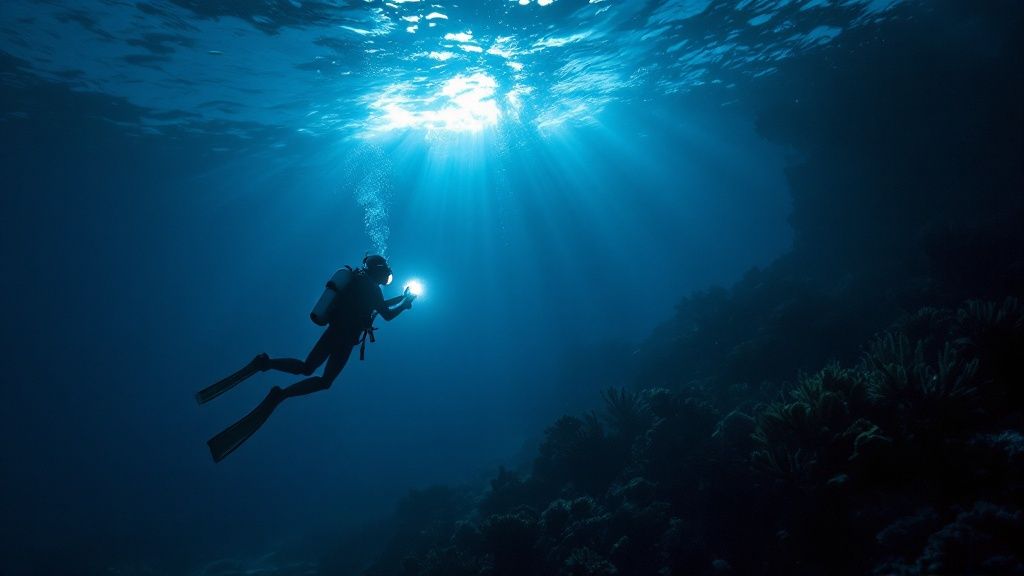
The Kona coast isn't just a good place to see manta rays; it's hands-down the best spot on the entire planet for this kind of encounter. It's a title the Big Island has rightfully earned, and it comes down to a perfect storm of unique ecology, dependable conditions, and a deep-seated commitment to keeping the mantas safe.
So what's the secret sauce? It’s a surprisingly simple but incredibly effective trick we call the "manta campfire." For years, operators have known that by shining powerful, stationary lights into the water after sunset, we can attract massive clouds of microscopic plankton—the manta rays' favorite meal.
This creates a reliable, all-you-can-eat buffet that the local manta population simply can't resist. They show up night after night to feast, gliding, looping, and barrel-rolling through the light beams with their giant mouths wide open. It’s a breathtaking underwater ballet.
The Famous Manta Hotspots
Of course, this nightly dinner party doesn't just happen anywhere. Over decades, we’ve pinpointed two incredibly reliable locations for the manta ray night dive in Kona. Each site offers its own flavor of magic, but both are spectacular.
-
Manta Village: Located just south of Kailua-Kona near Keauhou Bay, this is the original manta hangout. It has a legendary success rate and is close to shore, which means you get a nice, short boat ride.
-
Manta Heaven: You'll find this spot, also called Garden Eel Cove, north of the airport. It's famous for drawing in huge congregations of mantas. The sheer number of rays that can show up here on any given night can be absolutely mind-blowing.
Every evening, your captain will make the call on which site to visit based on the day's conditions, giving you the best possible shot at an unforgettable encounter. This strategic planning is a big part of why Kona’s success rate is the envy of the diving community.
Year-Round Consistency And Conservation
Unlike a lot of wildlife experiences that depend on the season, Kona’s manta rays are residents. They don't migrate, which means they are here 365 days a year. This is a huge deal for travelers because it means you have a great chance of a fantastic show whether you visit in July or December.
The numbers back this up. We see an average of about six manta rays per night, but that's just an average. It’s not uncommon for that number to skyrocket, with some lucky divers witnessing over 36 individuals on a single dive. The mantas don't have a specific season because the volcanic nutrients keep the plankton supply stable all year long. You can explore more about Kona's reliable manta ray sightings and the science behind this incredible phenomenon.
What truly sets Kona apart, though, is the community’s deep respect for these gentle giants. We've identified over 450 individual resident mantas, each with a unique spot pattern and a name. This has built a powerful conservation ethic that ensures every dive is sustainable.
This commitment makes the experience more than just a thrill—it's something you can feel genuinely good about. You’re taking part in world-class ecotourism, where the animals' well-being is always the top priority. It's this dedication that ensures the magic of the manta ray night dive in Kona will be here for generations to come.
Choosing Your Manta Adventure With Kona Honu Divers
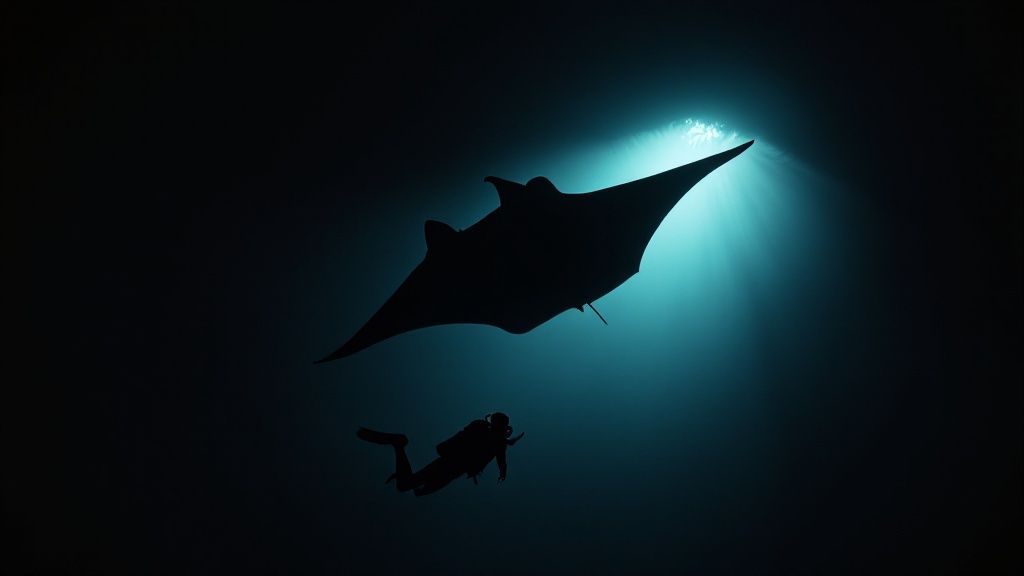
With a fair number of dive boats operating along the Kona coast, picking the right one is easily the most important decision you'll make for your manta experience. This choice single-handedly shapes your safety, your comfort, and ultimately, the quality of the encounter. For a truly unforgettable manta ray night dive in Kona, you need a team that's as committed to its guests as it is to the magnificent animals you're there to see.
This is where Kona Honu Divers really shines. They’ve built their reputation on a simple but powerful philosophy centered on two things that make all the difference: keeping groups small and showing profound respect for the mantas.
The Kona Honu Divers Difference
You won't find yourself packed onto a crowded boat here. Kona Honu Divers deliberately limits group sizes, and that small detail changes everything. It means you get personal attention from the crew, you have plenty of room to move around, and—most importantly—you get a front-row, unobstructed view of the underwater ballet. It’s the difference between being on a tour and being part of an adventure.
Even better, they are serious champions of ethical and sustainable wildlife tourism. They strictly follow the best practices laid out by the Manta Ray Green List, ensuring every interaction is safe and respectful. This allows you to soak in the magic of the moment, knowing you're supporting an operation that actively protects Kona's resident manta population for years to come.
These principles aren't just talk; they're reflected in the rave reviews they consistently earn from their divers.
The Signature 2-Tank Manta Dive Experience
The flagship trip with Kona Honu Divers isn't just one quick dip in the dark. It’s a complete evening, thoughtfully designed to build anticipation and maximize your time in the water. Their 2-Tank Manta Dive & Snorkel tour is a signature Kona experience for very good reason.
Your adventure kicks off in the late afternoon, just in time for a spectacular sunset over the Pacific. The first dive isn't actually with the mantas. Think of it as the "appetizer"—a relaxing exploration of a vibrant Kona reef as the golden hour light streams through the water. This dive lets you get your bearings, check your gear, and watch as the reef life starts winding down for the night.
This two-dive approach is an absolute game-changer. It delivers so much more value and time in the water, letting you appreciate a whole different side of Kona's marine world before the main event even starts.
As dusk turns to night, the real show begins. After a comfortable surface interval with snacks and drinks, you'll gear up for the second dive—the one you've been waiting for. You’ll descend to the "campfire," take your spot on the sandy bottom, and simply watch in awe as the graceful giants swoop down from the darkness to feast on the plankton drawn to the lights.
This pacing is perfect. You never feel rushed, and you get two distinct dives for the price of one, making it the definitive way to experience the manta ray night dive in Kona. It's an evening planned from start to finish for making memories.
What To Expect On Your Night Dive Trip
Knowing how your trip will unfold, from stepping onto the boat to that final, incredible view of a manta ray, is key. It helps build the right kind of excitement and makes sure you feel totally ready for the adventure ahead. We've got every detail dialed in so you can just relax and soak it all in.
Your night doesn't start in the water, but on deck. The first thing we'll do is a comprehensive briefing where the crew gets you acquainted with the boat's safety features and walks you through the evening's plan. This is also where we cover the essential "rules of the road" for a safe and respectful manta encounter.
The golden rule, and it’s a big one, is passive observation. This means you must never, ever touch the manta rays. They have a delicate, protective mucus layer on their skin, and our touch can strip it away, leaving them vulnerable to infection. We'll show you exactly how to position yourself so the mantas are always in control of the interaction.
This briefing is all about making sure the manta ray night dive in Kona is as safe for the animals as it is for us.
The First Dive: A Sunset Reef Exploration
One of the real treats of our two-tank manta trip is the first dive. We'll get in the water just as the sun starts to set, and you'll get to explore a stunning Kona reef as it's bathed in that beautiful, golden hour light.
It's a fantastic, relaxed dive that lets you get your bearings, check your gear, and just enjoy the scenery. You'll see reef fish darting about before they tuck in for the night, and you might even cross paths with a cruising turtle or a curious moray eel. Think of it as the perfect appetizer before the main course.
If you want a preview of the incredible marine life here, check out our guide on what you can expect when diving in Kona.
The Main Event: The Manta Ray Encounter
Once total darkness falls, the real magic begins. We'll enjoy some snacks during the surface interval, and then it's time to gear up for dive number two. Dropping into the inky black water is a feeling like no other, with the whole world shrinking down to the beam of your dive light.
Then you'll see it—a bright glow on the seafloor ahead. We call this the "campfire," and it's our destination. Your guide will lead you to a spot on the sand where we'll all settle in, get comfortable, and simply look up. The moment that first massive shadow glides silently into the light is something you will never forget.
For snorkelers, the view is just as breathtaking. You'll hang on to a custom-made float on the surface equipped with powerful lights. These lights attract the plankton, which in turn draws the mantas right up to you. You get an unbelievable top-down view of their acrobatic feeding ballet, sometimes just inches away.
This method of viewing the mantas has been perfected over years of experience. The manta ray night dive in Kona really took off as a unique eco-adventure back in the mid-1990s. Before that, their feeding behavior was a bit of a mystery. Now, thanks to a blend of careful tourism and scientific study, the Kona coast is the best place on the planet to witness this spectacle.
Essential Tips For A Perfect Manta Encounter
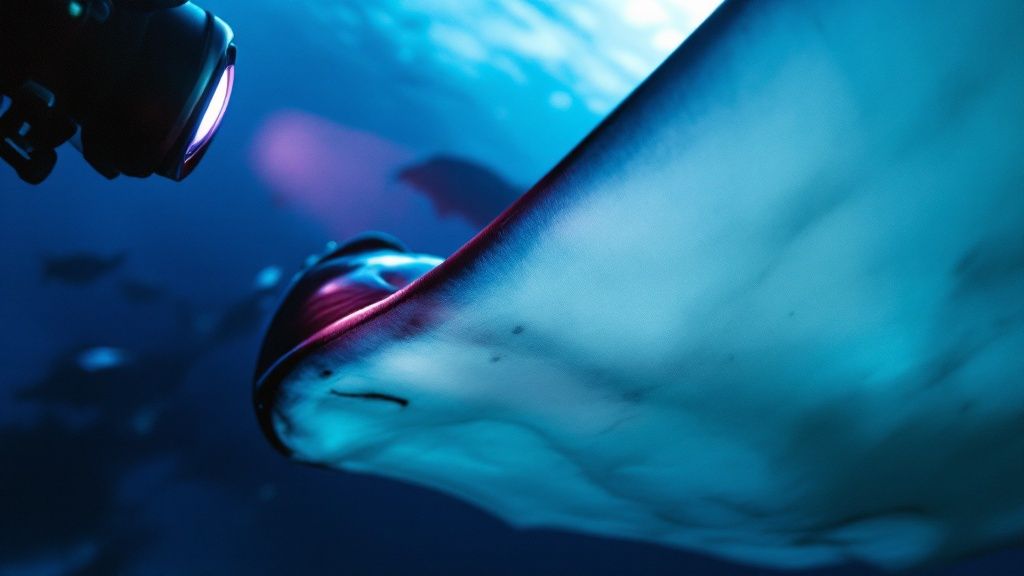
To make your manta ray night dive in Kona truly unforgettable, a little bit of prep goes a very long way. These are the insider tips we share with our friends to help them stay comfortable, safe, and ready to soak in every second of the magic, whether you’re diving or snorkeling.
First up: boat comfort. Even after a warm Hawaiian day, the ride back to the harbor can feel surprisingly chilly once you're out of the water. Trust me on this one—you'll be glad you packed a warm, dry jacket or sweatshirt for the trip home.
And while the ride out is usually smooth, the ocean is always the boss. If you’re even the slightest bit prone to seasickness, it's a good idea to take motion sickness medication before we leave the dock. A small step like this can be the difference between a good night and a genuinely incredible one.
In-Water Etiquette and Photography
Once we're in the water, the single most important rule is to listen carefully to your guide. We live and breathe this stuff, and we're experts in manta behavior and keeping everyone safe. Following the briefing and in-water directions leads to a smoother, more respectful, and far more rewarding experience for everyone.
The whole philosophy behind the dive is passive interaction. Your job is to find your spot, get comfortable, and simply let the mantas be in charge. They are naturally curious and will often glide just inches from you, but we absolutely cannot reach out and touch them.
Touching a manta ray strips away its protective mucous coating, which is like their immune system. This leaves them vulnerable to nasty infections. The best way to show your appreciation is to observe their effortless grace without interfering. It's a great idea to brush up on responsible and considerate diver etiquette before you even get to the island.
Of course, you’ll want to capture the moment, but underwater night photography can be a real challenge. Here are a few simple tips to get a great shot without bothering the mantas:
- GoPro is a great option: They handle low light surprisingly well and are super easy to manage in the water.
- Turn off your flash: Your personal camera flash or strobe will just disorient the mantas. Our powerful, stationary lights provide all the illumination needed for amazing photos and videos.
- Hold steady: Brace yourself on the bottom and keep the camera as still as possible to avoid getting blurry, shaky footage.
What to Bring for Your Adventure
Packing the right stuff means you can focus on the show, not on what you left behind. Here’s a quick checklist of what you should toss in your bag.
- Warm Jacket or Sweatshirt: You’ll thank yourself on the boat ride back.
- Towel: An essential for drying off and warming up.
- Reef-Safe Sunscreen: The sun will still be up on our way out to the site, so apply it before you get on the boat.
- Reusable Water Bottle: Hydration is key!
- Motion Sickness Medication: If you think you might need it, take it an hour or so before we depart.
- Underwater Camera: Bring your GoPro or another camera, just remember—no flash!
With these simple tips in mind, you’ll be set for a comfortable, respectful, and completely unforgettable evening with Kona's majestic manta rays.
Exploring More Of Kona’s Underwater World
The manta ray night dive is an absolute must-do, a true bucket-list experience. But it's really just the opening act for what Kona has to offer underwater. That same rich, vibrant ecosystem that brings the mantas in to feed also creates an incredible playground for divers. Think of the manta dive as the main event—now it’s time to explore the rest of the festival.
Don't just pack up your gear after the mantas swim off. We can show you a whole other side of Kona, from ancient lava tubes that feel like submerged cathedrals to massive, sprawling coral gardens teeming with life. We have our favorite spots, of course, but to get a real feel for the variety, check out the dozens of world-class Kona dive sites we visit regularly.
The Surreal Kona Blackwater Dive
If the manta dive ignited a love for the ocean after dark, then you absolutely have to try the Kona Blackwater Dive. This is unlike any reef dive you've ever done. We head offshore, miles from land, and drift over thousands of feet of inky black water.
Tethered safely to the boat, you'll float in the open ocean and watch one of the largest migrations on the planet happen right before your eyes. Tiny, bizarre, and often bioluminescent creatures rise from the crushing depths to feed. It’s a sensory experience that’s hard to describe—part space-walk, part biology lesson. Many of our most experienced divers say it's the single most unique dive they've ever done. You can read about the unique Blackwater Dive to get a better picture.
Advanced Dives For Experienced Divers
Ready to take things up a notch? For certified divers looking to explore more challenging environments, Kona is the perfect place to push your limits. We run charters designed specifically for experienced divers who want to explore deeper, more remote sites.
We're talking about venturing out to places with dramatic underwater landscapes—towering pinnacles, lava rock arches, and intricate formations that most divers never get to see. These spots are often home to bigger marine life and provide a completely different kind of thrill. If you’re ready for that next step, you can explore our advanced diving opportunities and see what lies beyond the usual reef tour.
From the mantas to the deep blue, we've got an adventure here waiting for you. See all our scuba diving tours in Kona.
Answering Your Manta Ray Dive Questions
It's natural to have a few questions buzzing around in your head before a big adventure like this. We get it! To put your mind at ease and help you feel completely ready for your manta ray night dive in Kona, here are the answers to some of the things we hear most often.
Is The Manta Ray Night Dive Safe?
Yes, it’s incredibly safe. When you dive with a top-tier, professional crew like ours at Kona Honu Divers, your well-being is our number one mission. We start every single trip with a thorough safety briefing so you know exactly what to expect. In the water, our experienced divemasters are with you every step of the way, following strict, proven procedures.
And what about the mantas? They are true gentle giants. Unlike stingrays, they don't have teeth, barbs, or stingers—nothing to worry about. They are filter feeders, meaning their only interest is in the microscopic plankton in the water. They pose absolutely zero threat to people, which is what makes getting so close to them such a peaceful and safe experience.
What If I Am Not A Certified Scuba Diver?
No problem at all! You can still have a front-row seat to the action. The snorkeling experience is just as breathtaking, offering a unique perspective from the surface.
Snorkelers hang onto a large, custom-made light board that floats on the water. This board’s powerful lights beam down into the dark, attracting the plankton. The mantas follow their food source, coming right up to the surface to perform their beautiful feeding ballet just a few feet below you. It’s an amazing, unobstructed bird's-eye view.
When Is The Best Time Of Year To See Manta Rays In Kona?
This is one of the best parts about the Kona manta ray dive—it's a year-round spectacle. While many wildlife encounters are seasonal, Kona’s resident manta population sticks around. They don’t migrate.
These incredible animals are here 365 days a year, showing up to the same feeding spots night after night. That means your odds of an unforgettable encounter are fantastic, no matter when you plan your trip to Hawaii.
Will I Get Cold During The Night Dive?
Kona's ocean water is usually a comfortable temperature, typically in the high 70s Fahrenheit. That said, after being in the water for about 45 minutes at night, your body will naturally cool down, and a chill can set in.
We make sure you stay comfortable by providing high-quality, properly fitting wetsuits with all our gear. A little pro tip from us: bring a warm jacket or a cozy sweatshirt for the boat ride back. You'll be glad you did!
Ready to see the magic for yourself? Your unforgettable manta ray adventure is waiting. Explore our Manta Ray Dive tour now! and book your spot with Kona Honu Divers today.