
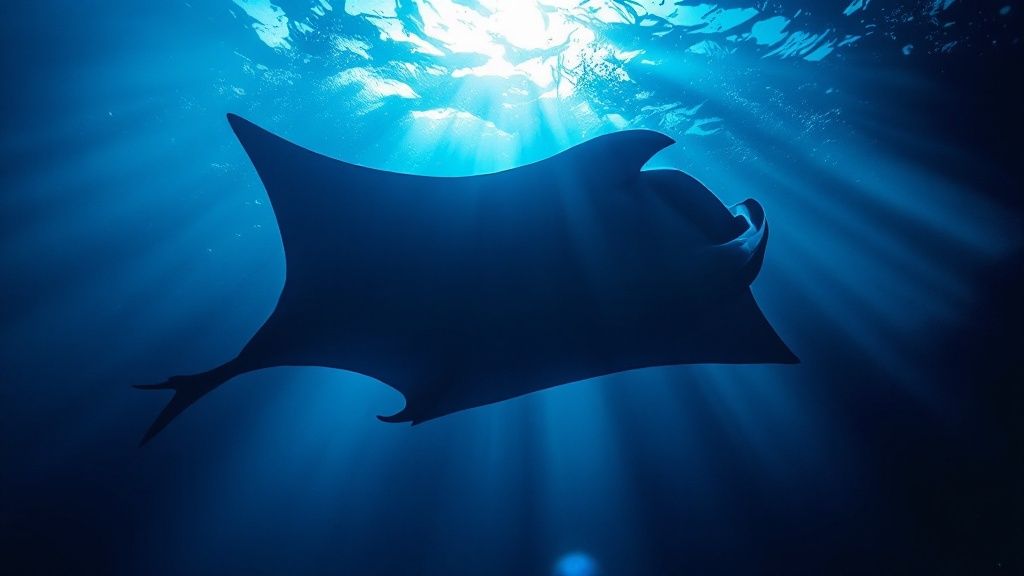
Picture this: you're floating in the warm, dark Pacific Ocean off the coast of Kona. Suddenly, a giant, graceful shadow emerges from the deep. A massive manta ray, with a wingspan easily stretching over 15 feet, glides silently towards you, barrel-rolling just inches from your mask. This isn't a scene from a documentary—it's the world-famous manta ray night dive, an experience so surreal it’s consistently ranked as one of the best night dives on the planet.
Experience Kona’s Unforgettable Underwater Ballet
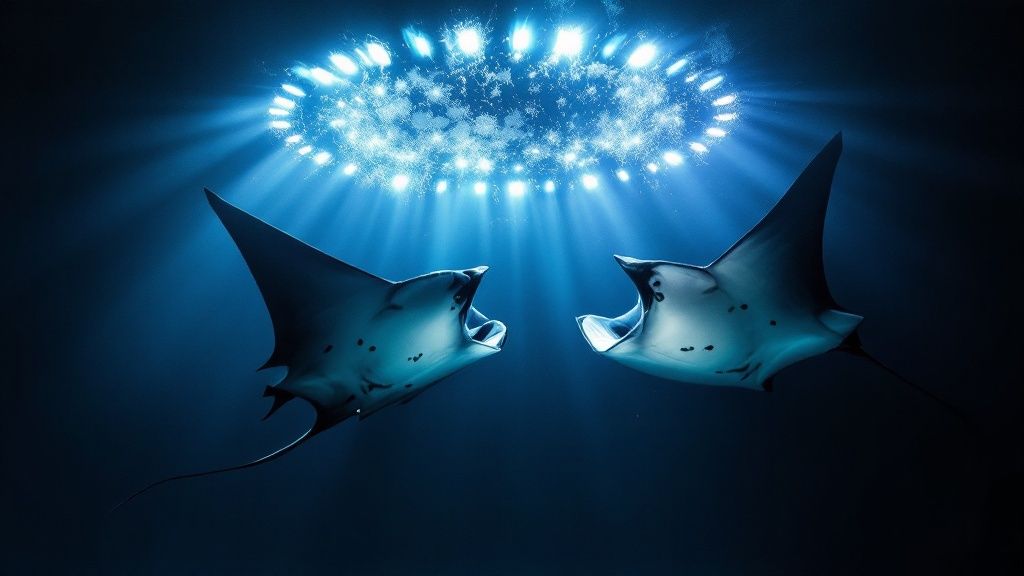
So, how does this incredible spectacle happen? It all starts with light. Tour operators place powerful, eco-friendly lights on the ocean floor, creating brilliant columns of light that shoot up towards the surface. These beams act like a massive bug zapper for the ocean's tiniest inhabitants: plankton.
This cloud of plankton is an all-you-can-eat buffet for Kona's resident manta rays. Attracted by their favorite meal, these gentle giants swoop in to feast. For divers and snorkelers, the result is a front-row seat to an incredible acrobatic show as the mantas glide, loop, and dance through the light beams. It’s a reliable, year-round phenomenon that feels like you've been transported to another world.
To give you a better sense of what makes this dive so special, here’s a quick overview.
Kona Manta Ray Night Dive At a Glance
| Feature | Description |
|---|---|
| Location | Kailua-Kona, Big Island, Hawaii |
| Wingspan | Manta rays can reach over 15 feet |
| Depth | Typically shallow, around 30-40 feet |
| Sighting Rate | Consistently 80% to 90% success |
| Best Time | Year-round activity |
This isn't just a local favorite; it's a world-class wildlife encounter that draws people from every corner of the globe.
A World-Class Spectacle
The Kona Manta Ray Night Dive is no hidden gem—it's a major attraction, bringing in around 80,000 visitors every year. What makes it so popular is its incredible reliability. With a sighting success rate hovering between 80% and 90%, it's arguably the best place on Earth to consistently see manta rays at night.
To ensure your experience is as incredible as it is responsible, it's crucial to go with a top-tier, eco-conscious operator. They provide not just the gear and the boat, but also the expertise to make the dive safe and respectful of the mantas. When you're ready to learn more, you can explore the essentials of the manta ray night dive in Kona. Choosing the right guide makes all the difference, turning a great dive into an unforgettable one.
Why Kona Is a Global Manta Ray Haven
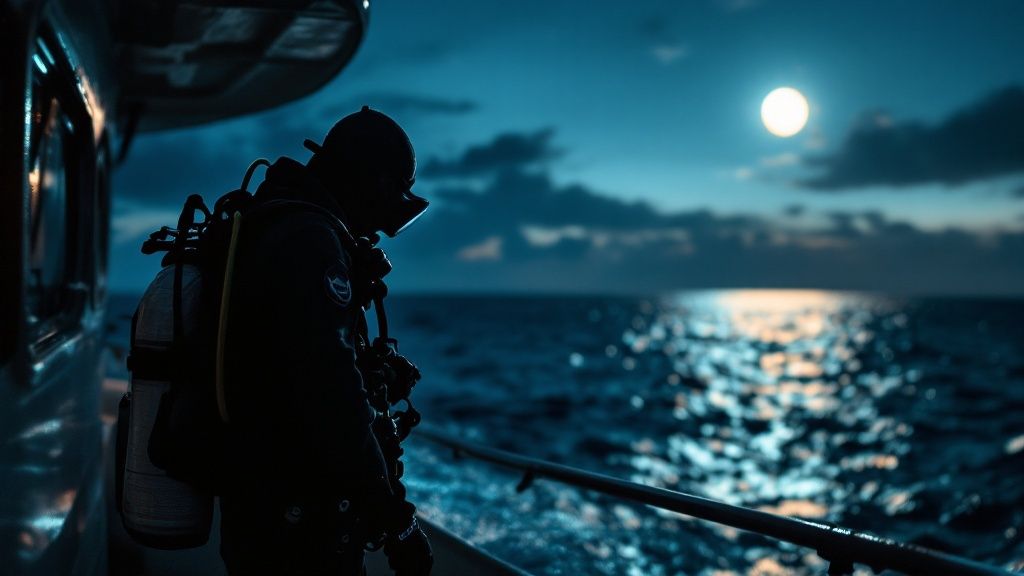
So, what makes Kona the undisputed world capital for manta ray encounters? It's simple, really. While you might spot mantas passing through other places, Kona is different. It’s home to a large, resident population of reef manta rays that stick around all year.
This isn’t just a random fly-by. We’re talking about a known community of animals, many of which have been identified and even named by local guides. They can point out individuals by their unique spot patterns and tell you about their personalities. This transforms the manta ray night dive Kona from a simple dive into a truly personal experience. You can dive deeper into this incredible underwater ballet in our detailed guide on what the manta ray night dive is all about.
This whole amazing phenomenon is concentrated in two world-famous spots right here off the coast.
Kona's Premier Manta Dive Sites
The Big Island’s calm, protected waters and unique geography create the perfect setup for a reliable nightly feast. Plankton, the mantas' favorite meal, gets concentrated in dense clouds, drawing them to the same feeding stations like clockwork.
- Manta Village: Tucked into Keauhou Bay, this is the original manta night dive location. Its convenient location and consistent manta sightings have made it a legendary spot.
- Manta Heaven: Found near Garden Eel Cove, this site is known for attracting even larger groups of mantas. Imagine a swirling vortex of gentle giants—it's absolutely spectacular.
A long-term study confirmed what local divers have known for years: Kona’s mantas have specific home territories and predictable feeding routines. This research is crucial for protecting these incredible animals and their habitat. You can read more about these manta ray research findings.
When you choose to dive here, you're not just hoping for a lucky encounter. You’re stepping into a well-understood and cherished ecosystem that offers one of the most reliable and awe-inspiring wildlife experiences you can find anywhere on Earth.
How to Choose the Right Manta Ray Tour
Picking the right tour operator is probably the most critical decision you'll make for your manta ray night dive Kona adventure. The best outfits are all about safety, respecting the mantas, and making sure you walk away with a memory that lasts a lifetime.
If you’re looking for a top-tier experience, we can’t recommend Kona Honu Divers enough. They keep their group sizes small, which makes a huge difference. You get a much more personal and less crowded view of the action, letting you really soak in the magic of the moment.
Why Choose Kona Honu Divers
Kona Honu Divers has a stellar reputation, and for good reason. Their crew is professional, and they stick to the highest standards for interacting with the mantas. They’re a Manta Ray Green List operator, which means the well-being of these incredible animals always comes first.
Their 2-Tank Manta Dive & Snorkel tour is a fan favorite. It's a full evening adventure that usually kicks off with a gorgeous sunset reef dive before the main event. It’s the perfect way to see two different sides of Kona's underwater world in one trip. While we're focused on Kona here, many of these same principles apply elsewhere—you can find similar tips for selecting marine tours that emphasize safety and quality.
"I can't say enough good things about Kona Honu Divers. The crew was professional, fun, and extremely knowledgeable about the mantas. They made sure everyone was comfortable and safe, and the dive itself was absolutely mind-blowing. Truly a first-class operation."
But you don't have to take our word for it—see what fellow divers are saying. If you want more pointers on finding the right company for any dive, our guide on how to choose a Kona dive shop is a great resource.
Ready to book an unforgettable experience with a trusted and celebrated operator?
How to Prepare for Your Night Dive Adventure
A little preparation goes a long way in making sure your manta ray night dive in Kona is absolutely unforgettable. Getting ready isn’t complicated, but knowing what to bring and what to expect will help you relax and soak in every magical moment, whether you're diving or snorkeling.
For Scuba Divers
If you're planning to scuba, the most important thing is your certification. You’ll need a minimum of an Open Water certification to join the dive. If it's been a while since you've been underwater, or if you're new to diving, taking a Kona scuba certification course ahead of time is a fantastic idea.
Once you’re in the water, the goal is to be as still as possible on the sandy ocean floor. This means your buoyancy control needs to be sharp. Staying put not only protects the delicate ecosystem but also gives you the best seat in the house for the manta ballet happening just above you.
For Snorkelers
Don't think for a second that snorkelers get a lesser experience—it's just as breathtaking from the surface! You'll be holding onto a custom-made light board that floats on the water. This board shines powerful lights down into the ocean, drawing in the plankton and, in turn, the mantas.
You'll have a direct, top-down view as these gentle giants glide, swoop, and barrel roll just inches below you. It's a completely different and equally mesmerizing perspective.
Tips for Everyone
No matter how you choose to see the mantas, a few simple tips can make your trip much more comfortable and enjoyable:
- Pack a Jacket: The water feels great, but the boat ride back to the harbor can get surprisingly chilly once the sun is down. A warm, dry sweatshirt will feel amazing.
- Pay Attention to the Briefing: Your guide isn't just talking to hear themselves speak! The pre-dive briefing is packed with crucial safety info, tips on how to interact with the mantas respectfully, and some really cool facts about their behavior.
- Mind Your Camera: Bringing a camera is a great idea, but be sure to use a red light filter if you have one, as white light can disturb the mantas. The best photos come from patience, not from chasing the action.
Every night is different, but you can typically expect to see around six mantas. On a truly epic night, lucky groups have witnessed over 36 manta rays feeding at once
How to Be a Good Manta Ray Dive Buddy
The incredible health of Kona's manta ray population isn't an accident. It’s the direct result of everyone—from tour operators to visiting divers—committing to responsible tourism. We follow a strict “passive interaction” model, which is just a way of saying we're there to observe, not interfere. This approach is the bedrock of a sustainable experience, making sure the mantas are safe and undisturbed in their own home.
The golden rule is simple: look, but don't touch. Ever. It might be tempting, but touching a manta ray strips off the protective mucous coating on its skin. This slimy layer is their first line of defense against infection, sort of like their immune system. Removing it leaves them wide open to harmful bacteria.
Rules of the Road (or, Uh, Reef)
Every guide will walk you through a clear set of rules before you hit the water. Following them isn't just about your safety; it's about showing respect for these magnificent animals and ensuring they keep coming back for years to come.
- Find Your Spot and Stay Put: If you're diving, you'll be positioned on or near the sandy bottom. Snorkelers stay on the surface, usually holding onto a custom light board. This creates a clear "stage" in the middle for the mantas to do their thing.
- Let Them Come to You: Chasing a manta is a huge no-no. You'll never catch one, anyway! The real magic happens when you stay still and let their natural curiosity bring them right to you.
- Mind Your Lights: Divers should aim their lights straight up from the bottom, creating a column of light that attracts the plankton. The snorkelers' lights will shine down from the surface. Just be sure to avoid shining your light directly into a manta's eyes.
The most unforgettable manta encounters happen when you become a quiet, respectful observer. When you relax and become part of the underwater scenery, the mantas feel comfortable enough to put on a show you'll never forget. To get a better sense of what makes this adventure so special, check out our post on why you should go on a manta ray dive in Kona.
Your Top Kona Manta Dive Questions, Answered
If you're gearing up for a manta ray night dive in Kona, you've probably got a few questions buzzing around. That's a good thing! Being prepared is key. Here are the answers to some of the most common things we get asked by fellow adventurers.
When Is the Best Time of Year to See the Mantas?
This is the best part: you can come any time of year! Unlike a lot of wildlife encounters that are seasonal, Kona’s manta rays are year-round residents. They don't migrate, so you have a fantastic chance of seeing them whether you visit in July or December.
Success rates for sightings stay consistently high, hovering over 80% no matter the month.
Do I Have to Be a Certified Diver?
Not at all! You can have an absolutely incredible experience as a snorkeler. The setup is genius: snorkelers hang onto a large, floating light board that shines powerful beams down into the water.
This light attracts the plankton, which in turn brings the manta rays right up to the surface for a feast. You get a stunning, top-down view as these gentle giants glide and somersault just inches below you. Many tour boats, like ours at Kona Honu Divers, accommodate both divers and snorkelers, making it a perfect trip for the whole family.
Is It Safe to Be in the Water with Manta Rays at Night?
Yes, it’s incredibly safe. Manta rays are often called "gentle giants" for a reason—they have no teeth, no stingers, and no barbs. They are curious and completely harmless to humans.
The real focus on safety comes from standard water protocols. A reputable operator will give you a thorough briefing, make sure your gear is perfect, and have experienced guides in the water with you the entire time. The dive sites themselves are also tucked into bays that are naturally sheltered from big ocean swells, which keeps the conditions calm and predictable.
What if We Don’t See Any Manta Rays?
It's a valid question. These are wild animals, after all, and even with a near-perfect track record, a sighting can never be 100% guaranteed.
This is why most of the top operators in Kona offer a "manta guarantee." It's their promise to you. If your trip is one of the very rare occasions where the mantas don't show up, you can come back and try again on another night for free (based on availability). Just be sure to ask about the specific policy when you book!
Ready to witness the magic for yourself? Kona Honu Divers offers a world-class, safe, and truly unforgettable adventure. Book your 2-Tank Manta Ray Dive & Snorkel tour and get ready for the experience of a lifetime!