
Imagine this: you're floating in the warm, dark Pacific Ocean just after sunset. You settle onto the sandy bottom, maybe 30 to 40 feet down, and shine your light toward the surface. All around you, other divers are doing the same. Together, you create a massive column of light, a beacon that draws in clouds of microscopic plankton.
This glowing buffet is exactly what Kona's most famous residents are looking for.
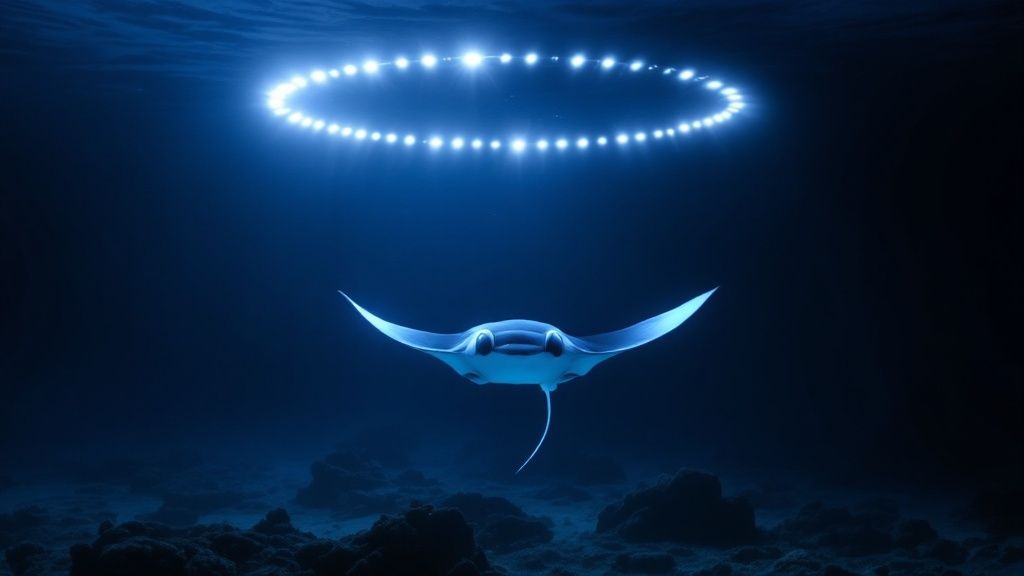
Before long, giant, graceful manta rays emerge from the darkness, gliding effortlessly into the beams of light. They perform a mesmerizing underwater ballet, executing somersaults and barrel rolls just inches above your head. Their cavernous mouths are wide open as they filter the plankton from the water. It’s a silent, powerful, and utterly surreal spectacle.
This unique feeding behavior, combined with a consistent, year-round population of rays, is exactly why the manta ray night dive in Kona has become a world-renowned adventure. It’s not just a dive; it’s an immersive performance, and you have the best seat in the house.
A Reliable and Unforgettable Encounter
Unlike so many wildlife encounters that hinge on luck and timing, the Kona manta ray dive is remarkably consistent. Why? Because the Kona coast is home to a stable, resident population of over 450 identified manta rays.
This consistency means sighting success rates often hover between a staggering 85-90%. Some nights are better than others, of course, but your odds of witnessing this incredible show are incredibly high. The dive itself is also relatively shallow, which allows for longer bottom times—usually around 45 to 60 minutes—giving you plenty of time to soak it all in.
To give you a quick overview, here's what you can generally expect.
Kona Manta Ray Night Dive At a Glance
| Attribute | Details |
|---|---|
| Location | Kona Coast, Big Island, Hawaii |
| Depth | 30-40 feet (approx. 9-12 meters) |
| Dive Time | 45-60 minutes |
| Success Rate | Typically 85-90% or higher |
| Water Temperature | 75-80°F (24-27°C) year-round |
| Best Time to Go | Year-round, with calmest seas in summer |
| Interaction | Passive observation only; no touching |
This table captures the basics, but it doesn't quite convey the magic of the experience.
So, What Really Makes This Dive Special?
At its heart, the experience is about the powerful, almost primal connection you feel with these magnificent animals. There are a few key ingredients that make it so unforgettable:
- Passive Interaction: You are purely an observer. By staying still on the ocean floor, you become part of the scenery. This allows the mantas to come to you on their own terms, creating a truly natural interaction.
- A "Campfire" of Light: The dive community here has a great term for the circle of lights created by the divers: the "campfire." This central light source is what concentrates the plankton, bringing the mantas' feeding frenzy directly to you.
- Up-Close Views: The mantas often glide within inches, giving you an unparalleled look at their sheer size and the unique spot patterns on their undersides. It's a humbling, awe-inspiring moment that stays with you long after you surface.
This isn't just another dive; it's a front-row seat to one of nature's greatest shows. For a deeper dive into what to expect and how to prepare, check out our complete guide to the manta ray night dive in Kona.
Why Kona Is the World’s Premier Manta Ray Destination
What is it about a small slice of coastline on Hawaii’s Big Island that makes it the undisputed global capital for manta ray encounters? It’s not just luck. It’s a perfect storm of unique geography, reliable marine biology, and a remarkable relationship between humans and wildlife that has developed over decades.
This whole phenomenon started by accident. Years ago, a hotel turned on lights overlooking the water, which unintentionally attracted swarms of plankton. The local manta rays, being incredibly smart creatures, quickly figured out that these lights were basically a dinner bell, signaling a free, all-you-can-eat buffet. That simple discovery laid the foundation for one of the most dependable wildlife adventures on the entire planet.
The Science Behind the Spectacle
The magic of the manta ray night dive in Kona isn't really magic at all—it's just a beautifully simple food chain in action. The whole show relies on a few key ingredients working together perfectly:
- Bright Lights: Dive operators set up powerful, eco-friendly lights in the water. Divers on the sandy bottom point their lights up, while snorkelers hang onto floating rafts with lights pointing down, creating a column of light.
- Plankton Magnet: All this concentrated light acts like a giant magnet for zooplankton, the tiny little organisms that manta rays love to eat.
- The Feast Begins: This glowing cloud of plankton becomes an irresistible feast. The local manta rays, who have learned to associate these lights with food over generations, show up for their nightly meal.
This ritual has become so ingrained that the local mantas truly rely on it. You get to watch them glide gracefully through the light beams, doing barrel rolls and somersaults to scoop up as much plankton as they can—often coming within inches of you.
It’s All About Consistency
You can find manta rays in tropical waters all over the world, but Kona offers something no one else can: year-round reliability. The reef mantas here aren't migratory; they’re a resident population. They live their entire lives right here along the Kona coast, which means there’s no such thing as an "off-season" for this dive.
That consistency is what brings so many people to the Big Island. The manta ray night dive in Kona draws around 80,000 visitors every single year, a number that speaks for itself. While you can typically expect to see about six mantas on an average night, some lucky groups have witnessed a mind-blowing spectacle of more than 36 individuals at once.
This incredible reliability is what turns a hopeful dive into a bucket-list certainty. When you know you have a greater than 90% chance of seeing these magnificent animals, planning a trip to Kona becomes a no-brainer for any ocean enthusiast.
Premier Sites and Protecting the Mantas
Two main spots have become famous for this nightly ballet: "Manta Heaven" and "Manta Village." Both are perfectly situated to attract plankton and offer a safe, almost amphitheater-like setting for divers and snorkelers. Manta Village, just off the coast from the Sheraton Keauhou Bay, was the original site and is still one of the most consistent.
Of course, the long-term success of this encounter all comes down to responsible tourism. The dive community in Kona has worked hard to establish strict guidelines to protect the mantas' well-being. It’s absolutely essential to choose an operator that follows the "passive observation" rules—no touching, no chasing, and never blocking a manta’s path. This respectful approach is precisely why the manta ray night dive in Kona has thrived for so long, ensuring that people can experience this magic for years to come. If you're new to the concept, you can read our in-depth explanation of what the manta ray night dive is.
Choosing the Best Manta Ray Tour in Kona
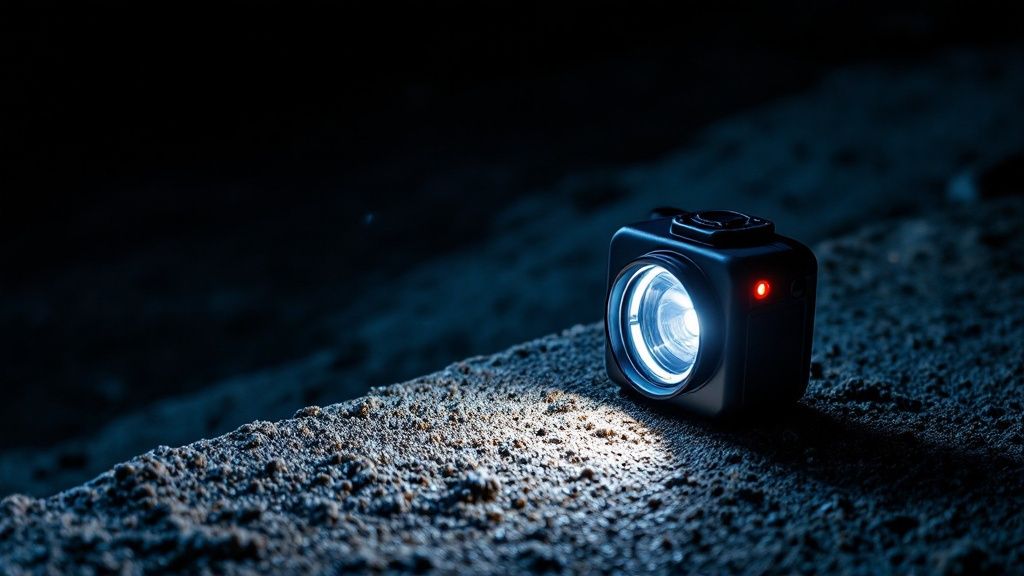
The manta ray night dive in Kona is one of the most popular tickets in town, so you'll find plenty of boats ready to take you out. But here’s the thing: not all tours are the same. The crew you go with can make or break your entire night, shaping everything from your safety to how truly magical the experience feels.
A top-notch operator does more than just ferry you to the dive site; they curate the whole adventure. Think smaller groups for a more personal encounter, knowledgeable guides who are passionate about marine conservation, and an unwavering focus on safety. When a tour is run well, you can just relax and soak in the incredible show unfolding in front of you.
This is exactly why we always point people toward Kona Honu Divers. Their commitment to doing things right—with small groups and an amazing team—really sets them apart.
Scuba Diving vs. Snorkeling: Which Is Right for You?
One of the first things you'll need to decide is whether you want to watch the manta ballet from below as a diver or from above as a snorkeler. The good news is that most boats, including those from Kona Honu Divers, take both groups out together. It really just boils down to your personal preference and certification level.
The main difference is your perspective. Picture the dive site as an underwater theater where bright lights attract the plankton (the main course for the mantas). The divers have front-row seats on the ocean floor, while the snorkelers get an incredible skybox view from the surface.
The Scuba Diving Experience
If you're a certified diver, you'll head down to the sandy bottom, usually around 30-40 feet. Once there, you’ll kneel or lie down and aim your dive light straight up, becoming part of the "campfire" of lights that lure the mantas in. From this angle, the experience is incredibly immersive.
- A view from the ground up: There’s nothing quite like watching these giants swoop and glide just inches over your head. It’s a humbling, awe-inspiring sight.
- Feeling like part of their world: By staying still on the ocean floor, you become part of the scenery, allowing you to observe the mantas in their natural element without being intrusive.
- More stability: Down below, you won't be bothered by any surface waves or chop, which can sometimes make things trickier for snorkelers at night.
The Snorkeling Experience
Not a certified diver? No problem at all—the view from the surface is just as spectacular. Snorkelers hang onto a large, custom-made float board that has powerful lights shining down into the water.
- A bird's-eye view: You get to see the whole show at once, watching multiple mantas perform their graceful, looping acrobatics below you.
- The mantas come to you: The rays are drawn right up to the lights on the float board, meaning they often get within inches of the snorkelers while feeding.
- No certification needed: This makes it a fantastic and accessible way for everyone, from families to less experienced swimmers, to witness this natural wonder.
No matter which you choose, the golden rule is simple: look, but don't touch. You must never touch a manta ray. Doing so can rub off the protective slime coat on their skin, which leaves them vulnerable to infections. Any responsible tour operator will brief you thoroughly on this critical rule.
Ultimately, whether you dive or snorkel depends on the view you want and where you’re most comfortable. Both give you a front-row seat to one of the most magnificent shows on Earth.
When you're ready to book this adventure of a lifetime, we recommend the manta ray dive and snorkel tour with Kona Honu Divers. You'll be in great hands for a safe, responsible, and truly unforgettable night.
How to Prepare for Your Manta Ray Adventure
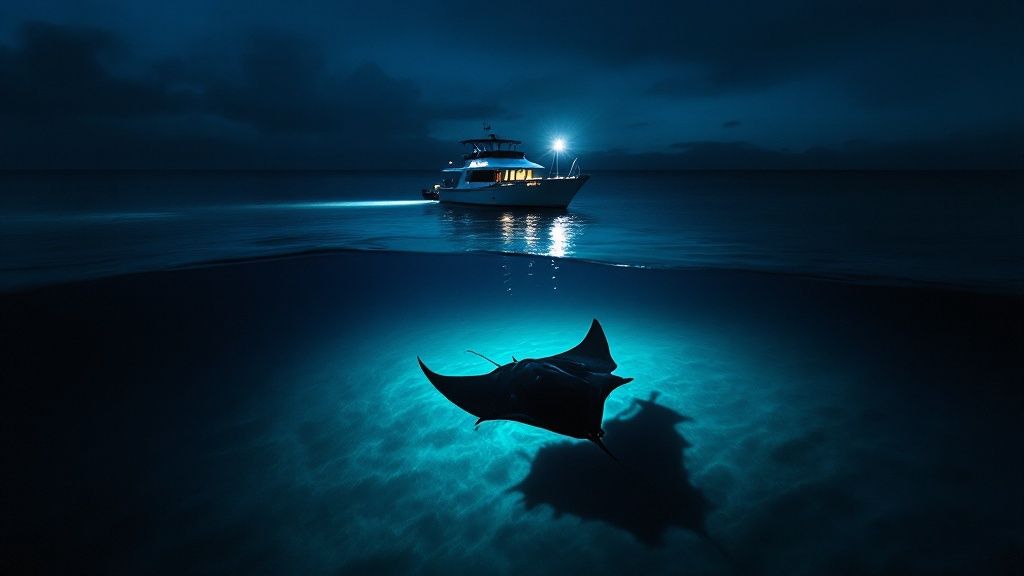
A little bit of prep work can be the difference between a good trip and an absolutely epic one. While the manta ray night dive in Kona is a pretty seamless operation, knowing what to bring and what to expect helps you shake off any pre-dive nerves and just soak in the magic. When you show up ready, you can focus on the incredible ballet that’s about to begin.
Most reputable tour operators, including us here at Kona Honu Divers, have you covered with all the main scuba or snorkeling gear. That means your mask, fins, BCD, and regulator are all taken care of. They'll also provide the powerful underwater lights that make the whole experience possible. Really, all you need to think about are a few personal items to keep you comfortable.
Your Personal Checklist: What to Bring
Even though the pros handle the heavy equipment, a few small things can make a huge difference in your comfort, especially on the boat ride home after the dive. After spending an hour in the water at night, that cool ocean air can feel pretty brisk!
Here’s a quick list to make sure you’re all set:
- Warm, Dry Clothes: This one is a must. You will be so glad you have a cozy sweatshirt, jacket, or sweatpants to pull on for the trip back to the harbor.
- A Towel: Simple, but essential for drying off the moment you climb back on board.
- Reef-Safe Sunscreen: Many trips head out while the sun is still up. Protect your skin—and Hawaii’s fragile coral reefs—by slathering on some reef-safe sunscreen beforehand.
- Seasickness Medication: If you have even the slightest suspicion you might get seasick, take your preferred remedy before you leave the dock. It's always better to be prepared.
- Reusable Water Bottle: Staying hydrated is key. Most boats have water, but bringing your own is a great habit for sustainable travel.
- Underwater Camera: Got a GoPro? Bring it! Make sure it's fully charged, because you are definitely going to want photos of this.
Ticking off these simple items guarantees you’ll be comfortable from beginning to end, letting you focus on the main event: the mantas.
Understanding the Pre-Dive Briefing
One of the most important parts of your preparation happens right on the boat, just before you hit the water. Your guide will give a thorough pre-dive briefing, and this is much more than just a formality. It’s crucial for your safety and for the health of the manta rays.
During this briefing, you'll learn the golden rule of the encounter: passive observation. You're a visitor in their underwater ballroom, and your only job is to watch the show without getting involved.
The most important rule is simple but non-negotiable: never, ever touch a manta ray. These gentle giants are covered in a protective mucous layer that shields them from bad bacteria. Touching them can rub off this coating, leaving them vulnerable to dangerous infections.
The briefing also covers the nuts and bolts of the dive itself. You'll learn how to position yourself on the sandy bottom if you're diving or how to hold onto the floating light board if you're snorkeling. Your guide will show you how to aim your light to create the "campfire" that attracts plankton, and they'll go over the hand signals used for communicating in the dark.
Paying close attention here is the key to a smooth, safe, and respectful experience for everyone. If you want a head start, you can review some of the essential things to know about the manta ray dive in Kona before you even step on the boat. A little prep ensures an amazing night for both you and the magnificent mantas.
What to Expect on Your Manta Ray Dive
Picture this: the sun is melting into the horizon, splashing the sky with shades of orange and purple. The energy on the boat is buzzing. This is it—the start of your manta ray night dive in Kona. Between the gentle sway of the boat and the excited chatter from fellow divers, you'll gear up and get ready to slip into the twilight ocean.
That first step off the boat is a thrill. The warm Pacific welcomes you as the world above goes quiet, replaced by the sound of your own breathing. If you're scuba diving, you'll begin a slow, easy descent into the blue, following your guide’s light down to the ocean floor. Your destination is a sandy patch about 30 to 40 feet down, which will become your front-row seat for the show.
The Underwater "Campfire"
Once everyone is settled on the bottom, your guide will have you form a circle. This is where the real magic kicks in. You'll turn on your dive light and point it straight up, creating a bright beam that cuts through the darkness. As everyone else does the same, the beams merge into a massive column of light—a glowing beacon that plankton find absolutely irresistible. We call it the underwater "campfire."
Snorkelers get an equally stunning, but totally different, perspective. You’ll float on the surface, holding onto a specially designed light board. Bright lights are built into the bottom of the board, shining down to create that same plankton buffet. It gives you an incredible bird's-eye view of the entire scene as it unfolds below.
And then, you wait. The darkness sharpens your senses. You'll notice tiny fish zipping through the light and hear the soft crackling sounds of the reef. There’s a palpable sense of anticipation as everyone quietly scans the dark water, waiting for the headliners to arrive.
The Grand Entrance
It usually starts with a shadow, just a flicker at the edge of your vision. Then another, this time more solid. Suddenly, a massive, graceful shape glides into the light. The first manta ray has arrived. It’s a moment that washes away any nerves and leaves you with pure, unadulterated awe.
Before you know it, more will join the dance. They sweep in from the darkness to perform a silent, mesmerizing ballet. With their huge mouths open, they do effortless barrel rolls and backflips, filtering the plankton from the water. For creatures with wingspans that can stretch over 12 feet, their elegance is almost unbelievable. They’ll often soar just inches over your head or right up beneath the snorkel board—so close you can see the unique spot patterns on their bellies.
You're not just watching animals from a distance; you're a guest in their dining room. It's a humbling, peaceful encounter where you become a silent spectator to one of nature’s greatest shows.
This is more than just a dive; it’s an incredible connection. You’ll spend about 45 minutes completely captivated by these gentle giants. The feeling of being so near to such majestic animals is something you'll never forget. To see how different tours create this experience, check out our guide to the top manta ray night dive tours in Kona. It's a memory that truly defines the magic of the Big Island.
Don’t Stop at the Mantas: Exploring Kona’s Other World-Class Dives
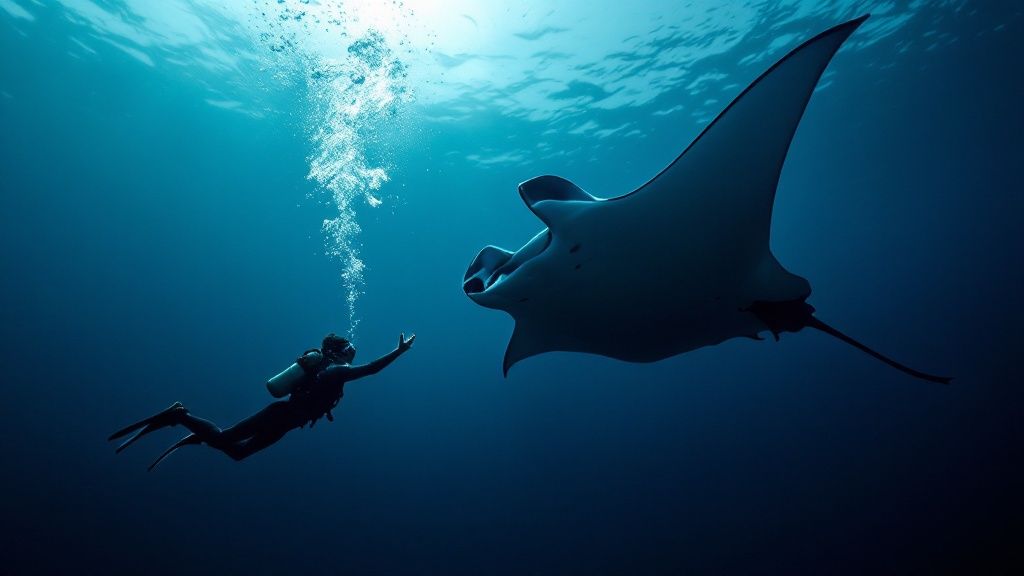
The manta ray night dive in Kona is an absolute must-do, a true bucket-list experience. But trust me, it’s just the first chapter of the incredible story waiting for you beneath the waves of the Big Island. This part of Hawaii offers some of the best scuba diving on the Big Island.
The same volcanic forces that forged the island itself have sculpted a stunning underwater world. Think dramatic lava tubes, towering pinnacles, and sheer drop-offs into the deep blue. Once you've seen the manta ballet, it's time to discover what else makes Kona a legendary diving destination. The variety of marine life here is staggering, from tiny, intricate creatures to the genuinely massive.
The Thrill of the Kona Blackwater Dive
If you thought the manta dive was surreal, the Kona blackwater dive is like jumping into a science fiction movie. This is a completely different kind of adventure. We take you miles offshore, where you'll drift, tethered to the boat, over thousands of feet of inky black ocean.
At night, this deep water comes alive. A massive vertical migration brings the weirdest, most wonderful creatures up from the depths to feed near the surface. You'll be suspended in the dark, watching a parade of bioluminescent and see-through critters you’ve never imagined. It's a humbling, mind-bending experience that is an absolute must for photographers and thrill-seekers.
This isn't just another night dive. It’s a genuine expedition into the planet’s largest, least-explored habitat, revealing a hidden ecosystem that only comes out after dark.
Daytime Adventures for Certified Divers
Kona's daytime diving is every bit as epic. The coastline is a playground of ancient lava tubes, swim-through arches, and underwater canyons—all magnets for marine life. You’ll find green sea turtles resting, whitetip reef sharks cruising by, and huge schools of fish found only in Hawaii.
For certified divers looking for a bit more challenge, advanced dive tours can take you to more remote sites to explore these formations up close. There’s nothing quite like gliding through a massive lava tube or navigating a submerged volcanic pinnacle. It’s a powerful reminder of the raw, creative energy that built this island.
To get a feel for the incredible variety of underwater topography and marine life here, it's worth learning more about what you can expect from diving in Kona.
Your Manta Ray Dive Questions, Answered
It's completely normal to have a few questions bubbling up as you get ready to book your manta ray night dive in Kona. After all, it's not every day you get to swim with these incredible creatures! Getting the details ironed out beforehand means you can relax and just enjoy the show. Here are the answers to some of the most common questions we get.
Do I Need to Be Scuba Certified to See Manta Rays?
Not at all! While scuba divers get an amazing view from the "campfire" on the ocean floor, the experience for snorkelers is just as spectacular.
You'll hold onto a specially designed float board equipped with powerful lights pointing down into the water. This light attracts the plankton, and the mantas come right up to the surface for a meal, often getting within inches of the board. You get a stunning, top-down view of the action. Most tour boats take both divers and snorkelers out together, so everyone gets in on the magic.
Is the Manta Ray Night Dive Safe?
Absolutely. When you go with a professional, experienced crew, this is considered a very safe activity. Manta rays are often called "gentle giants" for a reason—they have no teeth, no stingers, and no barbs. They are completely harmless to humans.
The biggest safety factors are simply listening to your guide, staying with your group, and practicing passive observation. That just means looking, not touching. The dive sites are well-known, relatively shallow spots, creating a controlled environment for an incredible, and safe, encounter.
Kona’s resident reef mantas have been interacting with divers and snorkelers for decades. They’re here for the all-you-can-eat plankton buffet created by the lights, not for the people. This allows for a beautiful, peaceful experience for everyone.
What Is the Best Time of Year for the Manta Dive?
This is the best part: any time is a great time! Kona is lucky to have a resident population of manta rays, which means they live here year-round and don’t migrate away.
This gives the dive an incredibly high success rate no matter when you visit. So, you can plan your trip based on what works best for your schedule, knowing the mantas will likely be here to greet you.
What Happens If We Don’t See Any Mantas?
It's rare, but it can happen—these are wild animals on their own schedule, after all. The best operators, like Kona Honu Divers, know this and usually offer a "manta guarantee."
This typically means that if you don't see any mantas on your trip, you can come back and try again on another night for free (subject to availability). It’s always a good idea to ask about the specific policy when you book your tour.
Ready to witness this underwater ballet for yourself? Join Kona Honu Divers for an unforgettable and responsibly managed manta ray dive and snorkel adventure.