
Picture this: a surreal, otherworldly ballet where giant, gentle rays glide through illuminated water right in front of your face. That's the manta ray night dive in Kona. It's widely considered one of the most unforgettable dives on the planet and an absolute must-do for anyone visiting the Big Island.
This isn't just another dive; it's a genuine, up-close encounter with majestic marine life you truly won't find anywhere else in the world.
What Makes the Kona Manta Ray Night Dive Unforgettable
Imagine slipping into the warm Pacific right after sunset. As you descend, you see a collection of powerful lights pointing up from the ocean floor, creating a brightly lit stage in the deep blue. You settle onto the sand, find your spot, and just wait.
Before long, a massive, graceful shadow emerges from the darkness. It's a giant manta ray, some with wingspans over 12 feet, swooping right into the beams of light to feed on plankton. This is the heart of the Kona Manta Ray Night Dive.
What makes this spectacle so special is the unique relationship that's developed here over decades. The consistent presence of dive lights has created reliable feeding stations for a resident population of over 240 identified manta rays. These gentle giants don't migrate; they live here year-round, which makes Kona the world's most dependable place to see them.
To give you a quick rundown, here are the key details you'll want to know for planning your trip.
Your Manta Ray Night Dive at a Glance
| Aspect | What You Need to Know |
|---|---|
| Location | Kona, Big Island of Hawaii |
| Best Time | Year-round, every night after sunset |
| Water Depth | Relatively shallow, typically 30-40 feet |
| Experience Level | Accessible for divers of all skill levels |
| Manta Population | Over 240 resident, identified reef mantas |
| Key Feature | Dive lights attract plankton, which draws in the mantas |
This table should give you a solid starting point, but the real magic happens when you're actually in the water.
A Reliable and Awe-Inspiring Encounter
The setup is often called an underwater "campfire." Divers gather in a circle on the ocean floor, shining their lights up to create a massive column of light. This bright beacon attracts a dense cloud of plankton—the mantas' favorite meal.
What happens next is pure magic.
The rays perform incredible acrobatics, doing barrel rolls and somersaults as they filter the plankton from the water, often coming within inches of you.
The feeling of a massive creature, shaped like a stealth bomber, gliding silently just above you is indescribable. It’s a moment of pure awe that connects you directly with the wildness and beauty of the ocean.
Because the dive is stationary and in relatively shallow water, you can just relax and enjoy the show. This accessibility is what makes it a bucket-list experience for divers of all skill levels. You can learn more about the specifics in our guide explaining what is the manta ray night dive.
Finding the Best Manta Ray Tour Operator
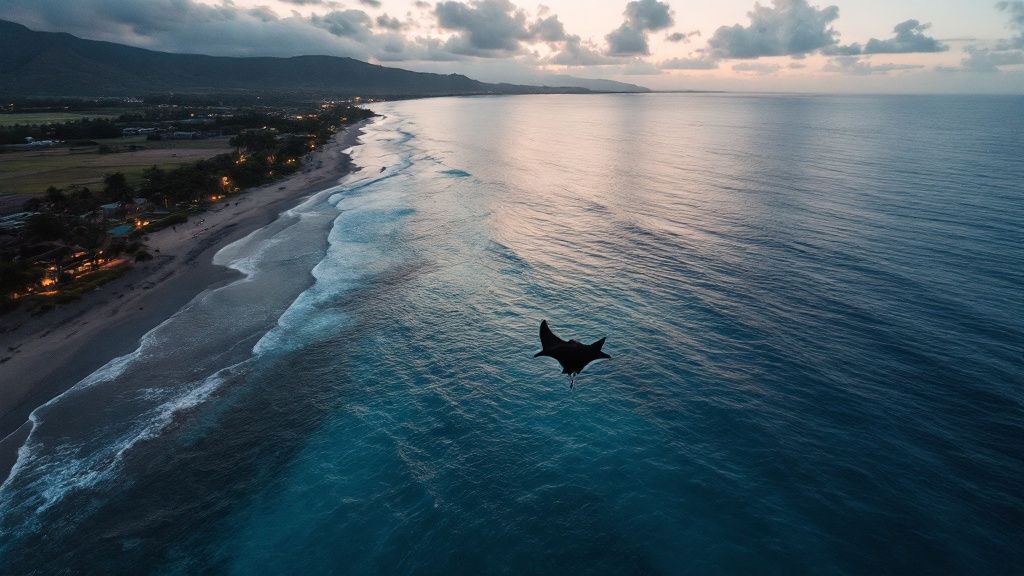
Choosing the right operator is probably the single most important decision you'll make for your manta ray night dive in Kona. The quality of the crew and the boat doesn't just affect your safety—it completely shapes the entire memory. A great company can turn an amazing dive into a life-changing one.
The best outfits focus on small groups, which means less chaos in the water and more personal attention from your guide. You want a team that is not only dialed in on safety and knows the local sites like the back of their hand, but is also genuinely passionate about marine conservation. Real pros know the mantas by name and are dedicated to protecting them.
What to Look for in a Dive Company
When you start digging into the options, a few key details will help you tell a top-notch operator from an average one. It's the little things that often reveal a company's commitment to a quality, ethical experience.
- Safety Record and Experience: Look for companies that have been around for a while and have a solid reputation. Captains and divemasters with years of local experience know these waters intimately and can handle whatever conditions pop up.
- Guide-to-Diver Ratios: Smaller is always better. Fewer divers per guide means a safer, more controlled, and personal experience. It's that simple.
- Boat Comfort and Amenities: You’re going to be on that boat for a few hours. A spacious, well-kept vessel with a marine head (that's a toilet) and warm showers makes a huge difference, especially on that chilly ride back to shore.
- Commitment to Manta Etiquette: Responsible operators live by the rules that protect the mantas. This means a strict "no-touching" policy and teaching divers how to be calm, respectful observers in the water.
Kona Honu Divers, for example, is well-known for their conservation-first attitude, seasoned crew, and comfortable, custom-built dive boats. Their dual focus on diver safety and manta well-being makes them a standout choice for this incredible encounter.
Questions to Ask Before You Book
Don't be shy about calling a shop and asking some direct questions before you hand over your credit card. Their answers will tell you everything you need to know about their standards.
Ask about their "manta guarantee." Sightings here are incredibly reliable, but these are wild animals. Many of the best companies will offer you a free trip back out if the mantas are a no-show. It’s a sign of confidence and a commitment to making sure you have a great time.
Also, ask about their group sizes and the experience level of their guides. A company that's proud to talk about its safety standards and conservation work is usually a solid bet. For a wider view, you can check out our detailed breakdown of the top 10 Kona diving companies ranked to see how they stack up.
Taking a little time to vet your operator isn't just about booking a dive—it's about investing in a safe, ethical, and deeply moving experience. A knowledgeable crew makes the whole thing even more magical by sharing stories about the individual mantas you're seeing.
Ultimately, making a smart choice guarantees you'll have a more personal and meaningful connection with Kona's majestic manta rays. When you're ready to take the plunge, picking a team that respects the ocean is the most important step.
Your Underwater Experience from Start to Finish
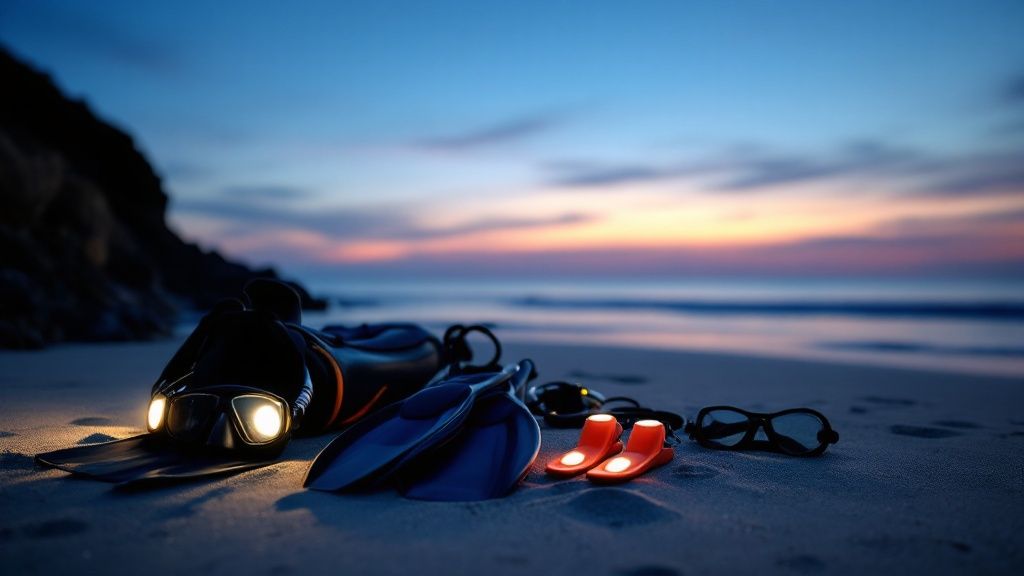
The experience really kicks off with a beautiful boat ride up the Kona coast. As the sun starts its slow dip toward the ocean, the sky explodes in those classic Hawaiian sunset colors—fiery oranges, deep purples, the works. It’s the perfect, dramatic prelude to the night’s main event.
Once you’re anchored at the dive site, the crew runs through a solid briefing. This isn’t just a list of rules. They’ll share some amazing facts about the resident manta population and teach you how to recognize specific mantas by their unique spot patterns. You'll also learn the all-important "manta etiquette" to make sure the encounter is safe and respectful for everyone, especially the rays.
The Twilight Reef Dive
Most manta charters, like the 2-tank manta ray dive tours run by Kona Honu Divers, are two-tank trips. The first dip in the water is usually a twilight reef dive. It’s a great chance to get your weighting dialed in and get comfortable in the water while you can still see the reef illuminated by the last rays of sunlight.
You get to watch the reef change shifts. The daytime fish start tucking into their hiding spots for the night, and the nocturnal critters begin to emerge. It's a gorgeous dive on its own and the perfect warm-up for what’s coming next.
Back on the boat, you'll have your surface interval—usually with some snacks and drinks to hold you over. As total darkness sets in, the excitement on the boat is palpable. The crew lowers the powerful lights into the water, creating what we call the "campfire"—an illuminated stage that draws in the plankton. Then, it's time to gear up for round two.
The Main Event: The Manta Ray Encounter
When you descend into the dark, you'll see the glow from the light circle below. You and the other divers find your spots on the sandy bottom, arranging yourselves around the lights. Everyone points their dive torch straight up, creating a massive column of light to attract the plankton.
And then, you just wait. It doesn't take long.
The first glimpse of a manta is something you never forget. A huge, dark shape just materializes out of the blackness, gliding effortlessly into the light. Then another appears, and another. They put on an incredible underwater ballet, swooping and barrel-rolling inches over your head to scoop up the clouds of plankton.
It's surreal. The only sound is your own breathing as these gentle giants, with wingspans easily stretching over 12 feet, dance through the beams of light. It feels less like a scuba dive and more like you’ve stumbled upon a secret, sacred ocean ritual.
While no two nights are the same, the Kona manta dive is famously reliable. On an average night, you can expect to see around six different mantas, but it's not unheard of for lucky groups to see over 30 at once! Hotspots like Manta Village and Garden Eel Cove consistently deliver these mind-blowing encounters. You can dive deeper into the stats and best locations by checking out this comprehensive Big Island dive guide.
When it's time to go, you'll ascend slowly, watching the mantas fade back into the darkness. The ride back to the harbor under a sky full of stars gives you a quiet moment to process the unbelievable show you just witnessed.
How to Prepare for Your Manta Ray Dive
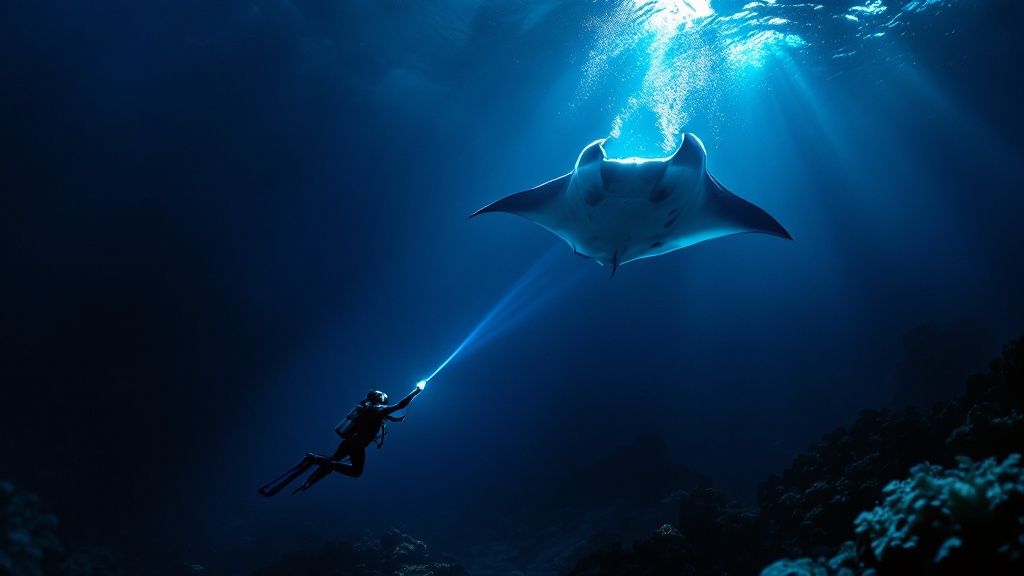
A little bit of prep work before your manta ray night dive in Kona goes a long way. When you have the logistics sorted out ahead of time, you can just relax and let the magic happen once you’re in the water. It’s all about setting yourself up for a stress-free and totally unforgettable night.
First thing's first: your certification. You'll need at least an Open Water Diver certification to join the dive. If it’s been a year or more since you last blew some bubbles, I’d highly recommend a quick refresher course. It's a great way to shake off the rust and get your confidence up before the main event.
Gearing Up for the Dive
When you’re packing your dive bag, a few key items will make your evening much more comfortable. Trust me on this.
- Certification Card: No card, no dive. It’s the first thing the operator will ask for, so make sure it's packed.
- Warm Layers: You will be thankful for a sweatshirt or windbreaker. The boat ride back to the harbor under the stars gets surprisingly chilly after a long soak.
- A Towel: Seems obvious, but you’d be surprised how many people forget! You'll want it for drying off and staying warm on the ride home.
Most reputable operators, like us here at Kona Honu Divers, provide all the scuba gear you’ll need—BCDs, regs, fins, wetsuits, the works. That said, if you have your own mask that fits your face perfectly or a dive computer you know inside and out, definitely bring them. Comfort is key.
You can find more details in our complete guide to the Big Island manta ray night dive.
Being a Respectful Observer
Once you’re in the water, your only job is to be a calm, passive observer. This means dialing in your buoyancy control so you can settle onto the sandy bottom without kicking up a cloud of silt or accidentally bumping into the fragile reef.
The idea is to become part of the underwater scenery. When you're still and quiet, the mantas feel comfortable enough to swoop in and do their thing, completely unbothered by your presence.
This hands-off approach isn’t just good manners; it’s backed by decades of research. From 2009 to 2014, for example, dedicated studies tracked individual manta rays along the Kona coast to better understand their health, population, and behavior. Your respectful participation helps ensure this incredible encounter remains sustainable for generations to come.
Why Kona is the World Capital for Manta Rays
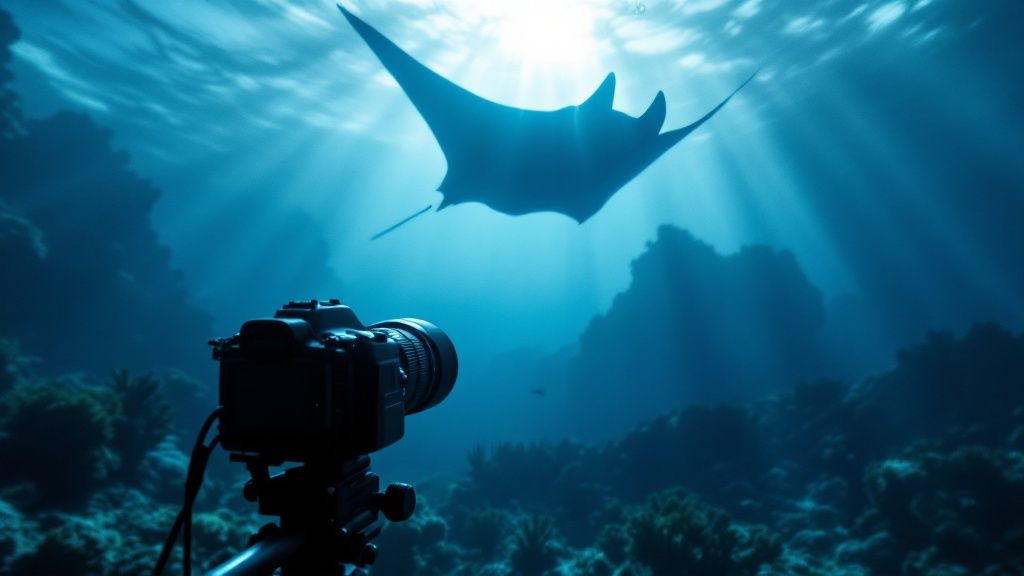
So, what’s the secret sauce that makes the manta ray night dive Kona experience so consistently incredible? While you might catch a seasonal glimpse of mantas elsewhere in the world, Kona is different. It's home to a year-round, resident population of over 240 identified individuals. These graceful giants aren’t just passing through; this is their neighborhood.
This amazing consistency is what makes the dive so legendary. Over decades, a unique, symbiotic relationship has formed between the dive operators and the mantas. Operators set up powerful underwater lights, which draw in clouds of plankton. The mantas have learned this creates a reliable, all-you-can-eat buffet waiting for them every single night.
A Unique and Protected Ecosystem
The specific geography and calm waters of the Kona coast create the perfect habitat for both plankton and the mantas that feast on them. It's this predictable food source that keeps the local manta population from needing to migrate, giving divers an unparalleled chance to see them any day of the year. You can dive deeper into the timing in our article on what is the best time of year to see manta rays in Kona.
This one-of-a-kind environment is world-famous, attracting roughly 80,000 visitors every year just to see the show. The success rate for these dives speaks for itself, hovering between an amazing 80% and 90%. That’s how reliable this natural encounter truly is.
Understanding this delicate ecological balance really changes your perspective on the dive. It’s not just another tourist attraction; it’s a living, breathing example of how humans and wildlife can coexist when the interactions are managed responsibly.
Conservation is everything when it comes to protecting these gentle giants and their feeding grounds. Strict guidelines ensure every dive is conducted with the utmost respect for the animals, helping to preserve this incredible experience for generations to come. When you choose a responsible operator, you become part of the solution.
Your Questions About the Manta Ray Dive Answered
It’s completely normal to have questions before you jump in the water for a world-class adventure like the manta ray night dive. Getting clear answers beforehand means you can relax and just soak in the magic of the moment.
We get a lot of the same questions from divers, so we've put together answers to the most common ones right here. Knowing what to expect is key to a great dive—both for your safety and for the well-being of the mantas.
Is the Manta Ray Night Dive Safe for New Divers?
Absolutely. The main dive sites are surprisingly shallow, usually around 30-40 feet. Better yet, the dive itself is stationary. You won’t be navigating tricky reefs in the dark; instead, you’ll find a spot on the sandy bottom and watch the show unfold right above your head.
Any reputable operator will have experienced guides who give a thorough briefing before you even get in the water and stay with you the entire time. As long as you have your Open Water certification and are comfortable in the water, it's a remarkably safe and jaw-dropping experience. For a complete list of scuba diving tours on the Big Island, you can check out our offerings.
What Happens If We Don’t See Any Manta Rays?
This is probably the number one concern we hear, and it's a fair question! While sightings are never 100% guaranteed—we are dealing with wild animals, after all—the success rate in Kona is ridiculously high, often over 90%. But nature has a mind of its own.
In the rare event the mantas decide not to show up, most top-tier dive shops in Kona have a "manta guarantee." This usually means you can come back and try again on another night, completely free of charge. It's always a good idea to confirm this policy when you book.
What Is the Difference Between Snorkeling and Diving with Mantas?
Both are incredible, just from a different perspective. Snorkelers float up on the surface, looking down as the mantas swoop gracefully toward the light boards to feed. It’s a fantastic view from above.
As a diver, you get the view from below. You're settled on the ocean floor, looking up as these gentle giants perform their acrobatic barrel rolls just feet above your head. Many people feel this is a more immersive, up-close encounter. If you're weighing the options, you can get the full scoop in our detailed guide on the Kona manta ray night dive.
Can I Touch the Manta Rays?
No, and this is the golden rule of the dive. It's crucial. Manta rays have a special mucus coating on their skin that acts as a shield against harmful bacteria. If you touch them, you can rub off that protective layer and leave them vulnerable to infections.
All responsible tour operators enforce a strict no-touching, no-chasing policy. Your job is to be a passive, respectful observer. Just stay put, and let the mantas control the entire interaction. It's the best way to ensure this amazing encounter can continue for years to come.
Still have a few more specific questions? This detailed Manta Ray FAQ is a great resource. Getting all your questions sorted out is the best way to prepare for an adventure you’ll never forget.