
Picture this: you're floating in the dark, warm waters of the Pacific. Suddenly, a giant, shadow-like creature with a massive wingspan glides inches from your face, performing a silent, hypnotic ballet. This isn't a dream. This is the magic of the manta ray night dive in Kona, an experience so profound it lands on bucket lists around the world.
What Makes This Night Dive a Bucket-List Adventure
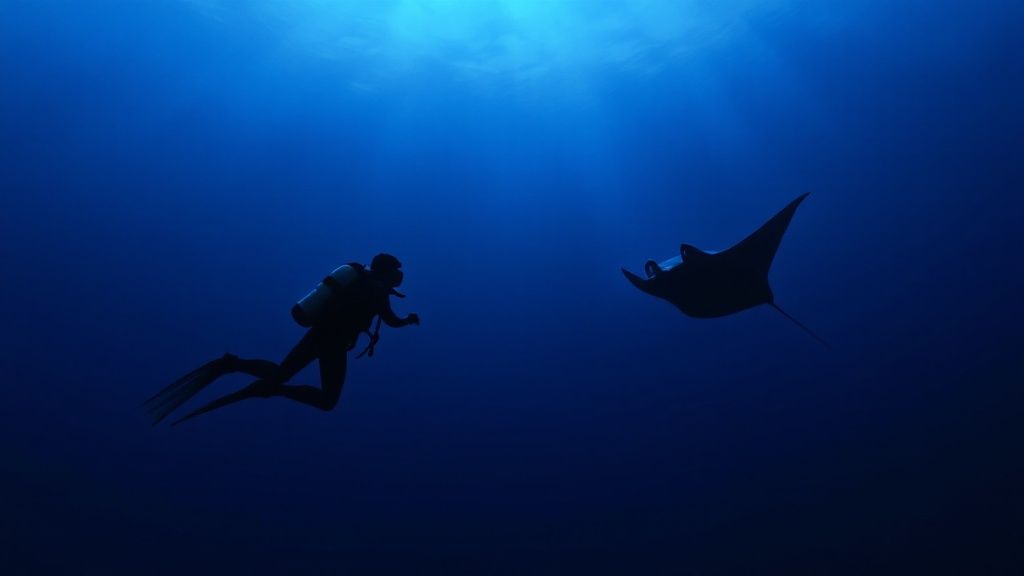
The whole spectacle is a brilliant mix of natural biology and a bit of human ingenuity. The secret sauce is what many of us call the "underwater campfire."
Tour operators set up powerful, eco-friendly lights on the seafloor or on special floating rafts. These lights act like a magnet for tiny microscopic organisms called plankton—the manta rays' favorite meal. This creates a glowing, concentrated buffet that draws the gentle giants in for a feeding frenzy you have to see to believe.
To give you a quick snapshot, here’s what the adventure looks like at a high level.
Manta Ray Night Dive Kona At a Glance
Here is a quick overview of what to expect on this incredible adventure.
| Aspect | Details |
|---|---|
| Activity | Night diving or snorkeling with giant manta rays |
| Location | Kona Coast, Big Island of Hawaii |
| Key Sites | "Manta Village" & "Manta Heaven" |
| Core Concept | Lights attract plankton, plankton attracts mantas |
| Success Rate | An incredible 80-90% chance of sightings |
| Manta Population | Over 240 identified resident manta rays |
| Best For | Divers, snorkelers, and wildlife enthusiasts |
| Experience Level | All levels, from beginners to experienced |
As you can see, it's a well-established and highly reliable encounter.
The Perfect Stage for an Underwater Ballet
Kona's unique coastline is what makes this nightly show possible. The sheltered bays and underwater volcanic landscapes create calm, clear waters, which is great news for both divers and snorkelers. Two spots, in particular, have become legendary: "Manta Village" at Keauhou Bay and "Manta Heaven" near the airport. These sites are the go-to feeding grounds for a resident population of over 240 identified manta rays.
This consistency is what truly sets the Kona experience apart from any other wildlife encounter on the planet. I'm talking about an 80-90% success rate for sightings, according to data from Manta Ray Advocates Hawaii. That's almost unheard of for wild animals! This reliability comes from the mantas learning that these light-filled spots are a guaranteed meal ticket night after night. You can get a deeper dive into how it all works in our guide to the Kona Manta Ray Night Dive.
People often use the word "surreal" to describe it, and they're not wrong. If you're diving, you'll likely be kneeling on the sandy bottom as mantas with wingspans up to 16 feet perform effortless barrel rolls right over your head. Snorkelers get a bird's-eye view, holding onto a lighted float while these majestic creatures soar just beneath them.
This guide will walk you through everything you need to know to get ready for this once-in-a-lifetime experience.
Why Kona Is the World’s Best Place to See Manta Rays
Kona isn't just a great place to see manta rays; it's the undisputed global hotspot for this kind of up-close encounter. This isn't just luck. It's the result of a perfect storm of unique geography, predictable biology, and a bit of human ingenuity that sets the stage for an underwater show you can't find anywhere else on Earth.
The secret sauce is a simple but brilliant concept that locals sometimes call the "underwater campfire." Dive operators set up powerful, eco-friendly lights on the ocean floor, which act like a massive bug zapper in reverse. Instead of zapping bugs, these lights attract huge clouds of zooplankton, the tiny marine organisms that manta rays absolutely love to eat.
As the plankton swarm in the bright beams, they create a reliable, all-you-can-eat buffet. The local manta population figured this out a long time ago and now treat these dive sites as their go-to nightly diners.
A Stage Built by Nature
Kona's coastline just happens to be the perfect venue for this nightly feast. The island's underwater volcanic slopes and sheltered bays create exceptionally calm and clear water, which is fantastic for both divers and snorkelers. This natural protection from rough open-ocean currents means the experience is consistently comfortable and safe, night after night.
On top of that, these calm waters are fed by nutrient-rich currents, ensuring a year-round supply of plankton. This abundance is the key reason the mantas stick around—they are a resident population and don't need to migrate for food. That dramatically increases the odds of seeing them on any given night.
The consistency is what truly makes Kona stand out. The manta ray night dive Kona has an incredible sighting success rate, consistently hitting above 85% and often topping 90%. It’s common to see an average of six mantas per night, but on truly epic evenings, crews have counted more than 36 individuals, some with wingspans stretching over 12 feet. This amazing reliability is why over 80,000 people come for this experience every year, making it a cornerstone of local tourism and a powerful tool for marine conservation awareness. You can dig into more facts about the Kona's manta ray dive phenomenon on konahonudivers.com.
Conservation and Community
Beyond the perfect natural setup, Kona’s dive community has worked hard to establish strong, self-enforced guidelines to protect these gentle giants. The rules are clear: all interactions must be passive and respectful. The whole point is to observe without interfering.
A cardinal rule is to never, ever touch a manta ray. Their skin is covered in a delicate mucus layer that protects them from infection, and a simple touch from a human can do real harm.
This deep commitment to sustainable and ethical tourism has built a healthy, trusting relationship between the mantas and the dive operators. It ensures that the world-famous manta ray dive tour remains a world-class natural wonder for generations, allowing us to witness this incredible feeding behavior in a way that truly respects the animals and their home.
Choosing the Right Manta Ray Tour Operator
Picking the right company for your manta ray night dive is probably the single most important decision you'll make for this trip. I'm not exaggerating. The quality of the operator is what separates a decent boat ride from a truly unforgettable, life-changing encounter. It shapes everything from your safety and comfort to how the mantas themselves are treated.
When you start looking at your options, a few things should be at the top of your list. Look for companies with stellar safety records, crews that are genuinely passionate about what they do, and a real commitment to eco-friendly practices. The best operators stick to the strict guidelines for passive observation, making sure the mantas are never touched or stressed out.
Then there are the practical details that make a huge difference. What's the group size? Smaller groups almost always mean a more personal, less chaotic experience in the water. And how's the boat? A spacious, comfortable boat makes the whole trip, especially the chilly ride back to shore, much more pleasant.
Why Kona Honu Divers Stands Out
If you're looking for a top-shelf experience, Kona Honu Divers is a name that comes up again and again for good reason. They're known for their professional crew, excellent gear, and a serious dedication to making sure their guests are happy. Their Manta Ray Dive and Snorkel tour is fantastic and works for pretty much everyone. Their obsession with safety and creating a positive vibe shines through in their mountain of glowing reviews.
You don't have to take my word for it—see what past guests are saying:
Their reputation in the community is rock-solid and well-deserved. In fact, plenty of locals and travel publications agree they are a top choice, as you can see in this piece about them being voted the best dive operator in Kona.
A key thing to look for with the best operators is a "manta guarantee." It's rare, but sometimes the mantas just don't show up. Companies with this policy will let you come back another night for free, making sure you get the experience you came all this way for.
Ultimately, it’s about finding the right fit for you. Are you a family with young kids who might need a little extra help? A serious underwater photographer with specific gear needs? Or an experienced diver looking for a more advanced trip? Figuring that out will help you cut through the noise and pick the company that will make your manta ray night dive absolutely magical.
Ready to book an adventure you'll never forget?
Your Manta Ray Adventure From Start to Finish
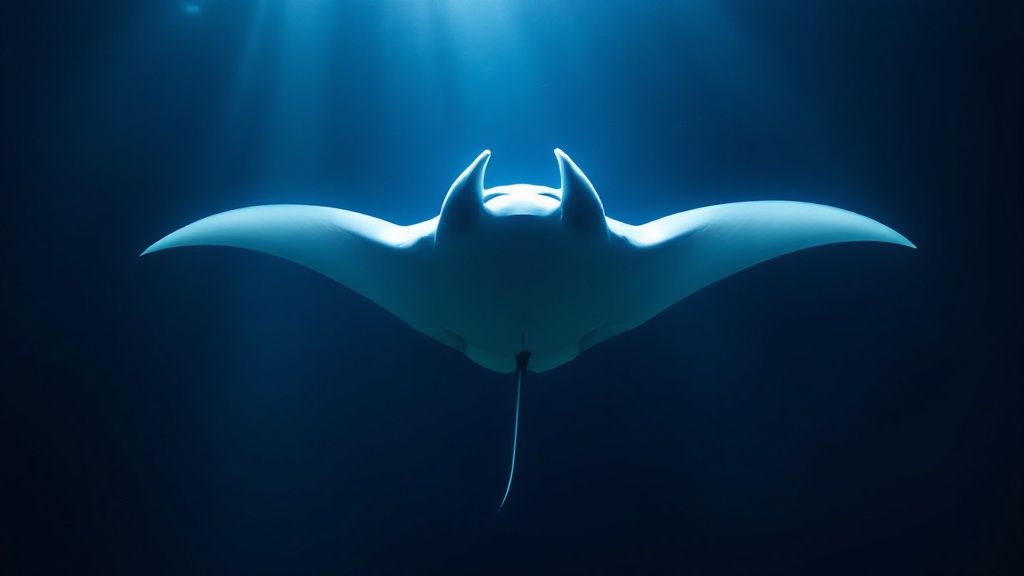
So you're booked for the world-famous manta ray night dive in Kona, but what is it actually like? Let's walk through the entire adventure, from the harbor to the final goodbye, so you know exactly what to expect. No pre-trip jitters here.
Your evening kicks off late in the afternoon at the harbor. You'll check in with your crew, get the rundown in a safety briefing, and get fitted for gear. Then it's onto the boat for a gorgeous ride up the Kona coast. As the sun starts dipping low, it paints the sky in those fiery colors Hawaii is famous for—the perfect, relaxing start to an epic night.
Setting the Underwater Stage
As twilight fades to dark, the boat arrives at the dive site. This is when the energy on board really kicks in. The crew gets to work setting up the main attraction: the lights. They lower powerful, eco-friendly lights into the water, creating what can only be described as a glowing underwater stage. This bright beacon is an irresistible magnet for plankton, the manta rays' favorite meal.
The anticipation is palpable. You'll gear up, run through your final checks, and get ready to slip into the dark, inviting ocean.
The Snorkeler's Experience
If you're snorkeling, you're in for an immediate, up-close show. After getting into the water, you’ll make your way to a large, custom-built floatation board. This isn't just for floating; it's outfitted with its own powerful lights pointing straight down, creating a personal plankton buffet right in front of you.
Floating on the surface gives you a literal bird's-eye view of the action below. The mantas swoop up from the dark depths, performing graceful barrel rolls just inches from your face, their massive mouths wide open. It’s like having the best seat in the house for a breathtaking underwater ballet.
The Diver's Experience
For certified divers, the experience starts with a descent to the ocean floor, usually somewhere between 30 and 40 feet. You and your group will settle onto a sandy patch, forming a semi-circle around a central light source that everyone calls the "campfire."
From down here, you're looking up as these gentle giants glide weightlessly right over your head. Their huge silhouettes are perfectly framed against the glowing lights from the snorkel boards above. It's a surreal, humbling perspective that lets you see the unique spot patterns on their bellies—their version of a fingerprint.
The Golden Rule
Whether you're diving or snorkeling, there's one rule that is absolutely non-negotiable: passive observation only. Manta rays have a delicate, protective mucus layer on their skin. Touching them can strip this layer away and cause them serious harm.
The real magic happens when you let them come to you. By staying still and being respectful, you become just another part of their environment. This is how you get a truly authentic and unforgettable interaction. Learning these guidelines is a crucial part of the manta ray dive experience in Kona.
Getting Geared Up: Packing & Photography Pro-Tips
Being properly prepared is the secret sauce to really soaking in the magic of the Kona manta ray night dive. While your tour operator is going to handle the heavy lifting with all the scuba or snorkel gear, there are a few personal items that will make a world of difference for your comfort. Trust me, if you pack right, you can put 100% of your focus on the incredible show happening just below the surface.
Most reputable outfits will have you covered with wetsuits, masks, and fins. What many people forget is what you need before and after the swim. That boat ride back to the harbor can get surprisingly chilly once you’re out of the water, so a warm jacket and a dry towel will feel like the best things on Earth. And if you even think you might get seasick, take something for it beforehand. You don't want to miss a moment of this.
What to Bring for Your Manta Adventure
To get you started, I've put together a quick checklist of the must-haves for your tour.
Manta Ray Night Dive Packing Checklist
Here are the essential items you'll want to toss in your bag for your manta ray night dive or snorkel adventure. A little preparation goes a long way in making this amazing experience as comfortable as possible.
| Item Category | What to Bring | Notes |
|---|---|---|
| Apparel | Swimsuit | Wear it under your clothes so you're ready to go. |
| Post-Dive Comfort | Warm Layers (Jacket/Sweatshirt) | You'll thank yourself on the chilly boat ride back. |
| Post-Dive Comfort | Dry Towel | An absolute essential for drying off. |
| Health & Wellness | Motion Sickness Medication | If you're on the fence, take it. Better safe than sorry. |
| Hydration | Reusable Water Bottle | Always a good idea to stay hydrated on the water. |
| Photography | Underwater Camera | Capture those incredible moments, but be sure you know how to use it! |
Having these few things will let you relax and enjoy the main event without any distractions.
Nailing the Perfect Manta Ray Photo
Taking photos during the manta night dive is tough, but when you get the shot, it's an incredible feeling. The biggest challenge you'll face is something called "backscatter." This is when your flash lights up all the tiny plankton in the water right in front of your lens, making your photos look like you're in a snowstorm.
The golden rule to beat backscatter is to get your light source off your camera. By using external strobes or video lights mounted on arms, you can light the mantas from the side. This simple change stops the light from bouncing off the plankton and straight back into your lens. A wide-angle lens is also your best friend here—it lets you get much closer to the mantas to fill the frame, which means less water (and less plankton) between you and these amazing animals.
Pro Tip: Whatever you do, do not use your camera's built-in flash. It's the #1 cause of backscatter, hands down. Even a simple GoPro can get jaw-dropping footage with a good external video light. Just point your light, get close, and let the mantas do their thing.
Explore More of Kona’s Underwater World
The incredible manta ray night dive in Kona is what brings most people here, but it’s really just the beginning. Think of it as the gateway dive to a whole new world of underwater adventures the Big Island has hiding just beneath the surface.
Once you’ve seen that graceful manta ballet, you'll be hooked. You'll want to know what else is out there, and trust me, there's a lot.
Kona’s got a dive for pretty much every interest and skill level you can imagine. The same reefs that host the mantas at night are absolutely buzzing with life during the day, offering a completely different but equally mind-blowing experience. You can get a better sense of all the unique spots from our guide to Big Island diving.
Otherworldly Night Dives
If the thrill of diving after dark is what really gets your heart pumping, the adventure doesn't stop with mantas. Not even close.
For something truly wild, the Kona Blackwater Dive is a must. You're tethered to the boat, drifting in the deep, open ocean at night, watching bizarre and beautiful bioluminescent creatures rise up from the abyss. It’s like a trip to another planet.
Advanced Diving Adventures
For the more seasoned divers out there, Kona is a playground of dramatic underwater landscapes.
An advanced dive charter can get you to remote sites with ancient lava tubes, steep drop-offs, and massive arches that will make you feel tiny. These are the prime hangouts for bigger marine life—sharks, dolphins, and those majestic eagle rays.
From daytime reefs to deep-ocean drifts, Kona has the full spectrum of world-class diving. Check out all the amazing Kona diving tours we have on offer.
Your Manta Ray Night Dive Questions, Answered
Thinking about taking the plunge? It's totally normal to have a few questions before booking an adventure like this. We get asked these all the time, so we've put together some straight answers to help you plan your trip.
Is the Manta Ray Night Dive Safe?
Absolutely. Safety is the top priority for any reputable tour operator. You’ll be in the water with experienced guides and divemasters the entire time, and they follow strict protocols to keep everyone safe and comfortable.
As for the mantas themselves? They're true gentle giants. Manta rays are completely harmless to people—they don't have teeth, stingers, or barbs of any kind.
Do I Need to Be a Certified Scuba Diver?
Nope, and that's one of the best things about this experience! You don't need any special certifications to join the fun. You can book a spot as a snorkeler and watch the whole show from the surface.
If you are a certified diver, you have the option to get a completely different perspective from the ocean floor. It’s an adventure that’s truly open to almost everyone.
One of the most frequently asked questions is what to do if you're a beginner. The good news is that no prior experience is needed for the snorkel tour, making it a perfect family activity.
What if I’ve Never Snorkeled Before?
That's no problem at all. The boat crew will give you a full briefing before you even touch the water and provide all the gear you need.
Snorkelers hang onto a large, custom-built floatation board. These boards are super stable, have built-in handles, and are equipped with powerful lights that attract the plankton. You don't even have to be a strong swimmer—you just float comfortably and watch the underwater ballet happen right below you.
For a complete play-by-play of the whole night, check out our guide on what the manta ray night dive is all about.
Will I Get Cold?
The water here in Kona is pretty warm year-round, but you will be in the ocean for about 45 minutes at night. To make sure you're warm enough to enjoy it, tour operators provide thick wetsuits, usually between 5mm and 7mm.
It's also a smart move to bring a warm jacket or a sweatshirt for the boat ride back to the harbor after you get out of the water.
Ready to witness this incredible underwater ballet for yourself? Kona Honu Divers offers a world-class manta ray experience you'll never forget.