
Picture this: you descend into the warm, dark Pacific waters, and giant, graceful shadows begin to dance in the beams of light below. This is the manta ray night dive in Kona, a world-famous underwater ballet that is, for many, the most unforgettable dive on the planet. It’s an experience that truly defines a trip to the Big Island.
What Makes the Kona Manta Ray Dive a Must-Do
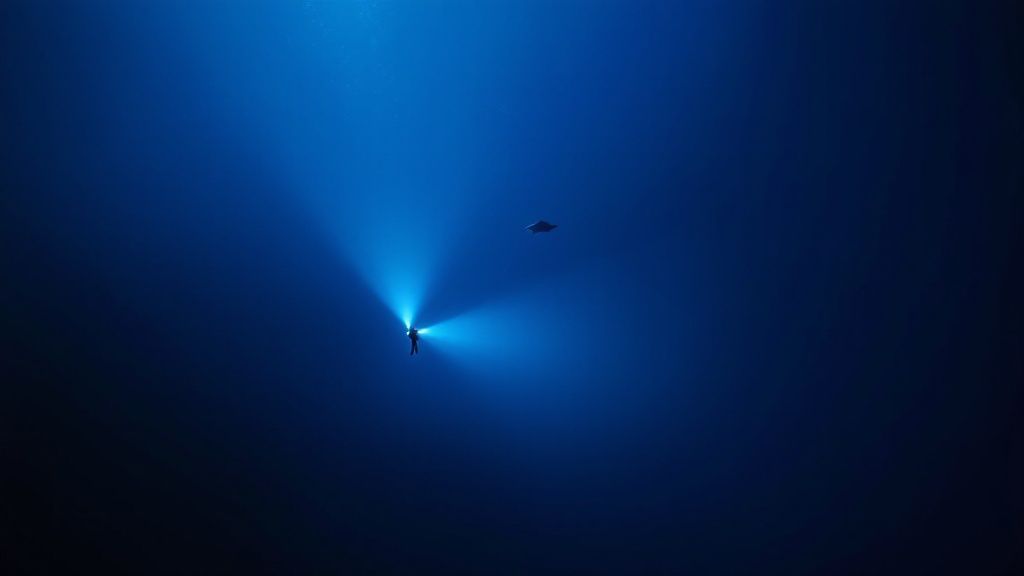
The magic behind the Kona manta ray night dive is a brilliantly simple concept people often call the "underwater campfire." Dive operators set up powerful, eco-friendly lights on the ocean floor. These lights attract swarms of plankton—the manta rays' favorite meal—creating a glowing, concentrated buffet.
This natural dinner bell draws in the gentle giants from all around. As a diver or snorkeler, you get a front-row seat to one of nature’s most incredible spectacles.
The Perfect Environment for an Unforgettable Encounter
Kona's unique geography is the secret sauce that makes this experience so reliable and special. The calm, protected bays and specific underwater landscape create the perfect conditions for plankton to gather, making it the single best place on Earth for this kind of encounter.
The local manta ray population isn't migratory; they live here year-round. This consistency leads to an unbelievable sighting success rate, often hitting 85-90% on most nights. The action usually happens in fairly shallow water, around 30-40 feet, which allows for long, comfortable bottom times as you watch these majestic creatures glide, swoop, and do somersaults just inches from your face.
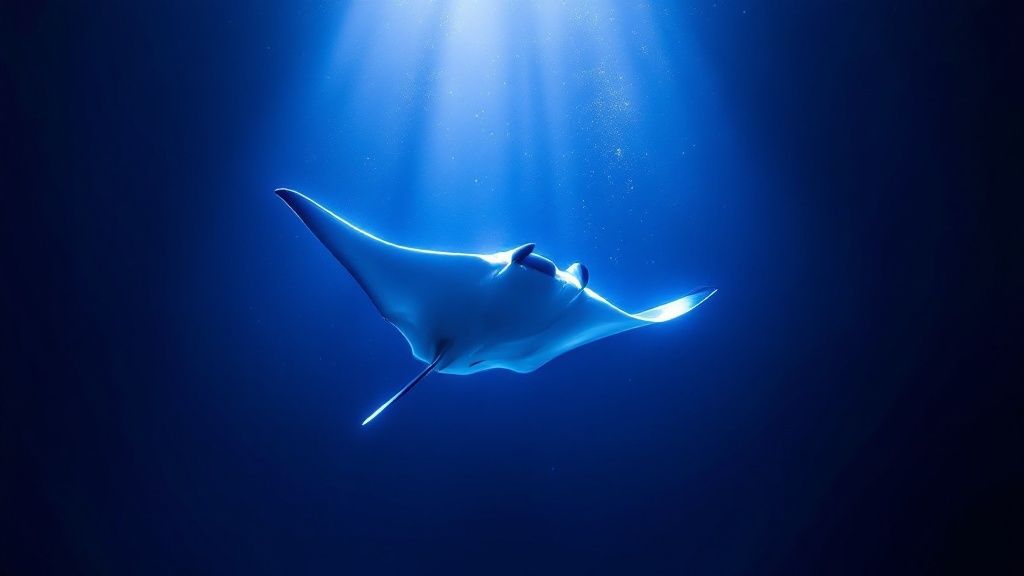
This isn't just a dive; it's a feeling. It's the pure awe of watching a creature with a wingspan of over 12 feet move with impossible grace, its massive shadow passing right over you in a silent, mesmerizing dance.
Choosing a Top-Rated and Responsible Operator
To witness this aquatic ballet safely and respectfully, picking the right guide is everything. Kona Honu Divers has built a solid reputation as one of the best operators for the manta ray night dive. Their commitment to small group sizes, experienced guides, and manta-safe practices ensures a top-notch adventure that puts both the guest experience and the rays' well-being first.
Guests are constantly praising the crew's professionalism and passion, and that’s what really makes the difference between a good dive and a great one.
For snorkelers looking to get in on the action, Kona Snorkel Trips offers a fantastic Ultimate Guide to the Kona Manta Ray Night Snorkel. While the view is a bit different from the surface, the core magic is exactly the same. The combination of Kona's resident mantas and the proven "campfire" method creates a truly once-in-a-lifetime marine encounter you'll be talking about for years.
Choosing Your Ideal Kona Manta Ray Dive Site
So, you're planning your manta ray night dive in Kona. Awesome. You'll quickly find out this world-famous show happens at two main spots. While both will absolutely blow you away, they each have their own vibe. Picking the right one is all about matching the adventure to your own comfort level and what you're looking for in a dive.
The two go-to locations are affectionately known as 'Manta Heaven' and 'Manta Village'. Think of them less as just two different dots on a map and more as two unique ways to see the same incredible natural wonder. Getting the lowdown on what makes them different will help you pick the perfect underwater stage for your big night.
Manta Heaven: The Thrill Seeker's Choice
'Manta Heaven,' which is officially called Garden Eel Cove, sits north of Kailua-Kona, pretty close to the airport. This place has built a massive reputation for pulling in huge groups of manta rays. On a great night, you could be watching a dozen or more of these gentle giants gliding through the lights—it's like a beautifully choreographed ballet of giants.
But, that incredible spectacle comes with a small catch. This site is more exposed to the open ocean, which can mean the surface gets a bit wavy or choppy. Because of that, Manta Heaven is usually the top pick for more experienced divers who are comfortable in potentially bumpy conditions and are chasing the thrill of seeing the biggest possible group of mantas.
Manta Village: Calm and Consistent Encounters
Head south of town and you'll find 'Manta Village' tucked into the sheltered waters of Keauhou Bay. This spot is famous for its super calm and reliable conditions. Since it's protected from the big ocean swells, the water here is usually much smoother. That makes for a more relaxing boat ride and a calmer time in the water.
This peaceful setting makes Manta Village the perfect choice for a few different groups:
- First-time night divers who want a gentle introduction to diving after dark.
- Divers who get seasick and will definitely appreciate the shorter boat ride and calm bay.
- Families and snorkelers looking for a beautiful, stress-free experience.
You might see a slightly smaller number of mantas here compared to a banner night at Manta Heaven, but the encounters are incredibly consistent. The calm water guarantees a beautiful show, perfect for anyone who wants a peaceful yet mind-blowing experience. If you're curious what it all feels like from a diver's point of view, check out our deep dive on what it's like to go on the manta ray dive in Kona, Hawaii.
This amazing activity has become a huge deal for Big Island tourism, bringing in around 80,000 visitors every year. Having the choice between the potentially larger manta gatherings in the rougher waters of Garden Eel Cove and the super reliable sightings in the calmer Keauhou Bay means there's an option for every comfort level.
To make the decision a bit easier, I've put together a quick comparison of the two sites.
Kona Manta Ray Dive Site Comparison
Here’s a simple side-by-side look at Kona's two main manta ray night dive locations to help you choose the right spot for your adventure.
| Feature | Manta Heaven (Garden Eel Cove) | Manta Village (Keauhou Bay) |
|---|---|---|
| Location | North of Kailua-Kona (near airport) | South of Kailua-Kona (Keauhou Bay) |
| Typical Conditions | Can be wavier, more exposed | Generally calmer, more protected |
| Best For | More experienced divers, adventure seekers | Beginners, snorkelers, families |
| Manta Sightings | Often larger groups of mantas | Very consistent, reliable sightings |
| Accessibility | Boat access only | Boat access, viewable from shore (at a distance) |
At the end of the day, you really can't go wrong. Both spots deliver an unforgettable manta ray night dive in Kona. Your decision just boils down to whether you prefer the adventurous energy of Manta Heaven or the calm dependability of Manta Village.
Your Manta Ray Night Dive Experience Step by Step
So, what’s it really like to do a manta ray night dive in Kona? Knowing the play-by-play of the evening helps take any pre-dive jitters and turn them into pure, unfiltered excitement. Let’s walk through the whole adventure so you can just relax and soak it all in.
Your night begins with a late-afternoon check-in at the harbor. The air is still warm, the sun is starting its slow dip toward the ocean, and you can feel the buzz of anticipation from everyone around you. Once you're on the boat, you'll grab a spot and get settled for a beautiful ride along the Kona coast. The sunset alone is worth the price of admission.
Along the way, your divemaster will pull everyone together for a pre-dive briefing. This is where you’ll get the rundown on the simple, but critical, rules for having a safe and respectful encounter with the mantas.
The Twilight Dive
Most manta trips are two-tank charters, and the first dive usually kicks off while there’s still a bit of light left in the sky. This "dusk dive" is the perfect warm-up. You'll drop down onto a lively reef just as the day-shift critters are clocking out and the nocturnal creatures are starting to wake up.
It’s a beautiful, calm dive that helps you get reacquainted with your gear and comfortable in the water before the main event. You might spot moray eels slithering from their dens, octopuses starting their nightly hunt, or schools of fish tucking themselves in for the night. This first dive really sets the stage for the spectacle that’s about to unfold.
The Main Event: The Manta Show
Once the sun is gone and true darkness sets in, the real magic starts. You’ll pop up from your first dive, maybe grab some snacks during your surface interval under the stars, and then gear up for round two. This time, the crew sets up a massive light source on the ocean floor—we call it the "campfire." This powerful light is a magnet for plankton, drawing in a thick, soupy buffet.
You and the rest of the divers will descend and find a spot on the sand, arranging yourselves in a semi-circle around the light. Then, you just settle in, look up, and wait for the show to begin.
The first time you see a manta ray appear out of the darkness is a moment you will never, ever forget. A giant, graceful shadow swoops into the light, its mouth wide open to filter the plankton. Then it does an effortless barrel roll, its bright white belly flashing just feet above your head.
Before you know it, another one arrives, and then another. They glide and swoop in a silent, hypnotic ballet. You're not watching a nature documentary anymore; you're sitting in the front-row seat of one of the greatest shows on Earth. It's the heart of the manta ray night dive in Kona and an experience that’s truly unlike any other. If you're hooked on night diving after this, the famous Kona blackwater dive offers a completely different, but equally mind-blowing, look into the deep ocean's mysteries.
Years of research by Manta Ray Advocates Hawaii confirms just how reliable this show is, with sighting success rates consistently hitting 80-90%. The number of mantas varies depending on the plankton, but their consistent presence is what makes Kona the global destination for this encounter. You can dig into more of the fascinating manta ray sighting statistics yourself. Now you know exactly what to expect, so you can fully immerse yourself in a truly once-in-a-lifetime performance.
How to Prepare for Your Dive
A little prep work for your manta ray night dive in Kona makes a world of difference. When you take care of a few simple things beforehand, your experience will be smoother and safer, letting you focus completely on the incredible show happening right in front of your mask.
First things first, let's talk about certifications. If you're planning to scuba dive and settle on the ocean floor for the main event, you'll need at least an Open Water Diver certification. For anyone who wants to stay on the surface, the snorkeling option requires no certification at all, so it's a fantastic choice for just about everyone.
What to Pack for Your Manta Dive
You really don't need to bring much. The goal is to be comfortable before and after you hit the water. All the heavy-duty gear—your BCD, regulator, and tank—will be provided and expertly maintained by your tour operator.
Here’s a quick checklist of what you should toss in your bag:
- Swimsuit: The easiest thing to do is just wear it under your clothes when you show up.
- Towel: You'll definitely want this for drying off after the dive.
- Warm, Dry Clothes: Even in paradise, that boat ride back can get chilly at night. A hoodie or a light jacket is a great call.
- Reusable Water Bottle: Staying hydrated is always a good idea.
- Seasickness Medication: If you even think you might get seasick, take your preferred remedy before you get on the boat.
Following Manta Manners
Honestly, the most important part of your preparation is getting in the right mindset. You're a guest in their world, and the whole encounter is built around respectful, passive observation to keep the mantas safe and comfortable.
The golden rule of the manta ray night dive is simple: look, but don't touch. Manta rays have a protective mucus layer on their skin, kind of like a shield against infection. Touching them can damage that coating and leave them vulnerable.
To make sure this is a great experience for both the divers and the mantas, everyone needs to follow these "Manta Manners":
- No Touching: As tempting as it might be, never reach out to touch a manta as it glides by.
- No Chasing: Let the mantas come to you. Don't swim after them.
- Stay Positioned: If you're diving, stay on or near the sandy bottom. If you're snorkeling, stay at the surface. This keeps the water column clear for the mantas to do their thing.
Sticking to these guidelines ensures the manta ray night dive in Kona remains an ethical and sustainable adventure for years to come. For a closer look at what the full experience is like, you can learn more about the manta ray night dive in Kailua Kona. When you show up prepared and with a respectful attitude, you're ready for an adventure you'll never forget.
Diving with Respect for Manta Conservation
The manta ray night dive in Kona is so much more than an incredible underwater show. It’s a genuine privilege—a chance to connect with a protected marine species in its home. The long-term success of this one-of-a-kind encounter hinges on a deep commitment to responsible tourism and conservation from everyone involved, from the dive operators to every single person in the water.
Every guideline and rule is in place for one simple, crucial reason: to protect the manta rays. When you choose an operator who puts conservation before crowds, you become part of the solution, ensuring this magical experience can continue for generations to come.
Manta-Safe Diving Standards
Ethical operators, like us here at Kona Honu Divers, live by the strict "Manta Ray Green" standards. These aren't just suggestions; they are a set of proven best practices designed to minimize our impact on the rays' natural behavior and keep them safe.
These guidelines shape key parts of the dive:
- Proper Light Placement: We instruct our divers to shine their lights up toward the surface. At the same time, the snorkelers' light boards shine down. This creates a concentrated "plankton column" right in the middle of the water, making a perfect feeding zone for the mantas.
- Specific Diver Positioning: Divers stay on or near the sandy bottom. This creates a predictable "arena," leaving the entire water column open for the mantas to swoop and glide freely and safely.
- Passive Observation: This is the most important rule of all. Be a quiet observer. We never chase, touch, or get in a manta ray's way. This is their world, and we are just visitors.
Think of it like this: We're silent guests in their underwater dining room. By following these standards, we ensure the dive is an observation of natural feeding behavior, not an interruption of it.
The Science of Manta Identification
One of the coolest parts of manta ray conservation in Kona is that we can tell individuals apart. Each manta has a unique pattern of black spots on its white belly, which works just like a human fingerprint. Researchers and dive guides use these spot patterns to identify, name, and track hundreds of individual mantas in our local population.
Being able to track specific mantas gives us priceless data on their health, migration patterns, and life cycles. So, when you're on your dive, you're not just seeing a manta ray; you might be meeting "Big Bertha," "Lefty," or "Kailey"—individuals with known histories and personalities.
This personal connection really deepens your appreciation for these animals and highlights just how important it is to protect them. To see what we mean, check out our article exploring why you should go on a manta ray dive in Kona.
Ultimately, choosing a manta ray night dive in Kona with a conservation-minded company means your adventure directly supports the well-being of these magnificent creatures. It turns a spectacular dive into a meaningful contribution to marine preservation.
Your Manta Ray Dive Questions, Answered
Here are the quick and clear answers to the questions we get all the time from divers and snorkelers getting ready for their big manta ray night dive kona adventure. We put this together to help you plan with confidence and really get the most out of your time with these gentle giants.
Do I Need to Be Scuba Certified to See the Manta Rays?
Nope, you absolutely don't! That's one of the best parts about this whole experience—it’s designed for pretty much everyone. Most operators, including us here at Kona Honu Divers, run an awesome manta ray snorkel right alongside the dive.
Snorkelers get to hang out on the surface, holding onto a big, custom-built light board. These powerful lights beam down into the water, attracting plankton and bringing the mantas right up to the surface for you. It's a killer bird's-eye view of the action, no certification needed.
But, if you're dreaming of that classic "underwater campfire" scene—settling on the ocean floor and watching the mantas do their acrobatic ballet right over your head—then yes, you'll need at least an Open Water scuba certification. That's the view you usually see in all the epic photos.
What Is the Best Time of Year for the Manta Ray Night Dive?
This is the easiest question of all: the manta ray night dive in Kona is fantastic year-round! Unlike a lot of marine life that migrates, Kona's resident manta population hangs out with us all 365 days of the year. So whether you book in January, July, or October, you've got a great shot at a magical encounter.
Success rates stay consistently high, usually over 85-90%, no matter what the season is. The real driver for manta action on any given night isn't the calendar, but how much plankton is in the water, which can change from day to day.
Plus, the water is always comfortable, typically hovering between 75-80°F (24-27°C). So, the best time to book your dive is simply whenever your vacation brings you to our beautiful Big Island.
Is the Manta Ray Night Dive Safe?
Yes, it's considered very safe, especially when you go with a reputable, professional dive operator. The manta rays themselves are completely harmless. We call them gentle giants for a reason!
Here’s why you don’t have to worry about the mantas:
- They're filter feeders: They only eat teeny-tiny plankton.
- They don't have teeth: Instead, they have a filtering system to gulp down their food.
- They have no stingers: Unlike their stingray cousins, mantas don't have a barb on their tail. They're all grace, no sting.
The main safety stuff is just standard night diving procedure. A good Divemaster will give you a thorough briefing on safety checks, what to do in an emergency, and how to interact respectfully with the mantas (Rule #1: no touching!). The dive sites are well-known and relatively shallow (around 30-40 feet), and since the dive is stationary, it minimizes risks like getting disoriented. To dive deeper into what the experience is like, check out our guide on what is a manta ray night dive.
Going with an experienced crew like ours means every safety standard is double-checked, so you can just relax and soak in a true bucket-list experience.
What Happens If No Manta Rays Show Up?
While the sighting rate for the manta ray night dive in Kona is incredibly high, we are dealing with wild animals in their natural home, so sightings can never be 100% guaranteed. On very rare nights, the mantas just decide to be somewhere else.
Good operators know this is a possibility and usually have a "manta guarantee." If your tour ends up being a no-show, most companies will offer to rebook you on another night for free or at a steep discount.
Pro Tip: It's a really good idea to schedule your manta dive early in your vacation. That way, if you happen to catch one of those super rare "off" nights, you have a buffer to reschedule and still get your amazing manta moment.
Can I Bring My Own Camera on the Dive?
Absolutely! We highly encourage bringing an underwater camera or GoPro. Capturing the graceful dance of the mantas can be just as thrilling as being there.
Just keep a few things in mind to make sure you (and the mantas) have a great time:
- Check Your Gear: Make sure your camera and its housing are rated for the depth, which is usually around 40 feet.
- Be Present: It's so easy to get lost behind the lens trying to get the perfect shot. Don't forget to put the camera down and just enjoy the magic happening right in front of you.
- Manta Manners: Pay attention to your buoyancy and where you are. Nobody wants a fin kick or a cloud of sand ruining their view.
- Lights, No Flash: Bright, sudden camera flashes can really startle the mantas. It's much better to use a constant video light or just rely on the ambient light from the "campfire."
Honestly, most divers find that video does a much better job of capturing the fluid, ballet-like movements of the mantas than still photos, especially in the low-light conditions.
Ready to see the underwater ballet for yourself? Kona Honu Divers runs a world-class manta ray dive tour that consistently gets top ratings for safety, professionalism, and creating memories that truly last a lifetime.