
Picture this: you're floating in the warm, dark Pacific. Giant, graceful shadows glide just inches above you, somersaulting through a beam of light. This isn't a scene from a movie; it's the world-famous manta ray night dive in Kona, and it's an experience so completely surreal it consistently tops the list of the best dives on the planet. This underwater ballet is an absolute must-do for anyone visiting the Big Island.
Why This Kona Dive Is a Bucket-List Essential
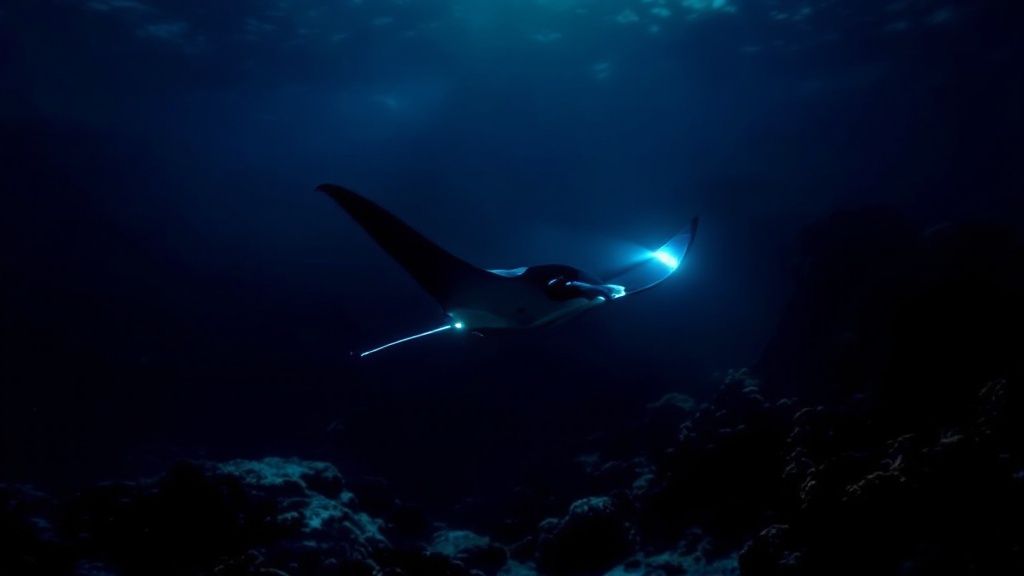
The Kona coast isn't just another pretty dive destination. It's known worldwide as the single most reliable place on Earth to see majestic manta rays at night. In other spots, a sighting might be a rare, seasonal treat. Here in Kona, it’s a nightly event thanks to a resident population of these gentle giants. The success rate is ridiculously high, often topping 90% year-round.
So, how does it work? The setup is actually simple, but brilliant. Dive operators shine powerful, submerged lights into the water. These lights attract swarms of tiny marine organisms called plankton—the mantas' favorite food. Before you know it, the plankton create a massive underwater buffet, and the mantas show up for the feast, performing incredible acrobatics as they feed.
A Truly Unique Underwater Spectacle
What really sets the Kona experience apart is how close you get. You're not just watching from a distance; you become part of the show.
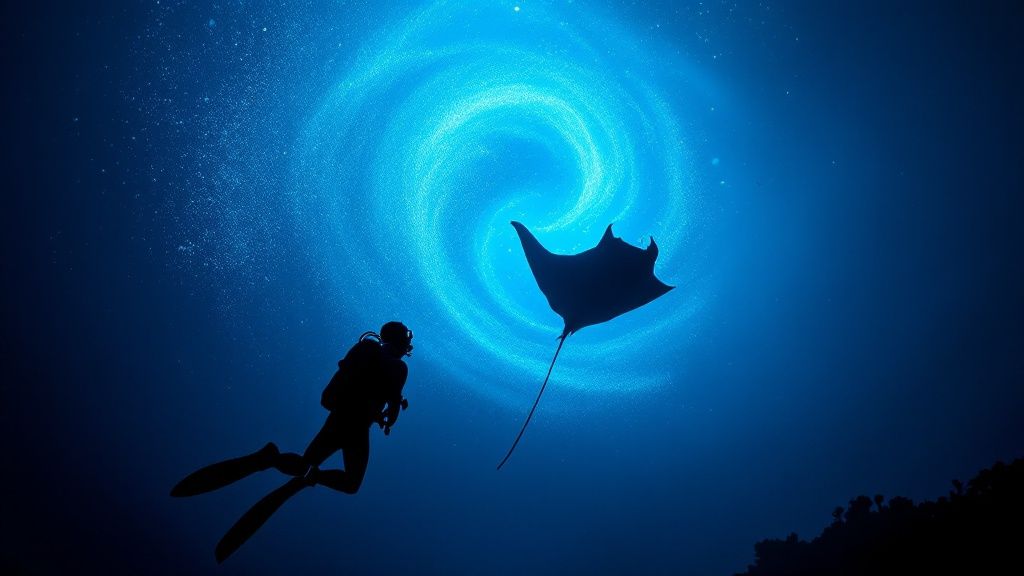
- For Divers: You’ll settle onto the sandy bottom, around 30 to 40 feet deep, and point your dive light straight up. The mantas will glide right over you, sometimes just inches away, their massive wingspans creating an unforgettable silhouette against the light.
- For Snorkelers: You'll float at the surface, holding onto a specially designed light board. The mantas swim right up to feed, barrel-rolling through the plankton-filled water just below you. It's an incredible view.
This is anything but a passive experience. It's an immersive, almost emotional connection with one of the ocean's most intelligent and gentle creatures. Manta rays have no teeth, no stingers, and no barbs, which makes the entire encounter completely safe and peaceful. This is the premier manta ray dive experience in Hawaii.
This isn't just another tour; it's a memory that will stick with you for a lifetime. The silent, graceful dance of these "eagles of the sea" is a powerful reminder of the ocean's magic, waiting right off the coast. There’s a good reason why ocean lovers and thrill-seekers put this dive at the very top of their bucket lists.
What to Expect on Your Manta Ray Adventure
Picture this: your manta ray experience doesn’t start in the dark. It begins with a front-row seat to one of Hawaii's legendary sunsets. You'll cruise out from the harbor along the stunning Kona coast as the sky puts on a show, shifting from fiery oranges and pinks to deep purples. It's the perfect, peaceful start to an unforgettable night.
Along the way, your guides will pull everyone together for a pre-dive briefing. This isn't just about ticking safety boxes; it's your first real introduction to the world of manta rays. You’ll get the rundown on these gentle giants and, critically, learn the rules of engagement—what we call "manta etiquette."
The main takeaway is simple but essential: Observe only, never touch. Manta rays have a delicate, protective mucus layer on their skin, and a simple touch from a human can damage it. Respecting their space is how we ensure these incredible animals stick around for generations to see.
As the last bit of sun disappears below the horizon, the energy on the boat shifts. It's time. You’ll get geared up and take that final, thrilling step off the boat into the warm, dark Pacific. The moment you hit the water, the world above melts away, and all you can hear is the quiet, immersive sound of the ocean at night.
The Underwater Campfire
Once you're submerged, your guide will lead you to a spot on the sandy ocean floor, usually in a comfortable 30 to 40 feet of water. This is where the real magic happens. Your group will settle in around a powerful, stationary light source that points straight up, creating a brilliant column of light. We call it the "campfire."
This beacon has one job: to attract massive clouds of plankton, the microscopic organisms that manta rays love to eat. You'll watch as the water column above you fills with a shimmering, living buffet. Now, all that's left is to wait for the guests of honor to arrive.
There's a reason this dive is famous worldwide. Here on the Kona Coast, we have an incredibly high success rate for sightings—over 85% to 90% all year round. It’s one of the most reliable places on the planet for this encounter. The relatively shallow depth also means you get more bottom time to soak it all in.
Witnessing the Ballet
And then, it happens. A huge, graceful shadow emerges from the darkness, gliding effortlessly toward the light. The first manta arrives, and soon, others might join. They put on a mesmerizing underwater ballet, soaring and somersaulting through the light beams with their cavernous mouths wide open to filter the plankton.
They'll swoop and barrel-roll just inches above your head, so close you can make out the unique spot patterns on their bellies—their version of fingerprints. Your guide, who knows many of these mantas by name, will be right there to ensure everyone, human and manta alike, stays safe. It’s an intimate, awe-inspiring encounter that honestly feels like visiting another planet. Exploring the underwater world is a highlight of any trip, and you can learn more about diving the Big Island with Kona Honu Divers here.
Top-rated operators like Kona Honu Divers have this adventure dialed in, consistently earning rave reviews for their professionalism and their commitment to marine conservation.
How to Choose the Best Manta Ray Tour
Picking the right operator for your manta ray night dive in Kona is hands down the most critical decision you'll make for this adventure. It's the difference between a safe, mind-blowing encounter and a major letdown. With a sea of options out there, it's tempting to just look at the price tag, but the real value lies in the factors that make for a truly world-class tour.
A top-notch company lives and breathes safety. We're talking experienced, certified guides who know these waters like the back of their hand, meticulously maintained gear, and safety briefings that are crystal clear.
Just as important are the ethics of the operation. The best tours are fiercely committed to protecting the mantas and their delicate home. This means following strict guidelines to make sure every interaction is respectful and sustainable for the long haul.
It's absolutely non-negotiable to choose an operator that follows established manta-safe interaction guidelines. These rules—like no touching and holding your position in the water—are there to protect the animals' sensitive skin and natural feeding patterns.
When you support operators who uphold these standards, you're not just getting a better, safer experience for yourself. You're also playing a part in conserving Kona's incredible manta ray population for years to come. For a deeper dive on what separates the pros from the rest, you can read our comprehensive guide on how to choose a Kona dive shop.
Small Groups vs. Large Boats
One of the biggest things that sets tour companies apart is group size. Sure, a bigger boat might seem cheaper upfront, but you're often trading that for a crowded, impersonal experience. A small-group tour, on the other hand, can completely elevate your adventure.
- More Personal Attention: With fewer people, guides can give you more one-on-one help. This is a game-changer if you're a new diver or feeling a bit nervous about snorkeling at night.
- A Better View: A less crowded site means you get a front-row seat to the manta ballet. You won't be bumping elbows with other people, just soaking in a more peaceful, intimate encounter.
- Enhanced Safety: It's just plain easier for a guide to keep an eye on everyone when the group is small, making sure everyone is safe and comfortable from start to finish.
This is exactly where we focus our energy at Kona Honu Divers. We specialize in creating these premium, small-group trips because we believe in quality over quantity, making sure every single guest feels like a VIP.
Comparing Your Tour Options
Whether you're a certified diver or have never put on a snorkel mask, the manta ray night dive Kona experience is for you. The key is understanding how the two main options—scuba diving and snorkeling—differ so you can pick the one that fits you best. Both give you a spectacular show, just from a different angle.
Comparing Manta Ray Tour Experiences
Find the perfect manta ray adventure for your skill level and preference by comparing scuba diving and snorkeling options.
| Feature | Scuba Diving Tour | Snorkeling Tour |
|---|---|---|
| Perspective | Bottom-up view. You'll be on the ocean floor, looking up as mantas glide right overhead. | Top-down view. You'll float on the surface, looking down into the feeding frenzy. |
| Certification | Scuba certification is required. | No certification needed. You just need to be comfortable in the water. |
| Experience | Incredibly immersive. You feel completely part of their world as these giants dance above you. | Super accessible and thrilling. You get an amazing bird's-eye view of all the action. |
| Best For | Certified divers looking for the most awe-inspiring and up-close manta encounter imaginable. | Families, non-divers, or anyone who isn't certified but still wants to witness the magic. |
No matter which you choose, going with a high-quality, safety-first operator like Kona Honu Divers ensures your night with these gentle giants will be an unforgettable highlight of your trip to Hawaii.
Understanding Kona’s Famous Manta Rays
The incredible creatures you’ll meet on the manta ray night dive in Kona aren't just passing through. They are part of a resident population of reef manta rays (Mobula alfredi), which means they call the Kona coast home all year long. This is the big secret behind why sightings here are so consistent and reliable.
Unlike a lot of other marine encounters that hinge on migratory seasons, Kona’s mantas are always here, drawn to the rich buffet of plankton that thrives in our waters. They are the second-largest species of manta ray, and some of the regulars boast massive wingspans of over 12 feet.
Despite their intimidating size, they are completely harmless filter-feeders. No teeth, no stingers, no barbs—just gentle giants performing a silent, graceful ballet. Knowing a bit about them transforms your dive from a cool activity into a real connection. To get the full picture of this magical experience, check out our guide on what the manta ray night dive is all about.
Identifying the Gentle Giants
One of the coolest things about Kona's manta population is that researchers and seasoned dive guides know many of them by name. How? Every single manta has a unique pattern of black spots on its white belly.
Think of it like a human fingerprint. No two mantas have the same spot pattern. This allows scientists and conservationists to identify, name, and track individuals over their entire lifespan, which can be up to 50 years.
This long-term tracking has given us an incredible window into their behavior, social lives, and life cycles. You might even hear your guide point out a local celebrity like "Big Bertha" or "Lefty," which adds a personal touch that makes the encounter truly unforgettable.
A Globally Important Research Site
The waters off the Kona coast aren’t just a premier spot for divers; they're a world-renowned natural laboratory. The consistent nightly gatherings at sites like "Manta Village" and "Manta Heaven" have made this one of the most studied manta ray aggregation sites on the planet.
Decades of data collection have provided deep insights into their population dynamics and behaviors. This dedicated research is what helps inform conservation strategies, ensuring the manta ray night dive in Kona remains a sustainable and ethical experience for years to come.
When you join a tour, you’re not just an observer. You're stepping into a story of scientific discovery and community-led conservation that has been unfolding for decades. Your participation directly supports the ongoing efforts to protect these magnificent ocean stewards for future generations to admire.
How to Prepare for Your Manta Ray Dive
A little bit of prep work can make a world of difference between a good manta ray night dive and an absolutely unforgettable one. Getting your gear and your head right beforehand means you can relax and just soak in the incredible underwater show that’s about to happen.
Most solid dive operators in Kona will have you covered with the big stuff like tanks, weights, and a decent wetsuit to keep you warm. But there are a few personal items you’ll want to throw in a bag to make sure the whole experience is smooth from start to finish.
What to Pack for Your Dive
Trust me, having a small dry bag with your own essentials is a game-changer. That boat ride back to the harbor can get surprisingly chilly once the adrenaline wears off and you're out of the water.
- Certification Card and Logbook: You absolutely need your cert card to dive. And why wouldn't you bring your logbook? Getting a stamp for one of the most unique night dives on the planet is a must.
- Warm, Dry Clothes: A sweatshirt or a simple windbreaker will feel like the most luxurious thing in the world on the ride back. Peeling off a damp wetsuit and pulling on something warm is pure bliss.
- Towel: Seems obvious, but you'd be surprised how many people forget it. You’ll want it.
- Reef-Safe Sunscreen: If you're heading out before the sun dips below the horizon, make sure you're lathered up with the good stuff. Normal sunscreens have chemicals like oxybenzone that are seriously damaging to Hawaii's beautiful and fragile coral reefs.
- Reusable Water Bottle: Diving is dehydrating. Most eco-friendly boats have a water cooler, so bring a bottle to stay topped up.
- Seasickness Medication: If you even think you might get seasick, take something before you step on the boat. The ocean doesn't always play nice, and feeling queasy will ruin the magic in a heartbeat.
And if you’re new to diving or just feeling a bit rusty, taking some general diving lessons ahead of time is a brilliant move. The more confident you are in the water, the more you'll enjoy the main event.
Mastering Your Buoyancy
Beyond what’s in your bag, your single most important tool is your buoyancy control. The whole point is to be a quiet, motionless observer on the seafloor. That means no kicking up sand or accidentally floating up into the path of a 1,000-pound animal.
Good buoyancy control isn't just about making your own dive better; it’s about showing respect for the mantas and their home. When you can hold your position, you protect the delicate ecosystem and make the mantas feel safe enough to carry on with their mesmerizing feeding ballet.
If you can, get a practice dive in beforehand to dial in your weighting and trim. When you're not fiddling with your BCD, you can just relax and enjoy the spectacle, knowing you're being a good guest in their world. For a deeper dive on this, check out our guide on what you should know about the Kona manta ray dive.
Tips for Underwater Photographers
Nailing that perfect manta shot is a fantastic challenge. You’re dealing with darkness, moving subjects, and a whole lot of action. It takes a specific game plan.
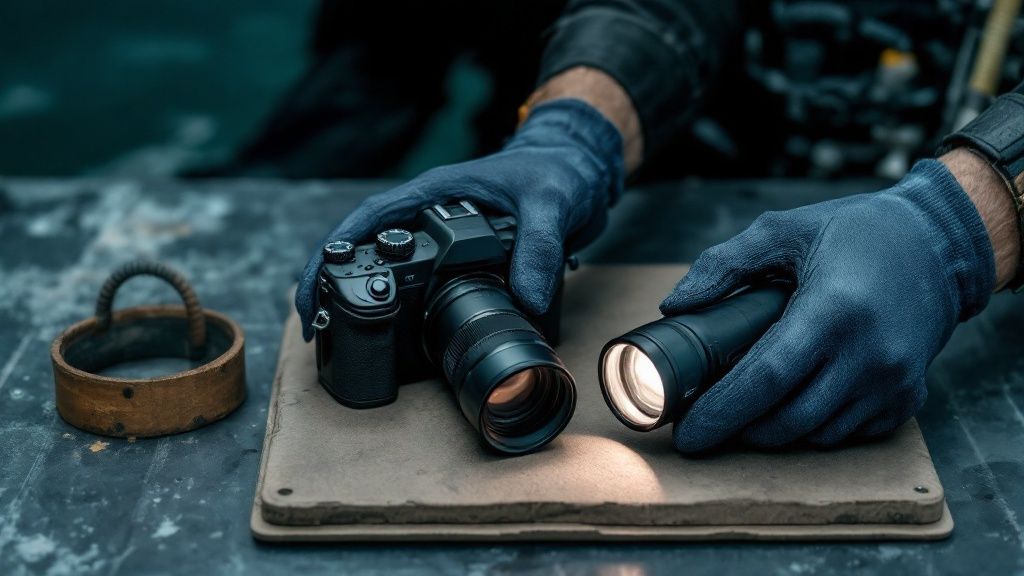
- Lighting is Everything: Forget your camera's built-in flash. All it will do is light up all the little particles in the water, creating a hazy, snowy mess called backscatter. You need an external strobe or a powerful video light to do the job right.
- Go Wide: A wide-angle lens is your best friend here. It lets you get close enough to light up the manta properly without chopping off the edges of its massive wingspan.
- Settings: A good starting point is a higher ISO (think 800-1600), a wide aperture like f/8, and a shutter speed around 1/125s. From there, you'll have to adjust based on your lights and the conditions of the night.
And the biggest tip? Be patient. Let the mantas come to you. Chasing them not only stresses them out but pretty much guarantees you’ll only get pictures of their back end as they swim away.
Exploring Other World-Class Kona Night Dives
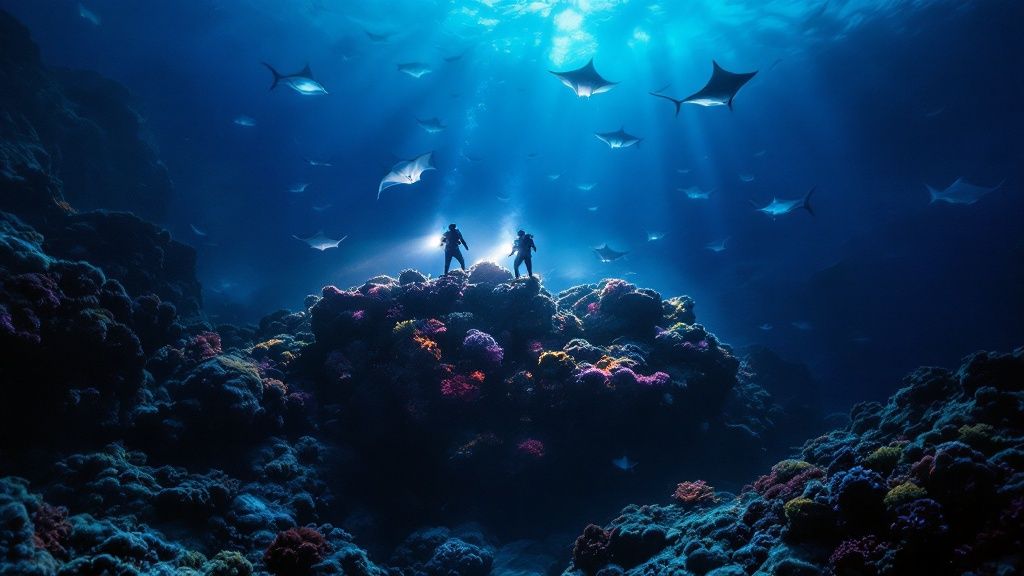
The manta ray night dive in Kona is the headliner, no question. It's the show everyone comes to see. But once the mantas have had their fill and the lights go out, Kona’s underwater world is just getting started. For divers with a taste for adventure, there are some truly world-class night dives that reveal an entirely different side of the Pacific.
Where the manta dive is a beautifully orchestrated spectacle, these other dives are pure, unscripted exploration. The reefs you saw bustling with fish during the day? At night, they become a mysterious new world. Critters that were tucked away in crevices all day finally come out to hunt, and the entire ecosystem shifts right before your eyes.
This incredible after-dark biodiversity is a huge part of what makes Kona so special. The popularity of experiences like the manta dive brings millions into the local economy and shines a global spotlight on marine conservation. That well-developed infrastructure means there are plenty of amazing ways to get in the water. If you want to learn more about the positive local impact, you can read about Kona's marine tourism economy here.
The Legendary Kona Blackwater Dive
Ready for something completely different? The Kona Blackwater Dive isn't just another dive; it's like a trip to another planet. Forget the reef. This is a pelagic drift dive miles offshore, where you're tethered to a boat and suspended over thousands of feet of inky blackness.
The mission is to witness the largest vertical migration on Earth. Every single night, an army of bizarre, alien-like creatures travels from the deep ocean to feed near the surface. You will see things that honestly look like they were dreamed up for a sci-fi movie.
- Bioluminescent Wonders: So many of these deep-sea organisms produce their own light. The result is a mesmerizing, silent fireworks display of pulsating and glowing life.
- Unique Creatures: We’re talking about weird larval fish, see-through squids, and otherworldly jellyfish that you would never, ever see on a daytime dive.
- An Eerie Calm: There's a profound sense of peace that comes from floating in the deep ocean at night. It’s a humbling glimpse into one of the planet's last true wildernesses.
People call this an "underwater light show," but it's so much more than that. It's an encounter with the strange and beautiful life that thrives in the abyss, and it will completely redefine what you thought was possible on a dive.
Classic Night Reef Dives
If drifting in the open ocean sounds a little too intense, a traditional night reef dive offers a fantastic adventure with its own unique thrill. As soon as the sun goes down, the whole personality of the reef changes. The daytime fish clock out and retreat to their hiding spots, making way for the night shift to take over.
This is your chance to spot the creatures who are masters of disguise during the day. It's like a treasure hunt where every sweep of your dive light could reveal something incredible. Keep your eyes peeled for octopuses slinking across the coral, crabs and lobsters scurrying over the sand, or even sea turtles tucked into their favorite nooks for a snooze.
And for certified divers looking to push their limits, Kona also has incredible opportunities for more experienced divers. These trips can sharpen your skills and grant you access to more remote and dramatic underwater landscapes, cementing Kona's reputation as a top-tier destination with an adventure for every diver.
Your Manta Dive Questions, Answered
Planning a trip to see Kona's famous manta rays is exciting, but it's natural to have a few questions before you book. We get it. To make sure you're totally comfortable and ready for the adventure, here are some straight-up answers to the most common things people ask.
Is the Manta Ray Dive Safe?
Yes, absolutely. Safety is always the number one priority for any good tour operator out here. Manta rays are called "gentle giants" for a good reason—they're peaceful filter-feeders with no teeth, stingers, or barbs. They're just big, graceful, and completely harmless.
The whole experience is very controlled and supervised. When you're in the water with a professional crew like ours at Kona Honu Divers, you're always under the watchful eye of experienced guides. They know the mantas, they know the water, and they follow strict safety rules to make sure everyone has an amazing—and secure—time.
Do I Need to Be Scuba Certified?
Nope! You don't need a scuba certification to have an incredible manta experience. While divers get that amazing view from the seafloor looking up, we have an awesome setup for snorkelers, too.
Snorkelers hang onto a custom-made, floating light board on the surface. These lights draw in the plankton, which in turn brings the mantas right up to you. You'll get a spectacular bird's-eye view as they glide and do barrel rolls just inches below. It’s an equally mind-blowing perspective.
What’s the Best Time of Year to See Manta Rays in Kona?
This is one of the best parts about Kona—there’s no "manta season." Our local reef mantas live here year-round; they aren't just migrating through. This means you can book your trip for January or July and have a fantastic shot at seeing them.
The success rate for sightings is consistently high, usually over 90%, no matter what month it is. That unbelievable reliability is exactly what makes Kona the best place on the planet for this encounter.
Will I Get Cold During the Night Snorkel or Dive?
Kona's water is warm, but it's totally normal to feel a bit of a chill after being in the ocean at night. Good tour operators know this and come prepared. We provide thick, high-quality wetsuits, usually 5mm or 7mm, that do a great job of keeping you warm and comfortable in the water.
Pro Tip: Toss a towel and a warm sweatshirt or jacket in your bag for the boat ride back to the harbor. Once you're out of the water and the adrenaline wears off, you'll be really glad you have something cozy to put on.
Ready to see the underwater ballet for yourself? Kona Honu Divers runs a world-class, safe, and unforgettable manta ray dive tour that’s perfect for both divers and snorkelers. Grab your spot for this bucket-list adventure today!