
Picture this: you descend into the warm, dark Kona water just as the last bits of daylight fade. Below you, beams of light cut through the twilight, and then you see them. Giant, graceful shadows glide into view, swooping and soaring like acrobats. This is the manta ray night dive in Kona, and it’s a wildlife encounter so profound it feels less like a dive and more like a dream.
Why Kona Is The World’s Manta Ray Capital
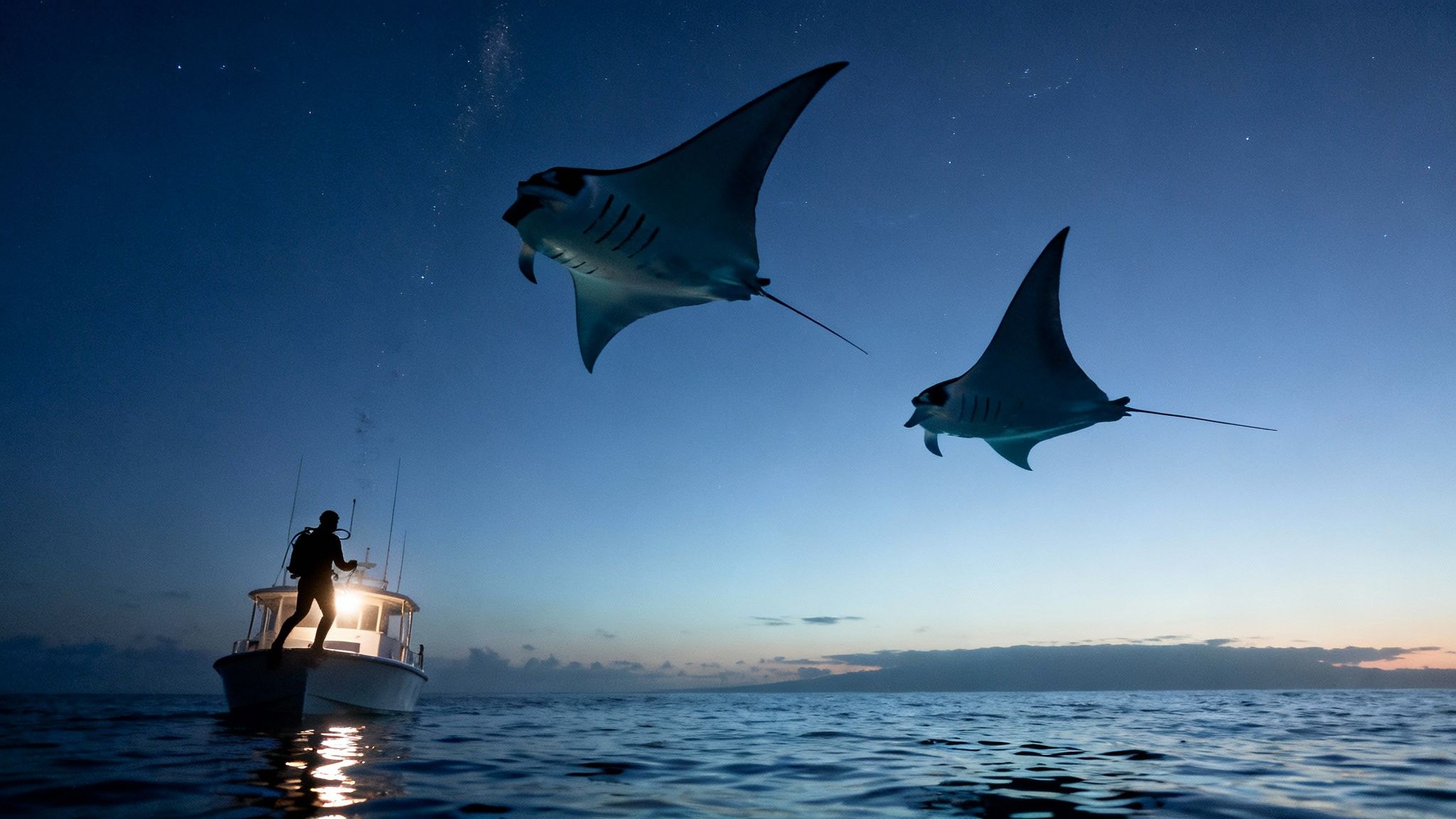
The Kona coast isn't just another pretty spot to dive; it's hands-down the most reliable place on the entire planet to see manta rays. While other destinations have seasonal sightings, Kona boasts a resident population of over 240 identified individuals. These gentle giants, with wingspans that can stretch over 12 feet, live here year-round.
This incredible consistency means professional tours have a sighting success rate of over 90%. Think about that for a second. With most wildlife encounters, you cross your fingers and hope. Here, you can realistically expect to be surrounded by these magnificent creatures.
A Symphony of Light and Life
So, what's the secret? It's actually a brilliantly simple idea. We set up powerful, stationary lights on the ocean floor, creating what we affectionately call an underwater "campfire." These lights attract massive clouds of microscopic plankton, which just so happens to be a manta ray’s favorite meal.
What happens next is pure magic. The mantas arrive for their nightly buffet, performing an underwater ballet as they swoop and barrel-roll through the beams of light, their cavernous mouths open to filter the plankton. As a diver, you get a front-row seat to this spectacle. You just settle down on the sandy bottom and watch the show unfold, sometimes just inches above your head.
This passive approach is what makes the Kona experience so special. We aren't chasing the animals. Instead, we create a dinner invitation, and they come to us. This allows for an incredibly intimate and respectful encounter that’s thrilling for us and safe for them. To get a real sense of the magic, check out these stunning manta ray dive Kona pictures.
Choosing an experienced, top-rated operator like Kona Honu Divers is key to having a safe, ethical, and truly unforgettable adventure. Our deep local knowledge and commitment to conservation mean you're in the best possible hands for this once-in-a-lifetime manta ray dive tour.
Ready to see it for yourself?
Why Garden Eel Cove Is The Premier Manta Dive Site
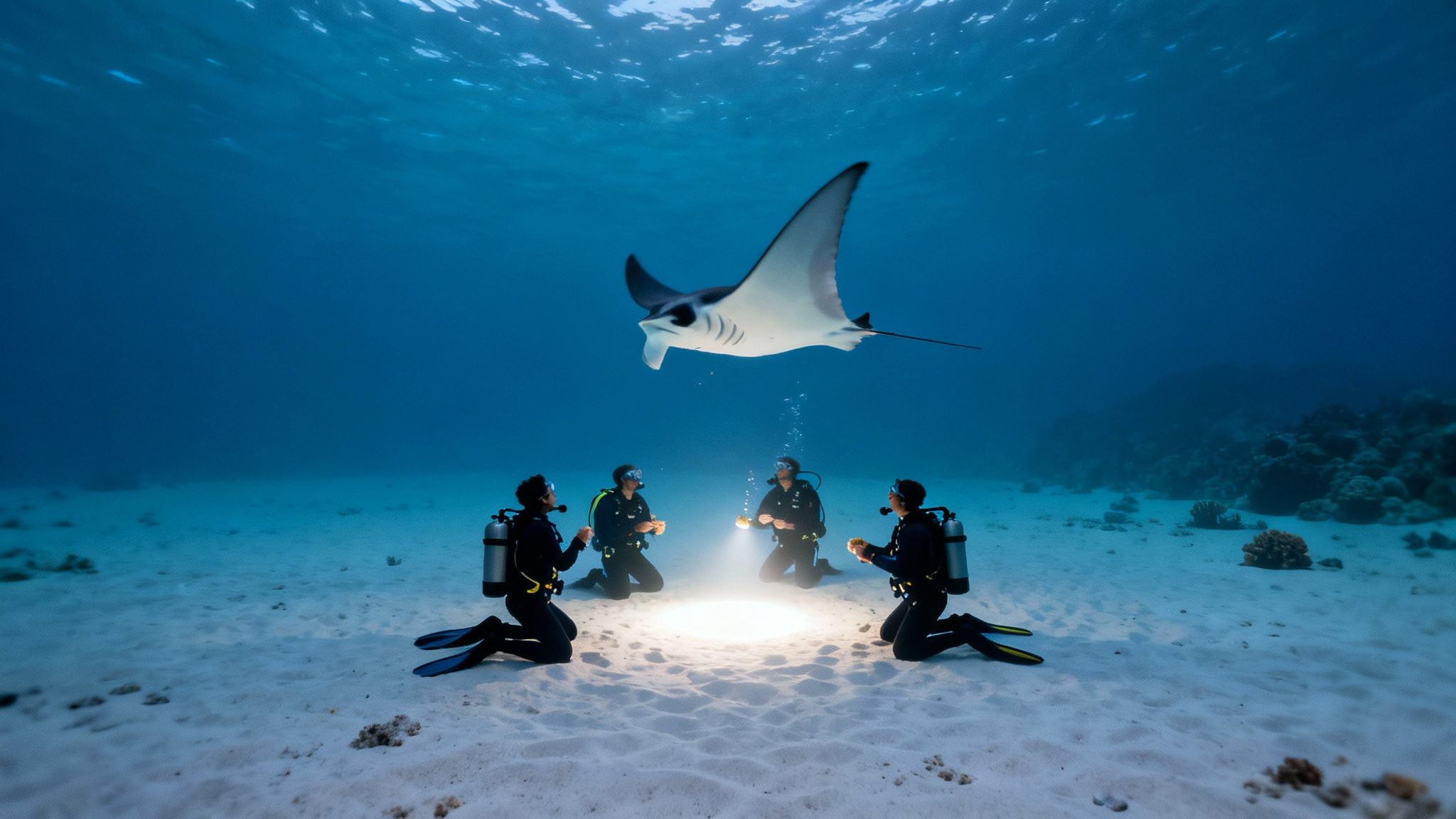
When planning a manta ray night dive in Kona, you'll discover multiple locations, but they are not created equal. There is one site that consistently delivers a superior, more comfortable, and more reliable experience: Garden Eel Cove. Its protected location, better viewing area, and healthier reefs make it the undisputed best choice for this incredible encounter.
This is why we at Kona Honu Divers exclusively run our world-famous manta ray dive tours here. It’s a deliberate decision to provide our guests with the safest and most spectacular experience possible. The cove’s unique geography and ideal underwater topography create the perfect natural amphitheater for the nightly manta ballet.
A Naturally Protected Amphitheater
One of the biggest advantages of Garden Eel Cove is its geography. Located near the Kona International Airport, the cove is naturally shielded from the large open-ocean swells that can affect dive sites further south. This protection results in calmer waters, which is a significant benefit.
What does this mean for your dive?
- A Smoother Boat Ride: The journey is more comfortable, a major plus for anyone prone to seasickness.
- Easier Entries and Exits: Getting into and out of the water is safer and less strenuous without battling large waves.
- Better Underwater Conditions: Less surge leads to clearer visibility and a more stable experience on the ocean floor. You can relax and enjoy the show without being pushed around by the current.
This natural shelter makes the entire manta ray night dive more enjoyable and accessible, particularly for divers who are new to night diving or haven't been in the water recently.
The Perfect Viewing Setup: The Underwater Campfire
The true genius of the Garden Eel Cove manta dive lies in its setup. The site features a large, sandy patch at an ideal depth of around 35-40 feet, which is the secret to its success.
First, the sandy bottom provides a safe place for divers to settle in. Participants can kneel or sit in a designated viewing area without any risk of damaging the beautiful surrounding coral reefs—a critical aspect of responsible diving. At other sites with rocky or coral-covered bottoms, finding a place to settle without causing harm is difficult, often forcing divers to hover, which requires more skill and effort.
Second, this sandy patch creates the ultimate viewing arena. Divemasters place powerful lights, known as "the campfire," in the center of the sand, pointing directly up. Divers then gather in a semi-circle around these lights, just as you would around a real campfire.
The powerful beams attract a dense cloud of plankton—the mantas' favorite food—drawing them directly overhead. From your stable position on the seafloor, you get an unobstructed, face-up view of the incredible show. The mantas swoop, glide, and perform barrel rolls right above your head in a silent, mesmerizing ballet.
This method ensures every diver gets a front-row seat to one of the most magnificent spectacles in the natural world. You can learn more about what makes this site so unique by reading up on Manta Ray Heaven at Garden Eel Cove.
By choosing this superior location, we ensure your focus remains exactly where it should be: on the graceful giants dancing in the light above you. Our commitment to this site reflects our dedication to offering the absolute best manta ray night dive Kona has to offer.
What To Expect On Your Manta Ray Adventure
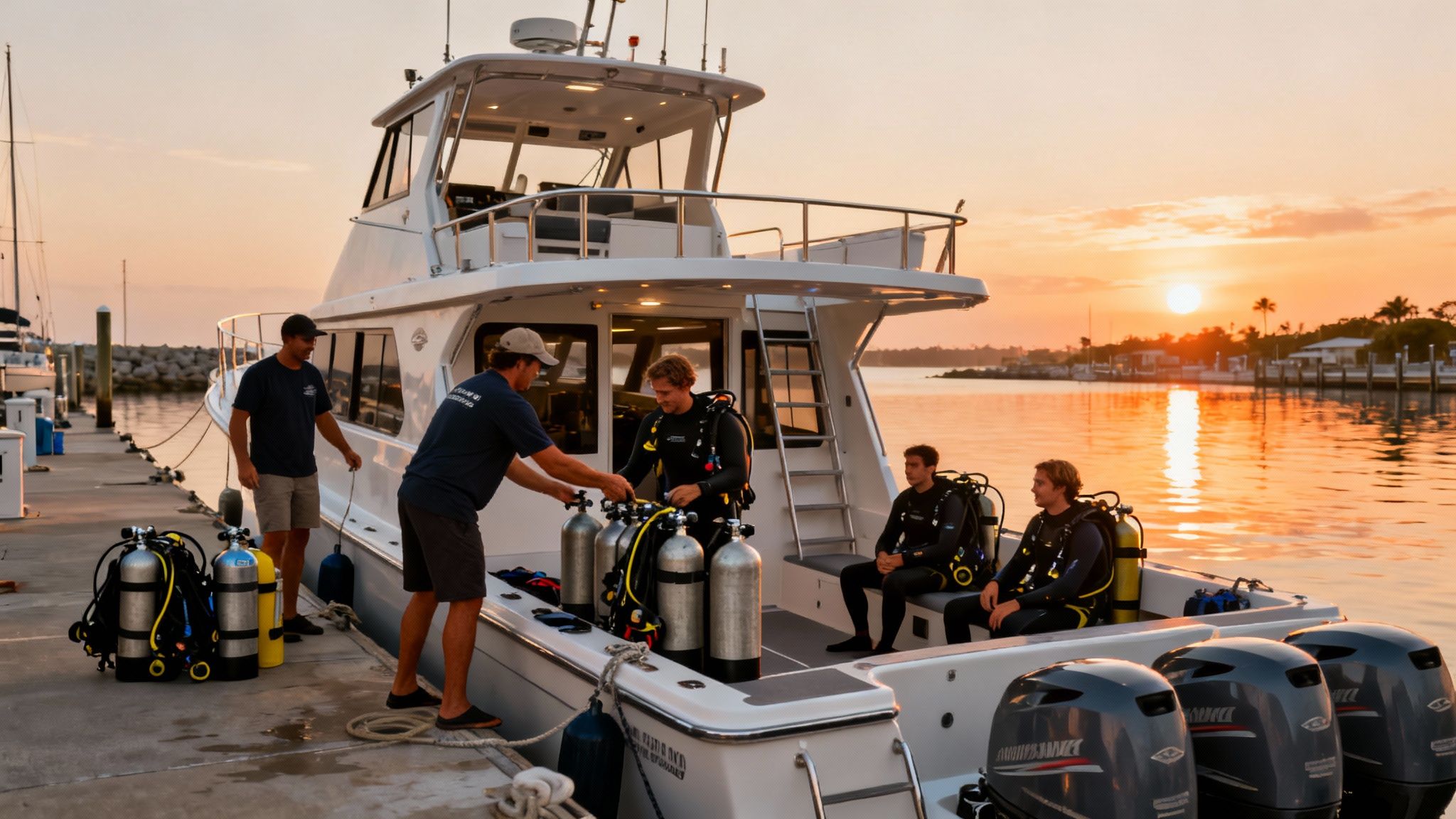
Your manta ray night dive Kona adventure doesn't just start when you hit the water. With us, the whole experience is designed to be seamless and unforgettable, from the moment you arrive at the dock to the buzzing boat ride back to shore. So, let’s walk through what a typical evening looks like.
The excitement builds at Honokohau Marina, where our friendly, professional crew will greet you. We keep the check-in process simple, making sure all your gear is a perfect fit and getting your certification squared away. Before you know it, you'll be stepping aboard our spacious, custom-built dive boat, designed with diver comfort and safety in mind.
Once everyone’s settled in, your dive guide leads a thorough briefing. This is much more than just a safety talk; it’s an introduction to the incredible world you’re about to enter. We’re passionate about conservation, so we'll explain the best ways to be a respectful guest in the mantas' home through passive observation.
The First Dive: A Sunset Reef Exploration
The boat ride out to Garden Eel Cove is a treat in itself. You get stunning views of the Kona coastline as the sun starts its slow dip toward the horizon. The first of your two dives is a beautiful reef exploration, timed perfectly to coincide with the golden hour of a Hawaiian sunset.
As you descend into the warm, clear water, you’ll get to explore the vibrant coral gardens that make this site so special. This first dive is important for a couple of reasons:
- It’s a great warm-up. You get comfortable with your gear and reacquainted with the feeling of being weightless before the main event.
- It’s a fantastic dive! You’ll see the reef shift from day to night, spotting colorful fish, curious eels, and other critters getting ready for their nocturnal routines.
This dive is an amazing experience on its own and sets a calm, confident tone for the incredible spectacle that awaits.
The Main Event: The Manta Ray Ballet
After coming up for a surface interval—complete with snacks and drinks—the sky will be dark and the real magic is about to begin. You'll make your second descent, this time into the inky blackness, guided by the familiar layout of the cove. Down on the sandy bottom, at about 35 feet, our crew has already set up a powerful light source we affectionately call the "campfire."
You and the other divers will settle onto the sand in a semi-circle around this light, pointing your own dive lights up toward the surface. This creates a massive column of light that attracts a thick cloud of plankton, the mantas' favorite meal. The stage is officially set.
Then, it happens. A giant, dark shape glides silently out of the darkness and into the light. It's a heart-stopping moment that no video can ever truly capture. Soon, another appears, and then another, until you are at the center of a mesmerizing, silent ballet.
The manta rays swoop and soar, performing graceful barrel rolls just inches above your head with their cavernous mouths wide open to filter the water. You’re not just a spectator; you become a part of their world, a stationary piece of the scenery in their magnificent feeding dance. The feeling is both exhilarating and profoundly peaceful.
The sheer reliability of this encounter is what makes Kona so famous. In fact, dive operator logs tracked over many years show that mantas are seen on roughly nine out of every ten trips. You can learn more about what makes this one of Hawaii's premier marine adventures at MantaRayNightSnorkelHawaii.com.
Finally, after an unforgettable bottom time with these gentle giants, your guide will give the signal to ascend. The boat ride back to the marina is always filled with buzzing energy as everyone shares the awe of what they just witnessed. It's an experience that will stick with you long after you've dried off—a perfect memory from your time in Hawaii.
How To Prepare For Your Kona Manta Dive
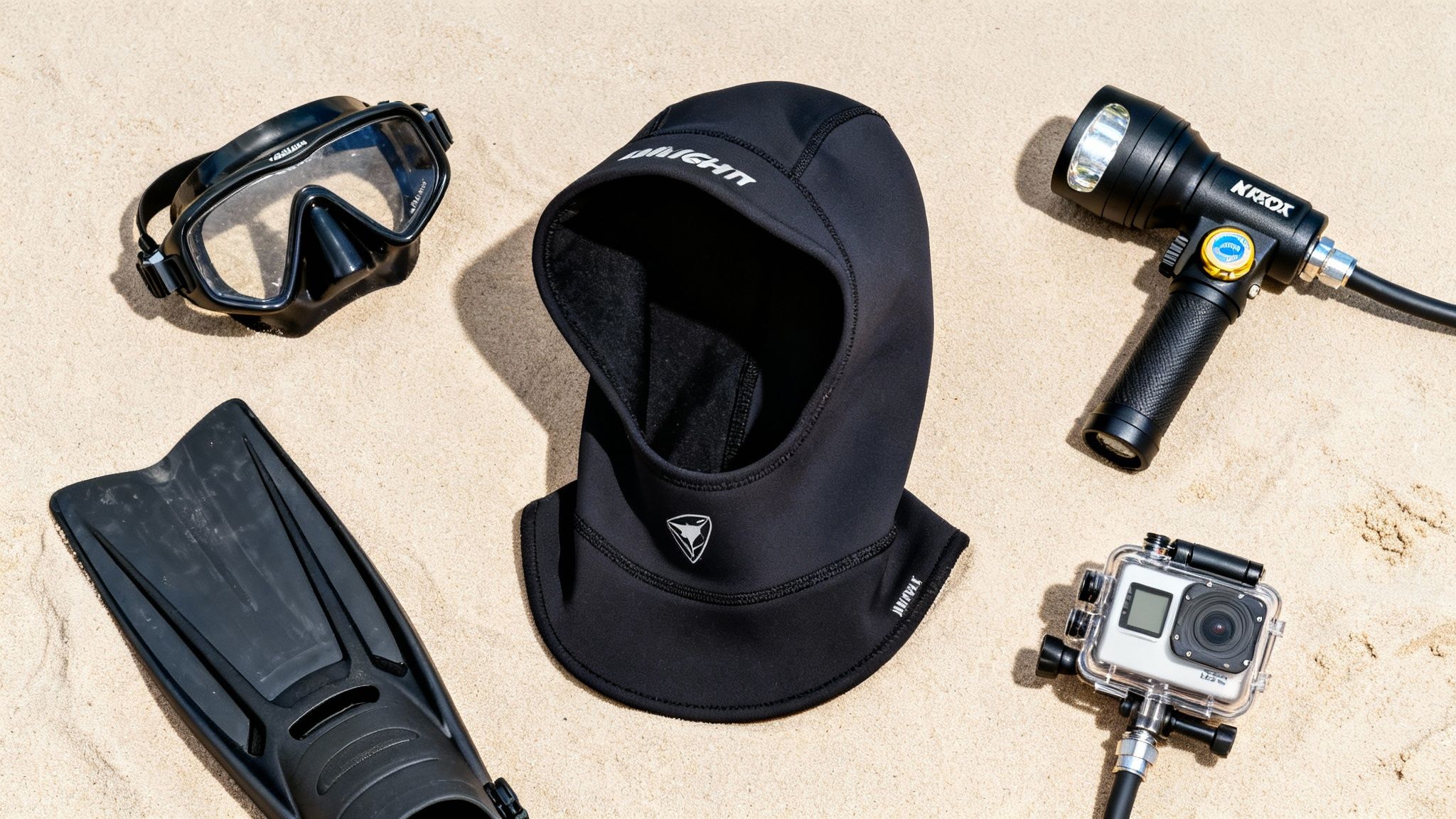
A little bit of preparation goes a long way in making sure you can soak in every second of your manta ray night dive. The good news? Getting ready is actually pretty simple. This whole experience is designed to be awe-inspiring, not intimidating, so you can focus on the magic.
One of the biggest questions we hear is about the skill level needed. Even though it's technically a night dive, you don't need to be a seasoned pro. Because we stay in one spot at Garden Eel Cove, any certified Open Water diver with decent buoyancy control will feel right at home. You’re not navigating a reef in the dark; you're simply descending to a sandy bottom around 35 feet and enjoying the show. It’s a very controlled environment that takes away the typical stress of night diving.
What Gear Do You Need? (And What About Nitrox?)
When you book with Kona Honu Divers, you can travel light. We’ve got you covered with top-notch, professionally maintained rental gear—from BCDs and regulators to fins and masks. Most importantly, we include a powerful primary dive light for every single diver, which is essential for seeing the action unfold.
To make an amazing experience even better, we also offer complimentary Nitrox for all certified Nitrox divers on our manta trip. Why is this a great perk?
- Less Fatigue: Diving with enriched air means your body absorbs less nitrogen. Many divers find this leaves them feeling much less tired after the dive.
- Extra Safety Margin: While we stay shallow, Nitrox gives you an added safety buffer by extending your no-decompression limits.
It’s just a small touch that helps maximize your comfort so you can stay focused on the incredible spectacle in front of you.
Tips For Capturing The Perfect Shot
For the underwater photographers out there, this dive is the definition of a bucket-list shot. But getting those crisp, stunning images in a low-light environment takes a bit of thought. The trick is to get incredible photos without blinding the mantas or disturbing other divers.
Your lighting is everything. Remember, the mantas are there for the plankton, and the plankton are drawn to the light. Try to avoid pointing your powerful strobes or video lights directly into a manta's face. Instead, use the ambient glow from the central "campfire" of lights and your own dive light to paint your subject. If you want to dive deeper into this, our guide on scuba diving at night has some great tips for handling your gear after dark.
Pro Tip: Set your camera up before you get in the water. Start with a higher ISO (think 800-1600) and a wide aperture (like f/2.8-f/4) to capture as much light as possible. A slightly slower shutter speed can create a beautiful sense of motion as the mantas glide, but you’ll need a steady hand to avoid blur.
Ultimately, the best shots come from patience. Let the mantas come to you, and you'll walk away with photos you'll cherish forever.
Manta Ray Night Dive Checklist
To make things even easier, here's a quick checklist to run through before you head to the boat. It covers what we provide and what you'll want to bring along.
| Item | Kona Honu Divers Provides | What You Should Bring |
|---|---|---|
| Dive Gear | Full rental set (BCD, regulator, wetsuit, etc.) | Your own well-fitting mask, fins, and computer if you prefer |
| Tanks & Weights | Included (Air or Nitrox) | N/A |
| Dive Light | Powerful primary light included for every diver | A small backup light is always a good idea |
| Certification | N/A | Your Open Water and Nitrox (if applicable) certification cards |
| Comfort Items | Snacks, water, and hot cocoa after the dive | Towel, a warm jacket or sweatshirt for the boat ride back, and any personal medication |
| Camera | N/A | Your underwater camera, strobes, and any accessories. Make sure batteries are charged! |
Having your personal items ready to go means you can relax on the boat ride out and get mentally prepared for one of the most unforgettable underwater experiences on the planet.
Finding The Best Time Of Year To Dive With Mantas
So, when’s the absolute best time to book a **manta ray night dive in Kona**? It’s one of the first questions we get, and the simple, fantastic answer is: whenever you can get here. This incredible experience isn’t seasonal because Kona is home to a resident population of manta rays that cruise our coastline all year long.
Unlike other marine life encounters that depend on migration, our mantas are here to stay. That's why local operators consistently see an 85-90% success rate for sightings. Whether you're planning a trip in the heart of summer or escaping the winter cold, your odds of a mind-blowing encounter are incredibly high.
What Creates a “Manta-Palooza”?
While pretty much any night is a good night to see mantas, some nights are just legendary. You might hear divers talking about a “manta-palooza,” where instead of a few graceful rays, the water is filled with dozens of them. What causes this? It all comes down to their food source: plankton.
When conditions are just right for a plankton feast, the mantas show up in droves. A few things can trigger this:
- Plankton Blooms: At certain times of the year, especially from late spring through early fall, the ocean can burst with life, creating massive plankton blooms. This all-you-can-eat buffet is an open invitation for every manta in the area.
- Moon Phases: The darker, the better. Around a new moon, the inky black water makes our dive lights an even more powerful beacon for plankton. More plankton means more mantas.
These natural cycles are what make every night a little different and completely unique.
Understanding Nightly Manta Counts
The number of mantas you’ll see can definitely vary from one night to the next. Some nights, you’ll be mesmerized by a handful of rays gliding just inches above your head. On other nights, when the stars (and plankton) align, the numbers can be truly staggering.
Looking at the daily logs from local dive shops gives you a great feel for this.
Though Kona’s night dives run year‑round, operator daily logs show strong short-term variability. During active periods, operators have recorded single‑night totals of 10–30+ mantas (with specific entries showing counts as high as 31 and 33 mantas on high‑productivity nights), tied to plankton abundance and moon phase. While late spring through early fall often offer favorable conditions, the overall ~85–90% success rate holds year-round. Dive deeper into the daily manta reports on JacksDivingLocker.com.
This data really helps set the right expectation. A massive "manta-palooza" is an incredible bonus, but the real magic is just being there, having a front-row seat to one of nature's greatest shows, no matter how many mantas appear.
The bottom line is there's no bad time to go. The year-round consistency is what makes the manta ray night dive in Kona a world-class attraction. Every single trip holds the potential for a life-changing encounter. But if you have a flexible schedule, aiming for those plankton-rich periods might just reward you with the performance of a lifetime.
Ready to book your front-row seat to this incredible underwater ballet?
What’s Next? Exploring Kona’s Other Epic Dives
The manta ray night dive is an absolute must-do, an experience you’ll talk about for years. But don't for a second think that's all the Big Island has up its sleeve. While the mantas put on the world's greatest night show, Kona's daytime diving is a whole other world of incredible. The volcanic landscape that shapes the island above water creates a diver's dreamscape below—think vibrant reefs, ancient lava tubes, and dramatic underwater canyons.
At Kona Honu Divers, we live to show you this side of Hawaii. Our daytime two-tank dives are all about exploring the sheer biodiversity and wild geology that puts Kona on the map as a world-class diving destination. One day you might be drifting over sun-drenched coral gardens buzzing with fish, the next you could be navigating through majestic lava arches. There's always something new to discover. You can see the full range of what we offer on our main Kona Scuba Diving Tours page.
Beyond the Reef: The Blackwater Dive
For those who crave something truly different, we have an adventure that’s hard to even describe: the Kona Blackwater Dive. Forget the reef. For this one, we head miles offshore into the deep, dark open ocean.
Tethered safely to the boat, you'll float in the inky blackness and watch one of nature's most bizarre spectacles—the nightly vertical migration. Creatures you’ve never imagined rise from the depths, many of them rarely seen by human eyes. It's a parade of otherworldly larval fish, see-through squid, and bioluminescent jellies. It's less of a dive and more of a trip to another planet.
We call it "pelagic magic," and for good reason. You’re suspended over thousands of feet of water, watching life forms that look like they were designed for a sci-fi movie drift past your mask. It’s humbling, mesmerizing, and pushes the very definition of what a night dive can be.
For the Experienced Diver
Got a logbook full of dives and looking for a real challenge? Our Premium Advanced Dive Tours are built for you. These trips aren't for everyone; we head to the more remote and demanding sites that most charters don't visit.
We explore deeper reefs, intricate lava formations, and spots known for attracting bigger pelagic life. If you're ready to put your skills to the test and see the wilder side of Kona, this is your ticket. Whether you came for the mantas, the reefs, or the deep ocean abyss, Kona has a dive that will blow you away.
Common Questions About The Manta Ray Night Dive
We get a lot of questions about the **manta ray night dive in Kona**, and that’s a good thing! Being prepared means you can relax and truly appreciate this once-in-a-lifetime experience. Let’s walk through some of the most common things people ask so you can show up ready for the show.
Is The Manta Ray Night Dive Safe For Beginners?
Absolutely. While the “night dive” part might sound intimidating, this particular dive is incredibly beginner-friendly. We head to a site called Garden Eel Cove, which is nice and shallow—typically only **35-40 feet**.
Better yet, the dive itself is stationary. You won't be navigating a dark reef. Instead, once you descend, you'll find a spot on the sandy bottom and simply kneel or sit. A professional Divemaster from Kona Honu Divers is in the water with you the entire time, handling the main lights and making sure everyone is comfortable. As long as you're an Open Water certified diver with reasonably good buoyancy, you're all set.
What Happens If We Don’t See Any Manta Rays?
That’s the million-dollar question, isn’t it? Manta rays are wild animals, so we can never promise a sighting with **100%** certainty. The good news is that the Kona coast is one of the most reliable places on Earth to see them, with success rates hovering around **85-90%** year-round.
On the very rare night the mantas decide to dine elsewhere, you’ve still had a beautiful Hawaiian sunset cruise and a fascinating night dive on a lively reef. Plus, many outfits (including us) offer a "manta guarantee." This usually means you can come back and try again another night for free, depending on availability. It's always smart to ask about the specific policy when you book.
Can My Non-Diving Friends Or Family Come On The Same Boat?
Yes, and that’s what makes this trip so special! We run our manta ray adventures for both certified divers and snorkelers, all on the same boat. It’s the perfect outing for families or groups where not everyone is a diver.
Snorkelers get their own large, floating light raft to hang onto at the surface. The lights on the raft shine down into the water, attracting the plankton and bringing the mantas right up to the top. Everyone gets to witness the same incredible ballet, just from a slightly different angle. Just make sure you book the right spot—"diver" or "snorkel"—for each person in your group.
The lights we use don't attract the manta rays directly; they attract the mantas' food. The powerful underwater lights illuminate microscopic organisms called plankton, creating a dense, floating buffet for the filter-feeding rays. We simply provide the light that rings the "dinner bell."
This incredible experience is waiting for you. Don't miss your chance to witness one of the most spectacular underwater shows on the planet.
Ready for the adventure of a lifetime? Book your trip with Kona Honu Divers and experience the magic of the manta ray night dive for yourself. Learn more about our world-famous manta ray dive tour.