
Picture this: you're descending into the warm, dark Pacific Ocean off the coast of Kona. As you settle in, massive, graceful shadows begin to glide through beams of light, their giant wingspans creating a silent, hypnotic ballet just inches above your head. This isn’t a nature documentary—it's the world-famous manta ray night dive, and it’s one of the most reliable and awe-inspiring wildlife encounters on Earth. It's consistently rated as a must-do adventure for anyone visiting the Big Island.
Experience Kona’s Unforgettable Underwater Ballet
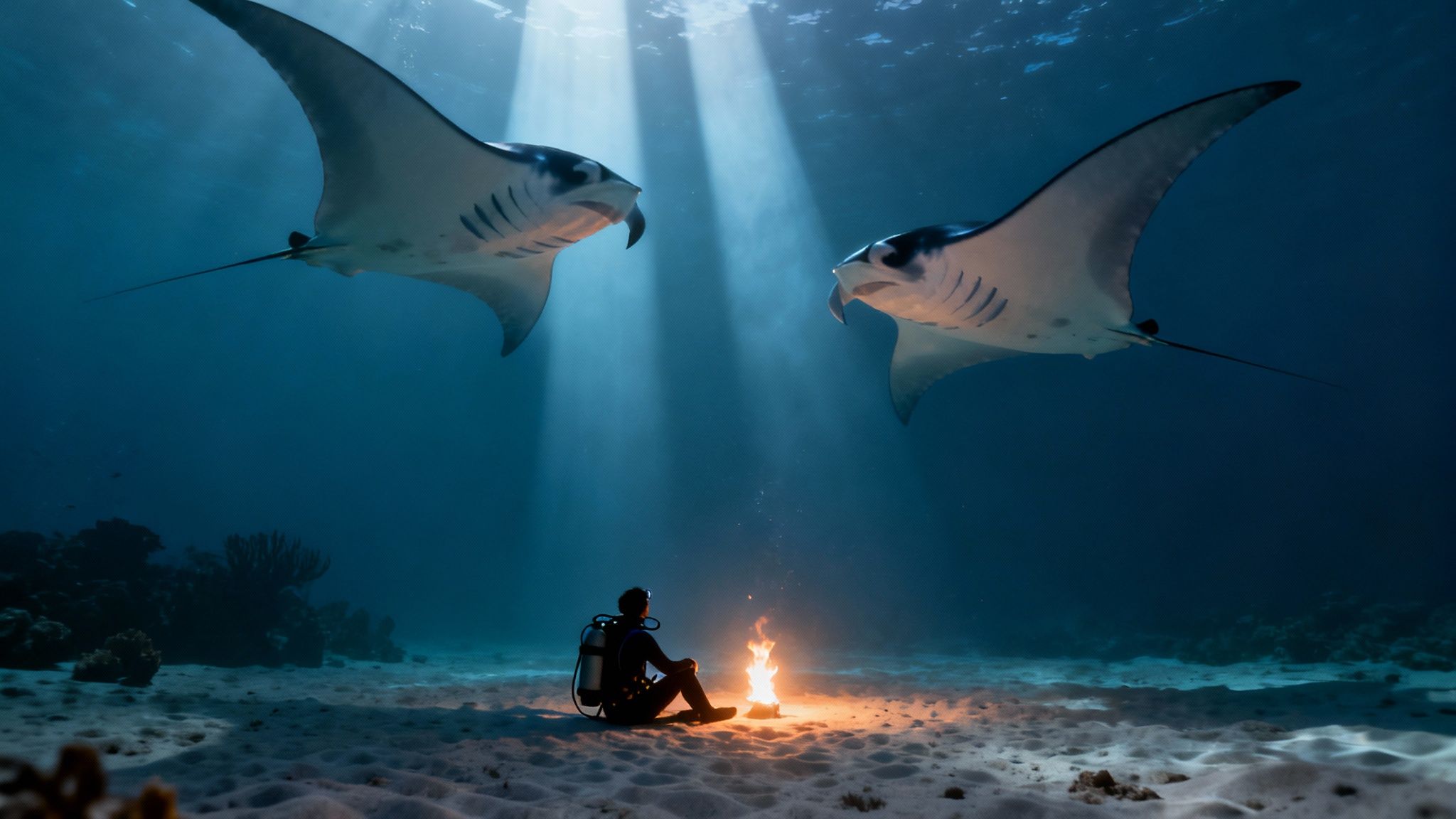
The magic behind this incredible spectacle is surprisingly simple. We place powerful, submerged lights on the ocean floor. These lights attract huge clouds of microscopic plankton, which are the favorite food of the magnificent reef manta rays (*Mobula alfredi*). The mantas, in turn, show up for the all-you-can-eat buffet, swooping and somersaulting through the light beams with their cavernous mouths wide open.
This whole experience wasn't some planned tourist attraction from the start. It actually started by accident back in the 1990s when divers noticed mantas gathering in the glow of hotel lights shining on the water. A few forward-thinking local dive operators saw the potential for something truly special and started running dedicated night dives. It completely transformed Kona's scuba diving tours scene forever.
Two Prime Locations, One Clear Winner
In Kona, there are two main spots to see the mantas: Manta Village in Keauhou Bay and Garden Eel Cove (also called Manta Heaven). While both sites offer chances to see manta rays, the experience is vastly different, with Garden Eel Cove being the superior choice for a premier dive tour.
- Manta Village: This is the original site, located off the coast from a large resort. While sightings can be reliable, it is exposed to open ocean swell, can get crowded, and lacks the optimal viewing setup.
- Garden Eel Cove: Found north of Kona, this is the premier manta ray dive location. Its protected setting provides calmer waters, a superior viewing area, and healthier surrounding reefs, ensuring a more comfortable and magical experience.
We'll walk you through why Garden Eel Cove consistently delivers a more magical and comfortable experience. The seafloor there is shaped like a natural amphitheater, giving everyone a front-row seat. If you want a preview of the magic, check out these incredible pictures from the Kona manta ray dive.
The best part? The success rate for seeing mantas is incredibly high, often over 90% year-round. This guide will give you all the details you need to plan your trip, showing you how a top-notch operator like Kona Honu Divers makes the experience safe, personal, and absolutely unforgettable. Let's dive in.
Why Garden Eel Cove Is Kona’s Premier Manta Dive Site
When you start planning a manta ray dive tour, you’ll hear two names pop up: Manta Village and Garden Eel Cove. Both can give you a look at these incredible animals, but they are not created equal. Garden Eel Cove, lovingly called "Manta Heaven," consistently delivers a better, more comfortable, and frankly, more magical experience due to its superior location and underwater topography.
The biggest advantage of Garden Eel Cove is its geography. Tucked away in a protected cove, it's shielded from the big ocean swells. This means calmer waters, which makes everything from the boat ride out to the dive itself much more enjoyable. This natural shelter translates to fewer cancellations from rough seas and a much more predictable, peaceful dive.
A Natural Amphitheater for an Unforgettable Show
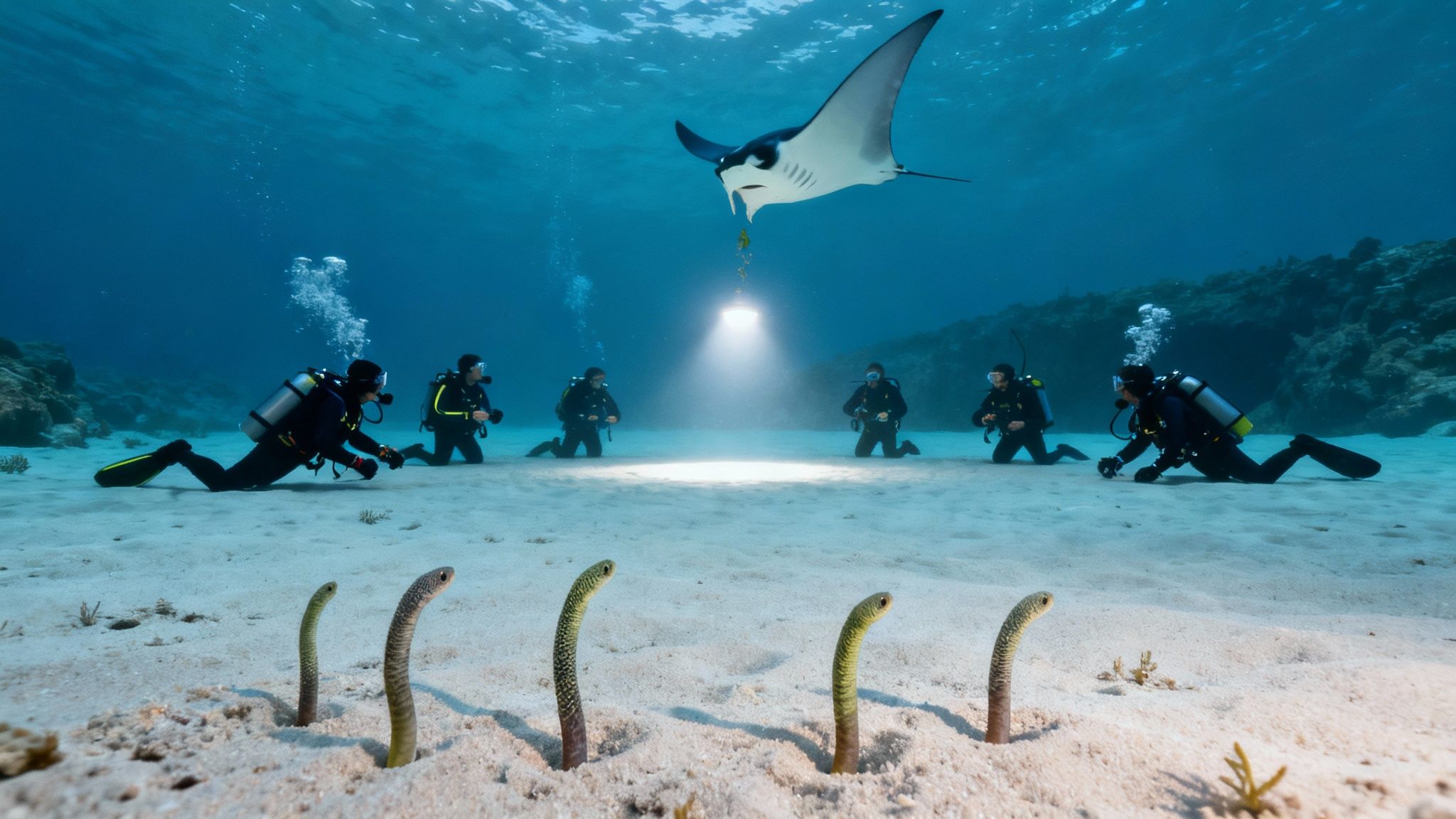
What truly elevates Garden Eel Cove is its underwater layout—it's almost perfectly designed for viewing manta rays. The site features a huge, sandy-bottomed basin that works like a natural amphitheater. Dive operators gather divers in a semi-circle on the sand, facing a central light source called the "campfire."
This setup is everything. It means every single diver gets an unobstructed, front-row seat to the show. No jockeying for a good spot or craning your neck to see over someone else's bubbles. You just get to settle in, relax, and watch the mantas perform their beautiful, acrobatic ballet as they glide and barrel-roll right over your head. In contrast, the rocky and uneven bottom at Manta Village makes this kind of organized, comfortable viewing nearly impossible.
The "campfire" viewing arrangement at Garden Eel Cove ensures that every participant has an unparalleled, unobstructed view of the mantas. This thoughtful setup maximizes the visual experience while minimizing disturbance to the marine environment.
As a bonus, the healthy reefs and sandy bottom are home to the critters that gave the site its name: thousands of tiny garden eels. You'll see them poking their heads out of the sand, swaying in the current. It adds another layer of wonder to an already incredible dive.
Better Reefs, More Plankton, More Mantas
While both sites have a good track record, Garden Eel Cove is the clear winner for a truly spectacular show. Its protected location and healthy, thriving reef ecosystem are a magnet for plankton—the mantas' favorite food.
This rich food source means we have a 90% success rate for seeing mantas, and we often see more of them here than at the other site. You can get even more insights from our friends over at Love Big Island, who also track the sightings. The healthy reefs surrounding the sand flats keep the whole ecosystem thriving, ensuring a reliable plankton buffet that brings the mantas back night after night. You can learn more about what makes this habitat so special on our page about Manta Heaven at Garden Eel Cove.
Kona Manta Ray Dive Site Comparison
To really see the difference, it helps to put the two main sites side-by-side.
| Feature | Garden Eel Cove (Manta Heaven) | Manta Village (Keauhou) |
|---|---|---|
| Location | Protected cove north of Kona | Exposed bay south of Kona |
| Water Conditions | Consistently calm and sheltered | Often subject to open ocean swells |
| Viewing Setup | Amphitheater-style "campfire" on sand | More dispersed, rocky bottom |
| Reef Health | Excellent, vibrant coral reefs | Good reef system, but more impacted |
| Overall Experience | Superior, comfortable, and predictable | Can be crowded and less comfortable |
At the end of the day, when you choose Garden Eel Cove for your manta ray night dive tour, you're setting yourself up for a calmer, better-organized, and more breathtaking adventure. It's easy to see why Garden Eel Cove is Kona's premier manta dive site, and it's the place to go for a life-changing experience you'll never forget.
Your Manta Ray Adventure with Kona Honu Divers
Knowing what to expect on your **manta ray night dive in Kona** can take the experience from great to absolutely life-changing. With us at Kona Honu Divers, the whole adventure is designed for maximum comfort, safety, and pure awe. From the moment you arrive, you’ll see why our focus on small groups and a personal touch really sets this trip apart.
Your evening starts with an easy, friendly check-in at Honokohau Harbor. Our crew will be there to greet you, get you set up with any rental gear you need, and welcome you aboard our spacious, custom-built dive boat. We find that a relaxed, no-rush start sets the perfect tone for the rest of the night.
The Two-Dive Itinerary
One of the best things about our manta ray experience is that it’s a two-tank trip. The first dive is a late-afternoon dip on a gorgeous, lively reef close to the main manta site. This isn't just filler; it’s a crucial part of the plan. It’s your chance to get comfortable in the water, dial in your weighting, and make sure your gear is perfect, all while enjoying some of Hawaii's beautiful marine life in the daylight.
This thoughtful approach means that when the sun goes down and it’s time for the main event, you’re already feeling confident and settled. You'll get to see plenty of colorful reef fish, maybe a few sea turtles, and intricate coral gardens, making it a fantastic dive all on its own.
After we surface from the first dive, we’ll have snacks and drinks ready for you as you watch a spectacular Kona sunset from the boat. As dusk settles in, our experienced divemasters give a detailed and engaging briefing about the manta dive. They'll walk you through exactly what’s going to happen and how to interact respectfully with these gentle giants.
The Main Event: The Manta Ray Night Dive
Once the last bit of sun slips below the horizon, it’s time for the dive you’ve been waiting for. The setup we use is beautifully simple but incredibly effective. As a small group, we’ll descend with our guides to a specific spot on the sandy ocean floor, usually around 30-40 feet deep.
Here, we arrange ourselves in a semicircle around a powerful, stationary light source that we call the "campfire." Your only job is to get comfortable on the sand, point your personal dive light straight up to attract even more plankton, and get ready for the show.
We call this the underwater amphitheater. The "campfire" setup ensures every single diver gets an unobstructed, front-row seat without getting in the way of the mantas' natural feeding.
Before you know it, the graceful giants start to arrive. They glide effortlessly through the beams of light, feasting on the concentrated plankton. You’ll see them perform mesmerizing barrel rolls and swooping fly-bys, sometimes coming within inches of your mask. It’s a peaceful, stationary dive where you simply get to witness one of nature’s most incredible ballets.
What Snorkelers Can Expect
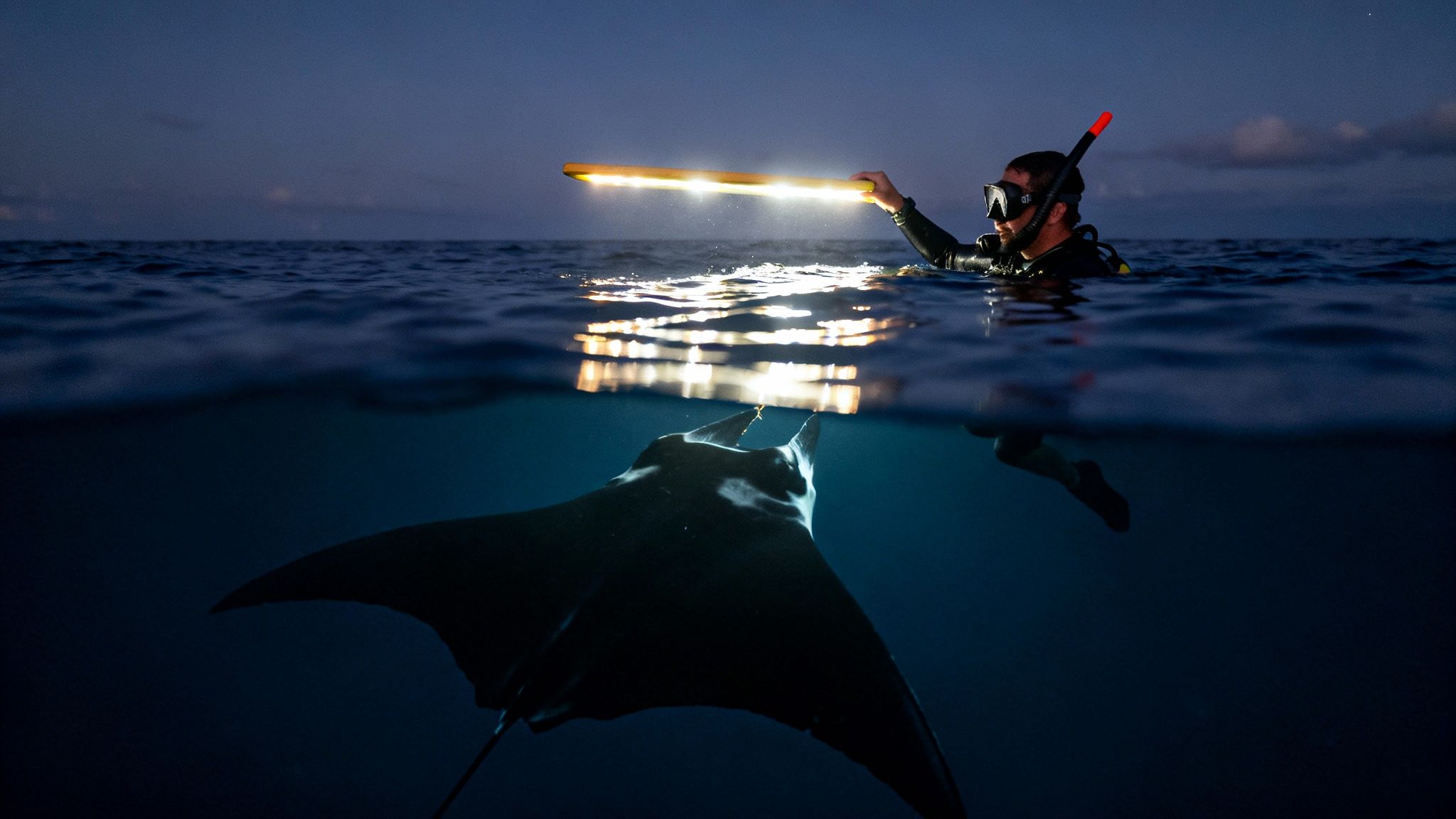
The experience is just as mind-blowing for our snorkelers. We’ll give you a custom-made, high-powered light board to hold onto while you float at the surface. These boards shoot powerful beams of light down into the water, creating a massive column of plankton that draws the mantas right up to the top.
You get an unbelievable bird's-eye view as the mantas feed just feet below you, their enormous wingspans creating a silent, beautiful dance in the dark. Our in-water guides are right there with the snorkel group the entire time, making sure everyone is safe, comfortable, and getting the best possible view.
With Kona Honu Divers, you’re not just another passenger; you’re our guest for the evening. Our dedication to safety, our expert crew, and top-notch equipment are why we’ve earned such an outstanding reputation.
Ready to join this incredible underwater ballet? Secure your spot on our world-famous manta ray night dive tour today.
Getting Ready: Dive Safety & What to Expect
There's a difference between a good dive and a truly epic one, and it all comes down to being prepared. When you know the gear, the safety plan, and how to act around the mantas, you can just relax and let the magic happen. Here at Kona Honu Divers, we take care of all the details so you can soak it all in.
We've got you covered with all the top-notch scuba gear you'll need—tanks, weights, BCDs, the works. We even provide thick, cozy wetsuits to make sure you stay comfortable as the sun goes down. All you need to bring is your certification card, a swimsuit, a towel, and a sense of wonder. Feel free to bring your own mask, fins, dive computer, or camera if you have them!
How to Behave Around Kona's Gentle Giants
The most critical part of this experience is knowing how to interact with these incredible animals. The golden rule is simple: look, but don't touch. This is non-negotiable. Manta rays have a special mucous coating on their skin that acts like their immune system. Touching them can rub it off, leaving them exposed to dangerous infections.
To keep everyone—divers and mantas alike—safe and happy, we stick to a few key guidelines:
- Find Your Spot: We’ll guide you to a designated spot on the sandy ocean floor. Once you're settled, stay put. This creates a stable, predictable environment for the mantas.
- Let Them Come to You: Chasing after a manta is a surefire way to scare it off. The most breathtaking moments happen when they feel safe enough to glide right over your head on their own terms.
- Master Your Buoyancy: Good buoyancy control is key. It keeps you from accidentally floating up into a manta or dropping down onto the delicate ecosystem below.
This unique, stationary style of diving is what makes the experience so accessible, even for newer divers. As long as you have your Open Water certification and feel comfortable in the water at night, you'll be just fine. That said, if it's been a year or more since you've logged a dive, we strongly recommend a quick scuba refresher course to polish your skills.
Your Certification and Other Kona Adventures
An Open Water Diver certification is the minimum ticket to join the scuba portion of the manta ray tour. This ensures you have the fundamental skills to dive safely after dark.
But the manta dive is just the beginning of what the Kona coast has to offer. For certified divers craving something truly different, we run some of the most unique night dives in the world. Imagine drifting in the deep, dark ocean on a Kona blackwater dive, watching bizarre and beautiful creatures rise from the depths. By day, our premium advanced trips can take you to remote sites with dramatic lava tubes and heart-pumping drift dives.
No matter what adventure you choose, your safety and a deep respect for the ocean always come first.
Getting to Know Kona’s Gentle Giants
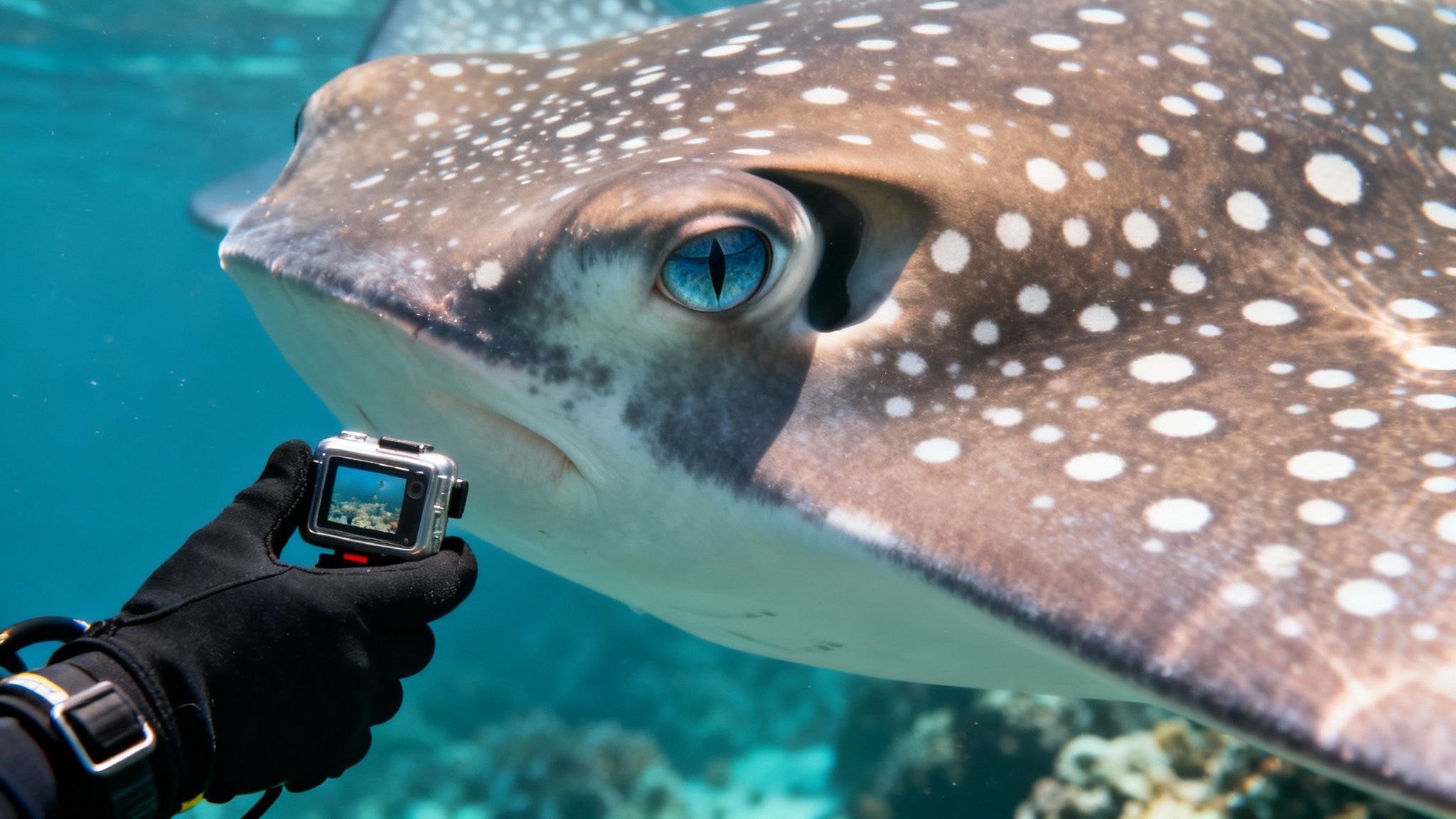
The Kona manta ray night dive is so much more than a cool underwater light show; it’s a genuine connection with some of the most intelligent and graceful animals in the ocean. The stars of this nightly ballet are the resident reef manta rays, known to scientists as Mobula alfredi. These aren't the giant oceanic mantas you might see roaming the deep blue, but a slightly smaller species that sticks close to the coastal reefs they call home.
First thing’s first: manta rays are completely harmless. Unlike their stingray cousins, they don't have a stinger or barb on their tail. They're gentle filter feeders, using those unique fins on their heads (called cephalic fins) to funnel plankton-rich water into their mouths. When you see them doing graceful barrel rolls in the light beams, it’s not just for show—it's the most efficient way for them to gulp down that microscopic buffet.
You're Actually Meeting Individuals
Here’s where the experience gets really special. You aren't just seeing a manta ray; you're meeting a specific, recognized member of the Kona community. The local manta population has been studied for decades, and researchers can identify each one by the unique pattern of black spots on its white belly.
Think of it like a human fingerprint. Each manta's belly markings are completely unique, allowing researchers and dive guides to identify and track individuals over their decades-long lifespans.
This turns your dive into an incredible citizen science opportunity. The photos and videos you take—especially of their bellies—can actually help researchers track the population. When a manta glides over your head, try to get a good look at its markings. You might be meeting a local celebrity like "Big Bertha" or "Lefty."
An Encounter You Can Count On
What makes this dive so legendary is how reliably amazing it is. The manta ray night dive in Kona is one of Hawaii's most dependable wildlife encounters, with a staggering 85-90% success rate for sightings. That’s almost unheard of in the wild!
Between 2009 and 2014 alone, marine researchers documented over 10,000 manta ray sightings at the dive sites. Today, local identification projects have cataloged more than 300 unique individuals in the area. You can learn more about the fascinating history of the Kona manta ray night dive and how it all began.
Your Dive Helps Protect Them
This incredible success story is a perfect example of responsible tourism at its best. When you choose an operator like Kona Honu Divers that’s committed to ethical practices, you are directly helping protect these magnificent animals.
Strict no-touching policies and following proper dive etiquette ensures the mantas stay safe and comfortable, which is why they keep coming back night after night. Your participation supports a beautiful ecosystem where tourism and conservation truly work hand-in-hand, proving these gentle giants are worth far more alive and healthy than they could ever be in any other capacity.
Ready to be a part of this incredible story? You can book your manta ray night dive tour and create some lifelong memories.
Your Kona Manta Ray Night Dive Questions, Answered
If you're thinking about joining this one-of-a-kind adventure, you've probably got a few questions. We hear them all the time, so we've put together answers to the most common ones to help you plan your manta ray night dive in Kona with total peace of mind.
Is This Dive Okay for Beginners?
Definitely. In fact, this is one of the best night dives a newly certified diver can do. The whole thing is stationary—there's no complex navigation or swimming around in the dark.
We take you down to a sandy patch of the seafloor, usually around 25 to 35 feet deep, where you'll get settled and watch the show unfold above you. As long as you're Open Water certified and feel reasonably comfortable in the water after dark, you'll be just fine. Our divemasters at Kona Honu Divers give a detailed briefing beforehand and are right there with you to make sure everything goes smoothly.
What if the Manta Rays Don't Show Up?
It's a valid question—they are wild animals, after all. But the good news is that Kona has one of the most reliable manta ray populations on the planet, with a sighting success rate that's consistently over 90%.
Operators like us have been doing this for decades, so we know exactly where to go. On the incredibly rare night they decide to be shy, you still get the thrill of a night dive on a beautiful Hawaiian reef, which is an amazing experience all on its own.
Can I Snorkel Instead of Dive?
You bet! The snorkel experience is just as mind-blowing. Snorkelers hang onto a custom light board that floats on the surface, shining powerful beams down into the water. This light is what attracts the plankton, and the mantas come right up to the surface to feed.
It’s not uncommon for them to glide within inches of snorkelers. You’re right in the middle of the action, getting an incredible top-down view of the ballet.
What's the Best Time of Year to See the Mantas?
Here’s the best part: there is no bad time! The manta ray night dive in Kona is incredible year-round. Our local manta population sticks around all year, so there’s no specific “season” you need to aim for.
Whether you visit in January or July, your odds of a fantastic encounter are excellent. We almost always go to Garden Eel Cove, the superior and more protected site, where conditions are typically calm and perfect for the dive.
Ready to see the magic for yourself? Book your unforgettable manta ray dive tour and get ready for an evening that will stick with you forever.