
Picture this: You’re descending into the warm, dark Pacific, your light slicing through the inky blue. All of a sudden, a massive, graceful shadow glides right over your head. It’s a giant manta ray, its wingspan stretching wider than you are tall, performing a silent, beautiful ballet just for you. This is the world-famous manta ray night dive in Kona, an experience that consistently tops the charts as one of the planet's best underwater adventures.
What Makes The Kona Manta Ray Night Dive Unforgettable
It's tough to capture the magic of the Kona manta ray dive in words, but it’s the kind of experience that sticks with you for life. You're not just watching marine life; you're becoming part of a surreal, beautifully choreographed natural spectacle. Once divers and snorkelers are in position, a powerful array of lights floods the water, creating what we affectionately call the "manta campfire."
This brilliant light becomes a magnet for massive clouds of plankton, the microscopic critters that form the foundation of the ocean’s food chain. Before long, the stars of the show make their grand entrance. Giant manta rays, some with wingspans pushing past 12 feet, emerge from the darkness. They glide effortlessly through the beams of light, performing barrel rolls and swooping maneuvers to filter-feed on the plankton.
A Front-Row Seat to Nature's Ballet
What really sets this encounter apart is just how close you get to these gentle giants. Unlike so many wildlife experiences where you’re watching from a distance, the mantas in Kona often come within inches of you. They aren't bothered by our presence at all—they're completely focused on their meal, which allows for an incredibly intimate and awe-inspiring show.
If you want to get into the nitty-gritty of what this experience is all about, check out our detailed guide on what the manta ray night dive is all about.
The feeling of a massive manta ray gliding just above your head, its immense shadow eclipsing your light, is a moment of pure wonder. It’s a powerful reminder of the ocean's majesty and our place within it.
Here at Kona Honu Divers, we feel incredibly privileged to share this spectacle with visitors from all over the world. Our expert guides are there to ensure a safe, respectful, and totally unforgettable adventure. But you don't have to take our word for it—see what fellow divers have to say about their journey with us.
The combination of the dark, open ocean and the brilliantly lit "stage" creates an atmosphere that feels truly otherworldly. Whether you’re a seasoned diver or a first-time snorkeler, the Kona manta ray night dive tour offers a profound connection to the marine world that is simply unmatched.
Check Availability
Why Kona Is The Premier Manta Ray Destination
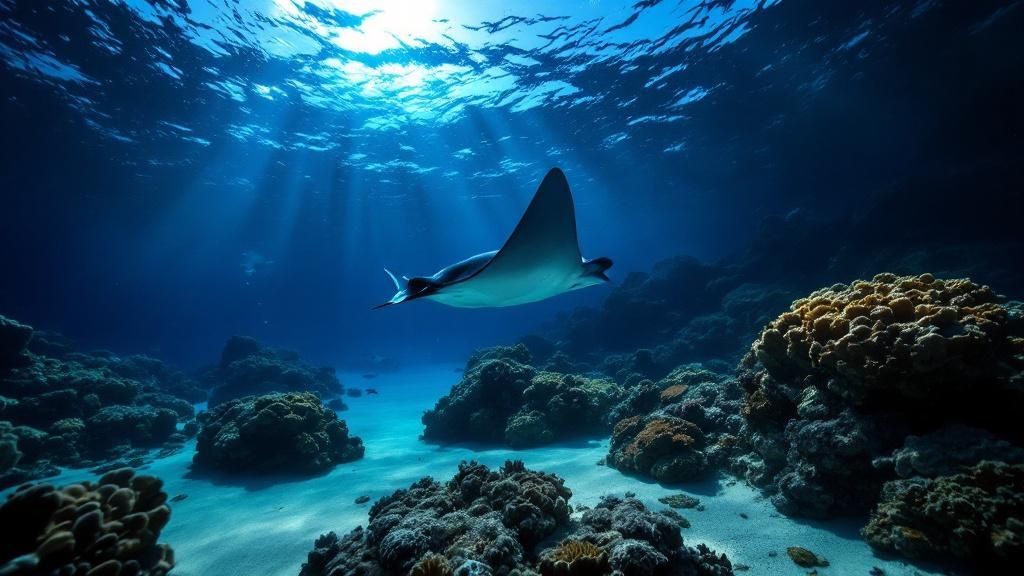
What makes the manta ray night dive in Kona a global phenomenon isn't just a happy accident; it's the perfect storm of geology, oceanography, and a little bit of human cleverness. The Big Island's unique underwater landscape, carved by ancient volcanic slopes, creates the ideal environment to trap and concentrate plankton—the manta rays' favorite meal.
This natural setup has turned Kona into a reliable, year-round buffet for these gentle giants.
Unlike other places where manta sightings are seasonal, Kona is home to a massive, resident population of reef mantas. These incredible creatures stick around the coastal waters they know and love, which is what turns a hopeful dive into a near-guaranteed encounter.
A Reliable Natural Spectacle
The predictability of seeing mantas here is what really sets Kona apart. It’s so consistent that the local dive community has built one of the world's most celebrated and sustainable wildlife interactions.
Operators have perfected the "manta campfire" method, using powerful underwater lights to attract clouds of plankton. The mantas, knowing a free meal when they see one, show up for their nightly feast.
This unique combination of a resident population and a reliable food source is why Kona is in a league of its own. While you can have amazing encounters in places like the Maldives or the Galapagos, those are often centered around "cleaning stations." Here, you witness the dynamic, awe-inspiring feeding behavior up close. You can learn more about what makes the Kona manta ray dive so unique right here on our site.
The numbers really speak for themselves. The manta ray night dive in Kona boasts an incredible 85% to 95% sighting success rate.
Here's a quick look at what makes it so special:
- Shallow Depths: Dives are typically in just 30 to 40 feet of water.
- Long Bottom Times: You get up to an hour of viewing time.
- Massive Mantas: You'll see mantas with wingspans exceeding 12 feet.
This incredible attraction draws an estimated 80,000 visitors a year, making it a cornerstone of Hawaii's eco-tourism.
By understanding the 'why' behind this amazing phenomenon, you gain a much deeper appreciation for the dive itself and the importance of the conservation efforts that protect this fragile ecosystem.
This isn't just another dive trip; it's a front-row seat to a natural wonder that happens like clockwork, night after night.
How To Prepare for Your Manta Ray Adventure
A little bit of prep work goes a long way toward making your manta ray night dive in Kona as amazing as it should be. When you get the small stuff sorted out ahead of time, you can be fully present for the underwater ballet you’re about to see. Trust me, you want your mind on the mantas, not a forgotten towel.
Start thinking about your dive the day before. Get a good night's sleep and make sure you're drinking plenty of water leading up to the trip. Diving at night is way more fun—and safer—when you’re rested and feeling sharp. It's also a good idea to skip any heavy meals or booze right before you head to the boat.
Your Essential Packing List
Think of this as your personal comfort checklist. While the dive operator hands you all the critical scuba or snorkel gear, a few personal items can make a massive difference in how your night goes.
- Warmth is Key: Bring something warm and dry to throw on after the dive, like a hoodie or a windbreaker. Even after a dive in balmy Hawaiian waters, the boat ride back under the stars can get surprisingly chilly. A dry towel is non-negotiable.
- Eco-Friendly Protection: If you're on a sunset trip, please use reef-safe sunscreen. It protects your skin without harming the delicate coral ecosystems we all love.
- Personal Gear: If you wear glasses, a prescription dive mask is a game-changer. Standard masks work fine for contact lens wearers, but having a mask fitted to your vision means you won't miss a single detail of the show.
Simple things like staying hydrated and packing a jacket can elevate a good dive into an absolutely epic one. It’s all about setting yourself up to just relax and soak in every single magical moment.
Here at Kona Honu Divers, we make sure all your primary gear—from BCDs and regulators to fins and wetsuits—is top-notch and ready for you. All you really need to bring is your sense of adventure and these few personal items.
And if you get hooked on the underwater world (which you will), there are tons of other amazing scuba diving tours in Kona to check out after you've danced with the mantas. For those with more experience seeking new challenges, we also offer advanced diving opportunities to explore deeper sites.
With your bag packed and your body rested, you're all set to dive into one of the most unforgettable nights of your life. The only thing left to do is book your spot for this must-do Kona experience.
Check Availability
Responsible Interaction with Manta Rays
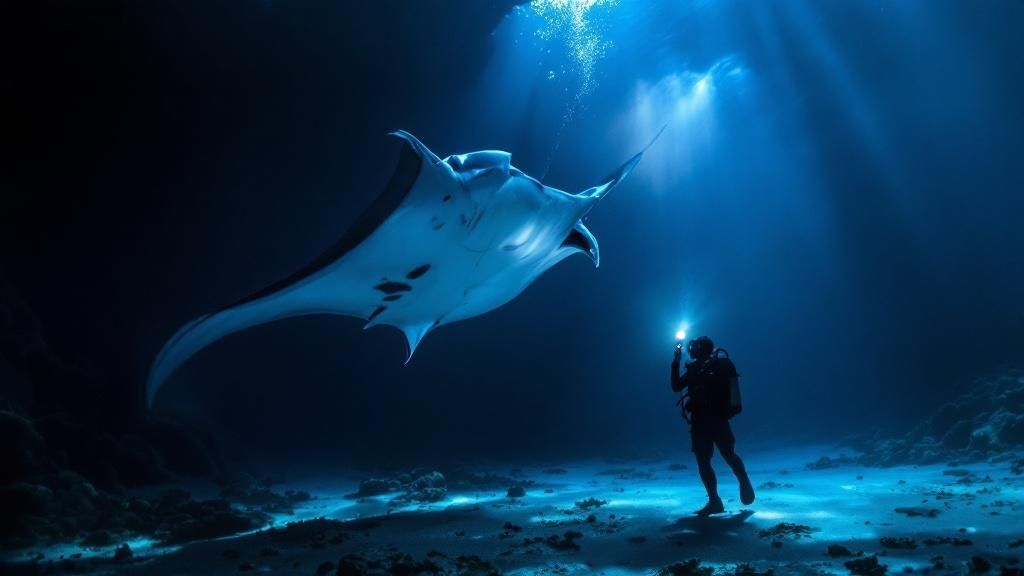
After the sun disappears, the real show begins. Your boat will head out to one of Kona's designated manta sites, where you'll get a solid safety briefing before taking that thrilling plunge into the dark Pacific.
The whole point of the manta ray night dive in Kona isn't just to see these amazing creatures; it's about being a respectful guest while they have dinner. The entire experience is designed around passive observation. We want to blend into the background so the mantas can do their thing, completely undisturbed. When we give them their space, we get an incredible, authentic encounter that's safe for everyone involved—divers included.
The Golden Rule: Don't Touch The Mantas
If you remember only one thing, make it this: do not touch the manta rays. It's a simple, absolute rule that's crucial for their health. Manta rays have a protective mucous coating on their skin, which is their primary defense against nasty bacteria and infections.
Touching a manta, even by accident, can strip off this delicate slime coat. It's like popping their protective bubble, leaving them vulnerable to disease. By simply keeping your hands to yourself, you're playing a direct role in protecting these gentle giants.
Dive Etiquette Dos and Don'ts
To make sure the dive is a success for both you and the mantas, you’ll need to follow a few basic rules. This ensures a safe, respectful, and mind-blowing interaction.
We've put together a quick cheat sheet to help you remember the key points. Think of it as your guide to being the perfect dinner guest.
| Manta Ray Dive Etiquette Dos and Don'ts |
| :— | :— |
| Do | Don't |
| Stay on or near the sandy bottom if you're diving. | Touch, chase, or try to ride a manta ray. |
| Stay at the surface holding the light board if you're snorkeling. | Block a manta's path or swim directly above or below them. |
| Keep a flat, horizontal position in the water. | Use flash photography, as it can startle them. |
| Let the mantas come to you and control the interaction. | Make sudden, quick movements. |
| Keep your fins pointed down to avoid accidental contact. | Forget to have an absolutely incredible time! |
Following these simple guidelines helps keep the mantas comfortable, ensuring they'll continue to visit these sites for years to come. It’s a beautiful partnership between tourism and conservation, and every single diver plays an important part.
Recognizing The Locals
Here’s one of the coolest parts of the experience: you’re not just seeing random animals. You’re meeting individuals. Each manta ray in Kona has a unique pattern of spots on its belly, which works just like a human fingerprint.
Guides and researchers use these spot patterns to identify and track each manta, giving them names like "Lefty" or "Big Bertha." To learn more about this, check out this great resource on the manta ray night dive in Kailua-Kona.
This ongoing cataloging effort has identified nearly 200 individual rays in the area. On a typical night, it’s not uncommon to see a group of 20 to 36 mantas, with the record being around 36 individuals on a single dive. This turns the dive from a simple animal viewing into a genuine meet-and-greet with some of the ocean's most famous local celebrities.
Photography Tips for Capturing Manta Magic
Trying to capture the surreal beauty of the manta ray night dive in Kona is a rewarding challenge, whether you're a seasoned pro or just pointing a GoPro. It takes a little planning to bring home images that truly do this magical experience justice, especially in such a unique low-light environment.
If you're bringing an action camera or a simple point-and-shoot, my advice is to focus on video. The fluid, graceful movements of the mantas are just mesmerizing in motion. Set your camera to the highest resolution and frame rate you can—this will give you that smooth, clear footage of their incredible underwater ballet.
Mastering Your Camera Settings
For the more advanced photographers out there, you're facing a different beast. The biggest hurdles are managing your light and cutting down on backscatter. The key is getting your strobes off-camera and positioning them wide to light the manta from the sides. This simple trick prevents all those little particles in the water from lighting up like a snowstorm between your lens and the manta.
A wide-angle lens is non-negotiable. Seriously. It lets you get close enough to fill the frame, which means your light has less water to travel through. That one piece of gear will drastically improve your clarity and color.
Here are some solid starting points for your settings:
- Low ISO: Start at your camera's base ISO, usually 100–200, to keep the image clean and minimize noise.
- Moderate Aperture: Something around f/8 gives you a great depth of field, which helps keep these massive creatures sharp from wingtip to wingtip.
- Fast Shutter Speed: Aim for 1/125s or faster. This will freeze the manta's motion and deliver a nice, crisp shot.
Your best tool, though? Patience. Don't chase the mantas. Find a good spot on the bottom, get your settings dialed in, and just wait for them to glide into your frame. I promise, the most breathtaking shots happen when you let the action come to you.
Framing the Perfect Shot
One of the most compelling photos you can get is a clear shot of the unique spot patterns on a manta's belly. These markings are like their fingerprints, completely unique to each animal. Nailing a shot of their underside creates a really powerful and personal image. For more tips and essential info, check out our guide on what you should know about the manta ray dive in Kona.
Ultimately, photographing the manta ray night dive is all about capturing the awe of the moment. With the right approach, you can create images that not only look incredible but also share the sheer wonder of being in the presence of these gentle giants.
How Your Dive Supports Manta Ray Conservation
The manta ray night dive in Kona is so much more than just an amazing show—it's actually a powerful engine for marine conservation. Every time you get in the water with us for this incredible experience, you’re directly supporting the efforts to protect these magnificent animals and their fragile ocean home.
This isn’t just tourism. It's ecotourism at its best.
The money generated from these dives goes straight into funding vital research, monitoring programs, and educational outreach. This support allows scientists and conservationists to keep a close eye on the health of the local manta population, study their behaviors, and push for stronger protections. When you choose a reputable operator, you’re making sure your money feeds back into a sustainable model that puts the well-being of the mantas first.
A Global Model for Responsible Ecotourism
Believe it or not, the Kona manta ray dive has become a global example of how to manage wildlife encounters the right way. We adhere to strict regulations and operator standards—like the ones we follow here at Kona Honu Divers—that are all about minimizing our impact.
These guidelines ensure the mantas are never disturbed and can feed naturally, which has helped create a genuinely positive, symbiotic relationship between us and the marine life we love.
The impact, both economically and ecologically, is huge. Each year, these tours bring in roughly 80,000 visitors. That provides livelihoods for local guides and operators while building a deep, lasting appreciation for these gentle giants. It's a successful blend of tourism and conservation that proves a thriving local economy and a healthy marine ecosystem can absolutely go hand-in-hand. You can read more about the impact of Kona's manta tours on the local scene.
This conservation-first mindset isn't just for mantas; it's part of everything we do. It applies to other unique underwater adventures, too, like the surreal Kona blackwater dive or our advanced dive trips. By joining us on any of these tours, you're helping sustain a community that’s dedicated to preserving Kona’s underwater wonders for generations to come.
Common Questions About The Manta Ray Night Dive
If you're planning your manta ray night dive in Kona, you probably have a few questions floating around. We get it. Let’s tackle the most common ones we hear so you can book your adventure feeling completely prepared.
Do I Need To Be A Certified Diver?
One of the first things people ask is whether they need a scuba certification. The great news is, you absolutely don't!
While divers get a unique perspective from the ocean floor, snorkelers have an equally jaw-dropping view from the surface. You'll hold onto a big, lit-up float board that acts like a magnet for plankton. This brings the mantas right up to you for their incredible acrobatic feeding show. It's an amazing experience that's accessible to just about everyone.
Is The Dive Safe?
Safety is always a top priority, and the answer here is a definite yes. Manta rays are true gentle giants. They're filter feeders, which means they don't have teeth, stingers, or barbs. It's an extremely safe encounter, especially when you go with a professional crew like Kona Honu Divers who makes sure every interaction is passive and respectful of the animals.
When Is The Best Time Of Year To Go?
This is another big one. Luckily, the answer is simple: any time!
Kona is home to a resident population of manta rays that doesn't migrate. This means the dive runs year-round with a consistently high success rate. Seriously, any night you're here is a good night to see the show.
For a deeper dive into what to expect, check out our complete guide to the Big Island Manta Ray Night Dive.