
Picture this: you're floating in the warm Hawaiian ocean after sunset. Suddenly, giant, graceful manta rays appear, dancing in beams of light and gliding just inches from your face. This isn't something you see on TV; it's the legendary manta ray night dive in Kailua Kona, and it's consistently called one of the best night dives on Earth. Think of this as your personal guide to one of the most magical wildlife encounters you'll ever have.
What Makes the Kona Manta Ray Dive a Must-Do Experience
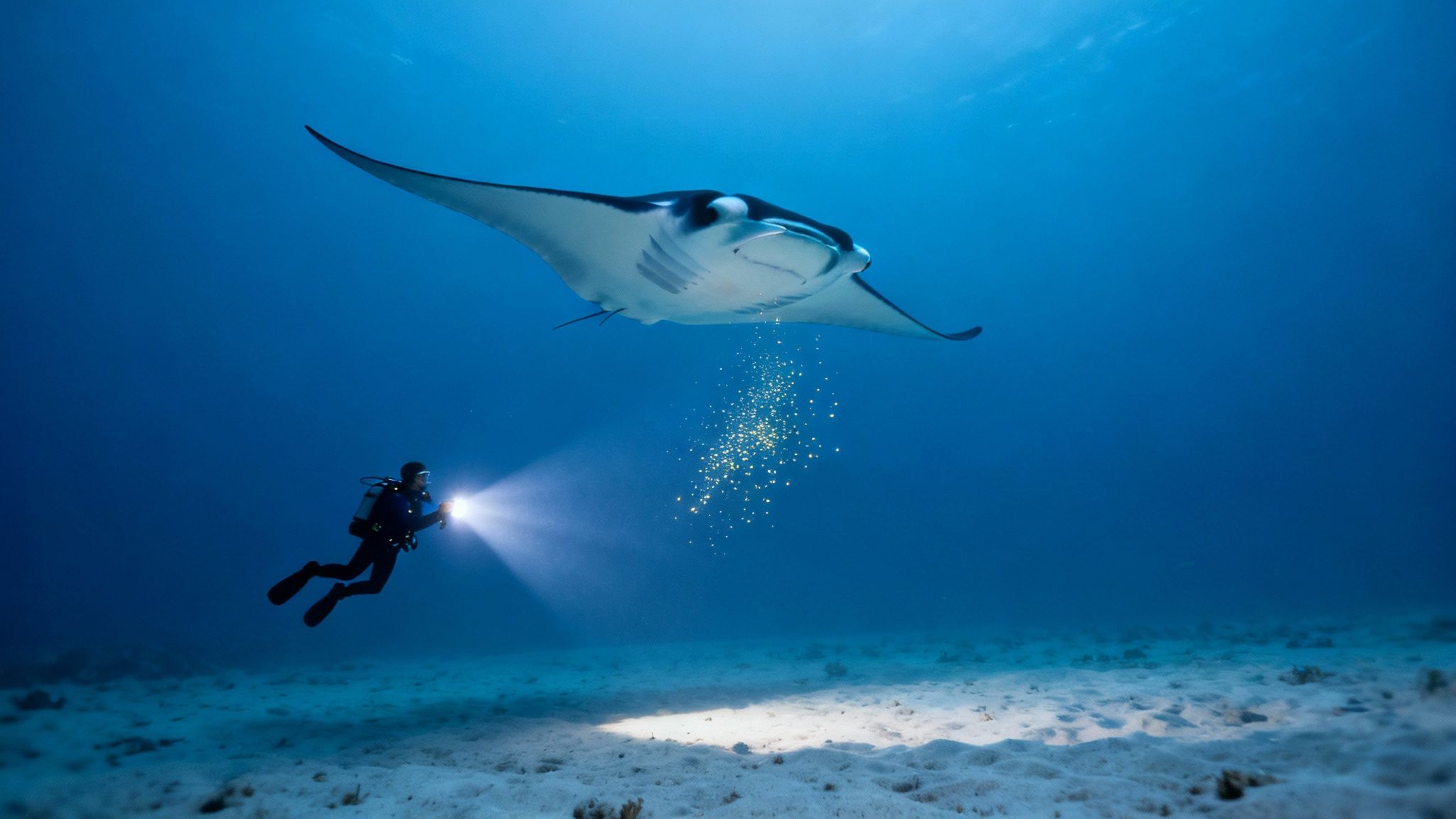
This adventure is so much more than a typical scuba trip. It’s an underwater ballet, a close-up interaction between gentle giants and the people who come to admire them. The unique geography of the Kona coast has created the perfect natural stage for this nightly show—a phenomenon you simply can't find just anywhere.
What really sets the Kona experience apart is its reliability. Unlike a lot of wildlife tours where a sighting is a roll of the dice, this one is practically a sure thing. The area is home to a healthy, resident population of reef mantas who are drawn to the same spots every night. This turns the dive from a hopeful search into a breathtaking performance you can count on.
A Guaranteed Spectacle
The success rate for seeing manta rays off the Kona coast is just phenomenal. We're talking a sighting success rate of over 85-90%, with some operators reporting even higher numbers on their best nights. This makes it one of the most dependable big animal encounters in the world.
There are an estimated 450+ individual rays in the local population, some with massive wingspans stretching over 12 feet. This incredible reliability means you can confidently plan your vacation around this one-of-a-kind experience, knowing you're almost guaranteed to see the mantas do their famous barrel rolls while they feed. It’s a memory that will stick with you forever.
More Than Just Mantas
While the mantas are the main event, the Kona coast is packed with other incredible marine adventures. For example, another trip high on our list is exploring Kealakekua Bay with a Captain Cook snorkel tour in Kealakekua Bay, comparing operators and sharing essential tips for this must-do Hawaii adventure. The entire coastline is a vibrant ecosystem with endless opportunities for exploration, day or night.
The real magic of the manta ray night dive is its accessibility. Whether you're a seasoned diver or a first-time snorkeler, you can witness this incredible event up close, making it a perfect adventure for families, couples, and solo travelers alike.
At the end of the day, this experience is all about connection. It's about witnessing a natural wonder in a way that feels both intensely personal and profound. Get ready for an adventure that goes beyond just watching and becomes a truly unforgettable memory.
Finding the Best Manta Ray Tour Operator in Kona
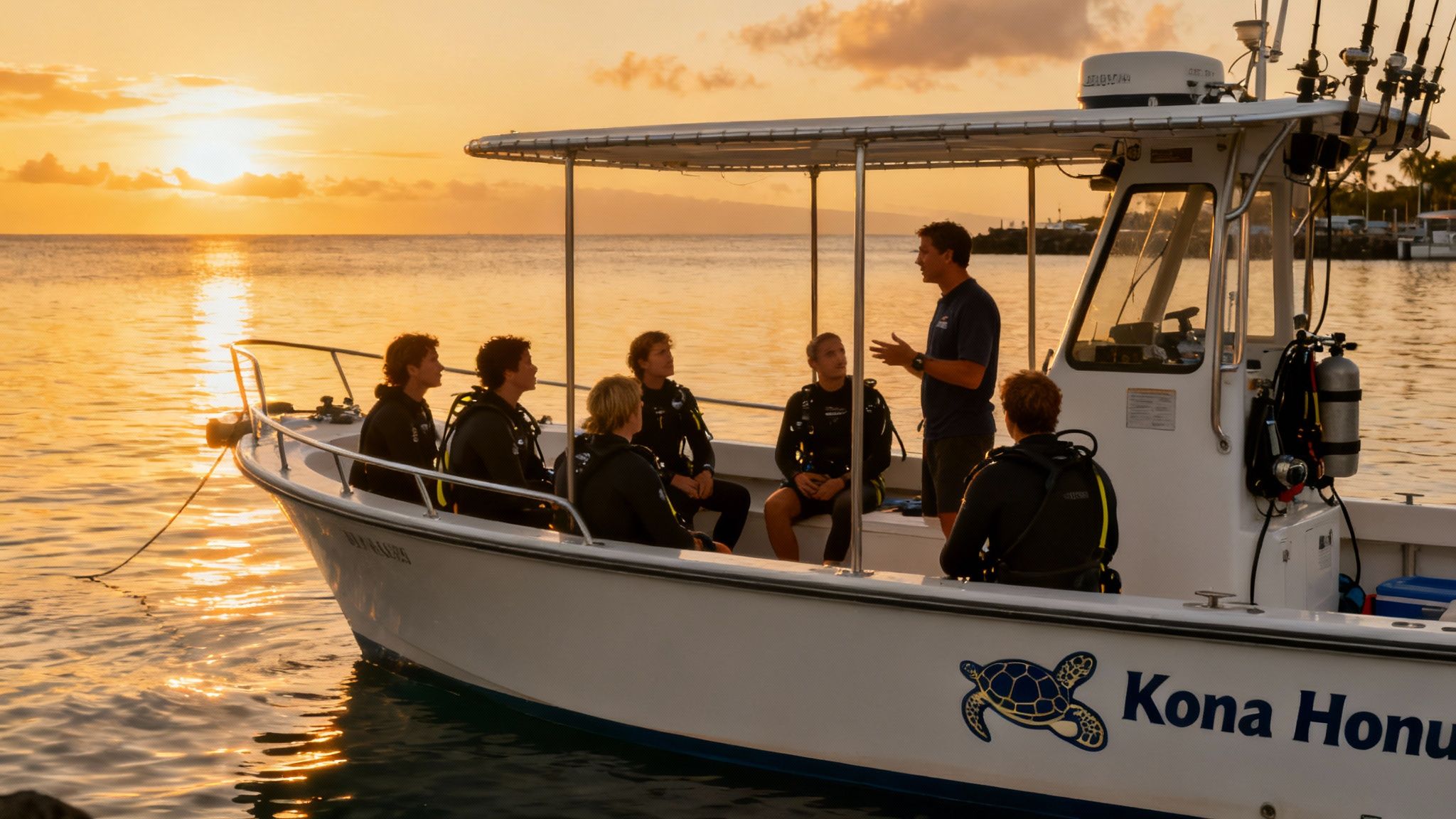
Let's be honest, who you choose to go with on your manta ray night dive in Kailua Kona can make or break the entire experience. It’s not just about getting in the water; it's about finding a crew that is safe, experienced, and genuinely cares about the ocean and its inhabitants.
This is where you can really see the difference a commitment to responsible tourism makes. For instance, Kona Honu Divers is a "Manta Ray Green List" approved operator. That's not just some marketing sticker—it's a serious certification. It means they follow strict, science-backed rules to make sure our encounters with these amazing animals are safe and sustainable for the mantas themselves. It's your peace of mind, knowing your adventure isn't harming the very creatures you came to see.
What to Look for in a Manta Tour
When you're comparing tours, a few key things really set the great ones apart from the merely okay ones. The biggest one? Group size. You don't want to be one of 50 people splashing around, fighting for a view. Look for operators who intentionally keep their groups small. It makes for a much more personal and intimate experience where you can actually connect with the magic of the moment.
Kona Honu Divers really gets this right, creating a comfortable and educational vibe from the moment you step on board. Here’s what I’d look for on any tour:
- A Real Manta Briefing: A top-notch tour starts with more than just a quick safety talk. The best crews get you genuinely excited by teaching you about manta biology, their behavior, and how to interact with them respectfully. It makes the dive so much more meaningful.
- Comfort on the Water: A custom-built dive boat with things like warm showers, snacks, and room to move around is a game-changer. After an exhilarating night dive, these little comforts make a huge difference.
- A Crew That Cares: You can always tell when a crew is truly passionate about what they do. Their energy is infectious, and they love sharing cool facts and stories about the local marine life. It elevates the entire trip.
The Kona Honu Divers Difference
The crew at Kona Honu Divers brings all these pieces together for a truly exceptional adventure. Their passion for conservation and education means you’ll walk away with a much deeper appreciation for Kona's incredible marine ecosystem.
But you don’t have to take my word for it—the glowing reviews from other divers speak volumes. If you want to dive deeper into what makes a company stand out, check out our guide on the top 5 manta ray night dive tours which details exactly what to look for.
Ultimately, the right operator doesn't just give you a great dive; they give you a core memory that will last a lifetime.
What Your Manta Ray Adventure Will Actually Look Like
So, you've booked your spot and the day is finally here. What can you actually expect? The whole adventure kicks off right at the harbor. You’ll be welcomed aboard by the Kona Honu Divers crew, who are genuinely some of the friendliest and most professional folks on the water. They’ll get you checked in, sized up for gear, and settled in for an evening you won't forget.
As the boat pulls away from the dock, the real magic begins. You'll get a front-row seat to one of Kona’s spectacular sunsets, cruising along the coast as the sky explodes in orange, pink, and purple. Honestly, the boat ride alone is worth it.
During the trip out, your divemasters will give a detailed and surprisingly entertaining briefing. This isn’t just a dry safety lecture. They'll share incredible stories about the local manta rays, explain their feeding habits, and walk you through the simple "rules of engagement" for a safe and respectful encounter.
Arriving at the Dive Site
Once the boat is moored and the sun has set, the crew smoothly shifts into high gear. Divers start gearing up to descend into the twilight, while snorkelers get their masks and fins, along with a quick refresher on how everything works.
If you’re feeling a little nervous—and many first-timers are—don't worry. The crew has a knack for putting everyone at ease with their calm, professional vibe. They’re fantastic at turning pre-dive jitters into pure excitement.
For a deeper dive into the logistics and science behind it all, we've put together a complete guide explaining in detail https://konahonudivers.com/what-is-manta-ray-night-dive/.
To give you a quick snapshot, here’s what your tour includes.
Kona Manta Dive Tour At-A-Glance
| Feature | Details |
|---|---|
| Duration | Typically 3-4 hours from check-in to return |
| Water Time | Approximately 45 minutes in the water with the mantas |
| Depth (Divers) | 30-40 feet, resting on a sandy bottom |
| Depth (Snorkelers) | At the surface, holding onto a custom light raft |
| Group Size | Small groups for a more personal experience |
| Included | All necessary gear, snacks, and hot chocolate |
| Crew | PADI-certified Divemasters and Instructors |
This setup ensures a safe, comfortable, and absolutely unforgettable experience for everyone.
The Underwater Light Show
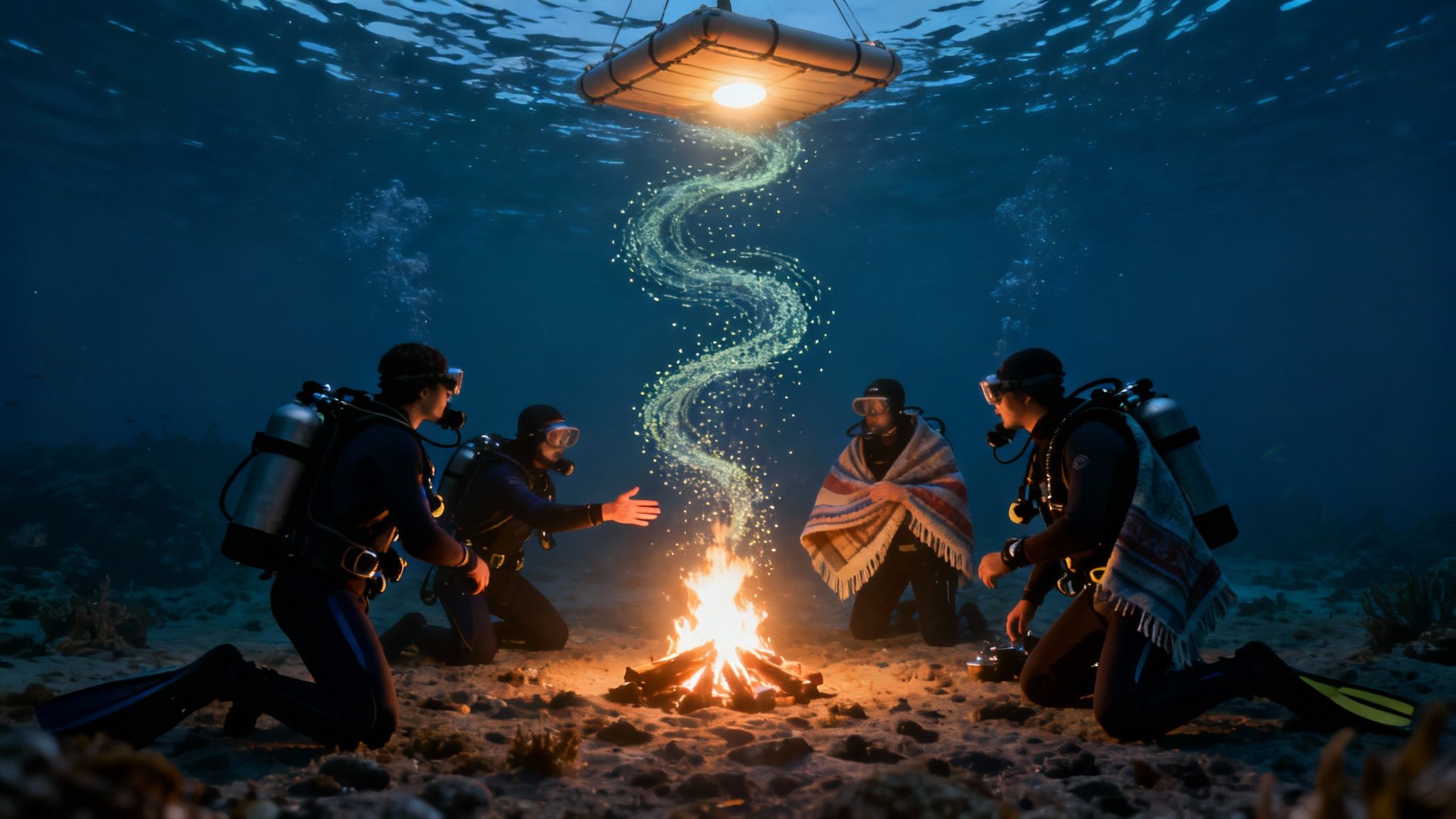
The whole operation is brilliantly simple. Divers head down to the sandy bottom, about 30-40 feet deep, and gather around a powerful light box nicknamed the "campfire." Up on the surface, snorkelers hold onto a large, floating raft that shines its own bright lights down into the water.
These lights are the secret ingredient. They attract massive clouds of plankton—the manta rays' favorite food. This creates a glowing, all-you-can-eat buffet that the mantas simply can't resist.
And then, the show begins. One by one, these gentle giants glide in from the darkness, performing graceful, swooping barrel rolls as they scoop up mouthfuls of plankton. Their movements are so fluid and effortless, it's completely mesmerizing.
This incredible spectacle is a huge draw for the Big Island, attracting around 80,000 visitors every year. The best viewing conditions are typically from April to October, when calmer seas and a higher concentration of plankton make sites like Manta Village the place to be.
A Truly Immersive Encounter
Whether you’re on the bottom or at the surface, the proximity is breathtaking. The mantas often come within inches, their massive wingspans casting giant shadows as they glide past. You’ll hear the muffled gasps of awe from fellow snorkelers and see the wide-eyed wonder on the divers below.
You get about 45 minutes in the water, which somehow feels like both a lifetime and just a few seconds. Once back on board, you’ll warm up with hot chocolate and snacks, excitedly swapping stories with the crew and your fellow adventurers. It's the perfect ending to an extraordinary night.
The Science Behind Kona’s Manta Phenomenon
Ever wonder what makes the manta ray night dive in Kailua Kona the most reliable place on Earth for this incredible encounter? It’s not just magic or dumb luck. The secret lies in a fascinating mix of biology, unique geography, and some clever human observation. And it all comes down to one tiny creature: zooplankton.
These microscopic animals are the manta ray's favorite meal. At night, plankton are naturally drawn toward light, a behavior scientists call phototaxis. Years ago, a local hotel aimed its lights at the ocean, and without even realizing it, they created a massive plankton buffet. The mantas came, and dive operators saw an opportunity to recreate this spectacle in a safe, sustainable way.
How Manta Hotspots Were Born
This is how legendary sites like "Manta Village" and "Manta Heaven" became the world-famous feeding grounds they are today. We place powerful, stationary lights on the ocean floor, creating a consistent beacon that attracts a massive column of plankton. The mantas, which are incredibly smart, figured out that these lights mean an easy, all-you-can-eat dinner. So, they keep coming back.
It’s important to understand this isn't an artificial feeding where we're handing out fish. We’re simply using a natural behavior to set the stage for an amazing observation. You get to witness a wild feeding event in a uniquely concentrated spot, all without interfering with their natural instincts.
This responsible setup is actually a cornerstone of local conservation. By building a sustainable tourism model around the mantas, they gain economic value. That value directly fuels efforts to protect them and their fragile marine home.
Getting to Know the Stars of the Show
What truly makes this experience special is that we know these mantas as individuals. Much like a human fingerprint, the unique spot pattern on each manta's belly is one-of-a-kind. For years, marine biologists and local guides have been carefully documenting these patterns, building a huge database of our resident manta population.
This allows us to give them names—like "Big Bertha," "Lefty," or "Kailey"—and track their health and movements over time. When you’re down there, your guide might point out a specific individual, transforming your dive from just watching an animal to meeting a local celebrity. You can learn more about their behaviors in our article that explores how deep manta rays dive in Kona.
This long-term research has given us some incredible data. Back in 2013, Manta Heaven averaged 11 mantas per dive, while Manta Village was seeing around four. Today, with a catalog of nearly 200 individual mantas in the area, seeing 20 distinct individuals on a single trip isn't out of the ordinary—and the all-time record is around 36! You can dig into the full statistical breakdown of manta sightings on the Kona coast to see just how dependable these sightings have become.
How to Prepare for Your Manta Ray Night Dive
A little bit of prep work can make all the difference between a good manta ray night dive in Kailua Kona and an absolutely epic one. Whether you’re a seasoned diver or dipping your toes in as a snorkeler for the first time, thinking ahead ensures you can relax and just be in the moment when the magic starts.
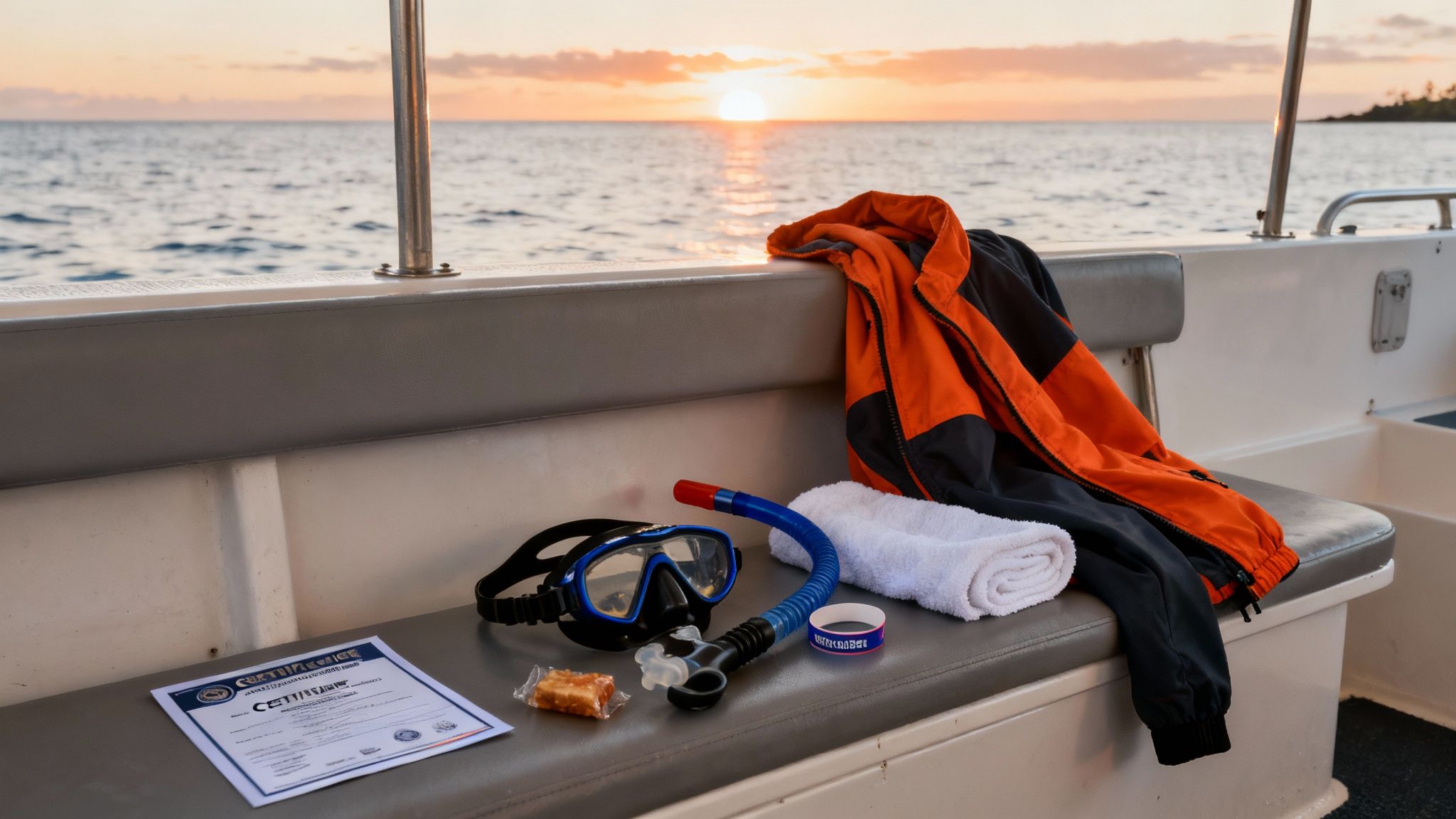
For certified divers, the most critical piece of plastic you own is your certification card. Don't leave it at the hotel! We also really recommend you've been diving within the last year. Being fresh on your skills means you'll spend less time thinking about your buoyancy and more time marveling at the graceful giants swooping overhead.
If you're snorkeling, it's much simpler. The main thing is just being comfortable in the water after dark. Our crew has you covered with great flotation gear and guidance, but basic swimming ability will help you feel much more at ease.
What to Bring for Maximum Comfort
Kona's waters are beautifully warm, but the air can get surprisingly chilly once the sun dips below the horizon. That boat ride back to the harbor feels a lot different than the one on the way out! Packing a few simple things will make your trip much more comfortable.
Here’s a quick checklist of what I always bring:
- A dry towel and a change of clothes. Simple, but so nice to have after an hour in the ocean.
- A warm jacket or hoodie. This is non-negotiable. Trust me. The wind on the ride home can be brisk.
- Reusable water bottle. Staying hydrated is key, especially after being in saltwater.
- Reef-safe sunscreen. If your tour leaves in the late afternoon, you'll want to apply this before you even leave the dock.
One thing that can ruin an otherwise perfect evening is seasickness. My pro tip? Take a non-drowsy motion sickness medication about an hour before we depart. It also helps to stay hydrated, eat a light meal beforehand, and keep your eyes on the stable horizon as the boat moves.
Booking Your Spot
Okay, you're ready to go. The last piece of the puzzle is locking in your reservation. The Kona Honu Divers manta ray dive tour is one of the most sought-after experiences on the island, so you'll want to book ahead. This is especially true if you’re visiting during peak season. Don't wait until the last minute and risk missing out!
Once you’re booked, all that's left is to count down the hours until you come face-to-face with Kona's gentle giants.
Your Manta Ray Night Dive Questions, Answered
Even the most seasoned travelers have questions before jumping into a totally unique adventure like the manta ray night dive in Kailua Kona. It's only natural. We get a lot of the same queries from our guests, so we've put together answers to help put your mind at ease and get you hyped for what’s to come.
Let's Talk Safety: Just How Safe is This Dive?
This is probably the number one question we hear, and the answer is: very safe. Your well-being is the absolute top priority for professional outfits like Kona Honu Divers. This isn't some rogue operation; it's a highly controlled and supervised experience from start to finish.
The crew is made up of certified, experienced divemasters and instructors who know these specific waters like the back of their hand. Before you even touch the water, you'll get a thorough safety briefing covering everything you need to know.
Plus, the dive sites themselves are well-known and relatively shallow, usually around 30-40 feet. The crew is constantly monitoring conditions, and every boat is kitted out with full safety and emergency equipment. If you're snorkeling, you'll have high-quality flotation gear, and guides are right there in the water with you the whole time.
I'm Not a Certified Diver. Can I Still See the Mantas?
Yes, absolutely! This is one of the best things about the tour—it’s designed from the ground up to give both snorkelers and divers an equally mind-blowing view of the mantas.
As a snorkeler, you'll float on the surface, holding onto a custom-made light board. This board shoots powerful beams of light down into the water, which is like a dinner bell for plankton. The mantas swim right up to feed on that plankton, often coming within inches of the board. You get this incredible, top-down view of their graceful feeding dance. It really makes the whole spectacle accessible to anyone comfortable in the water.
What if the Manta Rays Don't Show Up?
It's a valid concern—after all, these are wild animals, and nature doesn't run on a schedule. But here's the good news: manta ray sightings in Kona are incredibly reliable, with a success rate that’s often over 90%.
Still, the best operators plan for the unexpected. Kona Honu Divers stands by their manta ray dive tours with a "manta guarantee." On the very rare night that no mantas make an appearance, they'll invite you to come back and try again on another night, completely free of charge (just based on availability). It’s their way of showing confidence in the experience and giving you peace of mind when you book.
I'm Hooked! What Other Unique Dives Can I Do in Kona?
Kailua Kona is a diver's paradise, with amazing underwater adventures for every skill level. If the manta dive gets you excited, there's so much more to explore.
- For the Night Owls: If you loved the thrill of a night dive, the Kona Blackwater Dive is a must-do. You drift in the deep, dark open ocean while bizarre and beautiful creatures rise up from the abyss. It’s like diving in outer space.
- For a Daytime Adrenaline Rush: Experienced divers looking to see Kona's dramatic underwater landscapes should check out the advanced dive tours. These trips take you through lava tubes, under massive arches, and along deeper reefs buzzing with life.
- For Classic Reef Lovers: And of course, you can't go wrong with the classic daytime scuba diving tours in Kona. They'll take you to vibrant coral gardens where you'll swim with sea turtles, spot eels, and be surrounded by countless tropical fish.
No matter what you're into, Kona’s underwater world has an unforgettable experience waiting for you.
Ready to see the magic for yourself? Book your unforgettable manta ray night dive with Kona Honu Divers and get ready for a night you'll be talking about for years to come.