
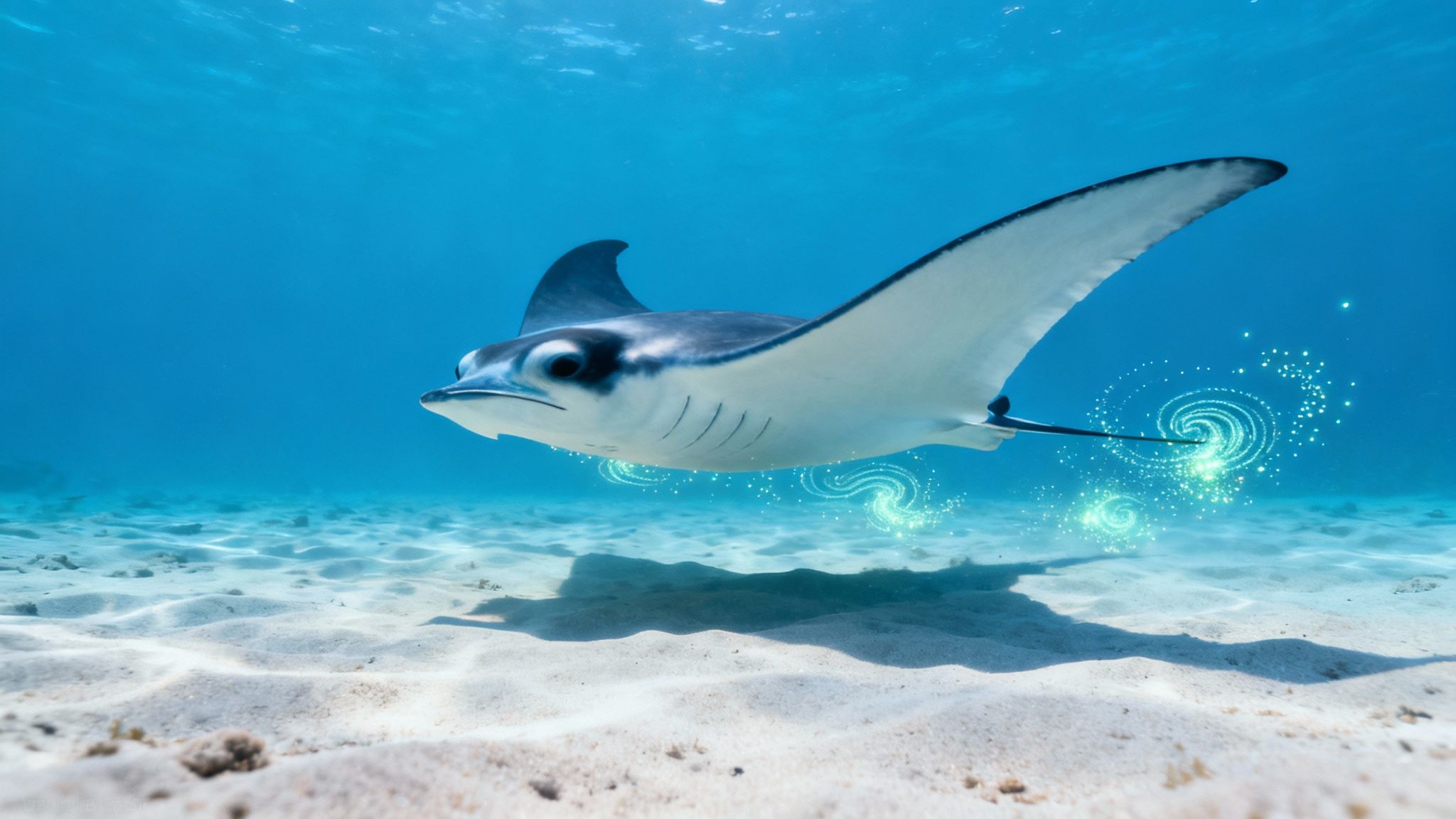
The manta ray night dive in Kailua Kona is something truly special—an underwater ballet that has rightfully earned its world-famous reputation. Imagine dozens of giant manta rays, some with wingspans wider than a car, gliding and barrel-rolling through the water as they feed on plankton. It’s one of the most incredible marine encounters you can have, period.
For anyone ready to jump in and see the magic for themselves, you can find detailed info on Kona's premier manta ray dive tours to get started.
What Makes the Kona Manta Ray Dive So Special
So, why Kona? The Big Island’s coastline is uniquely suited for this phenomenon. The deep, sheltered bays and nutrient-rich waters create a perfect environment for plankton to thrive, and where there’s plankton, there are manta rays. This reliable food source has helped establish a large, resident population of mantas that stick around all year.
The Science Behind the Spectacle
The whole setup is brilliantly simple. Dive operators create what we call "the campfire"—a cluster of powerful lights placed on the ocean floor. At night, these lights attract swarms of plankton, essentially creating a concentrated, all-you-can-eat buffet for the mantas.
When the mantas show up, the real show begins. They perform these mesmerizing, graceful loops and barrel rolls to scoop up as much plankton as possible, often gliding just inches over your head. It's breathtaking.
Two Legendary Dive Sites
This world-renowned dive happens mainly at two key spots just off the Kona coast:
- Garden Eel Cove (Manta Heaven): Just north of Kailua-Kona, this is probably the most famous site, known for its consistency and the sheer number of mantas that often show up.
- Keauhou Bay (Manta Village): A little south of town, this is another incredibly reliable location that delivers amazing encounters night after night.
Kona has become the global capital for these dives for a good reason. The sighting success rate hovers around an impressive 85-90%. You can even check out manta report data to see the recent trends for yourself. That consistency brings tens of thousands of divers and snorkelers here every single year.
This isn't just another dive. It’s a front-row seat to one of nature's most majestic performances. The sheer size and effortless grace of these animals feeding in the glow of the lights is an experience that truly stays with you forever.
When you understand the simple science behind it all, you get an even deeper appreciation for the delicate balance that makes the manta ray night dive in Kailua Kona possible. If you want to learn more about the specifics of the dive itself, our guide on what is manta ray night dive is a great place to start.
Manta Ray Night Dive At a Glance
Here’s a quick rundown of what you can generally expect from the entire experience, from start to finish.
| Aspect | Details |
|---|---|
| Average Duration | 3-4 hours total (including boat ride and briefing) |
| Water Time | Approximately 45-60 minutes |
| Typical Depth | 30-40 feet (divers) / Surface (snorkelers) |
| Water Temperature | 76-80°F (24-27°C) |
| Success Rate | 85-90% chance of seeing manta rays |
| Manta Population | Over 240 identified resident manta rays |
This table gives you the essential numbers, but remember, every night is a little different, which is part of what makes it so exciting.
Why It's Called a "Passive Interaction"
One of the most important things to know is that this is a passive interaction. We are guests in their world, and the golden rule is no touching.
Touching a manta ray can remove the protective mucus layer on their skin, leaving them vulnerable to infections. The best way to enjoy the show is to stay put on the bottom (or the surface if you're snorkeling) and let them come to you. They are curious and intelligent animals and will often get incredibly close on their own terms. It’s all about respect.
Choosing Your Kona Manta Ray Tour Operator
Picking the right operator for your manta ray night dive is probably the most important decision you'll make for this trip. This isn't just about booking a spot on a boat; it's about the safety, quality, and ethical standards of the entire experience. The best outfits in Kona are obsessed with two things: giving you an unforgettable encounter and protecting the very animals you’ve traveled so far to see.
A top-tier operator, like us here at Kona Honu Divers, has a crew that lives and breathes the ocean. When your guides have a deep respect for marine life, you’re not just another tourist—you become part of a responsible and awe-inspiring wildlife interaction. But don't just take our word for it; hearing directly from people who've done the dive is the best way to know what you're in for.
Key Factors for Selecting a Tour
As you start comparing companies, a few things should jump out as non-negotiables. These are the details that separate a truly exceptional manta ray night dive in Kailua Kona from a run-of-the-mill boat trip.
- Manta Ray Green List Certification: This is a big one. Only go with operators on the Manta Ray Green List. This certification isn't just a sticker; it means they follow strict, science-based guidelines for keeping both you and the mantas safe.
- Guide-to-Diver Ratio: Ask about their ratios. A smaller group per guide means more personal attention and a much safer, calmer experience underwater. You don't want to feel like just one person in a massive crowd.
- Boat Comfort and Amenities: Think about the boat itself. After an amazing night dive, a hot shower and a comfortable ride back to the harbor can make a world of difference. It's the small comforts that round out a perfect evening.
The goal is to find an operator that doesn’t just show you the mantas, but actually teaches you about them. A passionate crew turns a cool sightseeing trip into a real connection with the natural world.
It also helps to understand the different tour options out there. For a deep dive into what makes a shop stand out, we've put together a full guide on how to choose a Kona dive shop.
Dive vs. Snorkel: Which Is Right for You?
Most operators will give you the choice to either scuba dive or snorkel with the mantas, and honestly, both offer a mind-blowing view. The right choice for you really comes down to your certification, your comfort level in the water at night, and the kind of experience you’re looking for.
-
Diving: If you're a certified diver, this is the way to go. You’ll descend to a sandy spot on the bottom, around 30-40 feet, and settle in with your group. From there, you just point your dive light up and watch the show. You get an incredible, eye-level perspective as these gentle giants swoop and glide just inches above your head. It’s an immersive experience you’ll never forget.
-
Snorkeling: For non-divers or families, snorkeling is fantastic. You'll hold onto a custom-made light board that floats on the surface. The bright lights attract the plankton, which brings the mantas right up to you. It requires less gear and is a super accessible way to see the exact same feeding frenzy from above.
No matter which you choose, you're getting a front-row seat to one of nature's greatest performances. The best manta tour operators are set up to give both divers and snorkelers an amazing, up-close view.
Your Underwater Adventure from Start to Finish
The thrill of a manta ray night dive in Kailua Kona doesn’t just start when you hit the water. It begins with the boat ride out, cruising along the stunning Kona coast as the sun dips toward the horizon, painting the sky in fiery colors. This is your chance to settle in and soak it all up.
Your guides will use this time to give a thorough briefing, covering everything from the dive plan to the fascinating biology of the gentle giants you’re about to meet. They'll emphasize the most important rule of the entire experience: do not touch the mantas. It's all about passive interaction, which keeps both you and these incredible animals safe.
The Descent into Darkness
As the last sliver of sun disappears, it’s time to gear up. You’ll make your entry into the surprisingly warm Pacific, and once the group is ready, you’ll begin a slow, controlled descent. Your destination is a sandy spot on the ocean floor, usually somewhere between 30 to 40 feet deep.
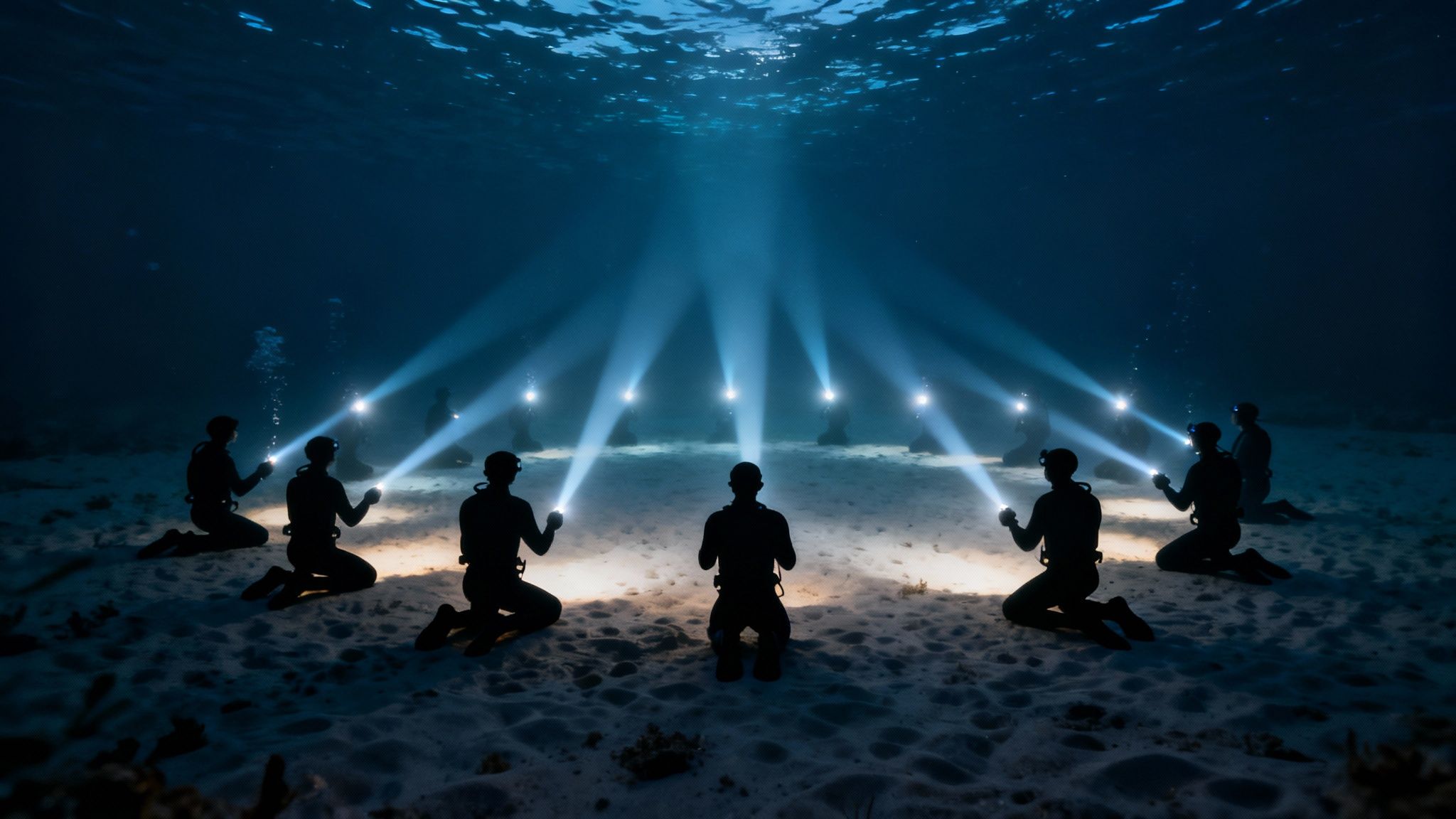
Down on the bottom, the crew has already placed a powerful light source—what we affectionately call the "campfire." Your divemaster will get everyone situated in a circle around it. On their signal, you’ll switch on your own dive light and point it straight up, adding your beam to the others. Together, you create a massive column of light that acts like a dinner bell for plankton, the mantas' favorite meal.
When the Gentle Giants Arrive
The first few minutes are pure anticipation. You’ll watch the plankton cloud grow thicker and thicker in the light, and then… it happens. A huge, dark shape glides silently out of the blackness and into the light. The first manta has arrived.
What follows is an underwater ballet that no video can truly capture. Soon, more mantas appear, swooping and barrel-rolling through the light beams in a mesmerizing feast. They get breathtakingly close, sometimes just inches from your face. You can feel the water move as their massive wings pass overhead. You’re not just watching; you’re part of the scenery.
This profound experience is a cornerstone of Hawaiian marine tourism. The economic and cultural impact of the manta ray night dive is significant, drawing an estimated 80,000 snorkelers and divers to Kailua-Kona annually. This popularity supports vital educational programs that enhance guest knowledge and promote conservation. Learn more about the iconic Kona manta ray dive and its role in ecotourism.
What to Expect During the Dive
You'll be on the bottom for about 45 to 60 minutes. Your main job during this time is simple: stay put, stay calm, and soak in every second of the amazing show.
- Observe Respectfully: Keep your hands to yourself. Let the mantas control the interaction.
- Stay Still: Try not to move around much. Kicking up sand from the bottom can ruin the visibility for the whole group.
- Trust Your Guide: Your divemaster is there to manage everything and keep you safe, so you can fully immerse yourself in the moment.
This experience is a true highlight of any trip to Hawaii and a bucket-list dive for anyone exploring Big Island scuba diving. After ascending, you’ll be greeted on the boat with a warm shower, hot chocolate, and snacks for the ride back to the harbor, buzzing with memories that will stick with you for a lifetime.
Meeting Kona’s Gentle Giants and Their Habitat
The manta ray night dive in Kailua Kona is so much more than a cool underwater light show; it’s a front-row seat to one of nature’s most incredible spectacles. To truly appreciate it, it helps to know a little bit about the stars of the show and their home.
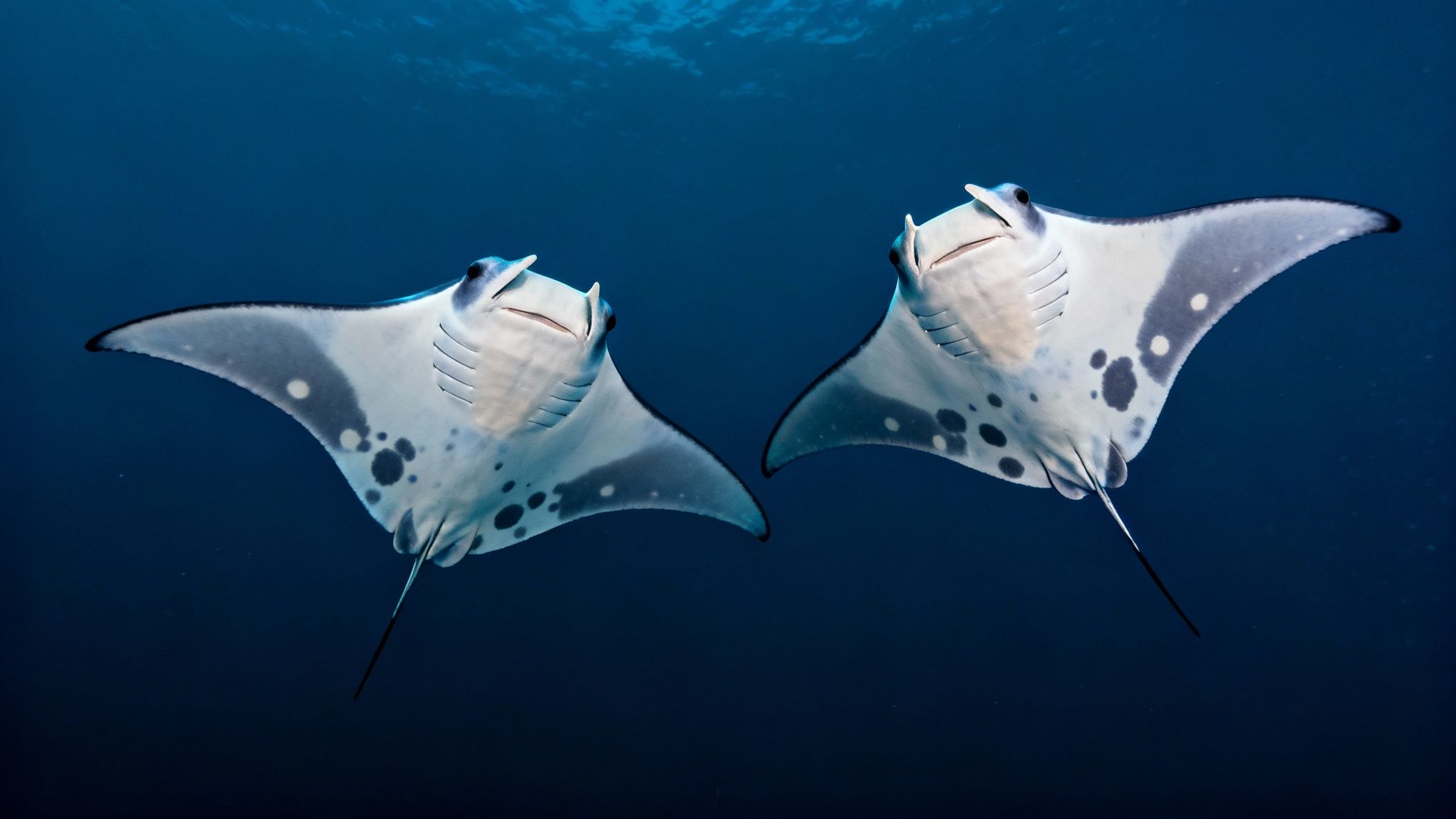
Believe it or not, every single manta ray is a unique individual. Researchers can tell them apart with stunning accuracy by looking at the pattern of black spots on their white bellies—it's just like a human fingerprint.
By photographing and cataloging these patterns, scientists track their movements, monitor their health, and learn their life stories. When you're down there watching them, you're actually part of this massive citizen science project.
Years of dedicated monitoring along the Kona Coast have given us some incredible data. Local researchers have identified over 300 individual manta rays from more than 10,000 sightings. This ongoing work helps them estimate the local population at over 450 mantas! You can dive deeper into these extensive manta ray studies and their findings to see just how much we've learned.
Comparing the Primary Dive Sites
Your big adventure will likely happen at one of two world-famous spots. The final call is always up to the boat captain, who will choose the location based on the day's ocean conditions, weather, and—most importantly—where the mantas were last seen. It’s all about giving you the best and safest encounter possible.
When you join this dive, you’re not just a tourist. You become an informed, respectful visitor supporting a sustainable ecotourism model that funds vital conservation research. You're helping protect these magnificent animals for generations to come.
The two main "stages" for this underwater ballet are Garden Eel Cove and Keauhou Bay. Both are fantastic, but they offer slightly different vibes. Knowing what makes each one special gives you a better appreciation for the dive, no matter where you end up.
Kona Manta Ray Dive Site Comparison
To give you an idea of what to expect, here’s a quick breakdown of the two main locations. Each site offers a unique backdrop for the manta experience.
| Feature | Garden Eel Cove (Manta Heaven) | Keauhou Bay (Manta Village) |
|---|---|---|
| Location | North of Kailua-Kona | South of Kailua-Kona |
| Bottom Type | Mostly sand and coral rubble | Sandy bottom, closer to shore |
| Typical Depth | 35-45 feet | 25-40 feet |
| Key Advantage | Known for attracting large numbers of mantas | Generally calmer and more protected |
| Best For | Divers seeking the classic, high-energy experience | All experience levels, often better for snorkelers |
Ultimately, the mantas go where the plankton is, which means no two nights are ever the same. Both locations offer an unforgettable chance to see these gentle giants do their thing up close.
Ready to see it for yourself? Our premier manta ray dive tours are waiting for you.
Getting Ready for Your Manta Ray Dive
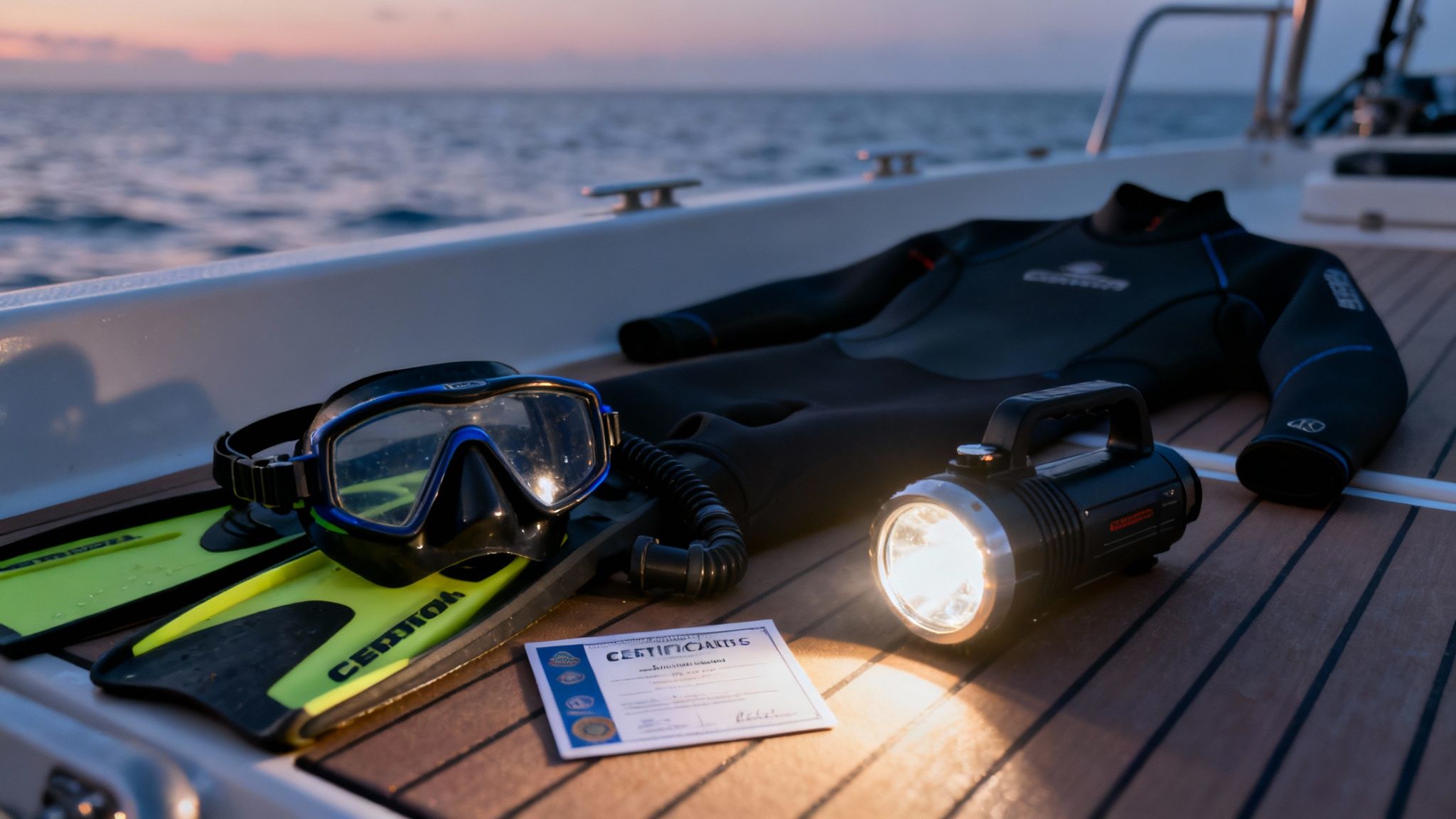
A little prep work can make the difference between a good manta ray night dive in Kailua Kona and an unforgettable one. Knowing what to bring—and what to leave on shore—means you can soak in every moment without sweating the small stuff. The good news is your tour operator provides all the heavy-duty gear: scuba equipment, tanks, weights, and the powerful underwater lights needed to attract the mantas.
So, what should you pack? Your list is surprisingly simple. Just think of it like a beach day that stretches into the evening.
- Swimsuit: The easiest approach is to wear it under your clothes when you show up.
- Towel & Dry Clothes: You'll definitely want these for the ride back.
- A Warm Layer: Even in Hawaii, the boat ride home after sunset can get surprisingly cool. A sweatshirt or light jacket is a lifesaver.
- Reef-Safe Sunscreen: If your tour departs before the sun goes down, you'll want to apply this beforehand.
- Certification Card & Logbook: If you're a certified diver, don't forget these! Most shops need to verify your cert before you get in the water.
For an even more in-depth look at what to bring, we've put together a complete checklist of the gear you will need for your Kona diving adventure.
Tips for Underwater Photographers
Trying to capture the ethereal beauty of a manta ray ballet is an incredible challenge, but so rewarding. Night diving obviously has its own lighting quirks, so planning your camera setup is crucial. If you have a camera with manual settings, you'll have far more creative control. A wide-angle lens is your best friend here, as it's the only way to really fit these gentle giants into the frame.
To get those stunning, well-lit shots, external strobes are a must. They dramatically cut down on backscatter—those distracting white specks you get when your camera's flash lights up all the tiny particles in the water. Just be courteous to the wildlife and your fellow divers; never blast your strobes or lights directly into the mantas' eyes.
Here's the most important piece of advice I can give: Don't live the entire dive through your viewfinder. Get your shots, for sure. But then, put the camera down and just be there. The feeling of a manta gliding inches over your head is a memory no photograph can ever truly replicate.
While the manta dive is the main event, it's not the only world-class night dive Kona has to offer. For divers craving a completely different kind of adventure, the renowned Kona Blackwater Dive takes you on a surreal trip into the open ocean to see the bizarre creatures that migrate up from the deep. And for seasoned divers looking to push their limits, there are some spectacular advanced dive trips that explore Kona’s deeper, more remote dive sites.
Your Manta Ray Night Dive Questions, Answered
It’s completely normal to have a few questions buzzing around your head before committing to a bucket-list adventure like the manta ray night dive in Kailua Kona. You want to be sure you’re prepared, safe, and ready to soak in every moment.
Let's clear up some of the most common queries we hear from both first-time divers and seasoned snorkelers.
Is This Dive Actually Safe?
Absolutely. Every reputable operator in Kona puts safety above all else. Think of it this way: their entire business relies on a flawless safety record. You’ll be in the hands of experienced, certified divemasters and instructors who know these waters intimately.
Before you even dip a toe in the water, you'll get a thorough safety briefing. They'll cover everything from how to enter the water to the rules of engagement with marine life. Plus, the dive sites themselves are well-chosen—they're relatively shallow and sheltered from the big ocean swells, which makes for a much more controlled and comfortable environment.
What if I’m Not a Certified Diver or a Great Swimmer?
No certification? No problem at all. The snorkeling option is specifically designed so that anyone can join in. Snorkelers gather around a large, custom-made flotation board that has bright lights shining down into the water. You just hold on, and it gives you a stable, bird's-eye view of the entire spectacle below.
Even if you're a bit anxious in the water, you're covered. You’ll be wearing a wetsuit or a life vest, which provides plenty of buoyancy. You can just relax and float comfortably without any effort. The key is to be upfront with the crew about your comfort level when you book so they can give you the attention you need.
When’s the Best Time of Year to Go?
This is the best part—anytime! Kona's manta ray population is a resident community. Unlike humpback whales that migrate, these mantas hang around all year because their food source, plankton, is always on the menu.
You’ll have a great chance of seeing them whether you visit in July or December. While some old-timers might say the summer months draw a little more plankton (and thus, a few more mantas), the success rate is consistently sky-high, hovering around 90% year-round. There really isn’t a bad time to book.
But What if the Mantas Just Don’t Show Up?
It's a fair question. These are wild animals, after all, and they don’t work on our schedule. While it’s incredibly rare for them to be a complete no-show, it can happen. This is where a good operator's "manta guarantee" comes into play.
Most of the top-tier companies in Kona will offer you a second chance to see the mantas on another night, completely free of charge (usually on a standby basis). It's their way of making sure you don't go home disappointed. Always double-check an operator's specific policy before you book.
Am I Allowed to Touch the Manta Rays?
This is a hard no, and it's the most important rule of the dive. A manta ray's skin is covered in a protective mucus layer, kind of like a shield against infection. Touching them, even gently, can rub this coating off and leave them vulnerable to harmful bacteria.
The mantra of the manta ray night dive in Kailua Kona is "passive observation." Your role is to simply be a quiet, respectful spectator in their underwater world. Find your spot, stay still, and let them work their magic. They’ll often glide within inches of you all on their own, and that’s a far more powerful experience than any forced interaction.
Ready to see this incredible underwater ballet for yourself?
At Kona Honu Divers, we're committed to a manta ray experience that is safe, ethical, and absolutely unforgettable. Take a look at our world-famous manta ray dive and snorkel tours and book the adventure of a lifetime.