
If you ask any diver for their top five most unforgettable dives, there’s a good chance the manta ray night dive in Kailua Kona will be on that list. It’s an almost surreal experience, a true underwater ballet where gentle giants swoop and glide through illuminated water, feeding on plankton just inches from your mask.
This isn't just another dive. It's a chance to connect with some of the ocean's most majestic creatures in a way that feels both spectacular and deeply personal.
What Makes the Kona Manta Ray Night Dive So Unforgettable?
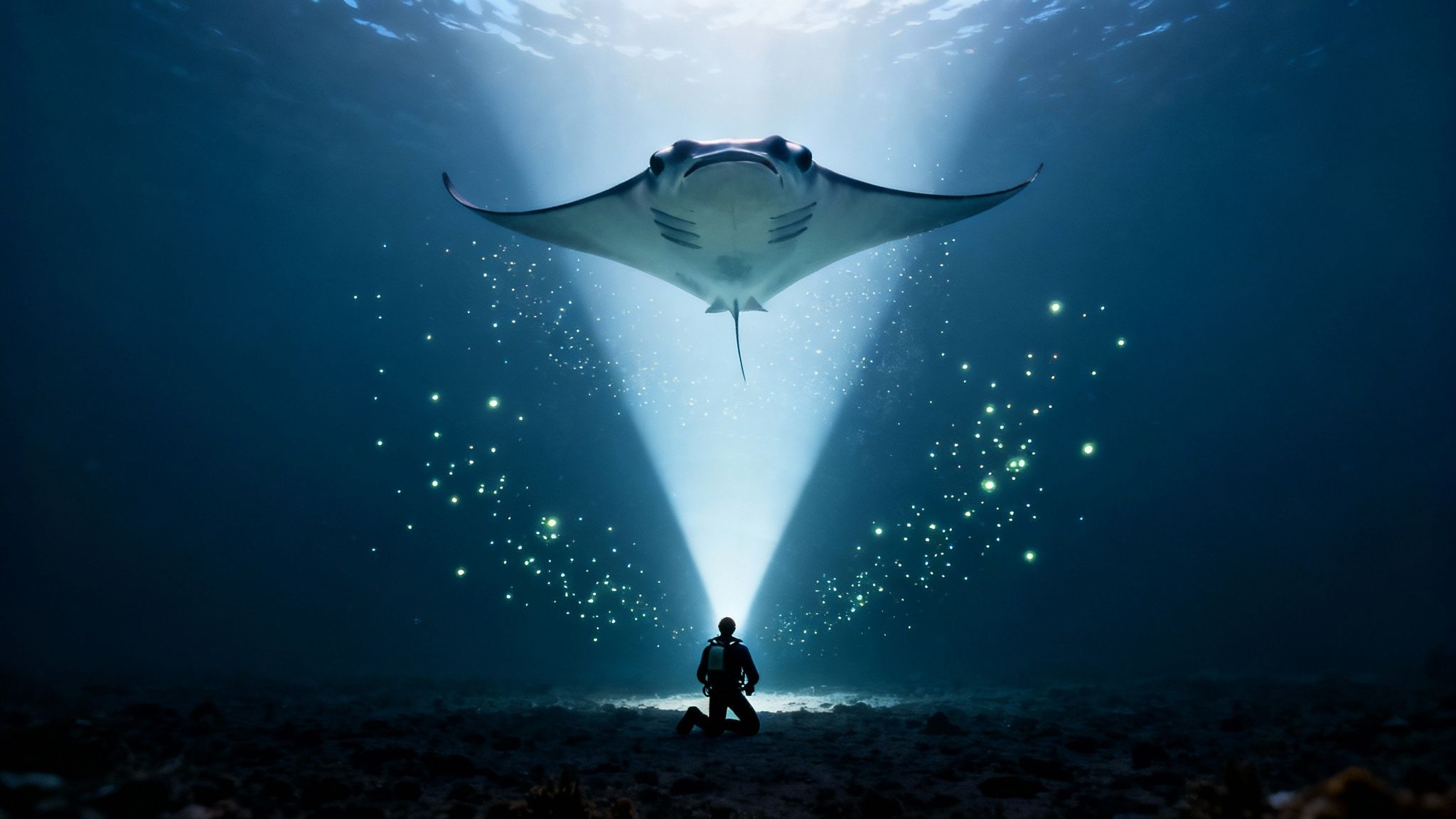
Picture this: you descend into the dark Pacific Ocean. Below you, powerful lights switch on, transforming a patch of the seafloor into a brightly lit stage. This is what many affectionately call the underwater nightclub for manta rays.
The concept is brilliantly simple. The lights attract huge clouds of plankton, the mantas' favorite meal. The mantas, in turn, show up for their nightly feast.
You and your fellow divers kneel on the sandy bottom, becoming the audience for an incredible performance. These majestic animals, with wingspans easily stretching over 12 feet, perform mesmerizing barrel rolls and graceful loops to filter the plankton from the water. They soar right over your head, close enough to see every detail.
A Predictably Magical Encounter
What really sets the Kona manta dive apart from other big animal encounters is its reliability. While many wildlife viewings are a roll of the dice, the Kona coast is a consistent feeding ground for a resident population of reef mantas. The success rate here is phenomenal.
This isn't just about seeing marine life; it's about being immersed in a vibrant, active ecosystem after dark. The focused beams of light against the blackness of the open ocean create a dramatic, theater-like atmosphere you just can’t find anywhere else.
The Manta Ray night dives off the coast of Kailua Kona, Hawaii, are known for their exceptional sighting success rate of roughly 85-90%. The estimated local manta population is over 450 individuals, many of which are permanent residents in the area year-round.
This isn't a fleeting glimpse. It’s a sustained, awe-inspiring show that stays with you long after you’ve dried off. It's a unique mix of heart-pounding proximity and serene, natural beauty.
Here's a quick look at what the experience involves.
Manta Ray Night Dive At a Glance
| Aspect | Details |
|---|---|
| Location | Kailua-Kona, Big Island, Hawaii |
| Creature | Reef Manta Rays (Mobula alfredi) |
| Wingspan | Up to 12-15 feet |
| Sighting Success | Typically 85-90% or higher |
| Dive Type | Night dive, stationary on the bottom |
| Depth | Shallow, usually around 25-40 feet |
| Best Time | Year-round |
This table gives you the basics, but it hardly captures the feeling of a 2,000-pound animal gliding silently over your head. It’s a humbling, moving experience that truly puts you in your place in the best way possible.
How to Choose the Right Manta Ray Dive Operator
Picking the right company for your manta ray night dive in Kailua Kona is hands down the most critical choice you'll make. It’s what separates a decent dive from a truly mind-blowing, safe, and respectful encounter. With so many boats heading out each night, it helps to know what to look for.
First and foremost, let's talk about safety. This is non-negotiable. A top-notch operator will have a squeaky-clean safety record, boats that are clearly well-cared-for, and a crew that knows their stuff. Their pre-dive briefing should be thorough, covering not just the amazing things you're about to see, but also emergency plans and the ground rules for interacting with the mantas.
One of the biggest tells of a safety-first company? Small guide-to-diver ratios. You want personalized attention down there, not to be just another face in a crowd.
Experience and a Commitment to the Ocean
Beyond the basics, you want a crew with real local knowledge and a genuine love for marine life. Guides who have been diving these sites for years know the mantas' patterns and can share incredible insights you won't get from a rookie.
Even more important is finding an operator who is a true steward of the environment. The best outfits are deeply involved in conservation and follow strict standards to keep the mantas safe.
- Look for Green Standards: While the old "Manta Ray Green List" certification isn't active anymore, the best operators still live by its principles. They always put the well-being of the rays first.
- Passive Observation is Key: A responsible crew will hammer home the "look, don't touch" rule. They’ll make sure you understand how to position yourself on the bottom so you never get in the way of a feeding manta.
- Education Matters: The best dives come with a great education. A passionate crew won't just take you to see the mantas; they'll teach you about their lives, their habitat, and why protecting them is so important.
When you choose wisely, you're not just buying a ticket for a great dive—you're supporting a business that helps protect Kona's underwater world for years to come. For a much deeper dive on this, check out our complete guide on how to choose a Kona dive shop.
See What Other Divers are Saying
Don't just take a company's word for it—see what fellow divers have to say. Spend some time scrolling through recent online reviews. You're looking for consistent feedback about safety, the professionalism of the crew, and the overall vibe of the trip. Companies like Kona Honu Divers have earned their stellar reputation one amazing dive at a time, built on years of respect for the ocean.
Reviews are where you find the golden nuggets—the little things that make a huge difference. Maybe it's a crew member's name that keeps popping up, mentions of hot chocolate on the boat ride back, or a captain who went the extra mile. These details paint a real picture of what you can expect and help ensure your manta ray night dive in Kailua Kona is a memory you'll treasure forever.
What to Expect on Your Manta Ray Dive Adventure
The buzz for your manta ray night dive in Kailua Kona starts the moment you step foot in the harbor. You'll meet the crew, find a spot on the boat, and share in the electric anticipation with your fellow divers. It’s a feeling I’ve come to love.
As the boat motors out, the real adventure begins. The ride to the dive site is half the fun, especially when you time it right for one of Kona's spectacular sunsets. On the way, the guides will run through a detailed briefing. They don't just cover the dive plan; they share incredible stories and facts about the local mantas, getting everyone even more hyped for what's to come.
Setting the Underwater Stage
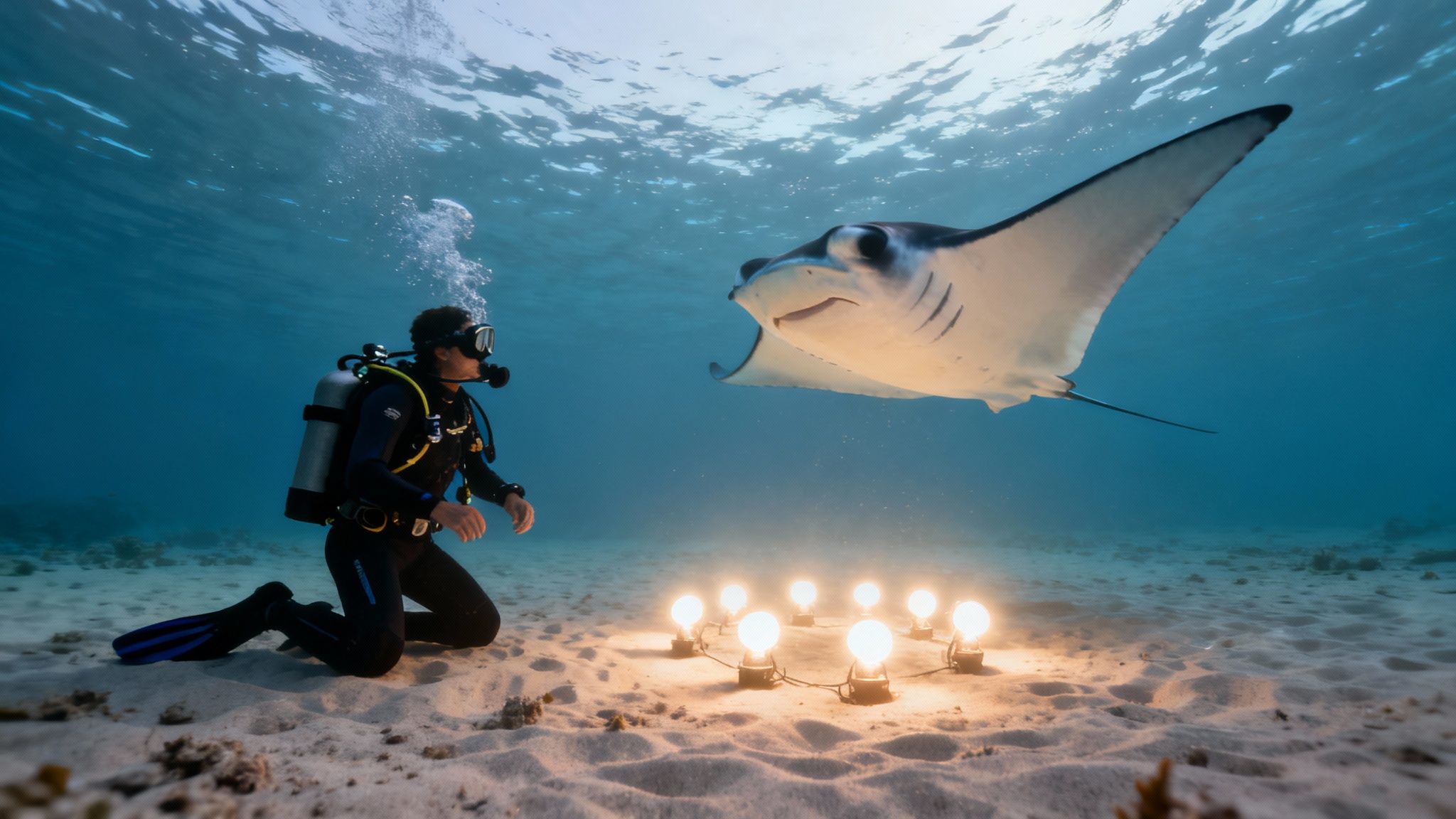
Once you arrive at the spot, the crew moves with practiced efficiency to set up the "campfire"—a collection of powerful, eco-friendly lights placed on the ocean floor. This isn't just for show.
These lights are the secret sauce. They illuminate huge clouds of plankton, which is the manta rays' primary food source. Your dive crew is essentially setting the dinner table and ringing the bell for the gentle giants of the Kona coast. With the lights in place, it’s time to gear up.
The Performance Begins
As a diver, you’ll descend to a sandy bottom, usually somewhere between 30-40 feet. Your guide will get you situated, typically in a semi-circle around the lights. This arrangement gives everyone a front-row seat without getting in the mantas' way. You find your spot, get comfortable, and wait.
Then, the magic happens.
Out of the deep blue darkness, a massive shadow emerges. Then another. And another. These majestic creatures, with wingspans stretching over 12 feet, perform a silent, weightless ballet just inches above your head. They glide, swoop, and barrel roll through the light beams, their huge mouths open to filter the water for plankton.
It's impossible to describe the feeling of a school-bus-sized animal gliding effortlessly right over you. It's pure, humbling awe. You feel a profound connection to the ocean that stays with you long after you surface.
All you can hear is the gentle hiss of your regulator as you watch the silent, graceful dance unfold in the beams of your lights. This is the moment you'll be replaying in your mind for years.
Back to a Sky Full of Stars
After what seems like both five minutes and an entire lifetime, your guide will give the signal to ascend. You’ll head back to the surface, your mind still reeling from the spectacle you just witnessed. Popping up out of the water, you’re often greeted by a brilliant blanket of stars in the clear Hawaiian sky.
The ride back to the harbor is always filled with energy and excited chatter. It’s a shared experience, and everyone has a story to tell. Many top-notch operators like Kona Honu Divers cap off the night with hot chocolate and snacks—the perfect way to warm up and seal the memory of an unforgettable adventure.
Getting Your Gear and Yourself Ready for the Dive
A successful manta ray night dive in Kailua Kona all comes down to being prepared. While you don’t need to haul a massive dive bag for this trip, packing a few key items will make a world of difference for your comfort and safety.
The single most important piece of gear you'll bring is your wetsuit. Yes, the water in Hawaii is warm, but you'll be settled on the ocean floor after sunset for quite a while, and the chill can creep in faster than you think. I always recommend a 3mm or 5mm full wetsuit. It keeps you toasty so you can focus on the incredible show in front of you, not on shivering.
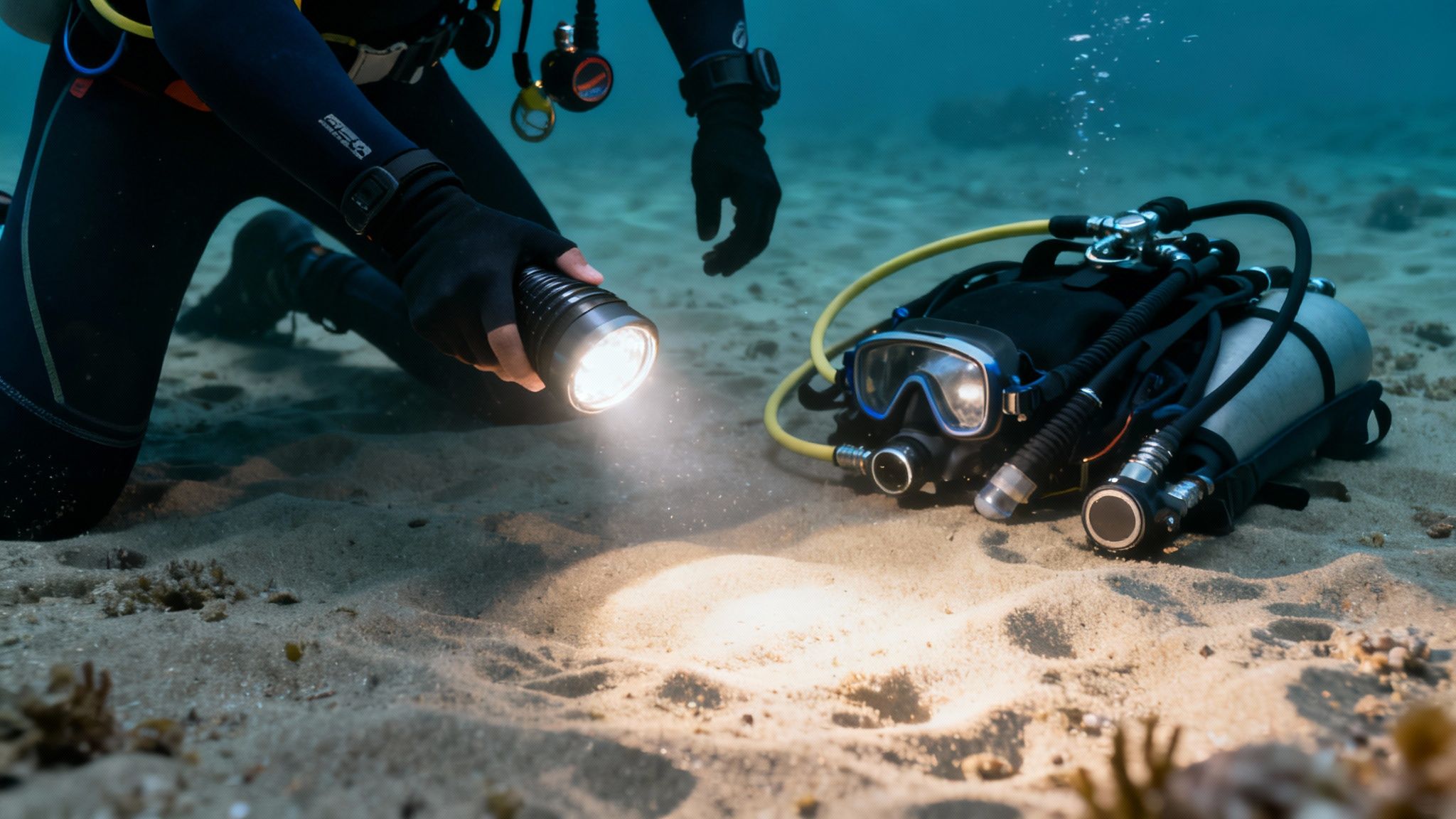
The good news? You can leave the heavy-duty lighting at home. Your dive operator provides the powerful, specialized light array—the underwater "campfire"—that draws in the plankton and, in turn, the mantas.
The Manta Briefing: Your Rules of Engagement
Pay close attention during the pre-dive briefing. This isn't just a quick rundown of formalities; it's the most critical part of the entire experience, laying the groundwork for a safe, respectful, and mind-blowing encounter.
Your divemasters will walk you through the non-negotiable rules for passive observation. They're simple, but absolutely vital for protecting the manta rays.
- Stay on the Bottom: Your job is to find a spot on the sand or rubble and stay put. This creates a predictable space and keeps the water column clear for the mantas to do their graceful dance.
- No Touching, Ever: Manta rays are covered in a protective mucus layer that acts as their immune system. Touching them can strip this coating and leave them vulnerable to nasty infections.
- Lights Up: If you bring a small personal dive light, you’ll be told to point it straight up toward the surface. This helps attract more plankton without blinding the mantas. Never shine your light directly in their eyes or gills.
Nailing your buoyancy is also key here. You want to be perfectly neutral right above the sand, so you don't drift up and accidentally bump a passing manta or damage the marine life around you.
Remember, following these rules isn't just about your safety—it’s about preserving this world-class natural encounter. With so many people experiencing this dive, responsible tourism is the only way we can ensure these gentle giants continue to grace us with their presence for years to come.
As with any dive, being prepared for emergencies is part of being a responsible diver. This includes having a general awareness of the importance of hyperbaric chamber safety as part of your overall dive readiness.
Each year, an incredible 80,000 people snorkel and dive with the mantas on the Kona coast, making this a massive hub for marine ecotourism. Because of these numbers, operators enforce strict guidelines to minimize our impact. This careful management is what keeps the experience sustainable and spectacular for everyone involved.
Your Role in Manta Ray Conservation
When you book a manta ray night dive in Kailua Kona, you're signing up for more than just an amazing underwater light show. You're actually becoming part of a powerful conservation story—one of the best examples of sustainable wildlife tourism anywhere on the planet.
Every dollar you spend supports local dive operators who are on the front lines, protecting these gentle giants. This whole experience proves that manta rays are infinitely more valuable to our community alive and healthy than they could ever be through harmful practices. Simply put, your dive is a direct investment in their survival.
The Power of a Photograph
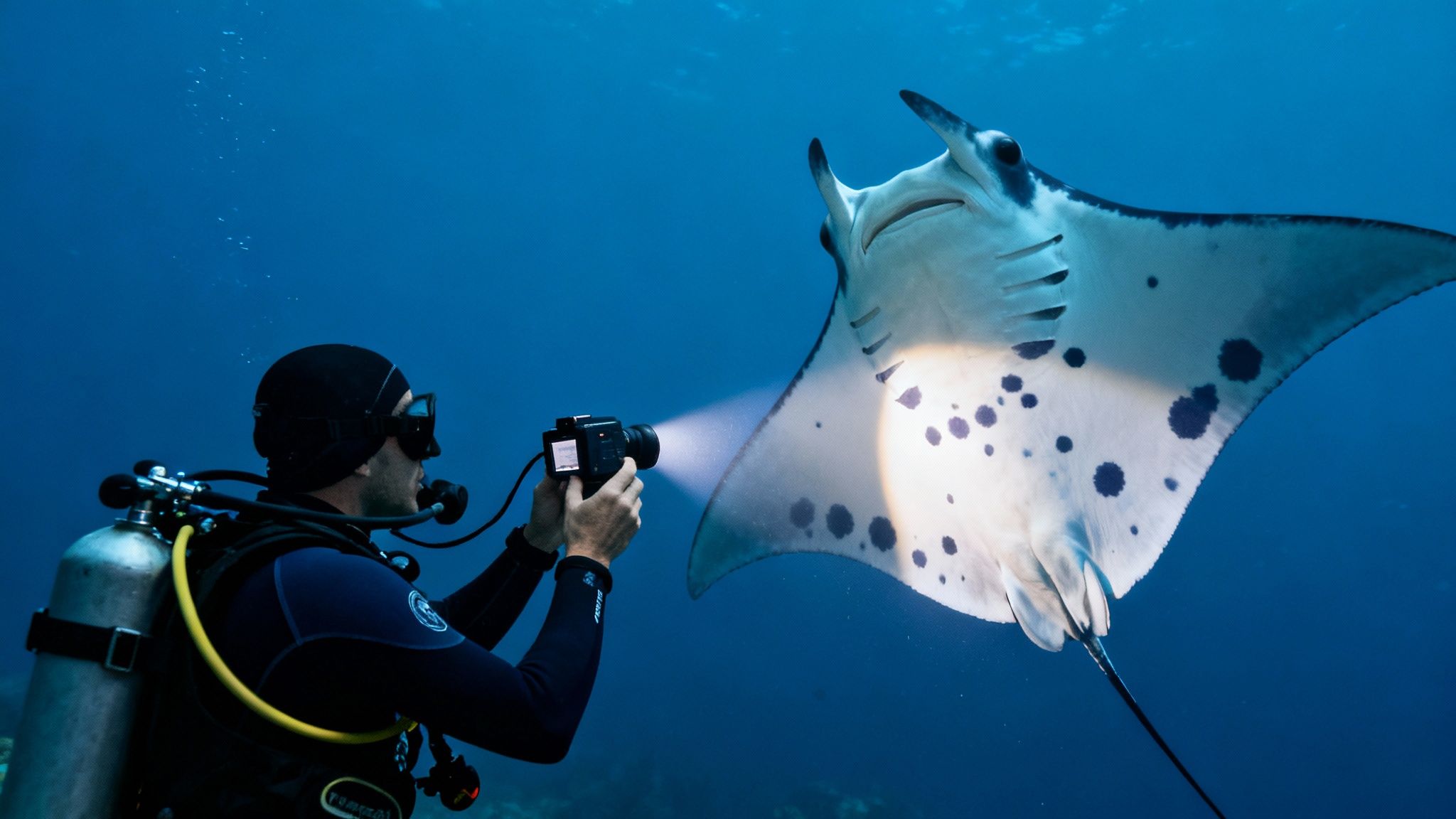
Here’s something pretty cool: you can contribute to scientific research just by being there. The unique spot patterns on a manta ray’s belly are like a human fingerprint. No two are ever the same.
Researchers and local conservation groups rely heavily on photos and videos from divers like you. By snapping a clear shot of a manta's underside, you’re helping identify and track individuals. This "citizen science" has created an incredible database that monitors the population's health, their movements, and their life cycles.
Your simple act of following the rules and maintaining a respectful distance does more than ensure a good experience; it directly contributes to the long-term protection of this incredible population. Your dive is a direct investment in the research and preservation of Kona's majestic manta rays.
This isn’t just a casual effort, either. Between 2009 and 2014, a research team meticulously documented over 10,000 sightings, identifying more than 300 individual manta rays. This data was absolutely essential for developing the sustainable tourism guidelines that keep the mantas safe today. You can dive deeper into these important manta ray findings to see exactly how the data is used.
Choosing to Make a Difference
Your role as a conservationist starts the moment you choose your dive operator. When you pick a company with a strong ethical backbone and a real commitment to responsible diving, you're sending a clear message. You're voting with your wallet for the well-being of the mantas.
Reputable operators follow a strict set of guidelines to make sure the animals are never stressed or disturbed.
- Look, Don't Touch: This is the golden rule. Never touch, chase, or try to ride a manta ray.
- Find Your Spot: Stay on the sandy bottom. This keeps the water column clear for the mantas to swoop in and feed.
- Smart Lighting: Your guide will handle the lights, which are positioned to attract plankton without blinding or bothering the rays.
By listening to your dive guide, you guarantee the encounter is a positive one for everyone—especially the mantas. It allows them to feed naturally and keeps them coming back night after night, ensuring this magical manta ray night dive in Kailua Kona can be enjoyed for years to come.
Ready to see these graceful giants up close? You can book your unforgettable and responsible manta ray dive tour and become part of this conservation success story.
Common Questions About the Kona Manta Ray Night Dive
If you're thinking about booking this incredible adventure, you probably have a few questions. We get them all the time from excited divers and snorkelers. Here are some straightforward answers to the things people ask most often.
Do I Need to Be a Certified Diver?
Nope, not at all! This is one of the best parts about the Kona manta experience—it’s for almost everyone.
While certified divers get an amazing view sitting on the ocean floor, snorkelers have an equally mind-blowing time. Most tours have custom-made, floating light boards. You just hold on, float comfortably, and watch the mantas swoop and feed on the plankton attracted to the lights just inches below you.
What’s the Best Time of Year to Go?
Here's the great news: any time is a good time! Kona's manta rays don't migrate; they live here year-round. We see them consistently, no matter the season.
The tour operators have this down to a science, and they boast a success rate of over 90% for manta sightings. So, you can book your trip for January or July and have an excellent chance of a spectacular show.
How Safe Is the Manta Ray Night Dive?
It's incredibly safe, especially when you book with a reputable, professional company. The dive itself takes place in a well-established, controlled area, and your guides are seasoned pros who know these waters and these animals inside and out.
Remember, manta rays are gentle giants. They have no teeth, no stingers, and no barbs. They are completely harmless to humans. The most important safety rule is just to listen to your guide and give the mantas their space.
Are There Other Cool Night Dives in Kona?
Absolutely! Kona is a world-class spot for all kinds of scuba diving tours. If you're looking for another adventure that's completely different but just as wild, you have to check out the Kona Blackwater Dive.
It’s a drift dive in the deep open ocean, miles offshore. You're tethered to the boat, floating in the dark, watching all the bizarre and beautiful deep-sea creatures migrate toward the surface. It's often called "pelagic magic" for a reason. You can learn more about this one-of-a-kind blackwater dive tour and add another unforgettable night to your vacation.
Ready to see the underwater ballet for yourself? Kona Honu Divers runs a world-class, safe, and truly unforgettable trip.